Let’s get the icky stuff out of the way first: a young blonde woman with a fresh black eye shows up at Perry Mason’s office, and he never expresses concern for her safety or well-being, never offers her a sympathetic comment, an ice pack or a raw steak. In fact, his early questions are disappointingly presumptive of the idea that the lady got what’s coming to her:
“’I take it,’ Mason said, his voice showing no more interest than courtesy demanded, ‘your husband is holding your clothes and there’s been the usual family fight. He accused you falsely of infidelity, and . . . ‘”

It’s 1944, you see, and if a pretty blonde shows up with a black eye, she no doubt deserved it. But Diana Regis’ story is more interesting than what Mason assumes it to be. Plus, she passes the sniff test of one Della Street, who quickly assures her boss that the girl is not “the type who would have been in a brawl.” Della Street (who is always called “Della Street,” never just “Della” by her creator) is one of the things I love most about the Mason books: she is a more thoroughly realized character here than in the TV show, where Barbara Hale took dictation, lent a sympathetic ear, and looked good in a fur stole. Book Della lends Perry a shoulder to cry on, but she adds warm inviting lips, dances like a dream, and has sleuthing skills to rival private investigator Paul Drake. Perhaps her most valuable skill to her boss is that, when it comes to potential clients, Della is a great judge of character.
For example, she notices right away that Diana’s speaking voice has the trained quality of an actress. Sure enough, Diana performs for the radio, and she comes to Mason with a story of how the wealthy Jason Bartsler called her up and told her he liked her voice so much that he wanted to hire her to read to him at bedtime. This perfectly innocent arrangement doesn’t sit well with Jason’s cold fish of a wife, and she decides to set Diana up with her odious son Carl.

All of this results in a black eye for, Diana, who hires Mason to represent her interests against the Bartslers. This the lawyer does in one of those fast-paced interviews with the Bartsler family that Erle Stanley Gardner does so well, and it leads Mason to learn the true reason that Jason Bartsler hired Diana.
The Case of the Black-Eyed Blonde is the 25th Perry Mason mystery, and by now a certain pattern has emerged in the structure of these novels: a troubled soul shows up at Mason’s office needing assistance, Mason performs certain early feats of legal legerdemain, and then he – accompanied either by Della or Paul – finds himself at some house out in the Valley where he stumbles upon a dead body and gets into all sorts of trouble. This time, he’s with Della, and it’s raining hard – and the victim is another beautiful blonde! And there’s a third blonde waiting in the wings to provide even more trouble for our hero and his client.

I can’t say that this is one of the top-drawer cases in the Mason file. For one thing, the black-eyed blonde turns out to be one of the most extraneous clients I’ve yet to meet. And in the end, the machinations of the murderer are pretty confusing, involving a past crime about which we get no hint and relying on a lot of disparate circumstances coming together in just the right pattern. Still, the book reads like a breeze, mainly because we’re in Mason’s company from start to finish, with plenty of Della Street and just the right amount of Paul Drake to make things zip.
We also get a couple of chapters in court, something that I have barely found in the early books I’ve read so far.
“The preliminary hearing in the case of The People versus Diana Regis, found the prosecution wearing that complacent smirk which indicates an airtight case. After suffering several ignominious defeats at the hands of Perry Mason, it was a triumphant moment when Claude Drumm, the chief trial deputy, had at last a case so bullet-proof that it would try itself, a case that simply couldn’t be upset, no matter which way the cat jumped.”

And even though Perry makes mincemeat of a couple of witnesses before a bemused Judge, the case indeed looks black. The final half of the novel finds Mason and Della racing around Los Angeles in search of missing witnesses and a kidnapped baby. It leads to an explosive climax involving a shootout where Mason has nobody on his side but his loyal pals Paul and Della.
I’ve been reading these books in piecemeal fashion, which I considered to be okay since to my knowledge there’s no real historical development for these characters. Turns out this is not exactly true. For example, in the 30’s novels, Mason’s nemesis in the Homicide Division was the brutish Sergeant Holcomb. But in 1940’s The Case of the Silent Partner, Gardner decided to give the LAPD an upgrade by introducing Lieutenant Arthur Tragg, a “slim, sophisticated bachelor” who the author felt made the police look better – even if the cops were destined to lose to Mason every time. The banter between Perry and this “friendly enemy” is delightful, but that doesn’t mean Holcomb has disappeared. He shows up here, having talked his way back into the department, and he’s itching to make trouble for our hero. Mention is made of how Mason got Holcomb kicked off of Homicide in an earlier case.
And there’s more: we get a running joke in the last quarter of the book that all this dangerous business is leaving our trio with no time to get dinner. When the case is finally broken (no spoilers there!) and Perry escorts Della and Paul to a late-night supper, a man approaches their table on the final page and begs to consult the lawyer right away on a matter involving a fish – a goldfish. And as the next book, 1945’s The Case of the Golddigger’s Purse, begins with a sick goldfish, I can only assume that – at least sometimes – Gardner ended one case with a hint about the next one.
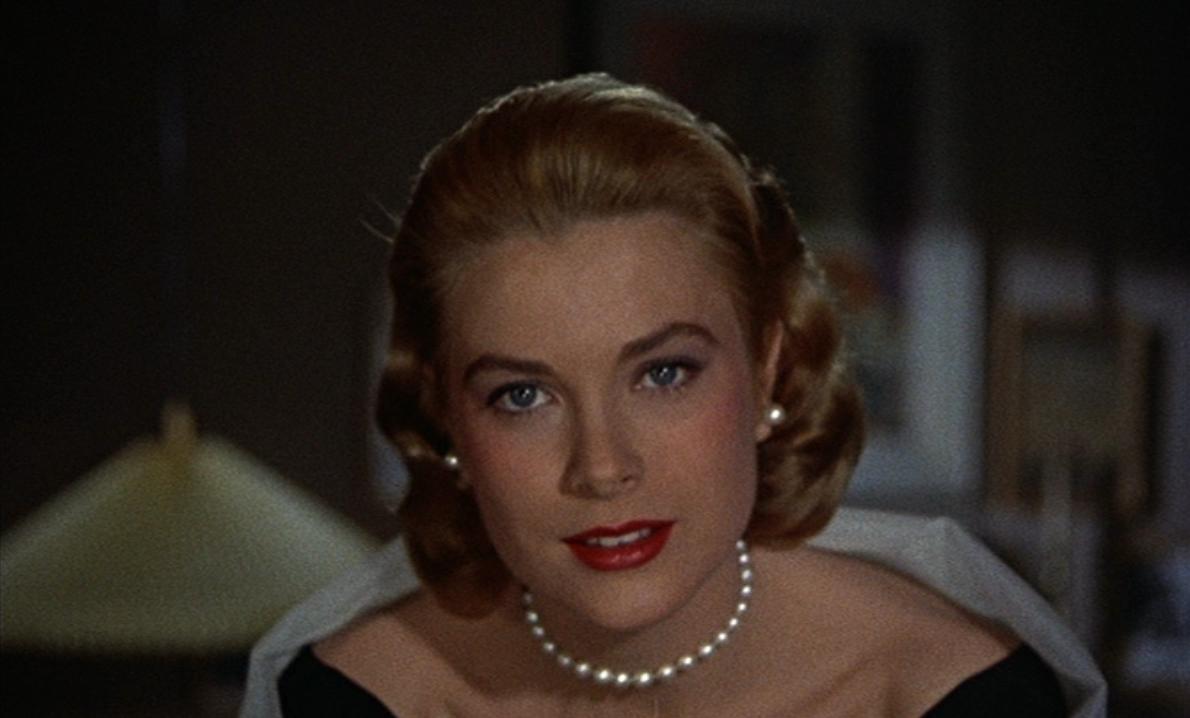
“The Case of the Black-Eyed Blonde” was the 37th, penultimate, episode of the first season of Perry Mason. As you can imagine, with only fifty-one minutes of storytelling time, the book’s plot is significantly truncated, hitting the highlights without offering much else. I don’t even mind that the murderer from the book doesn’t even appear in the episode, since the solution that the screenwriter’s reach is perfectly logical; in fact, this murderer might make a tad more sense than the one in the book! What is missing is everything that makes the book fun to read: the snappy dialogue, the action-packed camaraderie between Perry, Della, and Paul (it’s not that Raymond Burr, Barbara Hale and William Hopper aren’t terrific – they are, but their relationships are watered down from the books), and nearly every suspenseful moment from the novel. And while there is more courtroom action, it’s amazing how slapdash some of the legal maneuvering on display turns out to be. If you watch, check out the whole business with the diary and compare it to the book. It no longer makes any sense to the logic of the case!

Eighteen years later, Gardner would return to golden-haired ladies with The Case of the Blonde Bonanza (1962). But we’re moving on – and our next stop involves a whole unkindness of raven-haired beauties . . .
 Ah Sweet Mystery!
One of my favorite things when watching old Perry Mason episodes now is seeing Michael Fox as the coroner. He doesn’t show up in this episode, but was in 25 of them, and played an almost identical role on other unrelated series (like Burke’s Law). He happens to have been the father of one of my best friends, and is also the reason (SAG rules being what they are) that Michael J. Fox had to invent a middle initial when he began his screen career.
LikeLiked by 2 people
I thought this story didn’t hold up as well as many of the other Perry Masons. Even some of the Lam and Cool stories held up better. As far as Mason’s presumptions about Diana’s injuries, as you very astutely point out, they reflect the times and what was “acceptable” in those days.
What I would absolutely loathe is if the wokesters decide to rewrite Perry Mason stories to make them less “offensive” to themselves. UGH.
LikeLiked by 1 person
What I find interesting as I read these, most of them for the first time, is how much of a classic detective the literary Perry turns out to be. He is a bit snobbish, not in the people he chooses to work for – he’s often a champion for the underdog, the threatened female, or the working stiff – but in the nature of the cases he takes on. He wants to help these people and he wants to have an interesting problem to solve. The quest for Justice comes a distant third (although he doesn’t seem to take cases if he knows the person is guilty.)
LikeLiked by 1 person
Well yeah, any hack can handle the run of the mill cases. All of Perry’s are interesting, that’s for sure. Gardner himself, was an attorney and he understood all too well the rights of criminal defendants, as can be seen in all the Donald Lam books. I liked Perry’s choices and in many cases, he didn’t know whether the client was actually guilty or not. But he always chose to believe his clients, which lead him to the truth; i.e., if the client is telling the truth, then someone else must be guilty.
LikeLiked by 1 person
Pingback: #1132: The Case of the Smoking Chimney (1943) by Erle Stanley Gardner | The Invisible Event
Pingback: THE ERLE STANLEY GARDNER INDEX | Ah Sweet Mystery!