(Warning: you should go into this article knowing that there will be massive spoilers of the solutions of many Agatha Christie titles! Enter at your own risk!!)
Everyone has a list in their head of their favorite things. If I was to list just three of mine, I’d say that
- I love Agatha Christie
- I love talking about Christie with friends
- I love Screen Drafts, the podcast where hosts Clay Keller and Ryan Marker invite their friends within and/or revolving around the film industry to a list of their favorite films within a chosen topic.
Turns out I share these predilections with two of my buddies: Sergio Angelini, author of the gone-but-never-forgotten blog Tipping My Fedora, and Nick Cardillo, my favorite actor ever to play Sergeant Trotter and author of many fine pastiches of Sherlock Holmes. Back in April and ever impatient for Screen Drafts to turn its attention to our favorite film director, Alfred Hitchcock (Hey! That’s another favorite thing we have in common!), the three of us did our own draft to pick the Top Thirteen Hitchcock films. A good, if sometimes frustrating, time was had by all! I think I got a glimpse into how difficult this game is for all those Screen Drafts guest GMs to play.
We talked about Hitchcock for over six hours, and we vowed to get together again for a different subject. This time, however, we’re steering clear of movies and going straight for THE grand passion: the sixty-six mystery novels written by the Queen of Crime.

If you’ve been following along with my blog for the past eight years, you probably know that I’ve been reading Agatha Christie since the age of ten. I was introduced to her by a favorite baby sitter named Steve and have read and re-read all her mystery novels and short stories many times over the past harrrummpph – humph years! Now I blog about her and talk about her and direct her plays . . . But enough about me! Here’s what you need to know about my fellow players, in their own words . . .

SERGIO:
The first time I came across Agatha Christie I was 10 years old, living in the UK at that time, and was watching a TV program promoting the upcoming Death on the Nile movie starring Peter Ustinov. My Mum took me and my brother to see it and we thought it was brilliantly clever. However, the first novel of hers that I could lay my hand on after the great movie experience was the sub-Edgar Wallace thriller, The Seven Dials Mystery. It was not a great experience, so it was a few months before I tried her work again. This time I had much more luck, tracking down copies of such fine works as Hercule Poirot’s Christmas, They Do It With Mirrors and Curtain. (In the case of the latter, in retrospect, I wish I had waited several more years before reading it but I was young foolish.) As a teenager, I started reading her work in earnest after moving back to Italy in 1981, but this time in Italian translations. Many of these were fine editions published by Mondadori with their distinctive yellow covers, and they often featured a preface and afterword by such fine critics and authors as Julian Symons and Leonard Sciascia. My favorite of these is their edition of the penultimate Tommy and Tuppence novel, By the Pricking of my Thumbs, which includes a 50-page analysis of the book’s themes by the critic Alex R. Falzon. Treating her work as they would any other serious novelist certainly had a big impact on me as a young reader and as a fan of Christie and detective fiction in general.
NICK:
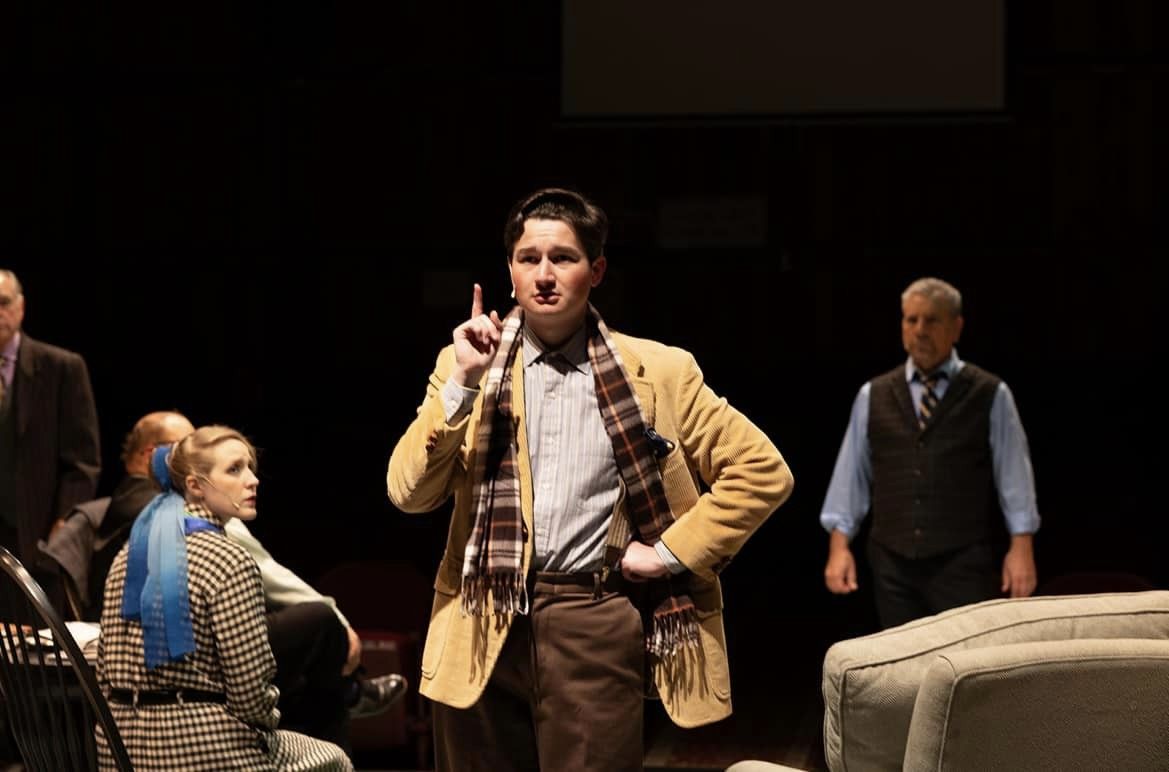
A confluence of things introduced me to Christie. I was already a big Sherlock Holmes fan as a 6-7 year-old boy, so it naturally followed that I’d want to explore other stories in the same genre. I remember renting the 1974 film adaptation of Murder on the Orient Express (a big two VHS set) from the library…and not understanding a word of it as it was revealed that no one on the train was who they said they were. I was still captivated by it though and, when I caught episodes of the David Suchet series on TV shortly thereafter, realized that the funny little detective with the mustache was the same guy from that confusing train movie and really then found out who Christie was. Around the same time, Christie was mentioned as one of the characters’ favorite authors in my favorite children’s TV show, Arthur, which, in the fourth grade, led me to reading The Mysterious Affair at Styles. I must have been bitten by the bug because I followed that up quickly thereafter with And Then There Were None and, from there, I was off to the races. Christie has been a constant companion ever since through the good times and bad.
THE RULES
We applied the Screen Drafts format to our efforts, dividing into drafters A, B, and C to create a serpentine-style draft of our Top Twenty. As in the podcast, we used trivia to determine our placement in the draft. Each position was endowed with certain “blessings” along the way. Since there were only three of us and soooo many choices, we each started out with two vetoes. A veto allows a player to kick out a selection another player makes, either to try and keep that title off the list or – because all titles remain in play until the end of the game – to push a title further up the list.
And there are additional blessings based on your position. Drafter A makes the fewest choices – 17, 13, 10, 7, 4, and 1 – but receives an additional veto. Drafter B gets one more draft pick – 18, 15, 14, 11, 8, 5 and 2 – but no additional blessings. And Drafter C also has seven picks – 20, 19, 16, 12, 9, 6, and 3 – and gets the veto override, which allows them to render another player’s veto void and keep a selection locked into place.
I hope that makes total sense! On to the trivia round!!!
* * * * *
THE TRIVIA ROUND
Each of us brought a few trivia questions to ask the others. We ended up needing twelve questions, and I thought you might like to play along. Here are the questions we posed to each other:
- In how many novels did Captain Hastings appear?
- One of Christie’s popular plot devices was having a character see something mysterious over another person’s shoulder. What they saw – and its significance – becomes part of the mystery! In A Caribbean Mystery, what did Major Palgrave see over Miss Marple’s right shoulder?
- What is Tuppence Beresford’s real name?
- Poirot worked with many policemen and Watsons during his career. But wouldn’t you know it? Sometimes a partner could become an adversary. Name one of the Poirot titles where an associate crime-solver turned out to be the killer!
- Christie was very hip! Name the two novels where she mentioned The Beatles!
- People were shot, stabbed, clubbed and, of course, poisoned in Christie’s books. Name the only novel where one of the murder methods was electrocution.
- The village of St. Mary Mead, Miss Marple’s home town, is mentioned in only one Hercule Poirot novel. Which is it?
- What is the first and maiden last name of Captain Hastings’ wife? (Bonus question: In which novel did she appear?)
- In how many novels did Ariadne Oliver appear?
- In which year did Christie submit the novel Curtain to her agent?
You will find the answers (and which of us got each one correct) at the end of the post:
Nick won the trivia round with four correct answers and decided to be DRAFTER B. With three correct answers, Brad chose DRAFTER C and received the veto override. And Sergio was left with DRAFTER A and that third veto.
Ready? Set? Let’s play!
* * * * *
THE DRAFT

To start the list with NUMBER TWENTY, Brad selected Sad Cypress (1940). After she ended the 30’s with And Then There Were None, Christie clearly headed in a different direction, imbuing her puzzles with richer characterization. Brad loves the complexity of Elinor Carlisle, who finds herself on trial for the murder of sweet Mary Gerrard. And who else could have dunnit?!? Elinor hated Mary with an unreasonable passion, and the murder itself, where three women sit down to tea and one doesn’t survive, could only have been committed by Elinor. Brad loves how, as the trial unfolds, Elinor transforms into a better person, finds true love and inner peace. And M. Poirot, who was stymied from revealing the identity of the killer on the witness stand in The Mysterious Affair at Styles (by Christie’s publisher, no less) gets to unmask a very clever poisoner at Elinor’s trial.
Nick and Sergio both agreed. Nick was impressed with the characterization and the simplicity and effectiveness of the murder and how the trial races by. Sergio had let the novel drop off his list, but couldn’t really figure out why. The stronger sense of emotion found here, the greater emphasis on character and relationships, according to Sergio, are indicative of the “Westmacott”-ization of her mysteries in the 40’s.
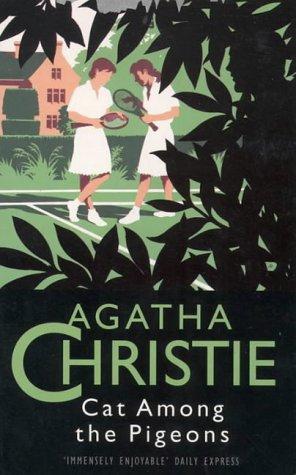
Brad also had the pick at NUMBER NINETEEN, and he selected Cat Among the Pigeons (1959). As an educator himself, he loves the academic setting and the light-hearted mixture of whodunnit and spy thriller. He also enjoys the characterization of the students and teachers. (Poor Miss Chadwick!) People complain that Poirot appears way too late in this book, and for once Brad sort of agrees: it would have been nice if clever young Julia Upjohn could have been Christie’s first child detective!
Nick agreed to a point, saying this is a really enjoyable boo without necessarily being a good book. The two separate murderers idea is cleverly employed. It’s also one of Christie’s best uses of spy material. (She tried it later in The Clocksand failed.) But Sergio was a bit appalled, saying that if Brad had put this book at #20 it would have stayed there. Since Sad Cypress is a much better book and shouldn’t be below Cat Among the Pigeons, Sergio played a veto!!!

Brad thus had to come up with a replacement at #19. The book he chose was Murder Is Easy. Of the two books Christie wrote in 1939 about serial killers, this is much the lesser one. But it has a marvelous beginning – retired policeman Luke Fitzwilliam meets the delightful old lady Miss Lavinia Pinkerton, who is on her way to London to report the existence in her village of a monster – and the solution, with its surprise killer, is fantastic. Where the book runs aground a bit is in the early middle: none of the village suspects is a match for the central trio of characters, Lord Easterfield, Bridget, and Miss Waynflete. But it’s an enjoyable read, and it contains arguably the best murder method in the canon. (Hint: Wonkie Poo!)
Sergio had the book on his list until a few days before the draft. The suspect list reminds him of Ngaio Marsh (not, for Sergio, a good thing). It would have been in his top 21, but Sad Cypress is also better than this one. However, he decided not to use another veto here. And while the book was not on Nick’s list, he agreed with Brad’s assessment. And while the suspect stuff in the middle is very dull, nobody is allowed to insult Ngaio Marsh around Nick!!

Nick’s first choice on the list for NUMBER EIGHTEEN is The Pale Horse (1961). One of Nick’s favorites, it makes terrific use of its supernatural overtones. Christie only used an alternating narrative POV a few times in her career, and the effect here is strange, but she makes good use of it. The murder-for-hire scheme and the use of thallium is very clever. And we get Ariadne Oliver untethered from Poirot, plus all the characters from other books.
Sergio said it fell off his list but here at the back end it fits perfectly. And Brad is totally happy to have it here. All the cameos made by past characters suit him fine, and there are some wonderful set pieces: Tommy Tuckerton’s clue-filled fight at the opening, the contrast between the séance with all its spooky trappings and the coldly bureaucratic interview Mark has when he contracts for Ginger’s murder. And all three GM’s agreed that the murderer here is a fantastic character.
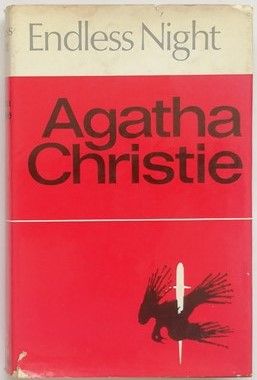
Nick had interjected the thought that Pale Horse was the only Christie from the 60’s that deserved a place on the draft, but he had forgotten an earlier set-to where Brad declared his antipathy for a certain title, and the others ganged up on him! Sure enough Sergio’s first pick at NUMBER SEVENTEEN is Endless Night (1967). Sergio feels the book deserves attention because, at this late stage in her career, Christie is trying something new and largely succeeding. She uses a trick from the 1920’s and modernizes it. It is a genuinely creepy story and commentary on modern disaffected youth. She is not an author known for scene setting, but this book works.
Brad has never been a fan. Michael is a fascinating character, but this is a case where Christie simply doesn’t provide enough red herrings to distract us from the truth. The middle section seems long and flabby. But Brad acknowledged the popularity of Endless Night among fans and said that, like the book that inspired the narrative trick here, it makes for a compelling re-read in order to see how carefully Christie laid the foundations for her trickery. And so he declined to veto. Nick read this book for the first time for this draft and really enjoyed it. It’s amazing that she could write this at the point of her career where she was. This book has great atmosphere, and once again she uses the supernatural well, with the Romany curses.
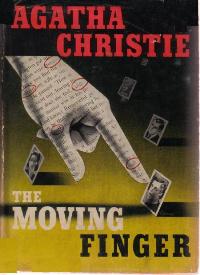
It was Brad’s turn again, and for NUMBER SIXTEEN he chose The Moving Finger (1943). The town of Lymstock is one of his favorite settings in Christie, and the whole fish-out-of-water story of Nick and Joanna Burton mingling with the inhabitants is delightful. Each villager comes to life and adds something to the proceedings, and who doesn’t love a good anonymous letters mystery, especially when Christie gets her hands on it and clues things so well. When it comes to this book, people tend to complain about two things. First, there’s the transformation of Megan Hunter at the end: Brad recently listened to the podcast Tea & Murder, where Christie biographer Laura Thompson spoke about this point and reminded listeners that Megan was a more than willing participant in the process and that the romantic feelings this event generated in Jerry could have more to do with Megan now appearing like a grown woman rather than an infantilized moppet. The second issue people take with this book is the dearth of Miss Marple. There’s no getting around it, but the argument that, had Miss Marple entered the scene earlier, she would have seen right through the killer’s plan is a compelling one.
Nick is more of a Poirot fan than a Marple devotee, but he enjoyed The Moving Finger. Like Brad, he is a fan of Jerry Burton and doesn’t mind the spare use of Miss Marple. Plus, the novel contains one of favorite twists – that of a person being killed not because of what they saw but what they didn’t see. Sergio hadn’t put this one on his list. It’s not one of his favorites, and it made him worry that some better-liked Marple novels wouldn’t make it on the list; still, he declined to veto.

In the first of back-to-back turns, Nick chose Towards Zero (1944) for NUMBER FIFTEEN. He considers it an underappreciated gem and a stunning combination of puzzle and rich characterization. Like one of his favorite films, Paul Thomas Anderson’s Magnolia, this is a tale of people converging to a center point and being changed by shocking events. It contains a brilliant murder method by elevator sign. Nick confessed a greater fondness for Superintendent Battle than he feared others shared and wondered why Christie abandoned him after this novel.
It turns out that Nick didn’t have to work hard at convincing the others. Sergio had put this at #16 and Brad at #14. Both agreed that the opening is strong, and the situation with Battle’s daughter works beautifully as a foreshadow to the mystery proper. And Brad pointed out the fine example of Christie tucking a verbal clue into casual conversation: here it happens when Kay reads everyone’s palm.

For his NUMBER FOURTEEN selection, Nick chose Evil Under the Sun (1941). He feared this may strike others as a little low, but his controversial opinion about the book is that it’s a top-notch puzzle, but the extra characters are dull. Nick went on to opine that for his screenplay adaptation, Anthony Shaffer strengthened these “weaknesses” in the book. The climactic revelation Poirot makes about Arlena’s character never grabbed him like it does other readers.
Nick’s opinion divided his fellow GMs. Brad had placed the book higher on his list, while Sergio had excluded it altogether. While he finds the novel perfectly enjoyable, it not only rewrites the tighter “Triangle at Rhodes” and has too many similarities with the far superior Death on the Nile. And while Sergio admitted that in a few ways, like in the number of characters, it improves upon Nile, there are so many great books that won’t fit on this dwindling list that he hated to waste a position on this one. And yet, he didn’t veto it.
Meanwhile, Brad seemed to like the novel more than the other GMs. He did not find the characters dull; in fact, he very much tends to enjoy the “extraneous” characters Christie inserts in her vacation novels, like this one, Nile and A Caribbean Mystery. The Gardeners and Emily Brewster are fun; Miss Brewster even supplies Poirot with an excellent clue. The story of Linda Marshall is poignant, and the killers here are particularly vicious. As far as Brad’s concerned, there’s room for both this and Nile on the list!
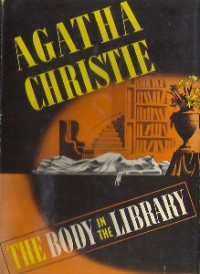
Sergio played The Body in the Library (1942) for his NUMBER THIRTEEN choice. He loves how the clever and contemporary mystery belies the title, which sounds like a parody of a creaky old crime novel. He confessed that this is the title he wished had been played instead of The Moving Finger. This has the perfect opening at Gossington Hall but then moves out into the larger world where Miss Marple can go head to head with the local police.
It turns out that this is one of Nick’s favorite Marple novels for all the reasons Sergio said. Brad feels a bit differently, loving the opening but wishing the book had remained in St. Mary Mead. And as much as he likes to ignore the criticisms of naysayers like P.D. James, there are elements of this murder plot (i.e., the peroxiding of the second victim) that one can’t spend too much time thinking about or the whole plot falls apart. Still, as Sergio gave Brad The Moving Finger and Nick loves this one, after much deliberation, Brad decided to save both his vetoes for the potential bloodbath to follow in the top half!
This proved wise because Brad’s selection for NUMBER TWELVE proved contentious!

Cards on the Table (1936) is a favorite of his, even if it hasn’t cracked his top ten. Brad loves the elegance and symmetry of the plot: four detectives vs. four murderers. When he first read it as a kid, he knew nothing about bridge. And now that he plays, his familiarity with the game only improved his relationship with the book. In a vague way, it foreshadows And Then There Were None with its evil mastermind manipulating the lives of undiscovered murderers. Christie works with a super-small list of suspects really well, palming off suspicion here and there. And as the investigation progresses, she expands this world to include Rhoda Dawes, a favorite early female character of Brad’s. Plus, there is a ton of Ariadne Oliver, and she is in her glory here. Brad loves how she shouts the name of the killer right at the start, but as it’s based on her feminine intuition, nobody takes her seriously. (This isn’t the first time Mrs. Oliver will get the right answer for the wrong reasons.)
Sergio had a similar experience to Brad in nearly every way, but Nick dreaded the placement of this title. He understands why, in the introduction, Captain Hastings is said to have found the book deadly dull. Nick finds it arid, despite the fun of Mrs. Oliver. He prefers tangible clues rather than the psychological approach Poirot takes. And Colonel Race is wasted, opting to leave mid-investigation and never return. (Maybe he found it boring, too!) But Brad’s enthusiasm proved too much for Nick, and he decided not to veto.

Turns out Nick had an ulterior motive: he hoped his fellow GMs would remember this kindness after he played The Hollow (1946) as NUMBER ELEVEN. Nick had read this in conjunction with the All About Agatha podcast and had the preconception that the book had a weak puzzle. Instead, he found it to be a great mystery. He loves the central triangle and the rich characterization of the family. The idea of a conspiracy conceived in the moment to protect the murderer is brilliant, but Nick wished that Poirot wasn’t in it.
As it turns out, Nick had misread his fellow GMS! Both Sergio and Brad adore this book. Sergio had it at his #15, and Brad had placed it at #6. Neither player intended to veto!
Sergio waxed about Christie’s often-used strategy of making the murderer the person who first came up. It works here, even if Gerda does not seem clever enough to substitute guns. And Brad, who has directed the play with its innocuous detective, is thrilled that Poirot is here. Nobody else is so deserving of this game of wits. Brad also loves how this book serves as a companion piece to Five Little Pigs, with its central romantic triangle and its thematic focus on the artist. The endings of both books pack an emotional punch, and here Henrietta’s final actions are both ironic and hopeful.
Moving into the Top Ten . . .

For NUMBER TEN, Sergio chose a 1953 novel that he knows to be one of Brad’s favorites: After the Funeral. Sergio claimed that it had a brilliant cleverness to it, with a wonderfully dysfunctional family, but it’s blatantly unfair when it comes to the painting clue. Sergio also wondered whether the scene where “Cora” goes home on the train is also cheating! Poirot may come in a bit late, but in his guise as M. Pontalier from UNESCO, he is magnificent.
Nick was perfectly fine with this title at this placement. While Brad, who had placed it much higher on his list, was willing to keep it here to honor his pledge for a copacetic draft, he had a few things to say to Sergio about these allegations of unfairness!! Brad sees this as the last well-clued novel of Christie’s career. The smell of paint is a fair clue; so is the scene where “Cora” (who is never identified by name) goes home by train. The wax flowers on the green malachite table is a classic Christie clue, as is its follow-up comment during the casual (but angry) conversation amongst the relations about dividing Richard Abernethie’s spoils. Brad even loves the reflection clue (and the fact that Helen is silenced without being killed!) The only unfair thing about this novel is the family tree at the beginning, which places an asterisk unfairly beside a certain person’s name. Otherwise . . . sheer perfection!
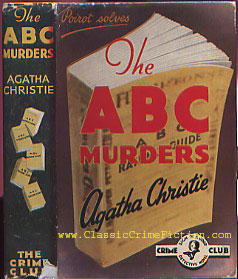
In the NUMBER NINE position Brad chose The A.B.C. Murders (1936). A serial killer chooses to match wits with the greatest detective in the land, and what Brad loves is that Poirot proves he is the greatest detective in the land by deducing the true reason why A.B.C. sent those taunting letters to him rather than the police. Another high concept Christie, featuring the “forest for the trees” theory of hiding a murder.
Sergio had placed the novel even higher on his list, at #2! It feels like the Christie version of a Philip MacDonald novel – until the end when it goes full Christie. You can’t really compare it to the other titles; it’s unique, and yet it’s more plausible than some of the other high concept solutions we will talk about. Nick also loves this and thinks it’s in the right place. The bifurcated narrative doesn’t work as well for him, but the focus on Alexander Bonaparte Cust is very interesting.

Nick chose Murder at the Vicarage (1930) for the NUMBER EIGHT position. This is a favorite of his: it includes one of her best uses of the double bluff of circling back to the original suspect. Plus, St. Mary Mead really comes to life here as in no other book. He loves the narrator/vicar Leonard Clement and all the suspects.
Sergio disagreed strongly; in fact, he didn’t have it on his list and now bemoaned the fact that, between allowing this and The Moving Finger on the list, there would be no room for 4:50 from Paddington. He disagreed about this book being a good introduction to Miss Marple, since she is different here than in the stories that came before or all the novels and stories that came later.
Brad was worried about different matters. He felt that Vicarage took the basic plot of The Mysterious Affair at Styles and improved upon it in almost every way; still, it was overlong (and even Agatha herself agreed with him!) But Brad was more worried about the lack of space left on the list: there were seven spots available and seven titles that he felt MUST be on this list! Still, with great trepidation – and because Brad, too, loves Leonard Clement and his wife – he let Nick have his Vicarage and put his faith in the power of the Christie-verse!

For NUMBER SEVEN, Sergio played Death on the Nile (1937). Nick immediately VETOED it, meaning we would see it again. Sergio replaced it with The Murder of Roger Ackroyd (1926). His first impression of this classic remembering the trick but not much of the plot. He still feels this way today, but less so. He now sees that, from early on, Christie creates an intangible atmosphere of something being “off.” The relationship between Poirot and the Sheppards is fantastic: creepy in a way that the reader doesn’t even understand until late in the game.
Brad was fine with this placement. The novel is technically brilliant but not so compelling that it needs to be higher. The Sheppards are by far the best characters, while everyone else is pretty standard fare. Still, it’s another of those novels that is even better as a re-read. Nick bought into the cultural touchstone this book has become. This is the one Christie that makes most of the Best Mysteries of All Time lists. But re-reading it, for him, was a slog: he didn’t care about any of the other characters. (So it seems we were all on the same page!)

Brad selected Crooked House (1949) for the NUMBER SIX position. For both Nick and Sergio, it could have gone higher, so we spent some time having a little love fest about this book. Brad and Sergio acknowledged that, as with many of Christie’s “high concept” solutions, she did not originate the idea – but she did it better than those who had come before. It follows Taken at the Flood, a favorite of Sergio’s and another tale about a large, dysfunctional family – but with a more realistic form of dysfunction than in your old-fashioned country home mysteries. Brad is fascinated by Aristide Leonides, one of the most significant immigrant characters in the canon. He falls into that category of benevolent tyrant, along with men like Gordon Cloade and Richard Abernethie, who “ruin” their families with love and money.
The first time Nick read this, it blew him away. It’s a lean, mean little book, one of his five favorite Christie titles. He loves the setting of the little crooked house. Sergio agrees, seeing the novel as a superb dark fairy tale. (It was his #4.) Josephine is compared to a changeling, and it is her “curse” that nearly destroys them all. And Sophia is the opposite side of that coin, a true heroine who rises to the occasion to lead her family back to financial and emotional health.
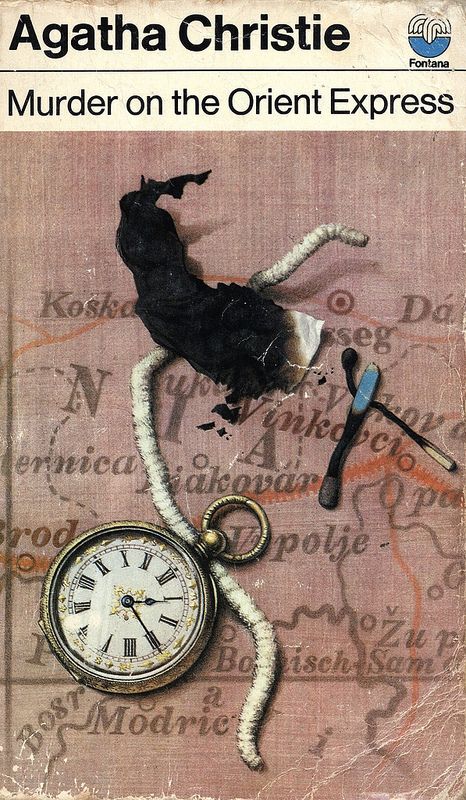
For NUMBER FIVE, Nick chose Murder on the Orient Express (1934), a book unlike any other that she wrote. It’s a totemic work in that it is a cornerstone of her bibliography and is recognized beyond its initial appearance as A Christie Novel. It was Nick’s entry into Christie through the Lumet film.
Brad once referred to it as almost honkaku in style, a grand tale of vengeance that plays out as a traditional murder mystery. It was his second Christie read and his first Poirot, and he remembers how his mind was blown, even as a kid, when the solution was revealed. How could a mystery end like that?!? Sergio had it a bit lower, but it’s one of the big high concept titles you can summarize in a few words. Kind of the ne plus ultra of Golden Age Mystery – basically preposterous, but it fits in with and uses classic conventions beautifully.
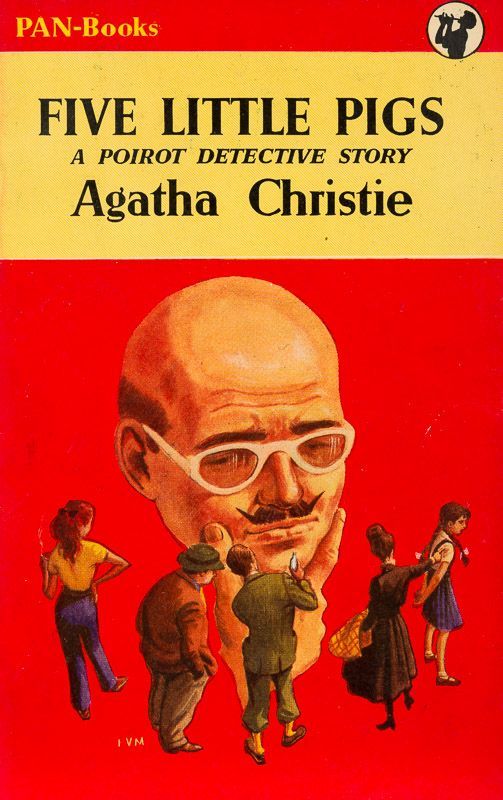
Sergio chose Five Little Pigs (1942) as his NUMBER FOUR. It’s her best “murder in retrospect” novel by far, (and we all agreed that the American title was far superior to the British) with strong characters, a fantastic use of the trope of the “woman on trial” and an altogether powerful story. Its functions both as a terrific mystery and novel.
Brad loves this book. It was his #2. Christie sacrificed none of her puzzle-making genius when she devoted so much of her energies to crafting these characters. The verbal clues are outstanding, and everyone who loves a good false solution is rewarded here with one of Christie’s best! (How heartbreaking it would have been if Angela had been the killer. Interestingly, Ellery Queen would do something similar only a few years later.) Nick has had friends who never heard of the book!!! What a shame, as he considers this a profoundly affecting work.

In the NUMBER THREE position, Brad chose A Murder Is Announced (1950). (Can we just allow some kudos that fourMiss Marple titles made our list?!?) This is the crème de la crème of Marple novels, the best-clued of her mysteries and a moving portrait of post-war village life. Even the emotional stuff turns out to contain clues because that’s just how the Queen of Crime rolls! Brad adores the characters, the humor (Edmund and Phillipa’s courtship dialogue could come straight out of a Paramount comedy) coupled with an underlying sense of tragedy, and the insight into this world and these people. Yes, Mitzi is a bit much, and yes, the presence of both Pip and Emma stretches credulity, and yes, Miss Marple’s use of voice-throwing at the end is ludicrous. But these are tiny caveats when compared to Christie’s accomplishment on her 60th birthday.
This was Nick’s first Miss Marple, and he loves it, too. The Pip and Emma stuff is too much, but the clueing is beautiful. He particularly loves the “She wasn’t there,” stuff at the end!
This was Sergio’s #3 choice. It’s the best Marple and one of Christie’s best books. When Murgatroyd dies, you are devastated, and you don’t always care about Christie’s victims. And the novel does an amazing job with its depiction of older women: the comfortable love between Hinch and Amy compared to the dangerous mutual dependency of Dora Bunner and Miss Blacklock. And then there’s Miss Marple: sensible, emotionally centered . . . and alone.
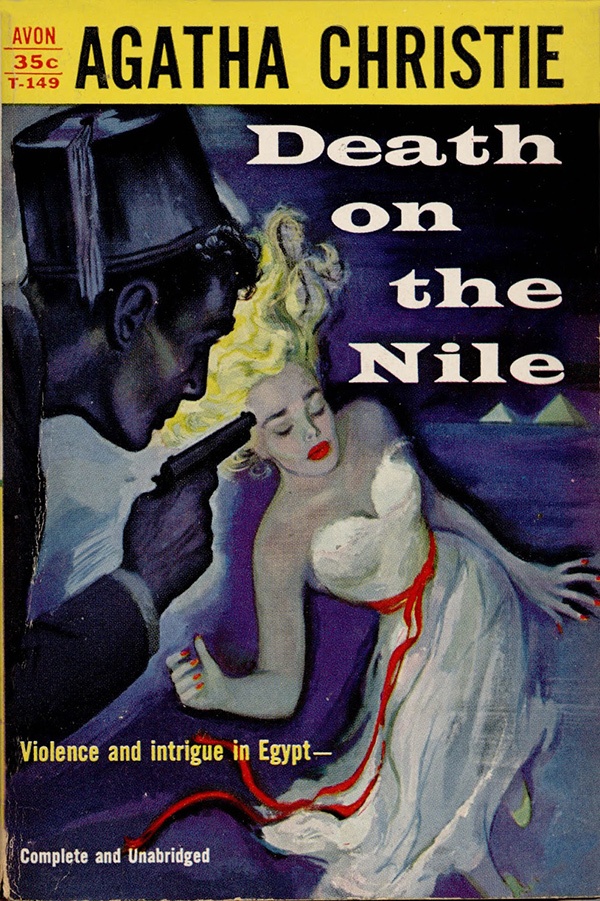
In the NUMBER TWO slot, Nick chose Death on the Nile (1937). He admitted that one of his goals was to get this book as high as possible on the list. It is her most epic book and his favorite Christie. The globe-trotting setting, the massive cast, all frame a brilliant romantic triangle.
Sergio thinks it’s a super clever story. There are disadvantages to epics – too long, too many characters – but ultimately it is amazing. Brad loves the huge cast (well, maybe not crewman Fleetwood, a suspect he always forgets!) and all those side plots and lesser romances that contrast to the blazing power of the central triangle. The book contains one of those scenes Brad loves in Christie, where she plants you somewhere – here, it’s a French restaurant – and shows you something that is true at the time and manages to send her readers in the wrong direction. This is a rare case of Poirot getting emotionally involved in a case – it does not happen on the Orient Express! – and his feelings for Jackie de Bellefort add a great emotional resonance to the proceedings. (NOTE: The three of us talked a lot about the film adaptations. Surely the 1978 version is the best by far, but none of them can capture all the glories of the novel.)
Drum role for NUMBER ONE . . . Sergio chose The Mystery of the Blue Train (1928)!
No, really, he didn’t. The choice was obvious: 1939’s And Then There Were None.

It’s not the most characteristic Christie, it’s simply the best. A grand experiment and a very bleak book. (Sergio admitted that he didn’t mind the “happy” ending of Christie’s play and the 1945 film as a counter to the novel’s bleakness. At that point, Brad would have thrown something at Sergio at this point if they hadn’t been talking online.) ATTWN hearkens back to Murder on the Orient Express in that both deal with people playing God. The concept could have become very boring, but it never gets boring.
Brad and Nick couldn’t agree more. It’s the Agatha Christie book that even non-Christie fans know about. One could argue that it’s not a traditional mystery, although in the end the killer plays detective and lays out the clues that reveal his identity. Brad couldn’t help paying homage to one of the book’s cleverest conceits, that after we have followed Vera more than any other character right up to her death and must therefore jump to the very wary conclusion that she must be U.N. Owen, Christie upends our expectations and turns the book into an impossible crime story with the placement of a chair.
After the draft, we all shared our discards, those titles that we longed to play but sadly couldn’t fit in. Of course, there was some overlap, but I have to say that having seventeen titles out of my top twenty make the list filled me with happiness. The only books I wish I could have found a place for were Hercule Poirot’s Christmas, Peril at End House, and Mrs. McGinty’s Dead.
Sergio fared worst of all, losing six titles that he had hoped to play: By the Pricking of My Thumbs, Curtain, Ordeal by Innocence, Taken at the Flood, 4:50 from Paddington, and, like Brad, Peril at End House.
Nick had five titles: Three-Act Tragedy, Hercule Poirot’s Christmas, Ordeal by Innocence, Taken at the Flood, and, in a fit of picque, Murder in Mesopotamia.
I’m sure some of you also wished one or more of these titles had made your list – or maybe you have another favorite that you wish had made the cut. I look forward to hearing from you about what you would have included in your own top Christie list. Meanwhile, we have all discussed the matter, and the Three Amigos intend to return this winter with our third draft! Next time, we will be holding a super-draft of all fourteen Sherlock Holmes movies featuring Basil Rathbone and Nigel Bruce!
The game is afoot!
* * * * *
ADDENDUM
AH SWEET MYSTERY WIKI
Here are a few statistics and odd facts about this draft:
- Title placement by decade: 1920’s (1); 1930’s (7); 1940’s (8); 1950’s (2); 1960’s (2); 1970’s (0)
- Brad placed three 30’s novels, three 40’s novels, and one from 1950.
- Nick placed three 30’s novels, three 40’s novels, and one from 1961.
- Sergio placed 1 novel from the 30’s, 2 from the 40’s, 1 from the 50’s and 1 from the 60’s.
- Title placement by detective: Hercule Poirot (10); Miss Marple (4); Other series detectives (1) (This was Superintendent Battle, but he and Colonel Race appear in Cards on the Table, and Race also appears in Death on the Nile)
- Of the ten Poirot novels that were played, only one of them – The A.B.C. Murders – features Captain Hastings. It was played by Brad, who ironically dislikes Hastings more than any of the other GMs.
- Tommy and Tuppence are missing from the draft. The threat to play N or M became a running joke between us! Also missing are any of the political thrillers. Make of that what you will!
- Only two vetoes were played – and Nick played his to push Death on the Nile higher up the list (where it belonged). Thus, this became a very copacetic list. All three GMs will roll over a veto in our next draft; plus, Brad will roll over a veto override.
ANSWERS TO THE QUIZ
- Captain Hastings appeared in eight films. (The Mysterious Affair at Styles, Murder on the Links, The Big Four,Peril at End House, Lord Edgware Dies, The A.B.C. Murders, Dumb Witness, and Curtain) – Sergio got it right!
- Major Palgrave saw . . nothing. He had a glass eye and couldn’t see over Miss Marple’s right shoulder. But over her left shoulder he saw Tim Kendall, the man from his “photograph of a murderer”, sitting with his wife, Mollie. – No one got this tricky question correct!
- Tuppence Beresford’s real first name is Prudence (her last name is Cowley). – Nick got it right.
- The five titles where an associate of Poirot’s turned out to be the murderer are: The Murder of Roger Ackroyd, Three-Act Tragedy, Death in the Clouds, The A.B.C. Murders, Hercule Poirot’s Christmas – Nick got it right with Three-Act Tragedy
- The Beatles are mentioned in Third Girl and At Bertram’s Hotel. – Sergio got it right.
- The Big Four – Brad got this right
- St. Mary Mead is the home of Katherine Grey in The Mystery of the Blue Train. – Brad got this right.
- Hastings’ wife’s maiden name was Dulcie Duveen. – Brad got this right
- Ariadne Oliver appears in seven novels. – Nick got this right
- Curtain submitted to Christie’s agent in 1941. – Nick got this right
And one last time . . .
THE AGATHA CHRISTIE DRAFT
FINAL LIST
- And Then There Were None (1939)
- Death on the Nile (1937)
- A Murder Is Announced (1950)
- Five Little Pigs (1942)
- Murder on the Orient Express (1934)
- Crooked House (1949)
- The Murder of Roger Ackroyd (1926)
- Murder at the Vicarage (1930)
- The A.B.C. Murders (1936)
- After the Funeral (1953)
- The Hollow (1946)
- Cards on the Table (1936)
- The Body in the Library (1942)
- Evil Under the Sun (1941)
- Towards Zero (1944)
- The Moving Finger (1943)
- Endless Night (1967)
- The Pale Horse (1961)
- Murder Is Easy (1939)
- Sad Cypress (1940)
 Ah Sweet Mystery!
This was such a great time! I am still surprised (and pleased) by how aligned our thoughts were on the Queen of Crime. Thanks for organizing, Brad! Looking forward to doing it again with Rathbone/Bruce – and then our Top 20 Ngaio Marsh novels after that, of course…!
LikeLiked by 3 people
Nick, I’m waiting for you to say yes to our joint podcast project: Nuts About Ngaio!
LikeLike
I had a great time and I do think it is a very good list. We had basically no disagreement about the top 10, which I think is pretty damn impressive, though I did get smacked around pretty good for daring to slightly criticise DEATH ON THE NILE (suddenly had images of getting an F in one of Brad’s classes way back when) 😆. Sorry I couldn’t turn you into believers of the greatness of BY THE PRICKING OF MY THUMBS … but it wasn’t exactly a shock!
LikeLiked by 2 people
Just so BtPoMT lovers don’t imagine that we gave you a hard time over this, Sergio, we did discuss that late Tommy and Tuppence novel for a while, and we all like the opening. I think the ending is eerie, like the movie Don’t Look Now! It’s just that the middle feels like a vast wasteland . . . or if books, like pastries, could have a soggy bottom!
LikeLiked by 1 person
I never expected it to make into the top 20 but I had to try a little bit. But a lot of great competition for a spot on that list 😁
LikeLike
Love this. And while it’s probably impossible to completely agree on a top 20 list (the middle part of Easy to Kill is to boring for me to put it that high), I think it’s an overall very fitting list.
LikeLiked by 2 people
Oh, and because I sometimes love to be a know it all: Hastings also has a blink or you’ll miss it cameo appearance in Evil under the Sun. When reading the question, I hoped this would be the tricky one. I got the Caribbean Mystery one wrong as well, though, and slapped my head afterwards.
LikeLiked by 2 people
You have to show me where that cameo is!! I can’t remember, and I can’t bring myself to re-read the whole book for that!!
LikeLike
It’s very early in the book. I only read this one in the German translation, so the name of the edition and page number wouldn’t help. But it’s before the murder. Poirots eavesdrops on a conversation and it’s mentioned, that he later justified this in front of Hastings by the fact, that it was about solving a murder. Hastings answered, that Poirot couldn’t have known this at that time, and Poirot basically conters, that given his ability to read the situation, he did know. (These are not exact quotes. I’m paraphrasing. But this is basically the scene.)
LikeLike
Since I’m currently on a run reading some Christie novels in English, that I have so far only read in German, I figured I could continue with Evil Under the Sun anyway and just bought the book. I searched for “Hastings”, and it’s the last paragraph of chapter 2. This is the quote:
‘Besides,’ as he explained to his friend Hastings at a later date, ‘it was a question of murder.’ Hastings said, staring: ‘But the murder hadn’t happened, then.’ Hercule Poirot sighed. He said: ‘But already, mon cher, it was very clearly indicated.’ ‘Then why didn’t you stop it?’ And Hercule Poirot, with a sigh, said as he had said once before in Egypt, that if a person is determined to commit murder it is not easy to prevent them. He does not blame himself for what happened. It was, according to him, inevitable.
Christie, Agatha. Evil Under the Sun (Poirot) (Hercule Poirot Series) (S.38-39). HarperCollins Publishers. Kindle-Version.
LikeLike
It was great fun reading this post, with some interesting tactical maneuvers. I am surprised Evil Under the Sun was not universally liked. I really enjoyed re-reading it earlier this year – the amount of early misdirection was impressive. Like you I would have liked to have seen Ordeal by Innocence in the top 20 – I would have happily given Murder is Easy the heave ho.
LikeLiked by 1 person
Evil Under the Sun is a tough one because some think it’s too much like Death on the Nile. We disagreed about the characters (one found them boring, one thought them better than DotN in some ways. It has long been in my top ten, so let’s blame the others.
However, I don’t think Ordeal by Innocence even came up in discussion until the discards. I dunno, Kate . . . I recognize that it’s a powerful novel, and I really love its warped views of adoption (something Agatha might have shared?!?), but it’s such a dour little book that I find it depressing and tend not to revisit it much. And the Phelps adaptation made me so very angry!!!!
LikeLike
For the most part, my personal preferences align with this list. There are four primary exceptions:
For all of its cleverness otherwise, the primary deception of MURDER IS ANNOUNCED is kind of ruined for me by the genre-prevalence of the “End House” concept— a non-fatal attack always points suspicions in an immediate direction for me. And the whole idea of what the culprit is trying to make the crime look like is too muddled in this book as well, so the plot is not only somewhat transparent, it’s somewhat confused. For me this all detracts for the rest of the admitted ingenuity.
And though it’s likable, I can’t give all that much credit to THE ABC MURDERS, given that the Chesterton story that preceded it not only introduced the basic deception concept, but is also surprisingly more richly and ingeniously clued in its few pages than Christie’s version is in a full novel.
And I still don’t understand THE HOLLOW. I realize that it’s more novel than mystery— and as such, it would probably never be among my top favorites – – but even still there’s something in there plot wise that I’m not “getting.” It’s as if my copy of this novel is missing a few pages…maybe it is.
For me, the one missing novel here is CURTAIN. It probably received too much fanfare when it was first released, but beyond its importance as Poirot’s last novel, it’s a more than solid puzzle plot, IMO, with a denouement which (much like that of the LAST OF SHEILA) plays out as a “best hits” list of detective fiction devices (and in particular, Christie devices). I really consider it one of the crown jewels of Christie’s career.
LikeLiked by 1 person
It was a fascinating experience to have three men with diverse tastes talking for six hours with the purpose of putting together this list. You make compromises. For example, I love both The Hollow and After the Funeral more than the others, but I accepted their lower placement because 1) I was happy to have them on the list, and 2) I could objectively recognize that other titles deserved to be higher. And then I probably like The ABC Murders least of the three of us, but I was the one who played it. I think I felt its uniqueness as a case for Poirot makes it important, and by playing it I could control it not getting any higher. This is part of what happens when you draft a list!!
As for Curtain, it never came up until the discards, although I’m certain Sergio wanted to play it for much the same reasons you mentioned. Nick has refused to read the book so far, so he wouldn’t have vetoed it. I’m not sure I could have vetoed it either if it had been played because I also recognize that 1) it’s important, and 2) there is much about it that is clever. But, to be honest, Curtain surprises me by how cold it leaves me. I seem to like Hastings less and less as time goes on (I think he is at his best in ABC). The prose style of the novel hearkens back to the 1920’s. The characters do not come to life at all for me, except for Poirot, whose method of finding justice is undoubtedly moving and important to his history. And I love the idea of an Iago-type killer; I think that’s a brilliant idea. Still, I was never going to play this, Nick couldn’t, and for some reason Sergio didn’t.
LikeLiked by 2 people
My feeling was that only beli.ged in the back 5 but I had to play Endless Night when my first turn came as I knew it otherwise might not and really wanted it in there – there were a lot of Poirots on that list so out it went when no one else before me chose it.
LikeLiked by 1 person
I can’t disagree with your criticisms of Curtain, though the weaknesses in characterization don’t bother me as much as they do for many other people, and I’ve always been pulled into the “symmetrical nostalgia” of the story (the whole returning to beginning concept…perhaps less a tribute to how it’s delivered than to my own personal need to find such symmetry).
As for the plot itself, I see it as an ultimate Christie tale, but less because of the high concept of “________ did it” (as you know, I’m not all that impressed by high-concepts themselves, but by how she pulls them off). And it’s not the “Iago murderer” concept that impresses me so much either. Rather, I think it’s because I find the plot a dazzling combination of And Then There Were None, Hercule Poirot’s Christmas, The Murder of Roger Ackroyd, Sparkling Cyanide, Mrs. McGinty’s Dead, Death on the Nile, and probably several others.
I suppose whereas I might consider A Murder is Announced a mediocre plot beautifully executed, Curtain is a brilliant plot that is admittedly imperfectly executed.
LikeLike
What a wonderful list, and I love the transparency of the selections. A Murder is Announced is a worthy choice (considering that I baked Delicious Death for my birthday this year — and it’s very good.) I do have a fondness for N or M, but it is a lightweight (and my most recent acquisition in dj!)
I wish Mrs. McGinty had made the list, but that’s a small whinge in a great achievement.
LikeLiked by 1 person
Jeffrey Marks, if you don’t make me a Delicious Death cake one of these days, I will NEVER forgive you!! N or M is my favorite Tommy and Tuppence novel, for what it’s worth, but that pair was never going to crack our Top Twenty. I do feel badly about Mrs. McGinty’s Dead, which I think is her funniest novel. Maybe I should’ve played that instead of Murder Is Easy.
Look at me, already second guessing!!
LikeLike
I’ll have to figure out how to get you a piece next time. This one was gone quick! The cake has a brownie consistency (with the cherries and brandy) and a dark chocolate/fudge icing.
I do love Mrs. McGinty, but I also love Murder is Easy. I’d have a hard time choosing just one.
LikeLike
What a delightful report, and draft! I have no real argument with the 20 titles chosen, which seem to represent a triumph of diplomacy and good taste. For myself, I’m a devotee of Hercule Poirot’s Christmas and Peril at End House (I love reading 4:50 from Paddington but I can’t defend the way the solution is, er, intuited), and would drop The Moving Finger and After the Funeral to make room. But that’s a very small quibble indeed, and I think the three of you did very well indeed. (Also, the reference to Murder in Mesopotamia made me laugh out loud — a fit of pique would indeed be the only excuse for nominating it!)
And your first choice is exactly the right one.
LikeLiked by 1 person
When you get into the titles you mention, it’s hard to find an argument for vetoing any one of them. Peril at End House has gotten duller and duller to me as time goes on. I can’t argue that it’s not clever, and Nick is a great character, but the rest seems blah to me. (Kind of like – dare I say it?!? – Roger Ackroyd). You would drop two titles that I would defend because of the sheer joy they give me in reading them; my compromise was in allowing them to sit lower on the list than I might have liked. But Hercule Poirot’s Christmas is, I think, one we all love and wish in retrospect had been on the list.
Yesterday, I listened to the podcast Tea and Mystery where Caroline Crampton waxed enthusiastic about Murder in Mesopotamia. There IS a lot to like about that book (the setting, the victim, the locked room aspect, that horrific second murder), but even Caroline had to admit that the solution flies beyond the pale!!!
LikeLike
Let me add, upfront, CHRISTMAS was never on my list but I recognise its strong points. But even as a kid the locked room scenario didn’t convince me so that really mitigated against it.
LikeLiked by 1 person
I like the locked room aspect more than you do (all that noise! all that blood!!), but it’s the identity of the killer that I believe is iconic! We’re talking about another high concept Christie here!
LikeLiked by 1 person
Definitely on my list of the five big high concept Christie books, no question. But we had to let some good stuff go, nature of the draft after all. But there is a reason why Carr was such a master of locked rooms and Dane Agatha was not 😁
LikeLiked by 1 person
What’s the big deal about about iconic high concepts? In themselves, they’re no sign of genius at all, I assure you.
Try this experiment. Get ten of your students— reasonably bright but non-mystery readers— together for an hour brainstorming. Ask them to think “outside the box” and come up with a murder mystery solution that would surprise readers. Tell them not to be inhibited by details of the logistics of credibility, etc..
In just one hour, I’m pretty sure they will offer up the basic solutions of The Murder of Roger Ackroyd (Endless Night), Hercule Poirot’s Christmas (The Mousetrap), And Then There Were None, Murder in the Mews (or a Thor Bridge variation), Peril at End House (The Mirror Crack’d), maybe Crooked House. Sure, they light not come up with the Murder on the Orient Express, but they’ll still cover most of the high concept solutions. And this is a group of non-mystery reading high schoolers in one hour, not a community of brilliant mystery writers over a decade trying to outdo one another.
Even if Christie had been the first to offer the Ackroyd concept (which as we know she wasn’t), it would not be the high concept that would mark it as brilliant. Besides Chekhov’s use of it in— what? 1844?— that concept was probably entertained by several nascent mystery writers within a week of the publication of A Study in Scarlet. No, what makes Ackroyd brilliant is that Christie not only provides strong clueing, but (as is frequently noted) she achieves narrative deception without false statements on the part of the narrator and (more impressively, IMO, and what is far less commonly noted) she provides a credible motivational justification for the narrator’s desire to deceive the reader. It was not the high concept that provides the brilliance, it is age mastery of the tricky logistics… the logistics that kept most other mystery writers from using the device earlier.
Which is why I see it as no mark against Christie that she did not pioneer nearly any of her high concept surprises. Others did them before, she did them RIGHT.
LikeLike
An excellent list, and very well argued!
My own personal Top 20 has an overlap of 14 with this one. Not only that, 4 of the missing 6 are in my positions 21-24! (Sad Cypress, Crooked House, The Murder at the Vicarage and The Pale Horse). The only ones in this list that I rank fairly lower are Body in the Library and Murder is Easy. The 6 I have in the Top 20 that are missing from yours are: Curtain, Sparkling Cyanide, Taken at the Flood, Hercule Poirot’s Christmas, Peril at End House, and… The Man in the Brown Suit (a probably indefensible choice, but I have a lot of sentimental affection for it).
LikeLiked by 1 person
Ha ha! We ALL brought indefensible choices to this project, Alejandro, so don’t apologize for TMinBS (well, maybe you could apologize a little!) Sergio didn’t let me keep Cat Among the Pigeons, and Nick and I warned him what would happen if he tried to slip in By the Pricking of My Thumbs. I’ve talked about Curtain in my comment to Scott Ratner above. As for the rest of your choices that we didn’t include, I think we all definitely wish there had been room for Hercule Poirot’s Christmas, and based on Sergio’s discards, I think most of your other titles were just below his Top Twenty.
LikeLiked by 1 person
Very enjoyable reading. I won’t argue the list as there is much of it to which I agree.
Question … over the years, has your list of favourites evolved? In my younger days and having never read the books yet, I immediately was drawn to Christie’s puzzle-oriented plots of the 30s including Orient Express, ABC, Death in the Clouds, Cards on the Table, Murder is Easy and of course And Then There Were None, etc. The hooks for many of those were irresitible. Now much older when I choose a Christie to re-read, it is likely one of the more character-driven books from the 40s or early 50s (e.g., Five Little Pigs, Crooked House, The Hollow, A Murder is Announced, etc.). Said more simply, would your list change if you were asked which of Christie’s books are you most likely to re-read?
LikeLiked by 1 person
I think the easiest answer to your question, Scott, is that nobody ever asked me ANY questions about Agatha Christie when I was first reading her as a child, including which were my favorites. I do know that I first read her in order to play armchair detective. I poured through the text looking for clues and invariably missing them. Right off the top of my head, I only remember solving Lord Edgware Dies (how come everybody assumes the ladies went where they say they went?) and They Do It with Mirrors (such an obvious clue!!!)
But now I read Christie for different things, both in order to appreciate her tactics and to derive pleasure from her characters and social commentary. And I don’t really try and solve any mysteries that I read. Like so many fans, I find the joy of being surprised much more thrilling than looking up in an empty room to cry, “I was right!”
And do my lists change? I was regretting one choice I made an hour after we finished the draft. That is part of the craziness of this game!!
LikeLiked by 1 person
Scott, my list of favorites has changed over the years. My appreciation for a few titles has increased. I hated, quite literally hated Cards on the Table when I read all of her books as a teen. I got caught up in the bridge and lost track of what was being implied. It wasn’t until I reread it as an adult that I understood it better and appreciated it. I was rather gung-ho when I read The Big Four (forgive me) as a teen, but now, it’s a much harder read. Same with Poirot Loses a Client.
LikeLike
Love this piece and will probably comment in piecemeal. Re: Cat Among the Pigeons, I truly think the story would have been better without Poirot. Julia Upjon and “Adam Goodman” should have solved it.
LikeLike
Pingback: THE RATHBONE/BRUCE SHERLOCK HOLMES SUPER DRAFT | Ah Sweet Mystery!
Pingback: MY AGATHA CHRISTIE INDEX (The Blog-iography!) | Ah Sweet Mystery!
Pingback: WHO’S AFRAID OF THE BIG GAD LIST? Announcing Our Next Draft | Ah Sweet Mystery!
Pingback: !TNEMECNUONNA DETREVNI NA (AN INVERTED ANNOUNCEMENT!) | Ah Sweet Mystery!
Pingback: “WITH A LITTLE HELP FROM MY FRIENDS . . . ” An Agatha Christie Starter Kit | Ah Sweet Mystery!
Pingback: MYSTERY MOVIE TALK: Three Announcements! | Ah Sweet Mystery!
Pingback: THE “GREATEST MYSTERY FILMS OF ALL TIME” DRAFT!!! | Ah Sweet Mystery!