“What more perfect image could Agatha have used for the disappearance of the world she had known? How wrong – how utterly wrong – were those who believed that Agatha Christie was a fossilized creature, suspended in an England that was forever 1932, comfortably taking tea in a firelit lounge: the very setting that Agatha herself was portraying as a sham.”
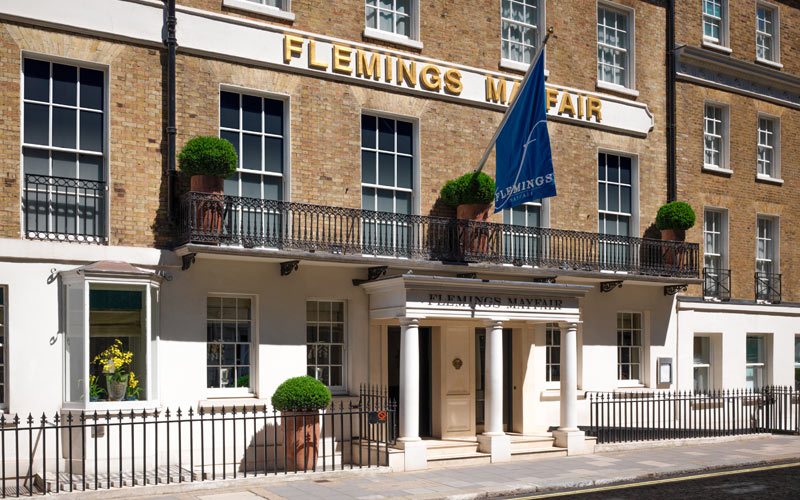
Biographer Laura Thompson suggests (almost) convincingly that At Bertram’s Hotel, published in 1966, was a sign that 76-year-old Agatha Christie’s books were not relics of the Golden Age; rather, she was accepting of both the changes wrought in the world around her and in the genre of which she had so long been Queen. For me, Bertram’s conjures up a place that evokes the joys of the Golden Age . . . and a mystery plot that does not. The cleverest thing about the novel is the way Christie uses the pleasurable associations of nostalgia as a trap, and if this had been a book solely about that, it might have stood out as a different sort of Christie – a thriller for Miss Marple that would have put Poirot’s The Big Four to shame.
But, like two contemporarily published Poirots – 1959’s Cat Among the Pigeons and 1963’s The Clocks, this book is a hybrid of thriller and whodunnit, and while the combination thereof in Cat, for me at least, works wonderfully, Bertram’s, like The Clocks, falls short as a mystery. Still, in The Clocks, Hercule Poirot merely sits in his armchair, waxing on about imaginary crime novelists. In Bertram’s, Miss Marple is on the move, and her travels through London and thoughts about her own private world gone by – many of them a mirror of Christie’s own memories – give this novel a charm that The Clocks lacks.
I’ll confess: I was not looking forward to this one. As a young man reading this for the first time, I was bored. Today, I’m here to tell you . . . there’s still a “meh” quality to much of this. But it’s an easy read nonetheless. It’s less woolly-headed than I remember, with some excellent minor characters and a lot of warmth and humor. But the mystery is just as weak as I recall – maybe even more so, as Christie does what nobody can usually accuse her of, and that is telegraphing exactly what’s going on pages and pages before each element of truth is revealed. Maybe she had been watching Alfred Hitchcock, who made his audience aware of where the danger lies long before the protagonist, and then the suspense comes from waiting to see when or if the truth will dawn before it’s too late. Sadly, though, the stakes here are never very high, and Christie isn’t Hitchcock – she’s Agatha Christie, the Queen of Puzzling Crime and we always hope she will be at her best.
* * * * *

The Hook
“On this particular day, November the 17th, Lady Selina Hazy, sixty-five up from Leicestershire, was eating delicious well-buttered muffins with all an elderly lady’s relish.”
Perhaps the seeds of a whodunnit are barely planted in the first four chapters, but the beginnings of the thriller are laid out with great charm.
Christie gives us a brief history of Bertram’s and paints it as a haven for those seeking a journey back in time. It’s the perfect place for Raymond West to send Miss Marple on a vacation, especially since, for once, this is exactly where Miss Marple wants to go. (Oddly, this time it isn’t Raymond but his wife Joan who precipitates this trip.) Miss Marple wants to revisit a journey she took in her youth with a favorite aunt: a round of shopping, a comfortable room, and some authentic seed cake. It turns out that Bertram’s still has all of this and more; in fact, it gives discounts to all the elderly ladies and gentlemen seeking a similar experience. And this immediately puts Miss Marple’s nose out of joint, for reasons she cannot quite determine. After all, why shouldn’t a grand hotel cater to “the upper echelons of the clergy, dowager ladies of the aristocracy up from the country, (and) girls on their way home for the holidays from expensive finishing schools?”
It’s a delicious question – what is wrong with Bertram’s Hotel? – and it would be nice for Christie to let it lay there for a while as we travel around the place, observing Lady Selina and her ilk overeating and people-watching, snooping around for a little domestic drama to get our mystery-loving blood racing. But in Chapter Four, we are introduced to Inspector “Father” Fred Davy and a committee of policemen who are looking into a huge and mysterious crime syndicate. As various banks and trains are being held up, witnesses keep popping forward with information about someone highly respectable – perhaps a judge or a cleric – who seems to be involved. And yet these men all have alibis. Davy figures that the headquarters for this racket must be someplace equally respectable, someplace where those above reproach may reside, someplace where money can be laundered behind mountains of cakes and scones and sandwiches.
Anyone got a guess?
As for the “traditional” mystery that plays a part in At Bertram’s Hotel, the one where the murder occurs at the end of Chapter Twenty, we meet Bess Sedgwick and Elvira Blake, and while there is a nice bit of tension as to the situation of a daughter separated nearly at birth from her mother who finds they are staying at the same hotel, we have no idea yet what is in store for us. Instead, we trust to Christie to make something of this situation that will be as delicious as scones and sandwiches and cake.
Ah, well . . .
Score: 6/10
The Closed Circle: Who, What, When, Where, Why?
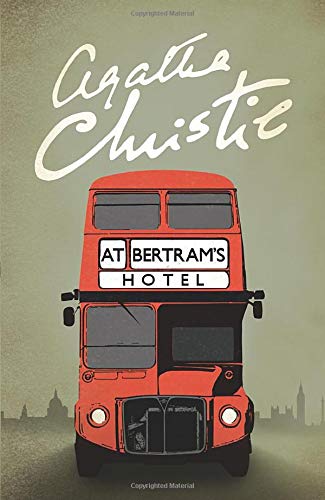
Who?
“Agatha’s sister Madge . . . always knew her own mind. She was as like (her father) as she was her mother, very much the half-American with her dry and limber wit, her lax disregard for convention. Unlike Agatha, she felt no need to behave like a ‘good’ girl and nobody thought the worse of her for it. She was Bess Sedgwick in At Bertram’s Hotel – impatient, adventurous, compelling – whereas Agatha was Bess’s daughter Elvira: quiet, compliant, infinitely complex.” (Everything I quote in this section comes from Laura Thompson.)
Bertram’s has quite a large cast; Wikipedia lists twenty-seven characters. My Pocket Book edition lists only fourteen: I assume this is meant to comprise “major” characters, although I don’t see Lady Selina Hazy, Mr. Robinson or Robert Hoffman as fitting that category. Really, though, Bess Sedgwick and Elvira Blake are the only two essential characters in this plot. As Thompson claims above, they seem to have found some of their inspiration in the two Miller sisters, Madge and Agatha. To my surprise this time around, I found Bess underwhelming: after a grand entrance, she is in the book surprisingly little. We are told a lot more than we are shown about what an extraordinary character she is.
One thing I did notice this time around: we’re set up to care about the fortunes of Miss Elvira Blake, but Christie, who I think portrays young girls and women especially brilliantly, has created someone so cold and unscrupulous that she’s hard to know or like. “(Elvira) has had every advantage, but she kills and lies without scruple. In the eyes of Agatha and Miss Marple, she is irredeemable: a sad fact, but a fact.” Still, Elvira – or what Christie is trying to portray through Elvira – is one of the strongest aspects of this novel. While she is less endearing than the girls of Cat Among the Pigeons or even Josephine Leonides, she is far more convincing a young person to me than the “swingin’” young ladies who appear a year later in Third Girl, and she continues to fulfill Christie’s mission to prove that every class, type, age, and rank of person is capable of evil.

“Agatha . . . had always known the wretchedness of which people are capable . . . She understood that although children may appear sweet and innocent, they are capable of evil, and adults are capable of evil towards them. This was the kind of thing that she wrote, without comment and without the need for comment. It was her subject matter. And in her old age she saw a link between the naivety of the modern world – its politicized belief in the perfectibility of human beings – and its love of ideology, anarchy and violence.”
I have much more fun with the wealth of minor characters, especially the dithery Canon Pennyfather, the hungry Lady Selina, and Elvira’s friend Bridget, who does more to humanize her pal than anything else in the novel. And there are all these fun cameo appearances by other people that enliven the narrative, including the lawyer Richard Egerton’s interview with (and sharp appraisal of) Elvira and the attempt by Canon Pennyfather’s housekeeper and Archdeacon Simmons to locate him.
Inspector Davy makes for a charming policeman d’histoire. Coming so late in Christie’s career, it’s interesting that she takes much time to present what a fine policeman he is, and he resembles a great many Scotland Yard veterans who were the leading protagonist in the mysteries of Christie’s compatriots. We don’t get much in depth knowledge of the many employees of Bertram’s. The reason for this may be obvious: Mr. Humfries, Henry, Miss Gorringe and the rest are engaged in a criminal conspiracy. But since this conspiracy is barely hidden, despite Davy’s grand announcement at the end, one wonders why we couldn’t have had a bit more of their inner thoughts. And then there’s race car driver and two-timing roue Ladislaus Malinowski, little more than a leather-jacketed cliché, and probably my least favorite character. We are told time and time again what a bad egg he is, but frankly he appears too little to bear the weight of villainy that this plot asks of him.
What?
In his 1965 review for The Guardian, author Anthony Berkeley judged the denouement of Bertram’s to be too far-fetched to make this “major” Christie. Fair enough – but then Berkeley goes on to say: “But does the plot matter so much with Mrs. Christie? What does matter is that one just can’t put any book of hers down.”
This, to me, seems like the critical kiss of death. We can argue all you like about Christie’s characters, her social commentary, or the quality of her prose. What most of us agree on is the immaculate brilliance of her plots. People argue that Death on the Nile has too many characters, that The Hollow shouldn’t have included Poirot, that And Then There Were None is too cold and creepy. Sure, these arguments are nuts, but even if they were true, we’re still talking about three gorgeously plotted novels here.

That is not what we find at Bertram’s Hotel, but for a while the plot putters along quite pleasantly as it looks for a place to settle and flourish. We follow four different strands: Chief-Inspector Davy’s investigation of a huge crime ring; Canon Pennyfather’s misadventures; Elvira’s mysterious activities following her return from finishing school; and Miss Marple’s London vacation. Every so often these strands interweave, largely due to the fact that Miss Marple seems to be in the right place at the right time: at afternoon tea, when both Bess and Elvira enter; in the writing room, when Bess talks to Michael Gorman; at the Army-Navy store for lunch, where Bess is having lunch with Ladislaus Malinowski; at a random tea enclosure in Battersea Park where the race-car driver is having another tete a tete, this one with Elvira; and up late at night to observe “Canon Pennyfather” emerge from his room next door to her own.
Frankly, all these “opportunities” on Miss Marple’s part strike me as lazy plotting. Here we have a detective specializing in closed-circle mysteries, and as soon as we widen the circle, Christie feels the need to drop Miss Marple into one appropriate spot after another to act as eyewitness. But this isn’t St. Mary Mead – this is London, one of the biggest cities in the world. A famous man like Ladislaus Malinowsky would know better than to plan assignations with a mother andher daughter in the neighborhood of the hotel where he could be spied by one or the other. A criminal mastermind like Bess Sedgwick would check the other chairs in the writing room and perhaps refrain from trumpeting her personal history with a former lover through the windows of a quiet hotel.
Chief-Inspector Davy is as quick as Miss Marple to sense that all is not right with Bertram’s Hotel. The middle section that chronicles his investigations brings him into contact with that good lady and even sends him to interview one of Christie’s most infuriating characters, Mr. Robinson. We first met Mr. Robinson in fellow hybrid mystery/thriller Cat Among the Pigeons, which I have already stated I enjoy much more. There, Robinson seemed to be a font of knowledge about the world of espionage; here, he is a financial whiz. Frankly, I don’t know what Christie sees in him, but Mr. Robinson has the distinction of straddling four strata of the Christie-verse: he will appear again in the stand-alone Passenger to Frankfurt and in the final adventure of the Beresfords, Postern of Fate. (Let’s just say that his presence will do nothing to raise the star of either book.)
During all of this, the “traditional mystery,” the part of the story involving Bess and Elvira, goes into stasis. Bess Sedgwick disappears for eighty-five pages, Elvira (minus a sighting by Miss Marple) for fifty. They reunite at the end of Chapter Twenty when Micky Gorman is shot. Elvira switches from a cool cucumber to a frazzled damsel-in-distress, issuing a string of lies about poisoned chocolates and attempts on her life that nobody, not Davy or the reader, can believe. The investigation into the murder is a rush job that takes forty pages. We suddenly realize that Miss Marple has been pushed to the sidelines for an awfully long time. She is present and strangely passive when Davy extracts the truth about Bertram’s out of Bess, who turns the tables on Miss Marple by trapping her into witnessing Bess’ confession of murder. And then Miss Marple reveals the truth about Gorman’s death with two pages of text to spare. A rush job, I tell you!
When and where?

“From the staircase, Father cast a jaundiced eye over the occupants of the lounge, and wondered whether anyone was what they seemed to be. He had got to that stage! Elderly people, middle-aged people (nobody very young) nice old-fashioned people, nearly all well-to-do, all highly respectable. Service people, lawyers, clergymen, American husband and wife near the door, a French family near the fireplace. Nobody flashy, nobody out of place, most of them enjoying an old-fashioned English afternoon tea. Could there really be anything seriously wrong with a place that served old-fashioned afternoon teas?”
Bertram’s Hotel is likely to inspire a great many fond memories for its readers. My own memory actually took place long after I read the book, during my first visit to London in 1983-4. It was just past New Year’s day, and as I was soon to depart for home, I set out on a snowy morning to walk the streets of Mayfair and do some shopping. Yet I had miscalculated how cold and wet snow could be, and at some point I found myself standing, laden with packages, in front of one of the city’s classic hotels – I think it was the Dorchester – and decided to stop for afternoon tea. I remember being relieved of my burdens and whisked to a big comfy chair by someone in fancy dress and then basking in the warmth as I feasted on sandwiches, scones and cake. (The only downside was the large, noisy group sitting next to me, a bunch of Texans who were soooo uncouth and kept braying about how much they had enjoyed Bath. Only they pronounced it “Baaaaaaaaaay-uth!”)
Bertram’s is what raises the score in this category a couple of points. Christie reaches into her own girlhood and produces just the spot that most of us associate with a cherished English experience of the not-too-distant past. The first chapter always makes me famished for smoked salmon sandwiches, currant scones and muffins dripping with butter. Frankly, I don’t think I would stay at a place like Bertram’s today because it is not a part of my nostalgia. But Christie makes her point well, and the understated luxury and comfort of Bertram’s Hotel is apparent on every page.
Too bad it’s all a sham.
Score: 4/10
The Solution and How She Gets There (10 points)

“Has anyone wondered, as I did, how Miss Marple knew that Elvira Blake was Bess Sedgwick’s daughter? I wondered whether she was just so bright that she deduced it or what.”
The quote comes from Dorothy Olding, the American literary agent at Harold Ober’s office, who had earlier complained in a letter of the transparent nature of the central mystery in The Mirror Crack’d from Side to Side (“. . . from the moment Mrs. Badcock was murdered I read with the fear that Agatha might be using the effect of German measles on pregnancy as the main clue!”). Her point about Elvira is well-taken: I have gone through the scene where Bess talks to Micky Gorman several times, and there is never a clear statement made by either of them that they were even married, and so it’s unclear why Elvira, who is engaged in her own love affair at the same age as her mother was, would jump to the conclusion that Micky had married Bess and fathered her. And while we’re at it, why didn’t Elvira first visit another lawyer before tackling her own Mr. Egerton to find out what she needed to know about inheritance laws? The only answer to that is that Elvira has to be smart about some things and dumb about others in order for us to have a murder mystery in our hands.
I’m supposed to be talking about Miss Marple here, and to be honest, I’m stalling a bit. The truth is that Miss Marple barely does any detection in this book because there’s actually very little to detect. Her intuition goes into overdrive when she beholds the nostalgic splendor of Bertram’s, but she puts nothing together about its true nature, and when Inspector Davy confronts Beth about the hotel being a crime ring, Miss Marple is the only one in the room who is surprised.
As for the domestic crime, Miss Marple is the lucky eyewitness to half a dozen scenes that give her information – or, at least, room for logical supposition – but her reasoning that Elvira, not Bess, killed Micky stems more from common sense than the intuition that she practices when there aren’t any clues available. (And here there most definitely aren’t any clues.) Unlike Hercule Poirot, who in Cat Among the Pigeons and The Clocks deduces the facts behind both the espionage and the domestic crimes, it is Inspector Davy who does most of the heavy lifting here on both cases, and Miss Marple’s gentle correction at the end comes out of that same notion we all felt when Elvira gave her evidence after the murder: this girl is lying!
Even though Miss Marple appears on far more pages here than in, say, The Moving Finger, as a sleuth this time around she feels reduced to a supporting player in league with the chief investigator. This is Davy’s show, and I’m tempted to pull a Hollow here and state that Miss Marple really isn’t needed here as a detective.
Score: 2/10
The Marple Factor
“’And what about the other one – the old lady?’ “’She’s sitting over there, by the fireplace,’ said Miss Gorringe. “’The one with fluffy white hair and the knitting?’ said Father, taking a look. ‘Might almost be on the stage, mightn’t she? Everybody’s universal great-aunt.’”

Even though I might argue that Miss Marple’s sleuthing powers aren’t necessary here – Inspector Davy had his own suspicions about Bertram’s all along and didn’t really need her affirmation –the elderly sleuth shines in another fashion. Throughout this book, Miss Marple comes across as an elderly Dorothy Gale, catapulted out of her homely village into a fantastic Oz-ian London that reminds her of all the best things of her past. Even as she voices her suspicions about Bertram’s Hotel, it’s a delight to watch her enjoy her teas and the comfort of her room and the high chairs, to observe her ordering her morning tea and having it served to her in bed. How can we not enjoy watching her bustle about London, commiserating over the old-time places that are gone and reveling in those that remain. Who knew that Miss Marple was such an enthusiastic shopper?!?
And then, like Dorothy in Oz, Miss Marple embraces the lesson she has learned:
“It seemed wonderful at first – unchanged you know – like stepping back into the past – to the part of the past that one had loved and enjoyed . . . But of course, it wasn’t really like that. I learned (what I suppose I really knew already) that one can never go back, that one should not ever try to go back – that the essence of life is going forward.”
This is the best that Christie offers us here: a chance both to wallow in a lovely past and to see our beloved Miss Marple embrace the future. It’s a different sort of thrill than watching her solve a mystery, but in this novel we must take what we can get and enjoy it.
Score: 7/10

The Wow Factor
. . .
There isn’t much about At Bertram’s Hotel to wow us except for the hotel itself – and for the fact that we learn that Miss Marple’s mother was named Clara. You all must know that Agatha’s mother was named Clarissa. Make of that what you will. As for me, I’m giving it five points.
Score: 5/10
FINAL SCORE FOR AT BERTRAM’S HOTEL: 24/50
 Ah Sweet Mystery!
I agree with your review and cannot imagine ever re-reading this one. I find it interesting that the core idea behind many of the late Christie novels was an interesting one … only for each book to get lost in its execution. For example:
The Clocks – Poirot solves a case involving a corpse found in a blind woman’s home, surrounded by several clocks that all stopped at the same time.
At Bertram’s Hotel – Miss Marple stays at a glamorous London hotel and becomes involved in a case of forgery, theft, and murder.
By the Pricking of My Thumbs – Tommy and Tuppence investigate a mysterious old woman and her connection to a painting that seems to hide a sinister secret.
Hallowe’en Party – Poirot is called in to investigate a murder of a young girl who claimed she herself had witnessed a murder.
Nemesis – Miss Marple receives an unusual request from a deceased acquaintance to investigate a crime that occurred in the past.
Elephants Can Remember – Poirot solves a decade old case – an apparent double suicide of a wealthy couple.
Even the dreadful Postern of Fate – Tommy and Tuppence discover an old children’s book that alleges a past murder occurred.
All of these sound intriguing from sound bites like these on a book’s back cover and yet I am not going to re-read any of these ever (except for possibly Nemesis that I kind of like). I guess my point is that Christie didn’t seem to lose her ability to come up with a clever idea for a book. But her capacity to craft a tight, compelling mystery from that nugget is what faded.
LikeLike
You’ve stopped doing the rankings?
This is really the weakest Marple. Nemesis is diffuse, and Christie’s narrative grasp was shaky, but the basic plot, while a weak mystery, is mythic. Still, it shows Christie’s concern with der yoof of 60s Britten.
LikeLike
I really hate waking up as early as I tend to do, but “You’ve stopped doing the rankings?” is confusing me as a question! If you are looking for the actual list of titles with their rank, I decided to only include that a few times (after Sleeping Murder, 4:50 to Paddington and in my final wrap-up) just to save time.) Nemesis comes next, and yes, it’s a special case.
LikeLike
Yes – I agree with your review and cannot imagine ever re-reading this one. I find it interesting that the core idea behind many of the late Christie novels was an interesting one … only for each book to get lost in its execution. For example:
The Clocks – Poirot solves a case involving a corpse found in a blind woman’s home, surrounded by several clocks that all stopped at the same time.
At Bertram’s Hotel – Miss Marple stays at a glamorous London hotel and becomes involved in a case of forgery, theft, and murder.
By the Pricking of My Thumbs – Tommy and Tuppence investigate a mysterious old woman and her connection to a painting that seems to hide a sinister secret.
Hallowe’en Party – Poirot is called in to investigate a murder of a young girl who claimed she herself had witnessed a murder.
Nemesis – Miss Marple receives an unusual request from a deceased acquaintance to investigate a crime that occurred in the past.
Elephants Can Remember – Poirot solves a decade old case – an apparent double suicide of a wealthy couple.
Even the dreadful Postern of Fate – Tommy and Tuppence discover an old children’s book that alleges a past murder occurred.
All of these sound intriguing from sound bites like these on a book’s back cover and yet I am not going to re-read any of these ever (except for possibly Nemesis that I kind of like despite how it sags in the middle). I guess my point is that Christie didn’t seem to lose her ability to come up with a clever idea for a book. But her capacity to craft a tight, compelling mystery from that nugget is what faded.
LikeLiked by 1 person
Yes, Christie never lost the ability to hook us in. I will say that Bertram’s was far more readable -and far less “fluffy” – than I had remembered. The Clocks is maddeningly one thing that most Christies never were – dull. The rest on your list are deeply flawed, and once again I find myself furious at the publishers, who seem to have done nothing to help make these better books. I guess there comes a point where some authors are edit-proof.
LikeLike
“I guess there comes a point where some authors are edit-proof.”
Oh I can name several best selling authors off the top of my head who’s work shows a steady decline in quality the more success they have and I often wonder if their editor is incompetent, non-existent, or the author has simply become so invested in their status as a Best Selling Author that they have stopped listening to them.
LikeLiked by 2 people
Oh how I dreamed of staying at Bertrams as I read this story… until the end of course. But I always imagined that someday, there would be such an amazing time piece.
I’ll bet that somewhere in the world, there is. I stayed at a wonderful hotel in Kensington that reminded me of Bertrams. The teas were amazing… nothing short of spectacular. Room service was crisp, friendly and polite, but lacking bows and curtseys LOL.
I thought overall, it was a very good mystery too. Silly reason to kill someone imho, but if anything this is why people need the guidance of parents. Loved the character of Bess Sedgewick (Carolyn Blankiston did a smashing job in the Hickson version) and the contrast with Elvira. And who didn’t adore lovely Cannon forgetful… such a sweet old codger, lost and confused, but so instrumental in solving the case.
I rate Bertrams on my top 10 Christies.
LikeLiked by 1 person
That’s what makes the world go round, Lucy! It’s a more enjoyable read than Hickory Dickory Dock or The Clocks, which are arguably better mysteries. And that has to do with its charm.
LikeLiked by 1 person
I enjoyed the nostalgia factor of of At Bertram’s Hotel, and how that nostalgia turns out to be a trap, but my memory is that elements of the plot were a bit unconvincing. I own the Tom Adams UK Fontana edition, so I’ll probably revisit it at some point.
LikeLiked by 2 people
Pingback: RANKING MARPLE: Settling the Scores | Ah Sweet Mystery!
Pingback: MY AGATHA CHRISTIE INDEX (The Blog-iography!) | Ah Sweet Mystery!
Pingback: At Bertram’s Hotel (1965) by Agatha Christie – crossexaminingcrime