“’It’s impossible . . . The beautiful foreign adventuress, the international gang, the mysterious No. 7, whose identity nobody knows – I’ve read it all a hundred times in books.’ ’Of course you have. So have I. But it’s no reason why it shouldn’t really happen . . . After all – I suppose fiction is founded on the truth. I mean unless things did happen, people couldn’t think of them.’”
Yes, we’re talking about Agatha Christie today, but first let’s mention Edgar Wallace. From 1905 until his death in 1932, Wallace wrote novels (170+), short stories (957 of them!) and plays founded on the conviction that fiction need have nothing to do with the truth. His practice of dictating his writing on wax cylinders, often completing a novel in three days, accounts for his prolificacy. In 1929 alone, he published twelve novels! That same year, Agatha Christie managed one. Full disclosure: I’ve read the Christie, but as for Wallace, my slate is clean!
Forty-eight years after her death (and a mere 104 since her first publication), Christie is still a household name, whereas Edgar Wallace is all but forgotten. Maybe that’s what comes of writing too quickly. I can’t claim that Christie’s reputation has lasted based on the novel we’re discussing today, but . . . well, here we are! Agatha loved her thrillers, and I’m sure she read her fair share of Wallace – although maybe she stopped after he threw shade at her during her disappearance in 1926! Yet even after that, she paid amusing homage to him in Partners in Crime, her paean to the classic detective authors she had devoured in her youth (many of which are long forgotten). The story “The Crackler” begins with Tommy Beresford pondering over which sleuths he and Tuppence should impersonate next:
“’All the same, Tuppence, we do need a larger office.’ “’Why?’ “’The Classics,’ said Tommy. ‘we need several hundreds of yards of extra book shelf, if Edgar Wallace is to be properly represented.’ ’We haven’t had an Edgar Wallace case yet.’ ’I am afraid we never shall,’ said Tommy. ‘If you notice, he never does give the amateur sleuth much of a chance. It’s all stern Scotland Yard kind of stuff – the real thing and no base counterfeit.’”
Stern stuff, sure – but full of master criminals and massive conspiracies. Unfortunately, Christie herself wasn’t above such silliness! Most aficionados of Agatha tend to embrace her brilliant puzzle plotting and wonderfully eccentric sleuths, but we’re torn over her thrillers, of which she wrote far too many. A baker’s dozen of Christie titles, nearly twenty percent of her novel output, deal with matters best relegated to . . . well, to an Edgar Wallace novel. They were quick money, for Christie admitted that thrillers weren’t nearly as hard to write as a well-clued mystery.
None of these novels rank anywhere near my top half, although exception might be made for The Pale Horse (1961) which is an utter delight. However, there are aspects of the other books that I enjoy: the depiction of Hilary Craven and the final twist in Destination: Unknown; the middle-aged escapades of Tommy and Tuppence in N or M; the . . . um, um, um . . . oh, there must be more, I’m sure. At the same time, my three least favorite Christies – The Secret of Chimneys, Passenger to Frankfurt, and Postern of Fate – are thrillers. I find the motivations of the villains in most of these books to be ludicrous and the “stuck in their time” elements far more frequent. And while some of these books make fun reads, the truth is that while few could match Christie when it comes to writing whodunits, a great many people wrote better thrillers. And so, for the most part, I tend to leave these books alone.
There is, however, one novel that I felt I should revisit because I only read it once, a very long time ago, and I remember finding it rather clever. The Seven Dials Mystery, Christie’s sole contribution to the 1929 booklists, utilizes tricks that had already appeared at this early stage of her career, albeit in cleverer form, and she employs a trope of which I have grown rather fond over the years. Unfortunately, there’s no way to discuss this trope or my feelings about the book without SPOILERS. From this moment forth, you stand warned.
* * * * *

“That amiable youth, Jimmy Thesiger, came racing down the big staircase as Chimneys two steps at a time.”
With the opening line of The Seven Dials Mystery, Christie begins weaving her mischievous spell over the reader. We’ll get to that in a minute, but first the plot: Jimmy Thesiger, who throughout this adventure casts himself as its hero, is part of a weekend party at the mansion Chimneys, which we are revisiting four years after the novel The Secret of Chimneys. That earlier book was very much a political thriller, and a few of its main characters return here: Lord Caterham, the master of Chimneys, Lady Eileen “Bundle” Brent, his daughter, and Superintendent Battle of Scotland Yard, plus a couple of dull young men.
None of these people are in evidence at the start, however, because Lord Caterham has let the house out for the season to a steel magnate named Sir Oswald Coote and his wife. The couple have invited a horde of young people down for the weekend, including Jimmy and his pals Bill Eversleigh (who also appeared in Chimneys) and Ronny Devereaux, both of the Foreign Office. Everyone is rich and gay and extremely stuck in their time when it comes to servants and Jews and other foreigners. They’re not the sort about whom Christie usually wrote, and for this special occasion she adopts a tone somewhere between Wodehouse and Wilde which is actually quite amusing.
At the Cootes gathering, everyone lazes about except the servants, who exercise a grim control over the party. The greatest amount of energy expended by the upper-class concerns the problem of fellow guest Gerald Wade, who has a tendency to sleep in past all reasonable limits of etiquette. Jimmy and Ronny and Bill and Nancy and a girl called Socks devise a plan, prompted by Sir Oswald’s serious-minded secretary Rupert Bateman (known by Jimmy at school as Pongo), where everyone will buy an alarm clock and set it near Gerry’s bed after he has retired in order to force him to get up at a reasonable hour. Eight clocks are set, and they go off accordingly. But the plan goes seriously awry when Mr. Wade doesn’t wake up; you see, he is dead. And here’s a curious point: one of the clocks has been thrown out the window, and the other seven have been lined up on the mantlepiece!

Leave it to Christie to come up with a juicy country house murder tale – except she doesn’t. The Cootes’ lease is up and everyone disperses, some of them never to return. Instead, Lord Caterham and his daughter return from their travels, and Bundle, bored at the prospect of lazing about the countryside, decides to drive up to London. But soon after setting off, she manages to collide her car into a young man who has burst into the road. It is none other than former houseguest Ronny Devereaux, who manages to choke out a dying message in Bundle’s presence before expiring: “Seven Dials . . . tell . . . Jimmy Thesiger.” An examination of Ronny’s corpse reveals that, rather than being run over, he has been shot!
So now we’re on an adventure: Bundle teams up with Jimmy, and they are joined by Loraine Wade, sister to the first dead body, and Bill Eversleigh, with whom Bundle has a sort of chummy understanding. Their investigations lead to the discovery of a secret organization of seven people, all wearing masks with clocks on the face!!! So it’s to be a thriller, is it? Well, no, because this all leads our heroic trio to another house party given by government drone George Lomax (also found in Chimneys) where an eccentric international bunch whirls about and rumors of highly protected secret plans for super-strong steel abound. When an attempt is made to steal these plans, it seems like Christie is going for a country house mystery again!
Hovering in the background to support this idea is the stolid Superintendent Battle, everyone’s favorite Christie cop, but we must remember that before Christie stuck him in an actual murder mystery, Battle was forced to engage in a lot of silliness. When Bundle goes to Scotland Yard to consult him, Battle warns her off. When she meets up with him at Lomax’ party where he is providing security, Battle warns her off again. In short, for most of this novel, Battle plays the part that any GAD policeman plays, that of throwing cold water on the bright young things’ attempts at having fun.

And that is both the high point and the problem with The Seven Dials Mystery. From start to finish, the tone is one of high hilarity and an utter lack of seriousness. Two men are murdered, and a vital scientific discovery is endangered, and everyone is expending most of their energies in amusing banter and rounds of golf. What makes this impossible to dismiss outright is that most of it is genuinely funny. Here are two examples to show how Wilde-ian Christie could be:
EXAMPLE #1: Bundle goes to visit her aunt Marcia, the Marchioness of Caterham, a woman so much like Lady Bracknell I kept expecting her to spout off about handbags! Bundle wants an invitation to George Lomax’ party, and to do that she must convince Aunt Marcia of a newfound interest in world affairs. Her plan works beautifully:
“It occurred to Lady Caterham that her niece was really wonderfully improved. Had she, perhaps, had an unfortunate love affair? An unfortunate love affair, in Lady Caterham’s opinion, was often highly beneficial to young girls. It made them take life seriously.”
EXAMPLE #2: Terence O’Rourke, a charming Irishman who is a guest at House Party #2 and House Party #3, is commenting to Bundle on the propensity of Mr. Bateman, the secretary, to possess and dispense knowledge on every subject imaginable:
“’Tis a man like that that writes all those little paragraphs in the weekly papers. “It is not generally known that to keep a brass fender uniformly bright, etc.”; “the dorper beetle is one of the most interesting characters in the insect world”; “the marriage customs of the Fingalese Indians, and so on.”’ ’General information, in fact’ (said Bundle). ’And what more horrible two words could you have?’ said Mr. O’Rourke, and added piously: ‘Thank the heavens above I’m an educated man and know nothing whatever upon any subject at all.’”
So, yes, all these characters treat their servants as pets or slaves and disparage all foreigners but think Jews are quite exotic and drive like the devil from one house party or club to another and sleep until one, while the few who work are dismissed as pompous and dull or viewed with suspicion. As a youngster, I found the style here pompous and dull and the characters annoying. Now I’m a wiser man and find the proceedings very amusing, if amazingly trifling. But during my first read, I was quite taken with the novel’s triple twist of an ending. And here it is (SPOILERS):

Bundle believes that she is working with Jimmy and Loraine to bring down a malevolent group of conspirators called The Seven Dials Society. In reality – here comes Twist #1: – The Seven Dials is what we might call a benevolent conspiracy, which is bent on preventing crimes and doing good. If you think about it, what with the masks and the secret identities, the organization is really a progenitor for The Justice Society of America, a cartoon gang of super heroes who did not appear until the 1940’s! Except the Justice Society – along with its many successors, including the Justice League, Fantastic Four, X-Men, Avengers and Legion of Super-Heroes – all came together to fight injustice and save the world. But as the leader of the Seven Dials explains to Bundle, this group came together to fight boredom and ennui by using patterning their efforts to do good after creaky old thrillers.
Much is made of the identity of the mysterious leader “Number 7.” At one point, Bundle tells Jimmy : “There’s only one person I’m really sure of isn’t No.7 (and that’s) Superintendent Battle.” Voila! Twist #2!! Battle is indeed the head of The Seven Dials, and the other members include several of the folks Bundle had earlier suspected of evil, as well as her own beau, Bill Eversleigh!. I give credit to Christie here for tapping into the minds of the average reader, both for their willingness to embrace these mysterious societies in books and, more unfortunately, for their xenophobic attitudes toward non-English people. That’s not to say that Christie plays “fair” here. I take issue with the chapter where Bundle hides in a closet and eavesdrops on one of the Society’s meetings. Here, everyone talks like a spy in a Bullwinkle cartoon, and nobody discusses any of their issues clearly. It’s like . . . like they knew somebody was hiding in the closet eavesdropping on them (which they didn’t!)
Which brings us to Twist #3. Once the veil over the intentions of the Seven Dials is lifted, the identity of the true villains can come to light. Bundle doesn’t know it, but she has been working alone all this time, without loyal confederates at her side. Because “that amiable youth Jimmy Thesiger” is the real villain, or as Battle describes him: “He wasn’t an ordinary crook. He worked in Mr. Wad’es world, a kind of Raffles, but much more dangerous than any Raffles ever was or could be. He was out for big stuff, international stuff.”

Yes, even Jimmy has modeled his life on an Edgar Wallace story. Playing “an empty-headed young ass of the most brainless description,” he turns out to be, according to Battle, “a more utterly depraved and callous criminal (than I ever) met.” And at his side abetting him was Loraine Wade, such “a gentle little thing,” although Battle reminds Bundle of the Pentonville murderess who was equally sweet and managed to kill five children.
The unmasking of Jimmy as the surprise villain is barely clued: a burnt glove with teeth marks on it is the only signifier, since Jimmy had at one point shot himself and could not have removed the glove with his injured hand. Other than that, we are completely in the dark, and when Battle sums up the case to Bundle, he reveals information we had not been given and had no way to figure out before the end. But this is not the real problem. This, after all, is a thriller, and it can’t be bothered with clues. No, my major issue, if I may borrow from my friend Scott Ratner, is that this “solution” suffers from the complete absence of “sudden retrospective illumination.” The reader may jump in surprise at Jimmy’s unmasking, but he never stops to think, “Of course! That had to be the way it happened! Nothing else feels right.” Virtually anyone could have ended up the bad guy, and while the shock value of Jimmy’s villainy would have been lost, a more logical case could have been made for Pongo or Lady Coote or even that dullard George Lomax to have been the bad guy.
That said, it was great fun reading this the second time around with the truth firmly planted in my brain. We are presented throughout with Jimmy’s point of view, and it’s quite amusing how much Christie reveals about the man’s true nature while framing it in the guise of a vapid wealthy lay-about. In fact, while almost all of the contemporary reviews were negative, the writer from The Scotsman commented: “It is an unusual feature of this story that at the end, the reader will want to go back over the story to see if he has had a square deal from the author. On the whole he has.”
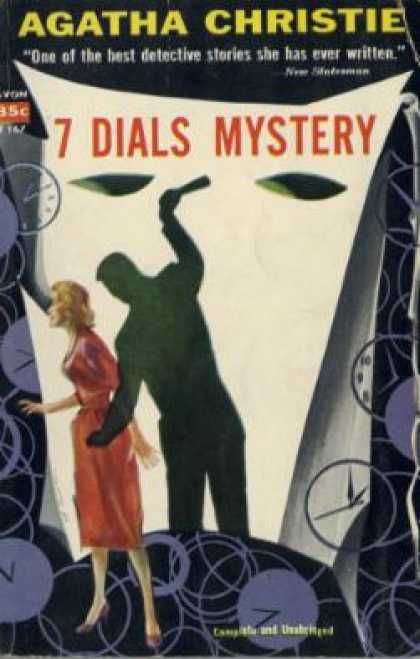
And it’s true that the prose abounds in clever little passages that can ultimately be read the right way around – if you want to re-read this book. It’s not nearly as satisfying as the experience of re-reading Roger Ackroyd, but it does afford a fan some pleasure. Take the opening of Chapter Ten, which takes place right after Bundle, Jimmy and Loraine have made a pact to investigate the murders of Gerry and Ronny:
“Now it may be said once, that, in the foregoing conversation, each one of the three participants had, as it were, held something in reserve. That ‘Nobody tells everything’ is a very true motto. It may be questioned, for instance, if Lorraine Wade was perfectly sincere in her account of the motives which has led her to seek out Jimmy Thesiger. In that, same way, Jimmy Thesiger himself has various ideas and plans connected with the forthcoming party at George Lomax’s which he had no intention of revealing to – say, Bundle.”
This, as I say, is all very clever, but the pleasure is mitigated by its lack of being grounded in circumstances that, by novel’s end, would have us smacking our heads with a surprise that is mixed with a sense of “I should have known this!”
After I read the book, I took advantage of My Year with Britbox to tackle the 1980 adaptation from London Weekend Television. It’s well over two hours long but still manages to move along at a fairly rapid clip. The cast, including Cheryl Campbell as Bundle, Sir John Guilgud as Lord Caterham, and James Warwick as Jimmy, is excellent throughout, and a great deal of the dialogue is lifted straight out of Christie, which works since the film is remarkably faithful to the book.

I’m glad I re-read The Seven Dials Mystery. While I don’t imagine I’ll ever have to return to it again, it gave me a chance to look at it afresh, and to give a thumbs up to the whole notion of benevolent conspiracies, where the appearance of a consortium of evil, whether organized or not, is illusory. The problem with the use of the trope here is that the motivations of the conspiracy are so loose and silly that they don’t match the high stakes around them. It’s hard to speak in detail about other, stronger examples without giving the whole game away.
One of the great early examples came from classic horror director Tod Browning, who in 1927 made a film with Lon Chaney called London After Midnight, based on a short story Browning wrote called “The Hypnotist.” Sadly, that film is lost, but Browning remade it as a talking picture in 1935 called Mark of the Vampire, starring Lionel Barrymore and Bela Lugosi.
I also want to call your attention to a 1960 French play by Robert Thomas called Trap for a Lonely Man. It inspired a host of TV-movies, including Honeymoon with a Stranger (1969), One of My Wives is Missing (1976) and Vanishing Act (1986). All of these are available to watch on YouTube. Vanishing Act was written by the team of Richard Levinson and William Link (The Adventures of Ellery Queen) who had previously dabbled in the conspiracy concept with an even better movie, Rehearsal for Murder (1982), also available to view. This was that rare thing, a genre film that was also a prestige television production. The cast includes Lynn Redgrave, Robert Preston, Jeff Goldblum and Patrick Macnee. It makes marvelous use of its theatrical setting, and I highly recommend it.
 Ah Sweet Mystery!
I really like this one. It’s by far my favourite of her thrillers, though partly because I don’t count the Pale Horse as a thriller of similar ilk. I agree with many of the problems you mentioned, but I reread it two years ago or so and in terms of enjoyment it still held up for me.
By the way, Edgar Wallace is still pretty popular here in Germany, though not because of his books but because of a black and white film series from the 1950s and 60s. It had lots of silly stuff, some great acting (some of the actors returned to the films several times, always playing different characters) and many dead bodies. It’s that popular here, that even as late as in the 2000s, two parody movies were shot and had high success in German cinema. I once bought the book from the most popular movie “Der Hexer” (the male witch) and was deeply disappointed by it. The book and the movie had about as much in common with each other as the Margaret Rutherford version of After the Funeral with the Novel. Except that in Wallace’s case, the movie was about ten times better or at least more fun.
My one issue with your review, and it contains a SPOILER: “The unmasking of Jimmy as the surprise villain is barely clued: a burnt glove with teeth marks on it is the only signifier, since Jimmy had at one point shot himself and could not have removed the glove with his injured hand. ”
I’d argue that Ronny’s dying words are a pretty big clue as well. Granted, Christie tried to mislead us, when Bundle asked to whom she should tell something. But Christie also dared to literally spell out the killer’s name though the victim’s last words, counting on the fact, that readers would overlook auch an “obvious” clue. And it was already the second time she did it.
LikeLiked by 2 people
Well, okay, but I count this more as one of those passages you read a second time and say, “Oh, how clever” – and then you realize it’s less clever than audacious, rather like Bundle telling Jimmy that the only person who COULDN’T be #7 is exactly who it turns out to be – the one man whom you would imagine would dismiss as silly an idea as the Seven Dials Society!
LikeLike
I find it amusing and even slightly ironic that you referenced my use of the term sudden retrospective illumination here, as this was actually my intro to Christie, and I found it very powerful (especially twist #1), though I certainly don’t know how much of this is due to the power of psychological anchoring, and I realize that no number of revisits to it can ever tell me. It will always have an impact on me that it likely would not have had I read it later in my Christie reading experience— whereas I can logically (and effectively) defend the strengths of my second Christie experience (the 1945 Rene Clair ATTWN) I must grant that my affection for this one may be largely due to it being my first. I remember also being rather stunned by the fidelity of the the 1980 version, and amused by the inclusion of the highly discussed celebrity-for-being-a-celebrity Rula Lenska as the Countess. I’m heartened to hear it’s among many others favorite of the thrillers, because, as I said, I’ve never been able to determine how much of its appeal to me has been the result of anchoring.
I’ve also always been fond of the many iterations of Robert Thomas’s play (One of My Wives is Missing is the strongest, I believe, though nothing can beat the central casting of Vanishing Act— Mike Farrell is PERFECTLY cast), and also its key-idea precursors (The Whistler episode A Stranger in the House, and the 1958 film Chase a Crooked Shadow). The superiority of OOMWIM is for me centered in its borrowing of the chess-strategy physical reveal of guilty knowledge from Dial M For Murder— the reveal of such knowledge through action is always more powerful than a mere slip of the tongue. I’d say the same about Rehearsal for Murder though, while it has one of my favorite casts of any film, let alone TV movie, I wish the guilty knowledge clue were a bit more convincing— I’m just not at all convinced that he would necessarily recall where that flashlight was after all that time, or that anyone would count on him being able to do so. And his acceptance of the job is not quite convincingly justified by the films punchline, IMO.
LikeLiked by 1 person
I did not intend to post that twice. This word press thing is still beyond me.
LikeLike
I got rid of the second post for you! My mentioning you in a post about your first Christie is an extraordinary COINCIDENCE!! But I’m too tired from our other discussion about coincidences to pursue this further. This one is certainly better than most of the other thrillers. As for Rula Lenska, her casting reminded me of the long ago stunt casting of Princess Lee Radziwell for a TV production of Laura! Yeesh!
LikeLike
Well, Lee Radziwell was indeed stunt casting, and I pitty anyone who has to take on the role of Laura after Gene Tierney (I find the film a bore, but I can’t deny the power of her beauty and presence in it). The role of the countess in 7 Dials presented no such daunting comparisons, and Rula Lenska was quite sufficiently attractive.
LikeLiked by 2 people
I just LOVE The Seven Dials Mystery and thank you very much for the post, Brad. Loved the details and your perspective. Still, this one and Chimneys, despite your dislike of the latter will always remain rank favourites!
Other favourites were the gardener and how he bullies Lady Coote and ”bringing William from the lower border” (whatever that means) and finally getting his comeuppance from Bundle. ”Damn the lower border!”
Lord Caterham was immeasurably astonished to see Bundle. ”Even you can’t have been to London and back in this time!” 🙂
I was a little disappointed that Socks Daventry didn’t get a more space – I really liked her (over?) use of ‘subtle’. She does appear later in the book but I don’t recall what role she actually plays in the that part.
The adaptation starring Sir John Gielgud was one that I watched in my teens and I remember it very well. It was good!
LikeLiked by 1 person
The casting of the 81 adapation is a piece of misdirection in of itself, since James Warwick had played Bobby Jones recently in LWT’s adaptation of Why Didn’t They Ask Evans. It took me in, I watched the adaptation without reading the book.
LikeLiked by 1 person
I always read Dame Agatha’s mad conspiracy books with tongue firmly planted in cheek. And she delivers every time. A dashing hero, a beautiful heroine, a mysterious society — all have the makings of great fun. Seven Dials is just one of those awesome stories that demands you suspend disbelief and just go along for the ride. Not only does the story deliver a good spy tale, but a ripping good mystery as well. And Bundle and Bill? Heaven!
Brad, you criticized Warwick’s portrayal, I think of Bobby in WDTAE as being a bit too glib, but frankly, he is absolutely perfect for these outlying characters. He was awesome as Tommy Beresford in Secret Adversary (cinematic very true to the book) who was portrayed as a discerning fellow, not easily fooled. Beresford was almost sardonic as he taunted his captors. Similarly, Jimmy Thesinger also was a smart ass and Warwick was the perfect choice for him. Pity they never did N or M, which is my favorite T&T story.
I also absolutely love the Secret of Chimneys. Virginia is such a great character and reminds me a little of Anne Beddington. I loved all the subplots and the crazy cast of loonies in their own right. Again, pure fun.
One of us (she or I) lost the plot in Destination Unknown, one of my least favorite of all her books, topped only by Postern of Fate, which begins oh, so promisingly, but quickly deteriorates into almost indecipherable drivel. But again, when viewed as almost satire, these stories can be very very amusing.
LikeLiked by 2 people
Sorry, Lucy, but I did not criticize any of James Warwick’s performances. I thought he was great here! And I think it was Johan who pointed out how clever it was of London Weekend to cast him as both Bobby Jones and Jimmy Thesiger. Audiences come in expecting a similar thing and get faked out!
Destination: Unknown starts out well and devolves into something ludicrous. But then it adds a delicious coda that comes straight out of Christie’s playbook! So I’m mixed about that one.
LikeLiked by 1 person
LOL, did I hallucinate or imagine this criticism? Perhaps it was some other blog.
Sorry Brad! Although I absolutely loved Francesca Annis as Lady Derwent, I thought she needed to humble/tone it down for Prudence Beresford. Sadly, she never did. Tommy and Tupence are inescapably likeable.
After the wonderful N or M (by the way, the unabridged audiobook version by either Hugh Fraser or James Warwick are splendid.) we never met Betty Beresford (nee Polanska) again. They make a vague reference to her in Posten as being in East Africa but we never actually see her. I always wished Christie had used her again.
LikeLike
Not really a fan, although the twist caught me.
Idk if i´m in the minority but i find the Battle character a bit boring.
LikeLiked by 1 person
Pingback: MY AGATHA CHRISTIE INDEX (The Blog-iography!) | Ah Sweet Mystery!
I saw today that Netflix will produce a new version of “The Seven Dials Mystery”. The update didn’t have a release date but intriguingly mentioned that Helena Bonham Carter and Martin Freeman will play the characters Lady Caterham and Superintendent Battle, respectively. This is not a favorite Christie book, but given the cast I will watch this adaptation.
LikeLiked by 1 person
I have never been less excited about a Christie-related announcement. When will we get an adaptation of Death Comes as the End? How about a warmer, richer Crooked House than the sterile film we were given? I’ll even take Destination: Unknown over another TSDM! I’m much more excited about Towards Zero, a true favorite that deserves a better adaptation.
LikeLike
Pingback: AGATHA CHRISTIE. The Seven Dials Mystery (1929). | Only Detect
Pingback: The Seven Dials Mystery, 1929 (Superintendent Battle #2) by Agatha Christie – A Crime is Afoot