The ever-increasing availability of Japanese honkaku and shin honkaku mystery stories translated into English is one of the greatest perks of the classic mystery revival. I used to talk about each review as “this year’s book,” but now I can’t keep up with the new titles. I’ve got books on my shelf that I haven’t read yet, another Kosuke Kindaichi mystery by Seishi Yokomizo, The Little Sparrow Murders, is arriving this September, and The Labyrinth House Murders, the next in Yukito Ayatsuji’s Bizarre Mansion murder series, is supposed to show up the following month.

Meanwhile, a new translation of a contemporary of Yokomizo’s is here to enjoy right now – and that is exactly what my Book Club has decided to do. Takagi Seiichi (1920 – 1995), who wrote under the pen name Akimitsu Takagi, lived most of his life during Japan’s Showa period, an era marked by its sharp pre/post World War II divide between an empire and a democratic state. Takagi’s writing career was literally fortuitous: after the United States forbade Japan from operating any military industries, Takagi left his job at an aircraft factory and visited a fortune teller, who advised him to become an author.
Takagi had the temerity to send the second draft of his first novel, The Tattoo Murder Case, to Japan’s most famous early mystery writer, Edogawa Rampo, who saw the promise in the book and helped get it published in 1948. The Noh Mask Murder (1950) was only Takagi’s second novel, and it was received with critical acclaim. Most frustratingly, here’s another prolific Japanese crime writer whose work has been largely unavailable to us. Only four of his novels have been translated into English, and a look at these titles makes it clear that Takagi varied his writing between classic mystery puzzles and psychological crime novels.
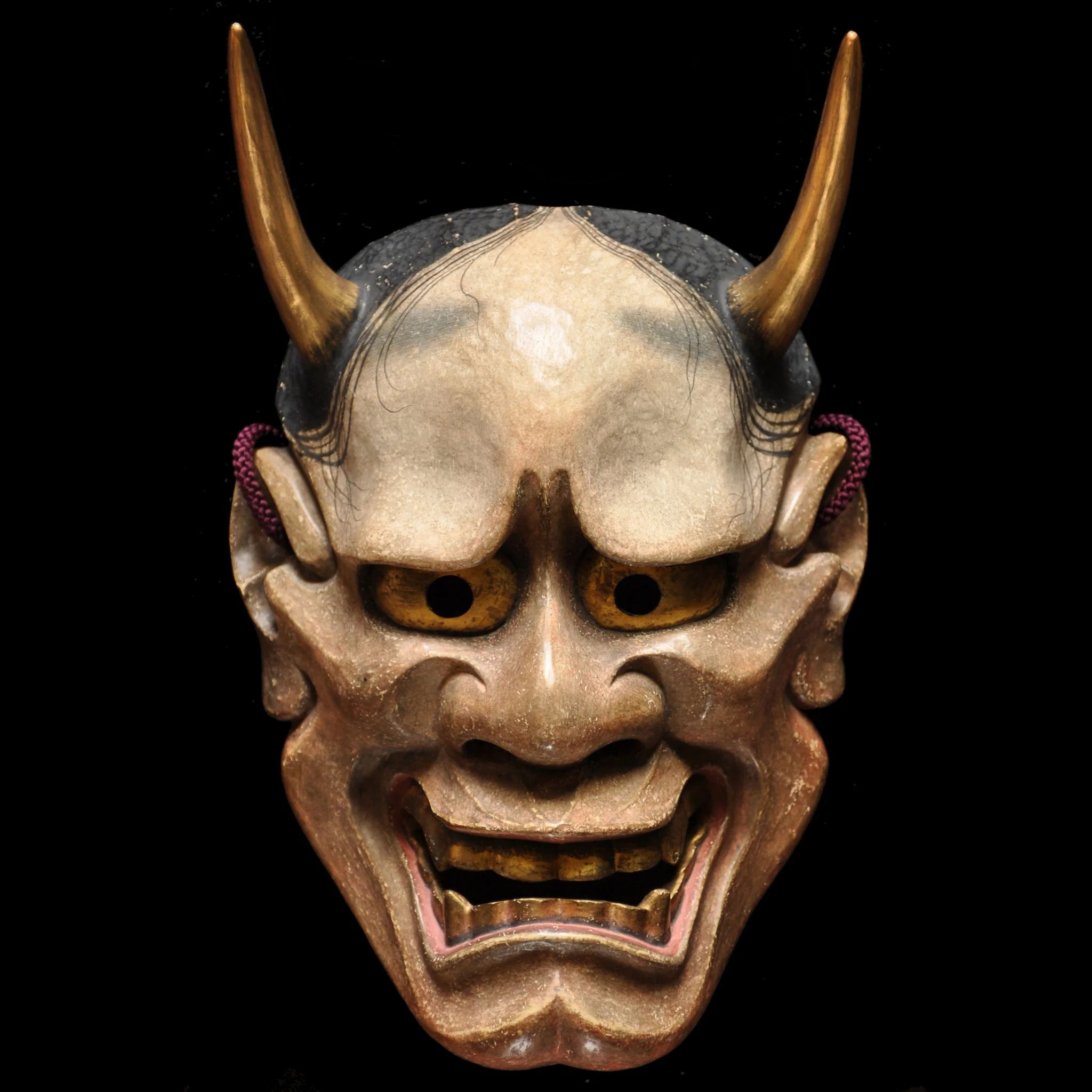
The Noh Mask Murder, beautifully translated here by Jesse Kirkwood, falls clearly in the former category, and it overtly calls to mind the great classic writers of old. It’s a locked room puzzle (John Dickson Carr), a mansion mystery (S.S. Van Dine) a psychologically dark family tragedy (Ellery Queen), and, for reasons I will keep vague, it has Agatha Christie’s fingerprints all over it.
The fact is, I can’t say a great deal about what I liked about Noh Mask without spoiling it. So here, as Joe Friday says, are just the facts, ma’am:
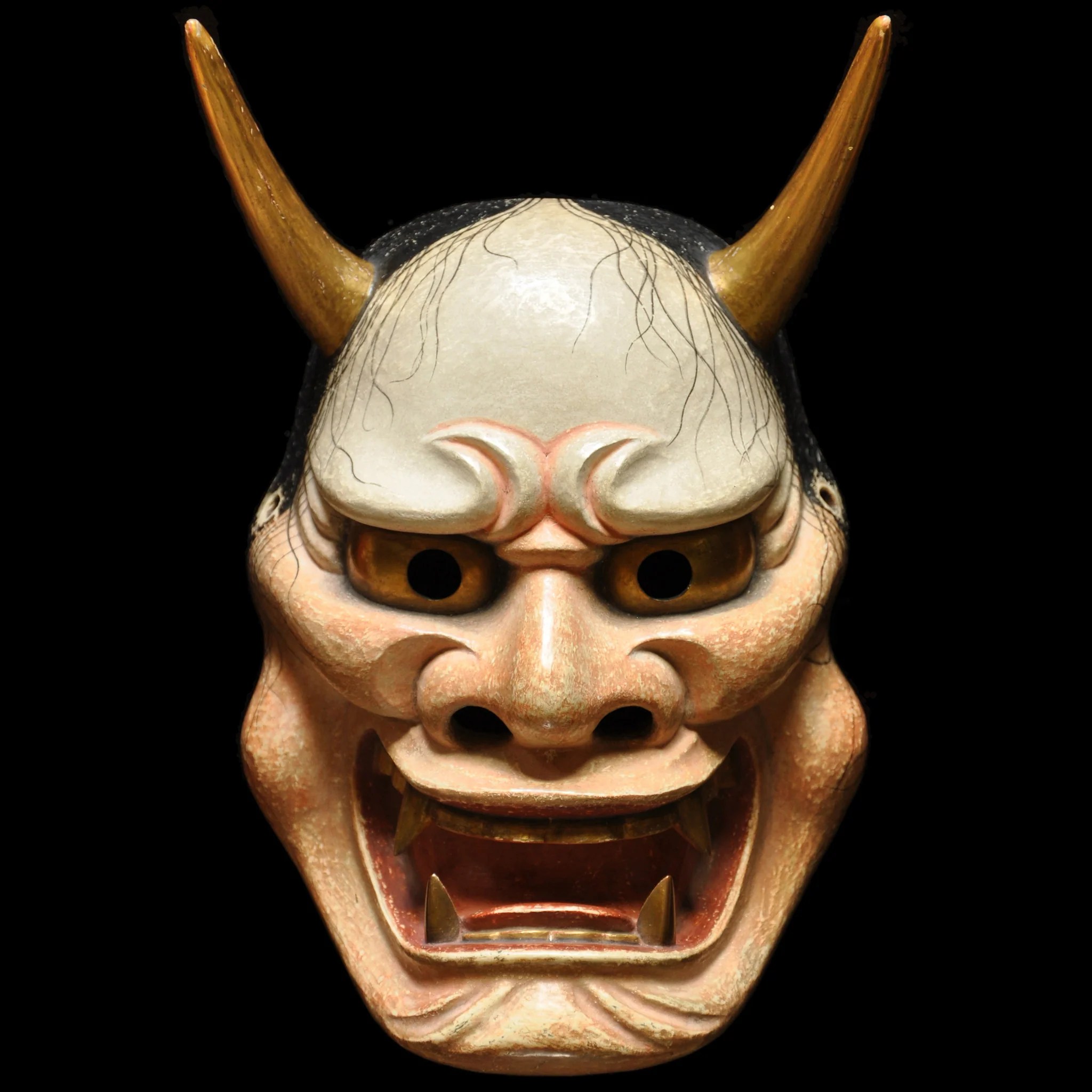
The narrative structure here is complex, beginning with a prologue by – shades of Queen – “mystery writer/detective” Akimitsu Takagi who wants to tell the story of a horrific murder spree he solved with his old school friend Koichi Yanagi. After this, we segue to the opening chapters which are narrated by a wholly different person, aging prosecutor Hiroyuri Ishikari, who meets Koichi one fateful night on the beach near the Chizui family mansion, where Koichi works in the family lab manufacturing sweeteners for the dinner table. Together they witness the first appearance of the hideous Noh mask that will lead them into a situation that is bizarre and creepy in the best way.
As with so much honkaku, much of what’s going on is rooted in the past, both in the dark history of the family and in the emotional maelstrom in which Japan finds itself after the war. Ten years earlier, Professor Chizui, a renowned radiochemist and head of the family, survived a mysterious lab accident only to die of an apparent heart attack a few days later. His younger brother Taijiro, whose own house had been destroyed in the war, moved his three children and ancient mother into the house where the professor’s widow and two kids remained. In short order, the widow was committed to an insane asylum, the professor’s daughter also went mad (but remained at home), and his young son was stricken with a fatal heart disease.
Now Taijiro rules the roost, and he and his sons spend their days searching for a mysterious treasure that the Professor has hidden. But when the Noh mask, which happens to be cursed, is seen in the window, Taijiro becomes afraid for his life and asks Koichi to find a great detective to protect him. The young man sends for his old friend Akimitsu Takagi, but not quickly enough to prevent the first of many deaths.
Locked room fans will appreciate the set-up of this crime: a man holed up tightly in his locked study, dead of no apparent cause, with the hideous mask lying before him on the floor. As with most Carr novels, I have no propensity for solving the “how” of these things; I wish you all the best. Fortunately for those of us less mechanically bent, the story wastes no time dawdling around the first crime as one murder succeeds another, all of them resembling heart attacks. The rising death toll never becomes tiresome, due to the bizarre variations of each crime and the diseased nastiness at the core of the Chizui family that underlies the killer’s motives.

As puzzling as the murders are, another central question is who will turn out to be the central sleuth here. Takagi (the detective) bases his sleuthing style on the plots of the mysteries he reads and adores – a fact that disillusions his friend Koichi and makes him question how really smart and clever Takagi is. The two men find help from prosecutor Ishikari and competition from the most loathsome of the suspects, who insists he can solve the case first. Just who will come up with the correct solution generates more suspense than usual.
I thought I knew where this was going, but even though I spotted (and even commented in my head upon) a few of the clues, I got it wrong. The twists keep coming, right up to the final page, but the plot never threatens to become so complex as to cave in on itself. We end up with a satisfying puzzle, an emotionally resonant tragedy, and some fascinating insights into various subjects, including the history of Noh drama, the psychological damage wrought upon Japan due to the War and the great social upheaval that followed. The novel never becomes didactic, though: as it should, the history permeates and informs the mystery in subtle ways. Given that my last couple of honkaku reads were a bit ponderous and/or disappointing, it was nice to pick up and devour this in a few days and find it so lively and entertaining. I really hope we get more translations of Takagi’s work in the not-too-distant future. Titles like Why Has the Doll Been Killed? and Seven Lucky Gods Murder Case are too intriguing to be ignored.
 Ah Sweet Mystery!
Sounds marvellous – thanks for the preview Brad.
LikeLike
My review :
Santosh Iyer’s review of The Noh Mask Murder | Goodreads
LikeLiked by 1 person
Along with translating great Japanese novels for the English-speaking market, I’d like to see more of the great Japanese adaptations of Agatha Christie films! They made plenty. The few we’ve been able to get with subtitles have been wonderful to watch.
Sadly, the one I’m least interested in is the anime Poirot and Miss Marple for kids! All 36 episodes of that one are easy to find.
But not the others. Maybe as Japanese novels find English-speaking markets, more of the films will get translated too.
We can but hope.
LikeLiked by 1 person
I second your call for more translations of Takagi, Yokomizo and their contemporaries. My love for shin honkaku mysteries is well documented, but the Takagi and Yokomizo translations feel like a cache of lost Golden Age detective novels has been unearthed. Fingers crossed Pushkin Vertigo doesn’t overlook Takagi’s short story collection Crimes From My High School Days. At least include its titular novella in an upcoming translation as an extra. It’s the origin story of Kyosuke Kamizu and probably patient zero for all the high school/college age detectives in Japanese mysteries.
Don’t forget Tetsuya Ayukawa’s The Black Swan Mystery is also appearing later this year.
LikeLiked by 1 person
I did NOT know about Black Swan! My official moratorium on buying any more books this year is officially canceled! 😜
LikeLike
While I haven’t read much of the honkaku genre, I found this book excellent. The vivid setting in a post-war Japan mansion, the unusual characters, the puzzle/locked room/plot, and a narrative structure that doesn’t sag in the middle all come together well.
The best GAD fiction is not just where will I remember the book or its solution, but how it made me feel reading it. This is one of those books for me.
LikeLiked by 1 person
The best of these brings me right back to the Golden Age and yet feels ineffably non-Western, thus becoming a unique reading experience. This one does an excellent job merging science with superstition, history with horror – and now I wish I had included that in the post!
LikeLike
Pingback: The Noh Mask Murder (1951) by Akimitsu Takagi (Trans. Jesse Kirkwood) – crossexaminingcrime
Pingback: #1213: The Noh Mask Murder (1949) by Akimitsu Takagi [trans. Jesse Kirkwood 2024] | The Invisible Event
Pingback: 2024 REPRINT OF THE YEAR, #1: The Little Sparrow Murders | Ah Sweet Mystery!