- “’Every time you come here, you lie to me. You’re one of those baby-faced little liars that always gets by by deceit. Just because you’re beautiful, you’ve managed to get by with it. You’ve deceived every man that ever loved you, every man you’ve ever loved. Now you’re in trouble, and you’re deceiving me.‘
- “She stared at him with blazing indignation, either natural or assumed. ‘You’ve no right to talk to me that way!’
- “’The hell I haven’t,’ said Mason grimly.“
And so our Mason Menagerie begins . . . not with any specific animal but with the 1933 “birth” of attorney Perry Mason in a case that feels savage from start to finish.
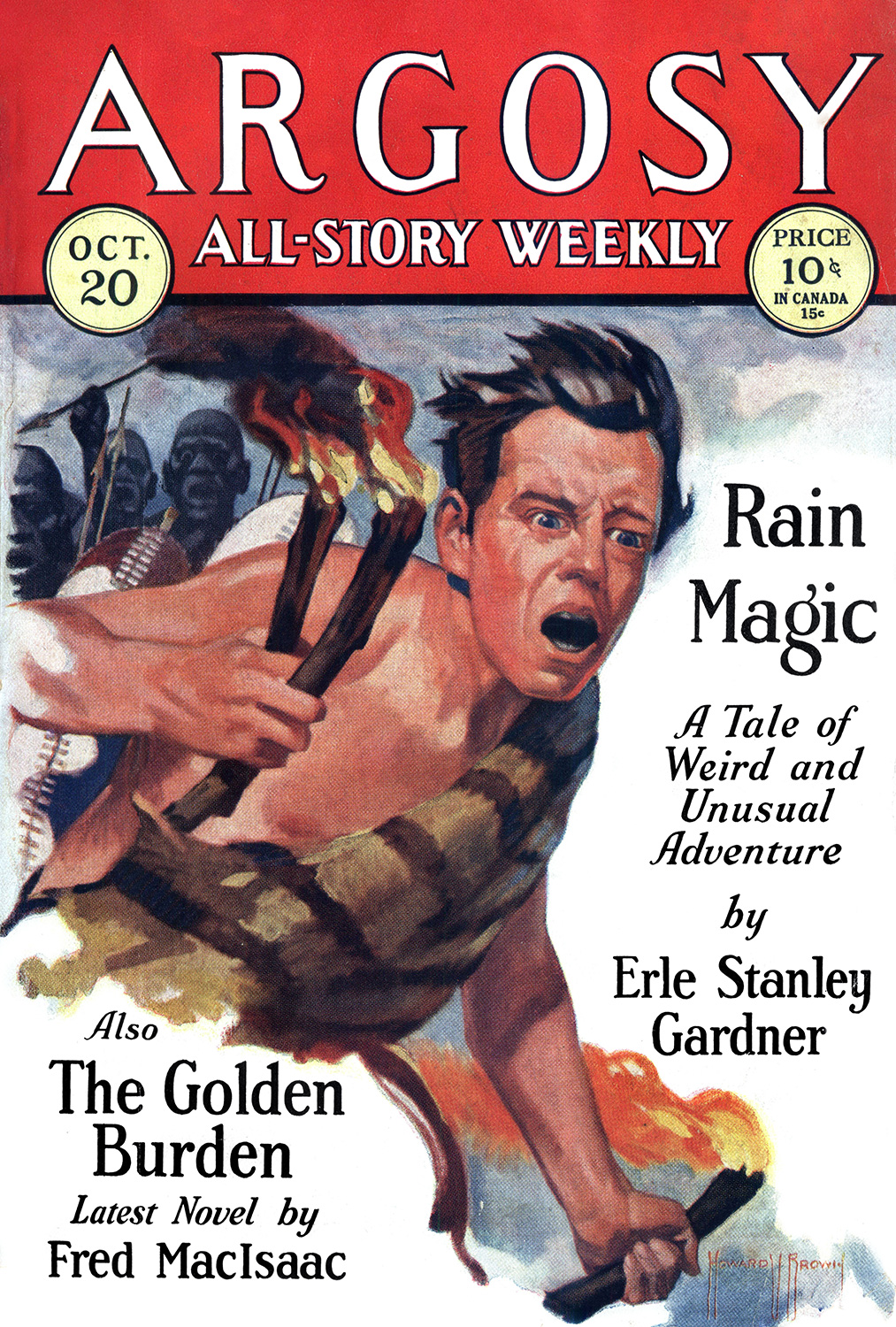
The reason for this might be that before he created his most famous and engaging characters, author Erle Stanley Gardner spent a dozen years, starting in 1921, writing for the pulps. He produced 456 short stories in a variety of genres, all while working full-time as an attorney. It was easy for a man who had set a goal of writing 1,200,000 words a year! And then, inspired by real-life trial lawyer Earl Rogers, who had appeared in 77 murder trials and had once defended fellow attorney Clarence Darrow (on a non-murderous charge), Gardner created what would become the most famous defense attorney in crime fiction.
“Perry Mason sat at the big desk. There was about him the attitude of one who is waiting. His face in repose was like the face of a chess player who is studying the board. That face seldom changed expression. Only the eyes changed expression. He gave the impression of being a thinker and a fighter, a man who could work with infinite patience to jockey an adversary into just the right position, and then finish him with one terrific punch.”
The character we meet in The Case of the Velvet Claws tilts more toward the fighter side. There is something vaguely animalistic about him: Gardner emphasizes his bigness, and he snarls at witnesses, at his client, at Paul Drake . . . even at Della Street, whom he reduces to tears more than once here.
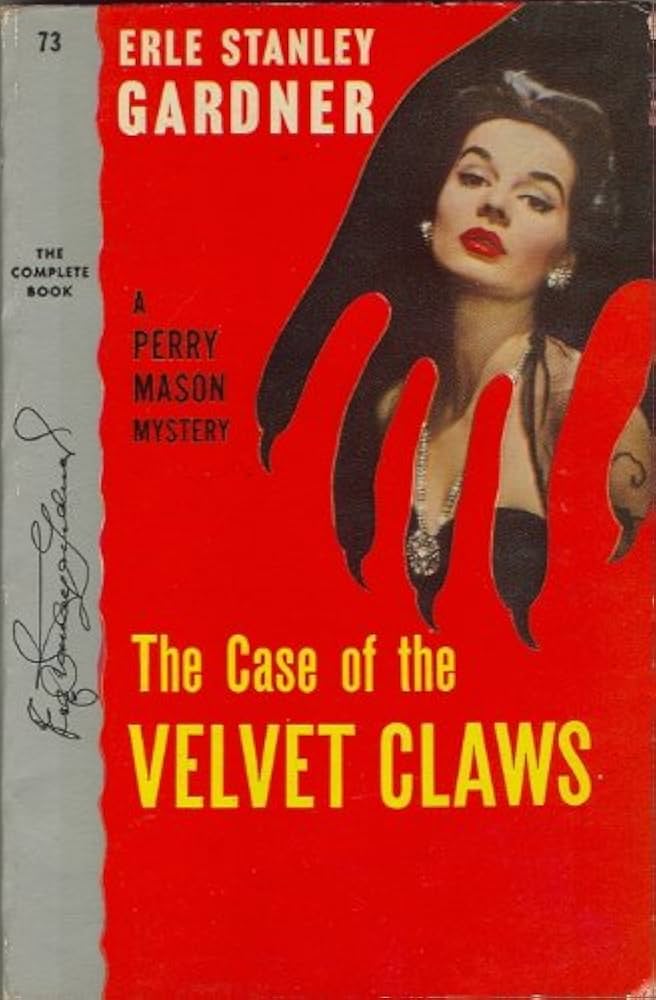
The claws, however, belong to Mason’s first recorded client, a beautiful dame who walks into the attorney’s office and introduces herself as Eva Griffin. It is the first of a string of lies she will tell that pull Mason into a cesspool of trouble and nearly gets him charged with murder. And yet, even though Eva never plays fair with Perry, the moment he takes her on as a client it doesn’t matter how dirty she gets – she is the client and he will stay by her side. When they meet, he lays out his credo, and although it is a long one and is repeated in multiple different ways to clients throughout the canon, I offer it here because it lays out nicely how Perry Mason differentiates himself from the rest of the lawyerly pack:
- “’Most of the attorneys that you’ve consulted have had expensive suites of offices and a lot of clerks running in and out. You’ve paid them big money and haven’t had anything much to show for it. They’ve bowed and scraped when you came in the room and charged you big retainers. But when you get in a real jam, you don’t dare to go to them.
- “’I’m different. I get my business because I fight for it and because I fight for my clients. Nobody ever called on me to organize a corporation, and I’ve never yet probated an estate. I haven’t drawn up over a dozen contracts in my life, and I wouldn’t know how to go about foreclosing a mortgage. People that come to me don’t come to me because they like the looks of my eyes or the way my office is furnished, or because they’ve known me at a club. They come to me because they need me. They come to me because they want to hire me for what I can do.’
- “She looked up at him then. ‘Just what is it that you do, Mr. Mason?’ she asked.
- “He snapped out two words at her. ‘I fight!’”
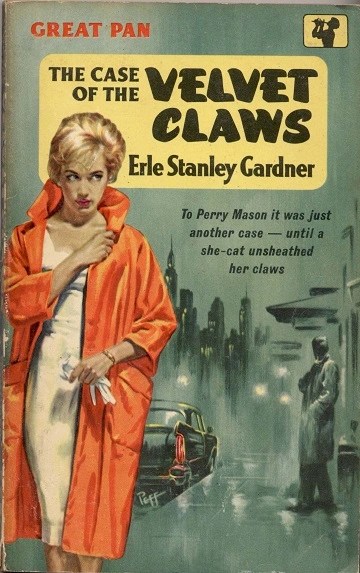
Of course, we also meet the other two major players in the Mason triumvirate. First, there’s Della Street, who in this adventure seems on less sure ground with her beloved “Chief.” Interesting fact: we learn that Della’s family was rich, that they lost all their money, and that instead of seeking a wealthy husband, Della went to work. This helps explain why she is so down on her boss’ new client, whom she labels a “phony” as soon as they meet:
“I hate everything she stands for! I’ve had to work for everything I got. I never got a thing in life that I didn’t work for. And lots of times I’ve worked for things and have had nothing in return. That woman is the type that has never worked for anything in her life! She doesn’t give a damned thing in return for what she gets. Not even herself.”
As the series progresses, Mason will come to rely on Della’s instinct about the characters who come to call, so it’s a bit annoying to watch him brush her aside so much in this first case. And then there’s Paul Drake, the detective who works downstairs and seems to make most of his money off Mason’s requests. Oddly, when Perry is laying out his methods to Eva Griffin, he says this:
“Most attorneys hire clerks and detectives to work up their cases and find out about the evidence. I don’t, for the simple reason that I can’t trust anyone to do that sort of stuff in the kinds of cases I handle. I don’t handle very many, but when I do, I’m well paid, and I usually give good results. When I hire a detective, he’s hired to get just one fact.”
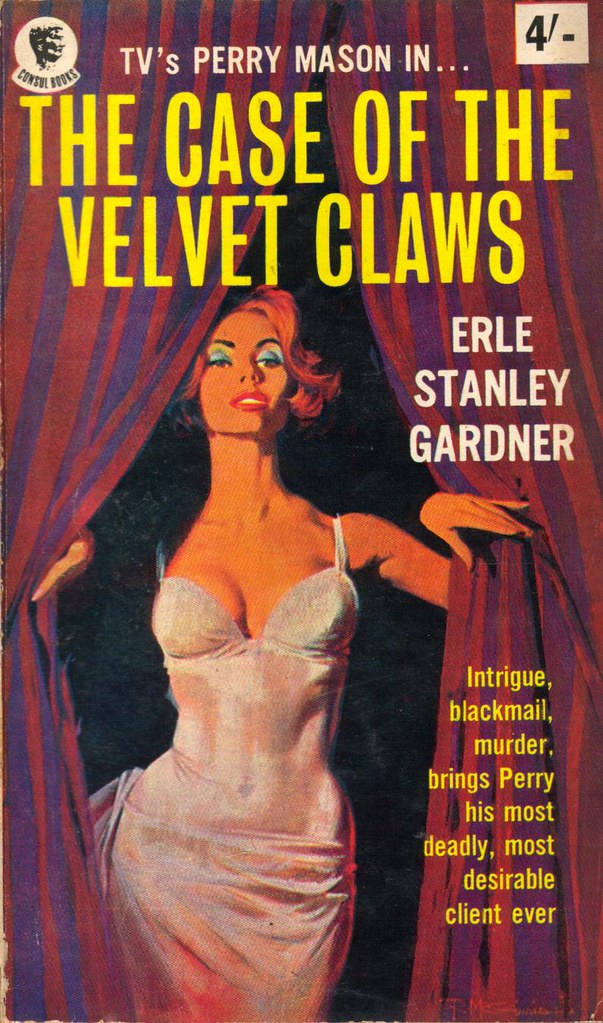
This is an out-and-out lie because as soon as Eva leaves the office, Mason puts the Drake Detective Agency to work pretty much non-stop, 24/7 – and, to be honest, he’s rather rude about it. He wakes up Paul at all hours and makes demands for information that must be delivered pronto. Paul complies without complaint, but we’re still in the gestation stages for that bond of friendship that will connect Perry, Paul and Della together. (Although Della does get her romantic kiss at the end!)
Mason’s clients tend to fall into one of two categories: the Dupes, who get into trouble either by being in the wrong place at the wrong time, by stumbling into a grift, or by associating with bad company – a crooked business partner, a con artist, or a faithless lover; and the Liars, who come to Mason with a story that is in some meaningful way fallacious. Lying is bad, but a Lying client is never all bad, or a Mason wouldn’t take their case. Eva, however, is one of a kind, a girl who never earns our sympathy and who, despite being saved at the last minute in true Mason fashion, gets her comeuppance for being such a dangerous thorn in the attorney’s side.
The mystery here is . . . okay. It involves blackmail and a lot of sneaking around. The early sections are the cleverest part, where Mason tries to figure out Eva’s true identity and who is behind a local gossip rag called Spicy Bits that is threatening to blow Eva’s cover and ruin her marriage. After murder rears its head, Mason has to dodge the police and deal with a suspect list that is unrelievedly unpleasant. And yet, that clever repartee and Mason’s way of entrapping bad people to serve his own ends is still in its nascent stages here. The dialogue and pace are never dull, having more snap than a pair of vintage Levis. It’s not nearly as clever as it would become, but it’s always fascinating looking at how raw and unfinished an origin story may be.

It would become very unusual for Mason to display such disdain for a client from start to finish (although, again, his loyalty never wavers), and he does some very upsetting things to get to the truth that I’m not sure he ever did again. Part of the unpleasantry has to do with the attitudes toward women here. Nobody could accuse Gardner of demonstrating an enlightened attitude towards females. They tend to be either boring saints or debauched sinners, and that’s true here in a book where there’s not a saint to be found among the female population. At one point, Perry asks Paul Drake to track down information on a suspect, and when the lawyer asks, “What does she do?,” the detective replies, “Anybody she can, I guess.” And that’s the general attitude with all the women here.
Sadly, we never get near a courtroom and get little evidence of Mason’s logical mind and legal legerdemain. He has to defend himself against a lot of liars here, including the velvet claws of his own client, and he fights back like a big ol’ bear. At the end of the novel, we get a fun moment that I think happened pretty often in the canon, where Mason is wrapping up his relationship with Eva when Della comes in to announce another pretty girl waiting to see him in the outer office. A sulky girl, as it turns out . . . the harbinger for Case #2.
But as we are focusing on a particular set of cases, we’re going to move ahead next month to Mason’s seventh adventure, where the attorney fights for a man’s right to keep his cat. Now that’s heroism!!
* * * * *
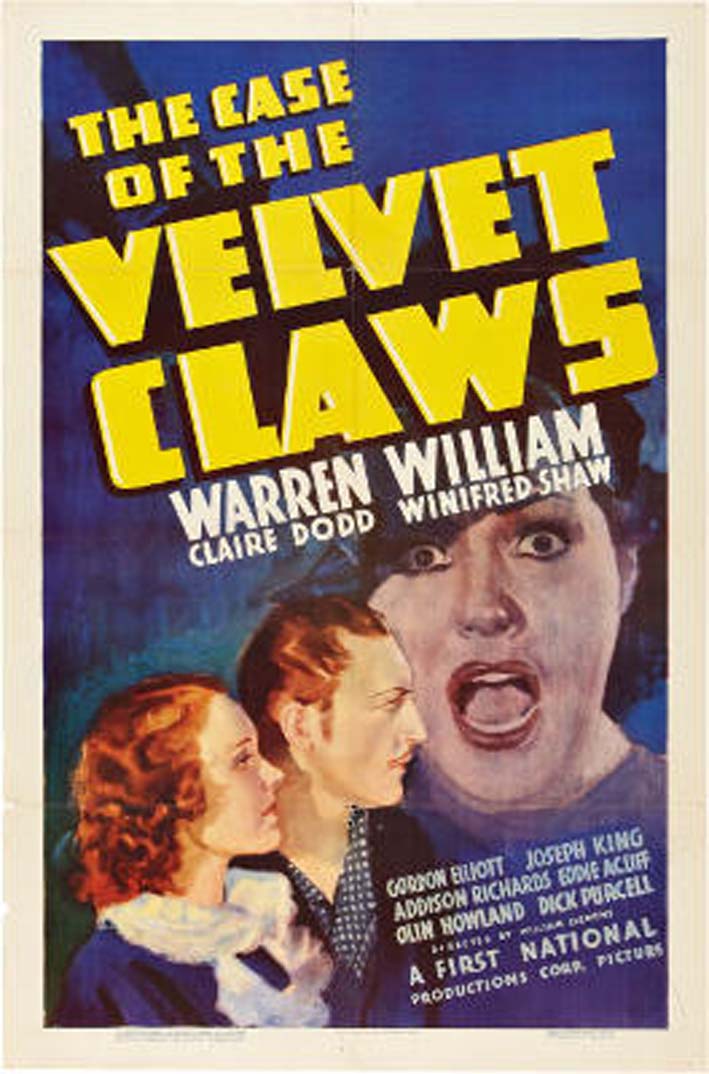
Velvet Claws is one of the rare Gardner titles to have two adaptations. It was the fourth and final of the films starring Warren Williams as Mason. (Two different actors would play the character in the final two adaptations.) Gardner is said to have disliked the films, and the fact that Perry and Della marry in this one might go some way to explaining his feelings! Sadly, I could not find a link to watch this one.
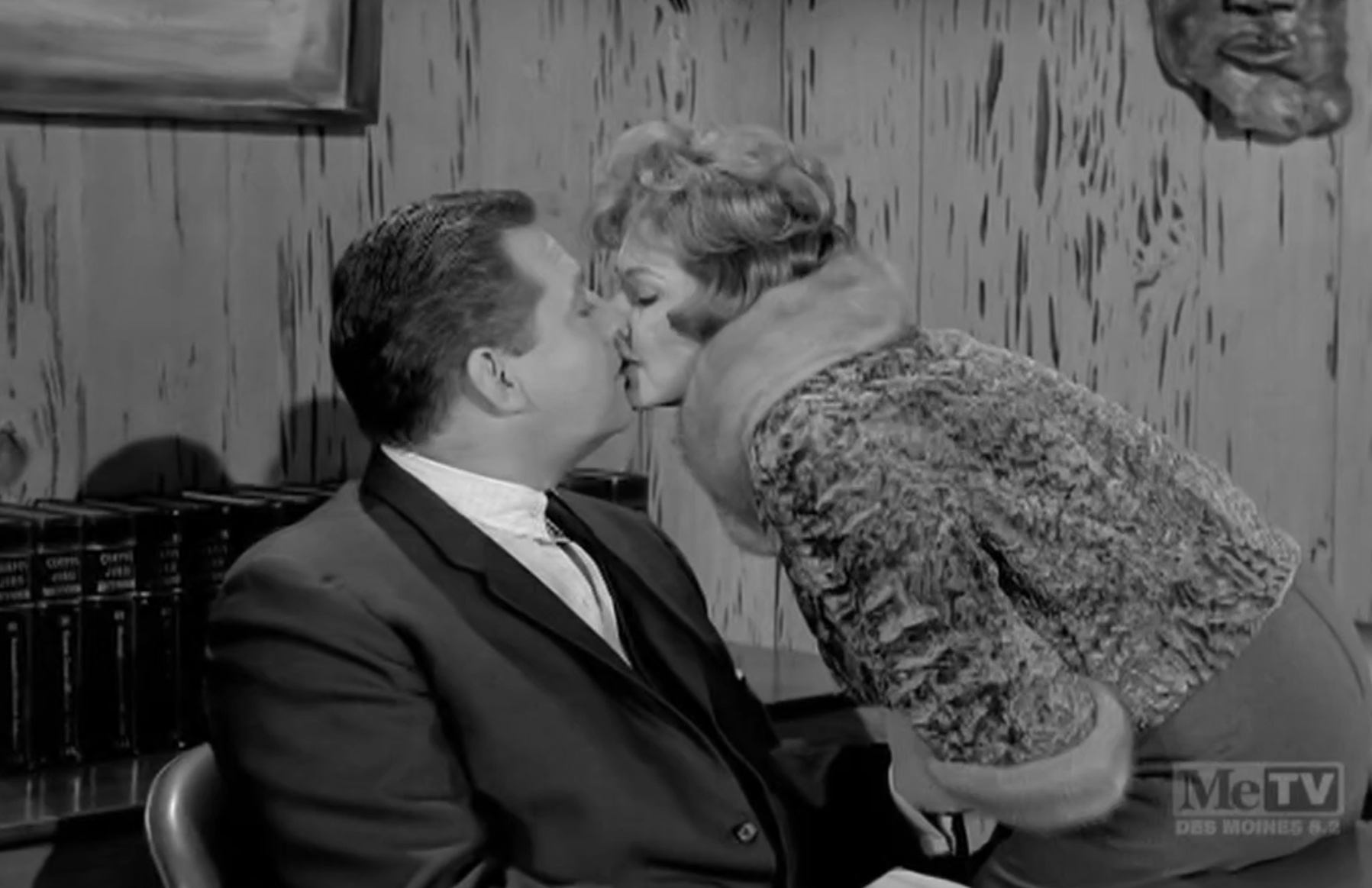
Despite being the first novel, “The Case of the Velvet Claws” didn’t show up until the bottom half of the sixth season of Perry Mason (Episode 22). It premiered on March 21, 1963, and without remembering it I made a solid guess that the TV series would wreak havoc on the original plot. Imagine my delight, then, at how faithful to its source the episode turns out to be. No court scenes, no reforming of the client – in fact, Patricia Barry gives a stellar performance as the complex Eva Griffin that makes this one a pleasure to watch.
That’s not to say that the TV episode doesn’t manufacture a happier ending, for Raymond Burr’s Perry Mason is no hot-headed animal. He approaches the whole affair with patience and logic, and in the end he and Eva have a more positive parting than in the novel.
Next month, we wander deeper into the menagerie and nearly get swiped by more claws . . . the sort you find on a wandering feline!
 Ah Sweet Mystery!
Pingback: THE ERLE STANLEY GARDNER INDEX | Ah Sweet Mystery!
Despite having read about a dozen Mason’s books over the last twenty years or so, I’ve never read this first case. I don’t know why not, as I thoroughly enjoyed it. The differences in the characters of Della, Drake and Mason himself are significant enough for me to realise what they will later become as the series develops.
I will add that although I appreciate the stand Mason takes with his personal “counsels code” – standing by his clients whatever they might do or say – I’m with Della and Drake on this one, as it seems an incredibly stupid position for such an intelligent man to take, especially given his clients dangerous (and bonkers) behaviour. If we are supposed to approve of his ‘higher moral stand’ I think it would have been better served by someone more deserving needing him to go to the very edge, rather than Eva Belter who, if I’m honest, I would probably have paid to see hang, just to shut her up.
Nevertheless, a really engaging start.
LikeLiked by 1 person
I like this opener, as unlike “typical” Mason as it is. The next one is much more conventional – and has some courtroom action – before returning to more action/less courtroom for most of the 30’s. At least the series starts
Defining the Perry/Della/Paul relationship that we know and love pretty early on.
LikeLike
I’ll also say that I didn’t miss any courtroom shenanigans. I find it refreshing to see him tackle something that he can sort outside of that environment. I don’t know if it will happen again, but I liked it.
LikeLiked by 1 person
Oh, it does. I came to Perry Mason through the TV series, which often placed half the episode in court, even if the book on which it was based contained no courtroom action. I’m still surprised at how often Mason acts more like a P.I. than a lawyer.
LikeLike
Pingback: NAUGHTY BUT NICE: The Case of the Sulky Girl | Ah Sweet Mystery!
Pingback: GAMS AND PINS AND SHANKS, OH MY! The Case of the Lucky Legs | Ah Sweet Mystery!