While the Fox Charlie Chan films are fresh in everyone’s minds – okay, maybe that’s wishful thinking on my part! – I thought I would take one step beyond the Top Thirteen list that Sergio, Nick, and I drafted over the weekend and share with you my complete ranking of all twenty-three of the Fox Films. It’s probably more information and personal opinion than you’ll ever need to know. Plus, after my long discussion with my buddies, I’ll bet if I took a moment to think about it, some of these placements might change. So . . . deep breath, and here we go:
NUMBER ONE: Charlie Chan at the Opera (1936)

This may be the classiest Chan of them all. It certainly has the best guest star in Boris Karloff, who plays a mystery mental patient with an operatic voice who one stormy night sees an article in the paper about a famous opera star returning to Los Angeles, goes berserk and escapes. He infiltrates the opera house and threatens all the characters, just in time to be blamed for a double murder of the show’s stars. Oscar Levant wrote an opera for this! (It’s not half bad: if I were committing a murder, I’d play this during the act.) The humor this time out is far more sophisticated, as when the police threaten to postpone the performance and the stage manager says, “This opera is going on tonight even if Frankenstein walks in!”
For once, son Lee is a helper rather than a hindrance to his Pop, and the comic relief is assigned to the great William Demarest as a casually racist cop. Thomas Beck appears (I think for the last time), and for once ALL the suspects behave suspiciously (at least one of them had recently been unmasked as the killer in an earlier Chan film!), and the guilty party is captured through a legitimate (and perfectly obvious if you think about it) clue. Oland is given more aphorisms to spout than usual, but he is still wonderful, and it’s hard to believe that only one more year and three Chan films remained in his career before chronic alcoholism hastened his all-too-early death in 1938.
NUMBER TWO: Charlie Chan at Treasure Island (1939)
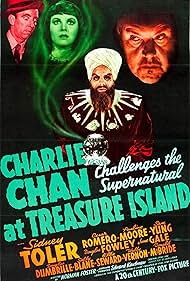
A delight from start to finish, and I’m not just saying that because it mostly takes place in my home town of San Francisco. (I dare you to find a single shot of the actual city in this studio-bound film!!) In case you know nothing about local history, Treasure Island is a man-made piece of geography in the bay between SF and Oakland that was constructed in 1937 for The Golden Gate International Exposition, our World’s Fair! We do get some cool stock footage from the air of the massive exposition, but it looks like nothing for the film was actually filmed there.
This is a grand mystery that centers around an insidious blackmailer called Dr. Zodiac, whose schemes have caused the suicides of several of his victims. The latest is a mystery writer named Paul Ellis, a friend of Charlie Chan’s. They happen to be flying to SF together (with son Jimmy) when Paul receives a radiogram that causes him to end his own life before the plane lands. Charlie vows to find Dr. Zodiac and hold him responsible, and he is aided by newspaperman Peter Lewis (Douglas Fowley) and Fred Rhadini (Cesar Romero), a magician who is working at the Fair and who has been trying to expose Dr. Zodiac as a fraud.
The film moves like a steam engine and contains all sorts of entertaining set pieces, from the initial death to a dangerous consultation with Dr. Zodiac and culminates in a lengthy climax where Rhadini challenges the blackmailer and we are given an array of magic trickery, a murder, an attempt on another life and perhaps Charlie’s most epic unmasking of the killer. I can’t say it plays fair, (which places it a bit lower than, say, Opera), but everyone in the film is so good, the comedy is kept to a minimum (Rhadini has a nervous butler/assistant), and the film never flags.
NUMBER THREE: Charlie Chan at the Race Track (1936)

This is another favorite of mine. The combination of race track setting and shipboard mystery keeps things hopping. Charlie is drawn into this one when a dear friend, Major Kent, is killed onboard a luxury liner, ostensibly by being kicked by his own horse. But Charlie, using blood spatter evidence, proves it was murder and sets about trying to find the leader of a large gambling ring. There are lots of VIABLE suspects, and a swell incriminating clue where the killer makes a mistake that observant audience members should notice.
On the downside, this one provides more evidence that the films were even more prejudicial against Black characters than Asian characters in the form of a stableboy named “Streamline” Jones, played by John H. Allen. As Lee Chan, Keye Luke has to perform some awful stereotypical shenanigans while working undercover for his dad, but in our discussion about this, we felt that, as in the books, such overtly racist stuff tended to be for show, and the Chans tended to put displays of white racism firmly in their place.
NUMBER FOUR: Charlie Chan in Paris (1935)
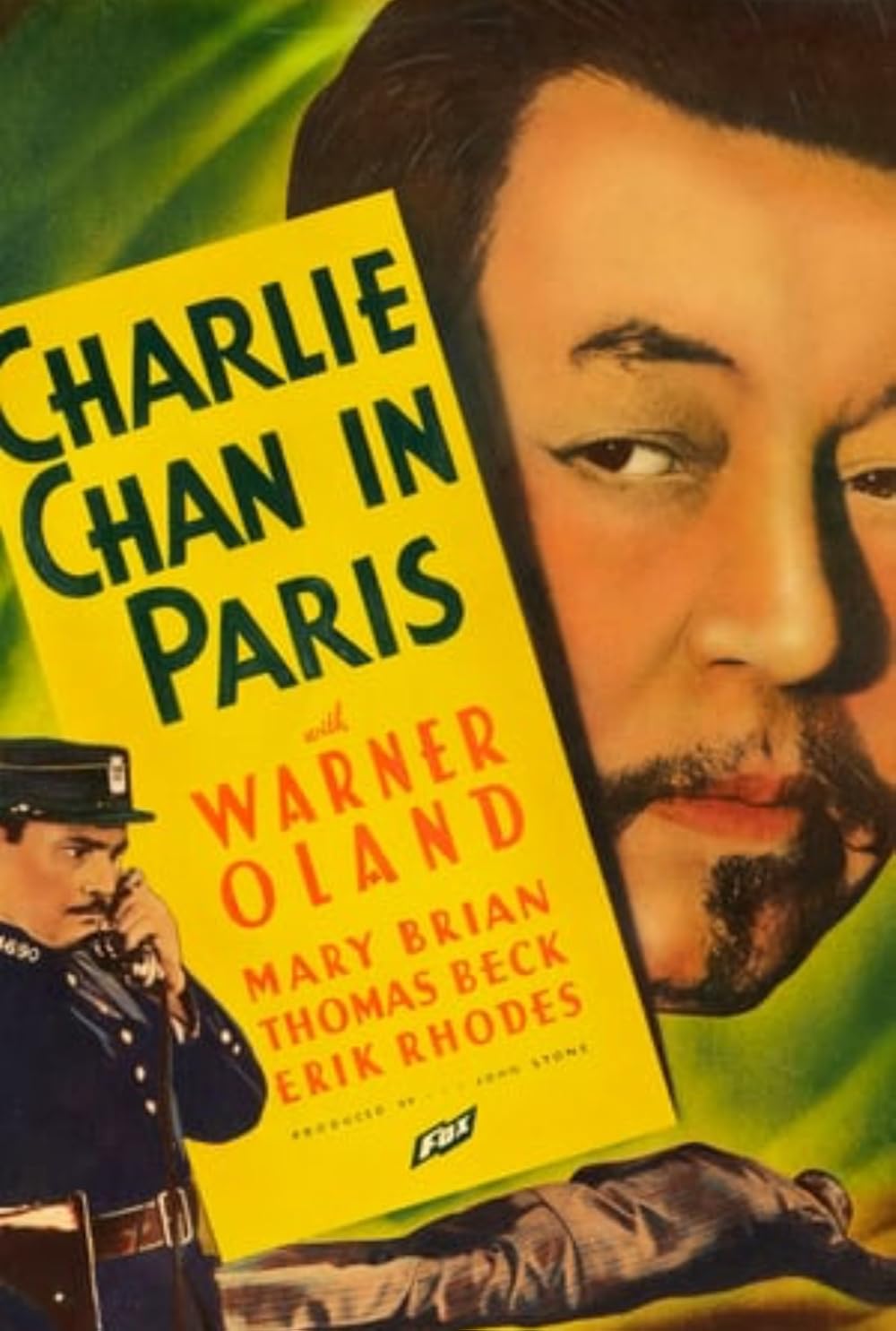
Fresh from his London adventure, Charlie is asked by a great London bank to go to Paris to investigate forged shares. He uncovers a conspiracy centered around the bizarre figure of Marcel Xavier, a fiendish murderer who masquerades as a blind beggar. Aided by his #1 son Lee (Keye Luke) and friend Victor Descartes (Thomas Beck), who is the ward of (and future successor to) Mr. Lamartine, the head of the bank and the fiancé to Lamartine’s daughter Yvette, Charlie discovers the truth about the conspiracy and unmasks Xavier. This is a tight, complex little mystery, worthy of the mind of Philip MacDonald, who created the story. It’s well-filmed, with lots of suspenseful moments, like the murder of Nardi, Charlie’s French informant, at the end of her apache dance or the climax where Charlie and Victor trail Xavier through the sewers of Paris. Lee Chan is used sparingly and is actually a help to his dad here rather than a comical hindrance. The solution involves a double unmasking and feels fresh, even if it doesn’t exactly play fair in the end.
NUMBER FIVE: Charlie Chan on Broadway (1937)

A fast-paced crime thriller worthy of the Great White Way in which it’s set. Charlie and son Lee are en route back to America from Berlin when they come to the rescue of Billie Bronson, the damsel in distress in the next cabin. Turns out that Billie has evidence that will blow the lid off the corrupt leadership in New York, and to safeguard it she hides it in Charlie’s luggage. It’s a fun cast, led by Harold Huber as the snappy Inspector who helps Charlie and Lee find a cleverly hidden surprise killer (but if you’re paying attention to the clues, or know the ways of casting in 1930’s “B” mysteries, you can figure it out.) Joan Marsh and Donald Woods entertain as rival reporters, and they’re not-quite-a-romance marks them as one of the most interesting young couples in the canon.
NUMBER SIX: Charlie Chan in Reno (1939)
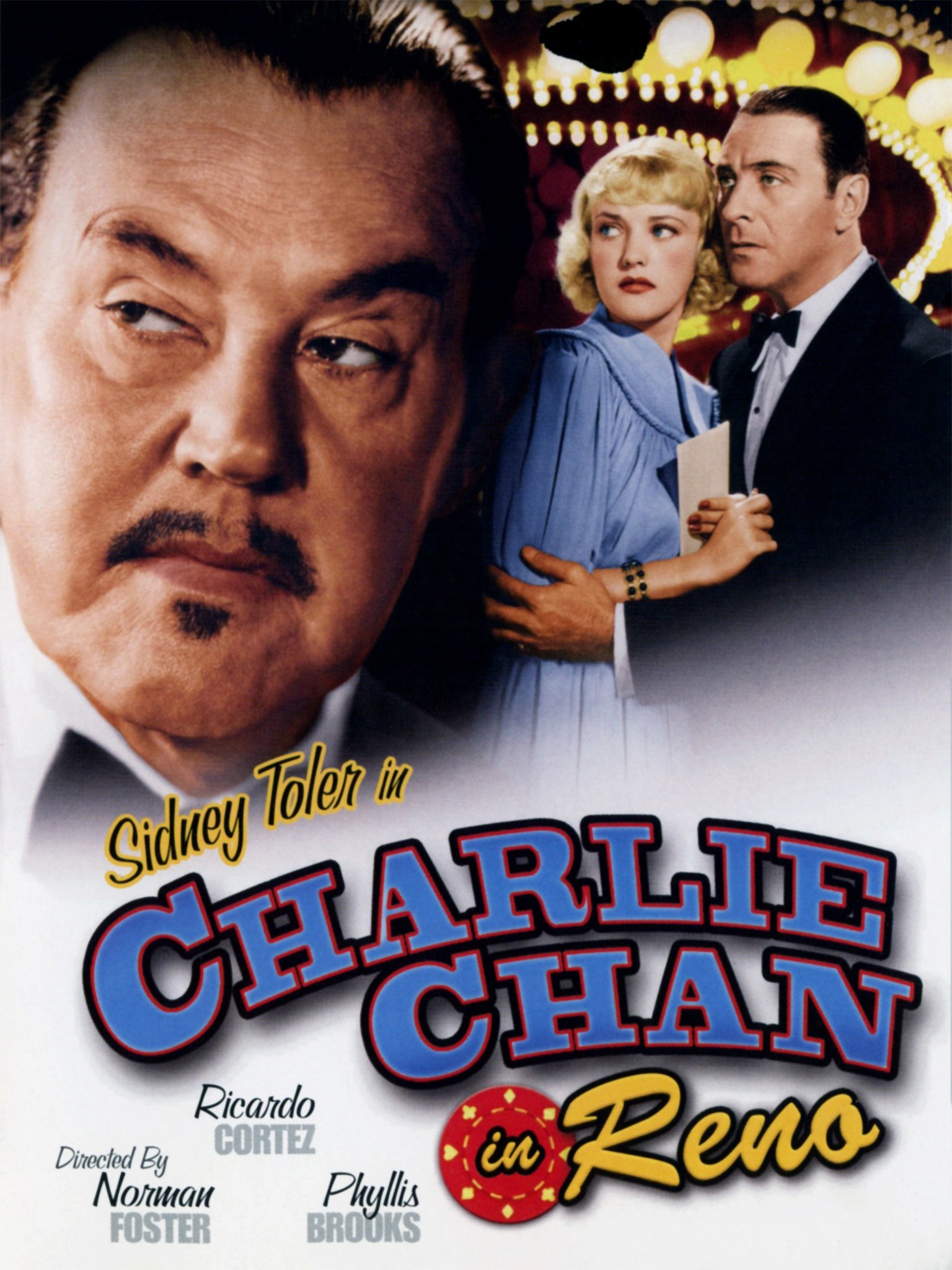
Sidney Toler’s second outing is so much better than . . . in Honolulu that it’s a relief! It’s got one of the best suspect groups of all the films, all of them stuck in a Reno hotel that caters to divorcees. One of the guests, a Mrs. Bentley, barely has time to offend all the other inhabitants before she is brutally murdered. There’s an interesting variation on the requisite ingenue couple: they are a married pair who are going through a very rough patch. The girl becomes the lead suspect in the murder because the victim claims she was planning on stealing the husband! The four main female characters are all played by Charlie Chan veterans, and the men include fading heartthrob Ricardo Cortez and Kane Richmond, who played the Shadow in many serials. The killer is not so obvious this time around, and this time it’s a character that you actually care about. (The actor in question happens to have appeared in two of my favorite Shirley Temple movies at Fox.)
On the downside, there’s still too much silly humor contained within these 70 minutes. Nervous Nellie Eddie Collins returns from Honolulu to play a manic cab driver, and Slim Summerville is the hick sheriff. I usually like Slim, but here his character is blatantly racist and thoroughly unpleasant. At least, Victor Sen Yung tones down his shtick and plays the son more like Keye Luke; his chemistry skills come in handy to his father, and he even gets a romance tossed in for good measure.
NUMBER SEVEN: Charlie Chan in Panama (1940)
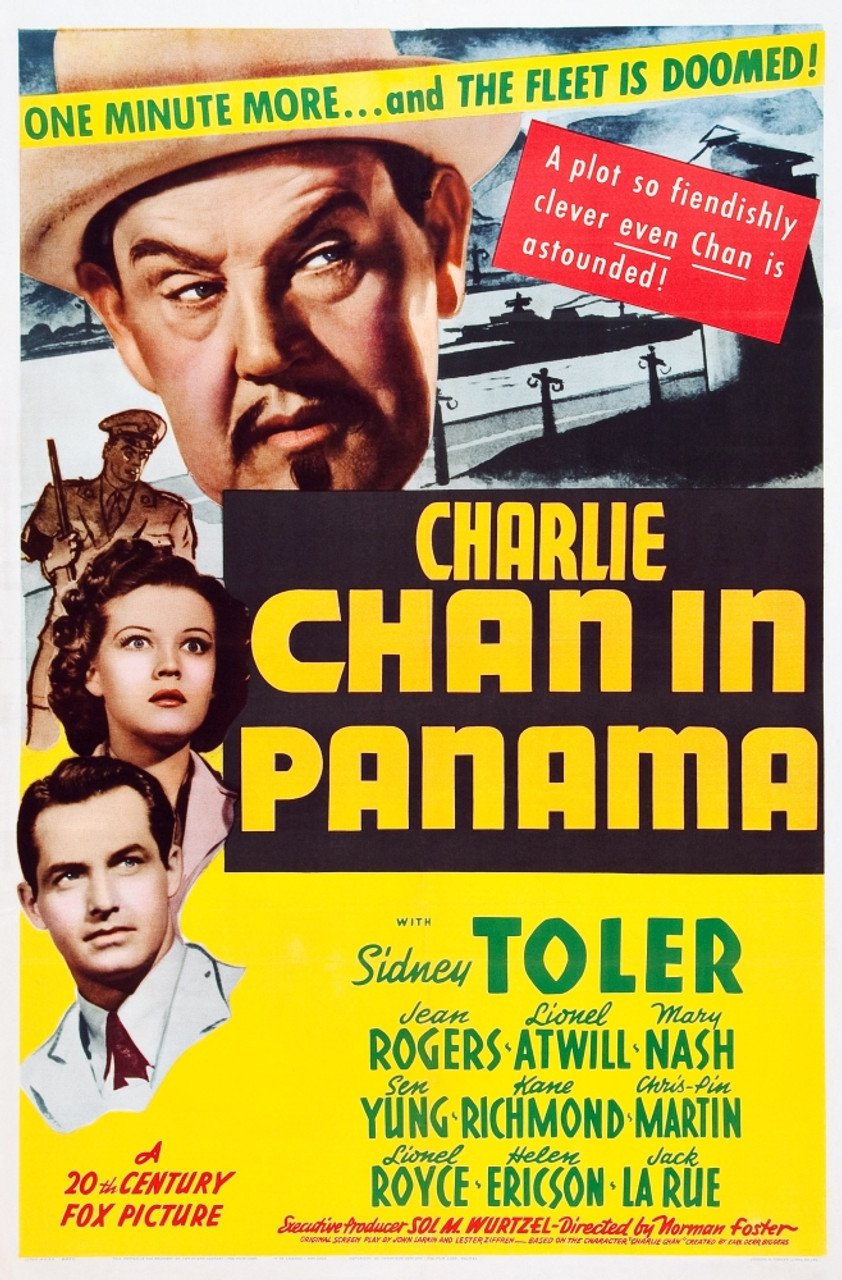
I knew going into this draft that Panama would rate high for me. I have always loved it for its murderer, played by an actor I very much enjoy. They are felled in the end by what Scott Ratner calls a “surplus information” clue, a common occurrence in the Chan films. The quality of these varies a lot, but I like this one, especially since Charlie had just used the same type of clue to incriminate the killer’s confederate and so you don’t see another one coming. Despite having watched this one many times, however, this time I felt that the body of the film was not nearly as good as the ones I ranked higher.
Charlie is in Panama City working undercover as a proprietor of Panama hats when he is contacted by government agent Godley who tells him that a mysterious foreign agent named Reiner was planning some dastardly business in the Canal. Before Godley can reveal more, he puffs on a poisoned cigarette and dies. Charlie realizes that Reiner must have been a fellow passenger on the seaplane that brought Godley to Panama City. The list of suspects is fun: Lionel Atwill plays a mystery writer and Mary Nash a schoolteacher. There’s also a cabaret owner (Jack La Rue) and his new singer, who attracts the interest of a federal engineer (Kane “The Shadow” Richmond), as well as a mad scientist and an Egyptian tobacconist.
Much of the film shows these people following each other around, and #2 son Jimmy Chan pops up inconveniently over and over and over again to “add” comic relief. The final quarter of the movie is the most exciting, but maybe having seen it so often, the killer felt particularly obvious to me this time. That said, it is my favorite murderer I the entire Charlie Chan film canon!
NUMBER EIGHT: The Black Camel (1931)
This one was missing from my regular Saturday matinee TV rotation, and it’s a shame because, although it creaks with age a bit and some of the performances are a little wooden, it’s really an excellent picture. It’s only Warner Oland’s second appearance as Chan, and he’s full of energy and humor. Plus, it’s great to see him on his home turf, in charge of everything and not answerable to some patronizingly kind police superintendent.

The film is set in Hawaii, and Fox even sprang for some location footage, including at the Royal Hawaiian Hotel. Charlie is keeping an eye on a recent guest, a psychic called the Great Tarneverro (Bela Lugosi) who has been summoned by movie star Shelah Fane, on the island to make a picture, to tell her whether or not she should marry the handsome stranger she met on the cruise over to the island. Before too long, Shelah is dead and Inspector Chan searches for her killer among her work associates and friends. The case seems to be connected to a past Hollywood scandal, the death of leading man Dennie Mayo.
Lugosi, fresh from filming Dracula that same year, makes a great red herring! He alternates between being helpful and acting suspiciously. Sally Eilers and Robert Young are a charming ingenue couple. Dorothy Revier, who plays Shelagh was a silent film actress who, at only 28, was staring down the end of her career. Her performance is stiff enough that it’s something of a relief when she becomes a stiff! I’m not a fan of the broad comic relief in Chan films as it often involves either physical silliness or overt racism. It is especially annoying here due to the high-strung antics of Chan’s assistant Kashimo, who thankfully never appears in another film. (We won’t meet a junior Chan for a few more years.) Charlie’s gibes are enough for me.
The suspect list is sadly not very interesting and the characters not well developed or given clear motives. An unbilled Dwight Frye (Dracula) is effectively creepy again, this time as an obsessive butler. The killer is a minor character but one of the most sympathetic killers in the filmography. You can feel that, due to its being adapted from a novel, that there is plenty of plot to work with here.
NUMBER NINE: Charlie Chan in Egypt (1935)
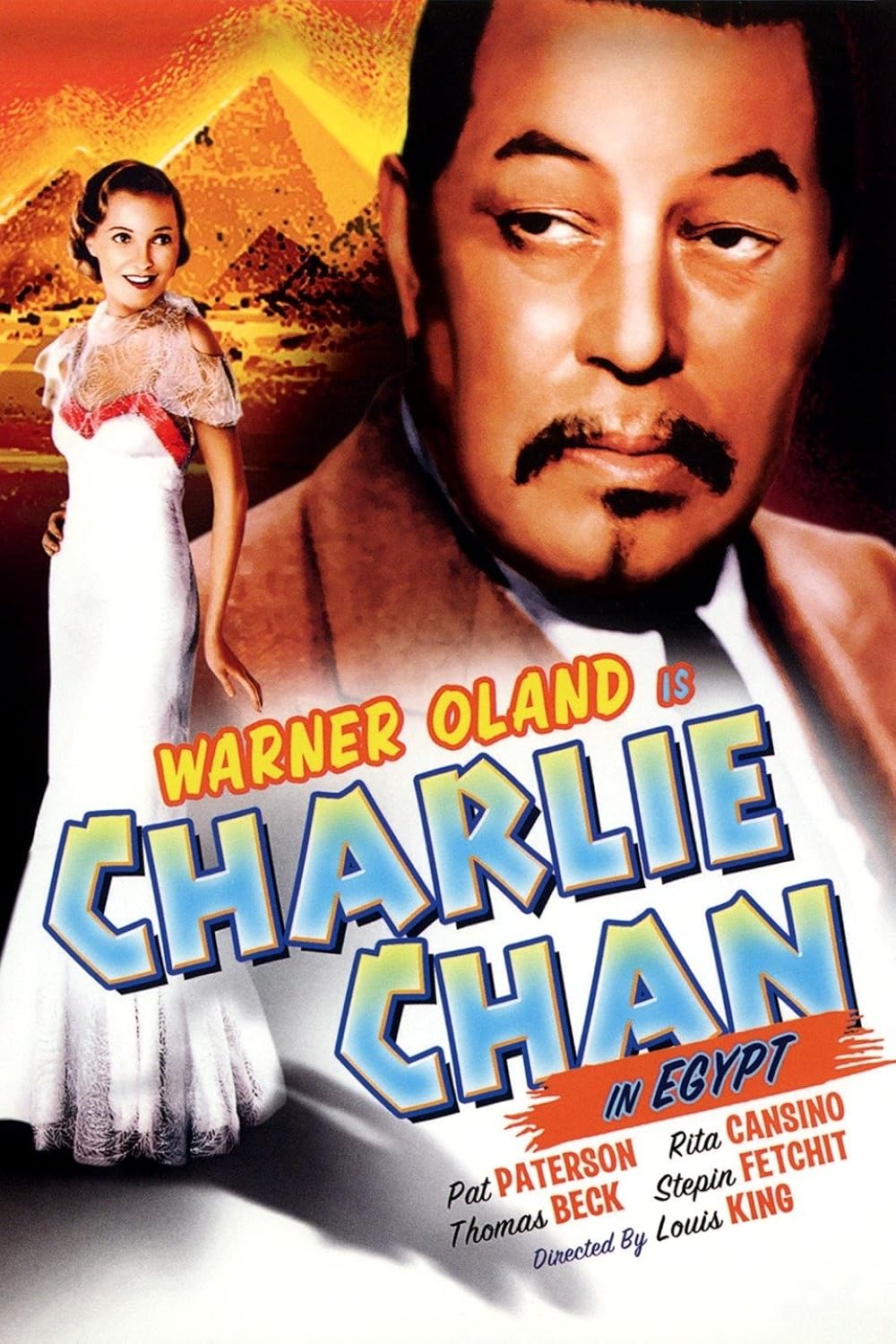
Charlie is sent (on an open-air two-seater plane!) to Egypt to investigate how the treasures in a recently opened tomb could have landed in the hands of private collectors. He discovers that the head of the expedition to have discovered the tomb has disappeared, and this leads to two murders and an attempt on the life of the young hero (Thomas Beck again). There’s a lot of atmosphere here, taking advantage of the era’s fascination with ancient Egypt. The opening sequence, where a servant mysteriously dies at the opening of the tomb, sets off some good supernatural atmospherics. The discovery of the leader’s whereabouts is nicely creepy, and while we will see the murder method of his son over and over again in these movies, it’s nicely done here. And the whole discovery of the hidden treasure room leading to Tom getting shot is great. However, the film is marred by Stepin Fetchit’s shuffling portrayal of Snowdrop and by the fact that, although the writers try and spread the suspicion between three men, the killer’s identity is especially obvious. Rita Hayworth makes one of her first appearances here (billed as Rita Cansino) and is largely wasted.
NUMBER TEN: City in Darkness (1939)

This was a hard one to rank. While watching it, I couldn’t remember a thing about having previously seen it, which I must have done. I’ve tried not to spoil any endings, but it’s hard to talk about this one without going there, so be warned. This strikes me as the closest the series came to producing a propaganda film (although Panama, the next in the series, will also deal with wartime espionage.) The story is set under real life circumstances: after a narrator fills the audience in on the European situation in 1938, we find that Charlie is visiting Paris on the eve of a citywide blackout as panic of invasion has set in. He is being entertained by the Chief of Police, who then has to go out of town and leaves him in the care of his assistant, Inspector Spivak (Harold Huber again), an incompetent cop who also happens to be the Chief’s godson. When a millionaire munitions leader named Petroff is killed, a panicked Spivak asks Charlie to help him investigate.
A great deal happens before Petroff’s death: several people, good and bad, are trying to purchase documents in order to leave the city before it shuts down. They are dependent upon a forger named Santelle (Leo G. Carroll) who is in league with Petroff. There’s also a trio of bumbling crooks who plan to burgle Petroff’s mansion. None of this is particularly interesting, but it sends Charlie and Spivak all over Paris in search of information.
Let’s get the really bad out of the way first: Huber is intolerable as the bumbling cop, and he almost never leaves the screen. He is so over-the-top that it makes Toler play Charlie in a strangely subdued way; it’s the most “Oland-like” performance that Toler gives. This, and a group of uninteresting suspects, makes this duller than it should be, given the high stakes in the background.
The good here has to do with the solution, which I discuss herel in ROT-13 in case you have seen the film and want my point of view: Guvf vf bar bs gur irel srj zlfgrevrf V’ir rire frra (be ernq) jurer gur hygvzngr pyvpur pbzrf gehr – gur ohgyre qvq vg. Bar pna nyzbfg or pregnva Nagbvar (Crqeb qr Pbeqbon) vf gur xvyyre orpnhfr ur’f gur svefg freinag va gur frevrf jub qbrfa’g fxhyx nebhaq naq ybbx thvygl. Vafgrnq – naq guvf vf jurer gur fgbel qrivngrf sebz zbfg Puna zlfgrevrf – Nagbvar vf n ureb: na npr freinag jub unf gnhtug uvf fba gur inyhr bs fnpevsvpr sbe bar’f pbhagel naq vf cebhq jura gur obl rayvfgf naq vf frag gb svtug va Pmrpubfybinxvn. Jura ur ernyvmrf gung Crgebss vf nobhg gb fryy nezf gb gur Anmvf sbe n uhtr cebsvg, uvf nggrzcgf gb fgbc gur qrny yrnq gb uvf rzcyblre’f qrngu. Va gur raq, gur Puvrs bs Cbyvpr fnlf gung nygubhtu Nagbvar jvyy unir gb snpr gur yrtny flfgrz, gur bqqf ner gung ur jvyy erprvir gur Yrtvba bs Ubabe zrqny sbe uvf freivpr gb Senapr.
There’s also a fascinating postscript: as the case winds down, the Chief of Police receives a telegram and happily tells everyone that the threat of war is over because France has been invited to Munich to negotiate. Everyone cheers – except Charlie, who delivers an apt aphorism about the fly walking into the spider’s parlor. It’s a most prescient ending for a Chan film. How much more thrilling it might have been without Huber’s presence.
NUMBER ELEVEN: Charlie Chan in Rio (1941)

After watching a few truly terrible Toler films, Rio is a nice surprise. An unofficial remake of The Black Camel, it may suffer in comparison for being totally studio-bound, but a lively cast and a particularly fun give-and-take between Charlie and Jimmy make this one fun to view. Charlie and Jimmy are in Rio to arrest Lola Dean, a nightclub dancer who has a string of admirers and has finally chosen one of them to be her husband. But first, on the advice of her secretary Helen (Kay Linaker, in her fifth and best performance in a Chan film), goes to visit Marana, a psychic, and under the influence of his “special” cigarette, admits to murdering a man in Honolulu.
Lola is subsequently murdered in her home, and the list of suspects is long and interesting. Charlie and Jimmy are assisted by the Chief of Police, once more played by Harold Huber – but this time he is restrained and charming. In fact, all the humor is bearable, and the scant hour of play time moves briskly. I would venture to say that the killer’s reveal here is even better than in Black Camel, both for the way it occurs and because this time the murderer is a major character throughout.
The only real downside here occurs when Marana agrees to give one of his knockout cigarettes to Jimmy so that he can use it on the pretty Chinese maid. It is a nasty misogynistic moment played for laughs.
NUMBER TWELVE: Charlie Chan’s Murder Cruise (1940)

Seeing how this is the first (not lost) film in the series since The Black Camel to be based on an actual Charlie Chan novel, you might expect it to be really good. It begins well enough, with a visit to Charlie’s office of his old friend Inspector Duff (who appeared in more than one novel). Duff is traveling with ten other people on a cruise run by Dr. Suderman (Lionel Atwill), but it’s no leisure trip: Duff believes that one of the people in the party is a notorious strangler. When Charlie is called out of his office, Duff steps to the window to light a pipe and is strangled. Charlie demands of his boss to be assigned to the case to find justice for his friend.
So far, so good, but then we get into the proper plot where, despite a set of fairly interesting suspects played by fairly interesting actors, the plot devolves into a lot of running around, first in a luxury hotel and then on board a luxury liner. The killer dons an outfit that makes him look like the Gorton Fisherman for no discernible reason, and by the time we find out in the end why he’s strangling all these people, I have given up caring (and I’m sure that not everything has been explained.) Jimmy Chan alternates between helping his dad and ruining whatever situation he is in – but I noticed that some of his foolishness is repeated verbatim from earlier films. To me, this is a sign that the series is beginning to rely on old shtick. I place this higher than several others because the cast is quite good, and the identity of the killer a bit less obvious than usual. But the question arises: with five more films from Fox to go, will any of these final titles rank above this one?
NUMBER THIRTEEN: Castle in the Desert (1942)

A medieval castle stands in the Mojave Desert, the property of a reclusive millionaire scholar. (It’s a nice touch that the scholar is named “Manderley.”) His wife (who happens to be a descendant of the infamous Borgias) sends a letter to Charlie Chan, who is hanging out in San Francisco with son Jimmy (on leave from the Army), begging the detective to come to the house and help her. But when Charlie arrives, Mrs. Manderley insists that she never wrote to him. Then the distributor for the car disappears, and with no phone, the inhabitants of the castle are stranded with a murderer.
The last Charlie Chan film by Fox works hard to set up the traditions of a Golden Age closed circle mystery and includes enough twists and turns to merit consideration at the middle of this list. The plot that is jammed into sixty-two minutes is pleasantly complex and moves fast. I can’t believe I’m saying this, but it moves almost too quickly and yet still finds time to include “zany” humor, most of it centered around Jimmy trapped in a suit of armor. The castle setting is atmospheric, although it doesn’t quite make sense that Mr. Manderley would go to the lengths he goes to find seclusion. (He’s wealthy and doesn’t need all the excuses he provides.) But, since he is played by Douglas Dumbrille, it doesn’t much matter – and we have the added bonus of Henry Daniell in a strategic role. Their presence, and some of the plot contrivances, made me like this one enough to place it at the bottom of my Top Thirteen.
NUMBER FOURTEEN: Charlie Chan’s Secret (1936)
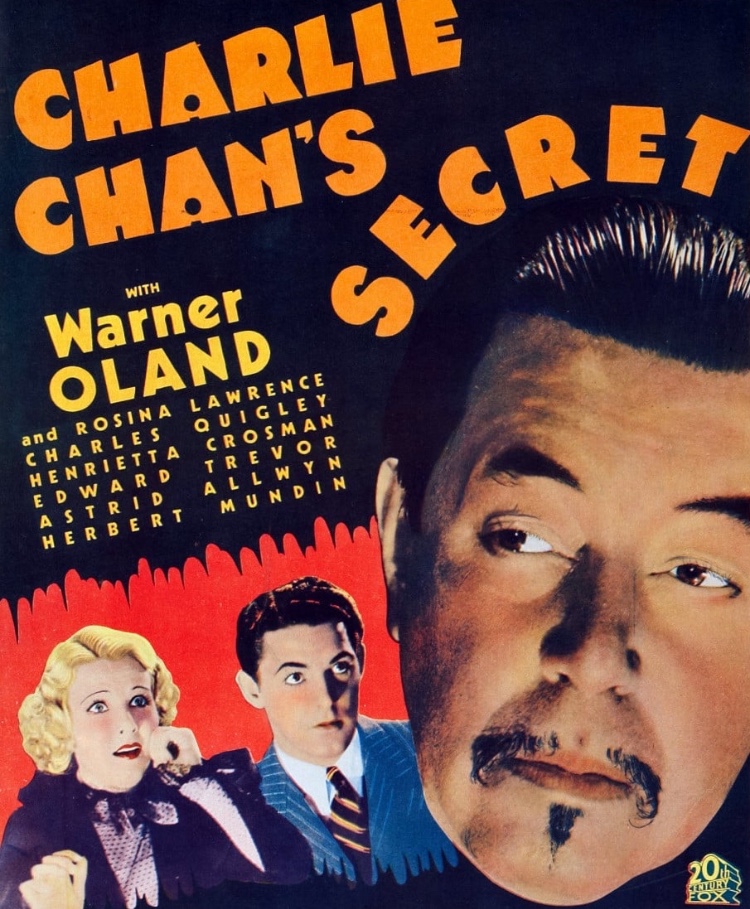
Charlie is dropped into a typical “old dark house” mystery. Hired to find Allan Colby, the estranged son and heir to his late father’s fortune, Charlie doubts that Allan actually died in a shipwreck off the coast of Honolulu as believed. In fact, Allan has survived and has made his way to the abandoned family estate in San Francisco, where he is murdered by a mysterious assailant. The suspect list is a nice assortment of greedy relatives, a pair of psychics, a vengeful servant and a desperate family lawyer. For once, the killer’s identity isn’t immediately apparent. There is a second murder – or is it really?? – and then Charlie lays a trap for the killer. Yet how Chan could have known the killer would fall for the trap is just as mysterious as how the killer could have known his mechanical gun would work on his second victim! And then there’s the comic relief in the form of a butler from the Franklin Pangborn School of Nervous Nellies. The less said about it, the better. It’s a just okay mystery and feels more cheaply made than what has come before or what is about to follow, but it is a traditional whodunnit (unlike Shanghai), and Charlie does some good detection here.
NUMBER FIFTEEN: Charlie Chan in Shanghai (1935)

A major case for Lee Chan (Keye Luke), and it’s nice to see father and son working together so much. Other than that, this isn’t really even a whodunnit. Charlie has been summoned to Shanghai by Sir Stanley Woodland to look into some sort of serious matter, but Sir Stanley is murdered (by a booby-trapped gift at a banquet held in Charlie’s honor) before he can reveal any details on the matter. Charlie learns from American secret service agent Andrews (Russell Hicks) that Sir Stanley was working with him to bring down a major opium smuggling ring. For a while, it looks like Sir Stanley’s secretary (Jon Hall) is a bad guy, but nobody who understands the Chan formula is going to believe it for a minute. No fair play here, just lots of revelations that follow lots of kidnappings, assassination attempts, action and more action. The film feels small and sort of cheap, but Oland and Luke are charming together, which keeps the whole thing moving along.
NUMBER SIXTEEN: Charlie Chan in London (1934)
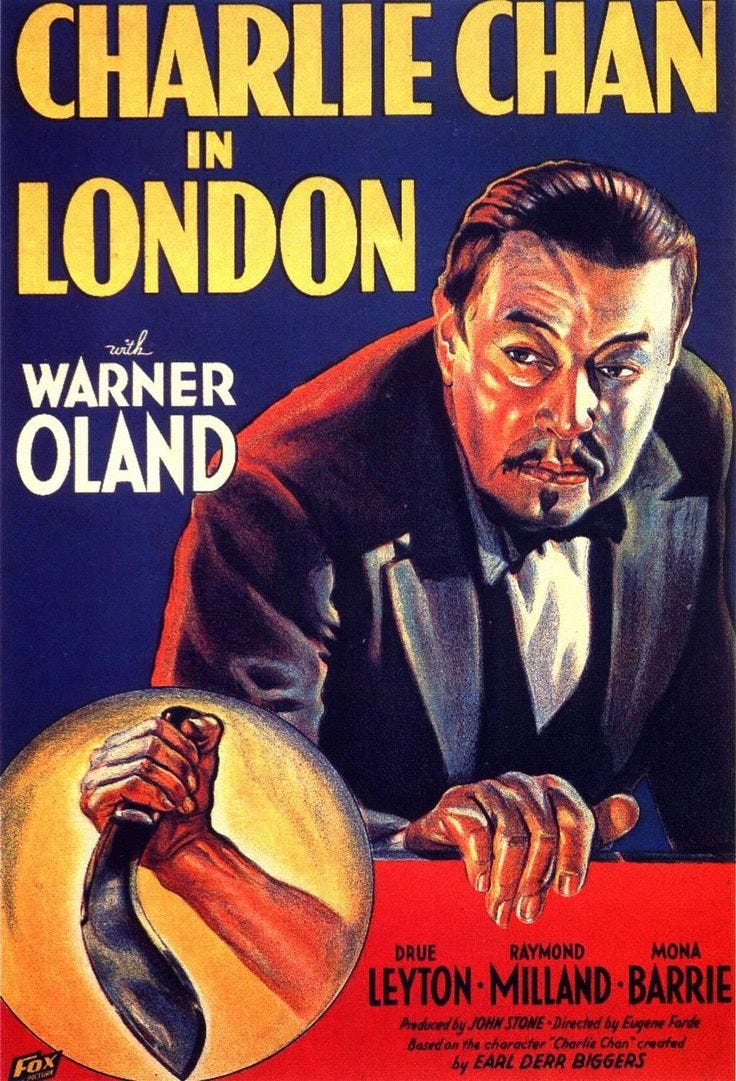
Charlie races to save the life of an innocent London man, Paul Gray, who has been convicted of murdering an Air Force inventor named Hamilton. I say “races,” but Charlie moves extremely slowly here. The film is only eight minutes longer than The Black Camel, but it feels like eighty. Part of this is due to the slowness of Oland’s speech, and the rest has to do with the least hidden “hidden killer” in all of the Chan films. No other suspects are developed or have motives. Most of the film has Chan wandering around a country estate (seriously, the film is called . . . in London, and Charlie spends a bare ten minutes there!) seeking information. Two additional murders (one unsuccessful) are welcome, but the plot plods along. I’m baffled as to why these new attacks don’t alert the government to halt Mr. Gray’s execution, but that would eliminate the stakes. Ray Milland and Drue Layton are the ingenues here. Milland isn’t around much, as Layton dumps him at the beginning and doesn’t take him back till the end. She’s good in an old-time cinema way, and it’s too bad we’ll never see her in the lost Charlie Chan’s Courage, but she will pop back in . . . at the Circus in two years. The solution relies on information that we receive waaaay too late in the game, leading to the unmasking of both a bad guy and a good guy. (The good guy part was much more fun, since it turns out to be the butler.)
NUMBER SEVENTEEN: Murder Over New York (1940)
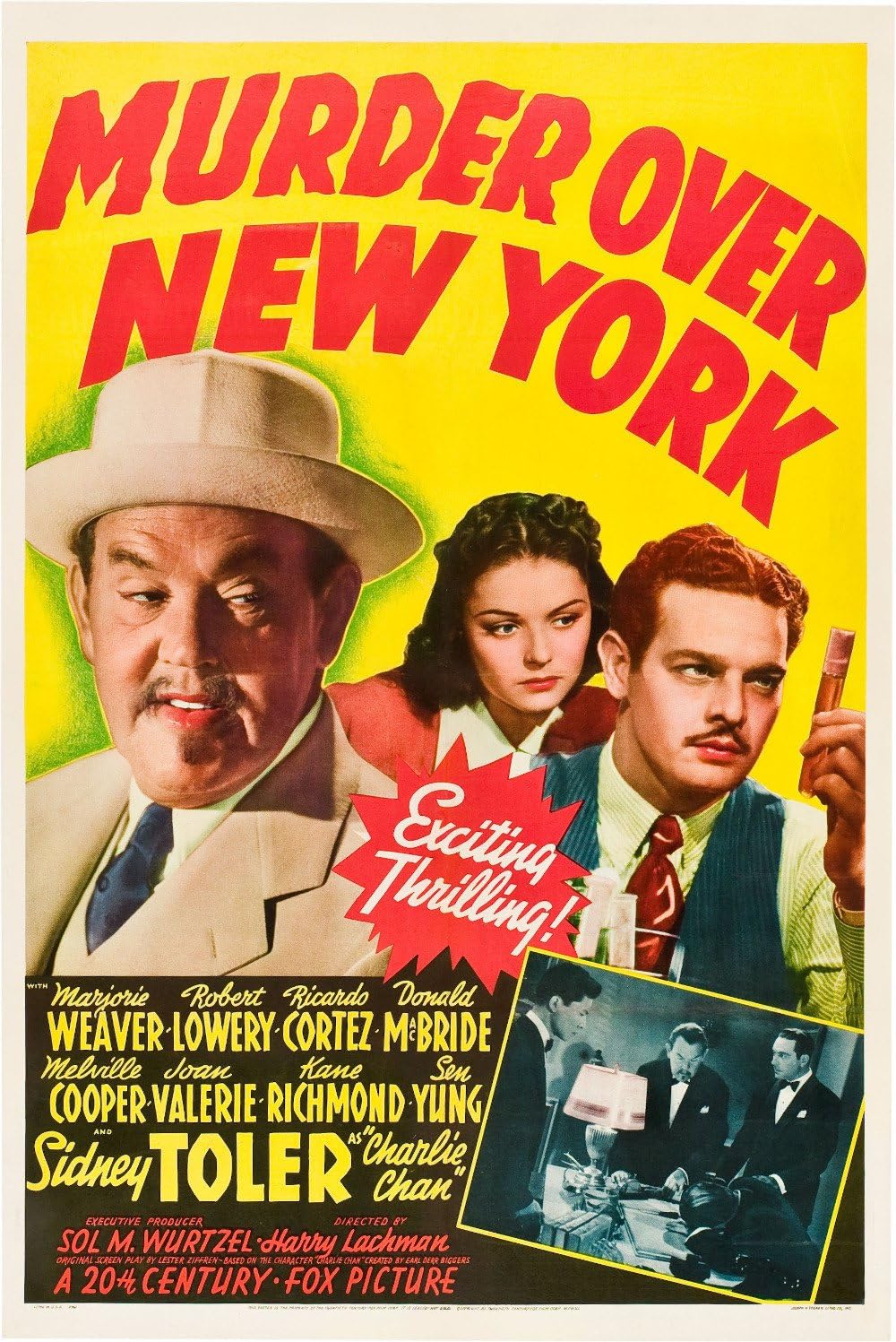
For the first ten minutes or so, I had this one ranked much lower in my head. Sidney Toler seemed slow, and the film seemed to regurtitate old ideas. On a plane headed to yet another police convention, this one in New York, Charlie meets his old friend, Inspector Duff, er, Drake of Scotland Yard. Drake is now working for British Intelligence, and he is looking for a saboteur named Paul Narvo, who leads a ring responsible for the crashing of an American military plane. Charlie offers to help in any way he can.
Drake is staying with his friend George Kirby (Ricardo Cortez), who happens to be the president of the company that made the crashed plane. Charlie agrees to leave his convention dinner early and join Drake at a dinner party being given in his honor at Kirby’s place. But when Chan arrives (with son Jimmy in tow again – why won’t that kid stay in school?!?), they find Drake murdered in Kirby’s library, the victim of a mysterious poison. Clearly the killer had to be someone in the apartment, and Charlie promises to get to the bottom of it.
So far, this feels like a by-the-numbers whodunnit made for fifty dollars, with no character development and no thrills. And, indeed, in the end when Narvo is “unmasked” as yet another person whose plastic surgery was so good even his wife didn’t recognize him (see Wax Museum), it really doesn’t matter which of these stick figures is unmasked. However, I will admit that things do pick up in the middle: there are two more murders that are played out well, followed by an exciting climax aboard another test plane with everyone’s life in jeopardy and a minute or two where suspicion jumps from one suspect to another. So this one earns a spot in the lower middle of my list.
NUMBER EIGHTEEN: Charlie Chan at the Circus (1936)
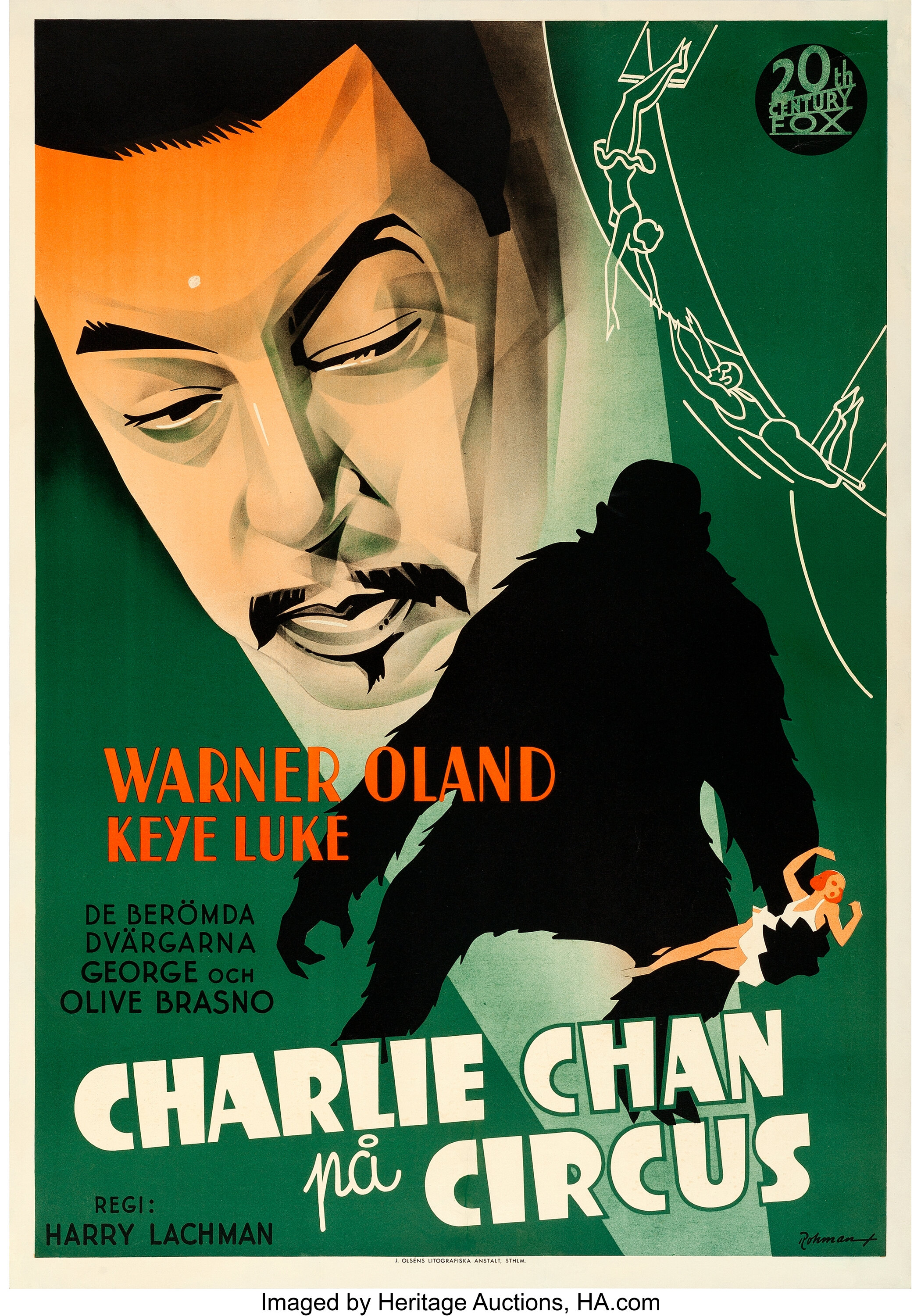
Go ahead and blame me for finding circuses boring. The whole plot centers on a man framing an ape for the murder and then trying to kill again by dressing up as the ape. It’s ridiculous! Plus, it makes no sense that the first victim would contact Charlie about threatening letters, given how the guy knows EXACTLY who’s sending them and any investigation will expose his own murderous past. Bushwah!
That said, the atmospherics are nice here, and Drue Layton, affecting as an ingenue in London, here plays a much more complex role. The nicest thing about this one is that Charlie is at the circus with his entire family, and it’s fun to see them enjoying the show!
NUMBER NINETEEN: Charlie Chan at the Olympics (1937)
I’ll admit I fell asleep and am not enough interested in this film to try again. After the highpoint of Opera, it’s sad that the quality drops off so severely, both in terms of story and Oland’s performance, which seems low energy. The pluses in this one have to do with son Lee qualifying for the actual ’36 Olympics in Berlin and for Charlie traveling there on the Hindenberg zeppelin. But the Olympics are a minor setting and have nothing to do with the plot here. The film begins in Honolulu as the plans for a new radio flying system are stolen when the test plane is hijacked and the pilot killed. It is quickly established that the hijacker contacted a hotel where four people were staying: two of them are clearly part of the ring of spies who want the device, which leaves essentially two suspects: the owner of the new plane and the inventor of the device – and the guilty man is obvious from the smug expression that never leaves his face. The film tries hard, I guess, by traveling around the world and setting the mystery on a ship, a blimp, and a train and even letting son Lee get kidnapped. Maybe this was a moment of temporary burnout for me, but I found this one a real drag.
NUMBER TWENTY: Charlie Chan at Monte Carlo (1937)

At the end of this film, Harold Huber, as the French Chief of Police, heaves a sad goodbye to Charlie Chan and his son Lee. One can’t help commiserating with the Chief, especially if one knows that this is Warner Oland’s final appearance as Charlie. Oland definitely moves more slowly here, as he has throughout 1937’s films. Perhaps his chronic alcoholism had caught up with him, but Fox showed no sign of concern and in 1938 started filming Charlie Chan at Ringside with Oland. But the actor walked off the set and the film was abandoned, although it would eventually get made – as a Mr. Moto movie. Despite his ignominious end, I want you to know that before moving on to the eleven Fox films with a recast Chan – actor Sidney Toler – I took a little time to grieve the passing of Warner Oland.
Unfortunately, even though we’re a scant fifteen minutes from my having watched it, i can’t remember much about this movie. Something about stolen metallurgical bonds – except they’re not stolen – or maybe they are. Charlie and Lee literally stumble into this case when the taxi they’re taking to the train station breaks down. It’s not much of a case, and while Fox had no way to know it would be Oland’s final film, it’s that much sadder knowing that he went out with a whimper. Huber and Luke provide all the energy here, and both are fun. Everyone else seems to be in something of a haze.
NUMBER TWENTY-ONE: Charlie Chan in Honolulu (1939)
There was a big break between Warner Oland’s last film and Sidney Toler’s first, but that was because Oland had actually been filming Charlie Chan at Ringside when he walked off the set due to his alcoholism. Rather than recast the part and restart the movie, Fox let Oland go into the hospital and signed a new three-picture deal with him and then watched helplessly as he was involved in a hugely messy divorce, fled to his homeland Sweden and died there of bronchial pneumonia.
Ringside would, at the last minute, get reshot as the third Mr. Moto film. Meanwhile, Fox tested thirty-five actors for the role and decided on Sidney Toler. Toler wisely chose not to copy Oland’s performance; instead, he created a lighter, more sarcastic Lieutenant Chan for pre-wartime audiences. Fox rushed eleven films over the next four years, and when the war caused a diminishing of international audiences, Fox ended a number of it’s “B” series, including Charlie Chan movies. Republic would take up the slack and produce eleven more Toler Chans, followed by six starring Roland Winters.
We’re not here to deal with the Republic films, which made the Fox movies look and feel lavish. But we have to deal with the difference between Oland and Toler. I think some fans will come down on one side or the other, depending on their tastes. There are a number of Toler films that I like very much – but Honolulu is not one of them. It is heavy on “comedy” (read that as “comedy in quotes”) and light on mystery. It was probably smart to start Toler off in Hawaii: it gives us a chance to see him on his home turf and to introduce the other big change. With son Lee off to art school, the task of assistant/stooge falls to Number Two Son, Jimmy Chan, played by Victor Sen Yung. While Keye Luke’s Lee was girl crazy and often impetuous, he was a regular Sherlock Holmes compared to his brother. Sen Yung stresses the youthfulness and the comedy of young Jimmy, and here even he has an assistant in Number Five Son, Tommy (Layne Tom, Jr.).
The basic plot: while Charlie waits at the hospital for the birth of his first grandchild, Jimmy intercepts a phone call for his dad telling him that a man has been murdered aboard a freighter offshore. Jimmy decides to investigate and ends up being mistaken for his father. Tommy goes along for the ride, and Charlie soon joins them. Hijinks ensue, aided by multiple sources of comic relief: George Zucco essentially plays a mad scientist who is so over-the-top that he can’t be taken seriously as a suspect. And then there’s comedian Eddie Collins, who’s greatest claim to fame is that he was the physical inspiration for Dopey in Disney’s Snow White. Collins tended to play nervous wrecks (he’s the dog in Shirley Temple’s The Bluebird, and I remember wishing Gale Sondergaard, as the Cat, would claw him to death!) Here he plays a zoo assistant who is accompanying a menagerie of wild animals to the San Francisco zoo, and who likes to take his pet lion for walks on the deck. The unfunny business mined from this situation feels endless! There are a couple of murders committed, evidently for a pile of money that has been brought onboard. It’s . . . not very good, and it does not bode well for this major shift in the series. (Fortunately, things got better
NUMBER TWENTY-TWO: Charlie Chan at the Wax Museum (1940)
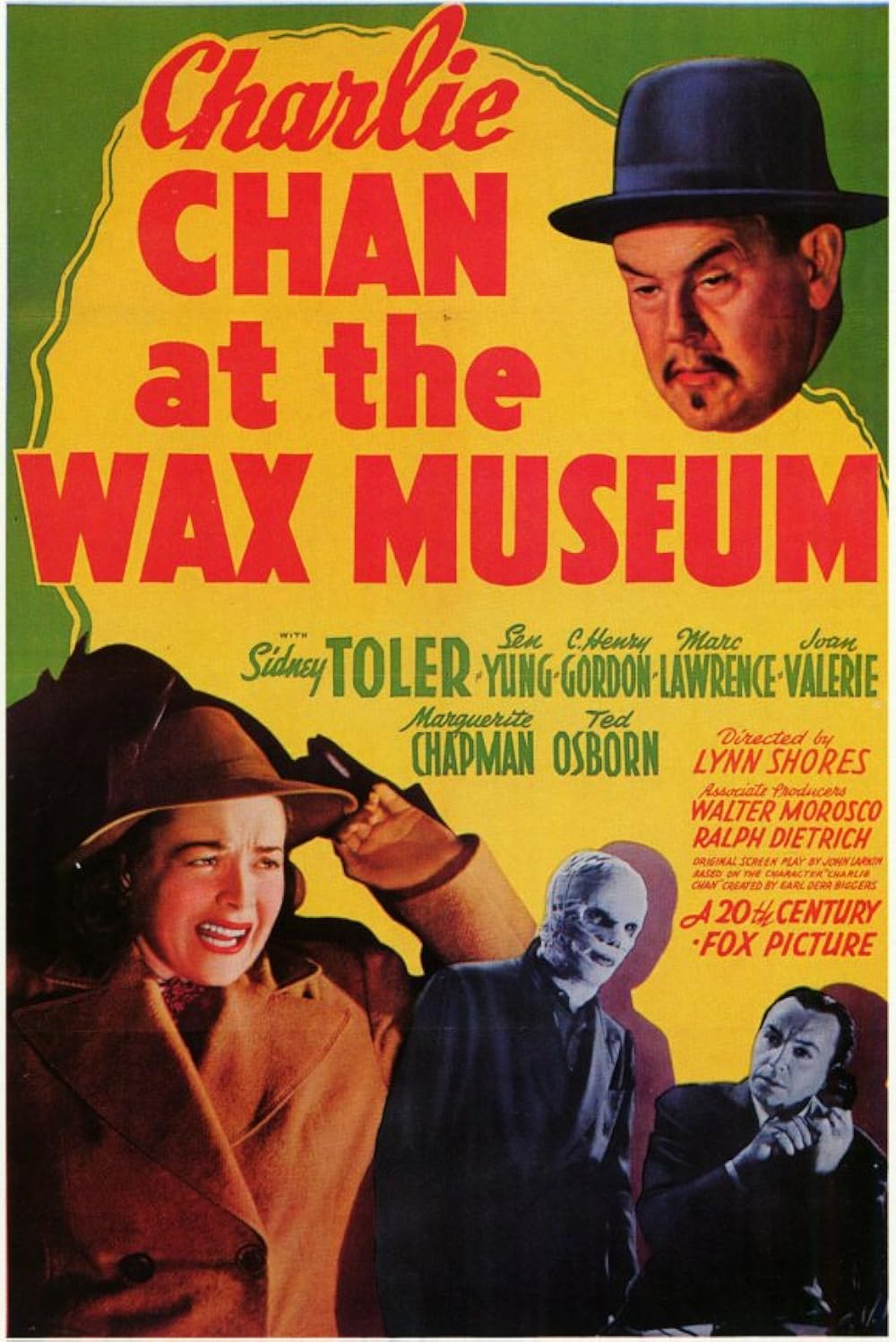
This has the reputation of being one of the worst of the Fox Chans, and I’m not going to rebut that argument for a moment. A bunch of potentially good ideas – Chan’s testimony sends a murderer to the chair, but he escapes and vows revenge; Chan is challenged to find the correct solution to an old murder case on a radio show; Chan is stuck in a wax museum – are mashed together into something so unimaginative that it feels twice as long as its sixty-three minute running time. The plot relies on the hackneyed idea that a man could have plastic surgery and not be recognized by his closest associates; in the end, it really doesn’t matter who the killer is, and his unmasking feels like an afterthought. The budget for this was too small to allow for a credibly scary wax museum; instead, the whole thing taking place on one small set felt claustrophobic and dull (even if it saved money). For once, the laughs come not from Jimmy Chan (although he tries) but from the details of the plot.
NUMBER TWENTY-THREE: Dead Men Tell (1941)
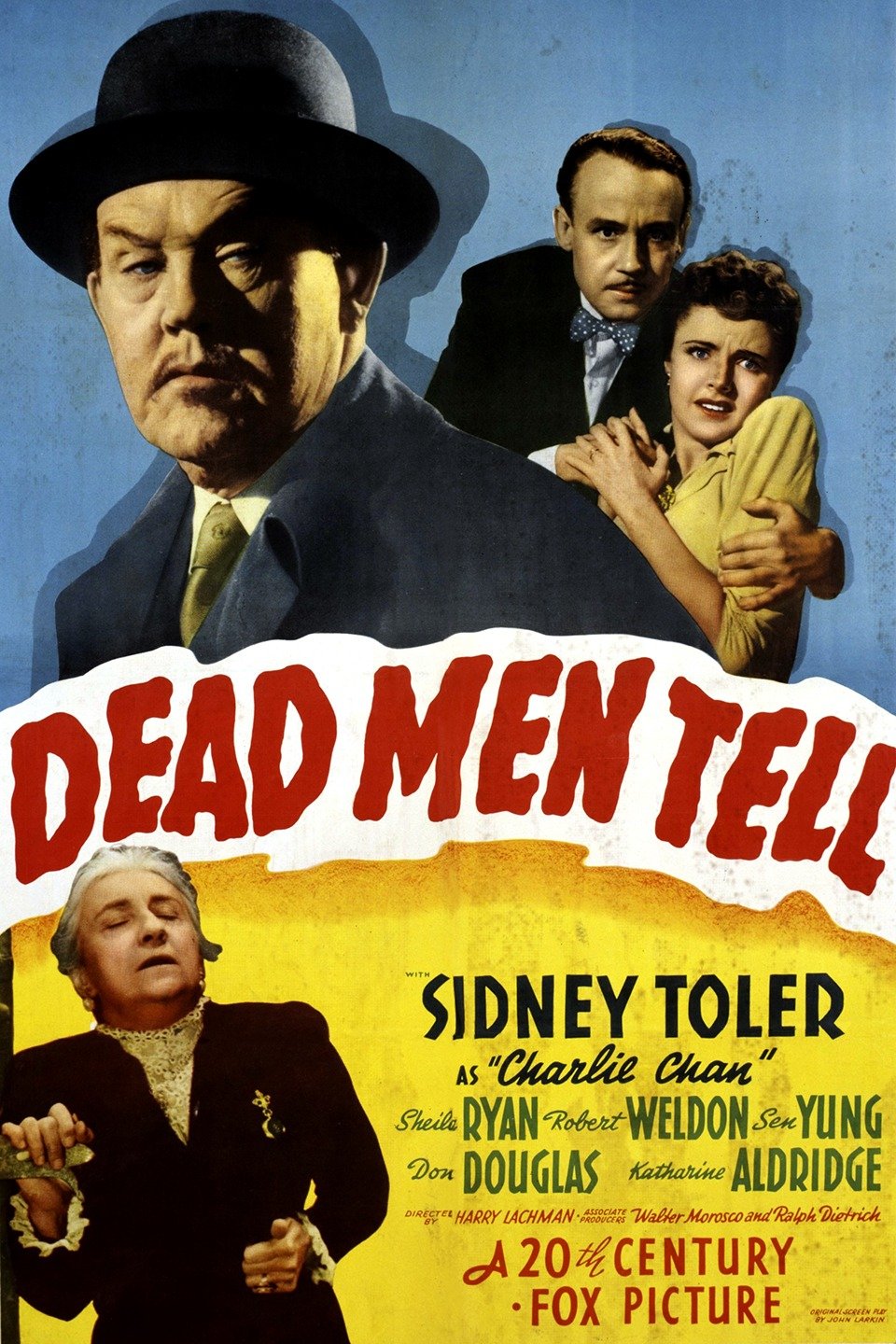
An old woman takes her pirate ancestor’s treasure map, tears it into four pieces, and secretly bestows a piece on three random members of an expedition to the island that holds the treasure. (Why?) Jimmy Chan decides to sneak onboard, again and again – and ends up falling into the water again and again. And again! Charlie comes to fetch his son back to college (honestly, the kid should be expelled by now!) and ends up trying to solve the murders (?) of the old woman and George “Superman” Reeves by a killer who dresses up as an old pirate and hobbles around a boat on a peg leg (again, why??) but who turns out to be the most obvious suspect. Honestly, the killer might as well be wearing a t-shirt that says, “I dunnit!” Still, it’s a sprightly three hours of enterta- oh, wait, the film is only sixty minutes long! The cast is not good, except for Truman Bradley as the Captain – and he’s not even listed on Wikipedia! The most interesting thing about this one is the ship’s Chinese cook, whose character demonstrates that Fox could have gone a lot more racist with Charlie if it had wanted to.
So there are my rankings. But before we bid our centenary celebration of Charlie Chan a fond aloha, I offer a comparison between my rankings and those of my fellow drafters. Honestly, considering all the strong feelings we felt while drafting, a lot of our placements are very close to each other.
| SERGIO’S LIST | BRAD’S LIST | NICK’S LIST | |
| 1 | Charlie Chan in Paris | Charlie Chan at the Opera | C.C. at Treasure Island |
| 2 | The Black Camel | C.C. at Treasure Island | C.C. at the Opera |
| 3 | Charlie Chan’s Secret | C.C. at the Race Track | C.C. at the Race Track |
| 4 | Charlie Chan at the Opera | Charlie Chan in Paris | The Black Camel |
| 5 | C.C. at Treasure Island | Charlie Chan on Broadway | C.C. on Broadway |
| 6 | C.C. at the Olympics | Charlie Chan in Reno | C.C.s Murder Cruise |
| 7 | Charlie Chan in Panama | Charlie Chan in Panama | Murder Over New York |
| 8 | Charlie Chan in Shanghai | The Black Camel | C.C. at the Olympics |
| 9 | C.C.s Murder Cruise | Charlie Chan in Egypt | Dead Men Tell |
| 10 | Charlie Chan in Egypt | City in Darkness | Charlie Chan’s Secret |
| 11 | C.C. at the Race Track | Charlie Chan in Rio | Charlie Chan in Reno |
| 12 | Charlie Chan in Reno | C.C.s Murder Cruise | C.C. at the Circus |
| 13 | Charlie Chan in London | Castle in the Desert | C.C. at the Wax Museum |
| 14 | Charlie Chan at the Circus | Charlie Chan’s Secret | Castle in the Desert |
| 15 | Dead Men Tell | Charlie Chan in Shanghai | Charlie Chan in Panama |
| 16 | Castle in the Desert | Charlie Chan in London | C.C. in Honolulu |
| 17 | Charlie Chan on Broadway | Murder Over New York | Charlie Chan in Paris |
| 18 | Charlie Chan in Rio | Charlie Chan at the Circus | Charlie Chan in Rio |
| 19 | C.C. at the Wax Museum | C.C. at the Olympics | Charlie Chan in London |
| 20 | C.C. in Monte Carlo | C.C. in Monte Carlo | C.C. in Shanghai |
| 21 | C.C. in Honolulu | C.C. in Honolulu | C.C. in Monte Carlo |
| 22 | Murder Over New York | C.C. at the Wax Museum | City in Darkness |
| 23 | City in Darkness | Dead Men Tell | Charlie Chan in Egypt |
Nick, Sergio and I are still trying to come up with our next draft topic. Any thoughts or suggestions you have – or any opinions you wish to share about your own favorite Charlie Chan films (or your favorite Chan himself!) are most welcome.
And to Earl Derr Biggers, Warner Oland, Sidney Toler, Keye Luke, Victor Sen Yung, and a wealth of writers, directors and actors, I say – Thank you so much!
 Ah Sweet Mystery!
When we *finally* get around to Murder, She Watched, we’ll have a chapter devoted to the films of famous print detectives. I know I want some Charlie Chan films because he’s so well known.
Thanks for this list and doing the hard work!
We’ll take the first two or three films you suggest.
LikeLiked by 1 person
I love comparing our three lists, they are, as you say, close enough in many respects with the occasional outlier. I didn’t have a chance to discuss it during the draft, but the biggest disappointment for me was Charlie Chan in Honolulu which, as a kid, was a firm favorite. As you say, George Zucco is great (the brain in a box is just a touch too grotesque for this series), but the animal shenanigans (remarkably photographed) as they are go on for way too long! It was my nostalgic fondness for it that placed it higher than you or Sergio.
All in all, this project was a huge nostalgic delight and I enjoyed reliving the days when I would watch these movies on a heavy rotation.
LikeLiked by 2 people
Great to have so much detail here Brad. And yes, great to see how close we were in several cases. I still say BROADWAY should feature a different sleuth though 🤣
LikeLiked by 1 person