Today we reach the halfway point in our 36-film list of 1955 films noirs that Sergio Angelini compiled for our Noirvember draft. (Find the list here.) Sergio, Nick Cardillo and I are currently watching and evaluating each of these in order to present our Top 13 list to you. Today’s threesome includes a top favorite, one that I have taught in film class many times, and two films that I have never seen (one of which I’ve never heard of!!) I hope you’re watching along!
Kiss Me Deadly
I’ve written about Robert Aldrich’s classic Ugly Noir before. You can find the article here, but here’s the gist of that earlier post.)
Based on a Mickey Spillane novel featuring his tough guy PI Mike Hammer, Kiss Me Deadly provides a landscape where violence reigns, where it’s impossible to tell, at least by their actions, the good guys from the bad, and where the ultimate goal isn’t riches but, quite literally, apocalyptic power. Initially banned by the Kefauver Commission as a film “designed to ruin young viewers,” Kiss is now hailed as one of the most influential noirs of all time and is widely regarded as inspiring the auteurs of the French New Wave. Frankly, I can understand both positions: Kiss Me Deadly is made up of socially irredeemable characters doing disgusting stuff; what helps the viewer along, ironically, is that it’s a stunningly made film by director Aldrich and cinematographer Ernest Laszlo.
Using Spillane’s novel as a starting point, Aldrich creates something bigger, sleazier, and ultimately darker than anything that sprang from the author’s pen, starting with the hero himself. Mike Hammer was written to be one of your tough-guy private investigators, good with his gun and with his fists, and dedicated to bringing down crime cartels and awful people. The Hammer of the screenplay, co-written by Aldrich and Buzz Bezzerides, is a no-holds-barred horrible person: a low-life investigator who blackmails his clients and sleeps with his secretary Velda so that she will sleep with his clients. As Hammer, Ralph Meeker perfectly embraces the scummy edges and violent impulses of this creep.
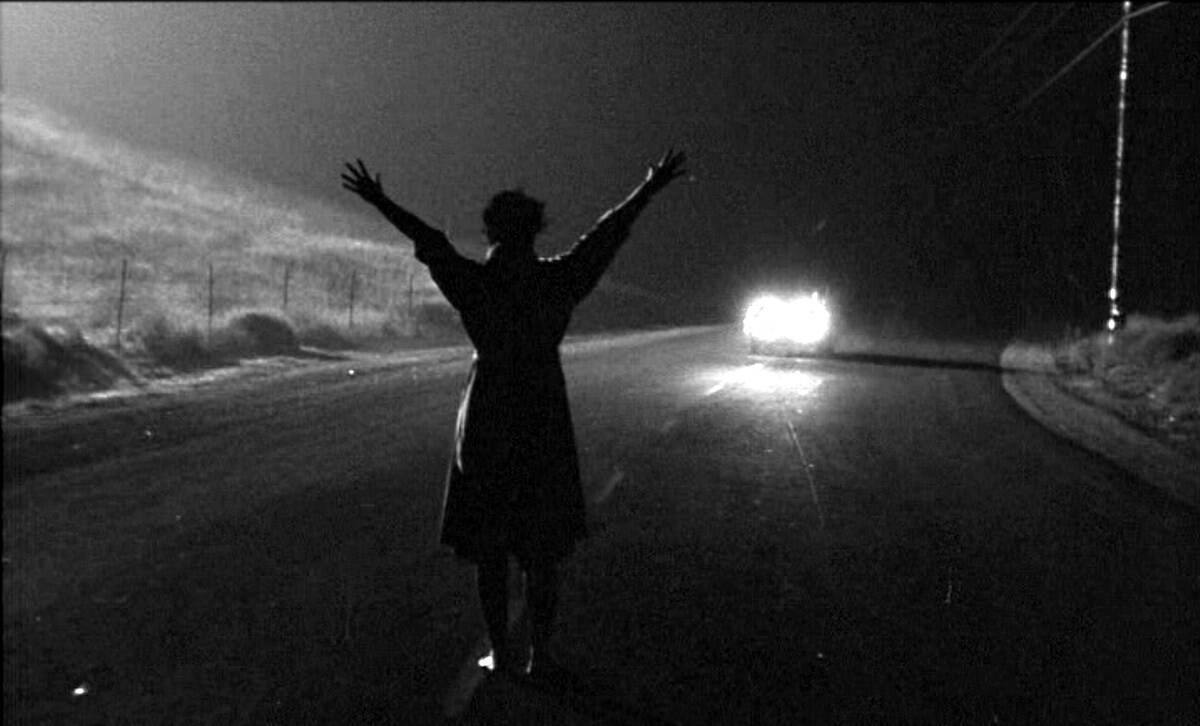
Every change to the novel Bezzerides makes, combined with Laszlo’s camera work, lifts the film from a standard crime movie with a murky, byzantine plot into a non-paralleled study in paranoia, starting with the striking opening scene where Cloris Leachman comes running down the highway, barefoot and breathing hard, and forces Hammer’s hot rod to stop and pick her up. Shortly, she’ll be tortured to death by a pair of goons as Hammer lies semi-conscious on the floor, listening to her screams. Then he’ll be crammed with her dead body into his little car and sent careening over a cliff. And that’s just the first five minutes.
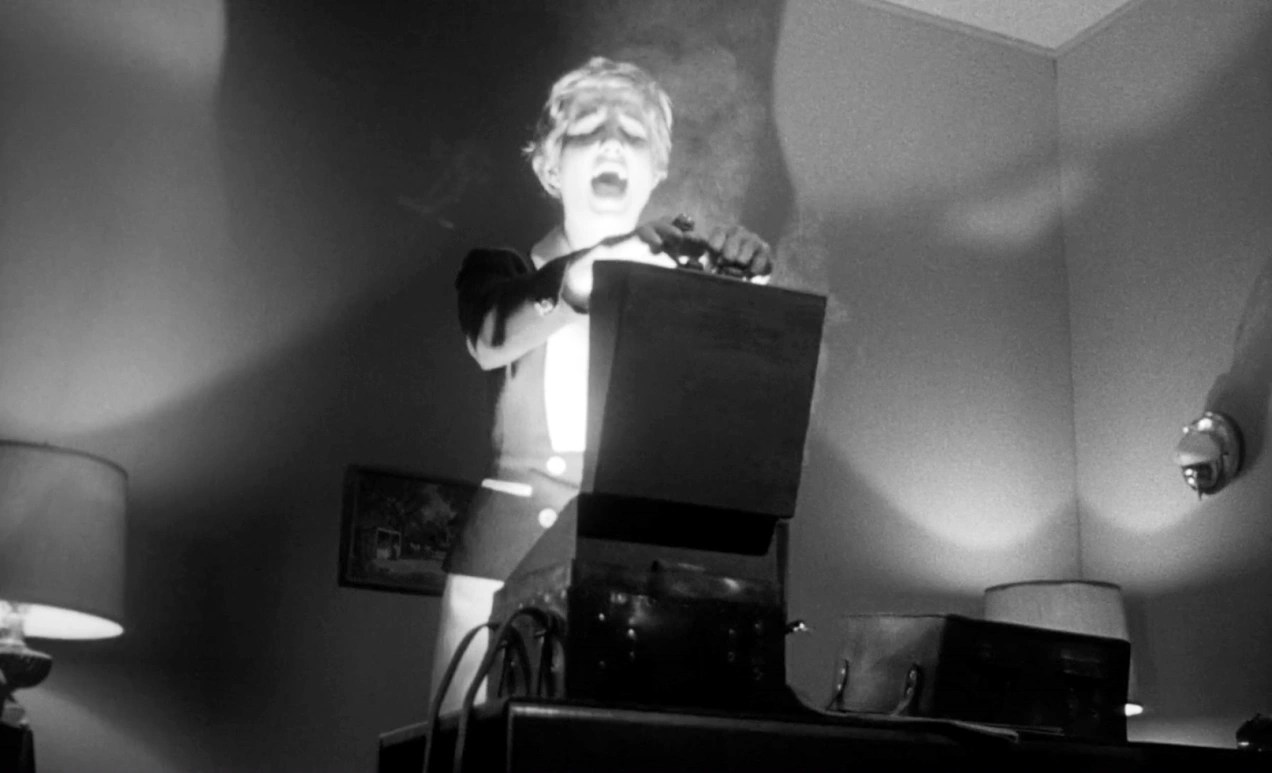
There is virtually no let-up to the hurt and the hate that permeates this film. In the end, everyone gets their comeuppance, starting with Gabrielle (Gaby Rodgers), one of the most unappealing femmes fatales you’ll ever meet, but it’s hard to enjoy the justice of it because the scenario presented suggests that, as the bad guys go, so goes the world. And that’s true whether you watch the original ending or the edited version. (TV producers cut 82 seconds from the final scene in order to fit the movie into prescribed time slots!) Bezzerides and Aldrich here successfully tap into the growing fears of a nuclear Armageddon that had been gripping the nation since the end of World War II.
This is Must See and Can’t Watch filmmaking, rolled into one.
* * * * *
Las Vegas Shakedown
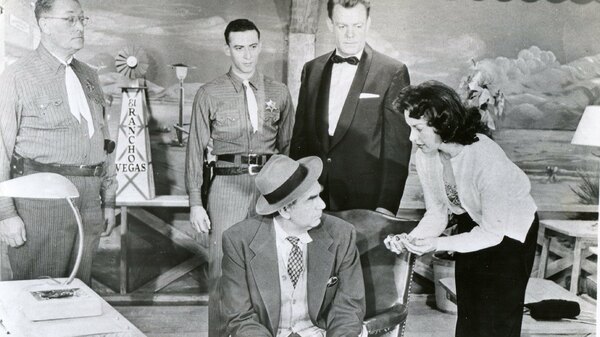
This movie is just plain weird. Some of it is noirish – the part about Joe Barnes (Dennis O’Keefe), who owns a Vegas casino and learns that Al “Gimpy” Sirago (Thomas Gomez), a gangster whom Barnes testified against and helped put in prison, has gotten out of jail and is coming to Vegas to force Barnes to sell his casino to the Mob, after which Gimpy plans to kill him. Barnes is first presented as weary of life, and if the film had been about his desperate attempts to stop Gimpy and how it makes him value his life once more, then this might have been a nifty little cheapie. It didn’t help that the print I watched kept skipping, but just look at the still below, which resembles a publicity shot from a mediocre community theatre production. That’s what the whole film looks like.
But LV Shakedown is so much more than this! It’s sort of a low rent Grand Hotel that intersperses Joe’s story with several subplots involving various customers who get in trouble over gambling. These include veteran actors Charles Winninger and Elizabeth Patterson as a small-town bank president and his wife who sneak over to Vegas in order to “live a little.” The man tries a systematic method of gambling and can’t stop winning – but it’s going to get him in trouble with the small-minded townspeople back home. There’s also couple whose marriage is threatened when the wife’s old-time gambling fever causes her to lose her husband’s investment in a future enterprise.
Of course, Joe helps both these couples find happiness in between getting beat up and dodging bullets. Joe also finds love in the form of a San Francisco schoolteacher (Colleen Gray) who has come to town to write a technical manual on how the Vegas odds are stacked against gamblers. The moment she and Joe meet, her glasses come off and she melts in his arms – which is good because it turns out he needs her to stay alive. And every time they kiss or talk or look in each other’s eyes, the score by Edward J. Kay gets so sticky sweet that I felt my blood sugar drop just watching.
This is an overly ambitious film, a noir that keeps veering away from the genre. I usually love O’Keefe and Gomez, but they both look old and tired here. (O’Keefe didn’t have much more work in him, but Gomez would act in film and on TV for another sixteen years.) I got some mild enjoyment out of watching this for the first time, but I can’t picture a revisit in the future.
* * * * *
Mr. Arkadin (aka Confidential Report)
It’s almost impossible to write anything meaningful about this one in a couple of paragraphs. The history of Mr. Arkadin reads like a film noir in and of itself – but then you could say the same thing about Orson Welles’ career as a film director. To my mind, Citizen Kane is deserving of every accolade heaped upon it, but boy did it make people mad! As a result, Welles was at continual war with the studios, who liked to exercise their prerogative and re-edit the director’s original cut. That nearly destroyed The Magnificent Ambersons (possibly my favorite Welles film) – but what of this oddity?
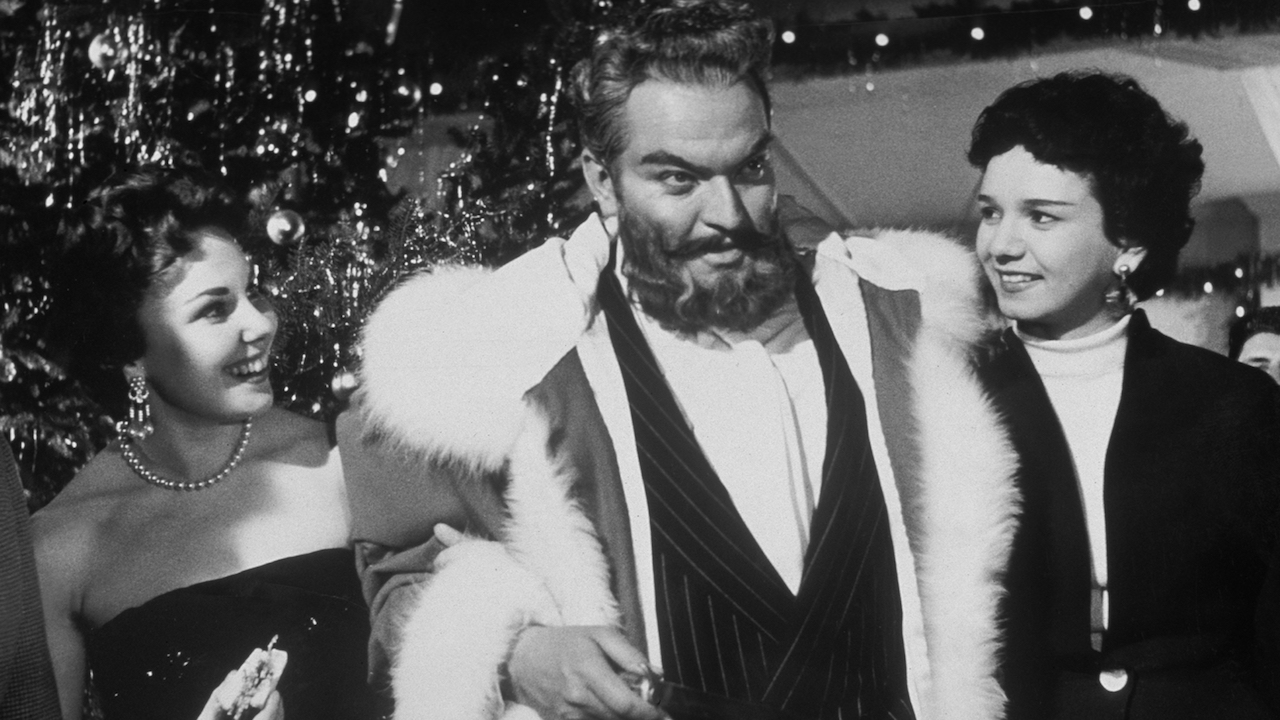
There are said to be seven or eight versions of this film in circulation, which Welles crafted from some scripts of his radio series The Adventures of Harry Lime, which was in turn inspired by The Third Man, Carol Reed’s classic noir that featured Welles as Lime, if only in the last few minutes of the movie. There are many parallels between Arkadin andKane, from the complex time structure of the film (at least in the “Corinth” version that I saw, the one that is also labeled Confidential Report) to the focus on uncovering the “truth” about almost mythological figures, both played by Welles.
I didn’t have a very good time watching this, but it is a fascinating film to watch. The visuals and the performances are over the top. The one big negative is that the protagonist, a petty criminal named Guy Van Stratton, who is hired by Arkadin, an apparent amnesiac, to discover the truth about how he made his billions, is played by Robert Arden. It’s not a great performance, but it might be due to the fact that Van Stratton is intentionally written as an obnoxious jerk. Welles, made up to look like a genie, overacts to the hilt: that’s not a surprising or even a bad thing, but Arkadin was a far less compelling character than the fascinating figure of Charles Foster Kane, the sadistic sheriff in Touch of Evil, or even the undercover Nazi in The Stranger.
Still, there were plenty of fun performances by the likes of Michael Redgrave, Mischa Auer, and Patricia Medina. Paola Mori, an Italian Contessa trying her hand at acting, is beautiful. She plays Arkadin’s daughter, but in real life she was sleeping with her “father” and eventually became his third and final wife. Most of the film consists of Guy taking a journey throughout post-war Europe in search of information. It feels like a dark, scattered melding of Kane with Alice in Wonderland. You have to hand it to Welles for his insane creativity, but you don’t have to give him top marks in this draft!
* * * * *
The rankings? This time they fall into place easy as pie:
1st place – Kiss Me Deadly, by a mile! One of the final classics in the genre!
2nd place – Mr. Arkadin, by default. It’s no match for the #1 but far more worth watching than the #3.
3rd place – Las Vegas Shakedown, by way of saying that I can think of a few interesting ways to turn Grand Hotel into a noir, but this isn’t one of them.
I’ll be back with nine more entries from the Noirvember ’55 list next month!
 Ah Sweet Mystery!
Certainly a very eccentric trio, Brad 🤪
LikeLike