Here’s a mystery for you: why is Netflix trying to murder the filmgoing experience as we know it?
Don’t worry, you don’t need to provide me with any clues. The solution, as in so many classic mysteries, comes down to greed. Produce a film and then control the distribution – that’s the business model for the industry. Since Netflix is a streaming service, however, it makes no sense to them for everyone to first see the movies they make in a theatre. And so the film plays in a few scattered houses and then lands on the streaming service where most of us have to watch it.
I don’t mean to open this post with a big kvetch, but I’m feeling bad for Rian Johnson, the only writer/director out there who wants to cater to the classic mystery fan! Since 2019, Johnson has given us two diversely brilliant detectives: the Southern-drawling, musical theatre-loving charmer Benoit Blanc (Daniel Craig) in two Knives Out movies, and the vape-addicted bundle of quirks Charlie Cale (Natasha Lyonne) who was on the run for two seasons of Poker Face before Peacock cancelled the show! (Johnson is currently shopping new seasons and has said if it happens, he will replace Lyonne with Peter Dinklage.)
I was a big fan of both Knives Out and its follow-up, Glass Onion, despite the fact that picking out the killer in the first movie was a no-brainer, and in the second film it was even less of a brainer! Watching Johnson play so lovingly with all the tropes we love – the closed circle of well-cast suspects, the lovingly rendered classic settings (country home, mysterious island), the careful dropping of legitimate clues – warmed my Golden Age-loving heart! Thus, it was especially lovely to learn that both Johnson and his leading man loved making these movies and want to make more of them!

Which brings us to Wake Up, Dead Man, another well-cast mystery with an intriguing setting (a decrepit church in a rural town), legitimate clues, and the added bonus of channeling John Dickson Carr (who has never in history been mentioned so much in a film!) by handing us an actual impossible crime. With all that, Johnson has struck out in a slightly new direction, giving us a film that, despite flashes of wit and humor, strikes a darker, more serious tone from the start.
Josh O’Connor plays Jud Duplenticy, a former boxer touched by tragedy who has become a priest. A clash with a self-righteous deacon lands Jud in trouble, and he is “banished” to a dying parish in the sticks where he will serve as assistant pastor to Monsignor Jefferson Wicks (Josh Brolin), whose own tragic past has made him a truly disturbing individual.
Jud watches with growing horror at the way Wicks has fashioned his parish to exclude all who don’t show obeisance and faith toward their leader. This leaves a small group at worship – sort of a closed circle, if you will – and they are an interesting bunch: the cuckolded doctor (Jeremy Renner), the depressed lawyer (Kerry Washington), the dried-up science fiction writer (Andrew Scott), the crippled cellist (Cailee Spaeny), and the failed politician (Daryl McCormack). The church is tended by Martha Delacroix (Glenn Close), who cleans the sanctuary, does the books, and plays the organ, and the groundskeeper Samson Holt (Thomas Haden Church), who has an understanding with Martha.
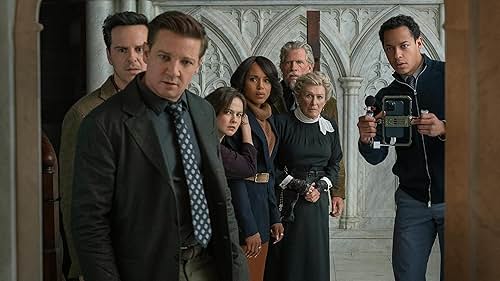
True mystery fans don’t need any more information than that. The cast play their roles to the hilt, with less overt comedy than we have seen in the other two films; Close and O’Connor are especially good. Director Johnson takes his time letting the dysfunction of this small community play itself out until we get to the murder, which is all that you would hope it would be. Of course poor Jud, the outsider, immediately becomes Suspect #1. Fortunately for him, Benoit Blanc enters the scene, wonders if things are as simple as they appear, and almost immediately spouts from the gospel. I’m speaking, of course, about the locked room lecture from Carr’s The Hollow Man!
Fortunately, and deliciously, things are not simple. Indeed, more “miracles” occur before Blanc gathers everyone together for the denouement and gives us a solution that is both complex and satisfying and does what you always wish an impossible crime story would do: it justifies the impossibilities. I made a few good deductions – I don’t think any true reader of the genre can help but do so under the circumstances – but this was the first time Johnson pulled some of the wool over my eyes, for which I am truly appreciative!
What may be more controversial to some is the overall tone here. This is a darker, more serious-minded film than its predecessors, dealing as it does with the complexities of modern religion and a man’s crisis of faith. O’Connor’s Father Jud is an appealing and complex man, who has come to his vocation via a difficult path, and who finds his faith consistently tested by the very institution he wants to believe in. While he welcomes Benoit Blanc’s belief in his innocence, he is also struck by the detective’s lack of faith, which is beautifully expressed by Craig in an early scene in the church:
“Well, the architecture, that interests me. I feel the grandeur, the . . . the mystery, the intended emotional effect. It’s like someone has shone a story at me that I do not believe. It’s built upon the empty promise of a child’s fairy tale filled with malevolence and misogyny and homophobia and its justified untold acts of violence and cruelty while all the while, and still, hiding its own shameful acts. So like an ornery mule kicking back, I want to pick it apart and and pop, it’s perfidious bubble of belief pop it’s perfidious bubble of belief and get to a truth I can swallow without choking. The rafter details are very fine, though.”
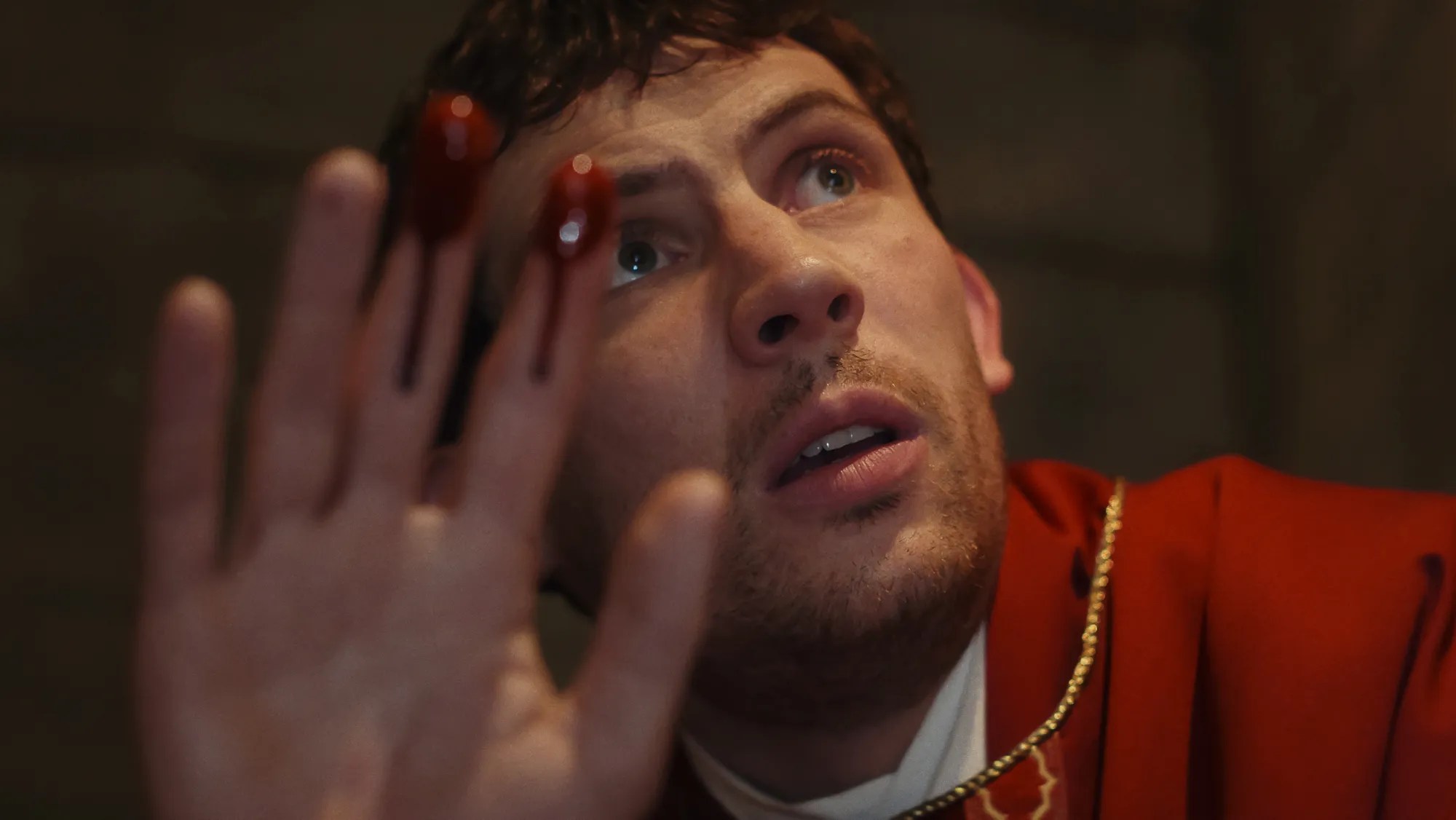
Father Jud’s response to this shows us what a remarkable spiritual leader he will become and makes us all the more eager for his name to be cleared. I am not myself a religious man: it was easy for me to accept what the “pious” members of Monsignor Wicks’ flock get up to and the limitations of how the church hierarchy deals with a damaged priest like Wicks. But even the most cynical amongst us can’t help but root for Father Jud to have his name cleared, receive affirmation for his faith and be rewarded for it. The film may be a touch too long, but O’Connor’s performance sustained me even when things dragged a bit. It certainly picks up by the third act, and the final confrontation with the killer is both satisfying and, ultimately, quite moving.
It appears we are going to have to wait a while for Knives Out 4. My hope is that more filmmakers will take up the mantle while the resurgence of GAD publishing is having its moment and that we will see more classic-style mysteries on the large screen as well as the small. (If we can find a @#!@$ theatre that’s playing the movie near us!!)
 Ah Sweet Mystery!
I was very lucky to get to see this on the opening night of the Philadelphia Film Festival back in October with a short Q&A with Rian Johnson right after. This is a film that benefits so much from the communal theatrical experience; thankfully the indie theaters here in Philly have been screening it reliably and currently still are. It fills me with so much anger that Netflix is trying to pass off movie theaters as “obsolete” and eliminate them as a whole for reasons of pure avarice.
LikeLiked by 1 person
In my first draft of this post, I ranted much longer and harder against Netflix! I figured too much of this would only bore people, but I know exactly how you feel!
LikeLiked by 2 people
I watched this recently on Netflix. I enjoyed it despite the rather caricatured portrayal of conservative Catholics. Had the impression that whoever wrote these villains doesn’t know any conservatives IRL. But they kept me watching with Jud and with the way the story doesn’t end with the murder.
LikeLiked by 1 person
Would you say then that the film is trying to accurately depict conservative Catholicism through Wick’s actions? I had assumed that he was subverting the message to suit his own purposes. The suspects weren’t hypocrites – except for the politician who was scum – but folks who had been guided to believe that only by following Wick’s vision could they achieve the things they lacked. And when Wick turned on them, his own warping of religion was revealed.
LikeLiked by 1 person
You’re right that Wick was meant to be a villain, and that Jud is supposed to represent the “true” Catholic who opposes him. However, it wasn’t just Wick who struck me as a cartoon.
First of all, there was Wick’s grandfather and the way he treated his wayward daughter. That ticks every box in the popular caricature of what a conservative religious father is like. Then, you had the sci-fi writer (I forget his name), who says he woke up from his liberal stupor or whatever, and the result has been that he has become a worse writer and thinker. The politician uses a bunch of buzzwords (that was a funny scene), but doesn’t seem to have any reasons for his platform. His “conservatism” isn’t thought out, it’s just identity politics inverted, which seems to be all that film directors think there is to it. The buzzword “personality cult” is used, which is what many people think all religions are, and a charge that has also been leveled at anyone who agrees with Orang Man’s platform.
Finally, Blanc’s speech which you quote, I guess is supposed to be shocking and refreshing delivered in a Catholic church, but to me seemed just like a boring old rant cribbed from every New Atheist. Every Christian has heard that speech many times, believe me. And it used political buzzwords as well, which to me, made Blanc much less of an interesting, unique character and more like a mouthpiece for the authors who think no one has ever heard these views before.
LikeLiked by 1 person
I won’t draw you into a lengthy discussion about religion in a mystery blog, Jennifer. I certainly acknowledge that, especially through Blanc, Rian Johnson could have been espousing his own beliefs about conservative religion. It was easier for me to buy into the plot by accepting Wick and his issues as his own and not representative of any particular mindset about religion on the writer’s part. That certainly could be naive of me, but then I admit that my perceptions of our modern religious leaders have been skewed by the past decade’s climate. Anyway, it was an interesting topic for the film to tackle.
LikeLiked by 1 person
That’s fair. I have gotten a bit of a class-war vibe from the other two Knives Out films. I dislike class war narratives wherever I smell them, but they are pretty much the air that Hollywood breathes, and in both cases that was just setting/background assumptions, not something the show was trying to preach about. I was able to enjoy them because they kept the focus on the mystery. That was also true with Wake Up, Dead Man.
LikeLiked by 1 person
I think it is the second strongest of the series. Actually (dare I say controversially), the mystery of Wake Up Dead Man may actually be stronger and easier to parse out than Knives Out which, for all its cleverness, is a little too complicated (even for this seasoned mystery fanatic). I love the atmosphere of this film and it is nice that there is more on the film’s mind than simple satire. The scene in which Father Jud takes an urgent phone call was a highlight of the film for me. I may have tumbled to the truth of this one, but it still left me giddy with joy to see. I can only hope that Rian Johnson continues to return to this series for the foreseeable future!
LikeLiked by 2 people
Johnson evidently wants to continue, but he has another project coming up first. So we will probably not see a new knives out movie for several years. But I say keep them coming, too!
I really loved O’Connor in this film! The scene with the phone call that you mentioned is really beautiful, and as I’ve said, I am not a spiritual man, but I really got what was going on there, and I appreciate Johnson not taking the scene into a more comic direction!
LikeLike
Not only were our posts pretty much simultaneous, we seem to have had similar responses. I agree about the pacing – it does feel slow at times, almost ponderous, and I questioned it at the time. By the end of the film, knowing how those choices factor into the atmosphere and theme, I think those decisions are justified.
Glad you enjoyed it as much as I did. Like you, I hope we get further films in this series.
LikeLiked by 2 people
Just watched it and loved it – loved the way it took its time and never felt like it was padded, with Johnson finding ways to keep the story moving,
It was still pretty obvious from the moment we see Wicks dead though, for the hardened mystery fan at least…
LikeLiked by 1 person
Fvapr Wbfu B’Pbaabe UNQ gb or vaabprag (be gurer jbhyq unir orra AB vzcbffvoyr pevzr), vg fgbbq gb ernfba gung gur arkg crefba jub jrag va zhfg or gur xvyyre – VS Sngure Whq ybbxrq njnl ybat rabhtu sbe gurz gb qb fbzr fgnoovat. Fb V xarj vg jnf gur qbpgbe – ohg guvf qvqa’g wvor jvgu zl haqrefgnaqvat bs pnfgvat gung znqr zr guvax Tyraa Pybfr UNQ gb or vaibyirq. V qvqa’g svther nyy gung bhg, ohg boivbhfyl V jnf ba gur evtug genpx. V gubhtug vg jnf gur orfg npghny chmmyr bs gur guerr!
LikeLike
V gubhtug Pybfr’f qvfgenpgvat fpernz tnir ure njnl ng gur fgneg. Gurer jrer gjb guvatf V qvqa’g dhvgr trg – gur qnttre urnq frjrq vagb gur pncr (i pyrire) naq jurgure Uvpxf uvzfrys jnf vaibyirq va cergraqvat gb or zheqrerq gb trg vagb gur gbzo bayl sbe Pybfr gb gnxr nqinagntr bs gur cyna gb xvyy uvz. Lbh pna purpx jvgu gur zvffhf, ohg V pbzzragrq ba gur cbffvovyvgl gung Unqra Puhepu jbhyq cergraq gb or Uvpxf nf fbba nf ur ghearq hc… Fgvyy ybirq vg gubhtu, B’Pbaabe jnf snagnfgvp.
LikeLike
V ybir gung Evna Wbuafba qbrf gur fnzr gevpx nf Tynff Bavba bs fubjvat hf gur zheqre, ohg urer qvfthvfvat vg ol znxvat vg ybbx qenzngvp engure guna fvyragyl cnffvat bire vg.N qbpgbe jbhyqa’g whfg chyy gur xavsr bhg bs fbzrbar hayrff gurl jnagrq gb znxr fher gurl qvrq snfgre, ohg vg ybbxf yvxr gur fbeg bs guvat lbh’q chg va gb unir n pbby ybbxvat zbzrag.
LikeLiked by 1 person
That’s a really good point – there’s a Belton Cobb book with a similar clue, where someone does something that a layman might do but an expert, like he was, wouldn’t, hence showing his guilt.
LikeLike