You probably won’t ever find me sitting on a panel extolling the superiority of Agatha Christie’s thrillers. Oh, there’s fun to be had, but there’s also a good deal of silliness: Christie veered toward ideological conspiracies and hidden master criminals a lot. Still, even in the absence of Marple or Poirot, she could be clever when she wanted to be, and one of my favorite examples of this is 1929’s The Seven Dials Mystery. I revisited the book only a year ago, and while all the storyline about a bunch of “bright young things” investigating multiple murders and possible espionage had all the seriousness of an afternoon with Jeeves and Bertie Wooster, Christie plays a nice trick here in terms of whom she convinces you to suspect and whom to trust.
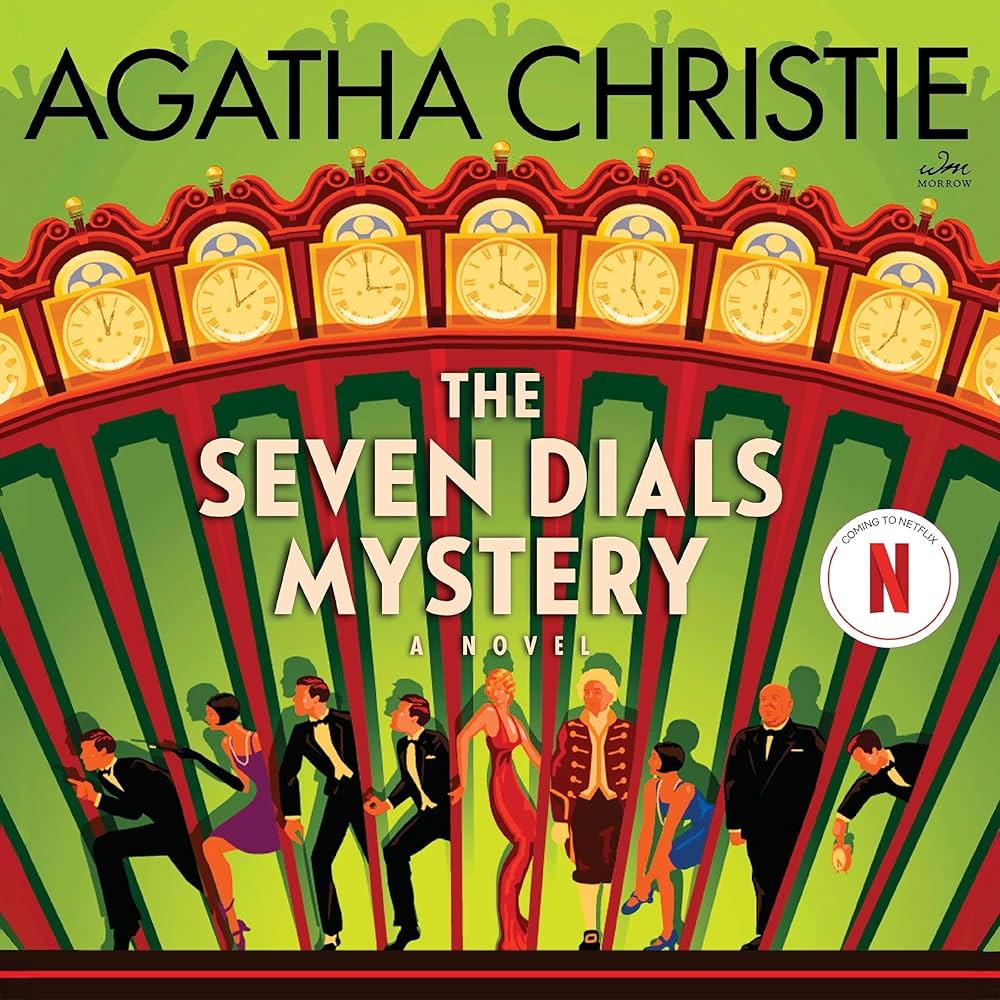
There is an adaptation in existence which you can catch on Britbox and which nails both the plotline and the tone of the novel. It’s guaranteed to warm the cockles of a Christie purist’s heart. But that program was produced in 1980, and forty-six years is a long time to wait between adaptations, even those of a mid-tier Christie title like The Seven Dials Mystery.
When Netflix announced in April, 2024, that it had commissioned writer-producer Chris Chibnall to create a new adaptation of Seven Dials, it was not the clarion call I was hoping for. I’m still waiting for someone to tackle Death Comes as the End . . . or all the stories in The Labors of Hercules or The Tuesday Club Murders. Then there was the problem of Chibnall, whom most of my friends insist was responsible for the destruction of Dr. Who. I looked up his resume: he wrote the first two seasons of Torchwood, which are terrific. He wrote Broadchurch, a series with which I have a troubled relationship (love it all the way up to the solution, then – yeesh!), and its American counterpart, Gracepoint, a series with which I have no relationship because its very existence is unnecessary.
Chibnall wrote a few episodes of Dr. Who during the David Tennant and Matt Smith eras; these guys were my favorite Doctors. But then he took over the reins of head writer and ushered in the Jodie Whittaker period. So, yeah, I guess my friends were right. But who am I to judge the man too harshly? Based on Broadchurch, he clearly had a love of the classic mystery format. And Chibnall is part of the growing club of show biz people who have dabbled in mystery fiction: his novel Death at the White Hart came out last year. I haven’t read it, but I understand it’s in development with ITV.

This is the first time the guy has tackled Agatha Christie, though, and the Community has been keeping a close watch on this. Any new adaptation of Agatha’s work gives her fans a case of the heebie-jeebies! Where will the next program fall? Will it be essentially faithful to the author’s original intention? OR . . . will it try to insert ideas that counter some of the more, shall we say, dated attitudes and beliefs one sometimes finds within the pages of her books – and if it does try to do such a wicked thing, can it do so with some success? OR . . . will it go completely off the rails and blow up Agatha’s good intentions?
Well, I’m excited to tell you that, with Agatha Christie’s Seven Dials, Chris Chibnall amazingly manages to accomplish all three of these feats in one program!!! Yes, folks, there’s something for everyone here, and it all depends on how far you are willing to go in your viewing. Just follow my handy guide and you can be as thrilled or outraged as you wish!
(Spoilers of both the book and the series abound from hereon in.)
The series is divided into three episodes, each with a clever sub-title. If you are a Christie purist, you should watch Part One, “Bundle of Love.” I’ll admit that, at first, you might be wondering if my head is screwed on straight when the first episode opens in Ronda, Spain in 1920 and we watch an unknown gentleman (played by Game of Thrones’ Iain Glen) get gored to death by a bull. This doesn’t happen in the book!! Be patient, though: we immediately jump ahead five years, and now we’re at the grand estate of Chimneys in the midst of a gay party hosted by Sir Oswald Coote and his wife, who have rented out the mansion from the cash-strapped Caterham family.
And look! There’s our heroine Lady Eileen “Bundle” Brent, charmingly played by Mia McKenna-Bruce, and she’s gazing down the stairs where we see the Cootes being suitably odious, Gerry Wade (Corey Mylchreest) being dashing, Jimmy Thesiger (Edward Bluemel) being amiable, George Lomax being the perfect horse’s ass, and Ronny Devereaux and Bill Eversleigh being mischievous and sneaking a bunch of clocks into Gerry’s bedroom because he will sleep in so very late every morning. And there is Lady Caterham, played by no less than Helena Bonham-Carter, with her hair looking as eccentric as ever, and her caustic wit indicating that she will be acting as the Lady Violet of this series.
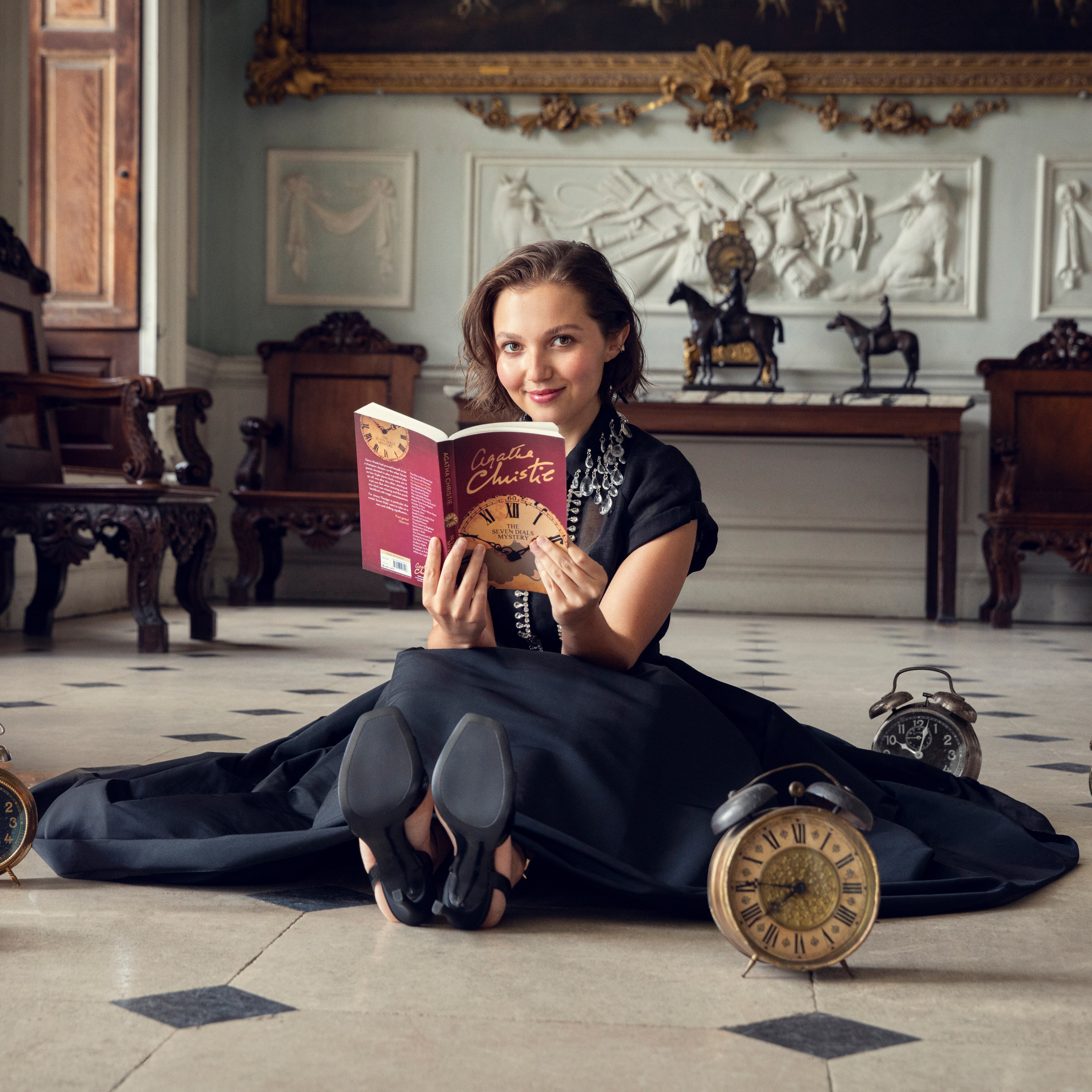
Chimneys, both house and grounds, looks appropriately magnificent and, best of all, lived in. (Filming was done in Bristol and Bath.) And the episode follows the basic storyline of the first chapters of the book with great style. Yes, there are a few changes: Lord Caterham, that delightful fellow, is nowhere to be seen – because he’s dead. And there’s a lot of mention of Thomas, Bundle’s beloved big brother – who is also dead, a victim of the war. In fact, Gerry Wade fought beside Thomas and evidently saved his life at least once. And now, Bundle feels more deeply fond of Gerry than she did in the novel; in fact, he intends to propose to her at dinner next Tuesday.
For me, this makes Gerry’s death more meaningful and less of the lark it seems to be in the book. The clocks are all there, ticking madly and mysteriously, and the first mentions of the mysterious “Seven Dials” are made, but they are more ominous here than in the book. And since I’m not a purist and have said myself that a problem I have with the novel is its sense of inconsequentiality, I felt perfectly happy to see this strike a darker tone. Oh, I enjoyed the 1980 adaptation very much, but when Gerry dies and Bundle (Cheryl Campbell) decides to investigate, it’s more out of a sense of having something fun to do! McKenna-Bruce plays a Bundle who gives full vent to her sense of shock and grief – and then determines to prove that Gerry was not suicidal, that he loved her and wanted to marry her, and that his death would not go unpunished.
She receives brusque comfort from her mother and from the amiable Jimmy, and the episode ends on a thrilling note with Bundle’s discovery of a dying man in the road uttering the dying message that will confound her till the end.
I would advise Christie purists to stop here, go make yourselves a nice hot cuppa, and forget all about the rest. For those of you who don’t mind when a screenwriter inserts ideas that counter some of outdated attitudes sometimes found within Christie’s work, let’s move on to the second episode, “Battle Commences.”
We’ve caught a few glances of Superintendent Battle in Part One, but here is where he comes into his own. He is played by Martin Freeman, and aside from being not quite as wooden and unemotional as he is described in the books, Freeman makes a great Battle. I wouldn’t mind seeing him in a series about the stolid Superintendent. (And I might just get my wish. See below.)
Most of this episode takes place in London, followed by the second house party at Wyvern Abbey – just like in the book. True, some of 1925 London looks very CGI, but the interiors are nice, and the Abbey is as magnificent as Chimneys. Bundle finally meets Battle, and their confrontation is charming. She forces Bill Eversleigh to take her to the notorious Seven Dials Club and ends up in a closet as witness to a meeting of this mysterious society of masked plotters. So far, so good – and the masks are quite elaborate!
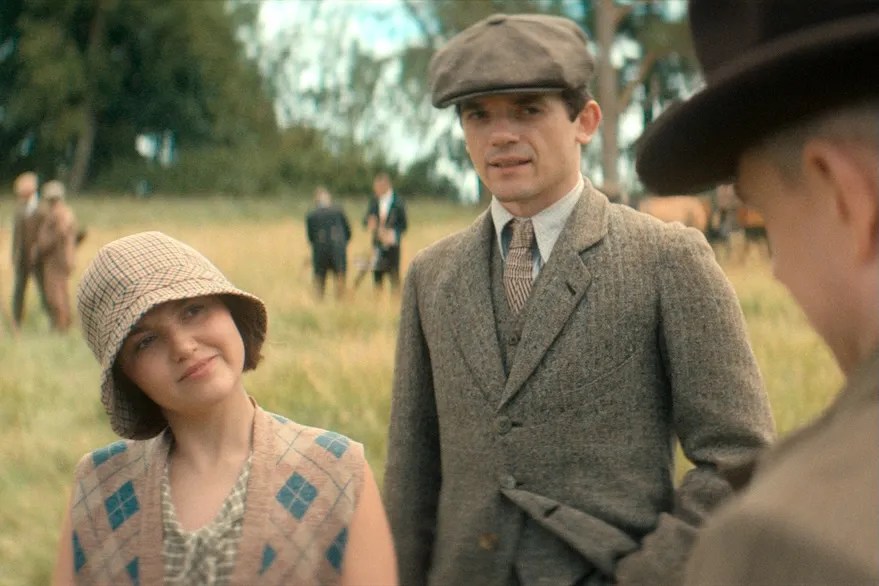
As in the book, Bundle joins forces with Jimmy Thesiger, and he instigates a meeting with Gerry’s sister Lorraine, who, as played by Ella-Rae Smith, strikes just the note she should at this point in the story. Bundle wangles an invitation to Wyvern Abbey from George Lomax, who really is a horse’s ass, but as played by Alex Macqueen is also a comic delight. The purpose of the weekend, as fans of the book may recall, is to get an inventor to turn over his stunning new invention to the English government – and prevent malefactors from stealing it – and all of this goes pretty much according to plan.
Where things differ is the point where Chibnall inserts those new ideas you might be nervous about. In the book, the inventor is a German named Herr Eberhard. This has all sorts of interesting ramifications considering the troubled relationship between the British and the Germans. Here, he is transformed into Dr. Cyril Matip (Nyasha Hatendi), a Cameroonian nobleman who was subjugated by the Germans and forced to fight for them in World War I. Despite his distrust of European white men, Dr. Matip is considering sharing his formula for the most powerful steel on earth with the British in the hopes that it will help bring about the end of war.
This is a change that I didn’t mind at all. Let’s face it, folks: if you want resolutely faithful adaptations of Christie, they’ve already been made. I urge you to watch them because they’re largely wonderful. If you want Christie to remain relevant in an ever-changing modern world, you’re going to have to allow modern filmmakers to exercise their voice when adapting her. This change reminded me of the film 1999 Mansfield Park, a truly fine adaptation of Jane Austen’s novel, but one which makes Sir Thomas Bertram a more than willing participant in the slave trade.
Anyway, the purists left us after Episode One, and so I hope those of us who are left can appreciate this interesting variation which includes something pretty awful that actually happened at the time, but that Christie had no thought or reason to depict. The rest of the episode proceeds according to the text and ends on a perfect dramatic note with the attack – and possible death – of Jimmy Thesiger.
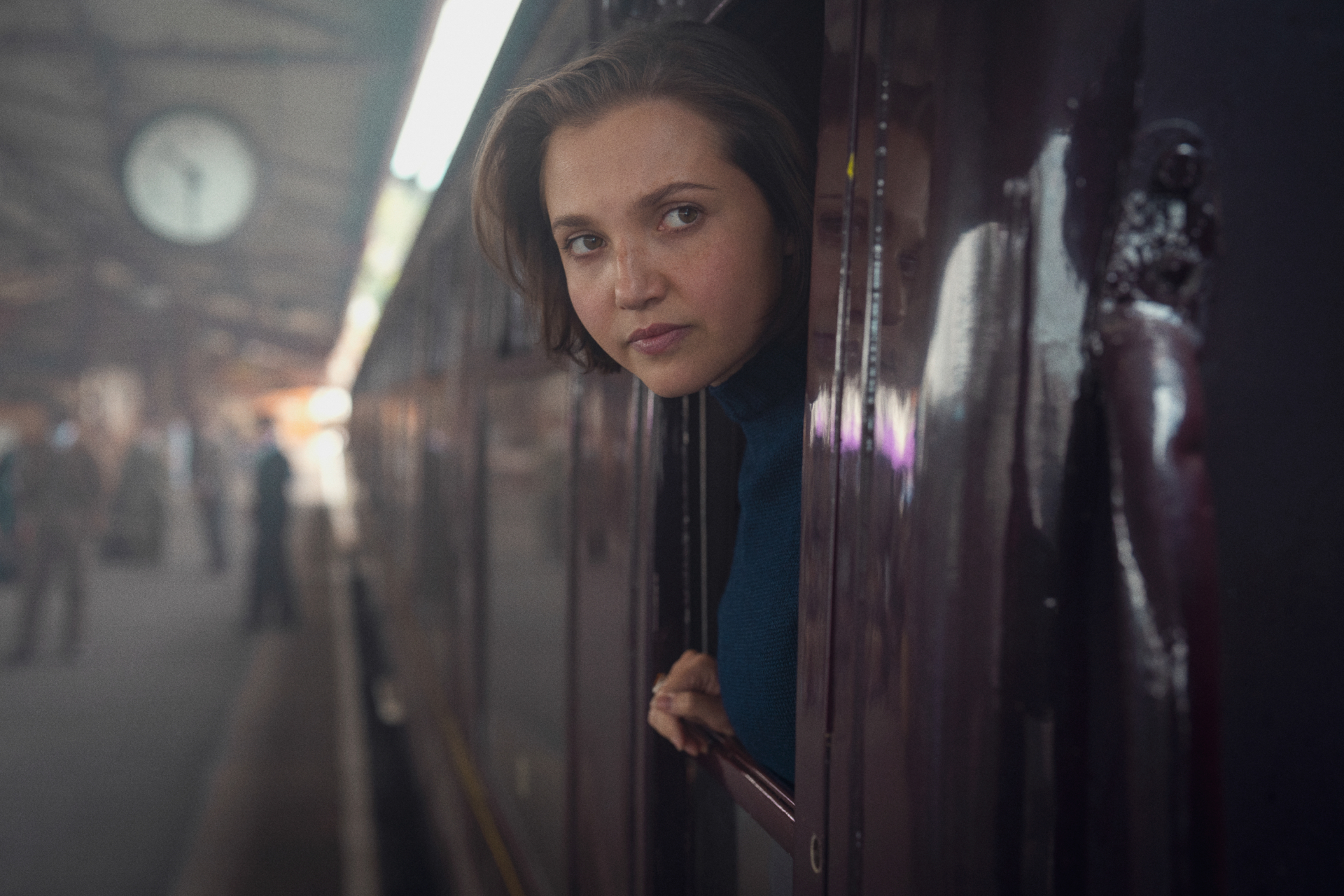
Episode Three is called “The Finger Points.” It takes place largely on board a speeding train – which is appropriate because here is where Chibnall goes off the rails. I’m going to dive deeply into spoilers here, both of the book and the film, so if you haven’t experienced either or both then – what the heck are you doing here?
The cleverness of Christie’s novel is that we are set up to root for Bundle and Jimmy to bring down the evil Seven Dials conspiracy – only to discover that the Seven Dials are a benevolent society dedicated to rooting out all threats to Britain and headed by Superintendent Battle himself! And since what seemed evil is revealed to Bundle to be good, then she must locate and root out the true evil – which turns out to be her fellow amateur sleuths Loraine Wade and Jimmy Thesiger!!!
Have no fear! All of this is in the adaptation, although the revelations are reversed, so when we learn all too early in the episode that Jimmy and Loraine are bad guys, we still know nothing about the Seven Dials. Attempting to jump into Chibnall’s head, I suppose that he wanted viewers to assume then that the pair were members of the secret society and to have us believe it was an evil organization right up to the end.
That’s not the problem: in a face-off with Jimmy, Bundle gets the upper hand and holds a gun on him. And that’s when the no-longer-amiable traitor-for-money unleashes his coup de grace: Jimmy insists that he may be a monster, but he is certainly not the leader of the monsters. Why, he’s too stupid to lead such an organization. (And he has behaved stupidly throughout, which I thought was just a ruse!) In fact, the true leader of the organization is sitting in a first-class carriage at the front of the train, waiting to receive the stolen super-steel plans.
And so Bundle trots off with her little gun to the front of the train. The music builds, and she (and I, folks, me too!) is thinking furiously, “Who am I going to meet in that first-class carriage???” And I have to tell you, it came as a surprise, when Bundle opened the door and discovered that the true villain all the time was . . . . . her own mother.
Yes, Helena Bonham-Carter is playing both Lady Violet and Dr. Evil. Turns out that the guy gored to death at the top of the series was her husband, Lord Caterham. That, coupled with the death in war of her beloved son, has turned Lady Caterham against England. Oh, and the fact that the laws of the land make living at Chimneys unaffordable for her means that the Lady needs an immediate inflow of cash, which she hopes to get through a life of theft and murder.
This final confrontation between daughter and mother begins uncomfortably and ends awfully. Worse, still, it’s underscored by bittersweet music to help us feel the sense of “my world is ending” that Bundle must be feeling.
And there’s still ten minutes of film to go! That’s when we find a forlorn Bundle wandering around a deserted Chimneys when her former footman Alfred shows up, sympathetically pulls a gun on her, and forces to accompany him to London and come face to face with the Seven Dials Society. Superintendent Battle throws off his mask and then pitches to Bundle the idea of joining this Legion of Super Heroes, dedicated to the eradication of all threats to England and the world. She can become Three O’Clock, taking up the mantle left open by – that’s right! – Lord Caterham, her late father and the greatest and most patriotic spy that England has never known.
And you know what? The girl says yes. And it looks like we have a new League of Extraordinary Gentlemen to contend with. Odds look favorable that Agatha Christie’s Chris Chibnall’s Seven Dials will return with new adventures and new foes! And if I can pick my jaw up off the flow and get control of my sense of outrage at this denouement . . . I just might be there!
 Ah Sweet Mystery!
Ah, the original “Seven Dials” with the fabulous Cheryl Campbell as Bundle. She later played Griselda in “Vicarage” and the dreadful Mrs. Boynton in “Appointment with Death”. The adaptation of that was dreadful too in my opinion. Of “Appointment” that is – though I do love me some Tim Curry.
LikeLiked by 1 person
I didn’t remember her as Mrs. Boynton – because I have tried to block that travesty from my memory.
LikeLike
It was awful, wasn’t it? Even worse than “Taken by the Flood”. Completely ruined by taking it out of its post-war setting and turning David into a psychotic mass murderer.
LikeLiked by 1 person
Brad, thanks very much for this post! I’ve avoided watching this because I haven’t really liked the new adaptations of Christie’s work. Most of them are just OK. But I trust your opinion, and this isn’t a book I’ve re-read, so maybe I won’t be disappointed in this one! And I’ll get to see Martin Freeman😀
Thanks for all your blogs! I always look forward to reading them!
Cindy Christian
North Pole, Alaska
LikeLiked by 1 person
Thanks for your kind words, Cindy. Freeman is great, and the show looks wonderful. They really had me in their corner for most of it!
LikeLike
I actually saw the 1981 version on ITV when it was new and, even at age 12, I thought the whole secret society thing was stupid! But OK, you have half convinced me, Brad! Will give it a go. How does it compare with Hugh Laurie’s WHY DIDN’T THEY ASK EVANS? I really liked that a lot.
LikeLiked by 1 person
Oh, EVANS is loads better than this. The acting, the writing, the tone . . . all superior. But DIALS isn’t bad, just weird at the end.
LikeLiked by 1 person
The ending in real life would be even darker as there was still the death penalty for treason so Lady Violet might well have been hanged.
>
LikeLiked by 1 person
I bet HBC would have loved to play that scene standing on the dock!
LikeLike
FWIW, I really enjoyed this – alterations and all. At least the additional reveal was properly clued earlier in the miniseries (and on more than one occasion too)! I would be more than happy for more – particularly as the actress playing Bundle is quite superb. Very curious what they imagine might come next though…
LikeLiked by 1 person
Logically, I suppose they would have the Seven Dials Society seek out the Secret of Chimneys – the plot of which would have to be totally reconstructed. Or they might have a series of new stories, all credited to Agatha Christie. Maybe they can go to St. Mary Mead and team up with the League of Super Spinsters there!
LikeLike
BUT the moment I saw Helena Bonham-Carter, I knew they were going to make her a big part of the story and when they revealed the Thesiger-Lorraine plot way too early, I knew instantly what was coming up. And that spoiled it for me. I also felt HBC sleepwalked her way through the role. 😦
LikeLike