If the opening chapters of 1933’s The Case of the Sulky Girl emit for me a faint “been-there-read-that” whiff, I must remind myself that this was only Erle Stanley Gardner’s second Perry Mason adventure. That’s what comes of trying to read 80+ cases out of order. Fran Celane resembles half the female clients who will walk into Mason’s hallowed office over the next forty years: she’s beautiful, willful and potentially rich – if only she could get out from under the thumb of her hated uncle/guardian – and in love with a man she can’t marry because Uncle Guardian won’t give his approval. It’s a cinch that this human obstacle to her happiness will end up sprawled dead on his office floor and the girl will wind up on trial for her life.

Okay, things pan out a bit differently: it’s the fiancé, not the girl, who winds up on trial. But Fran is the highlight of this early effort – as she should be, considering this is the inaugural case in our year-long salute to Perry Mason and Girls! Girls! Girls!!
“Fran Celane drove the Packard roadster with a deft touch on the wheel, and skilled foot on the throttle. When she had sat in the huge leather chair at the lawyer’s office, she had seemed small, frail and helpless. Now that suggestion of helplessness had gone from her. The hint of the feline power in her nature was more pronounced. Her handling of the car was swiftly savage as Ashe sent it hurtling through openings in traffic, coming to abrupt stops when the traffic lights were against her, leaping into almost instant speed as she got clear signals. Her face still held a pouting, sulky expression.”
It’s Della Street, Mason’s ace secretary and character expert, who describes Fran as sulky, but Perry knows better: “You’re not sulky, you’re just in a panic, that’s all. You look sulky when you’re frightened.” Fran has asked Mason to help her break her late father’s will, a crazy affair that gives an inordinate amount of power to Uncle Edward. However, Rob Gleason, the fiancé, tells Mason that Fran is being blackmailed. And Perry suspects that Fran doesn’t just want to get married, she already is married, and that the case is much more complicated than any old will-busting.
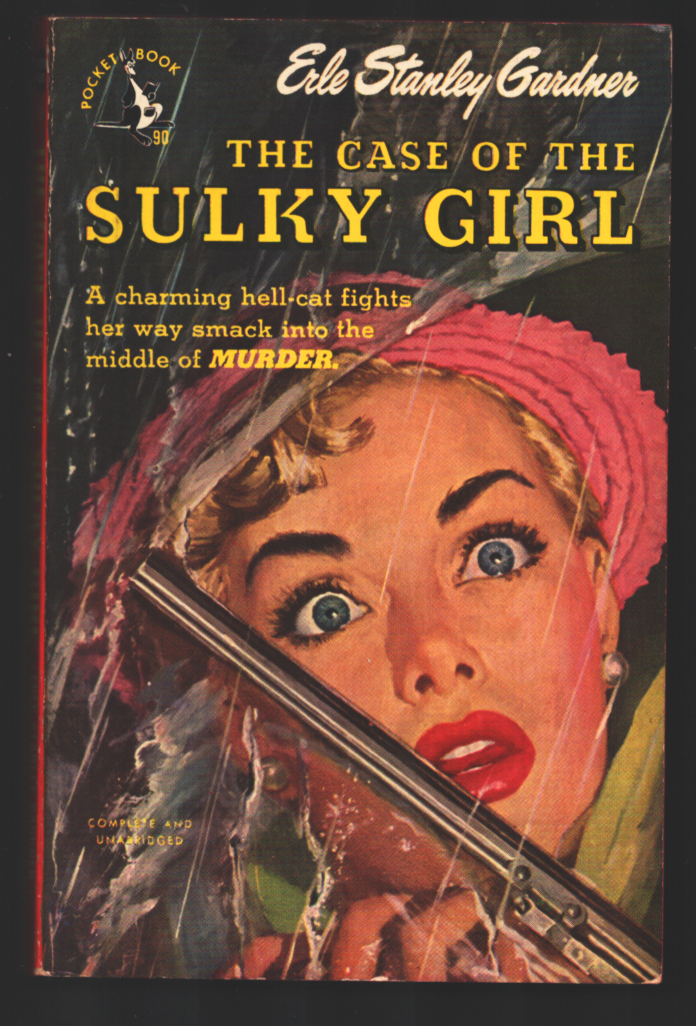
From there, the case proceeds along all too familiar lines – except I must keep reminding myself that . . . well, you know. Mason meets the guardian, who is just as unreasonable as Fran insisted. The next day, the guardian is found sprawled – well, you know! – and a trio of witnesses swear that a man showed up in Uncle’s office and bashed his head in. Things look bleak for Mason’s client – they always will! – until the attorney thinks long and hard about the pigheadedness of one of the witnesses and conceives a plan to turn the case around.
On the plus side, there is much more courtroom action here than in the previous Mason novel (The Case of the Velvet Claws), but this book is missing much of the noirish attitude of Perry’s debut. This includes the depiction of our hero himself, who in the first fifty pages is described as “steady,” “patient,” “calm,” “emotionless,” “gentle,” “toneless,” and “cautious.” It’s a far cry from the man who was introduced to us as “a fighter (who) could, perhaps, patiently bide his time for delivering a knock-out blow, but who would, when the time came, remorselessly deliver that blow with the force of a mental battering ram.” We’re also at the beginning stages of the Mason/Street/Drake triumvirate, a set of relationships that are fun to watch even when the case is bland. Here, neither Della nor Paul makes much of an appearance, and when they do, Della plays it maternal, and Drake is all business. Plus, it’s way too early for Hamilton Burger or Lieutenant Tragg to make an appearance. We don’t even get the odious Sergeant Holcomb. However, Claude Drumm, the district attorney who dominated the 30’s, is nicely smarmy, and it’s always fun to watch Mason wipe the smirk off the fellow’s mug.
This feels much more like a traditional Golden Age murder mystery than a lot of the hard-boiled cases that will follow. Unfortunately, the puzzle, such as it is, relies on a trick of the trade that I have seen used many times by many crime novelists. It’s a trick that ruined a much-recommended John Dickson Carr title for me because I saw instantly what was going on, and I defy any reasonably well-read mystery fan not to recognize the trick the moment a certain character’s actions are described.
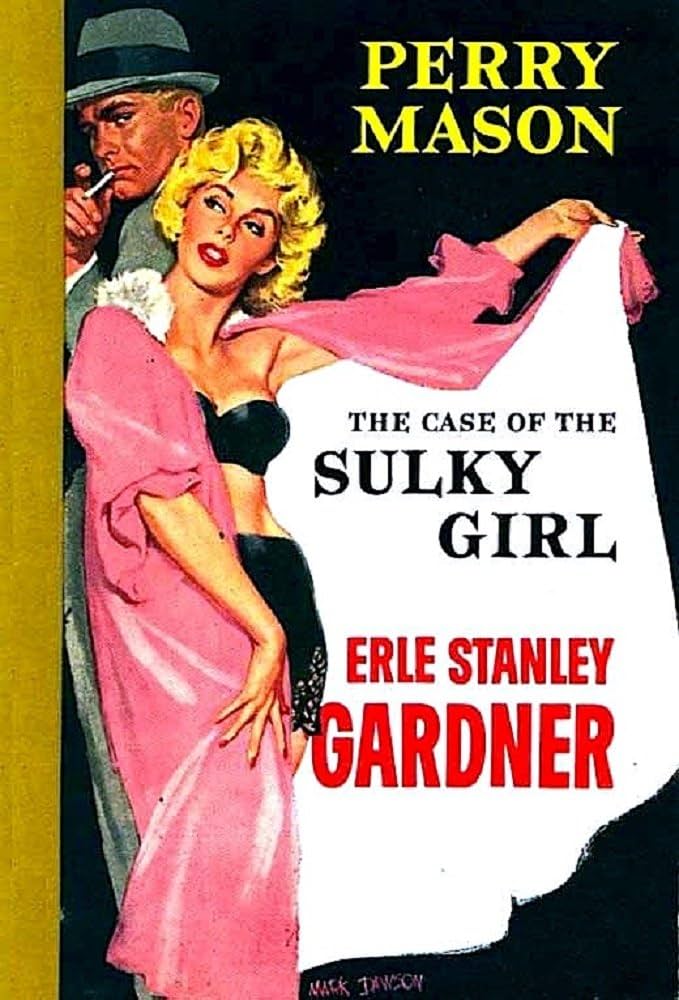
That’s okay – I’m sure there are a much more original cases in store as the decade progresses.
* * * * *
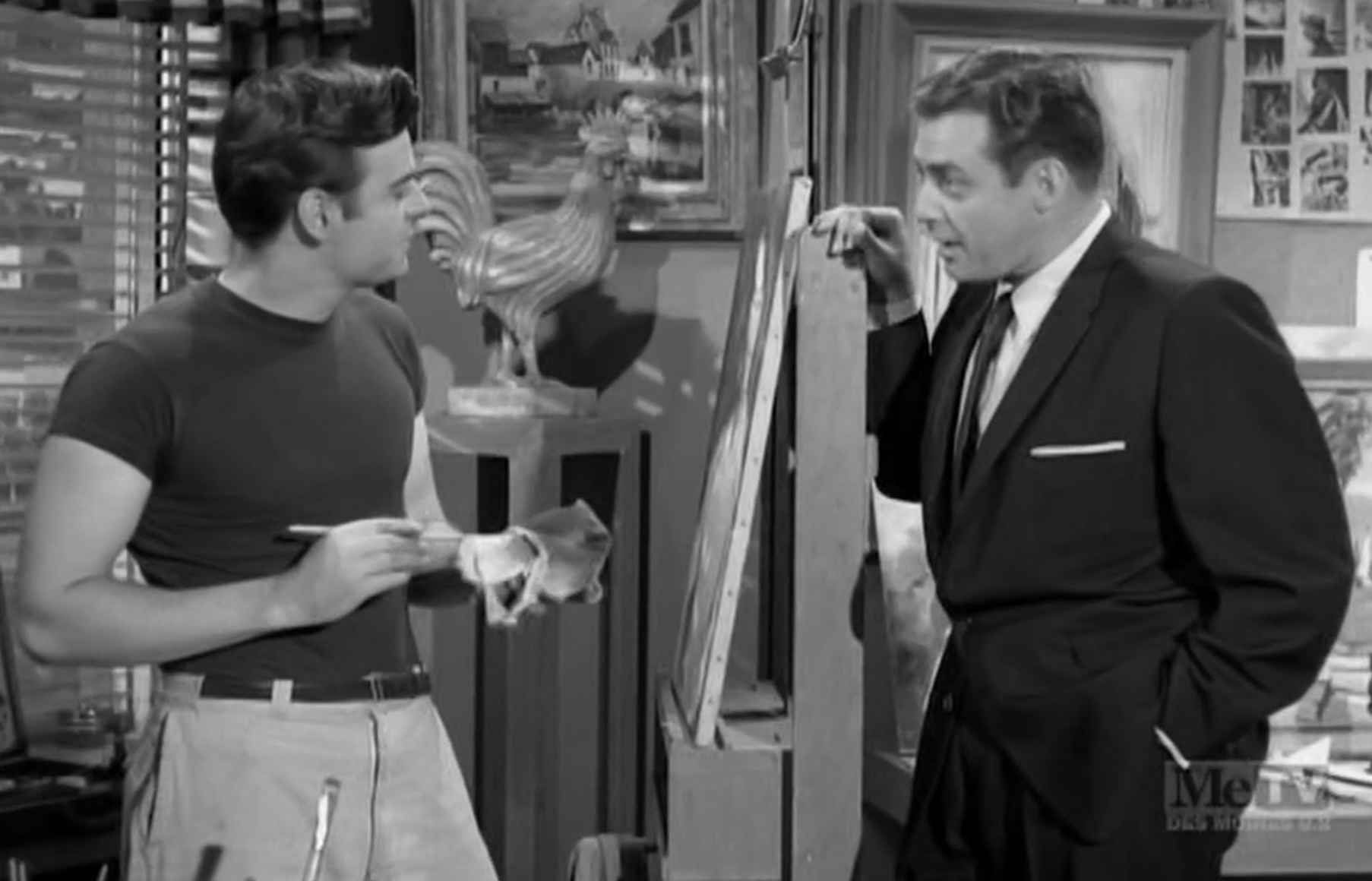
“The Case of the Sulky Girl” debuted on October 17, 1957, as the fifth episode of the very first season. It is admirably faithful to the novel, and it benefits from having that “fresh new smell” of a successful series in its infancy. Raymond Burr looks great, and Perry and Della are more playful here than they will grow to be. There’s also the benefit of William Schallert, a character actor who may be most famous for playing Patty Duke’s dad on TV, here in an earlier (and far sneakier) role. However, it’s pretty obvious here that, unless the defendant is indeed the killer, there’s only one possible solution.
Next time, a scam involving a beauty contest circuit gives Mason and his gang more girls, girls girls! than they can handle!!
 Ah Sweet Mystery!
Pingback: THE ERLE STANLEY GARDNER INDEX | Ah Sweet Mystery!
Pingback: GAMS AND PINS AND SHANKS, OH MY! The Case of the Lucky Legs | Ah Sweet Mystery!