The latest class I’m taking at Stanford University is chock full of the stuff I love. In “Hollywood Looks at Itself,” we’re exploring films that turn a mirror on the art of filmmaking. Don’t let the fact that we started with Singin’ in the Rain fool you: most of the twenty films on this list are dark as hell. I think it’s brave of an industry that peddles itself as a dream factory to turn a vitriolic lens upon itself. What’s even more fun for this mystery blogger/movie fan is how often a murder mystery enters the picture in these, er, pictures. Seems it’s not enough for the Hollywood machine to crush the hearts and souls of its actors, writers, producers and directors; all too often their bodies get mangled to bits in the process.
I wouldn’t expect anything less from this list, considering our teacher is my old friend Elliot Lavine, who has spent years programming film noir festivals and other dark visions at repertory houses up and down the West Coast. It’s no wonder he would be drawn to this material, but we’re less than halfway through the class, and even Elliot is squirming a bit at how dark things have gotten. Mind you, none of the films we’re watching could be considered a puzzle plot whodunnit by any stretch, but it’s remarkable how often a good drama utilizes the tropes and twists of a whodunnit to create something Oscar-worthy. This came up in class recently, and I’m ashamed to say it was a classmate and not I, myself, who brought up the idea after we watched Sunset Boulevard.
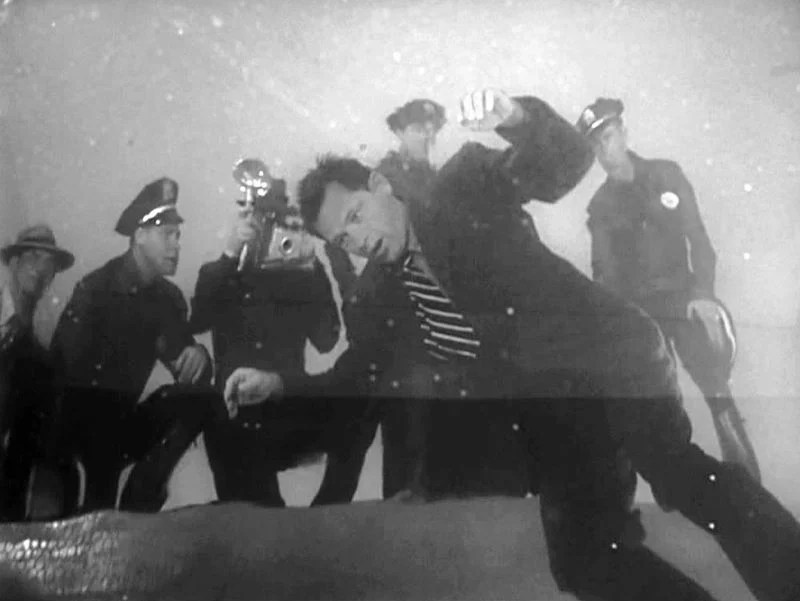
But then, it’s obvious that director/co-screenwriter Billy Wilder sets up a mystery at the very start, and it’s a doozy. A body is discovered floating in the swimming pool of an old Hollywood star. How did he come to be here, who shot him, and why? Even more mysterious, the corpse is clearly the film’s star, William Holden, who also seems to be narrating the story of his own demise. Holden plays Joe Gillis, a struggling young screenwriter who can’t catch a break. When he flees a couple of collectors trying to repossess his car, he stumbles upon the shattered Shangri-la of Norma Desmond (Gloria Swanson), a once great actress from the silent era who now sits forgotten and entombed in her wreck of a mansion. Her butler Max (Erich von Stroheim) is also her ex-first husband and former director. Her pet monkey has just died. Norma needs a new project, and that turns out to be Joe.
If this was actually a whodunnit, we could examine the motives of the small group of characters circling around Joe. Could Max have killed him out of jealousy after Joe became Norma’s lover – or perhaps he killed Joe for leaving “Madame” after being fed up with her lunacy. Could sweet Betty Schaefer have shot Joe in the heart after he broke hers? Or could it be Betty’s fiancé Artie – Joe’s only friend in Hollywood – in a jealous rage?
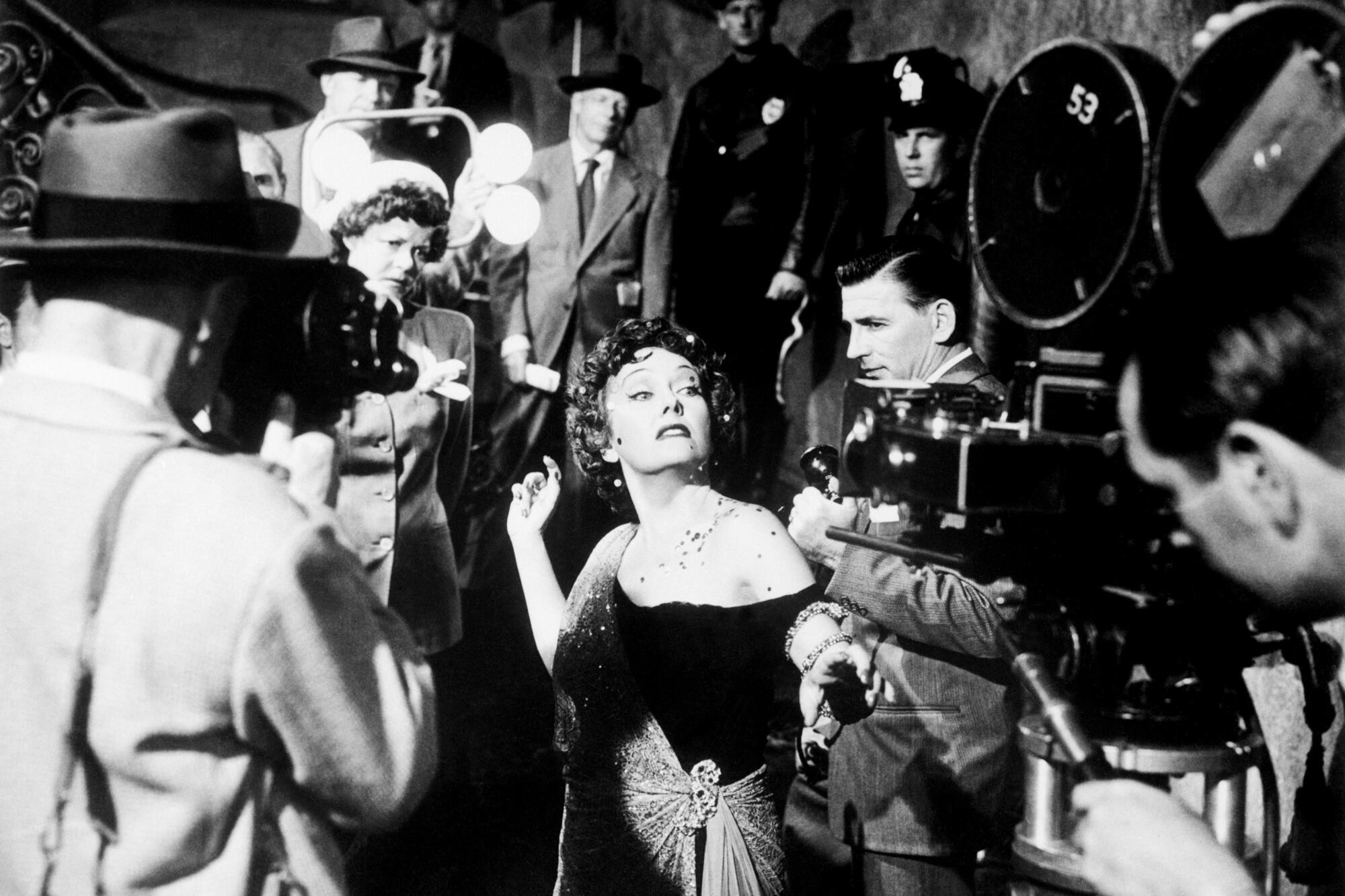
In the end, it could only be Norma who shot Joe – because this film isn’t a puzzle but an indictment of both Old and New Hollywood: how it elevates nobodies with talent and/or beauty into gods and goddesses, and then abandons them; how it sacrifices creativity to the bottom dollar line. Norma has made this poor shlub of a screenwriter her everything: she needs him to reshape her six-hour mess of a screenplay about Salome so that she can make a comeback, er, return to her former glory. And she needs him to love her as both fan and lover. For most of the film, Joe takes advantage of Norma until he can get back on his feet. It is to his credit that he sees the error of his ways and makes things right. Unfortunately, Norma takes Joe’s redemption badly. And she has a gun.
The screenwriter and the actress . . . if this were one of our beloved Choose-Your-Own-Adventures, I would ask you which character you wish to follow. If it’s the screenwriter, scroll below. If it’s the actress, keep reading.
Sunset Boulevard was part of a double bill that Elliot called “Hollywood Gothic;” the companion film was Robert Aldrich’s 1962 Grand Guignol fright fest, Whatever Happened to Baby Jane? Both films deal with the tragic aftermath of Hollywood success when actresses age out or lose their luster and are abandoned by the studios that mined them for gold until the mine panned out, and the casting here of screen greats Bette Davis and Joan Crawford, brought together for the first and only time on film, is a brilliant stroke of meta-casting.
The losing of luster happens quicker than usual for Blanche and Jane Hudson in Aldrich’s too-long film, which, it turns out, is very much a whodunnit, although for the first two hours and ten minutes, we’re not sure who did what to whom. In the prologue, my favorite part of the film, we learn that “Baby” Jane enjoyed early stardom on the vaudeville circuit but couldn’t transfer her dubious talents to the emerging cinematic world. However, her older sister Blanche, once dowdy and extremely resentful, becomes a big movie star, and now it’s Jane who resents her sister’s success and generosity. A clause in Blanche’s contract requires the studio to put Jane in pictures as well, but as each and every one of them a stinker, it eats into Jane’s rotting soul. (I love this section because Aldrich utilizes clips from early Crawford and Davis pictures to illustrate the varied talents of the sisters!)
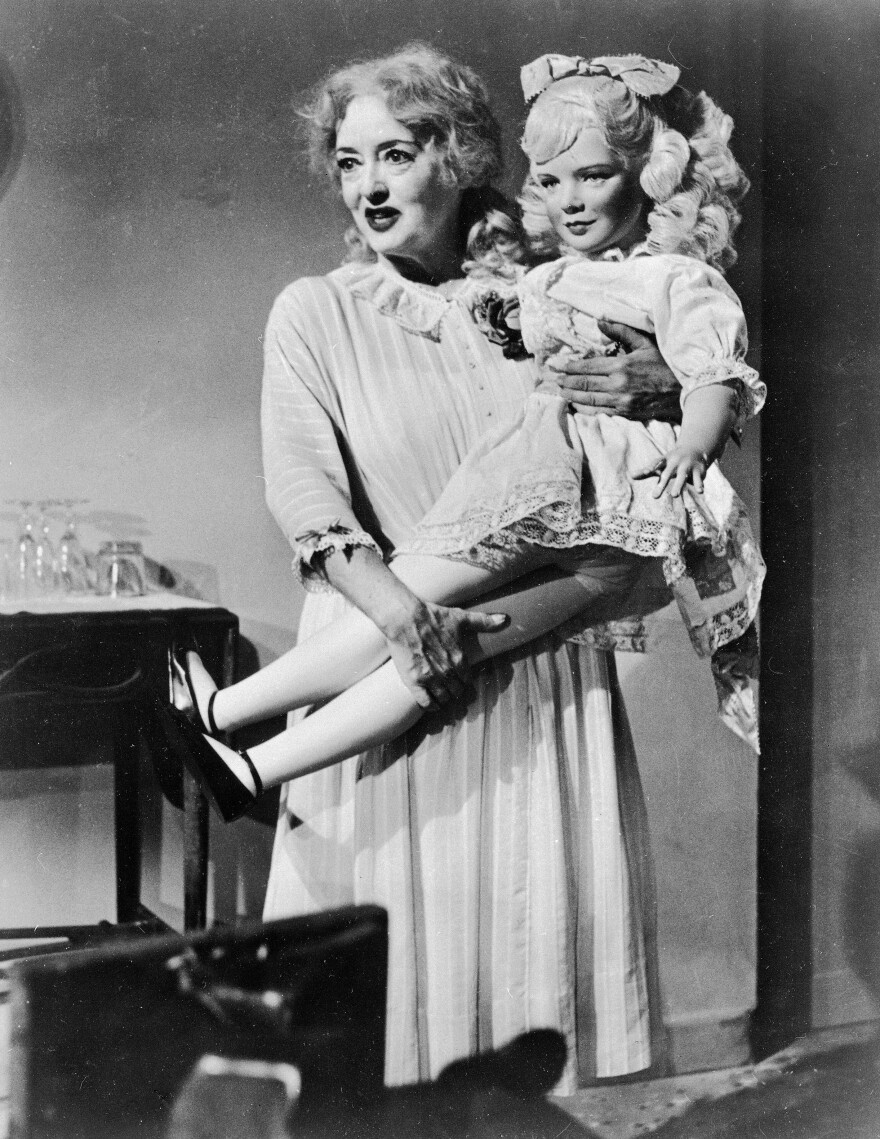
Jane’s resentment of Blanche comes to a head one fateful night when the sisters, returning home from a party, are involved in an auto “accident” that leaves Blanche permanently crippled and Jane . . . not quite right. This leads to the lengthy middle section of the film where Jane, dressed in a frightful parody of her vaudeville costume, perpetually drunk and three-quarters mad, decides to launch her own comeback. She hires an accompanist, played in his screen debut by a brilliant Victor Buono as a tortured mama’s boy who could easily inspire a horror film of his own.
All that’s standing in Jane’s way is her sister, whose crippled condition, past success and decision to sell the house and probably commit Jane to an institution doesn’t fit in with the Baby’s own plans. Jane proceeds to torture and starve Blanche in one horrific scene after another. It’s gruesome and funny and entertaining – but, as I said, it goes on too long. It’s especially satisfying in a meta way that this relationship was mirrored by the real-life one between Davis and Crawford. Like Jane and Blanche, they despised and needed each other to make this picture as, by this point, both their careers were hopelessly stalled. The things they did to each other on set are legend, but you need to look them up for yourself. Or go watch Susan Sarandon and Jessica Lange act the whole thing out in Ryan Murphy’s campily brilliant Feud.
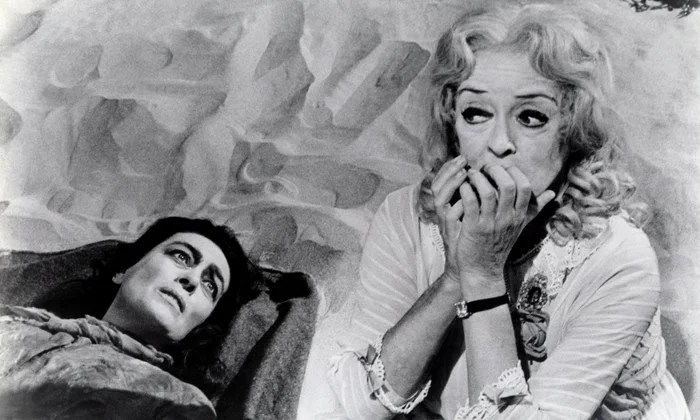
The film climaxes, as so many Los Angeles-set films do, on the beach, where Jane and Blanche, the one destroyed in mind and the other in body, have a final frank talk where twists are turned and secrets revealed. And really, this is the point of Whatever Happened to Baby Jane? It’s less the tragedy of what Hollywood does with the stars it has no further use for and more the horror of what these two old bitches can do to each other that matters here, making this a true genre film and, to my mind, less great than Sunset Boulevard.
If you decided to skip the actresses and stick with the screenwriters, Nicholas Ray’s In a Lonely Place was made the same year as Sunset Boulevard and also centers on a doomed scribe. Dixon “Dix” Steele (Humphrey Bogart) is twice as old and five times more screwed up than Joe Gillis, but then he has received the wounds to earn it. A war veteran clearly suffering from PTSD, Dix hasn’t written a successful script in ten years. He is clearly talented but is tormented by the dreck that the studios insist he write for them. He can charm the ladies but has a terrible temper. Oh, and he just might be a psychopathic killer.
This is one of the most fascinating and complex characters Bogie ever played. From the start, he is brimming with both sensitivity and a capacity for brutal violence. After the credits roll, Dix nearly gets into a fight while driving his car on his way to take a meeting, and he ends up ruining said meeting when he beats up a younger rival. Granted, he does so for a good reason: the schmuck had insulted an elderly ruined actor sitting drunk at the bar.
Dix has been asked to adapt a best-selling novel into a movie. Since he hasn’t read the book but the hat-check girl, Mildred Atkinson has, he invites her back to his place to have her pitch the book’s plot. Throughout the evening, Dix is a perfect gentleman, and once he has heard the godawful synopsis, he sends the delightful Mildred on her way. The question that then haunts the rest of the film is: was Dix so turned off by the book or damaged by the war or simply crazy enough that he followed Mildred to a canyon and brutally strangled her?
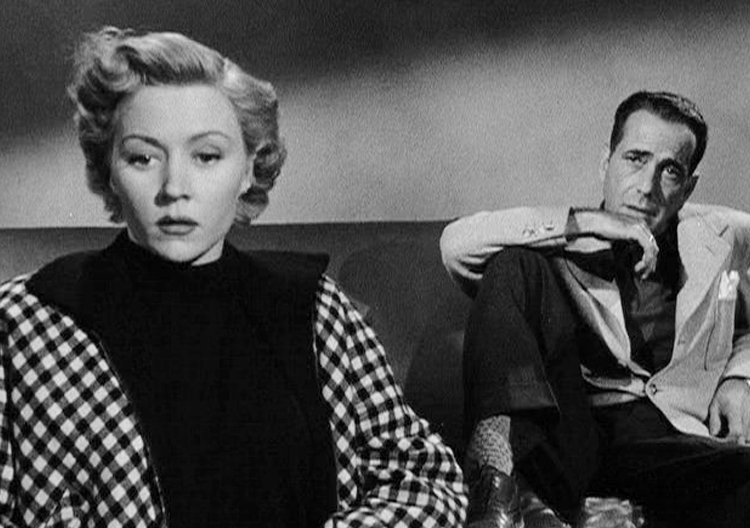
The police think so. Dix’s beautiful young neighbor Laurel (Gloria Grahame) isn’t so sure. She supplies Dix with an alibi and then becomes his lover and muse, despite being twenty-four years his junior. Dix begins to write again, turning an awful book into a surefire hit – if he can finish it before murdering Laurel. Because that’s where it looks like this film is going. In fact, Dix’s hands are around Laurel’s throat when the phone rings and the police inform them that Dix is innocent of Mildred’s murder. His legal innocence doesn’t matter; as he walks away from Laurel and his life, it’s clear that Dix is a walking dead man.
In most of these films, we never watch movies being made. The actors and writers and directors and agents all sit around, ostensibly “working” and feeling things terribly deeply. And isn’t it Hollywood, with its greedy producers and over-imaginative publicity departments, that stirs up these feelings? Just as Baby Jane was colored by the real-life relationship with its stars – which you can bet was used as publicity to promote the film – In a Lonely Place was filmed primarily in the apartment that director Nicholas Ray shared with his wife – the film’s star Gloria Grahame. Their relationship was turbulent and marked by lurid scandal. Bogart, on the other hand, had a loving stable marriage with Lauren Bacall, despite her being twenty-five years his junior.
I’ve got one more film to discuss with you: it features an actress and a screenwriter and a director, but the main character is a producer. Unlike the three films above, this is the first time I ever saw The Bad and the Beautiful, directed by Vincente Minnelli in 1952, the same year as Singin’ in the Rain. If ever a film deserved to be a murder mystery, this was the one – at least, I thought it should be before I watched it because I thought I knew what it was about. Kirk Douglas plays Jonathan Shields, the son of a hugely successful but much reviled producer, who wants to make a success of himself in his own right. The fact that he will go to any lengths to ensure that success by all rights makes Jonathan a true cad – but his story ends up being more complicated than that.
The film is structured as a series of flashbacks related by the three people Jonathan hurt the most: director Fred Amiel (Barry Sullivan), actress Georgia Lorrison (Lana Turner), and writer James Lee Bartlow (Dick Powell). Each of them has quite a story to tell, and each would make a great murder suspect! Fred is a journeyman assistant director who starts with Jonathan at the bottom, learns the trade making “B” pictures and finally scores a hit that gives them the opportunity to make the quality film Fred has always longed to direct. Jonathan successfully pitches Fred’s idea to the studio, and the film is made – with another director.
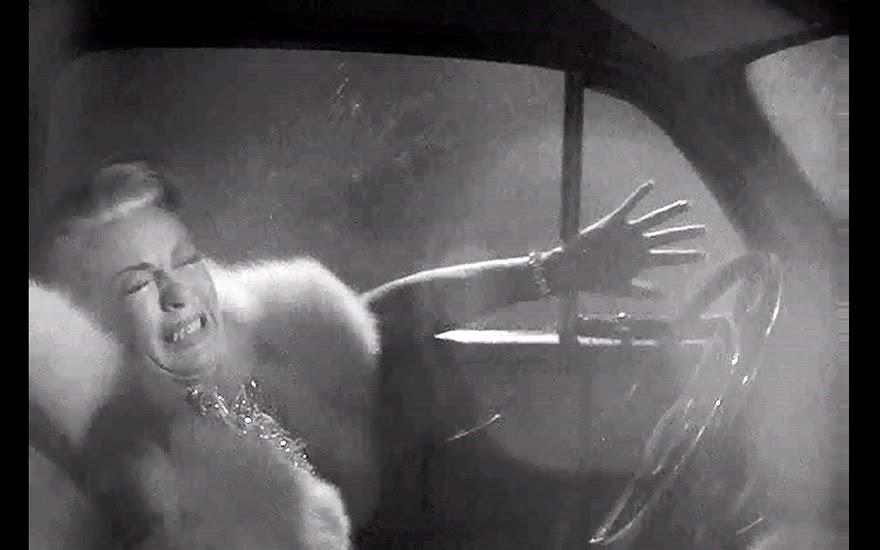
Georgia is the neurotic and alcoholic daughter of a late Barrymore-style actor who gets her big break working for Jonathan. In order to keep her mentally together during shooting, Shields makes love to her, but after the film scores big, he breaks her heart in a remarkably callous way. One of the most chilling sequences I’ve ever seen on film occurs after Georgia discovers the producer in his home with another woman. She drives away, and we endure a few terrifying moments watching her in hysterics and barely steering as the car hurtles down the road.
James Lee Bartlow is a happy man, an English lit professor who happens to have written a best-selling novel. When Jonathan calls to pitch adapting his book to film, Bartlow is happy to refuse, but his ambitious wife (Gloria Grahame again) insists that he take her to Hollywood. There, Jonathan seduces Bartlow into writing the adaptation himself. Unfortunately, Mrs. Bartlow is such a distraction that her husband can’t get his work done, so Shields palms her off on an aging lothario of an actor, with tragic results.
Any one of these three would make a credible murderer – only Jonathan does not die! Instead, he faces his own financial crisis at the studio and realizes that he needs Fred, Georgia and James to make another picture with him in order to recoup his losses and come out on top again. Of course, all three of them refuse, but then Jonathan’s former boss, now employee (Walter Pidgeon) forces them to realize that, in undercutting or betraying or costing them some happiness, the producer propelled each of these people to the top of their game.
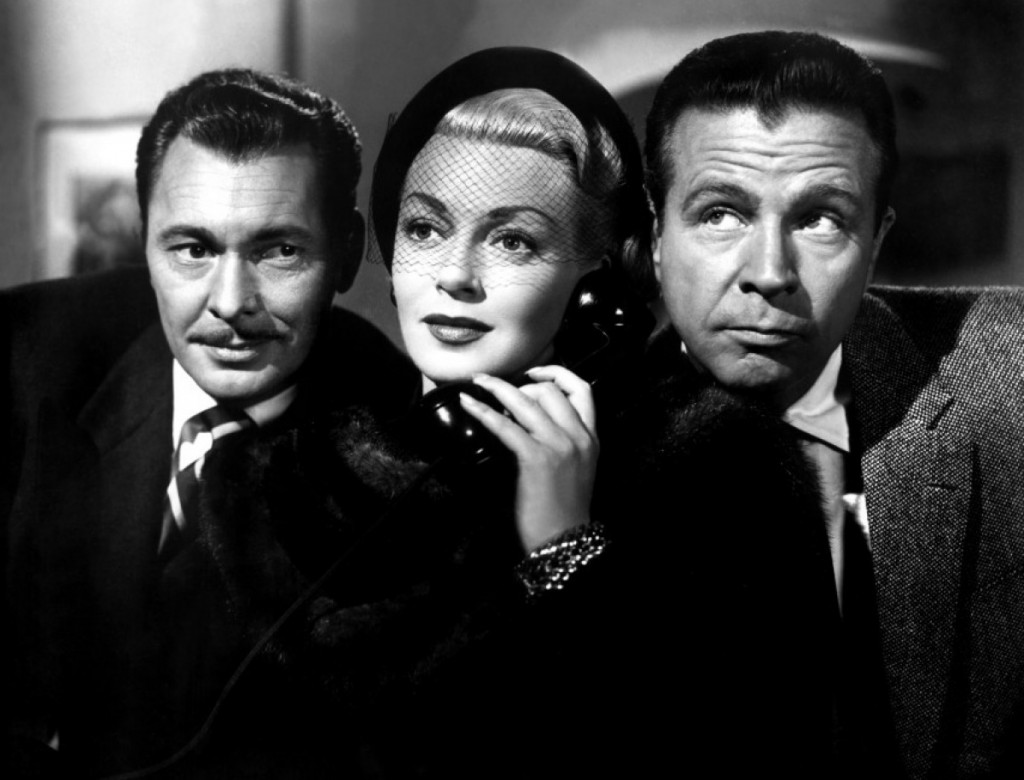
The Bad and the Beautiful has a comparatively happy ending to the other films we’ve seen. Because Jonathan’s three victims don’t waste much time feeling gratitude for the Oscars and the Pulitzer Prize and the long careers; rather, they each remember the thrill of making cinematic gold with him. Turns out that the thrill of artistic collaboration is just as real a Hollywood experience as all the jealousies and betrayals. But that’s Hollywood for you: it uplifts you, or it kills you. And sometimes it does both!
We have fourteen more films to watch for “Hollywood Looks at Itself.” Most of them are dark as hell. The Player contains a murder mystery, Barton Fink lives next door to a serial killer, and Once Upon a Time in Hollywood has to contend with the Manson clan! And these films are the funny ones!! One thing’s for sure: from The Day of the Locust to Adaptation, from Kiss Kiss Bang Bang to Get Shorty, I’m going to enjoy this “MMM Good” trifecta!
 Ah Sweet Mystery!