Despite the fact that I count London among my three favorite cities in the world, I know far too little about it. I’ve been there four times, hit some of the tourist spots, taken high tea (with and without gluten), and visited with friends. Most of what I have learned about London, however, is what I’ve read in books. And thanks to Tina Hodgkinson, I now know a lot more about The Big Smoke, particularly as it relates to the life and work of our mutually favorite mystery writer.
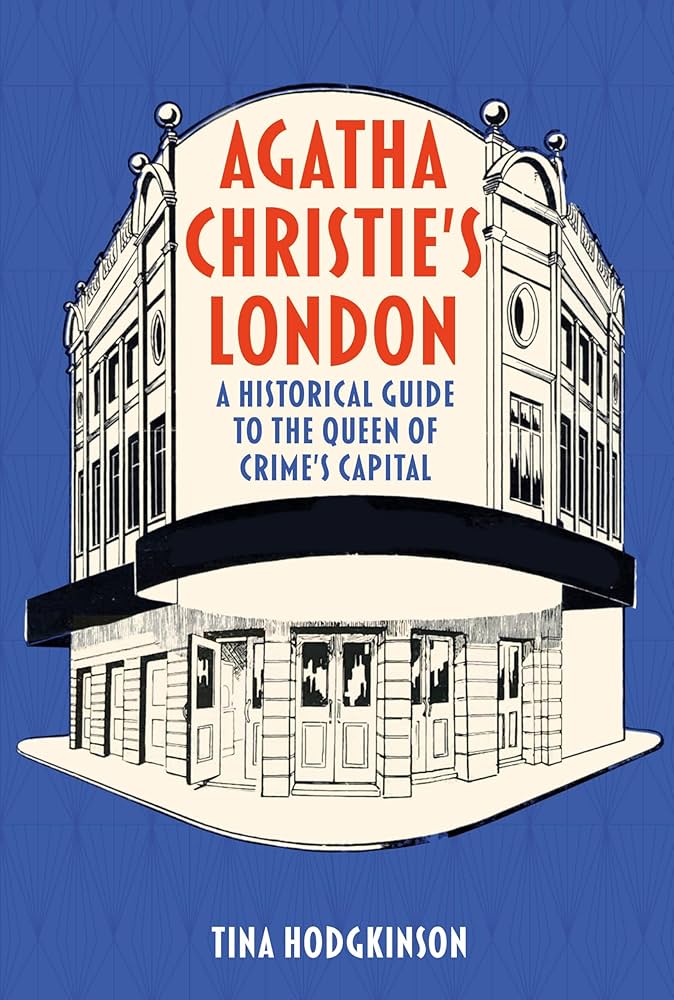
Tina’s new book, Agatha Christie’s London: A Historical Guide to the Queen of Crime’s Capital is actually three books in one, and Tina, a resident of England’s capital city and fellow Christie scholar, is the perfect guide, having created and conducted walking tours of Christie’s London since 2014. I had the pleasure of meeting Tina at the 2024 Agatha Christie Festival in Torquay and look forward to seeing her there again this fall, where she will be talking about her book and where we get to serve together on a panel to talk about Agatha’s greatest narrators.
If you seek to possess a modicum of knowledge about Christie, one fact to store in your hat is that she loved houses! Most fans are aware of Greenway, her cherished summer home in Devon that is nestled on the River Dart and is currently one of the most cozily cluttered museums you would ever want to visit! You might also know about Ashfield, Agatha’s childhood home, which she adored but which sadly doesn’t exist anymore. Or maybe Styles, named after her debut novel and the house she lived in with her first husband Archie.
All of these homes can be found in the countryside, and you might think that the doyenne of country house mysteries was a primarily happy lady squire. But Agatha adored the City, and in the first part of Tina’s book, the reasons for this become apparent. London was the home of young Agatha’s beloved Auntie Grannie (called that because, through an interesting confluence of marriage, that lady was both Agatha’s grandmother and her aunt!) and other family, a place to shop and attend the theatre. In her lifetime, Agatha purchased many homes and flats and liked nothing more than knocking through walls and redecorating. Each place she lived in, either with Archie or her beloved second husband Max, had its own history, flavor and charm, and although Tina swears that her book is not a biography, it’s remarkable how much we can learn about Christie by studying the places where she lived.
And since London was not just a place to live but “a place for inspiration and creativity,” we are taken on a tour of various spots that inspired Agatha and often featured in her stories: we can dine with Hercule Poirot at the Savoy Hotel, as he did in Lord Edgware Dies (aka Thirteen at Dinner) and where in the 1920’s the staff figured out a most creative way to protect diners from seating thirteen at dinner! We can take the same shopping route that Miss Marple took in At Bertram’s Hotel (although the Army and Navy Stores are long gone) or check out the facades of all the real-life hotels that inspired Bertram’s. Or we can have a sumptuous dinner of oysters and sole Colbert at the Ritz Hotel, as Tommy and Tuppence did in The Secret Adversary, before we sprint about capital trying to save England!
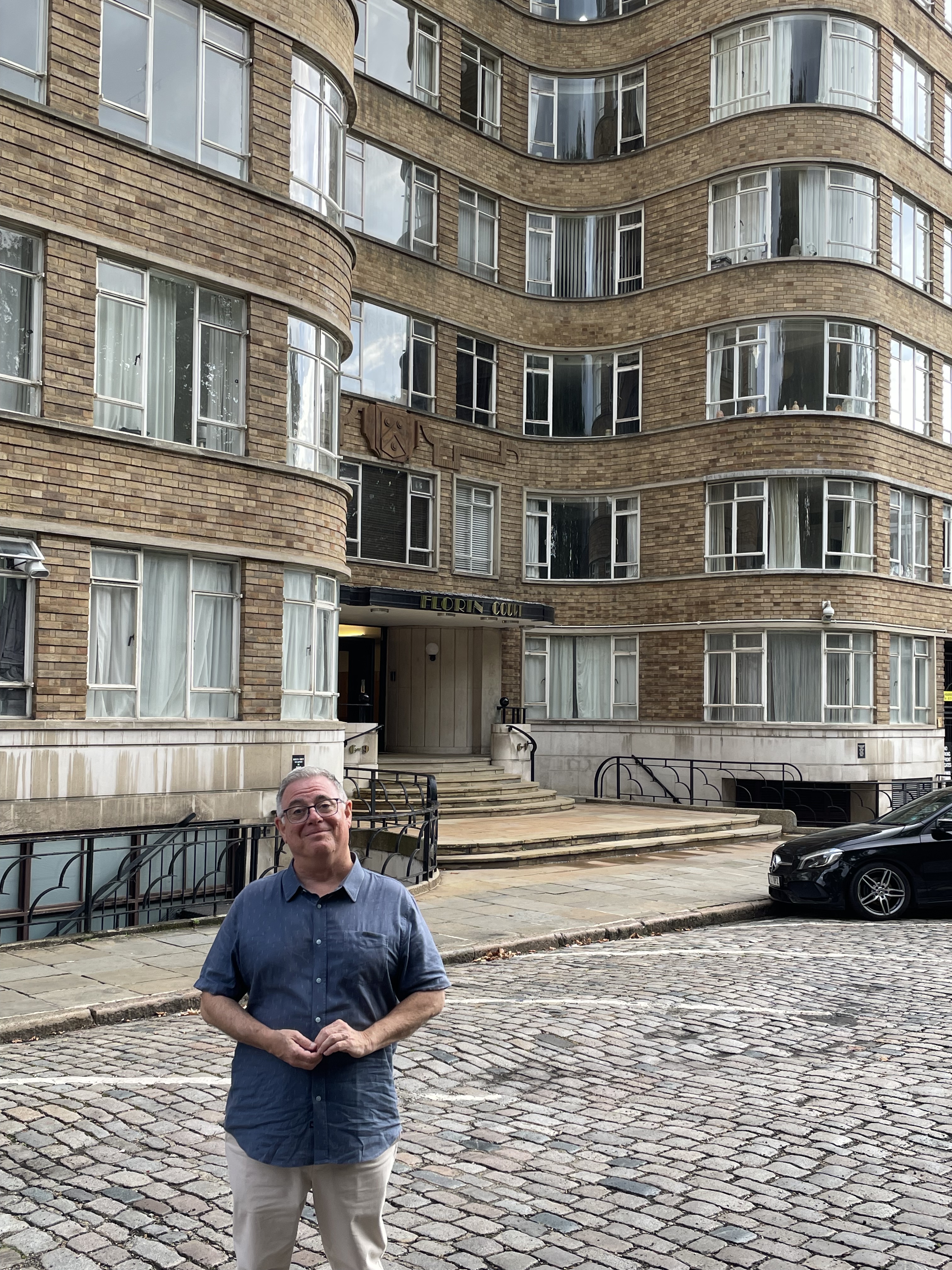
In Part II of her book, Tina takes a deep dive into the cases for all these sleuths and more, examining each of Agatha’s works, the ones that spend time in London anyway, and describing both the real places found in the stories and the fictional locales they inspired. There is a wealth of detail to be found here, from neighborhoods where crimes took place or suspects lived, to the tube stations from which Poirot emerged while on the track of a clue. One of the highlights is tracking down every apartment Poirot lived in; through this, we can see how Christie began her chronicles of the Belgian detective with a distinctly Holmesian influence and eventually allowed Poirot’s distinctive personality to come into its own and affect the environment in which he lived and traveled.
If you can imagine the advantages of taking this book along with you on your walking travels through London, Tina has really got you covered. Part Three of the book is entitled, “The Ultimate Agatha Christie’s London Walking Tour!” Here, Tina has provided all the details you need to enact a thorough walking tour of Agatha’s West End, complete with a route, starting and finishing points, advice on transport, how much distance you’ll cover and how long it should take, the best times of the week to go, where to find refreshment, and valuable information on accessibility along each route.
And as you go along your route, Tina provides a wealth of information about where each site you visit appeared in Christie’s books. Now you can stand in the Piccadilly Circus tube station and look around you. There! Do you see Tuppence Cowley jumping out of her taxi and finding Tommy Beresford waiting for her? (The Secret Adversary) Do you notice Poirot exiting his train and spying Countess Vera Russakoff before he walks home? (“The Capture of Cerberus,” The Labors of Hercules) Do you wait in vain to get a glimpse of Lady Frances Derwent who missed her stop on the Central Line? (Why Didn’t They Ask Evans?)
With Agatha Christie’s London, you have elements of biography, literary analysis and a travel guide all at your fingertips. I predict some wonderful walking adventures – and a happy sit-down with a fellow Christie fanatic – in the near future!
 Ah Sweet Mystery!