Between 1967 and 1973 – those halcyon days of junior and senior high school – I subscribed to two periodicals. One of them was Mad Magazine – and if we lived in some alternate universe, that’s all this blog would be about! Alfred E. Neumann, baby!!!
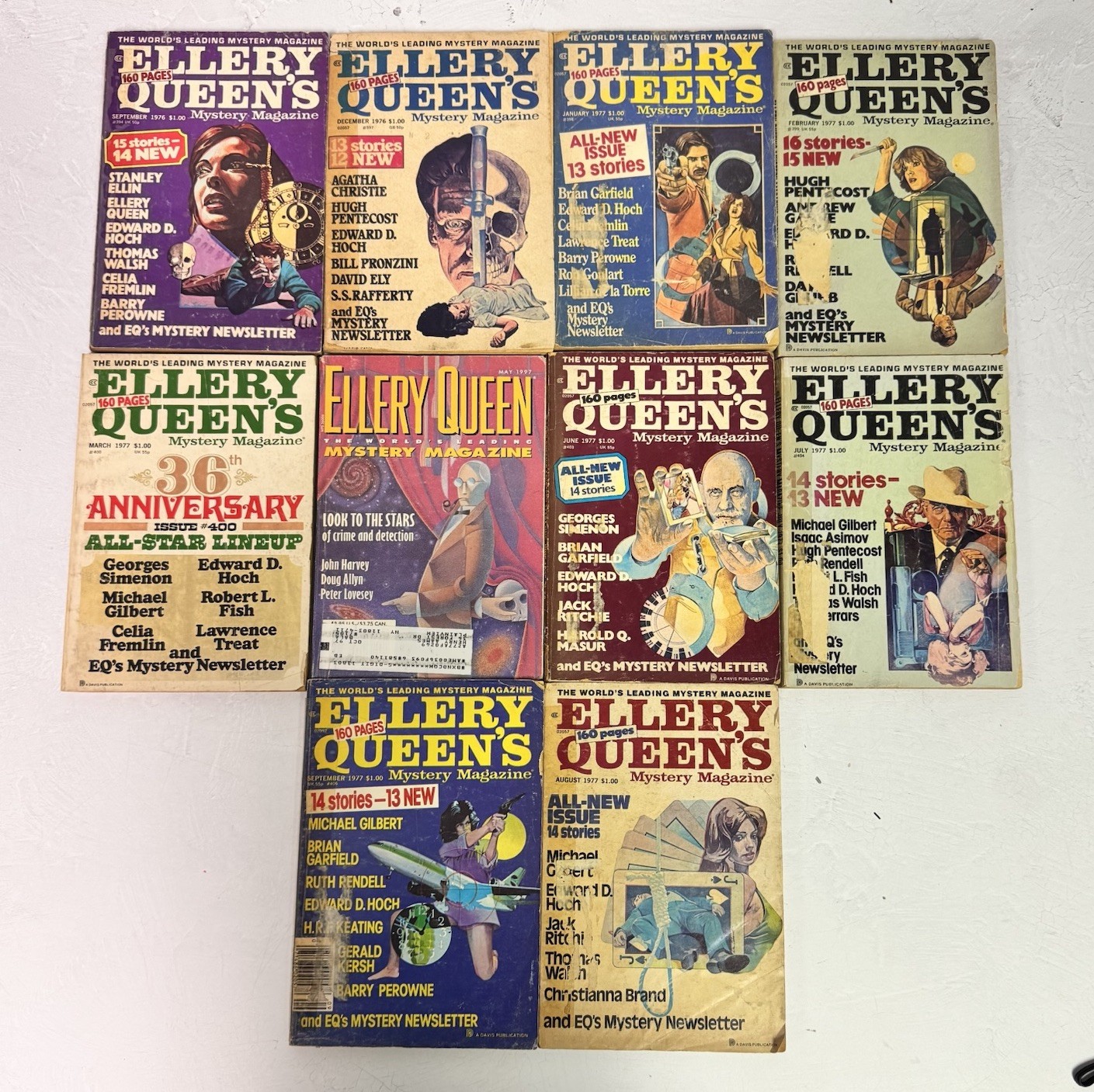
The other was Ellery Queen’s Mystery Magazine. EQMM was amazing in the late 60’s and early 70’s! Each month, I would receive an issue that offered a quality mix of classic and contemporary short fiction, with an author list ranging to everyone from Charlotte Armstrong to James Yaffe. I might find a story from Christie or Queen or Carr or a novelette from Stout – or a parody of any one of them from the pen of Jon L. Breen. And there were plenty of modern authors writing stories that referenced the style of the 30’s, the 40’s or the 50’s but added a modern twist.
Which brings us to Edward D. Hoch! Ed was one of the few writers to make his living on short fiction: between 1955 until his death in 2007, he produced over 950 stories. Half of these appeared in EQMM beginning in December 1962. In fact, from 1973 on, one of Hoch’s stories appeared in every single issue!
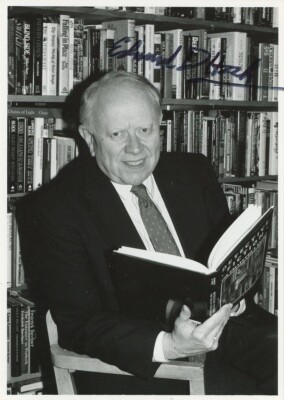
Hoch created a bunch of series characters, and you never knew who you would be getting until your new issue arrived. His most beloved sleuth may be Dr. Sam Hawthorne, a retired medico who solved impossible crimes. Then there was Captain Leopold, head of the Violent Crimes Squad, whose cases were puzzle mysteries dressed up to look like procedurals; Nick Velvet, a professional thief who only steals objects of little value; code and cipher expert Jeffery Rand; the Coptic priest Simon Ark, who was 2000 years old; and many many many more!
Fortunately, you don’t have to have kept all your old EQMMs in the garage in order to collect Ed Hoch’s tales. (My mom made me throw all my magazines away – the EQMMs and the MADs – when I went off to college.) That small publishing denizen of the short story, Crippen & Landru, has so far published fourteen collections of Hoch stories, and there’s more to come. A lot of these are Dr. Sam Hawthorne stories – folks love their locked room murders – and I happen to own, er, none of them. Recently, however, I purchased a volume that C & L produced in 2024 which features two of Hoch’s least well-known sleuths, one of which I’ve never even heard of.
But the other . . . well, here’s where we take all the threads – EQMM, Ed Hoch, and Crippen & Landru – and tie them together like a classic mystery denouement! In the spring of 1971 EQMM announced that it would begin a six-part mystery extravaganza from April through September called The Will ‘o the Wisp Mystery. The author was a mysterious figure known only as . . . Mr. X! I can’t tell you if the magazine had ever done anything like this before or since, but it was billed as a big event.
In retrospect, many readers have stated that they only had to examine the writing style of these six stories to know that the author was Edward D. Hoch. I was fifteen, had no idea it was Hoch, and could care less. I read the stories and then went on to live my life. Fifty-five years later, The Will ‘o the Wisp Mystery wasn’t even a dim mystery. And then I went on the Crippen & Landru website to check out some exciting upcoming publications – and found The Will ‘o the Wisp Mystery on the list! Did you know that the older you get, the more that ol’ nostalgia washes over you?
What can I say? It was an impulse buy.
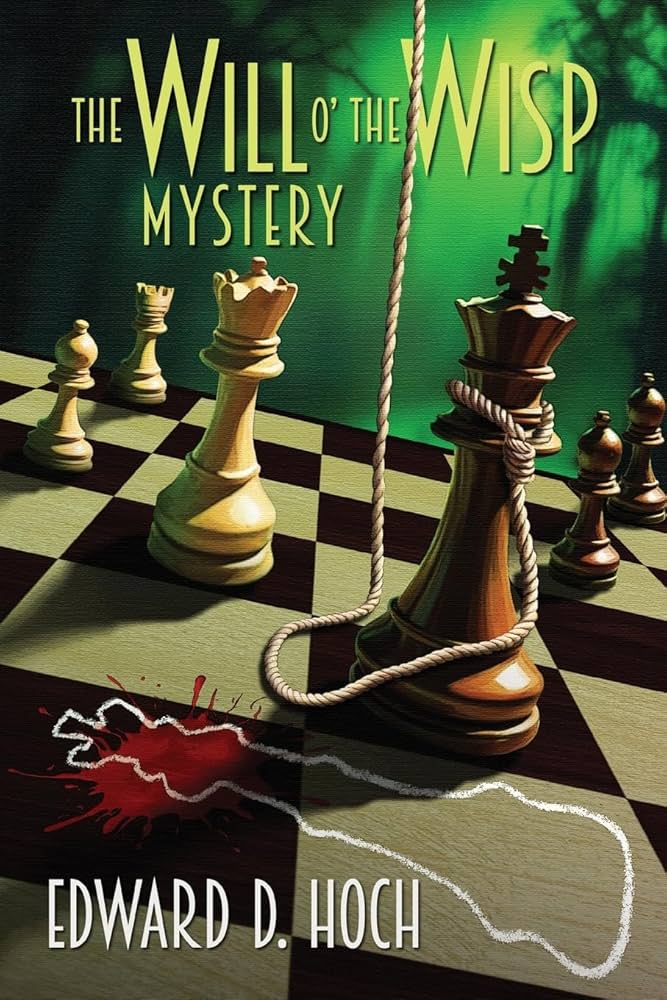
The first half of the book contains The Will ‘o the Wisp Mystery in its entirety. The six stories get their titles from chess pieces: “The Pawn,” “The Rook,” “The Knight,” “The Bishop,” “The Queen,” and “The King.” The premise: a prison van bearing six convicted criminals from a County jail in upstate New York to a state penitentiary is hijacked, the driver and guards disposed of, and the six prisoners whisked away. They include a high-level mob boss with ties to the Mafia (the king), a woman convicted of killing her husband (queen), a British con artist and killer (bishop), a bank robber and car thief (knight), a swindler and card cheat (rook) and a forger (pawn).
Was the mob boss the target of the hijack, with the other criminals merely collateral damage? Or have all the prisoners been sprung for a larger purpose? The local police are baffled and call in David Piper, the head of the state’s Department of Apprehension, known to one and all as “The Manhunter.” It’s Piper’s task to retrieve every one of these felons, and as you might expect, each story centers on a different “chessman” in this rogue’s gallery.
As the prisoners are captured, one by one, the overarching story becomes bigger and more complex. Piper’s troubled marriage comes into play, and people he thought he could trust become suspect. Several disguises are donned, and identities become confused. At one point, a corpse’s head is severed and stolen – after the body has been identified. (The reason for this is pretty darn wonderful!) As far as I know, David Piper never appeared again in Hoch’s work, but this could very well have become a TV series; I liked imagining Mike Connors playing the role a couple of years after Mannix ended.
The Will ‘o the Wisp Mystery is full of action, with plenty of twists and turns, and a big cliffhanger at the end of each “episode.” I can only imagine that, for a bigtime fan of Hoch’s work, this would not make anyone’s “ten best” list, but it’s a lot of fun, and it shows Hoch’s propensity to insert puzzle aspects into even his pulpiest stories. It’s not really a spoiler to say that you’ll keep up better if you are moderately well-read – I love an author who panders to intelligence!
The second half of this volume contains the entire oeuvre of Hoch-created sleuth. Both men are among the rarer of detectives for the author, and both are named David. This one, however, is a Catholic priest, Father David Noone. (Hoch was a devoted Catholic.) The seven stories about the good father first appeared in various publications and span over four decades, from 1963 to 2004. During that time, Noone moves from a flourishing suburban parish to a financially struggling inner city church. In true genre form, both institutions seem to attract murder.
The cases David Noone solves are varied and deal as much with issues of faith as with crimes committed for passion or gain. They aren’t complex puzzle mysteries, and yet once the solution is revealed, you realize that Hoch has gone to some length to clue them fairly.
In “Game of Skill” (1963), Noone’s regular evening chess game with his associate, Father Malloy, is interrupted by a phone call from a man announcing he plans to blow up the church on Sunday. As the week passes and the calls increase in their intensity, Hoch effectively ramps up the suspense – but he has something more in mind, a “higher calling” if you will, as Father Noone races to see if he can save both his congregation and the tormented soul on the other end of the telephone.
“The Thing in Lover’s Lane” (1971) is a murder mystery that hits closer to home. when Father George Kling, a young and extremely popular priest, is found shot to death in a car on Lover’s Lane, wrapped in the arms of a married woman, also deceased, Father Noone must deal with the tragedy to his community, the threat of scandal, and the shattering possibility that he misjudged a fellow cleric. By “The Sweating Statue” (1989), Father Noone has moved from St. Monica’s to Holy Trinity, an inner-city parish, where he tends to the needs of a poor working-class congregation. When a statue of the Virgin Mary begins to ooze sweat every day, this possible miracle draws a huge number of the faithful from outside the congregation and offers a possible solution to the church’s money troubles. It also leads to a tragic murder, which is solved by a visiting monsignor. The final line will have readers discussing the peculiar nature of religious faith.
“One More Circus,” (2002) was the first Father Noone story to be published in EQMM frankly reminds me a little of the short stories that Ellery Queen wrote. It’s set in, of all places, a Montana circus, where Father Noone travels to perform a baptism on the baby daughter of the circus’ human cannonball and his wife, a tightrope walker. This one has a twist that I saw coming before anyone died, but it’s a sweet, sad tale about the things people will do for love. “The Arrow of Ice”(2002) takes place on a wintry and very busy Sunday morning: a demonstration is taking place outside to protest the Bishop’s plan to renovate the church at the same time that a local schoolteacher is heading an ice sculpture contest in the parking area. Father Noone barely has time to perform three successive Masses when a body is discovered in the rectory kitchen with a long shard of ice shoved in his throat.
“Hand of God” (2003) is set in the theology department of a nearby Catholic college where Father Noone has been asked to represent the clergy in a conference about the modern Catholic church. The event is cancelled when two bodies are discovered in an apparent murder/suicide situation. It’s up to David to sort out the order, manner, and motive for these deaths. In the final story, “Searching for Sammy Sand” (2004), we discover that (spoilers) the church renovations come through, and Father Noone is without a home for six months. He is asked to take on various duties, including ministering to the prisoners at a local penitentiary. Naturally, one of his charges insists that he is innocent! He has been accused of running a drug house and murdering a policeman, but he insists that he had rented out the house to a Jamaican fellow named Sammy Sand. Father Noone promises to investigate, but before he can find out whether or not Sammy is guilty, he must discover whether or not Sammy really exists.
Nobody will ever come forward to insist that David Piper or Father Noone represent the top tier of Edward D. Hoch’s prolific output. However, I’m grateful to Crippen & Landru for giving me a nostalgic fix with The Will ‘o the Wisp Mystery and then introducing me to the thoughtful stories featuring the sleuthing priest. If you find the time, check out C&L’s website here. They have a huge array of fascinating collections, including rarities from some of the biggest names in classic mystery.

 Ah Sweet Mystery!