“. . . All the things that seemed to be true, were only illusions. Illusions created for a definite purpose – in the same ways that conjurers create illusions, to deceive an audience. We were the audience.”
Nobody excelled at misdirection better than Agatha Christie. Her bag of tricks was large and, if it wasn’t infinite, she had a knack for reincorporating tropes in ways that made them seem fresh. Time and again, she manipulated her readers to see things the wrong way round: identities and moral character, relationships, even the true nature of a crime. By the 1950’s, she was still finding ways to spin new cloth out of old thread; sometimes, however, the seams appeared a little frayed.
It’s not that there was a steady decline. Take the concept of The Wrong Victim, where we are made to think that a certain person is, or was, a murderer’s target, which blinds us to the identity of the true victim, even if that person is killed! Between 1950 and 1953, Christie used this idea three times!! We’ve already discussed how it works in A Murder Is Announced – and then Christie doubled down with back-to-back novels: They Do It with Mirrors (aka Murder with Mirrors) and After the Funeral. In the latter of these, the trick works beautifully because that novel’s opening hook, one of Christie’s best, does such a great job of misdirecting us from the beginning. Things work differently in Mirrors because . . . well, that’s what we’re here to discuss.

One of Christie’s favorite means of distracting us from the true nature of a relationship was the staging of a dramatic quarrel. The idea appears as early as The Mysterious Affair at Styles, which is only marred by the deus ex machina reveal of a relationship that springs up out of nowhere. In Murder in the Making, John Curran’s second volume about Christie’s notebooks, he traces this idea during his discussion of They Do It with Mirrors:
“The central idea behind this plot, the fake quarrel, was one that Christie nursed for a long time before finally incorporating it into a book. She considered numerous variations in various settings, and the plotting was entangled, at different times, with both Taken at the Flood and A Pocket Full of Rye. As can be seen, that attraction went back over many years and oddly, it would seem that it was the title, or at least a reference to “mirrors”, that attracted her.”
I think the phrase “before finally incorporating it into a book,” is misleading, since Curran himself mentions some titles on the next page that utilize this very trope. Perhaps he is referring to the specificity of the characters who are quarreling: Christie was drawn to the idea of a pair of brothers locked in a Cain and Abel type of hatred so severe that they actually attempt to kill each other in front of witnesses – thereby providing them both with a solid alibi for the murder that they have secretly planned together. As the idea progressed – linked, as Curran says, to the word “mirrors,” Christie settled on names for these brothers: Percival and Lancelot.
As most of you probably know, we, along with Miss Marple, will meet Percy and Lance next month. But the idea of the quarrel remains behind, along with the word “mirrors,” and that – as others have pointed out – may have been to its detriment. Unfortunately, this is not the only problem running through They Do It with Mirrors, as we are about to discover.
* * * * *
The Hook

“Such an odd thing, friendship! She, young Jane Marple, and the two Americans. Their ways diverging almost at once, and yet the old affection persisting; occasional letters, remembrances at Christmas. Strange that Ruth, whose home – or rather homes – had been in America should be the sister whom she had seen the more often of the two . . . There had been many meetings like this one. In Claridge’s, or the Savoy, or the Berkeley, or the Dorchester. A recherche meal, affectionate reminiscences, and a hurried and affectionate goodbye. Ruth had never had time to visit St. Mary Mead. Miss Marble had not, indeed, ever expected it. Everyone’s life has a tempo. Ruth’s was Presto whereas Miss Marple’s was content to be Adagio.”
At the very end of the Joan Hickson adaptation of this novel, Miss Marple sits down with Ruth Van Rydock and Carrie Louise Serrocold to watch an old film of the three of them as girls. We see the blurry figures on the screen, but our focus is held by the three old women watching – the Martin sisters with some wistfulness and Miss Marple with a look that is hard to decipher.
You must forgive my tendency to express what I wish this, or any, novel had been. For instance, I have stated that The Body in the Library could have been better if the plot had stayed rooted in St. Mary Mead. And I wish with all my heart that Christie had better utilized They Do It with Mirrors as an elegiac reminiscence of Miss Marple’s youth. That final shot in the Hickson version is a hint of what might have been. But Christie valued the privacy of her heroes, and she offers little insight into Miss Marple’s heart, except when involved in matters of justice.
Let’s grab onto what we can, the idea that old friendships never die, and watch how Ruth Van Rydock asks Miss Marple to investigate the home life of her sister Carrie Louise. Ruth has already assumed Miss Marple will say yes, and she had painted a false picture to her sister of Miss Marple’s life, an impoverished mirror to Dora Bunner’s miserable existence, and encourages Carrie Louise to invite her old friend for a long visit to fatten her up. To her credit – and for purposes of having a story – Miss Marple takes no umbrage at this: any strategy is a good one if it works.
Ruth’s reason for making these arrangements is laid out straightforwardly but, on examination, is disappointingly vague. Like Ruth herself, Carrie-Louise has been married three times, and Ruth worries about her sister’s well-being, perhaps due to her tendency to marry “cranks.” “Carrie Louise has always lived right out of this world,” her sister says. (Except, as we shall see, much of Miss Marple’s success at detection will depend on the fact that Carrie-Louise is actually a practical person and sees most things clearly.) Ruth then goes on to describe those three marriages, and really, two of these guys don’t seem like cranks at all. One of them, Eric Gulbrandsen, was a fabulously rich old coot who died and left Carrie Louise a fortune. The second, Johnnie Restarick, was a hot-looking opportunist who may have married her for her money but gave her a good life – until Carrie Louise pushed him back into the theatre business and into the arms of a Yugoslavian femme fatale who literally drove him to his death.
Only the third spouse, Lewis Serrocold, deserves “crank” status for his pie-in-the-sky dreams of “curing” juvenile delinquents. At least, that’s how Christie sees it: you can just feel her fidgeting with scorn over Lewis’ ideals. But even with Lewis ensconced at Carrie Louise’s side, spending her money on these bad boys who live right on the grounds with them, Ruth is still unsure of what exactly is wrong. And so she begs Jane to take Carrie-Louise up on the invitation that Ruth has finagled and look into matters.
Well, it’s a free vacation.
Score: 6/10
The Closed Circle: Who, What, When, Where, Why?
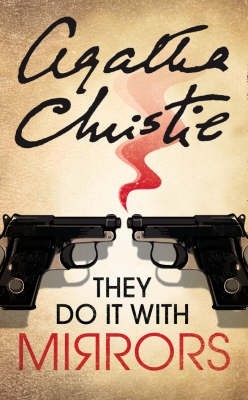
Who?
John Curran mentions that the 1950’s were a decade when Christie began to tackle social issues, and it seems necessary to mention that here, in the context of how she presented young people. Between 1920 and 1951, there was little variation in how the younger generation was portrayed: Julia and Patrick Simmons could have easily been part of the Boynton entourage of 1938 or even the set of Bright Young Things found at Chimneys in the 1920’s. Teenaged boys, like David Angkatell in The Hollow and Eustace Leonides in Crooked House, tended to brood, but there was nothing about their character particularly resonant of “youths in revolt.”
Things change – or, at least, they are meant to change – starting with They Do It with Mirrors, set in a home for juvenile delinquents, and they would continue with Hickory Dickory Death (a university hostel), Cat Among the Pigeons (a girls’ school) and a whole groovy London “drop out” scene (replete with made-up drugs) in Third Girl. Only Meadowbanks comes out unscathed because it represents old British tradition and nothing about what happens in the book changes that. Most of Christie’s other attempts to recreate some sort of milieu for the younger generation are about as convincing as Raymond West’s depiction of promiscuous teens with dirty fingernails in A Caribbean Mystery.
What’s significant about Mirrors is that, after suggesting the potential danger of sweet Carrie-Louise living amongst all these young hoodlums, the novel is devoid of either realistic depictions of juvenile delinquency or melodramatic scenario of danger at the hands of fallen youth. There are actually only two young men from the institutional side of Stonygates who are included in the plot, and one of them, Ernie Gregg, makes his first appearance in Chapter 16 and exits at the end of Chapter 19 in one of the most extraneous third murders in the canon.
That leaves Edgar Lawson, arguably the most fully realized male character in the book, but he doesn’t sound like a juvenile delinquent. It is drummed into our heads from the start that Edgar, despite being given loads of responsibility by Lewis Serrocold and the run of both sides of the estate, is a “disturbed individual.” Of course, you don’t even have to read your Christie carefully to recognize from the start that there’s something “off” about this information: “His voice had an unexpectedly dramatic quality about it, as of the utterance of her name were the first words of a part he was playing an amateur theatricals.” This is our first description of Edgar when he comes to meet Miss Marple at the train station, and the theatrical similes fly through his every appearance. At their next solo meeting, Edgar tells her that he is the illegitimate son of Winston Churchill, and “what he said had the familiarity of a stage scene.” Christie reminds us far too much in this – and every – aspect of the novel that something theatrical is at play, making it nearly impossible to buy Edgar’s publicly-displayed neurosis as real.
Easily my favorite male character is Wally Hudd, the poor sap married to the gorgeous Gina. He’s a go-getter bursting with American can-do spirit who is stymied by all these rich people hanging about the overgrown gardens of Stonygates in darned clothes, eating on cracked china, while a bunch of loony hoodlums have the run of the place. He explains himself to Miss Marple:
“I understand being poor. There’s nothing much wrong with it. If you’re young and strong and ready to work. I never had much money, but I was all set to get where I wanted. I was going to open a garage. I’ve got a bit of money put by. I talked to Gina about it. She listened. She seemed to understand . . . Just a couple of crazy kids we were – mad about each other.”
As for the other men, it’s hard to buy the handsome, dull Stephen Restarick as a serious contender for Gina’s affections. Christian Gulbrandsen and Alex Restarick, Carrie Louise’s stepsons by her first and second marriages respectively, make brief appearances and exist only to be murdered. Dr. Maverick is guilty – of being a bad psychiatrist. The Pocket Books cast of characters describes him as “supercilious,” and we never take him seriously as a suspect. Only Inspector Curry, the detective d’histoire, turns out to be someone we like spending time with, and his evolving relationship with Miss Marple, while nothing we haven’t seen before, is pleasantly rendered.
That leaves Lewis Serrocold. Ruth Van Rydock describes him thusly to Miss Marple: “He was well off, about (Carrie-Louise’s) own age, and a man of absolutely upright life. But he was a crank. He was absolutely rabid on the subject of the redemption of young criminals.” And that’s what we get, a man slightly absent-minded in his private life because of his devout attention to his work. He reminds me a little bit of Dr. Leidner in Murder in Mesopotamia, and although their secret inner lives are quite different, both men do possess secret inner lives that prompt them to murder. Lewis’ biggest risk, if you want to call it that, is that he manipulates the situation to provide a false narrative – who is trying to kill Carrie-Louise? – and then banks on the police accepting his true devotion to his wife and excluding the most likely suspect, the sincerely loving husband, from consideration.
Our acceptance of Lewis’ adoration of his wife resembles our certainty of high moral character on the part of Letitia Blacklock in A Murder Is Announced, but the latter case is better established by multiple witnesses and is “disproven” by the fact that we’ve had the wrong woman in our sights all along. In Mirrors, we believe Lewis wouldn’t kill his wife because Miss Marple senses he wouldn’t – and we have been bred to trust the Marple instincts. This is reminiscent of The Murder at the Vicarage when Miss Marple’s belief in a killer’s guilt is shattered when her choice confesses. We are not let into that bit of reasoning in her head until the end; at least here we have Marple’s mental “testimony” that Lewis’ love is genuine; the trick is that this merely eliminates one motive, not the entire man.

I think the biggest problem with Lewis is that his real motive comes out of nowhere, despite the multiple appellations of the word “crank.” We are fairly clued to the fact that Lewis, as a former accountant working with the Gulbrandsen Trust, would have the skill and opportunity to embezzle funds. But the idea of a Utopian Island for Juvenile Boys is bizarre; even Michael’s garden paradise in Hallowe’en Party makes more sense – and that’s saying a lot. How would that island even work? What happens when the boys “age out” into men? Do they go straight, or does the whole “Fagin” aspect of Lewis teaching his boys the accounting equivalent of pocket-picking go on and on in order to pay the bills? Do they get personal lives? Would young women be brought there to procreate with the lads? Christie has been known in her thrillers to create mad goals that don’t seem thought through – did she think nobody would notice in Destination: Unknown that somebody was stealing the world’s best scientists? – and that seems to be the problem here.
We often find ourselves saying that the female characters outshine the males in Christie, but that’s barely evident here. The central figure of Carrie Louise is the most problematic. Her sister says that she “has always lived right out of this world. She doesn’t know what it’s like.” This sets Miss Marple in a wholly wrong direction, and she spends the rest of the novel struggling to accept that nobody at Stonygates sees things clearer than Carrie-Louise – except, perhaps, for the matter of her husband. I say “perhaps,” because in the end she is not in the least surprised that Lewis used his financial expertise in an attempt to play God.
But Carrie-Louise is so damned passive throughout the novel that you want to shake her. Her clothing, her attention to the house, her blind acceptance of what Lewis says is going on behind the walls of Stonygates. Interestingly – and quite annoyingly – the French adaptation of this novel in Les Petits Meurtres d’Agatha Christie makes Carrie-Louise a willing partner in Lewis’ plan – and a cold-blooded murderer! Why the hell not??
The rivalry between Carrie Louise’s daughters, Mildred Strete and the late Pippa – and, by extension, with Pippa’s daughter, Gina – is an interesting dynamic. We talk a lot about Christie’s confusing attitudes toward adoption, and we find something of a variation here: unable to have children, Carrie Louise and her elderly first husband adopted Pippa, a beautiful, laughing child. And then Carrie-Louise found herself actually pregnant and gave birth to the “solid and worthy – but definitely homely” Mildred. Gina is a lovely reminder of Pippa, and she’s fun to be around. Mildred is whiny and bitter, and she’s no fun to be around.
But why would either of these women slowly poison Carrie Louise, who provides them with all they need? Mildred lives to complain, not to kill. And don’t get me started on that tiresome old saw about Pippa’s birth mother having been a killer who left a killer’s genes buried in Gina’s brain! I won’t have it anymore!! And besides – how could Christian Gulbrandsen, of all people, have come upon a scheme by either of these women – or, for that matter, the devoted Juliet Bellever – to murder Carrie Louise? And why would he consult Lewis Serrocold about this, especially if it concerned his own half-sister?
What?
As I alluded to above, the whole of They Do It with Mirrors appears to rest on Christie looking for a new home for a favorite trick. She had garnered much success using the “fake argument” strategy in Death on the Nile and, to a lesser degree, in Evil Under the Sun, but in both she was dealing with an apparently estranged romantic couple. Here she wanted to do the same with brothers. I would argue that the trick would have been easier to see through had she stayed with the sibling idea; the Lewis/Edgar battle in Mirrors appears until the end to be between an employer and his (very disturbed) employee, and I would argue that this relationship caused fewer people to suspect collusion or a shared motive. (It helps that Lewis’ parentage of Edgar really comes out of nowhere!)
Mirrors isn’t the first book to hang on a single trick, but if the trappings around it aren’t gripping, you’re asking for trouble. To make for a satisfying read, the body of the novel should be rich: the hook should grip you, the red herrings should be juicy, and the final solution should upend expectations with flair. Certainly, we will end with a solution that amounts to a reversal of what we have been told is going on; however, the journey to get there is padded and dull.
Chapters Three through Seven are mostly taken up with lots of conversations regarding family matters, several sightings of Edgar Lawson behaving like a madman, and a visit with Dr. Maverick to keep our toe in the delinquency business. (I can’t call it a red herring because it ultimately matters. But this is no Bertram’s Hotel: the young residents and their affairs have no real drama, and we simply do not see enough of them to become invested in what will ultimately be revealed as a con job.) We also get two conversations with Christian Gulbrandsen, one directly with Miss Marple and the other, which she overhears, with Lewis Serrocold. These are maddening conversations common to mysteries where characters speak in such vagaries that we can’t pin down what they are talking about in the moment, but we can have them satisfactorily deciphered in the end.

The problem for me with the conversation is that, given the urgency and secretiveness of the matter (how do we protect Carrie-Louise when her husband is taken away in cuffs?), it makes absolutely no sense for the men to hold this conversation out in the open, speaking loudly enough that an old lady can hear much of what they say from her window. What she hears goes far to support the last few words that had been typed by Lewis at the end of Christian’s conveniently vague letter. And here’s the thing: so much of the misdirection in the novel is based on how Lewis uses Miss Marple’s limited reception to misdirect the motive for Christian’s murder. What if she hadn’t heard the words she was meant to hear? What if the word “embezzlement” had floated up to her earshot?
Based on the timeline, Lewis and Edgar had to form their plan pretty quickly, and they had to rely a lot on luck. Their argument is an effective piece of literary theatre. It works better in print than onscreen, since we’re more likely to ask ourselves while watching a movie why the camera is dwelling on the folks outside the study and not on the other side where the action is! We are supposed to buy the idea that someone in the house has been feeding Edgar with crazy notions about his parentage in order to spur him on to attack Lewis and provide cover for the murderer to shoot Christian. (How did the killer know Christian had uncovered the plot against Carrie Louise?)
As a false plot, it’s fairly weak, and much of the aftermath of the murder consists of Lewis planting the idea of a poisoner in everybody’s head.
When and where?
Stonygates is based on Abney Hall, the impressive home of Agatha’s sister Madge and her husband James Watts. (It would also serve as the setting – and much more effectively – for Christie’s next novel, After the Funeral.) We are given a map of the house that can be helpful in solving the murder – especially if, like me, you glommed onto the single major clue earlier in the novel. The estate was inherited by Carrie Louise from Eric Gulbrandsen, and she has let the grounds go to seed; it’s post-WWII, and we are meant to blame this state of affairs on a dearth of gardeners, something that was mined for better effect in A Murder Is Announced.
Nowadays, with all the Downton Abbeys and other Masterpiece Theatre fare, I’m more familiar with the redisposition of great British estates into schools and hostels and museums. It might have been more interesting if Stonygates had been some character’s family manse, and we could have mined a little drama out of its transformation into a home for wayward boys. As it is, even though we get a tour of the institute, and even though Miss Marple and others stroll around the grounds over and over again, I can’t say that this setting pops particularly well.
Score: 5/10
The Solution and How She Gets There (10 points)
“They heard the key fitted into the lock. It turned, and the door was slowly opened. But it was not Edgar who opened it. It was Louis Serrocold. He was breathing hard as though he had been running, but otherwise he was unmoved.”
A good classic mystery plot is dramatically gripping and well-clued. Often you get one without the other, and I think the factor that separates the Marple fans from, say, the Poirot fans is which of these elements you can do without. Frankly, it amazes me how many of my friends don’t mind if a book is tepidly plotted, even dull, so long as the clues are well-placed and the solution earned. Miss Marple’s village parallels are charming, but they aren’t “fair play.” However, I am more than willing to accept a clue based on instinct about character when it seems eminently logical.
They Do It with Mirrors contains such a clue. Christian Gulbrandsen does not live at Stonygates and would have little to no opportunity to observe a member of the family engaging in personal hanky-panky. His strongest connection to the institution is financial, and early on we are told: “Presumably it was on business concerns with the Gulbrandsen Institute that Christian Gulbrandsen had come to Stonygates. It seemed to be assumed so by Miss Bellever and everyone else.”
Why should we assume anything else? Because Christie follows this up with the single sentence: “And yet Miss Marple wondered.” If Miss Marple herself doubts the obvious, then we should follow. But then, Miss Marple has been sent on a mission to doubt the obvious and, just as in Murder at the Vicarage, she falls early on into a trap that makes the novel possible. Ultimately, she reasons that Christian must have come for financial reasons, and the only person he could be concerned about was his fellow trustee . . . Lewis Serrocold.
This clue of personality turns the whole plot around in a satisfactory way. But it is not the clue that everyone talks about. No, that is the fact that, after his argument with the dramatic, theatrical Edgar, Lewis steps out of the study “breathing hard as though he had been running.” When I read this at the age of 15 or so, I thought, “Well, what if he had been running. And then I looked at the provided map and noticed how the windows in the study gave off on the pathway leading to the wing where Christian was staying. And I knew.
What pisses me off is that I knew before Miss Marple. She saw it all – and yet she refused to see it the right way until a certain amount of page time had passed. She wanders the grounds staring at Stonygates, watching the policeman timing himself to see how long it would take to run from the Great Hall to the Oak Suite and breathing hard after his run. Meanwhile, Inspector Curry interviews suspect after suspect and comes up with nothing that applies to the truth.
Not everybody is as clever as 15-year-old me. And sadly, most of the Miss Marple mysteries that follow won’t even have two viable clues. So I’ll be kind. (But not that kind: really, Miss Marple, you should have been quicker on the uptake!)
Score: 7/10
The Marple Factor

If there is one thing about They Do It with Mirrors that provides a cause for celebration, it’s that this novel is the harbinger for the different way Miss Marple is going to fit into her novels in the future. It is a given that she is not a detective, either professional or amateur. She is a student of human nature, and because such people are generally dismissed by Golden Age policemen as kindly old dears or interfering busybodies, Miss Marple is generally absent more than she is present in one of her novels. As an outsider, she doesn’t figure into the lead-up to the crime, and she is never invited to sit in on police interviews.
Although she appears quite a bit in Vicarage due to her proximity to the crime and then is consulted by Dolly Bantry soon after the murder is discovered in Body in the Library, there are great gaps in those novels as we follow the police in their investigations. She comes in late in both The Moving Finger and A Murder Is Announced, but she is so well woven into the proceedings in the latter that we almost don’t mind her late appearance. And while she does have more to do in Sleeping Murder, she is still relegated offstage a great deal of the time while we follow the Reeds about.
Here – finally! – Miss Marple appears on Page One, and we see the entire case unfold through her eyes. Once again, she is not invited to participate in the police interviews, but these are done with fairly remarkable swiftness after the murder. I love the way Ruth Van Rydock introduces her old friend into Stonygates: it’s adorable watching Miss Marple “play a part” by dressing shabbily and packing light. We are let into her head more than ever before – but only up to a point. For example, as I’ve mentioned, whenever Edgar Lawson appears, Christie uses theatrical adjectives, and yet she never allows Miss Marple to wonder in the reader’s presence if what Edgar is doing amounts to an act. In fact, our heroine seems to fall into the trap laid for the reader for an awfully long time, and it isn’t until she observes the policeman huffing and puffing on the grounds and tours the theatre and thinks – rather erroneously – about magicians’ illusions that she announces: “Why of course! That must be it!”
In the end, I always prefer more Miss Marple to less, but given the ultimate simplicity of this murder plot, Christie tamps down her inner thoughts in order to continue what obfuscation can be mustered. It’s not the brightest Miss Marple we’ve come across, but she is a charmer.
Score: 8/10
The Wow Factor

“’When I think of you, and Aunt Ruth and Grandam all being young together . . . How I wonder what you were all like! I can’t imagine it somehow . . . ‘ “’I don’t suppose you can,” said Miss Marple. ‘It was all a long time ago . . . ‘”
The wow factor comes from So Much Marple, especially from that glimpse into Miss Marple’s girlhood that we get. It isn’t totally satisfactory: there’s not enough of it, and there is confusion over the type of girl and woman Carrie Louise turned out to be. For me, the rest of the novel is pleasant and serviceable, made more so by the sheer amount of Marple that we get throughout. Ultimately, however, They Do It with Mirrors pales when it stands in comparison to the other novels.
Score: 4/10
FINAL SCORE FOR THEY DO IT WITH MIRRORS: 30/50
 Ah Sweet Mystery!
Christie is one of all time favs. This is a great post and wonderful deep dive into her work.
LikeLiked by 1 person
Thank you. I think Christie herself would have said, “What are you doing? Put away the computer, get outside and smell the flowers!” But she is hard to resist!! 🙂
LikeLiked by 1 person
Great post Brad, as ever, and it brings it all back to me. First read it some 40 years ago and it was I am fairly sure my first ever Marple – and I was decidedly underwhelmed. It was in an omnibus edition with 4:50 FROM PADDINGTON, which I remember liking much more in fact. Which may be why I have never re-read it …
LikeLiked by 1 person
This is one of the Christie titles I read for the very first time only recently (though I had seen the adaptations). I think you’re absolutely right, Brad: this books feels simple and there’s not enough extra detail – whether that’s fleshed out characters or engaging subplots – to keep attention focused. (It is no coincidence that this is one of her shortest novels, I think.) It’s well-written and the post WWII sensibilities are strong, but it pales in comparison to the other Marple books and Christie’s other mysteries in general.
LikeLiked by 1 person
Despite its flaws, I’ve always enjoyed this and I think one reason is that we spend more time than usual with Miss Marple and in her head. I also like the character of Wally a lot, though he does use some un-American terminology that jars a bit. The final two murders are quite perfunctory, almost like padding.
LikeLiked by 1 person
Before I completely stopped watching movies made from Christie’s books, this was one instance where I actually watched the movie before reading the book. The movie was the Helen Hayes – Bette Davis version. I *think* I enjoyed the movie (don’t remember much of it now, having watched it more than 30 years ago) but reading the book later and still later multiple times, definitely was more satisfying. Yes, I agree with all the weaknesses of the book Brad and I definitely agree with you that this is one in which Miss Marple appears in PAGE ONE itself and is present right through. We definitely cannot have enough of her. Thanks for the great post Brad – as usual!
LikeLiked by 1 person
That movie came out when Bette Davis was in the throes of one health crisis after another. It was painful to watch one of my favorite actors in that condition. I was excited that TV was adapting Christie so much; in retrospect, none of the films was particularly good.
LikeLiked by 1 person
BTW, I have valiantly refrained from reading your post on A Murder is Announced – I need to reread it again before reading your post! 🙂
LikeLiked by 1 person
Well, get to it, my friend! The year draws on apace!
LikeLiked by 1 person
Pingback: RANKING MARPLE #8: 4:50 from Paddington (aka What Mrs. McGillicuddy Saw) | Ah Sweet Mystery!
Pingback: RANKING MARPLE: Settling the Scores | Ah Sweet Mystery!
Pingback: MY AGATHA CHRISTIE INDEX (The Blog-iography!) | Ah Sweet Mystery!
Pingback: THE POIROT PROJECT #4: Dead Man’s Folly | Ah Sweet Mystery!