


That “special” look is one of my favorite Agatha Christie devices, and the myriad ways she employed it throughout her career illustrates what a fertile, creative mind she had. Such a look lies at the center of The Mirror Crack’d from Side to Side. It is the best part of the mystery because what Marina Gregg saw over Heather Badcock’s shoulder is one of the most devastating things in the canon. But the look is also problematic – for Christie doesn’t provide much more than the look in her attempt to mystify us this time.
Christie wrote her final four Miss Marple mysteries between the ages of 71 and 82. When writing about her planning for this novel, Dr. John Curran gracefully states that this was “the 71-year-old Christie still working at full creative stretch at an age when most people have retired.” There is certainly much to delight us in this book, particularly in the early sections. Still, although it appears only five years after 4:50 from Paddington, one can detect a real shift, both in the passage of time for Miss Marple and in the author’s ability to structure a puzzle and keep track of its details.
Ranking this as a puzzle alone means calling it out for its flaws. While the central idea is fascinating, it finds inspiration, whether purposefully or not, in a sensational real-life tragedy. The problem for me with Sleeping Murder, the solution of which is spoiled for anyone who has studied Jacobean tragedy, is the same for anyone here who has a familiarity with the Hollywood tabloids. But then the lives of famous people are fair game for writers, as Christie proved when she wrote Murder on the Orient Express. That novel was published while the Lindburgh kidnapping was still being investigated, and it is sort of an inverse to The Mirror Crack’d in that it reveals fairly early on the true nature of the crime, and then slowly uncovers the plan of the criminals.
In the later book, Christie tries to hide the truth of Heather’s death until the very end. But the clues she provides are weak, and the lack of any convincing red herrings hurts the novel badly. With too little mystery to hold us, one could argue that The Mirror Crack’d is the first book in the final period to suffer from a certain bloat. It might have made a better novella or even short story. Perhaps it could have been a seventh Mary Westmacott novel that put aside the mystery altogether and dealt with the tragedy of losing a child. But this is a mystery, and there’s too little mystery here. There’s a lot of talking, some of it very pleasant, but there’s little in the way of true detection. And there are too many extraneous murders. No mystery needs two blackmailers!
What makes The Mirror Crack’d a problematic book to score is that much of it – the non-mystery part – is pretty wonderful, an elegy on the passage of time and the changes it has wrought on a village and a woman that we love. The novel begins, “Miss Marple was sitting by her window,” and it signals Christie’s approach to the character for the rest of her career. No longer will she make her first appearance in Chapter Ten, recovering from rheumatism in a nearby hotel or visiting the local vicar. From now on, Miss Marple stands at the center of her novels. And while her advanced age (she must be 110 by now!) has made gardening impossible, challenged her ability to knit, and made her village parallels shakier, as a channel into the elderly Christie’s views of the modern world around her, Miss Marple is a delight. All of that is present in full force in this book.
With that, let’s begin.
* * * * *
The Hook
“I had just finished carving some boiled beef (remarkably tough by the way) and on resuming my seat I remarked, in a spirit most unbecoming to my cloth, that anyone who murdered Colonel Protheroe would be doing the world at large a service.”
Now there’s a lovely hook into a mystery! So, in a different way, is an opening chapter where a body is found in someone’s library, an invitation to a murder appears in the morning paper, or a woman sees a murder through the window of a passing train. These events plunk you down right into the puzzle. There’s no turning back!

The Mirror Crack’d from Side to Side offers a gentler “plunk” – a slow-burn sort of hook that will appeal to fans of Miss Marple who, after a run of four novels, hadn’t heard from her in five years. And what changes there seem to have been since 4:50 from Paddington, both to St. Mary Mead and to Miss Marple herself. She is frailer, and she is frustrated. She can’t garden any more. Her eyesight causes her to drop stitches in her knitting. And, in one of the comical high points of the book, her nephew Raymond West has saddled her with a live-in companion, the horrifically cheery Miss Knight, who inspires murderous thoughts in Miss Marple herself!
The interior monologue Christie provides in Chapter One into Miss Marple’s mind is mostly delightful, but it signals a woollier kind of writing that will become more and more problematic of Christie’s final work. The stuff about the garden goes on a little too long. The vignette where Miss Marple observes a young house-buying couple in the Development and steers the young lady away from her fiancé who is clearly a bad lot is funny, but it feels like a slightly cheap display of the old lady’s skills. It’s too easy.
Easily the most fascinating parts of this early section are the impressions Miss Marple shares of the changing world around her, for which she displays feelings of both nostalgia and equanimity.
“One had to face the fact: St. Mary Mead was not the place it had been. In a sense, of course, nothing was what it had been. You could blame the war (both the wars), or the younger generation, or women going out to work, or the atom bomb, or just the Government – but what one really meant was the simple fact that one was growing old. Miss Marple, who was a very sensible old lady, knew that quite well. It was just that, in a queer way, she felt it more in St. Mary Mead, because it had been her home for so long.”
Miss Marple could react to this great change by hiding in her room, being the fragile old lady Miss Knight believes her to be, or she could be that indomitable spirit she always was, as seen by her cook, Cherry Baker, the antithesis of Miss Knight. And so she sends Miss Knight on a wild goose chase and heads for the Development “with the feeling of Columbus, setting out to discover a new world.” This is how she meets the Badcocks and hears the story of when Heather Badcock met her idol, actress Marina Gregg, who has just bought the old Bantry place, Gossington Hall. We’re gathering information, but as Christie doesn’t necessarily want us to recognize its importance yet, it’s a sneakier inciting incident.
Next, another plum: Dolly Bantry comes home from an extended trip around the world visiting her four grown children. She provides us with more information about Marina Gregg, but more importantly, she will act throughout as Miss Marple’s stand-in for the events to come. This is important because had Miss Marple herself attended the fete where Heather Badcock died, the novel would have ended at Chapter Six. The plot requires Mrs. Bantry’s charming vagueness to get information a little wrong and stretch out the plot.
Still, there’s nothing really sinister going on! True, when Miss Marple brings up Alison Wilde, her village parallel for Heather Badcock, and informs us that Alison is dead, it doesn’t take the sharpest mind to imagine that things won’t bode well for Heather. But once we meet Marina Gregg in Chapter Four, it seems the perfect time for Christie to “set up shop,” so to speak. Let’s introduce a household of venal family members and employees, all with potential motives to do Marina in! But we get none of that, only a portrait of a woman with a sad history of many marriages, a terrible pregnancy, and a couple of recent breakdowns.
This is the slowest build-up to a murder that we have found so far in a Miss Marple mystery. As a hook into a mystery, then, it’s a bit iffy. And yet the opening constitutes the best part of the novel, and while it takes its time getting there, it does get there.
Score: 7/10
The Closed Circle: Who, What, When, Where, Why?
Who?
In the Pocket Books editions of the novel, fifteen characters are listed. Five of these are series regulars (plus Miss Knight, who is not a suspect) and five of them – Hailey Preston, Dr. Gilchrist, Lola Brewster, Ardwyck Fenn, and Margot Bence – are so woefully undeveloped as suspects that they can be effectively scratched. I can only imagine Kim Novak picking up the novel after getting cast as Lola in the 1980 film adaptation, then calling her agent and demanding the role be beefed up! Preston and Gilchrist are there to provide information. Lola, Mr. Fenn and Margot Bence make single brief appearances in Chapters 14 and 15, and Fenn is rung up for a quick word toward the end.
Cherry Baker, who plays a larger role in the novel than any of these people, is sadly not even listed. She is a wonderful new character who, along with her husband Jim, does remain in Miss Marple’s employ for the rest of the series. Her antagonism with Miss Knight is one of the book’s assets, allowing us to witness for perhaps the first time some personal drama in the life of Miss Marple. Yes, these scenes can easily be dismissed as padding, but we’re talking about a book where sometimes the excess is tastier than the meat.
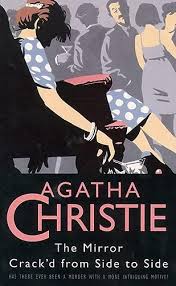
That leaves only five characters remaining. Heather Badcock and Ella Zielinsky are both murdered. (For some reason, the third victim, the butler Giuseppe, is not listed.) Both of them are well-drawn characters. Heather reminds me a bit of Aimee Griffith from The Moving Finger, both cheerful, positive people given to good works who tend to get under your skin. Their kindness is mitigated by their lack of sensitivity toward the feelings of others. Miss Marple recognizes the inherent egoism beneath Heather’s desire to spread a little sunshine, and Christie cleverly makes this the central factor in her death.
As for Ella, it’s a shame that she dies because she is one of only four viable suspects. Brisk and efficient, but also attractive, she is undeveloped as a character. We only know she is in love with Jason Rudd because we are told it’s so. Christie rarely puts the two characters together or lets us into Ella’s mind long enough to witness her feelings for the man; instead, she is typecast as the “lovelorn secretary” – and then she turns blackmailer in a scheme that Christie did not think through clearly. Did Ella see the cocktail get doped, or does she call everyone at the party and pretend she saw them in order to lure the murderer into the open? Why not simply go to the man she loves, tell him about Marina, and offer her undying support and devotion?
And then how do we learn that Ella was a blackmailer? Couldn’t Dolly Bantry having witnessed her use a pay phone been enough? But Christie exposes Ella through Ardwyck Fenn, who hasn’t been a part of Marina’s life for years and years. We’re supposed to believe that he could recognize Ella on the phone because of her sneeze (“I knew that Miss Zielinsky suffered from hay fever.”) This confuses both the timeline and Ella’s loyalties, suggesting that Ella had been working for Marina since before Jason Rudd had entered the picture. And yet Ella’s devotion is clearly to Jason here. It’s a dynamic that is neither shown nor explained to the reader.
We are left with Arthur Badcock, Jason Rudd, and Marina Gregg. Arthur is described maybe four times in the novel as “a piece of wet string.” It’s funny the first time, but when different characters start using the same phrase, it feels like lazy writing. The dynamic between Arthur and Heather is interesting: he isn’t henpecked, just a weak-willed man who is drawn to powerful, selfish women. If that was it – if Heather’s beneficent dominance was driving the guy crazy – it would have been enough. He might be so drawn to the potential for happiness that his neighbor, Mrs. Bain (dark, gypsyish – a character I had completely forgotten about) that he might be tempted when the opportunity arose to bump off his wife. That’s enough of a motive to perhaps make this lumpy man desperate enough for happiness to turn boldly murderous in an instant.
Unfortunately, Christie makes one of her worst plot decisions ever when she reveals toward the end that Arthur was Marina Gregg’s first husband. This coincidence flies beyond the pale! Are we to believe that Arthur never told Heather that he was once married to her favorite movie star? Or, if he’s so ashamed, why marry Heather when he learned about her obsession? The book is full of coincidences: Marina buying the home of the woman she met in San Francisco; Marina moving to the same community as Heather Badcock. But this is a bit of lunacy that serves no purpose but to light a fire under Miss Marple to hire Inch and save Arthur Badcock by revealing the truth.
In Christie, the murderer is often also the strongest character, and that is the case here. Marina Gregg is the latest in a long line of actors to grace the pages of Christie’s books. It’s a profession where the right combination of ego and insecurity produced some notable murderers. Marina is arguably the most compelling and sympathetic of them all, due to the tragedy that lies at the heart of her story. But she’s also equally selfish: the discarding of her first husband and three adopted children is vile. It feels like Christie, like Miss Marple, looked through a bunch of movie magazines in order to form a composite of a movie star: the many marriages of Elizabeth Taylor, the adoption nightmares of Joan Crawford, the childlike qualities (and marriage to a writer) of Marilyn Monroe.
Of course, in the greater scheme of things, another actress would have played the role best – but we’ll get to that.
What?
Chapter Five takes place at a fete at Gossington Hall to benefit the St. John’s Ambulance Association, and it culminates in the murder of Heather Badcock, the Association’s secretary. It is the climax of the strongest part of the novel and the best scene in the book. As events occur that matter to the case – Heather meeting Marina, Marina’s reaction, the suggestion of other guests of note in the area – we are most pleasantly distracted by Mrs. Bantry’s curiosity over what the new owners have done with the house. The chapter swirls about like a movie scene, and the final passages leading to Heather’s death are appropriately chaotic.
But then we have an investigation to get to, starting with the erroneous deduction that Marina was the intended victim. As we’ve seen in The Murder at the Vicarage and A Murder Is Announced, it is Miss Marple herself who makes this claim and leads everyone down the garden path. That’s fine: all she has to do is murmur at the end, “Oh dear! I have been very foolish,” and all will be made right. This time, the problem lies with Christie, who has to build a good case for a vendetta against Marina. We need viable suspects with viable motives and, considering how difficult it would have been to poison her drink, several potential paths toward opportunity.

While the structure of the investigation is typical and fine – Craddock goes around interviewing people and consults more frequently than usual with Miss Marple – none of the information he produces is very satisfactory. Most of the people who gathered at the Hall are eliminated by virtue of their being extraneous to the story. The “three suspects” who were standing on the stair are treated with less urgency, and less page time, than the three ex-boyfriends in Sleeping Murder. Marina had rejected Ardwyck Fenn’s affections and stolen Lola Brewster’s husband, but all of this had happened a long time ago. Would either of these people show up unannounced, search for Calmo on the estate (or bring their own?) and then take the huge risk of dosing Marlena’s drink based on these stale motives? And then, after that had failed, would either of them send multiple threatening notes to Marlena, sneak onto the set, poison her coffee, and set up a prop to fall on her, and then break into her home twice – first to poison Ella’s atomizer and then to shoot Giuseppe dead? This isn’t the kind of murder plan Christie endows her killers; it’s the sort that Miss Marple or Poirot dismisses outright!
Margot Bence, as a victim of Marina’s disastrous adoption spree, has a much stronger motive. But this subplot is introduced far too late to matter to anyone. Christie even introduces the idea that there were two other adoptees and that one of the boys was vengeful enough to want to kill Marina’s baby! It’s a bad version of Pip and Emma that makes as little sense as Marina not recognizing Margot at the fete. (Not recognizing her ex-husband or adopted daughter? How much Calmo did Marina take?!?) Perhaps Christie meant for us to ponder if Hailey Preston was the vengeful Angus, but this thread is immediately dropped after it is mentioned, and it all happens too late in the novel for us to care about it.
That leaves three suspects: Ella Zielinsky, Jason Rudd, and Arthur Badcock. Ella is a terrific suspect – but she dies. Jason has no motive, and Arthur – well, the piece of wet string has a potential motive to kill either woman, and yet the very notion of making him the killer feels ridiculous, especially after what we have come to expect in a Christie novel. No, what Christie has in mind is far more affecting, a tragedy of circumstance and coincidence that is all the more powerful because it is based on a true story. Never mind Edmund Cork’s protestations to an angry fan that Christie had no idea this had ever happened; even the Christie website acknowledges that the author must have been inspired by what happened to actress Gene Tierney when crafting Marina’s story.
In 1943, the 22-year-old Tierney became pregnant by her husband Oleg Cassini. She attempted to hide her condition for as long as possible so that she could keep working and decided to help out with the War Bond effort by greeting fans at the Hollywood Canteen. After her appearance there, she contracted German measles, with the result that her daughter Daria was born with serious birth defects. A couple of years after the birth, Tierney attended a tennis match where a woman walked up to her and reminded her that they had met at the Canteen a couple of years earlier. When the woman revealed that she had had German measles but nothing was going to stop her from meeting her favorite film star, Tierney simply walked away – and into a life plagued by mental illness, a shattered career and unhappiness.
The first time I read The Mirror Crack’d, I had never heard of Gene Tierney, and I did not know the effect of German measles on pregnant women. Marina’s tragedy affected me deeply, and the truth of what caused her frozen look was a powerful emotional moment. While I don’t intend to hold Christie accountable for her choices in telling this story, however, I do take issue with the way she tells it. The alternative narrative she provides to steer us away from the truth is weak, and the timeline of events is flawed – a situation that will occur more and more in her later mysteries.
It would be easy to put together a clear timeline for someone as famous as Marina Gregg: her marriages, her pregnancy, her breakdowns. But everyone keeps getting the timeline wrong – or Christie keeps this purposely vague. How many husbands did Marina have, four? five? Six? She met Heather when she was married to her fourth husband, Isadore Wright, because he is the man who got her pregnant. We’re told that this happened eleven or twelve years earlier. And yet this is the same time that Marina “stole” Lola’s spouse Robert Truscott and made him her third husband. Impossible!
Craddock’s interviews also have yield vague results about what was said between Heather and Marina at the fete in order that Miss Marple can make a simple call to the Vicar at the end, who clarifies immediately that Heather had suffered from rubella, or German measles, when she met Marina. The term “rubella” had appeared early in the manuscript Christie sent to Collins and immediately gave the game away. Thus, the author held onto that word until the last possible minute, sacrificing any sense of “fair play” for the chance to surprise us at the end.
While reading this novel for the fourth or fifth time in preparation for this piece, I became very much aware of my own maturation as a reader. Compare the shocking reversal of this book with a 1940’s classic like Five Little Pigs, which doesn’t set out to surprise so much as to bring a well-crafted puzzle to a strong emotional finish. Or a lighter novel from the 1950’s like After the Funeral, which weaves its clues so well that it earns its surprise at the end. The Mirror Crack’d has the potential to stun and move its readers, but it is guided by a weaker hand than before and the effect is ultimately less satisfying.
When and where?

When we think of Miss Marple, we think of villages; only one of her twelve cases took place in the city. More specifically, we think of St. Mary Mead, “because it had been her home for so long.” And yet, The Mirror Crack’d is the only book in the canon besides The Murder at the Vicarage to take place firmly and entirely in St. Mary Mead, and the sense of time and place is one of the strongest aspects of the novel.
The village has undergone a profound transformation, one that wasn’t mentioned in the last Marple, 4:50 from Paddington– although changes are being wrought all over, if we remember Luther Crackenthorpe complaining of a burgeoning town practically bursting through the gates of his estate. It’s not that St. Mary Mead is unrecognizable; rather, it is a hybrid of old and new. Progress requires that the village attract the ever-expanding, more economically flush middle working class. These people cannot afford to buy one of the old houses, “little changed in appearance, since the people who had bought them had done so because they like what the house agent called ‘old world charm’” Meanwhile, the common have been installed in The Development, a large housing estate full of well-built, nearly identical homes, which has replaced the meadow that used to feed Farmer Giles’ cattle and, if I remember rightly, provided a shortcut to Colonel Protheroe’s manor.
To the elderly sleuth – and perhaps to her creator, who all her life loved grand houses and the architecture of old England – a visit to The Development takes on sinister overtones:
“The people, too, looked unreal. The trousered young women, the rather sinister-looking young men and boys, the exuberant bosoms of the fifteen-year-old girls. Miss Marple couldn’t help thinking that it all looked terribly depraved.”
But Miss Marple is a wise old woman, and as she watches the younger generation go about its business, she recognizes how much these people resemble the villagers of old, including the Edward Leekes, Mary Hoopers, and other village parallels that serve as a lexicon of human behavior for Miss Marple to explore.
“She turned a corner into Walsingham Close, and her spirits rose every moment. The new world was the same as the old. The houses were different, the streets were called Closes, the clothes were different, the voices were different, but the human beings were the same as they always had been.”
Score: 6/10
The Solution and How She Gets There (10 points)
“’I suppose I need hardly ask what you’re doing down here,’ said Miss Marple. ‘Our local murder is considered worthy of the attention of Scotland Yard.’
“’They handed it over to us,’ said Dermot, ‘and so, naturally, as soon as I got down here I came to headquarters.’
“’Do you mean – ‘ Miss Marple fluttered a little.
“’Yes, Aunty,’ Dermot said disrespectfully, ‘I mean you.’”
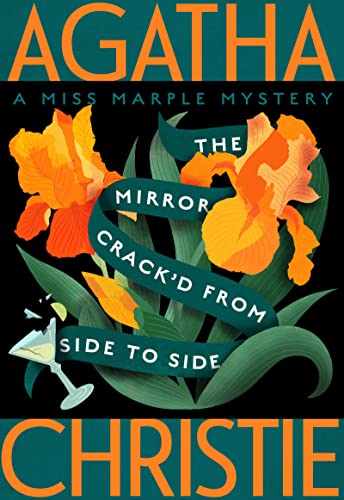
By now we know better, of course, than to expect plodding detection or clue analysis in a Miss Marple novel. Still, her knowledge of human nature tends to be logical or, at least, full of common sense, and those all-too-convenient village parallels serve as charming window dressing to the way her mind works. Plus, in most of her books, Christie utilized offhand remarks or seemingly random events to inspire her sleuths to see the truth.
All of that is here in watered-down form. Perhaps because there is so little to stand in the way of Miss Marple seeing the truth, Christie can’t afford to hand her solid clues, but one can’t help but feel that, in terms of puzzle-making, the author isn’t working very hard. The clues we get are either worthless, muddled or all-too obvious.
- The village parallel – As soon as she meets Heather, Miss Marple thinks of an old acquaintance of hers named Alison Wilde who we are told ominously, has died. Later, she describes Alison to Mrs. Bantry as the type of person for whom “Life is a kind of one-way track – just their own progress through it. Other people seem to them just like – like wallpaper in her room.” Usually, Miss Marple is then able to illustrate this with some behavioral example, but all she can provide is an imaginary incident about where being indiscreet about your vacation plans could get you coshed. Heather’s problem isn’t that she talks too much; it’s her insensitivity to how her actions might have harmed someone.
- The poem – Tennyson’s “The Lady of Shalott” is quoted several times here. The big “clue” from that is Mrs. Bantry’s mistakenly substituting the word “doom” for “curse.” This is more suggestive than evidentiary, but then Miss Marple’s “evidence” is rarely substantial enough for court. The idea is good: when Dolly see’s Marina’s face, the poem comes to her mind with the misquoted word, as if Marina sees doom somewhere. And indeed she does – hearing Heather’s words brings about that woman’s doom by Marina’s hand. When Inspector Craddock interviews Mrs. Bantry, he quotes the poem correctly, but then he misquotes it as she had when talking to Margot Bence. I suppose that Christie is rewarding those who steep themselves in literature – like the university students who study The Duchess of Malfi just before they read Sleeping Murder. This example is perhaps more clever because, like the “Letty/Lotty” business, it is simply laid out there for all to see and make of what they will. I’m just not sure how much one can make of it in the end.
- The old pronoun game – Perhaps my least favorite clue in A Murder Is Announced involved Miss Marple pontificating over the emphasis Amy Murgatroyd laid on the sentence, “She wasn’t there!.” It goes on and on, and I’m not convinced that two of the three examples don’t mean exactly the same thing. Christie provides an equally weak example with the ditherings of Cherry Baker’s friend Gladys Dixon (of course her name is Gladys!), who witnessed Heather’s drink being spilled and says, “She did it on purpose.” This seems at once more nebulous and more obvious than the AMIA example. Gladys says it, Cherry repeats it to Miss Marple, and Miss Marple finds the money to send Gladys on an all-expenses-paid vacation to prevent her from being killed. (Is it odd that two other characters are bumped off when Gladys seems to be the only person who has actually seen anything?) Still, there is logic in Miss Marple’s reasoning: in an incident involving two women and a spilled drink, why on earth would Heather, who hated cocktails, spill her own, ruin her dress, and then take Marina’s?
- The jam roll – Miss Marple asks Craddock to think of “some incident, some happening that caused you grief, or a passion quite incommensurate with its real importance” ostensibly to help him understand how seeing Marina at the fete might have inspired intense feelings within Margot Bence. Craddock comes up with the time he learned about the death of his mother just as he had been served a jam roll. And now whenever he sees that dessert, “a whole wave of horror and misery and despair comes over me.” Craddock’s words give Miss Marple “an idea,” supposedly about Marina, although the topic had been the fragile minds of children.
- Rubella – An early appearance by this word had to be cut from the original manuscript because it gave the whole game away. But if Christie didn’t mention it, then any pretense of “fair play” would fly out the window. And so, near the very end, Miss Marple asks Dr. Haydock to come over in order to discuss dispensing with the services of Miss Knight, and as he’s leaving he says, “I’ve got to go now, and do some real doctoring. Eight to ten cases of German measles, half a dozen whooping coughs, and I suspected scarlet fever, as well as my regulars!” I would argue that even though I am now familiar with the effects of the disease on a pregnant woman, this is scientific information, the same as the nature of strychnine that informs the murder method in The Mysterious Affair at Styles. Christie does not provide it to us in advance of Miss Marple’s explanation, and without it an armchair detective might have more of a problem beating the detective at her own game. To be fair, we are informed more than once that Heather got out of her sickbed, put on a little make-up, and went to meet her idol. I suppose the idea of make-up might suggest a measles rash rather than the flu. On the other hand, any sick woman who wants to look her best might attempt to use make-up to give herself more of a bloom of health.
A pronoun, a jam roll, a doctor’s visit. Perhaps it’s just as much as Miss Marple has worked with before, but it seems clumsy this time around. I can’t help wondering if, while reading all those movie magazines she got from the beauty parlor, Miss Marple happened to come across the story of Gene Tierney and figured things out from there!
Score: 5/10
The Marple Factor

“Miss Marple reflected with some nostalgia on how good her eyesight has been a few (well, not perhaps a few) years ago. From the vantage point of her garden, so admirably placed to see all that was going on in St. Mary Mead, how little had escaped her noticing eye! And with the help of her bird glasses – (an interest in birds was so useful) – she had been able to see –”
Miss Marple reminisces about everything she saw during The Murder at the Vicarage. She talks to Dolly Bantry and recalls events from The Body in the Library. Inspector Craddock asks her about her success rate at solving cases for The Tuesday Night Club. Say what you like about her detection here, Miss Marple is present in full force and a delightful presence at that.
Again, I remind you that Agatha Christie was 72. She had caught up with Miss Marple – although if you apply logic and a little math, a conservative estimate of our sleuth’s age at this point would be 106. This book is the first sustained attempt to let us into Miss Marple’s head, and while she tends to dither – as her creator has started to do as well – she is also sharp and wise as she regards the world around her. I think Christie dug a hole for herself here and had to keep Miss Marple away from the action in her own backyard so that the story could be novel-length. When Mrs. Bantry meets Marina Gregg, she is too caught up in talking about her four children to notice Marina’s reaction. Miss Marple would have understood immediately. She would have prevented the murder at the fete had she attended – or at least she would have seen Marina’s look, checked out the painting, and given the game away right then and there.
Instead, we get a stall game – and it’s only going to get worse in subsequent books. But here, at least, we get to spend a lovely time in Miss Marple’s presence and to view a world we love – albeit one that has admittedly changed a lot, for better and for worse – through her eyes.
It’s the best thing about the book.
Score: 8/10
The Wow Factor
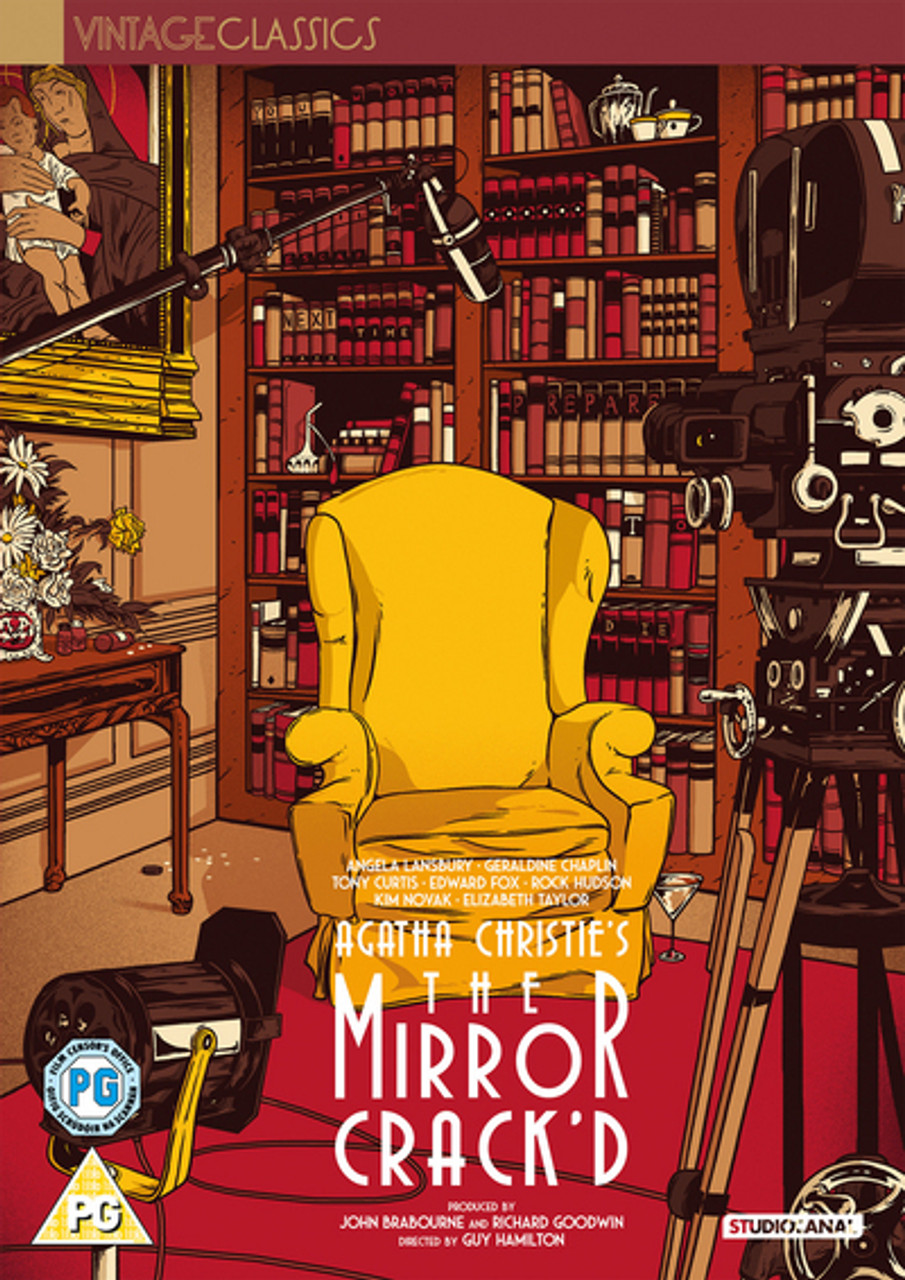
The Mirror Crack’d from Side to Side stands out from the rest of the pack in a number of ways. It is the only novel out of the twelve to begin with the words “Miss Marple” and the first of only two that finds that lady alone with her thoughts. The book takes us into Miss Marple’s head like no other has before, providing a strong start to her final, more reflective period.
If I have come down hard on the mystery here, it still is a distinctive case. Marina Gregg is the most sympathetic murderer that Miss Marple ever faced. She is used to dealing with evil: nine of the twelve cases she solves involve financial and/or emotional gain, and nearly all of these villains murder more than once, coldly and indiscriminately. Marina Gregg is the only one to kill a virtual stranger in a moment of certain madness. It’s clear that Miss Marple, and by extension Christie, has little sympathy for Heather Badcock. And while the murders of Ella Zielinsky and Giuseppe are certainly crimes and must be punished, these people are blackmailers who, it is suggested, let their greed dig their own graves.
I can only wish that this had been a different sort of book, perhaps an inverted mystery pitting Marina and her loving husband, Jason, against Miss Marple and Craddock. As hokey as most of the ensuing events and information strike us after Heather is killed, it admittedly makes sense that a person like Marina would do a terrible job covering up a murder. As a famous figure, it was natural to expect someone would see what she did to her drink and mayhem would ensue. It’s just too bad that those consequences come off as clunky. It’s also unfortunate that, in her attempt to provide more red herrings, Christie would turn to her problematic views on adoption and toss in a half-baked story of Marina’s own experiments in that line. It makes Marina come across as horrible, and that’s not what we want or need here.
We also get to see a different more, er, merciful side to Miss Marple’s thirst for justice. She is not going to let Arthur Badcock suffer for a crime he didn’t commit (although Craddock lets her off the hook after the fact by telling her Arthur was never a serious suspect), and so she pursues Marina. As nearly always, Miss Marple has no proof, and this is where she usually sets a trap. Again, she is let off the hook by Jason Rudd, who it is assumed has utilized some drug to give his wife peace. It is an action of which Miss Marple seems to approve, which is a bit extraordinary to me and, for good or ill, adds an extra bit of “wow” to the proceedings.
Score: 6/10
FINAL SCORE FOR THE MIRROR CRACK’D FROM SIDE TO SIDE: 32/50
Oh, one final thing: I’m posting this on September 15, 2023, so . . .


Thete in undeniably a meandering quality go a lot of her books after a certain point, but I agree, quite a lot to enjoy here. I don’t know if I agree with you about its real-life plot origins meaning it lacks surprise – certainly not for modern readers and I’m not sure how widely publicised it was at the time either. What I will admit to is that I like the 1980 movie version more than the book, not least because, unlike the book, it is so utterly imbued with movie lore 😁
LikeLiked by 2 people
I was just rewatching that film, and I think it’s better clued than the book. All the non-mystery stuff I love in the book is missing, and turning Marina and Lola into Krystal and Alexis is . . . a choice. But the meeting between Marina and Heather is really well done (that look!!!), and Angela Lansbury’s performance is growing on me. She’s too brusque, but she looks like the book Marple! And St. Mary Mead is beautiful!
LikeLiked by 2 people
I read this book during a particularly bad snowstorm while recovering from Covid in early 2021 and perhaps it was the perfect confluence of circumstances, but I remember finding it a really good read. I cannot help but agree with nearly everything you have written here though, Brad. One can feel that Agatha had the central idea for this book and then was straining to fill out the rest around it. Nonetheless, that central idea is great. I know it is somewhat controversial and bordering upon “bad taste” for cribbing from Tierney’s real-life tragedy, but it is utterly compelling drama.
I like the movie too. Good campy fun. The opening movie within a movie is delightful. But that saxophone wailing on the soundtrack…agh!
LikeLiked by 1 person
Seriously! All those shots of that beautiful village with that tonal dissonance underscoring it! Bad, bad, bad!
LikeLiked by 1 person
Post COVID, the story is even more effective as we found out the world is still filled with Heather Babcocks and just plain selfish people.
LikeLiked by 1 person
And that’s just . . . sad.
LikeLike
This is an amazing blog entry. The Mirror Crack’ed… is one of hers that I have not read, so I will be back to read this when I do read it. What a wonderful piece of work this post is!
LikeLiked by 3 people
Thanks so much, Nan. Please come back after you read the book. I’d love to hear what you thought!
LikeLiked by 1 person
I will! I’ve just ILLed it from my library!
LikeLiked by 2 people
I love this one. Not so much for the clues or detection (though I do really like the basic plot/motive) but for Miss Marple’s observations about the changes in the village and growing old. It got bogged down after the first murder trying to introduce other suspects and throw in more murders but ended nicely with Miss Marple’s explanation of the crime.
LikeLike
Which of the screen adaptations do you like, Brad? I enjoyed the Geraldine McEwan version the most but frankly, don’t think any of the leading ladies did justice to Marina Gregg’s look of doom. They all seem to be fixed, blank stares, nothing like I imagined. 😦
LikeLiked by 1 person
Oh, and I knew nothing about the real life story or about rubella; so this was a fantastic read for me and Heather Babcock’s character really stayed with me (kind and well-meaning but not really considerate of others’ feelings and circumstances; I see so many people like that!) The fact that Mr. Babcock was Marina’s first husband was ludicrous and unnecessary; this sort of thing makes me wonder what sort of editorial conversations did the Dame have! My husband’s written a book and his editor went over so many plot points and truly helped finesse the story. I wish her editors had done more (kindly but firmly) especially in her later years. So many of the last set of books would have been spectacular then. 😦
LikeLiked by 1 person
Badcock* everywhere
LikeLike
Agreed! Not knowing about Tierney or rubella adds to the surprise (it did for me as well), but it’s like reading The Mysterious Affair at Styles without knowing the properties of strychnine – it isn’t fair play.
LikeLike
It has been too long since I’ve watched the Hickson or McEwan versions to give an accurate opinion. I’ve seen the Lansbury film several times and rewatched about half of it last week. Of course, the movie cuts all of the “extraneous” stuff from the book that I love about the effects of time on the village, but that’s perfectly understandable. The film is set ten years earlier than the book. St. Mary Mead looks beautiful. The dropping of clues is also done well. And while I take you point about the look not being quite proper in any adaptation, here with Elizabeth Taylor it’s a powerful filmic moment.
All the campy stuff, the sniping between Taylor and Kim Novak, gets on my nerves. Part of it is that it’s not particularly well written, not like the stuff Maggie Smith did with Bette Davis or Diana Rigg in earlier films. And part is that it demeans Marina’s character. I also like Geraldine Chaplin as Ella. And they cut Arthur Badcock completely. Still, I think it’s a hard book to dramatize without adding a lot that isn’t in the text.
LikeLiked by 1 person
The story is based on the real life tragedy of the gorgeous Gene Tierney, who apparently became infected with German measles while performing at a charity event at the Hollywood Canteen. Sadly, she was in early pregnancy and her daughter was born with numerous birth defects and had to be institutionalized throughout her life.
Of course, Ms. Tierney didn’t murder anyone.
Christie’s story is gripping and, again based on real life and classic literature. What could be bad?
As for the cinematic/televised productions? They all sucked pretty much, but it’s a tough tale to tell. I can’t even think of the actress who could quite pull off Lady Chalot’s “doomed” look except the late, great Bette Davis. And that look is the center of the entire story.
LikeLike
Pingback: RANKING MARPLE: Settling the Scores | Ah Sweet Mystery!
Pingback: MY AGATHA CHRISTIE INDEX (The Blog-iography!) | Ah Sweet Mystery!
Pingback: THE ART OF ADAPTATION: Ms. Ma, Nemesis | Ah Sweet Mystery!
Pingback: “WITH A LITTLE HELP FROM MY FRIENDS . . . ” An Agatha Christie Starter Kit | Ah Sweet Mystery!