When I was struck with the idea last year of reading and “ranking” the twelve Miss Marple novels, it was more of an excuse to revisit the lady and think long and hard about each of her books than it was to come up with a “definitive best of” list. All art – even murder mysteries – inspires a subjective emotional response, and all I can hope to do here is create my own subjective response, one that will probably change the next time I pick up one of these titles. Still, this Ranking Marple project has been a year-long labor of love for me. Here is the end result:
- A Murder Is Announced (45 points)
- Murder at the Vicarage (41 points)
- The Body in the Library (38 points)
- The Moving Finger (37 points)
- A Caribbean Mystery (37 points)
- 4:50 from Paddington (36 points)
- Nemesis (36 points)
- A Pocket Full of Rye (34 points)
- The Mirror Crack’d from Side to Side (32 points)
- They Do It with Mirrors (30 points)
- Sleeping Murder (29 points)
- At Bertram’s Hotel (24 points)
If anyone were to take me to task for my scores – or to even ask me how I came up with each score – this whole thing would fall apart with a mumbled “How the heck should I know?” But as I look at this final list, there’s a certain pleasing sense about it.
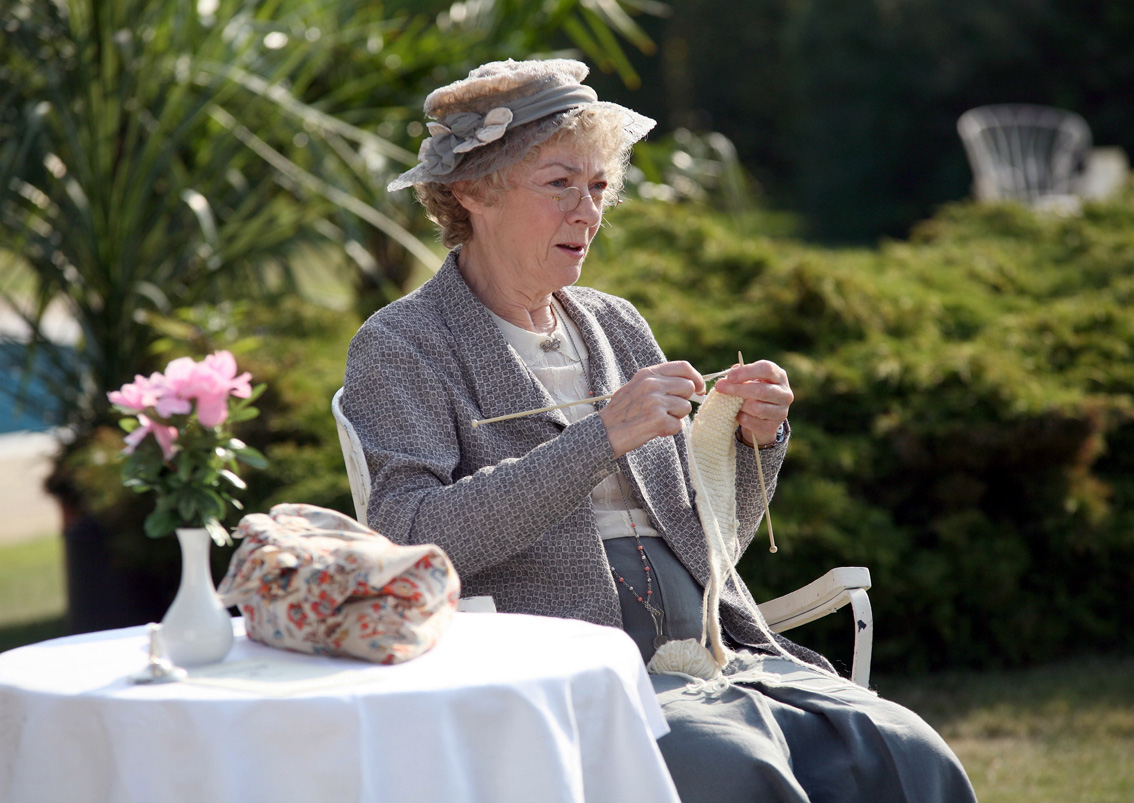
It’s easy to divide the list into three sections: Choices 1 – 4 comprise my sense of “the best of Miss Marple.” And honestly, without any conscious finagling on my part, I find that these four novels are village mysteries. The cast of characters in three of these four rival the best in Christie or even, I’ll wager, any Golden Age village mystery. And the fourth, The Body in the Library, may diverge from the village path, but it gets points for returning to St. Mary Mead and giving lead support status to Dolly Bantry, one of my favorite Christie regulars. This quartet of novels also represents the best of Miss Marple as a problem-solver (the puzzles have actual clues) as well as of Christie the plotter: while the Marple puzzles cannot rival those of Poirot, at least these cases have reversals and entertaining solutions.
To most of us Christie fans, this matters a lot, and you can see that it matters to me because as much as I love Miss Marple herself, none of these novels features her as the focus from start to finish. She may appear quite early, as in Library and Murder at the Vicarage, intolerably late (The Moving Finger) or sort of near the middle (A Murder Is Announced). For a considerable period of time, however, she stands on the sidelines while the police do their business, and then she pops in to show them all up.
The next four titles may vary in the quality of their puzzles (most of them are singularly lacking in clues or deductions), but they highlight Miss Marple beautifully. Three of them comprise what I unofficially deem “The Nemesis Trilogy”: A Pocketful of Rye gives us a spinster on a mission, focusing her attentions on the murder that, in a mystery, tends to ignite the least interest in readers. Gladys Martin is killed in a way that contributes to the mordantly humorous tone of the book, but Miss Marple takes a look at that clothespin on the poor girl’s nose and sees it as the shockingly rude punctuation point to a particularly cruel murder. The mantle of “Nemesis” is formally bestowed upon Miss Marple in A Caribbean Mystery and reaches its consummation in Nemesis, but it seems to me it has its beginnings at Yewtree Lodge.
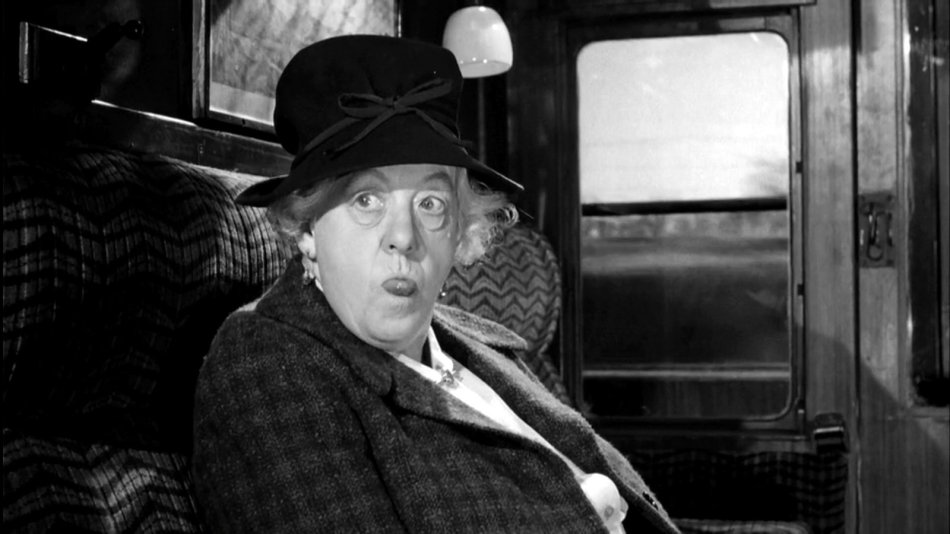
The case covered in the fourth title, 4:50 from Paddington, may not have the same personal touch, but it is such a happy book – a glorious hook, a return to St. Mary Mead after too many years, and the wondrous creature Lucy Eyelesbarrow – that it deserves its position in the list. And if the Margaret Rutherford film (Murder, She Said, 1961) got the story a bit wrong – there’s no Mrs. McGillicuddy, for example – it’s only a little bit, and there’s something about the daffiness of the movie that matches the ghoulish Christmas cheer of the novel.

The final four books on my list may be for me the weakest, but all of them have their charms: The Mirror Crack’d from Side to Side has that terrific motive and a fascinating snapshot of “modern” St. Mary Mead; They Do It with Mirrors provides a glimpse into Miss Marple’s girlhood; Sleeping Murder has a powerful hook and solution at its core; and At Bertram’s Hotel . . . well, it’s proof that there’s fun to be had watching Miss Marple go shopping and eat cake.
We may wish that Agatha Christie had written more about Miss Marple, but tonight I feel like an even dozen novels was the perfect number. And don’t forget the joy of her short stories. One of my first major projects on this blog was an exploration of The Thirteen Problems, easily my favorite collection by the author, which introduced Miss Marple to the world. For a minute, I tried going back and ranking those thirteen stories as a side project! A clearer head prevailed, but I call your attention to my three favorite tales: “The Bloodstained Pavement” (combine this with the Poirot classic “Triangle at Rhodes” and you have Evil Under the Sun), “The Herb of Death” (can there be any better narrator than Dolly Bantry?), and “The Affair at the Bungalow (well, yes, just one . . . and it turns out to be Jane Helier).
Don’t expect an upcoming announcement about my applying this task to Hercule Poirot. Poirot settles down a bit in the end, but he doesn’t really change much. His novels are so puzzle-centric that it’s relatively easy for me to place them in order without a lot of analysis. Don’t get me wrong: I love M. Poirot, and I adore his puzzles. But through Miss Marple, Christie did something that she never really attempted with Poirot, not even with Tommy and Tuppence, whom she allowed to age in relatively realistic fashion. Of course, there’s the Christie-an portrait of village life that I cherish and the cases solved with homespun wisdom rather than solid deduction (which I’m okay with, even as others sneer).

But, also, with Miss Marple Christie turned an eye onto life itself: on the changes, big and small, that we experience, on the vicissitudes of penury, old age, and ill health, on the importance of good friends and, if you’re lucky, a rich and generous nephew, on how to live a happy life. In most cases, the elderly in a Miss Marple story are models of how to grow old with grace – or, in the case of invalids like Conway Jefferson, Luthor Crackenthorpe, and Jason Rafiel a great deal of money. But it is with Miss Marple herself and the women she meets – the ladies of St. Mary Mead or the friends she makes on vacation – that Christie offers a guide to living a happy life.
After a year of studying Miss Marple and her kind, I think it boils down to these four rules, which I find so easy to apply to our modern world:
- Accept the inherent weakness of humankind and people will never disappoint you;
- Problems can usually be solved with common sense, but it sometimes requires good acting skills;
- Happiness in old age lies in turning your life outward to embrace the young – whether it’s your own children, your generous nephew, or the housekeeper who comes to clean;
- The best rewards in life are the simple ones: a beautiful bed of flowers, a delicious pastry, a sense of community.
I will always be thankful to Miss Marple for the entertainment she supplied, but also for what she has taught me. May she live forever!

 Ah Sweet Mystery!
Impressive stuff Brad, well done mate. A great idea, beautifully executed. I am duty-bound to say that seeing the rankings laid out like this it does emphasise just how singular and personal the placement of NEMESIS is 😁
LikeLiked by 1 person
Did you refuse to let it get on our draft? No, it’s not a top twenty Christie.
LikeLiked by 1 person
I never for a second thought it would make our list. Now, BY THE PRICKING on the other hand… 🤣 (which is to say, personal favourites are very important and I totally get that).
LikeLiked by 1 person
This is lovely. Thank you so much for going to all the trouble (combined with great pleasure of course) of rereading all of these and ranking their elements for us.
Not that the goal is to have everyone agree on the ordering, and like you I enjoy the symmetry with which your 12 titles sort themselves into levels. My own list would swap the bottom two, simply because I can’t bear to see At Bertram’s Hotel at rock bottom (plus, I really have little fondness for Sleeping Murder). Though I concede its faults, At Bertram’s Hotel retains a place in my affections for (a) the appealing details of its old-style hotel service, (b) the way that appeal ends up being a plot point, and thus used against me as a reader, and (c) the format in which I first read it — serialized in Good Housekeeping magazine (which my mother subscribed to), so that after a spell of borrowing her books from the public library, I became aware that she was still with us and still writing.
But that’s just a personal quibble. Great list and article!
LikeLiked by 1 person
But this is natural: A Caribbean Mystery is admittedly unnaturally high on my list due to my personal relationship with it. I love the hotellery aspect of Bertram’s. I’m determined to stay at a “posh” British hotel on my next trip. I’ve got a nice little tip riding on the ponies in order to be able to afford it!
LikeLike
Pingback: MY AGATHA CHRISTIE INDEX (The Blog-iography!) | Ah Sweet Mystery!
I am so glad you put A Murder is Announced first. It is my favorite Christie novel and in fact one of my handful of favorite mysteries. It is an exquisite portrait of village life with characters so vividly drawn that it could stand alone as a novel even without the murders (I actually had a soft spot for Charlotte – and Bunny too) and so wished that she had stopped with Rudi (whom nobody would miss). She could so easily have written off Bunny’s gaffes by saying that she had dementia and grew up with the twins and hence confused them (particularly as their names were identical). One indication of how much I love a book is whether or not I wonder about the characters and wish there had been more. I would have loved a backstory about Letty, Lotty, and Bunny, for example.
I would have put Murder at the Vicarage and The Moving Finger lower down. Murder at the Vicarage never “went” anywhere because it ended where it began with the actualy killers being the people who confessed at the beginning. And I thought The Moving Finger got off to a very slow start. I definitely would have put Nemesis higher (probably second) and put Pocket Full of Rye next to Body in the Library.
But everyone has their own opinion about these novels, as you’ve said.
And you are spot on as to why we love Miss Marple. At 74 I would love to be her.
I think you asked if people would be interested in a similar list of the Poirot books and yes, I would – at your leisure.
LikeLiked by 1 person
I meant their names were almost identical.
LikeLiked by 1 person
When you really think about it, I agree that Charlotte overreacted to the Bunny Threat. But they say that once you kill, it becomes easier. And Charlotte’s plan for killing Rudi was elaborately ruthless. Miss Marple talks about Charlotte being weak, but there was definitely a nasty streak inside her!
Murder at the Vicarage ranks so highly because of my deep love of the Clement family. The Vicar might be Christie’s best narrator!
LikeLike
Pingback: THE POIROT PROJECT #4: Dead Man’s Folly | Ah Sweet Mystery!
Pingback: REVISITING JOAN HICKSON’S MISS MARPLE, Part I | Ah Sweet Mystery!
Pingback: My Ranking of the Twelve Miss Marple Novels – A Crime is Afoot