Fans of classic detective fiction know that there are thousands of books by hundreds of authors to choose from. They run the gamut from pure puzzlers to “Had I But Knowns”, from succinct procedurals to opulent thrillers. Their tones rank from despairing to hilarious, and you can pick your sleuths out of a panoply of cops, priests, doctors, lawyers, private dicks, tippling couples, snoopy old ladies and egg-shaped furriners. There’s something to suit anyone’s taste, and as a recent commenter on social media put it, so wisely and succinctly: “Competition isn’t necessary.”
Which might be why it rankled when that person’s comment happened to be a polite response to another person’s comment in a review about the book Poison in the Pen by Patricia Wentworth. This 1955 novel is the 29th of thirty-two mysteries featuring Miss Maud Silver, former governess turned private detective. The book has been popping up all over my feed lately, and one person wrote this comment: “Fantastic author! Much better than Christie IMO.”
Now “IMO” is politeness itself. It’s what we say when we know we’re write but we don’t want to be an ass about it. So my own criticism here is with the person’s opinion, not with the way he stated it. If this person wants to compare Patricia Whatsername favorably against Agatha Christie – Dame Agatha Christie, my favorite author and the best-selling mystery writer of all time – they are entitled to do so without fear of reprisal even if they’re as wrong as wrong can be.
IMO . . .

And really, do I even have the right to compare these authors? Truth to tell, I have only read one book by Patricia Wentworth, and it did not go well. True, The Case Is Closed was the second case for Miss Silver, and it’s possible the author was feeling her way. However, seeing as how Wentworth had been writing novels since 1910, and seeing that The Case Is Closed arrived in 1937 during the full flowering of Golden Age Detection, I expected a rich puzzle plot rather than the Victorian thriller that I got. But that, I have come to learn, was the style of those early Miss Silver mysteries; the traditional whodunnits would arrive soon enough.
Believe me, I really want to like Wentworth! She was nearly as prolific as Christie. Miss Silver debuted in 1928, mere months after Miss Marple first appeared on the scene in the December 1927 short story, “The Tuesday Night Club.” And Christie only wrote twelve novels about dear Aunt Jane against Wentworth’s thirty-two about Miss Silver (although the twenty short stories about Miss Marple evens the number out – and those are some of Christie’s best short stories). Liking Wentworth would mean a whole new slew of classic mysteries with a spinster sleuth to dive into!
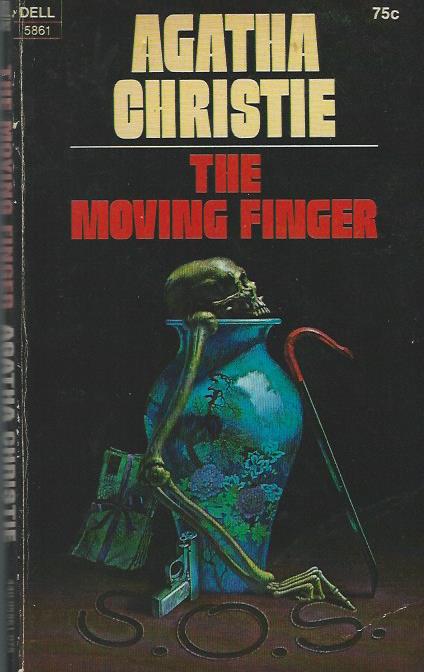
As it happens, I wasn’t so close-minded after my first experience that I refused to try again; in fact, I bought a few more titles for future reading – and one of them happens to be Poison in the Pen. I love a good anonymous letter mystery, and it made me wonder how this novel would stack up against one of my favorite Miss Marples, 1943’s The Moving Finger. Thus, I sat down and read Poison in the Pen, and I pondered over these two novels. I looked at the PLOT, SETTING, CHARACTERS, SLEUTH, and SOLUTION (I kept all my SPOILERS there, so if you don’t wish either book spoiled for you, simply skip the Solution section). And now, let us examine, through a mere two books, which which sleuth is better – Marple or Silver – and which author is so . . . much . . . better . . .
IMO!
PLOT
Both novels center around the activities of a poison pen letter writer and the havoc this creates in a British village. There is a death that appears to be a suicide prompted by the receipt of an anonymous letter; in both novels, this is not the first death. Almost everything else about the plot is different in the two books, but each ends with the writer of the poison pen letters being unmasked and brought to justice, just as they are attempting to gas their latest victim to death. (Yes, the method is the same, but the identity of the proposed victim and their relationship to the killer is quite different!)
Much is made in both books of the type of person who might stoop to writing such filth. This tends to narrow down the field of suspects. In the end, Wentworth and Christie go in wholly different directions as to their solution, with one being completely straightforward and the other quite a twist.
An effective puzzle plot tends to have effective clueing. This has rarely been a strength in the Miss Marple novels, and I feel that, at least in this case, Wentworth is on a par with Christie. Miss Silver deals at some length with one physical clue – a scrap of paper from one of the letters – and runs it to the ground, but I don’t think anyone will argue that this is a particularly rich clue or that it definitively narrows suspicion to the killer. I think Christie has the edge here: clues like the first victim’s suicide note, “I can’t go on . . . “ are extremely helpful in deducing that the suicide was faked; other clues are more psychological, like the nature of the letters themselves and the detail about who did – or rather, who did not – receive one.
SETTING

Both authors do a fine job of bringing their respective villages (Lymstock for Christie, Tilling Green for Wentworth) to life. Lymstock is the larger place, having figured a bit prominently in British history due to the existence of a priory. It is now described as “a little provincial market town” that has been swept aside by progress and the absence of a railway station or good road. But it still possesses a thriving High Street and a thriving professional class intermingling with a servant class, all living their lives in seeming harmony. (And we get to meet a great many of them, too: see CHARACTERS.) As people move about Lymstock, you always get the sense of traveling some distance, albeit on foot, and of the bustle of activity.
Tilling Green, by contrast, seems a small place indeed, and it comes to life on the page. There is little to do in the way of shopping: the post office/store seems to be all there is, and people travel to the nearby larger town of Ledlington to do their major shopping. We get a clear picture of a row of cottages, and the Manor house across the street. There are middle class gentle people who all seem to be distant cousins to each other and to the two or three wealthier families that live in the area. And there are plenty of working-class folk who serve them and entertain each other with gossip about their masters. People live close to each other, the better to nose in on each other’s secrets and to travel abroad to commit foul acts without anyone noticing that they were missing for a bit. A chief strength of Poison in the Pen is Wentworth’s depiction of the town as a collective hive of information gathering and spreading. It’s easy to see how the culprit gets their work done. And more than once, characters express their concern that any deviation from their normal behavior will be noticed and judged by their neighbors, then spread throughout the community.
CHARACTERS

The character structure differs greatly between the two novels. In Poison in the Pen, all the drama gravitates around the residents of the Manor and their activities. Everyone else is either a distant relation, a working-class resident who works either as a servant or an artisan (the postmistress, the seamstress, the vicar). The lord of the manor, Colonel Repton, has married most inappropriately a city girl who is half his age and much lower in class. (Rumor has it that she was a chorus girl.) This callous young wife, appropriately named Scilla after the Odyssean monstress, has been carrying on with Gilbert Earle, a handsome employee of the Foreign Service who is due to inherit a title but unfortunately has no money. However, Gilbert is engaged to the beautiful heiress Valentine Grey, who inconveniently also makes her home at the Manor. And Valentine is desperately in love with Jason Leigh, the Vicar’s nephew, who mysteriously disappeared months ago but has now shown up on the eve of the wedding with protestations of love for Valentine.
Much is made in both novels about the sort of person who would write and send poison pen letters: it tends to be a woman of middle age or repressed spinsterhood, a woman who has been disappointed in life and/or love, who might resent the happiness of those around her. Poison contains quite a few such persons: Colonel Repton’s sister Maggie, who lives with him; his distant cousin, Mettie Eccles, who desperately loves him; and Mettie’s neighbor Miss Renie Walsh, who takes in boarders ever since her older sister died. (It is with Miss Walsh that Miss Silver stays – and hears most of the dirt on the villagers.) The final suspect is that old GAD chestnut, the mysterious new neighbor. This one, Mr. Barton, only goes out at night, is reputed to hate women, and is the loving owner of seven cats with whom he takes walks throughout the village late at night.
There are three murders in this novel, but only one is of a major character listed above. The other two are young women who are suspected of having committed suicide, one a seamstress and the other a plain-Jane cousin of the Repton’s who was only invited to be part of the wedding party as a last-minute substitution. The circumstances surrounding their deaths will be discussed in the SOLUTIONS section.
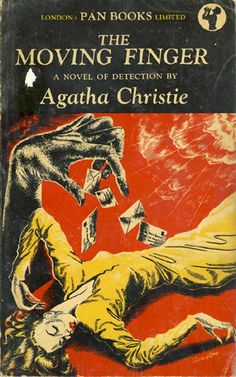
To my mind, the characters of The Moving Finger are much better drawn: they represent a more varied proportion of the town, and they generally behave in a livelier, more interesting manner. In all fairness, as I mentioned, Lymstock is bigger, so we don’t have that brooding insularity that we feel throughout Wentworth’s book. Instead, we see a wide range of professionals: the town lawyer, his family, and the workers in his office; the town doctor and his sister; the vicar and his wife, the impoverished lady of the manor, Miss Emily Barton, the last of a long line of spinster sisters who must let out her house and move in with a former maid; the lovely Mr. Pye, who collects antiques and information; and a host of servants at each of these households. We get to see these people in their capacity outside the mystery, which may not be to everyone’s taste, but it is to mine.
It’s a fine cast of characters, and it’s all viewed through the outside lens of brother and sister Jerry and Joanna Burton, who have come to Lymstock so that Jerry can recuperate from a devastating plane crash. Over the course of the novel, these two not only help uncover and solve the many mysteries contained therein, but their lives are also changed for the better. Both find love and a sense of contentment they never knew in the hustle and bustle of London. Whereas Tilling Green tends to feel like a diseased place throughout, there always seems to be a potential for happiness within Lymstock.
Let’s put it this way: if after the election in November I found myself having to flee the country, I’d rather move to Lymstock than Tilling Green!
SLEUTH

It is a common complaint about The Moving Finger that it is a Miss Marple mystery with all too little Miss Marple in it. There’s no denying it: the lady first appears three quarters of the way through the novel as a guest of the vicar’s wife. With that said, if I had only read this one novel about each of these spinster sleuths, I would still ride off into the sunset with Miss Marple every time. There’s also the fact that this is only the third novel about Miss Marple whereas Poison in the Pen marks a near-final chapter in Miss Silver’s long career. I admit I know Miss Marple better, having written everything about her several times, while I’ve only got two Miss Silver cases under my belt.
But, boy! does Maud Silver leave me cold! In 1955, she is still vociferously Victorian, and she really amounts to a series of traits: her her incessant polite coughing, her knitting of one sweater or nursery set after another, her spouting of poetical quotations, chiefly from her beloved Tennyson. Unlike Miss Marple, Miss Silver appears in the novel on Page One, consulted by frequent collaborator and friend, Detective inspector Frank Abbott of Scotland Yard. Although she arrives in Tilling Green under cover, she is soon reacquainted with the local Chief Constable March, who happens to be a former student of hers and whose wife was once one of those poor beleaguered murder suspects in an earlier case. Miss Silver meets up with a lot of these people or knits sweaters for them! I’m sure such Easter eggs are enjoyable to Wentworth’s fans, but they have a certain dull sameness to them. Contrast this to Miss Marple in 4:50 from Paddington, consulting the now-grown son of the vicar from Murder at the Vicarage due to his vast knowledge of trains.
Miss Marple seems fluffier and warmer but just as sharp as Miss Silver. Her frequent use of village parallels to clarify a character or situation may have little evidentiary value, but they are always a charming brand of country psychology. Miss Silver uses the full force of her personality to pressure her former student-now-chief constable to open his mind to her point of view. I wouldn’t say she uses less logic or factual evidence than Miss Marple, but she harps on the same facts over and over to the point that while her actual detection might be more at the forefront than Miss Marple’s, it feels more repetitive and unconvincing. Both ladies use their position as, well, elderly spinster ladies, to insinuate themselves into the households of suspects and witnesses. In fact, Wentworth makes a point of explaining how Miss Silver’s faded Victorian persona is a tactic:
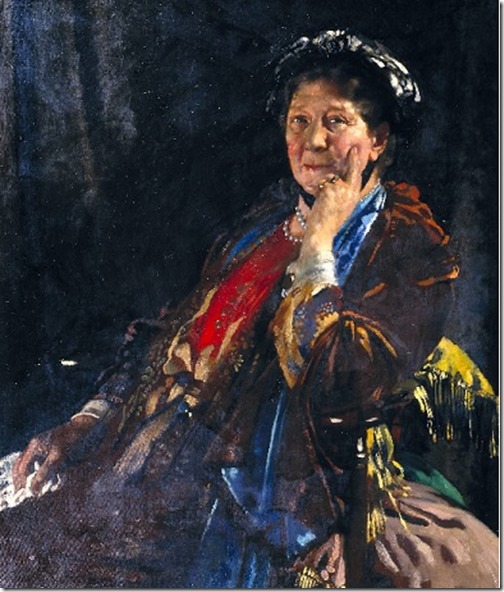
“If Miss Silver’s own garments were quite incredibly out of date, it was because she liked them that way and had discovered that an old-fashioned and governessy appearance was a decided asset in the profession which she had adopted. To be considered negligible may be the means of acquiring the kind of information which only becomes available when people are off their guard. She was fully aware that she was being treated as negligible now.”
This clearly works for Miss Silver, and I am astounded at how well-liked she is by everyone here (except the killer), while Miss Marple is often seen by uninitiated policemen and suspicious characters as an interfering old busybody. This is especially strange since in every novel Miss Marple steps aside so that the police can do their business. Miss Silver, on the other hand, is the clear focus of investigation. In Poison in the Pen, we get only one brief interview between Chief Constable March and a suspect. (And that suspect, a confirmed bachelor and woman hater, ends up welcoming Miss Silver into his home at book’s end.) Still, I find Miss Marple’s interactions with people more enjoyable and the clues she uncovers more interesting and significant. The Moving Finger may not be the best example of this, for in no other book has she ever felt more like a deus ex machina; however, it is Miss Marple’s deft understanding of village psychology that steers the police finally in the right direction.
And I’d just like to make an observation which I acknowledge comes from a far shallower incursion into Miss Silver-Land. Poison in the Pen is, as I said, one of the final books in the series, and after thirty years, you would think that we might get a more in-depth portrait of the sleuth. Of course, I can contradict that statement immediately, since it was the habit of Golden Age writers to basically freeze their detectives and keep them pretty much the same from Book One through Book Sixty.
This is not what Christie did at all with Miss Marple, though. That was made especially clear as I did my deep dive into her books last year, and it has been reinforced of late as I listen to Mark and Grey talk about Christie’s relevance in the 60’s in their podcast The Swinging Christies. Granted we’re still seeing early Miss Marple in The Moving Finger, but by the latter half of her career the lady more and more reflects Christie’s own observations of the vastly changing Britain of the post-WWII era. These reflections are never less than fascinating: they are the source of some of the best stuff in The Mirror Crack’d from Side to Side, and sometimes, as in At Bertram’s Hotel, they form the key to solving the case! My sense reading Poison in the Pen is that, from first to last, Wentworth sticks to formula, and Miss Silver never changes.
SOLUTION
SPOILERS AHEAD . . .

As I said at the beginning, both novels center around the activities of a poison pen letter writer and the havoc this creates in a British village. By the end of Poison in the Pen, we have been treated to a traditional mystery where what we thought we had is what we get. One of the residents of Tilling Green who conforms to the general psychological profile of a poison-pen writer turns out to be that writer, and all three victims were murdered because they had uncovered the writer’s identity. There’s an almost numbing sameness in the deaths: the killer pushed someone off a bridge, poisoned another person’s cocoa, and poisoned a third person’s tea in order to save themselves from exposure so that, I presume, they could keep writing letters and ruining people’s lives.
It’s all so simplistic that it sounds crazy – and, as I suspected, it turns out that Miss Renie Walsh was driven insane by having always been the invisible one, first next to her dominant older sister and then to all the other residents of Tilling Green. Miss Walsh expresses these resentments openly from the moment we meet her, which I suppose makes her the most likely suspect; plus, she mentions an earlier spate of letter-writing in another town where she and her sister used to live that should give the game away. I suppose the fact that Miss Silver is staying with her and accepting Miss Walsh’s confidences, plus the fact that nobody ever expresses a suspicion about this woman, is what would make her unmasking feel like a “surprise.” For me, it made it that much easier for me to spot her as the culprit from the start. Her unmasking is all too easily done, but she makes an effective fiend, especially when we learn that her latest victim is one of Mr. Barton’s cats, just because it growled at her. (Fortunately, Miss Silver saves the cat.)

The solution to The Moving Finger is typical Christie in that it is in no way straightforward. Miss Marple’s understanding of village psychology serves her well here. The fact that none of the letters’ contents have any basis in truth leads her to the deduction that they are a blind and that the killer is probably a man with a whole other motive. All of this turns out to be true, and the denouement is far more thrilling and sensible than what we find in Poison in the Pen, where Miss Walsh threatens to kill a child if Miss Silver doesn’t keep her mouth shut (she’s actually trying to asphyxiate a cat!). In The Moving Finger, Mr. Symmington quite sensibly tries to do away with the latest witness to his crimes, at which point Jerry Burton does what he was always meant to do here: save Meghan and marry her. Okay – that’s far more of a fairy tale ending than what Wentworth gives us, I’ll grant her that. But I still think Christie’s solution is more clever.
END SPOILERS
In the end, I feel like I picked up Poison in the Pen and read a pleasant mystery. It doesn’t propel me to pick up another Miss Silver novel anytime soon, but it leaves a far better impression on me than The Case Is Closed did and I’m sure that, sooner or later, I shall return to Wentworth. As for The Moving Finger, it remains a favorite Miss Marple of mine, and I have little doubt that over the next twenty years, I will revisit it again.
Thus, my comment to the recent thread on Poison in the Pen would no doubt be: “Wentworth? She’s a pretty good author, but she’s no Agatha Christie
. . . IMO.”
 Ah Sweet Mystery!
Loved this analysis, Brad. I have never read any Wentworth (nor really been moved to) so I cannot weigh in for myself. Other than playing the part of contrarian (about which I know only too well), if you had to suppose, what might this person find more appealing about Wentworth? Is the writing itself “stronger” than Christie; characterization more vivid? Does she work on a thematic level beyond the usual GAD writer? I’d be interested to see you play Devil’s Advocate if only for a lark.
LikeLiked by 1 person
Wentworth’s writing style is fine, especially when she’s following her suspects. It feels old-fashioned to my tastes, but she is a perfectly fine prose stylist. I don’t think her characterization is any better than Christie’s , and I would go further to saying that Wentworth lays out her characters’ moral fiber all too clearly, while Christie’s characters are more layered (much more promising in the mystery genre if you want to fool your readers.) I’d be interested in learning whether Wentworth ever wrote an actual surprise ending.
Finally, regarding “thematic levels,” the point I was trying to make was that as time progressed, Christie used Miss Marple to explore themes of aging, loss, and social change. I found no evidence of that in the Wentworth book, which surprised me given its place so late in the canon.
LikeLike
I read a few Miss Silver novels, and they are all similar in the sense, that they feature some decent characters but have a sort of predictable plot. In one of them, she even spells out what otherwise could have been a really clever plot twist by a totally unnecessary scene involving a fortune teller early in the book. I guessed the solution just because Wentworth thought it was a good idea to add an otherwise totally unimportant character than can foretell the future.
If you want to read another Miss Silver again one day, I really recommend Miss Silver comes to stay. Out of those I’ve read it’s by far the one with the best clue without being obvious. It’s similar to Christie in the sense, that there’s a statement made by a certain character at one point in the book, which gets a totally different meaning, when looked from another angle, leading to the culprit.
LikeLiked by 1 person
Thanks for the recommendation. That novel is mentioned here because the chief constable’s wife was the chief suspect in that book. Plus, I love those kinds of clues you describe, so I will definitely check it out!
LikeLike
Very interesting! A few years ago I read all of the Miss Silver mysteries because I was (yes!) writing an essay about the two spinster sleuths. As for Wentworth’s oeuvre, it is not as a whole all that interesting. Almost all the novels are more or less the same. In fact she at one point stated that every novel had a young couple in love and that they would never be the killer(s). That limits the field quite a bit. The plots are similar enough that no one novel or character stands out. And often I could guess who the killer was which was never the case with Christie. What I did enjoy was all the period detail. That is what I found Wentworth to be very good at: describing furniture, table settings, clothes…I really felt like I was there. (So actually these novels would make “pretty” costume dramas.)
The chief difference between the two women as I recall is that Miss Marple was a lady who would not lower herself to accept a fee (despite struggling financially) whereas Miss Silver was predominately a working woman who thought detecting would pay much better than governessing and is totally unapologetic about her need to work (she references this quite frequently while enjoying, for example, her curtains).
One thing that interested me was Wentworth’s choice of a surname. I live in New York, and most people with the last name “Silver” are Jewish. Looking at some US census data, it shows that a plurality of people (a little under 40%) with the last name “Silver” are Jewish. I don’t think I know any gentiles with that last name.
Also, I remember noting that the two women’s first appearance in a book were very close in time so I wondered if there was any “cross-polination”. I know Christie said that Miss Marple reminded her of a great aunt. I don’t know about Miss Silver.
LikeLiked by 1 person
I know nothing about Miss Silver’s origins, but I would love it if she were Jewish! (She clearly isn’t, given her frequent church attendance.) I did wonder why nobody ever thought to make aTV show about her, especially in the heels of Marple’s media popularity. The books are basically cozy, and I think a lot of people (myself included probably) would have watched!
LikeLike
I was speaking of Jewish ancestry not religion. A lot of British Jews who were not Orthodox (Disraeli eg) attended Anglican services.
LikeLiked by 1 person
Love this. I keep wishing I could get into Miss Silver but find the stories much less rich and engaging – they lack the human element that Christie can bring to life. Glad I’m not the only one finding this, though if you have a Great GAD spinster other than Miss Marple I’ll gladly take the recommendation…
LikeLiked by 1 person
I’ve only read a couple, but Stuart Palmer’s schoolteacher Hildegarde Withers is quite funny. So are the movies!!
LikeLike
Huge fan of the books and the initial 3 movie with Edna May Oliver especially.
LikeLiked by 1 person
Really enjoyed the close reading here Brad. It has been a very long time since I read any Wentworth, an author that during the depth of the pandemic got mentioned a whole heck of a lot. Clearly a great many readers found her work particularly reassuring and comforting and for that she deserves plenty of praise. But I stopped reading her decades ago as I found the books much too predictable and formulaic (especially the anodyne young lovers that invariably make an appearance). Of course, for some that may be part of the attraction. IMHO (added a bit of Uriah Heep there 😁).
LikeLiked by 1 person
There are lovers with happy endings in Christie, too, but they run greater risks that their beloved will be killed – or do the killing! I find that tension much more thrilling, and I’m a person who likes happy endings.
LikeLiked by 1 person
I’ve read a handful of Patricia Wentworths; by and large, they’re rather bland. (Apart from the odd notion that Miss Wentworth is really an angel.) She seems to have been a library fixture for decades, though.
For what it’s worth, Wentworth inspired Inspector Morse: Colin Dexter was reading one of her books, thought he could write a much better mystery, and proceeded to do so.
The best ‘little old lady’ sleuth is undoubtedly Gladys Mitchell’s Mrs. Bradley (who knits quickly but badly).
LikeLiked by 1 person
I know how much you love Mitchell, Nick! I’m not sure she’s for me, but I have one here that I really must read one of these days!
LikeLike
Which one?
LikeLike
When Last I Died.
LikeLike
I enjoyed this enormously (and do I recognize two of the pictures…?) – I feel the two old ladies and their books are as different as Marple and Poirot, and I enjoy them both.
I first read a couple of Silvers many many years ago, and thought ‘not a patch on Christie’ and stopped. And it was actually Poison in the Pen that brought me back: I was doing a Poison Pen week on my blog and needed another book, so picked it up. I realized that I could get a lot out of it, but in a totally different way, and that set me off reading all the Miss Silvers. And of course by this time I was doing a blog called Clothes in Books – ideal fodder, with all those nice supper dresses, smart suits, low-class women in flashy clothes, and characters wondering if they will look good in mourning. She is MUCH better on clothes than Christie/Marple!
I would say the books tend to be easy reads with no surprises. But in every one, somewhere, there is an odd moment where a minor character is described, or an unusual view is expressed, or we see inside someone’s mind – and I feel Wentworth has grabbed me and said ‘see? I CAN do something deeper and less predictable, I just don’t choose to…’
Our much-missed friend Noah Stewart wrote wonderfully about Wentworth – I so wish his old posts were available.
LikeLiked by 1 person
Oh my goodness. Noah’s blog has disappeared, but someone mentioned to me once that they had found an old post of his elsewhere. I decided (as a result of comment above) to have one last go at finding him – and here it is, listed under ‘hypnotic mysteries’?
this is him on Wentworth
Miss Silver: the coatee, the fichu, and the bog-oak brooch | Noah’s Archives (wordpress.com)
LikeLike
Actually that one is just about clothes – but he wrote very well about her more generally – this one is more of a long discursive general post about her, and full of insights, as is the post on Chinese Shawl. they are all there on this site!
LikeLike
I miss Noah too, all the time, and I look forward to reading what he had to say about Wentworth – so thank you, Moira, for the links. (And for the pics !! 😘)
LikeLike
Hi Brad,
I’ve been a reader of your website for at least a year now but this is the first time I’m leaving a comment.
Thanks so much for all the insightful Christie-themed pieces, I really enjoy them (had to skip quite a few to avoid spoilers as I’m still relatively new to Christie and GAD in general).
I’ve read and enjoyed about a dozen Christies so far and have a question you can hopefully answer: which ones of her crime novels allot the least space to actual detection? And among those, which ones would you say you enjoyed the most (perhaps for character interactions / general atmosphere or other factors)?
Thanks again for all the wonderful posts
Alex
LikeLiked by 1 person
Thanks so much, Alex – I’m glad you’re enjoying yourself around this place. To try and answer your question . . .
Christie wrote sixty-six mystery novels, and if you’re trying to avoid “detection,” you can quickly cut this in half by eliminating the thirty-three books featuring Hercule Poirot – although even these vary in the amount of detection in them. And while Miss Marple does her sleuthing a whole lot differently than Poirot does, they’re still detective stories and she’s still a detective (and there’s always an Inspector d’histoire doing the more conventional sleuthing.) So that eliminates another dozen titles.
Tommy and Tuppence Beresford featured in four novels (and one book of short stories). Their form of “detection” is much looser, and their books read more like thrillers where they’re chasing after something – an evil mastermind, Nazi spies, or, in their final two adventures, something much much vaguer! The coolest thing about these books is that T&T age in a fair approximation of real time throughout, and so you get to see them do their work as young adults, middle-aged marrieds, and old fogies, and it’s charming. Still, a lot of people avoid these books like the plague. (I’d recommend N or M if you’re inclined to give them a try.)
That leaves seventeen titles. Of these, nine feature some sort of murder “investigation” and an investigator, whether professional or amateur. They are: The Sittaford Mystery, Murder Is Easy, And Then There Were None, Towards Zero, Death Comes As the End, Sparkling Cyanide, Crooked House, Ordeal by Innocence, and The Pale Horse.
These may or may not be heavy on clues (Crooked House has exactly ONE clue), but they still rank as novels of detection.
That leaves (sigh) the thrillers: The Man in the Brown Suit, The Secret of Chimneys, The Seven Dials Mystery, Why Didn’t They Ask Evans?, They Came to Baghdad, Destination Unknown, Endless Night, and Passenger to Frankfurt.
Of these eight titles, only Endless Night is considered by many fans to be a classic and a surprisingly well-written book for Christie’s late period. I myself am not a big fan of it, but it is a one-of-a-kind Christie! I also have to confess that I do not love the thrillers. Still, they aren’t novels of detection, and some of them are great fun and have some terrific twists. Many folks favor The Man in the Brown Suit and Why Didn’t They Ask Evans? for their characters and charm. I think Destination Unknown has a wonderful central character and a neat twist at the end, but the middle section requires a great deal of suspension of belief.
I’ve probably gone on too long! These are all my own opinions only: you can find positive feelings from someone on any one of these books if you just look around. (Mark and Gray on The Swinging Christies have much affection for Passenger to Frankfurt.) Hope this helped!
LikeLike
Thanks for the through breakdown!
I really enjoyed The Pale Horse (my current favourite non-series Christie) and had fun with N or M. Didn’t finish Passenger to Frankfurt but I gather I’m not the only one. When it comes to Christie’s late period, both Third Girl and Hallowe’en Party worked fine for me, even though their plots may not be as tight as her earlier work. I’m about to explore some key Poirots and Marples next, so that I can then read the reviews and listen to podcasts about their merits.
Somehow I came to Christie really late, way after having read many other classic authors in the genre.
LikeLiked by 1 person
It’s never too late . . . and you have the advantage of approaching Christie as a critical reader that I didn’t have when I started. I look forward to hearing what you think!
LikeLike
I do feel quite privileged on that front. It’s awesome knowing there are literally dozens of novels waiting to be enjoyed and then talked about with fellow readers.
LikeLiked by 1 person