A shabby raincoat . . . a perpetually lit cigar . . . a mastery at playing the fool! No detective was better at getting under his adversaries’ skin than Lieutenant Frank Columbo of the LAPD. As played by Peter Falk, Columbo appeared in sixty-nine episodes that ran on and (mostly) off between 1968 and 2003. Seriously, that amounts to one episode every twenty-sevenweeks!
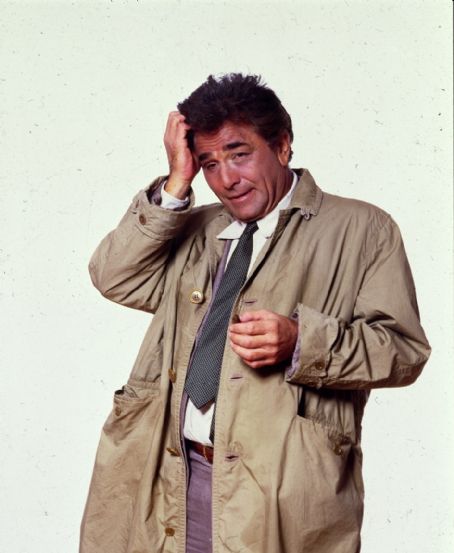
Columbo is the favorite TV detective of many a viewer . . . but not me. I’m not a huge fan of inverted mysteries, and, well, frankly, Frank – the overly obsequious shtick that Falk perfected tended to tip into obnoxiousness for me. So, during the 70’s I ignored Columbo and focused on Ironside, Mannix, and McMillan and Wife – and for one glorious season in 1975, Ellery Queen!
This would never sit well with my two buddies, Nick Cardillo and Sergio Angelini. Sergio’s knowledge of the series is positively encyclopedic! He sees Columbo as a Golden Age of Mystery-type show in disguise. The cleverness around alibis and the occasional impossible crime are all elements we classic mystery lovers love, as is the attempt by the screenwriters to “play fair” with the viewer. These are not things that appeared with much frequency on late 20th century network TV – not even the Matlocks and the Jessica Fletchers approached the genre with such consistent cleverness. Yes, these were inverted mysteries, so the question of “who” was not on the table. But this was a cat and mouse game at its most cerebral, with a loving attention to detail and some terrific characters.
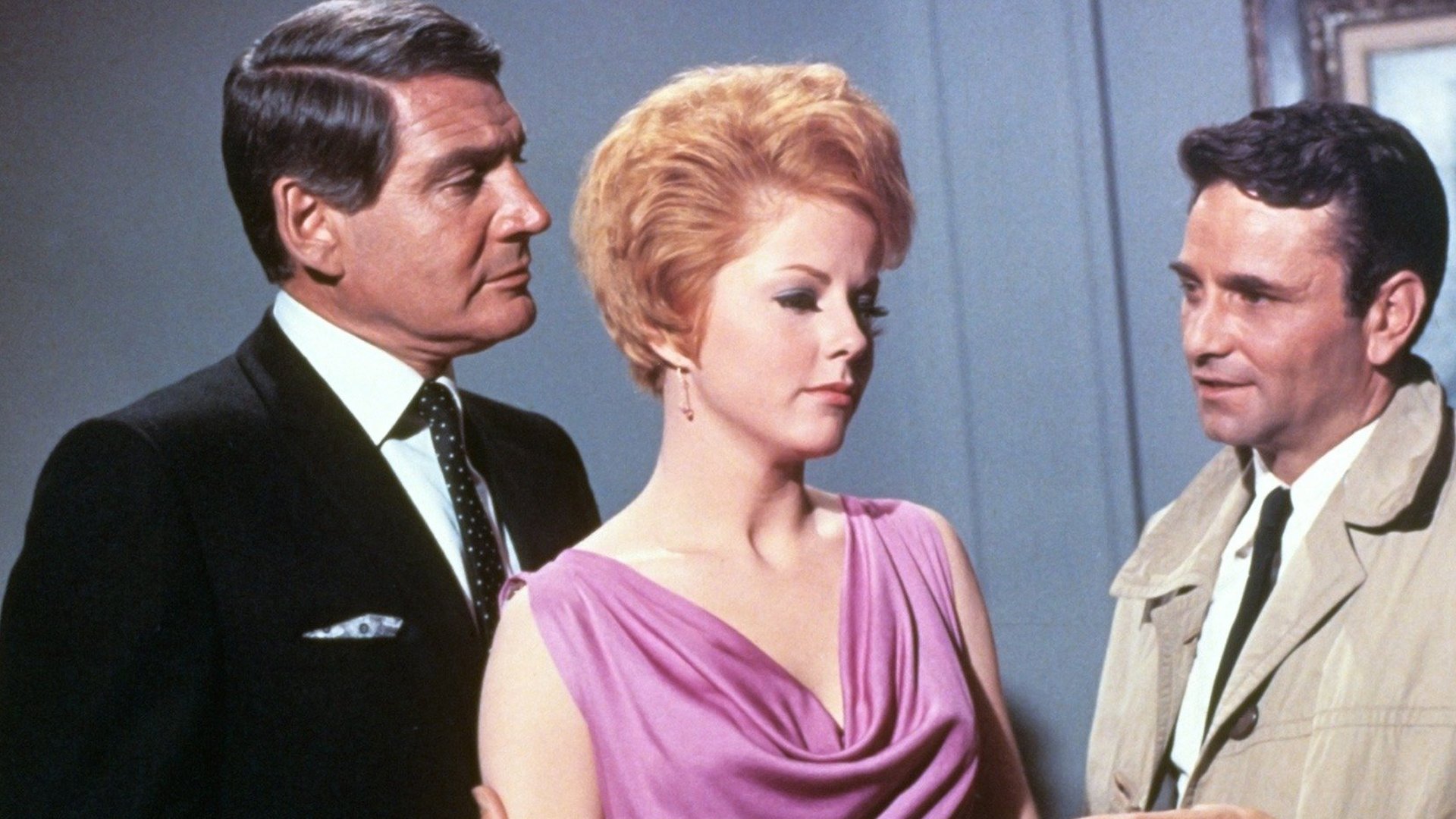
Nick’s path was more circuitous: his first viewing of the pilot Prescription: Murder left him cold, but then during the pandemic, Columbo became a favorite show to stream and Nick returned to it and fell for Falk’s characterization, the many terrific guest stars – and the clever plots that cropped up from time to time. Plus, Nick reminds us, Columbo is not an example of “cop-aganda”, a.k.a., a show acting as a public service announcement for the police.
Sergio and Nick both worked hard to get me to agree to a Columbo draft. And then Sergio had a brainstorm: since there was no way I would binge watch sixty-nine episodes of Peter Falk scratching his hair and saying, “Oh – one more thing . . .” what if we cut the list down to just those episodes featuring a female murderer?? While so many of the male murderers on Columbo were brilliant but heartless sociopaths, the female murderers tended to generate more empathy, both from the audience and the Lieutenant himself. This had much to do with the way women were portrayed on TV in the latter half of the 20th century, but it necessitated a different approach by Falk to his character, and by the writers to the stories they told.
Sergio’s original list ran to twenty-one titles, which included episodes where a woman acted as an accomplice. I watched all twenty-one and shared my reviews with you. And then I balked at the inclusion of the accomplices, some of whom were barely complicit at all, some who had little screen time, some who died in the second reel!! Thus, we whittled down the list to fifteen episodes, and on Saturday, July 20, we sat down at our screens and had a ball drafting them into a “BEST OF” list.

Using the format of Screen Drafts, my favorite film podcast, we three have created a serpentine draft of the FIFTEEN DISTAFF COLUMBO EPISODES. We went in turn creating a list from least to most favorite. Normally, the draft order is determined through trivia, but since Sergio’s knowledge is encyclopedic, this time we went with a randomizer. In this way, we also determined what AMENITIES we would get. Each player starts with one veto: if someone plays a title and another drafter believes that title should be HIGHER, he can veto it and it will be played later in the draft. Because he has the fewest selections, DRAFTER A will also receive an additional veto. The other amenity is the veto override: if someone vetoes a person’s choice and another drafter feels the veto was correctly played, he can override the veto that has been played and seal the spot of the title where it was played. DRAFTER C gets the veto override since he has the lowest placements in the game.
Nick manned the randomizer, and here are the results:
- DRAFTER A is Brad
- Picks: 11, 8, 5, 2 (the fewest picks but he actually gets to pick #1 through the process of elimination)
- Amenities: two VETOES
- DRAFTER B is Nick
- Picks: 13, 12, 9, 6, 3
- Amenities: one VETO
- DRAFTER C is Sergio
- Picks: 15, 14, 10, 7, 4, 1 (the most picks but weighted at the bottom)
- Amenities: One VETO, one VETO OVERRIDE
And here’s the draft . . . after I play Henry Mancini’s gorgeous NBC Mystery Movie theme (listen here).
* * * * *
15. Sergio played “Old-Fashioned Murder” (1976) with Joyce Van Patten. This was originally meant to be a modern adaptation of Richard III with a male murderer playing a museum curator who decides to kill one nephew and frame the other for his murder. It was an extraordinarily difficult production with massive cost overruns and constant script changes. (The original screenplay was by Peter S. Fischer, and then Elaine May, whose daughter Jeannie Berlin has a pivotal role in the episode, stepped in.) Joyce Van Patten isn’t particularly well cast, but she does a creditable job. The best we can say about Columbo is that this is the episode where he gets a haircut.
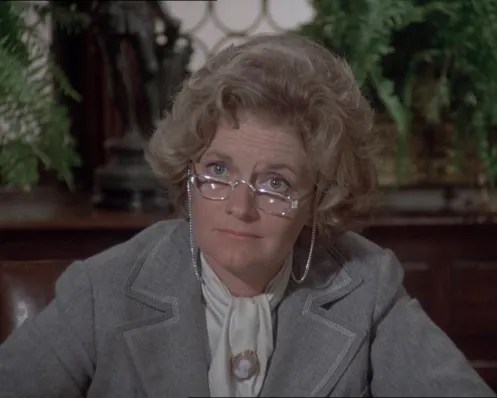
This was Brad’s #14. Joyce Van Patten plays a nice combination of ruthless and sympathetic, but we’re expected to buy that this extremely intelligent killer makes Mistake 101 in her plan by turning off the lights as she leaves. And everyone around her is obnoxious, especially Celeste Holm as her sister.
Nick placed it slightly higher as his #12. A very boring episode, easy to zone out.
14. Sergio played “A Trace of Murder” (1997) with David Rasche and Shera Danese (Mrs. Peter Falk). It had a great premise (wife wants not to kill her husband but to frame him for another man’s murder) and a clever twist (a killer who actually works with Columbo) that is sadly underplayed. The main issues are that, while the actors are fine, their characters and relationship as villains are quite bland, and the final scene, where Columbo recapitulates the entire episode for his friend Barney, is such obvious and dull time filler that it ruins the episode.

This was Brad’s #15!! He agrees with the clever aspects, but the murder plan is desperately flawed, especially since one killer is a forensics expert. They don’t take into account how the husband cuts his cigars or provide for him making stops on his way to the wedding. And the whole cat hair clue makes no sense! Brad lives with cats and their fur clings to him. But in order for that much fur to land on the husband’s back, he would have had to wrestle around on the ground on his back with the victim or let the cat walk all over him.
This was Nick’s #14. He agreed with the dullness of the portrayals, calling the whole affair “underplayed.” The “twists” were so obvious that Nick found himself yelling at the screen. Plus, the husband, played by Barry Corbin was such a caricature that Nick couldn’t buy him as a character.
13. For Nick’s first pick, he selected “Dagger of the Mind” (1972). What a great locale – London! – and cast – John Williams, Wilfred Hyde-White, Honor Blackman! – and all of them ill-served in a half-baked episode. As an actor himself, Nick should have liked this one so much better, and yet initial premise is weak, the murder is weak, and the whole setting is mostly squandered.

This was Brad’s #12. Blackman and Basehart were obnoxious, the whole wax museum “gotcha” was too long and not interesting enough, and the whole fish out of water crazy photographer Columbo stuff felt more like padding than usual. Hyde-White’s butler was the star of this show.
Sergio had the same placement as Nick. The original premise was by show creators Levinson and Link, but time constraints put the whole schedule in a rush. Falk had plans for going to New York, and he was incredibly difficult to work with here. (There might not have even been a second season, but L&L had cleverly got it blueprinted before leaving the show so that the series would continue.) Blackman and Basehart play the whole thing too broadly, and the show runs too long. Writer Jackson Gillis was used to writing 74-minute episodes, but the network wanted two hours to justify the show’s expense.
12. Nick’s second pick was “Lovely but Lethal” (1973). In the world of Columbo, the whole sci-fi premise of a miracle skin cream is impossible to buy. Vera Miles is fine in rendering the high-class persona, and it’s great to see an appearance by a young Martin Sheen. The show is competently directed, but Vincent Price is totally wasted as the rival beauty expert.

Brad was more enamored of the premise but disinclined to veto. Anything that takes place in the beauty industry has the potential to turn into a great horror movie, and there are moments that play into that at the start. Vera Miles is great: less sympathetic than most of the women murderers but far more so than Lee Grant.
Sergio agrees! The director was known for his episodes of Night Gallery and the fantasy movie Somewhere in Time. This fanciful take doesn’t work for Columbo. And Vincent Price was actually filmed in more scenes which unfortunately landed on the cutting room floor. It’s one of those episodes that has a second murder to keep the story going, but this plot point is essentially dropped and not even mentioned by Columbo in his final wrap-up. The poison ivy clue is clever – except Sergio points out that early in the episode Miles shakes hands with Columbo, and this could have served as a totally innocent explanation of the passing of the itch.
11. Brad’s first pick was “A Bird in the Hand” (1993). He actually likes the first half, with Greg Evigan being so inept at planning the kill. But as Dolores starts to gain power, Tyne Daly has to switch up from one sort of character to another. And since Columbo spends most of the episode doing his give and take with Evigan, we’re cheated out of all the byplay between the sleuth and the real killer.

Sergio placed this much higher. The writers do something really smart with this longer episode, like making us forget that somebody must have run Steve Forrest down. (Brad was certain Tyne Daly had dunnit!!!) Daly might have been miscast, but Sergio found the character switch a much more interesting twist. Still, he chose not to use his veto.
Nick agreed with Brad’s placement. There are certain elements that one expects of a Columbo episode, and this one is missing some of them. Because of the focus on Evigan’s character, we don’t get enough of Daly’s perspective to understand and appreciate her transformation. The third murder (of Evigan) is not shown and there is confusion surrounding it.
10. Sergio was up again, and he played “Sex and the Married Detective” (1978). The producer had in mind the idea that Dr. Ruth would be a killer!! Lindsay Crouse is terrific in the part and comes up with a pretty good disguise to play sex-mate “Lisa.” The scene at the end is also wonderful as Columbo listens to Crouse explain her motivations. The emphasis on character is great, but the clues are weak and it feels incredibly padded by not one, but two scenes: the tuba water ballet and the extended scene where Columbo acts as therapist for all Crouse’s lovestruck co-workers.

Brad had rated this one much higher due to Crouse’s performance. For once, we get to see an innocent person transformed by betrayal into a killer. Columbo’s cutesy stuff can pall, but his embarrassment here around sex therapy is charming. No veto, though, because those two extended scenes are terrible.
So far, Nick is especially copacetic with Sergio in this draft! This was his #10 as well. It had some nice parts to it, not least is the reference to Agatha Christie. (Did Crouse’s doctor find inspiration in her costuming from the author who LOVED a good costumed murderer?!?) Nick is often quite fond of the musical scores: this one, by Patrick Williams, started out well and gradually became grating.
9. Nick chose “Make Me a Perfect Murder” (1977). He always loves a good show-biz milieu. All the extra stuff about other TV crises let us see the other side to Trish Van DeVere’s character, letting us see her in a positive light, but it didn’t go far enough to convince Nick to sympathize with her. It’s one of two episodes on this list to deal with the use of a screening room for an alibi, and to Nick it’s the weaker one.

Sergio is fine with the placement, although he had it slightly higher. Columbo doesn’t show up for the longest time, and his relationship with Van DeVere’s character is well-written but feels padded. Lainie Kazan is great in her role but way too young to play a has-been. Columbo’s antics as a technical fool who just loves pushing buttons is grating in the same way as the tuba fountain was.
This was also Brad’s #9. The best distaff Columbo episodes address the inequality of women in contemporary society, and this one is a perfect example of that. The killer never has a real chance to rise to the top in this male-dominated industry, and we feel for her. Plus, the teleplay actually gives us time, through the Lainie Kazan subplot, to show us that Trish is a sympathetic character in a cold male-dominated business. (Still, all three drafters agreed that airing a rotten TV-movie in an open time slot is a fireable offense!)
8. Brad played “Lady in Waiting” (1971) Nick vetoed it! Sergio was tempted to use his override, and so Brad and Nick made their cases.
Brad liked this one for Susan Clark’s performance. Her dream of the murder plot going perfectly, followed by disaster, is great. So is the way Columbo treated her from start to finish. But the murder plot is just okay – it drags through the middle – and while Clark is sympathetic, she could have left, rather than resort to murder, and her use of the money suggests that maybe she did need a strong guiding hand in life!
Nick loved the murder set piece and how the plan goes wrong immediately! Leslie Nielsen might not convince as anything other than an upright citizen, but Columbo really fulfills the role of a Golden Age detective, the burglar alarm clue is beautifully planted into the story, and the “Gotcha” moment here is integral to the whole plot. Susan Clark is wonderful, especially in the final confrontation. From both a production and writing standpoint, it was strong (and it was Nick’s #3 selection.)

Sergio decided, with many apologies to Nick, to use his veto override. Clark is technically the first female murderer in the series, but this has always felt like one of the weaker episodes of the first, and strongest, season. She is not nearly as deserving of our sympathies as some might believe. The brother is controlling and protective, but he deserves censure rather than death, and she seems desperate to kill him. And because Peter Falk had gone on strike in protest for not being allowed to direct for the series, there are several shots where a double is used, and it weakens the relationship between Columbo and this killer.
#7. Sergio played “Columbo Likes the Nightlife” (2003). This is the final episode of Columbo, and it’s stylistically different from everything that had come before at ABC. The producers had long been pushing for the show to appeal to a younger demographic. It’s beautifully shot, in a much more fluid style, and yet it doesn’t betray the best aspects of the show’s formula. The clues are really solid. Matthew Rhys is a good villain, and he and Jennifer Sky as his confederate are not the typical upper-class sociopaths we so often find. Here they look down on Columbo because he’s old! Falk plays the whole thing with a surprising minimum of shtick, and he’s very convincing in the role.
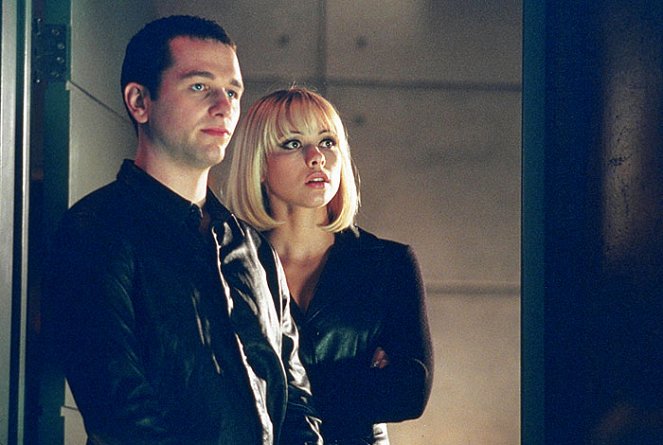
Brad liked this one a lot as it beautifully returns to original form after a slew of weaker episodes. The whole first sequence is deftly shot and full of thrills, with brutal murders rendered in a style reminiscent of a Coen Brothers movie. Columbo is really charming here and he does some great detective work, especially at the journalist’s murder scene. Finally, the “gotcha” at the end is one of the best: surrounded by confused ravers, Columbo shows a very cool “x-ray” of the victim’s hidden body.
This was Nick’s #6, and he agrees with all that has been said. It feels like the best-case scenario for what Columbo would be like in the 21st century. The murders are nice and gnarly!
6. Nick played “Requiem for a Falling Star (1972). Sergio vetoed it immediately. Nick then played “Rest in Peace, Mrs. Columbo” (1978). Brad, in his great wisdom, vetoed that one!
Now it was up to Nick not to screw the draft completely!!! His third title was “Ransom for a Dead Man” (1971). In retrospect, he feels he should have played this title in the first place! Lee Grant is terrific, and the first half is propulsive. It appears to be a kidnap case for a long time, and Harold Gould as the FBI agent shares some great back and forth with Columbo. The entrance of the dead man’s daughter provides some nice twists, but the episode starts to drag for Nick halfway through.

Brad pointed out that Grant is the most like a male Columbo villain of all the women we meet, and she does a great job of it. He loved the abruptness of Grant’s murder of her husband, establishing at once how cold-blooded she is, and how she could turn the charm on or off as needed. After playing the part of Columbo relatively straight in the first pilot, here we see him in all his schticky glory (the bit with the bathroom soaps is fun.)
This was Sergio’s #2, so he was disappointed in the relatively low placement. We’re early in the series, and so the episode relies upon its newly established tropes: brilliant, cold killer, strong clues placed early, the complication of the daughter halfway through, Columbo’s use of the killer’s fatal flaw – she can’t understand how her stepdaughter would behave more humanely when faced with a bribe – all work to make for a gripping episode. Plus, everybody, not just the killer, is treating Columbo badly.
5. Brad was thrilled at this point that his top five selections were going to make it into the top five our list. And so he played the lowest of these: “Requiem for a Falling Star” (1972). Anne Baxter is terrific here, and so is Mel Ferrer as her nemesis. The use of the Hollywood background is excellent, and the twist as to the killer’s intended victim truly comes out of the Golden Age tradition.

Sergio was bereft! This was his #1 episode. It’s extra clever, has proper clues that are delivered in a ‘fair play” manner, a great “gotcha” finale and the perfect guest villain. The pervading idea that she killed the wrong victim is delicious. Most of these ideas would be reused by the series in less clever ways. The cameo by costume designer Edith Head is fabulous!
Nick had tried to play this as his #6, but it had actually been his #5. He also loves the double bluff about the victim. This feels like a Golden Age plot throughout, and with the twist feels less like an inverted mystery with that surprise. It also has Nick’s favorite funny Columbo moment when the Lieutenant is driving onto the lot and finds his police sticker is missing.
4. For his last “free will” pick, Sergio played “It’s All in the Game” (1993). It’s the only episode in the series with two murderesses, and both of them are amazing. Early in the first season, Peter Falk had been complaining about scripts, and Levinson and Link suggested he try his hand at writing his own. The results confounded the actor, and he kept it in a trunk for twenty years, reviving it when he became a producer. Sergio loves the ambiguity of the relationship between the two women and the display of Columbo’s sentimental side, both toward the suspects and his wife (“It’s bowling night!”)

This was also the #4 pick for both Brad and Nick. Brad considers it the best distaff episode of the late season entries because of the special connection between Faye Dunaway’s character and Columbo. He doesn’t buy that Columbo has fallen for her, but even if he’s “undercover” he’s enjoying the game. And the whole mystery about the relationship between Dunaway and Claudia Christian provides a lovely twist at the end.
Nick had heard so much hype that he wondered if it would live up to its reputation – and it did. The final section in the police station is especially strong. He could have done with less nibbling on the ears!!
3. Nick’s final pick is “Rest in Peace, Mrs. Columbo” (1978). On his Columbo DVD, Nick saw a preview of the episode that would play at the beginning of the episode on TV, and he felt that it ruined the plot too much. But the episode is beautifully acted, especially by Helen Shaver. The scene where she dances in front of a TV screen projecting her happier days with her late husband is especially lovely. In some ways, it subverts the typical pattern of the formula – maybe not as cleverly as in “Requiem for a Fallen Star,” but it’s an engaging episode with a strong, if hard to believe, final confrontation between killer and detective.
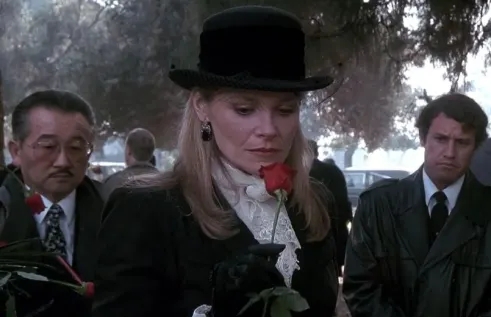
Sergio wonders if audiences were actually worried for Columbo since they were coming to the end of the series. Had they bumped Columbo off here, Sergio would have been deeply disappointed. The episode never feels long, and Shaver is fantastic.
Brad rates this one higher than the Dunaway because the suspense is better, thanks to Shaver. We may never believe that Mrs. Columbo is really dead, but it’s fascinating to wonder how Columbo will see his way through to the end.
2. Brad selected “Try and Catch Me” (1977). It’s a sweet homage to Agatha Christie, both in the character Ruth Gordon plays and in its attention to Golden Age structures and tropes. It’s seriously hampered by the stupidity of Gordon burying the car keys in the ash tray, an act beneath the intelligence mystery writer and a guest star of Gordon’s caliber. The dying message is terrific, and the ambiguity at the end as to whether Gordon had even gotten it right about her niece’s disappearance or killed an innocent man adds resonance to the finale.
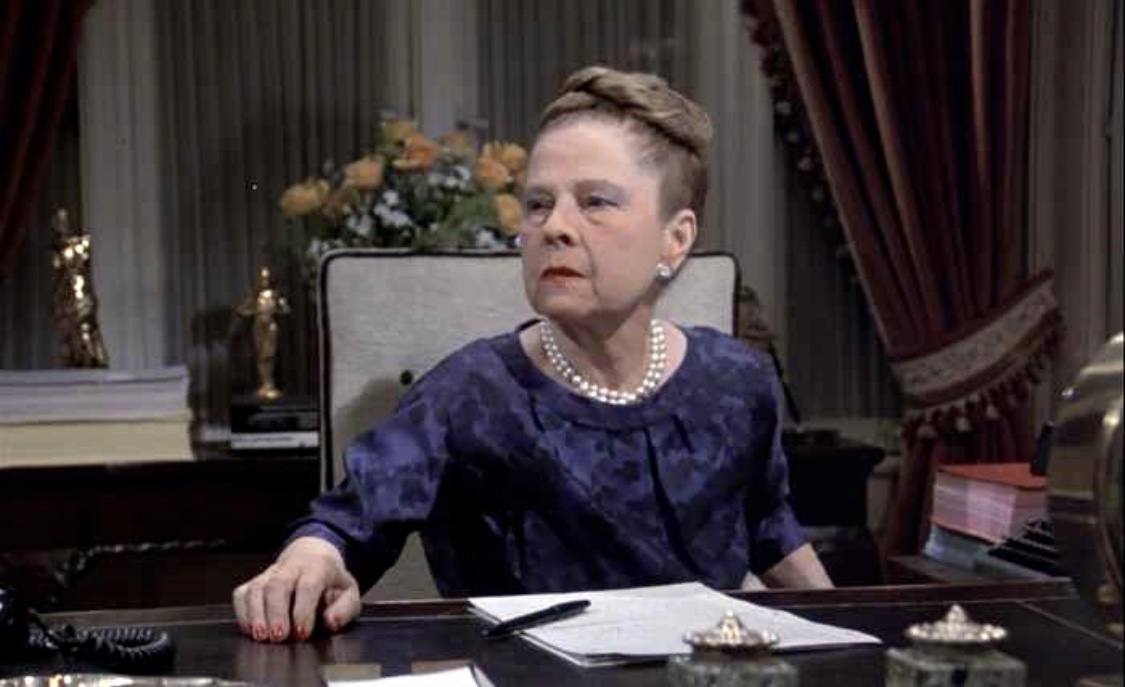
This was also Nick’s #2. He had gone in thinking it would be the best, but one episode beat it out. Yes, the car keys made him cringe, but the episode is beautifully structured and genuinely funny, especially in moments involving the dog.
Sergio had it at #3. That blasted car key clue is not only bad from the start, but it keeps getting renegotiated in terrible ways. Sergio loves Mariette Hartley (for multiple reasons), and she’s fantastic here as a jolly blackmailer. In keeping with later episodes, Peter Falk was given a dramatic entrance (striding out of the safe in the murderer’s office.)
1.Sergio was forced to play “Forgotten Lady” (1975). It’s the only episode where Columbo doesn’t quite get the murderer at the end. It’s also a deeply moving teleplay, thanks to the performances by Janet Leigh and John Payne. You feel sympathy for Leigh’s character throughout, even before the final twist, and her condition, like the mystery, is well clued. Sergio would have preferred that a “better” constructed mystery, like “Requiem for a Fallen Star,” had made the top, but this is an episode that you don’t forget.

This is easily Brad’s favorite distaff Columbo because of its emotional impact. Watching Columbo’s genuine surprise as he learns that the case he has been dragged into involves famous movie stars, and then that moment when his shoulders sag as he realizes that his beloved leading lady must be the killer are very emotional. When he realizes he can’t play the typical games with his quarry, Columbo reveals the truth to her co-star in a deeply moving finale and makes an Orient Express type of decision to allow Leigh’s life to play itself out naturally.
This was also Nick’s – quite unexpected – #1. The emotional gut punch put it over the top for him and takes the Columbo formula to the next level.
So that’s our list! Sergio pointed out with some delight that two of our top five came from the oft-maligned ABC years. A lot of dreck came out of the network switch, but when the episodes were good, they were very good. We had some drama, but our bottom picks generally aligned and our top picks were understandable, even if we had our disagreements over placement by a couple of spots.
Sergio has promised to send me his list of the TOP TEN male-centered episodes, so I’m not entirely finished with Columbo. Meanwhile, we’re planning our next couple of drafts and getting very excited about them.
If you want a hint as to our next topic . . . . it takes place in Noirvember!!!!
COLUMBO DISTAFF DRAFT (Final List)
| ORDER IN DRAFT | TITLE/DATE | MURDERER/ACCOMPLICE |
| Number Fifteen | “Old-Fashioned Murder” (1976) | Joyce Van Patten |
| Number Fourteen | “A Trace of Murder” (1997) | Shara Danese/David Rasche |
| Number Thirteen | “Dagger of the Mind” (1972) | Honor Blackman/ Richard Basehart |
| Number Twelve | “Lovely But Lethal” (1973) | Vera Miles |
| Number Eleven | “A Bird in the Hand . . . “ (1992) | Tyne Daly |
| Number Ten | “Sex and the Married Detective” (1978) | Lindsay Crouse |
| Number Nine | “Make Me a Perfect Murder” (1978) | Trish Van DeVere |
| Number Eight | “Lady in Waiting” (1971) | Susan Clark |
| Number Seven | “Columbo Likes the Nightlife (2003) | Jennifer Sky/ Matthew Rhys |
| Number Six | “Ransom for a Dead Man” (1971) | Lee Grant |
| Number Five | “Requiem for a Falling Star” (1973 | Anne Baxter |
| Number Four | “It’s all in the Game” (1993) | Faye Dunaway/ Claudia Christian |
| Number Three | “Rest in Peace, Mrs. Columbo” (1990) | Helen Shaver |
| Number Two | “Try and Catch Me” (1977) | Ruth Gordon |
| Number One | “Forgotten Lady” (1975) | Janet Leigh |
 Ah Sweet Mystery!
I had an absolute blast celebrating my favourite American detective series with you guys. A treat from start to finish!
LikeLiked by 1 person
This was a lot of fun, as always. And, as I said during game play, things would be a little boring without some contentiousness!
LikeLiked by 1 person
Pingback: “A strange and dangerous experiment in love and murder” THE NOIRVEMBER ’44 DRAFT | Ah Sweet Mystery!
Pingback: MYSTERY MOVIE TALK: Three Announcements! | Ah Sweet Mystery!