Fresh off our Columbo Distaff Draft, the Three Musketeers (we have got to come up with a better name for ourselves – maybe I’ll have a contest!!) didn’t have to think hard to arrive at our next topic. The glorious sub-genre of cinematic mystery known as film noir has a history as dark and complex as the fog-shrouded streets of Poisonville, U.S.A.. All three of us have a fondness – dare I say an aching need – for the stuff, but we come at it from differently skewed perspectives.
Actor/writer Nick “Shinwell” Cardillo was born in a trunk. He only wishes the trunk hadn’t been flung into the river by Alphonse Moriarty’s gang, dredged for salvage by a failed drunken fisherman literally at the end of his rope, who popped the lid open to reveal an infant reciting Shakespeare’s “Full Fathom Five” in a layette fashioned out of seaweed. Five minutes later and all would have been lost; hence, the name Nick (for “Nick of Time”). Nick is the baby of our group and has the least experience with film noir, but he has a real affinity for it!
Director/pundit Brad “Bogey” Friedman has been drinking the stuff his entire adult life. He used to swagger around town wearing a medallion with the Maltese Falcon hanging from it, a ring made of material out of the Great Whatzit, and an anklet like Phyllis Dietrichson’s – until he started to suffer from both radioactive and lead poisoning. Now he stares hauntedly at the TV screen, watching the noir canon over and over again and worshipping from afar the film career of Elisha Cook, Jr..
Finally, there’s our own “Dark Angel” himself, Sergio Angelini. He’s our Caspar Gutmann, our Bruno Anthony, the mob boss of noir in this group. Sergio has such an encyclopedic knowledge of the genre that he is on the verge of publishing a new noir encyclopedia, featuring entries on over a thousand films. And on the eve of this vital new reference’s appearance, Sergio has done what most of us have dared not hope for many a year: he has revived his brilliant blog, Tipping My Fedora – only this time it’s a podcast and it’s devoted exclusively to all things noir. You can find the show wherever you stream your podcasts and let me say that, with six episodes out as of this posting, it has already become an addictive listen!
It was Sergio’s project that inspired us to select film noir as our latest draft subject, but I immediately brought up the challenge: with a topic as enormous as film noir, how on earth does one prepare oneself, especially since the range of knowledge amongst the three of us varies so widely? The solution we came up with was to select one specific year and draft The Top Thirteen Films Noirs from that year. Since this was really Sergio’s baby, we let him come up with the year in question. He selected 1944 and sent us a list of twenty-three films.
1944 was an interesting and formative year for noir. Our list runs the gamut from classics of the genre to relative unknowns, originating from a wide variety of studios and featuring some of the best noir directors and cinematographers. In terms of budget, the films range from luscious to extremely lean. (It pays to know up front that a low budget for a film noir is not necessarily a bad thing.) Each of us reacted to our viewings based on our individual knowledge and experience with the genre – which boded ill for a copacetic draft!
Here’s the list:
| FILM | DIRECTOR | STARS |
| Bluebeard | Edgar G. Ulmer | John Carradine and Jean Parker |
| Christmas Holiday | Robert Siodmak | Deanna Durbin and Gene Kelly |
| Dangerous Passage | William Berke | Robert Lowery and Phyllis Brooks |
| Dark Waters | Andre de Toth | Merle Oberon and Franchot Tone |
| Destiny | Reginald Le Borg | Gloria Jean and Alan Curtis |
| Double Indemnity | Billy Wilder | Barbara Stanwyck, Fred MacMurray and Edward G. Robinson |
| Experiment: Perilous | Jacques Tourneur | Hedy Lamarr |
| Gaslight | George Cukor | Ingrid Bergman, Charles Boyer and Joseph Cotten |
| Guest in the House(aka Satan in Skirts) | John Brahm | Anne Baxter, Ralph Bellamy and Aline Macmahon |
| Lady in the Death House | Steve Sekely | Jean Parker and Lionel Atwill |
| Laura | Otto Preminger | Dana Andrews, Clifton Webb, Gene Tierney, Vincent Price, and Judith Anderson |
| The Lodger | John Brahm | Merle Oberon, George Sanders and Laird Cregar |
| The Mark of the Whistler | William Castle | Richard Dix and Janis Carter |
| The Mask of Dimitrios | Jean Negulesco | Zachary Scott, Sydney Greenstreet and Peter Lorre |
| Ministry of Fear | Fritz Lang | Ray Milland and Marjorie Reynolds |
| Murder My Sweet (Farewell My Lovely) | Edward Dmytryk | Dick Powell and Claire Trevor |
| Phantom Lady | Robert Siodmak | Franchot Tone and Ella Raines |
| Strangers in the Night | Anthony Mann | William Terry and Virginia Grey |
| The Suspect | Robert Siodmak | Charles Laughton |
| Voice in the Wind | Arthur Ripley | Francis Lederer |
| When Strangers Marry (aka Betrayed) | William Castle | Dean Jagger, Kim Hunter and Robert Mitchum |
| The Whistler | William Castle | Richard Dix |
| The Woman in the Window | Fritz Lang | Edward G. Robinson and Joan Bennett |
As per usual, our draft follows the style of our favorite film-centric podcast, Screen Drafts, which is currently in the middle of a month-long celebration of the films of both Alfred Hitchcock and Francois Truffaut and has just announced that next year, they will set aside the whole month of Noirvember to draft the greatest films noirs of all time. The Screen Drafts format is a serpentine-style draft where each GM in turn places his choice of film on what will become the Best of 1944 Noir List. We determined the order of drafting using a randomizer, and as a result, each of us assumed the following position in the draft:
Sergio was Drafter C, responsible for selecting #13, 12, 9, 6, and 3. This is the largest number of films, but they fall lower on the list.
Nick was Drafter B, and he named the films in positions 11, 8, 5 and 2.
Brad was Drafter A and got to pick # 10, 7. 4 and 1.
All GMs are given a blessing known as the VETO. Let’s say Nick plays the film Double Indemnity in the bottom position. One of the other players may use his veto and wipe it out of that position. The film then goes back into the pile where it may be played again by Nick or any other player. Thus, in this draft, if a player wanted to make sure that Double Indemnity stayed off the list, they haven’t necessarily accomplished their task by using their veto. However, if the player only wants to ensure that the film places higher on the list, then they have accomplished a necessary first step.
The usual draft in Screen Drafts is made up of seven films. For longer drafts, there are additional blessings. One player receives the VETO OVERRIDE, which allows them to nullify a veto immediately after it has been played. Example: if Nick plays Double Indemnity in the bottom position, and Brad vetoes it to push it higher, but Sergio uses the override to ensure it stays on the bottom, then Double Indemnity stays on the bottom and Brad realizes that the world is a murky bottomless pit of despair. The only player to receive a Veto Override is Player C, so Sergio will have the override in this game.
We also grant an additional VETO to one person. On Screen Drafts, this usually goes to whoever makes the top pick – but since this is a FILM NOIR DRAFT, I thought there should be an extra dash of hopelessness and frustration so we’re giving this extra Veto to Player B – Nick. Try and play your top pick now, Brad!
And now . . . the draft!
* * * * *
13. For his first pick, Sergio played Christmas Holiday. It’s an odd film, and Sergio feels it deserves to be on the list but at the bottom. It was meant to jumpstart child star Deanna Durbin’s career as an adult dramatic actress – but then it it was advertised in a way that would fool people into thinking it was another of her musicals (i.e., her co-star was Gene Kelly, and the Irving Berlin song “Always” is prominently featured.) The film looks amazing, and director Robert Siodmak makes expert use of flashbacks to tell most of the story. The acting isn’t bad, although Durbin is almost insanely over-made-up to make her look adult. The influence of noir is strong, but Universal was somewhat confused over how to re-package Durbin, and this confuses the style.
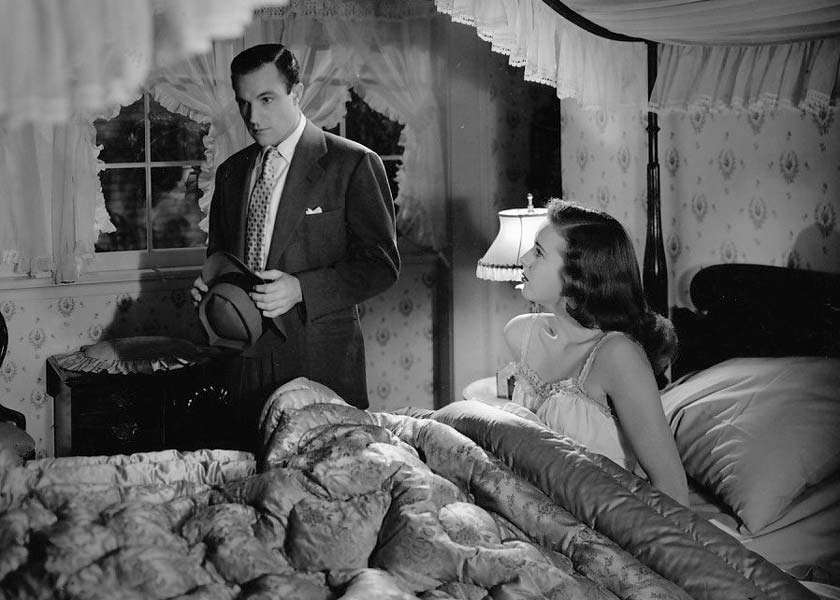
Nick did not watch the film, although he imagines with Siodmak at the helm and Gale Sondergaard in the film, it would be a lot of fun.
Brad thought this was a really weird movie. Most child stars seem to have an awkward time trying to play grown-up, and Durbin up is . . . okay. The idea that she has married a rich psychopath (Gene Kelly) is told in flashbacks but seems undeveloped. (It might have to do with Kelly’s limited acting range here.) The framing story is weird, too. Brad likes Dean Harens as the soldier who, in the throes of his own crisis, meets Durbin and hears her story, but his very real predicament is totally dropped when he becomes the shoulder for Durbin to cry on. Still, Gale Sondergaard is nice and creepy as Kelly’s mother.
12. Sergio followed this up with William Castle’s The Whistler. This is the first film adapted from the radio show, and the story itself was adapted from an earlier Robert Siodmak film. A despairing man hires a contract killer to do him in, and then when life changes, he tries desperately to cancel the contract. Sergio loves how evil the Whistler is in his commentary: he enjoys the suffering the story inflicts on the characters. Carrol Naish is good as the Killer with a Kapital K.
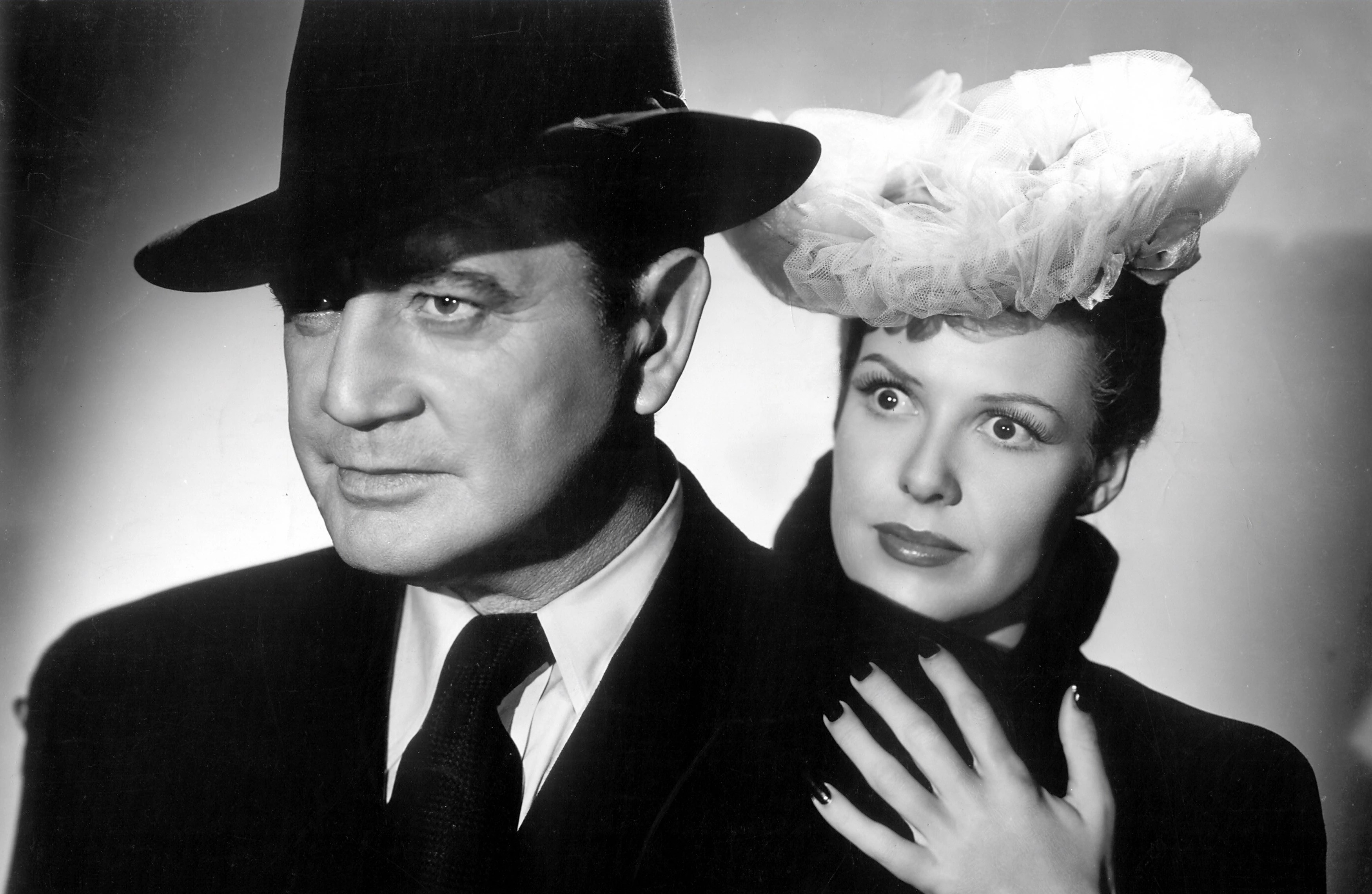
Nick liked this one and had it at his #11. It’s certainly a cheap little movie, but there’s a lot of good to be found here, especially in Naish’s performance but also in Gloria Stuart, even if she is given little to do. Nick reckoned that there was 60 – 70 percent of a great movie to be found here.
Brad disagreed, opining that the classic idea of man putting a hit on himself gets a dull treatment from William Castle. But he freely admits that his enjoyment was minimized by an incredibly dark, scratchy print found on YouTube. The Whistler was a show that traded in irony, and the set-up here would lend itself to that – except at the end Richard Dix is saved, and the irony is moot. Brad agrees with the others that J. Carrol Naish was excellent, but he thought Dix was so-so.
11. Nick played his first selection: Fritz Lang’s The Woman in the Window. Approaching this list, he was definitely drawn to recognizable names that he pushed to the top of his watch list. The premise of an upright man, a college professor (Edward G. Robinson) finding himself enchanted with the portrait of a beautiful woman, meeting the model, and getting inexorably drawn into a dark world that destroys him, is, of course, pure noir. The elephant in the room is the ending: all the suspense, all the nihilism are dashed to the ground when the Professor wakes up from a dream. It’s great seeing his character unwind, though, and both Raymond Massey and Joan Bennett deliver great performances.
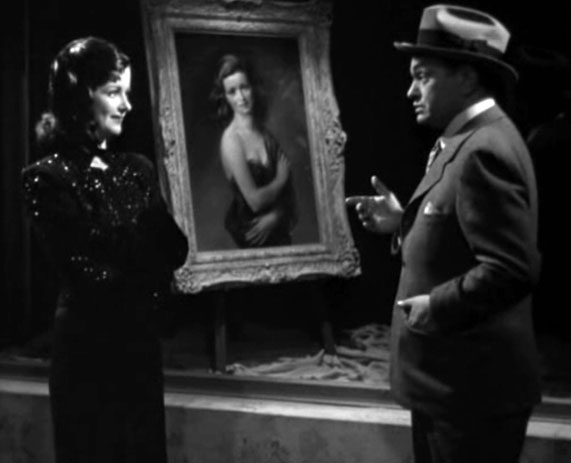
Sergio had the film much higher on his list. Does the trick ending “de-noir” it? On re-watching, Sergio actually thought the dream aspect makes more sense, as some of the sequences are very slow and have a deliberate, dream-like quality. There’s a charming Wizard of Oz aspect to the final scene, as Robinson starts placing the faces he saw in his dream. If you want pure nihilism, watch Scarlet Street, Lang’s follow-up companion piece. This version of the story lets the audience off the hook after ratcheting up the doom, and maybe that’s a nice thing!
Brad flits back and forth between this and Scarlet Street as to which is the better film. It’s probably Scarlet Street, which is incredibly dark and nasty, while this one is like a noir fairy tale. Brad enjoys the Columbo vibe here, as Professor Wandley manages to steer clear of suspicion – and since he’s such a good man at heart, the magical ending feels good to see. Robinson is great – Brad always loves him when he plays a basically decent man – and so is Joan Bennett, who is much softer here than in Scarlet Street. It amazes him to know that Robinson had a miserable time making both films due to their dark subject matter.
10. Brad started off by playing Andre de Toth’s Southern Gothic noir Dark Waters. Merle Oberon is Leslie, who is left deeply traumatized when a German sub sinks the ocean liner she’s cruising on with her parents. The orphaned Leslie reaches out to her only relatives, an aunt and uncle in New York, only to learn that they have moved to an old plantation in the bayous near New Orleans. Of course, her relations (Fay Bainter and John Qualen) are up to no good, along with a family “friend” (Thomas Mitchell) and the estate’s overseer (Elisha Cook, Jr.). The setting is dangerous and atmospheric, the conspirators menacing in a variety of different ways, and Oberon is great. Franchot Tone as a kindly doctor is boring, but then he only appears when Leslie needs saving.
Nick did not see this one, but he likes Merle Oberon and thinks it sounds like fun.
Sergio finds this film quite dull. Things that might be important aren’t shown (i.e., Oberon fainting at the train station), and the plot and solution are totally synthetic and unconvincing. He decided to use his only VETO!!!
For his replacement pick, Brad played Robert Siodmak’s The Suspect. This was perhaps his favorite of the period films. The cast is uniformly excellent, particularly Charles Laughton as a tobacconist and decent man and Ella Raines as the pretty shopgirl whom he grows to love. There’s nothing smirky or creepy about their relationship, but there is the matter of Laughton’s shrewish wife. Yes, he might have killed her, and he definitely poisoned the despicable neighbor (Henry Daniell) who tried to blackmail him. But even in this Hays Code world, both victims seem to have deserved it, and Laughton never bothers to feel any guilt. He only confesses when a truly decent person (Daniell’s abused wife) is framed by the police. So if noir is where decent people are destroyed by the world around them, this is noir – but it doesn’t look or feel much like it, which is why Brad had it lower on his list.
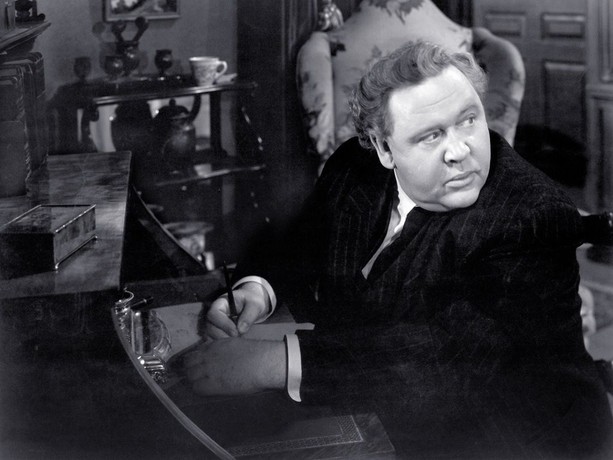
Sergio was ecstatic about the replacement. It’s a far better film that he had ranked a little higher. Laughton is sweet and understated for a change, kind to children! The wife is a bit one-note, which is a shame, but there’s not enough time to develop her. This reminds Sergio of another film, Uncle Harry, where George Sanders falls for Ella Raines. Brad didn’t feel the film was noir enough, but Sergio thinks the fact that the main character is pushed beyond limits makes it fall well within the parameters of noir. The relationship between Laughton and the inspector (Stanley Ridges) ratchets up the suspense, especially in the scene where the policeman lays out a possible scenario to Laughton over how his wife’s death might not have been natural.
Nick has not seen the film yet – but he will!
9. Back to Sergio, and he played John Brahm’s The Lodger. Nick immediately used his first VETO, implying we would see more of this film later on. Sergio countered by playing George Cukor’s Gaslight. It’s a film he hesitates over. Based on a Patrick Hamilton play, this is a remake of a 1940 British film that is far superior to the Hollywood version. A very expensive and slow-paced MGM production that deserves to be considered a film noir due to its premise, Gaslight was very popular at the time. And yet it takes forever to get going (the first twenty minutes are not in the play or previous film), and it tends to drag. Bergman and Boyer are fine (Boyer was Sergio’s Nan’s favorite movie star!), but Angela Lansbury, in her first movie role, steals the film as the slatternly maid Nancy.
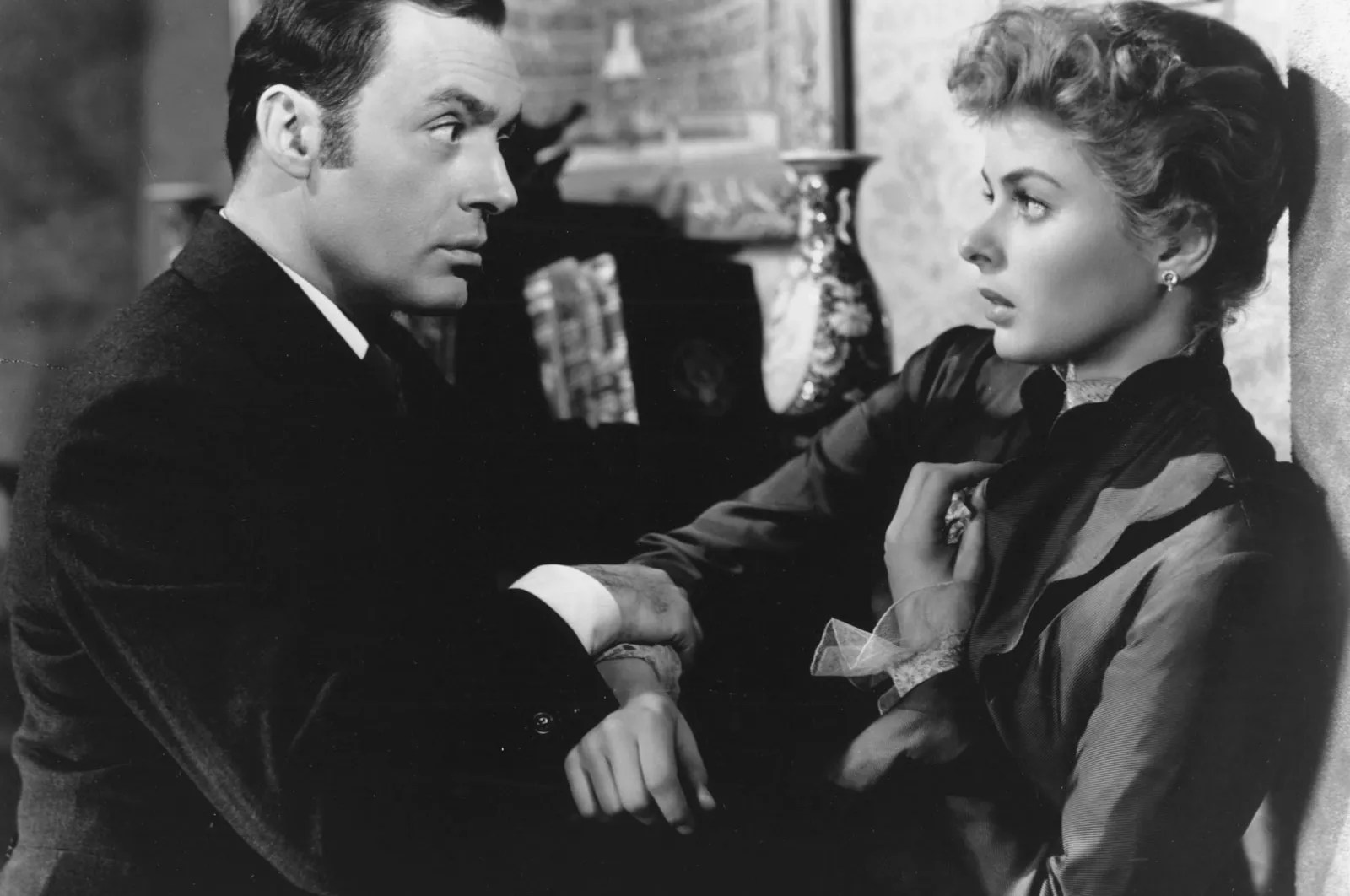
Nick likes this placement. He first saw this on Turner Classic Movies as part of a series of films introduced to kids by John Lithgow. It is a sumptuous film to look at, beautifully photographed and costumed. It should be more claustrophobic than it feels. Joseph Cotten is sadly underwhelming as the heroic male. Nick’s only question: does it really look like a noir?
Brad admired the acting, with Bergman especially earning her Oscar. Lansbury of course is great, Joseph Cotten makes the most of the dull hero role, and Dame Mae Whitty plays the forebearer for Gladys Kravitz, the nosy neighbor on Bewitched, with great humor! The story isn’t as much Brad’s cup of tea as the ones he ranked higher: Boyer’s character is so obviously a monster to his new bride that it’s hard to buy the B.S. he’s selling her just taking it. Still, Bergman sells it beautifully.
8. Reading the room correctly and realizing that he probably couldn’t get it even higher, Nick played The Lodger. It’s one of his favorite films of the 1940’s, maybe one of his favorites of all time. He first came across it as a small child when he turned on the TV to watch Frankenstein Meets the Wolfman and found himself watching the climax of The Lodger. The film feels ahead of its time, based largely on the amazing work of Laird Cregar in the title role. It’s shocking that he gets away with the perversity of the character in 1944, with shades of incest and necrophilia motivating him to kill. Sir Cedric Hardwicke is charming and quirky in a heroic role. The cinematography, especially in the final chase sequence in the theatre, is breathtaking. Nick far prefers this to Alfred Hitchcock’s 1927 version of the story.
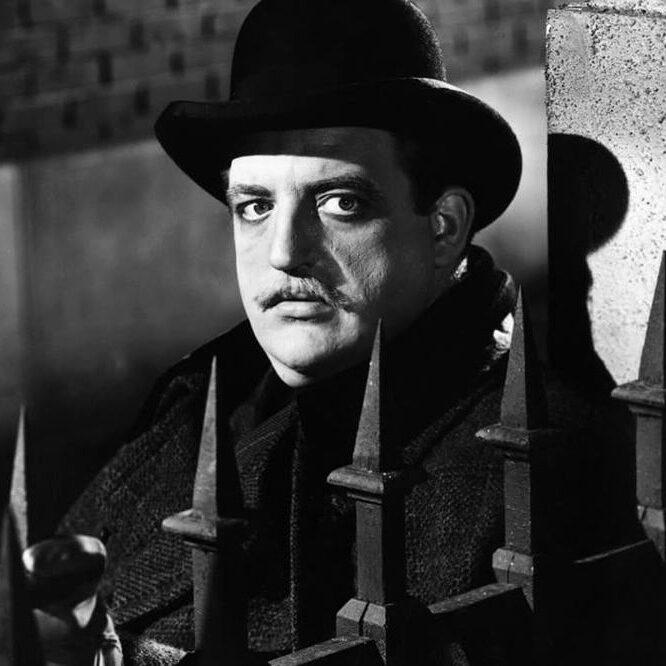
Brad loves Laird Cregar in I Wake Up Screaming and thinks he really displays his range as the psychopath. The sad story of Cregar’s life, cut short because his desire to be a leading man led to dangerous diets, is another tragedy in the fabled history of the genre. Merle Oberon is charming as Cregar’s obsession. There are some beautifully filmed scenes of the streets of London as the murders happen, and the finale in the theatre is good. He was happy to see it on the list (it was a few spots lower on his own), but was glad that Nick didn’t try to play it higher.
Since Sergio had just attempted to play this title, he was happy to see it appear near his original spot. He also pointed out that this is a more faithful adaptation of Mrs. Belloc Lowndes’ novel than the Hitchcock film.
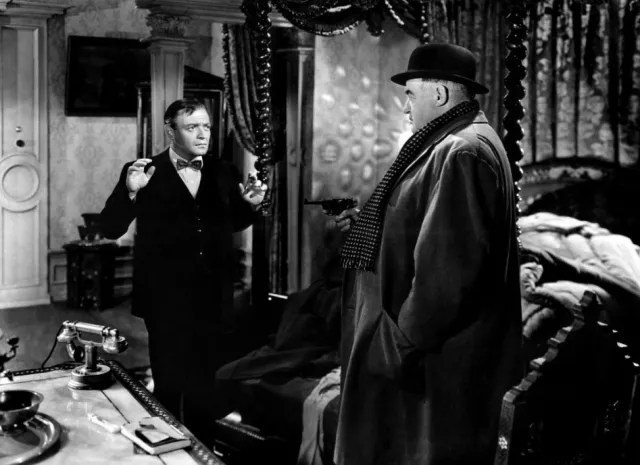
7. Brad played Jean Negulesco’s The Mask of Dimitrios. Peter Lorre (Little Pete) and Sidney Greenstreet (Big Syd) made nine films together, although they didn’t always have or share much screen time. The story here is okay, an investigation into the life and supposed death of a scoundrel named Dimitrios Makropoulos (Zachary Scott in his film debut). There aren’t a lot of twists to this journey: Dimitrios is an utter pig from start to finish, and the various flashbacks showing what a cold-hearted rat he was take on a certain sameness. But watching Lorre and Greenstreet work together (in leading roles, too!) is a joy, and all the other Warner Brothers character actors who fill the screen energize the scenario considerably.
Nick can’t wait to watch it!
Sergio agrees that a chief delight of the film is that it’s completely populated by character actors. He, however, feels the story is adequately complex, representative of the Eric Ambler novel on which it is based. Screenwriter Frank Gruber’s dialogue is fairly strong, and the film is well-deserving of placement on the list.
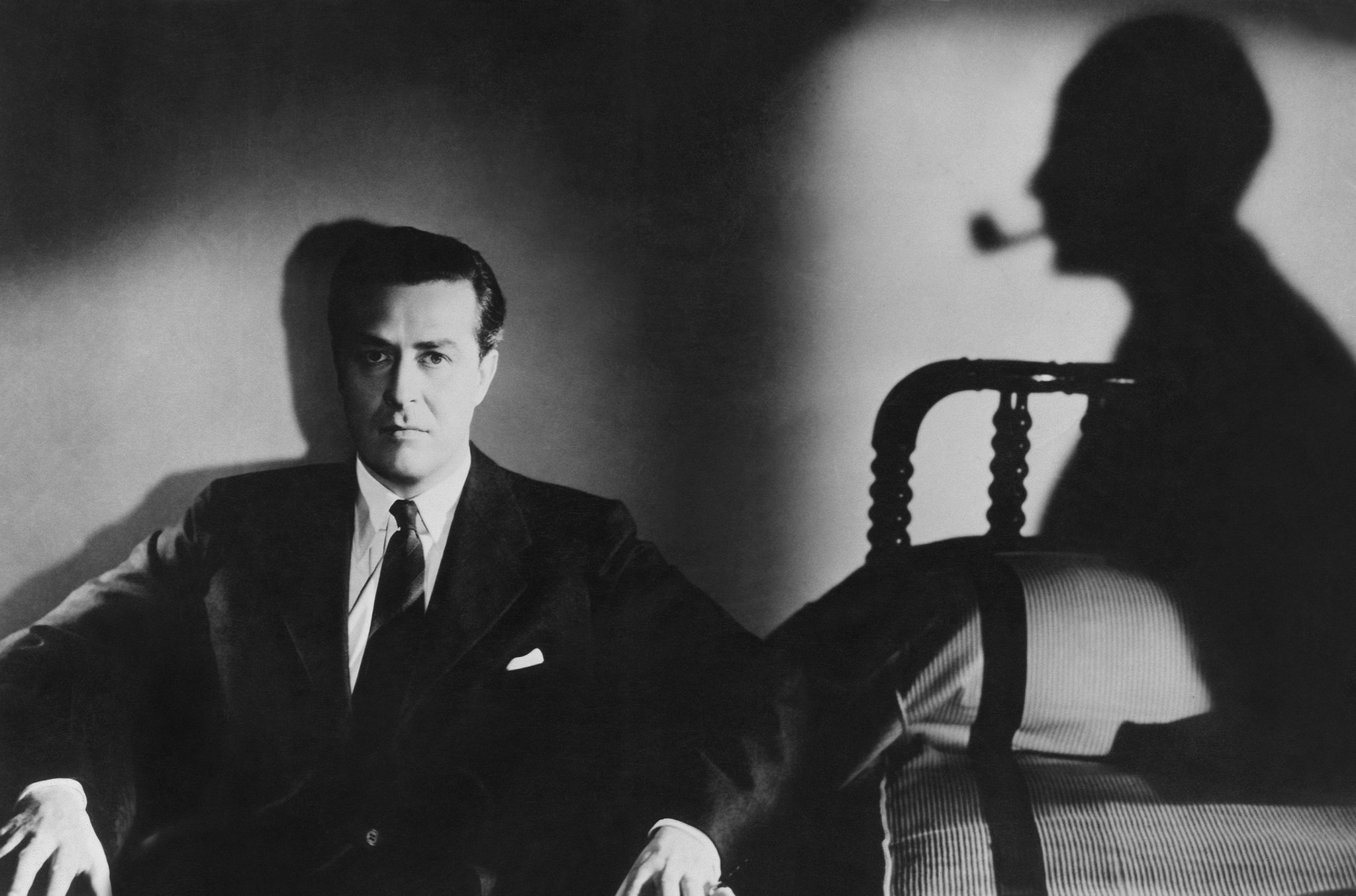
6. Sergio played Ministry of Fear. It’s comparatively faithful to Graham Greene’s novel, although there’s a section of the book where the hero loses his memory that is very noirish and yet was inexplicably excluded from the screenplay. Ray Milland was making the shift from “callow youth” roles to more complex men, and he is great here as the bewildered hero. The opening that takes place at the village fete is charming and amusing. Later on, effective use is made of doors and the mysteries behind them. The issue of propaganda, so important to the war, is on display here, but as we’re in wartime, we must make allowances.
Nick really wanted to watch this one, due to Lang and Milland’s involvement.
Brad found this to be the most Hitchcockian Fritz Lang film he has ever seen and the best surprise of this exercise. The first third is especially good, as the whole thing is told from the off kilter Point of View of a man (Milland) who has just been released from an asylum. The reason for this comes out eventually, but the whole point (and this is veryHitchcockian) is for Milland to come to terms with his life through the Maguffin-like battle against a criminal ring. Brad guessed the final betrayal right way (he has seen too many films like this), and as much as he loves Marjorie Reynolds and Dan Duryea, their accents are terrible. But Hillary Brooke steals the show as the dreamiest femme fatale, and all in all this is a terrific film!
5. Nick was torn between two titles and chose the one that he revisited for this draft and found less compelling this time around: Murder My Sweet. Whenever Nick tries to follow a Raymond Chandler plot, his brain turns to mush and he has to focus on the visuals. The opening interrogation scene leading into the first flashback and Mike Mazurka’s entrance is spellbinding. The list of character actors who turn up is a real kick. Ultimately, though, Nick views the film as a triumph of style over substance, maybe because he can’t help comparing it to other incarnations of Chandler he has seen and preferred.
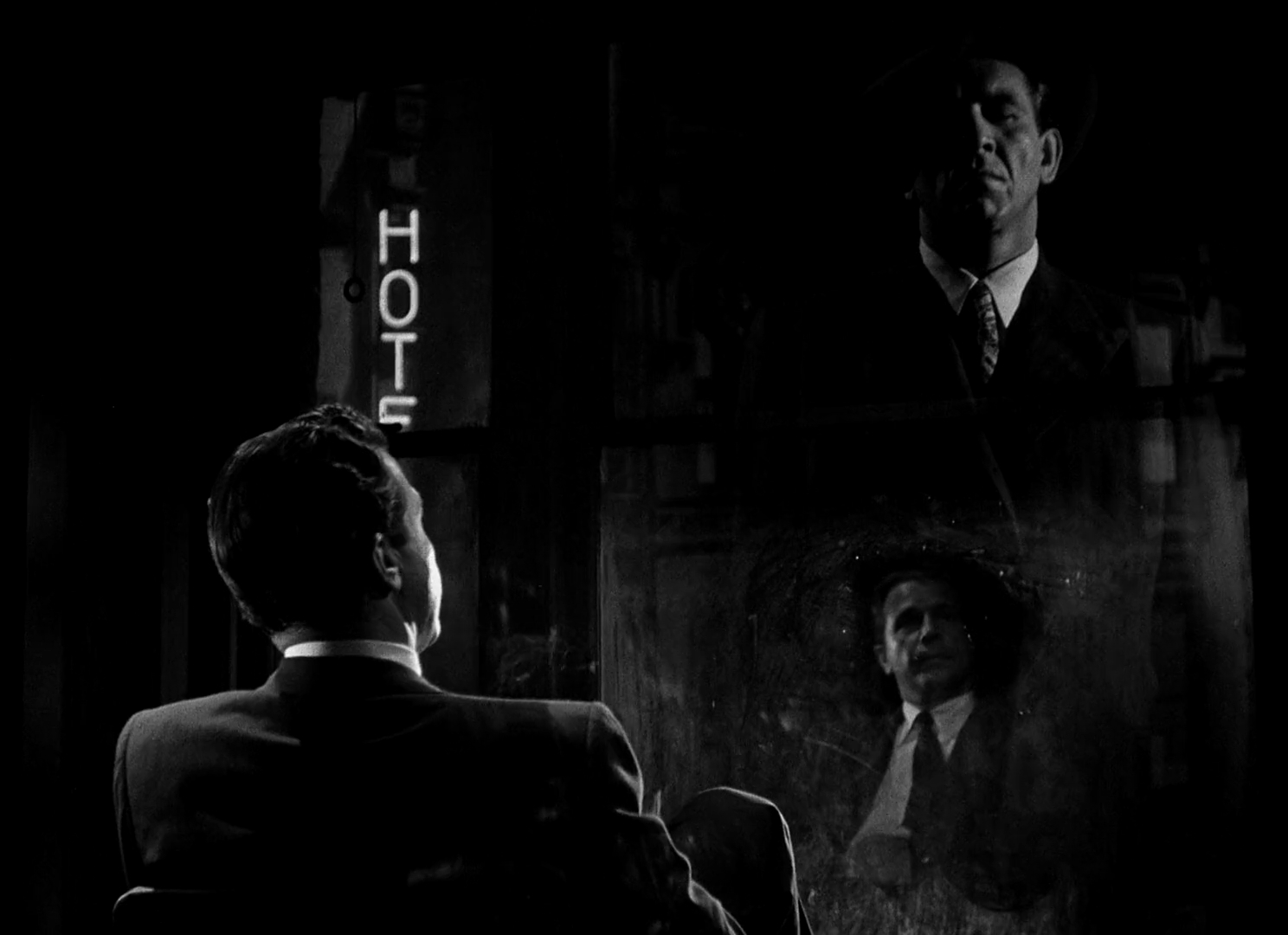
For Brad, this is definitely one of the best noirs of the year. Dick Powell was aging out as a tenor and wanted to escape the type-casting. He is great as Marlowe, playing it much lighter than Bogart – but he’s no Bogart. Claire Trevor is a great femme fatale, Otto Kruger a handsome substitute for Sidney Greenstreet, and Mike Mazurka the consummate psychotic goon. It’s not as good as Maltese Falcon or The Big Sleep, but it’s really good.
This was Sergio’s Number Two film. Chandler was the first author for grown-ups that he read, and he had a huge effect on Sergio’s literary evolution. Powell plays a Marlowe much more attuned to the book than Bogart does and is superb in the part. (Chandler had once stated that he wanted Cary Grant to play the role!) Sergio thinks this may be the best film adaptation of Chandler’s work of all time.
4. Brad played Phantom Lady. Stylishly directed from start to finish by Robert Siodmak and filmed by Woody Bredell (The Unsuspected) with great performances by the three leads, (even Franchot Tone gives a good performance!) Countless noirs deal with a man wrongfully accused of murder, and most of the time he escapes and tries to dodge the police as he searches for the real killer. Phantom Lady stands out because the man (Alan Curtis) remains in jail, and the focus shifts to the efforts of his loyal secretary, “Kansas” (Ella Raines) to free him. The whole jazz sequence with Elisha Cook, Jr. is a highlight. He is terrific here, and so is Thomas Gomez as the weary cop who realizes he has maneuvered an innocent man to the chair. This is top-notch, and Brad would have played it as his #3 if the draft hadn’t gotten away with them all!!
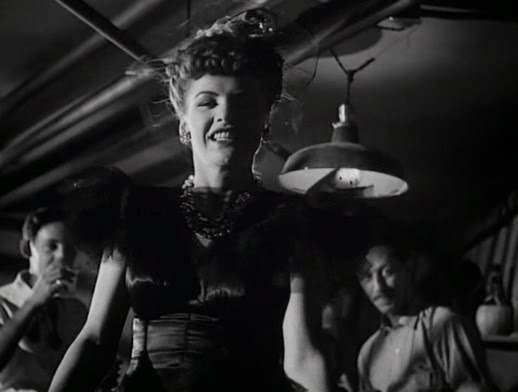
Sergio loved this (and had it as his #4.) The novel by Cornell Woolrich is more of a whodunnit. The film abandons this aspect, but all the great suspense sequences are lifted straight out of the book, making it perhaps the truest film adaptation of Woolrich’s work. The business with two women wearing the same hat is a bizarre Maguffin, but it comes straight out of the book. Plus, Bredell’s work is unsurpassed here, with a feast of images that tend to end up on the covers of books about film noir.
Nick had it in a similar spot. It was a first viewing for him and he got along with it pretty well, especially the middle chunk where Kansas goes undercover. It felt ahead of its time, and the production design is beautiful. Siodmak’s direction flirts with pre-Code imagery. A shout-out to Fay Helm, a Universal stalwart, who played the title role!
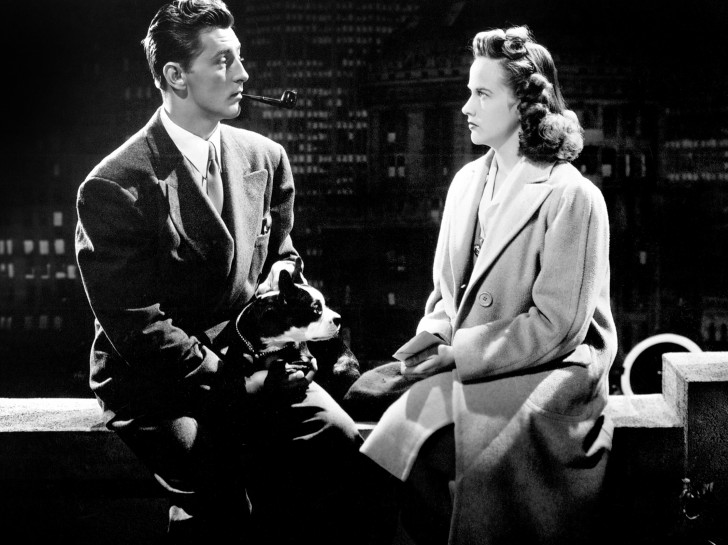
3. Faced with selecting the top three, Sergio recognized the nonsensical position he was in. All the best titles had been played, and now he was in a position of placing a title in 3rd place that had no business being there. For that reason, he played yet another William Castle film, When Strangers Marry. It was a sleeper hit for Monogram (the re-release title was Betrayed.) At the time of its release, Orson Welles liked it more than the films that no doubt will be our top two choices. It’s trying to do something a bit different with a fairly limited budget and it largely succeeds. It doesn’t deserve to be this high, but somehow Sergio – the biggest noir expert in the bunch – ended up getting trapped in the Draft Alley and had to play it here.
Nick hasn’t watched it (frankly, my friend, there’s no need to rush.)
For Brad, Kim Hunter has to be the stupidest heroine in all of noir, but she’s still cute as a button. He figured out the final twist right away, but that doesn’t mean it’s not an okay movie. Dean Jagger and Robert Mitchum are both good as the men in her life. And the fact that she didn’t marry the psychopath and turned down the “nice” guy (as in the play Cat and the Canary) at least makes her a better judge of character than we thought! Rhonda Fleming has a cameo at the end!
2. Nick played Laura, which the tagline calls “a strange and dangerous experiment in love and murder!” This was a re-watch, but Nick hadn’t seen it in a while. He latched onto it better this time than before and was surprised at how hypnotic it was. Gene Tierney is a fascinating screen presence. (We all need to watch Leave Her to Heaven soon!) There are a lot of sliding doors in the production history of this film, with other actors set to play the roles and then replaced. (George Sanders as Mark MacGregor, Laird Cregar as Waldo Lydecker.) Reuben Mamoulian was the original producer and envisioned a different sort of film, but director Otto Preminger fought him off – and won. Cardillo favorite Vincent Price is wonderful in an early role.
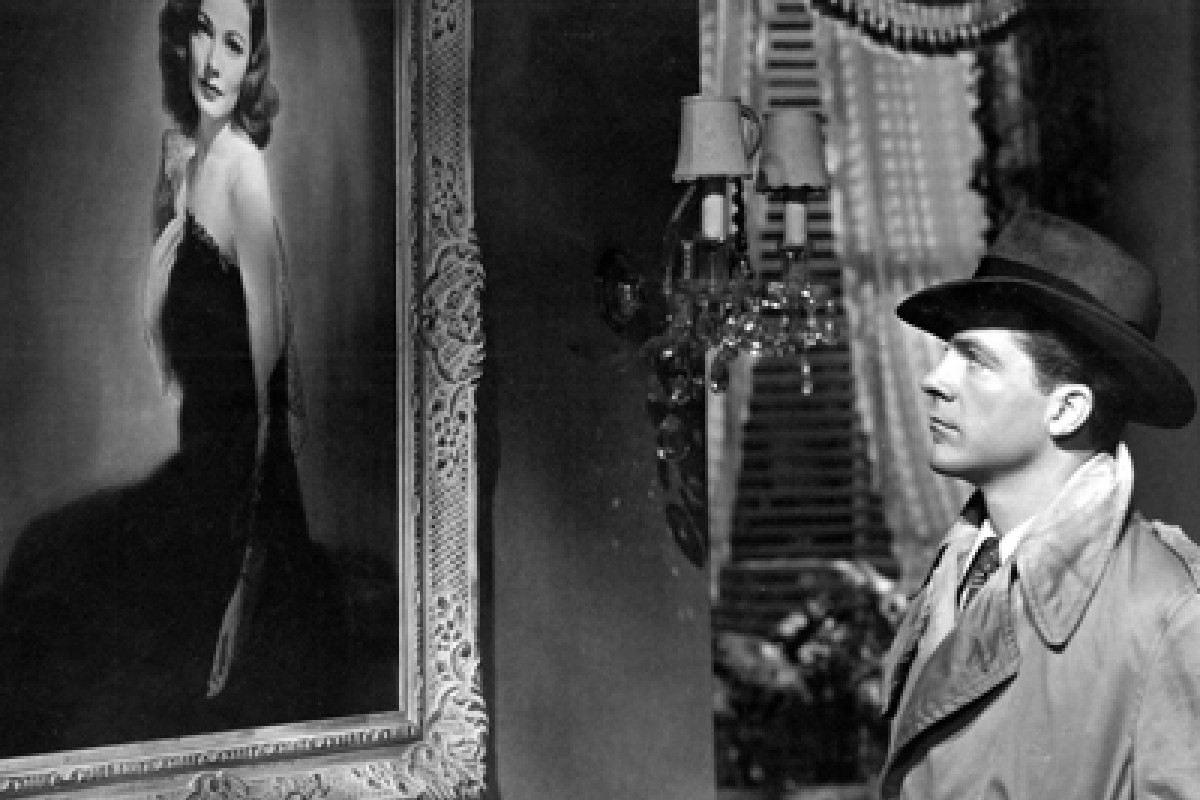
Brad thinks this one missed first place by a hair. It’s classy noir and the best murder mystery of the lot. The cast is uniformly excellent, but for good or ill, everyone’s performance pales beside Clifton Webb’s sexily sinister Waldo Lydecker. (The homoerotic undertones between Dana Andrew’s cop and Webb’s critic are undeniable.) Gene Tierney’s great, but her portrait is even greater as an embodiment of the unattainable. In fact, one of Brad’s favorite moments is the utter ordinariness of Tierney’s first entrance into the room where Mark is wallowing in obsessively lovelorn despair.
Sergio had this at #3 with Murder, My Sweet, which he feels a teensy-weensy bit more noirish than Laura, in the second spot. You have to wonder how much the replacement of Mamoulian affected the finished product, but Preminger (who never made another film like this) did a tremendous job shooting it. The production team was savvy at the allure of this storyline to the public: the audience becomes as fascinated with Laura as Mark does, even though we mostly see her in the minds of others!
1.Brad played Double Indemnity, the gold standard of 1944 film noir and one of the greatest noirs of all time. Barbara Stanwyck epitomizes the femme fatale in all her sociopathic glory: Even though Hollywood was handicapped by the Hays Code, you still feel the sexuality she oozed in pre-Code films like Baby Face. The friendship between Robinson and his protégé MacMurray is doomed by Walter’s lust, but it’s still a fine thing to behold. (That final moment when Robinson comforts the dying Walter always breaks Brad’s heart.) Billy Wilder’s direction and the cinematography of John Seitz, who would go on to do Lost Weekend and Sunset Boulevard with him, elevate noir to the classiest of film genres.
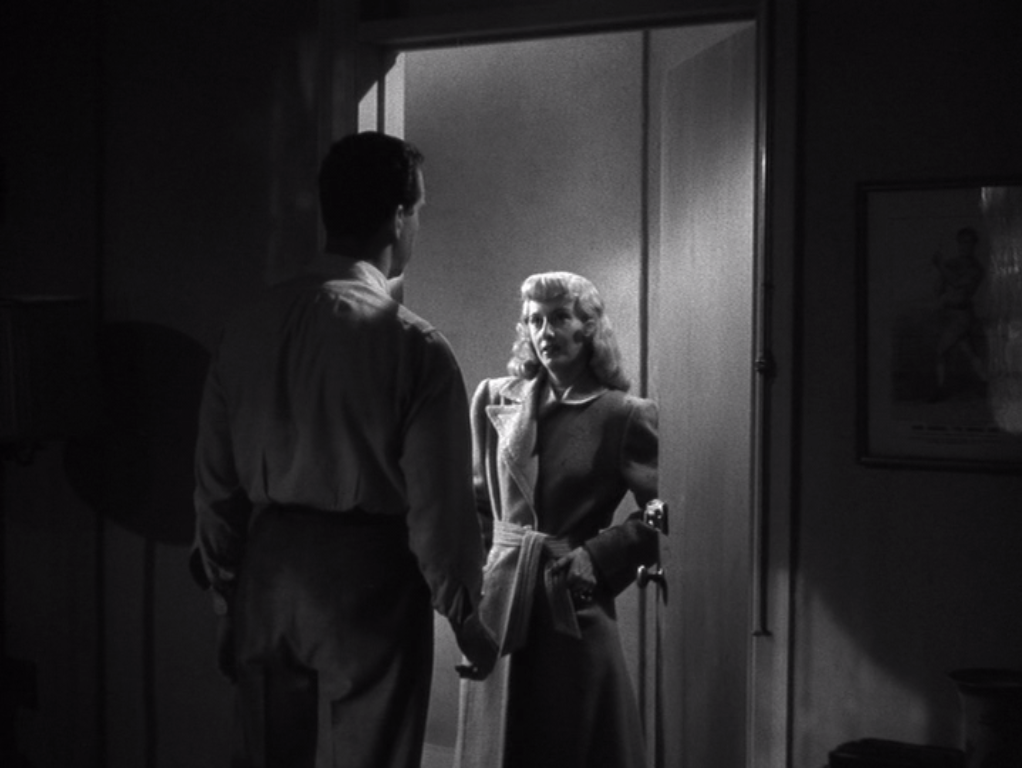
Nick doubled down on Brad’s opinion. This always felt like the “Number One to beat” on this list, based on the place it holds in the larger film history context. This is the film that’s parodied in Dead Men Don’t Wear Plaid, that the characters go to see in Manhattan Murder Mystery. Nick loves Stanwyck and MacMurray together, and he loves the crankiness of Robinson’s character. It certainly ranks at the top of Wilder’s filmography.
Sergio didn’t have to think about it: it was always the top film here. It’s the best of the “Malice Domestic” variant of noir(couple plan to bump off a spouse). He’s not crazy about Stanwyck’s wig, and he notices the door to Walter’s apartment opens the wrong way, but that’s what a film this good does to you – it makes you quibble.
We had as much fun putting this together over our four-hour-long conversation as we had watching the films. I will say this: for me, the past week has been fraught with suspense and a nightmarish sense of loss of control. Watching film noir – or reading and discussing classic mysteries – has always been the perfect respite from the sense of despair that life can often hand down to us. This world has just become a more uncertain place. But Nick, Sergio and I will continue to provide and share our own ways to distract.
May the list above provide you with a great selection of viewing choices. (If you want to whittle it down, the final list appears at the end.) Meanwhile, the Three Musketeers (does anyone have a suggestion of a better name??? PLEASE?!?) have come up with the subject matter of our next two drafts. In early 2025, we’re going to celebrate the centenary of the debut of one of the great detectives – Earl Derr Biggers’ Charlie Chan. I’m going to read and review one of the novels, and then Sergio, Nick and I will draft the Top Thirteen Charlie Chan Films out of the twenty-three films that appeared courtesy of 20th-Century Fox from 1931’s The Black Camel to 1942’s Castle in the Desert. (We collectively decided to ignore the output from Monogram Studios.)
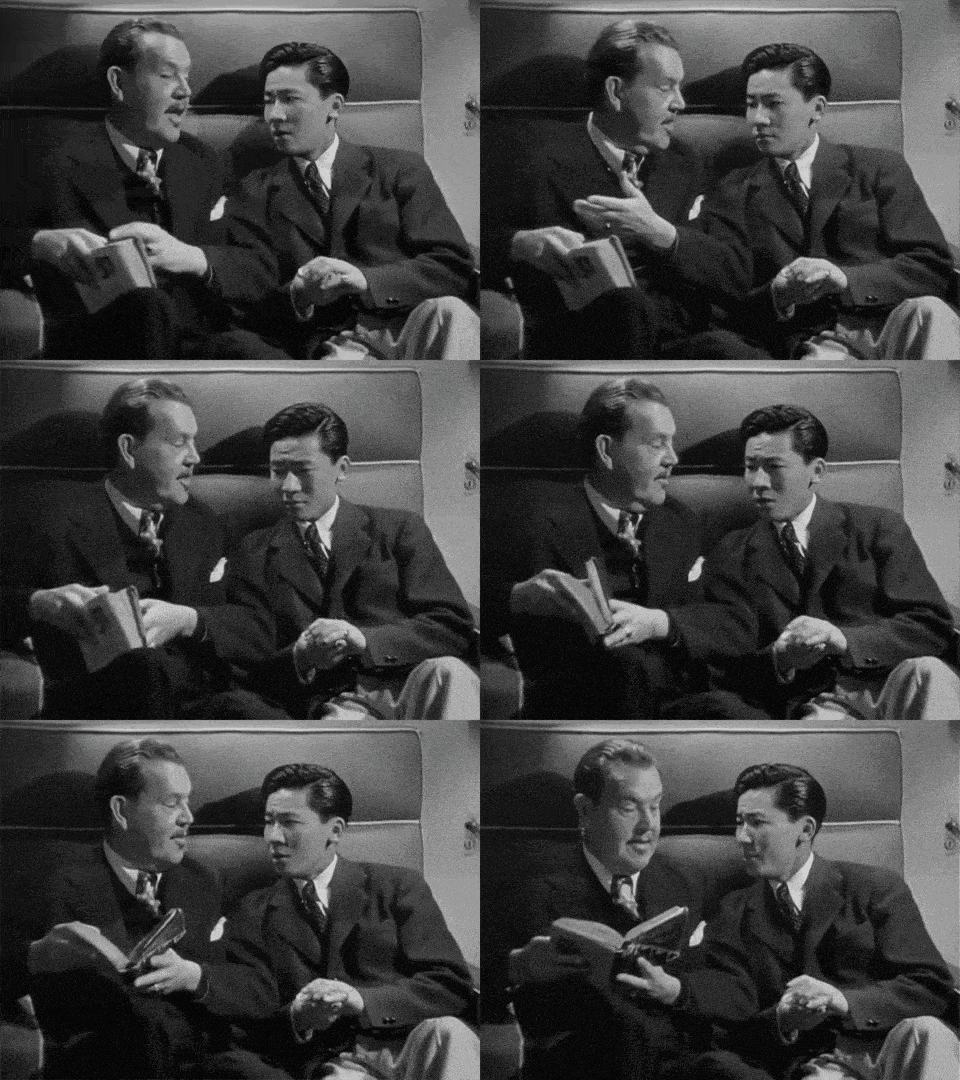
We hope you’ll keep joining us for these as they’re such fun to do, and I always love hearing how you might have drafted the lists! And now, a final look at our final list of the Top Thirteen Films Noirs of 1944:
- 13. Christmas Holiday
- 12. The Whistler
- 11. The Woman in the Window
- 10. The Suspect
- 9. Gaslight
- 8. The Lodger
- 7. The Mask of Dimitrios
- 6. The Ministry of Fear
- 5. Murder My Sweet
- 4. Phantom Lady
- 3. When Strangers Marry
- 2. Laura
And the #1 Film Noir of 1944 . . .
1.Double Indemnity
Sweet!


I LOVE the personal histories you have created for us Brad 🤣. And thanks for not rubbing it in about my having to place WHERE STRANGERS MARRY at number 3 – my lack of experience with drafts really made itself felt there 🙄. I had a superb time but shall keep my eye on the top 5 much more carefully in the future …
LikeLiked by 1 person
PS
I like The Three Musketeers but how’s about …
THE THREE DEGREES
THE THREE AMIGOS
THE THREE WISE MEN
THE THREE GODFATHERS
THE THREE CABALLEROS
THE THREE STOOGES
THE THREE TENORS
THE THREE LITTLE PIGS
THE THREE BLIND MICE
TOM, DICK AND HARRY
THE THREE DAYS OF THE CONDOR …
🤣🤣🤣
LikeLike
Just rented Three Days of the Condor from my local library! Ashamed to say I have never seen it…
This was great fun as always, gentlemen, and so glad that I have a few more films to add to the top of the to-watch list!
LikeLiked by 2 people
Very curious to know what you make of Condor …
LikeLike
Double Indemnity is certainly my favorite of the listed films, and by a substantial distance. As for most of the others, I feel some disappointment only compounded by the confusion of terminology. For me, the constant quest to define “film noir” only provides evidence that no satisfactory definition can or will ever be found. I realize that many would attribute that to the fascinating complexity of the issue, but I only see it as frustrating proof of a lost cause. Whether “film noir” is a genre, style, or thematic bond, it clearly represents different subjective Venn diagrams in the mind of each beholder.
And, despite the admitted “practical” value of such classifications (“oh, you liked Horse Feathers? You’ll probably like Duck Soup!”) the truth of the matter is that every artistic work is ultimately sui generis, just a bit more like something than it is like something else. And where it begins or ends being something is governed (and ultimately defeated) by the Sorites Paradox. For, unless we could ever agree on common ground in terms of definitions— which we obviously can’t— what’s the point of arguing whether a certain work fits the description? Double Indemnity is apparently close to a Sara Lee of “film noir” (nobody doesn’t like it… at least in this group), but who cares if it’s truly film noir if no one can agree on what that means, or what defines its boundaries?
Moreover, I personally find the plots of many of the films listed here boring, despite stylistic brilliance. The Lodger is a key example for me. Seldom has so much style been dedicated to such a nothing plot. Ooh, that man seems suspicious… maybe he’s the Ripper! Yes, he is! There’s the whole story in 12 words (and “ooh” and “yes” weren’t even really necessary). Several of these films go in one simple direction, and admittedly do it with a lot of style. But it’s often just a matter of stretching out suspense, with no surprises or ingenuity (one of the reasons I prefer the 1940 Gaslight to the 1944 is simply that it doesn’t draw out the one note plot as long). The Suspect is another one. Like Gaslight, The Lodger, Hangover Square, Love From a Stranger, and so many others, it’s a half-hour (at most) radio play stretched to nearly three times that length.
I happen to dig Murder My Sweet, whatever category it fits into. And like Brad, I like seeing E. G. Robinson playing a nice guy… but playing a nice guy with fire and humor. He’s amazing in Double Indemnity, which I consider only second to Tales of Manhattan as my favorite Robinson performance (the Robinson sequence of that film is one of the greatest 25 minutes in cinema history, IMO). But, though he’s always excellent, I find his characters in Woman in the Window and (especially) Scarlet Street as wimpy sclemiels whom I doubt I’d like to spend much time with (he’s a similar sad sap in The Night Has a Thousand Eyes, but the plot at least has a bit more to chew on). Lang was a helluva director, but I really don’t feel he ever had a great American script to work with (with the possible exception of Fury).
And the big trouble spot for me will always be Laura. Webb is great, as are Tierney, Andrews, Price, and Anderson. The portrait is gorgeous, the score is magnificent, the witticisms are wonderful, and Preminger’s direction is terrific.. But I just can’t understand how anyone can call that a good, let alone great, mystery. What mystery is there? As a detective story, it strikes me as more hollow than The Hollow. The problem is not that there are plot holes (though I think the biggest mystery is when, where, or in what context Lydecker wrote the opening narration, which I find much more puzzling than the “who heard him say ‘Rosebud’? question… which I CAN explain). It’s simply that, as far as I can see, there’s simply no there there. In 1944 alone, The Uninvited offers a much more interesting puzzle plot, and that’s not even a murder mystery or noir. Or it it?
The reason the Double Indemnity towers over the rest, IMO, is that not only does Wilder & Co. gives of suspense, wit, cynicism, and dazzling noir stylistics, but does so in the service of a script that also gives us cerebral ingenuity (“He broke his leg… why didn’t he file a claim?”) as well as surprises (wait a minute… what was Nino Zachetti doing visiting her?). Far too many so-called noirs strike me as style over substance, but film gives us plenty of both.
LikeLike
I think this oversimplification of The Lodger undoes the brilliance of that film. As Brad wrote, I have a deep relationship with the film so I may be keen to overlook any of its deficiencies, and, to a certain extent, the Hitchcock version has an edge in the suspense department since the narrative is predicated upon the unknowability of whether the lodger is a killer or not. In the Braham film, it is pretty clear that Slade is Jack the Ripper, but the suspense is like waiting for a bomb to go off. As Slade continues to unravel – leading to the brilliant moment in the theatre as he watches Oberon dance with a mixture of lust and hatred battling out across his face – we become more and more anxious for Oberon and the others. It’s a wonderfully suspenseful film and I’m so happy that we made the decision to include it in our list of eligible titles.
LikeLike
I think it’s a matter of the kinds of things that interest us and hold our attention. I agree about both the level of suspense and the quality of the suspense in that film. But it isn’t enough for me.
LikeLike
Scott, I think you’re going to find a certain amount of vagueness whenever you study a huge body of work. I watched 22 out of 23 films on the list, and the only one I feel sure is NOT a noir is The Suspect. It doesn’t look like a noir, and even though Laughton goes to prison in the end, he is always the master of his fate and seems pretty satisfied with the way his life has played out. And yet Sergio (and Wikipedia) say it’s a noir. I thought Experiment Perilous looked and felt more like a noir, but Wikipedia calls it a “period melodrama.” I didn’t enjoy it half as much as I did The Suspect.
Noir may not be the genre/style/thematic bond for you, and that’s okay. I’m told that Horse Feathers is a comedy, and I don’t understand that at all!! Each film we view may be sui generis, but so is each viewer. We’re never going to agree because I think you have more absolute standards than I do over what you see. You can easily write a response “proving” that Laura isn’t as good a mystery as Death on the Nile or The Last of Sheila or The Kennel Murder Case. I will never be convinced.
LikeLike
Brad, is this always an effort to rile me, or have you never read anything I’ve ever written? Suggesting that I have standards that are too absolute is like saying that Christopher Hitchens was too devout a Christian… that the Ritz Brothers were too somber… that Franklin Pangborn was too macho…. hell, that David Suchet was too canonically accurate in his portrayal of Poirot. The Sorites Paradox is the very essence of my view on such matters. If there is no universally-agreed upon definition to a classification— which is undeniably the case here— what is the point of arguing whether a given work qualifies? A person who maintains that noir is defined by a murderous femme fatale will allow Leave Her to Heaven but not The Third Man; someone who says it’s defined by black and white photography and urban corruption will allow for exactly the reverse.
I’d never argue that Laura is a true noir or isn’t one, because I consider having an understanding of what it means to be a film noir is a prerequisite for making such an argument, and it’s quite clear that I never will (and indeed that no one ever will). I can say that it’s objectively true that Double Indemnity is largely CONSIDERED a film noir, but that’s not the same as saying that it is objectively a film noir. It is merely acknowledging an objective truth regarding a consensus subjective opinion (a subjective opinion, I believe, based on an illogical belief in objective aesthetics). I believe it’s demonstrable that both more people and more film critics consider it a film noir than not— polls could do that beyond a margin of error— but that still doesn’t mean that there is an objective truth regarding its classification, or even that the classification of noir has any true meaning being the independently held subjective perceptions of it. And when I say that I think The Uninvited has a “better” mystery plot than Laura, it’s merely because it’s exhausting to write “in view of my values as to what is satisfying in a mystery” alongside each opinion when responding to someone whom I think should long ago have recognized that’s ALWAYS my meaning regarding matters of objective merit. Laura, Gaslight, The Suspect, The Lodger, etc… certainly don’t have objectively boring plots. There are no objectively boring plots. They just bore ME.
LikeLike
Brad, is this always an effort to rile me, or have you never read anything I’ve ever written? Suggesting that I have standards that are too absolute is like saying that Christopher Hitchens was too devout a Christian… that the Ritz Brothers were too somber… that Franklin Pangborn was too macho…. hell, that David Suchet was too canonically accurate in his portrayal of Poirot. The Sorites Paradox is the very essence of my view on such matters. If there is no universally-agreed upon definition to a classification— which is undeniably the case here— what is the point of arguing whether a given work qualifies? A person who maintains that noir is defined by a murderous femme fatale will allow Leave Her to Heaven but not The Third Man; someone who says it’s defined by black and white photography and urban corruption will allow for exactly the reverse.
I’d never argue that Laura is a true noir or isn’t one, because I consider having an understanding of what it means to be a film noir is a prerequisite for making such an argument, and it’s quite clear that I never will (and indeed that no one ever will). I can say that it’s objectively true that Double Indemnity is largely CONSIDERED a film noir, but that’s not the same as saying that it is objectively a film noir. It is merely acknowledging an objective truth regarding a consensus subjective opinion (a subjective opinion, I believe, based on an illogical belief in objective aesthetics). I believe it’s demonstrable that both more people and more film critics consider it a film noir than not— polls could do that beyond a margin of error— but that still doesn’t mean that there is an objective truth regarding its classification, or even that the classification of noir has any true meaning being the independently held subjective perceptions of it. And when I say that I think The Uninvited has a “better” mystery plot than Laura, it’s merely because it’s exhausting to write “in view of my values as to what is satisfying in a mystery” alongside each opinion when responding to someone whom I think should long ago have recognized that’s ALWAYS my meaning regarding matters of objective merit. Laura, Gaslight, The Suspect, The Lodger, etc… certainly don’t have objectively boring plots. There are no objectively boring plots. They just bore ME.
LikeLike
Brad, is this always an effort to rile me, or have you never read anything I’ve ever written? Suggesting that I have standards that are too absolute is like saying that Christopher Hitchens was too devout a Christian… that the Ritz Brothers were too somber… that Franklin Pangborn was too macho…. hell, that David Suchet was too canonically accurate in his portrayal of Poirot. The Sorites Paradox is the very essence of my view on such matters. If there is no universally-agreed upon definition to a classification— which is undeniably the case here— what is the point of arguing whether a given work qualifies? A person who maintains that noir is defined by a murderous femme fatale will allow Leave Her to Heaven but not The Third Man; someone who says it’s defined by black and white photography and urban corruption will allow for exactly the reverse.
I’d never argue that Laura is a true noir or isn’t one, because I consider having an understanding of what it means to be a film noir is a prerequisite for making such an argument, and it’s quite clear that I never will (and indeed that no one ever will). I can say that it’s objectively true that Double Indemnity is largely CONSIDERED a film noir, but that’s not the same as saying that it is objectively a film noir. It is merely acknowledging an objective truth regarding a consensus subjective opinion (a subjective opinion, I believe, based on an illogical belief in objective aesthetics). I believe it’s demonstrable that both more people and more film critics consider it a film noir than not— polls could do that beyond a margin of error— but that still doesn’t mean that there is an objective truth regarding its classification, or even that the classification of noir has any true meaning being the independently held subjective perceptions of it. And when I say that I think The Uninvited has a “better” mystery plot than Laura, it’s merely because it’s exhausting to write “in view of my values as to what is satisfying in a mystery” alongside each opinion when responding to someone whom I think should long ago have recognized that’s ALWAYS my meaning regarding matters of objective merit. Laura, Gaslight, The Suspect, The Lodger, etc… certainly don’t have objectively boring plots. There are no objectively boring plots. They just bore ME.
LikeLike
Brad, is this always an effort to rile me, or have you never read anything I’ve ever written? Suggesting that I have standards that are too absolute is like saying that Christopher Hitchens was too devout a Christian… that the Ritz Brothers were too somber… hell, that David Suchet was too canonically accurate in his portrayal of Poirot. The Sorites Paradox is the very essence of my view on such matters. If there is no universally-agreed upon definition to a classification— which is certainly the case here— what is the point of arguing whether a given work qualifies? A person who maintains that noir is defined by a murderous femme fatale will allow Leave Her to Heaven but not The Third Man; someone who says it’s defined by black and white photography and urban corruption will allow for exactly the reverse.
I’d never argue that Laura is a true noir or isn’t one, because I consider having an understanding of what it means to be a film noir is a prerequisite for making such an argument, and it’s quite clear that I never will (and indeed that no one ever will). I can say that it’s objectively true that Double Indemnity is largely CONSIDERED a film noir, but that’s not the same as saying that it is objectively a film noir. It is merely acknowledging an objective truth regarding a consensus subjective opinion (a subjective opinion, I believe, based on an illogical belief in objective aesthetics). I believe it’s demonstrable that both more people and more film critics consider it a film noir than not— polls could do that beyond a margin of error— but that still doesn’t mean that there is an objective truth regarding its classification, or even that the classification of noir has any true meaning being the independently held subjective perceptions of it. And when I say that I think The Uninvited has a “better” mystery plot than Laura, it’s merely because it’s exhausting to write “in view of my values as to what is satisfying in a mystery” alongside each opinion when responding to someone whom I think should long ago have recognized that’s ALWAYS my meaning regarding matters of objective merit. Laura, Gaslight, The Suspect, The Lodger, etc… certainly don’t have objectively boring plots. There are no objectively boring plots. They just bore ME.
LikeLike
Brad, is this always an effort to rile me, or have you never read anything I’ve ever written? Suggesting that I have standards that are too absolute is like saying that Christopher Hitchens was too devout a Christian… that the Ritz Brothers were too somber… hell, that David Suchet was too canonically accurate in his portrayal of Poirot. The Sorites Paradox is the very essence of my view on such matters. If there is no universally-agreed upon definition to a classification— which is certainly the case here— what is the point of arguing whether a given work qualifies? A person who maintains that noir is defined by a murderous femme fatale will allow Leave Her to Heaven but not The Third Man; someone who says it’s defined by black and white photography and urban corruption will allow for exactly the reverse.
I’d never argue that Laura is a true noir or isn’t one, because I consider having an understanding of what it means to be a film noir is a prerequisite for making such an argument, and it’s quite clear that I never will (and indeed that no one ever will). I can say that it’s objectively true that Double Indemnity is largely CONSIDERED a film noir, but that’s not the same as saying that it is objectively a film noir. It is merely acknowledging an objective truth regarding a consensus subjective opinion (a subjective opinion, I believe, based on an illogical belief in objective aesthetics). I believe it’s demonstrable that both more people and more film critics consider it a film noir than not— polls could do that beyond a margin of error— but that still doesn’t mean that there is an objective truth regarding its classification, or even that the classification of noir has any true meaning being the independently held subjective perceptions of it. And when I say that I think The Uninvited has a “better” mystery plot than Laura, it’s merely because it’s exhausting to write “in view of my values as to what is satisfying in a mystery” alongside each opinion when responding to someone whom I think should long ago have recognized that’s ALWAYS my meaning regarding matters of objective merit. Laura, Gaslight, The Suspect, The Lodger, etc… certainly don’t have objectively boring plots. There are no objectively boring plots. They just bore ME.
LikeLike
okay, I posted that once. Several minutes later checked and it was nowhere to be seen. I reposted it, and now it’s on there three times. That ain’t faulty operator error.
LikeLike
I don’t know what happened to your second comment, Scott – the one that I received three times in my e-mail. I know you didn’t mean harm. I know it’s just your opinion. I acknowledge that film noir sometimes feels like a broad term for a lot of different movies. I think it’s a lot about style, but even that can vary, often depending on the budget. I only know that most of the time I know a noir when I see it. It doesn’t always have a femme fatale or even an unhappy ending, but it’s a noir all the same. And yet, other fans might disagree with me about individual films. Here it’s not a matter of what we like, it’s about what we see and how we came to noir in the first place. It might be because no one set out to invent a new genre. It all came together from the right juxtaposition of plot, character and image. Right now, I can’t explain it any better. The “vagueness” of the definition doesn’t bother me at all, although I don’t believe it’s as vague as you seem to think.
LikeLike
Pingback: MYSTERY MOVIE TALK: Three Announcements! | Ah Sweet Mystery!
Pingback: NOIRVEMBER ’55, PART I | Ah Sweet Mystery!
Pingback: THE “GREATEST FILM SLEUTHS” DRAFT | Ah Sweet Mystery!