Recently, my friend Kemper Donovan hosted that Dynamic Duo (and fellow friends), Dr. Mark Aldridge and Gray Robert Brown, on his podcast All About Agatha in order to compare rankings of the 1960’s Christie novels that have consumed Gray and Mark over the past year on their delightful podcast, The Swinging Christies. Actually, the guys have been loose enough to include eleven titles that span the years 1959 to 1970. Their conversation reminded me of those halcyon days of . . . well, of only six weeks ago when I was lounging about the seaside town of Torquay, England and chatting up a storm with these guys and many other wonderful fans and scholars about our favorite mystery author.
Kemper provided the base rankings gleaned from the final list that he and his late creative partner Catherine Brobeck had created together. (Catherine tragically passed away soon after their discussion of Hallowe’en Party.) The rankings below are pulled from the greater list, and so I’m including where they fit in the bigger picture:
ALL ABOUT AGATHA’S LIST
- Endless Night (4th place overall)
- The Pale Horse (24th)
- Cat Among the Pigeons (29th)
- A Caribbean Mystery (34th)
- The Mirror Crack’d from Side to Side (39th)
- Hallowe’en Party (51st)
- By the Pricking of My Thumbs (52nd)
- At Bertram’s Hotel (53rd)
- Third Girl (55th)
- The Clocks (56th)
- Passenger to Frankfurt (65th)
My fascination with the discussion that ensued lay primarily with the differences between Mark’s and Gray’s and Kemper’s lists. And – of course – my own list! The 60’s are not my favorite decade for Christie by a long shot, and while Swinging Christies has done a remarkable job making the argument for Agatha’s relevance, even as she wrote about this transformative decade between the ages of 69 and 80, they haven’t necessarily changed my mind about any of the titles under discussion.
Here are Gray’s and Mark’s lists for comparison:

GRAY’S LIST
- Endless Night
- The Mirror Crack’d from Side to Side
- The Clocks
- By the Pricking of My Thumbs
- Hallowe’en Party
- A Caribbean Mystery
- The Pale Horse
- At Bertram’s Hotel
- Cat Among the Pigeons
- Third Girl
- Passenger to Frankfurt
MARK’S LIST
- Endless Night
- Hallowe’en Party
- The Mirror Crack’d from Side to Side
- At Bertram’s Hotel
- A Caribbean Mystery
- By the Pricking of My Thumbs
- The Pale Horse
- Third Girl
- Cat Among the Pigeons
- The Clocks
- Passenger to Frankfurt
And here is the list that author and fellow Agath-ologist Sophie Hannah posted on Twitter to add to the complexity of personal choice:

SOPHIE’S LIST
- The Pale Horse
- Endless Night
- By the Pricking of My Thumbs
- The Mirror Crack’d from Side to Side
- Cat Among the Pigeons
- Hallowe’en Party
- Third Girl
- A Caribbean Mystery
- The Clocks
- At Bertram’s Hotel
- Passenger to Frankfurt
There is only one title on which everyone agrees about ranking, and that is the one on the very bottom. But even if Passenger to Frankfurt is everyone’s choice for last place, both in Mark and Gray’s podcast and in the in-depth analysis that Sophie did with Kemper when she guest-hosted on his show to rank this novel shows that the book, problematic or not, is a fascinating work. I wish it was a title that I felt I could rush to re-read, but even though I am the only person here who read that novel the year it came out (I received it from my aunt as the 1970 “Christie for Christmas”), I still remember how it went down and I keep resisting a revisit!
I am only a humble blogger, but this recent exercise inspired me to examine these eleven novels and present my own rankings. Let’s see how they compare, from last to first place . . .
Number 11 – Passenger to Frankfurt

No surprise there. I remember enjoying the opening and not much else. The “Young Siegfried” theme seemed a retread from They Came to Baghdad, which happens to be one of my least favorite of the thrillers, and the mystery elements, mostly consisting of hidden traitors and other enemies, felt tired. Perhaps some inducement to re-read this one in the future will change my mind . . . but somehow I doubt it.
Number 10 – At Bertram’s Hotel

This may be a matter of filtering a novel through an American viewpoint. (Mark ranks this one much higher and speaks feelingly for both its atmosphere and its connection to a real life train robbery.) What do I like about this one? I like the hotel itself: I love the opening scene where everyone is at tea and the hotel is described. And I love Miss Marple in this setting because the best thing about Miss Marple in the 60’s is her reflective nature. Watching her wander around London, shopping and remembering her early days, is lovely. And while the central mystery is a bit of a mess – it’s hard to relax and accept what we’re given and not bemoan the fact that the book lacks a puzzle plot and throws a murder in at the very end – there’s something powerful in Miss Marple’s “deduction” that one cannot recapture the past and indeed should not attempt to do so.
Number 9 – Third Girl
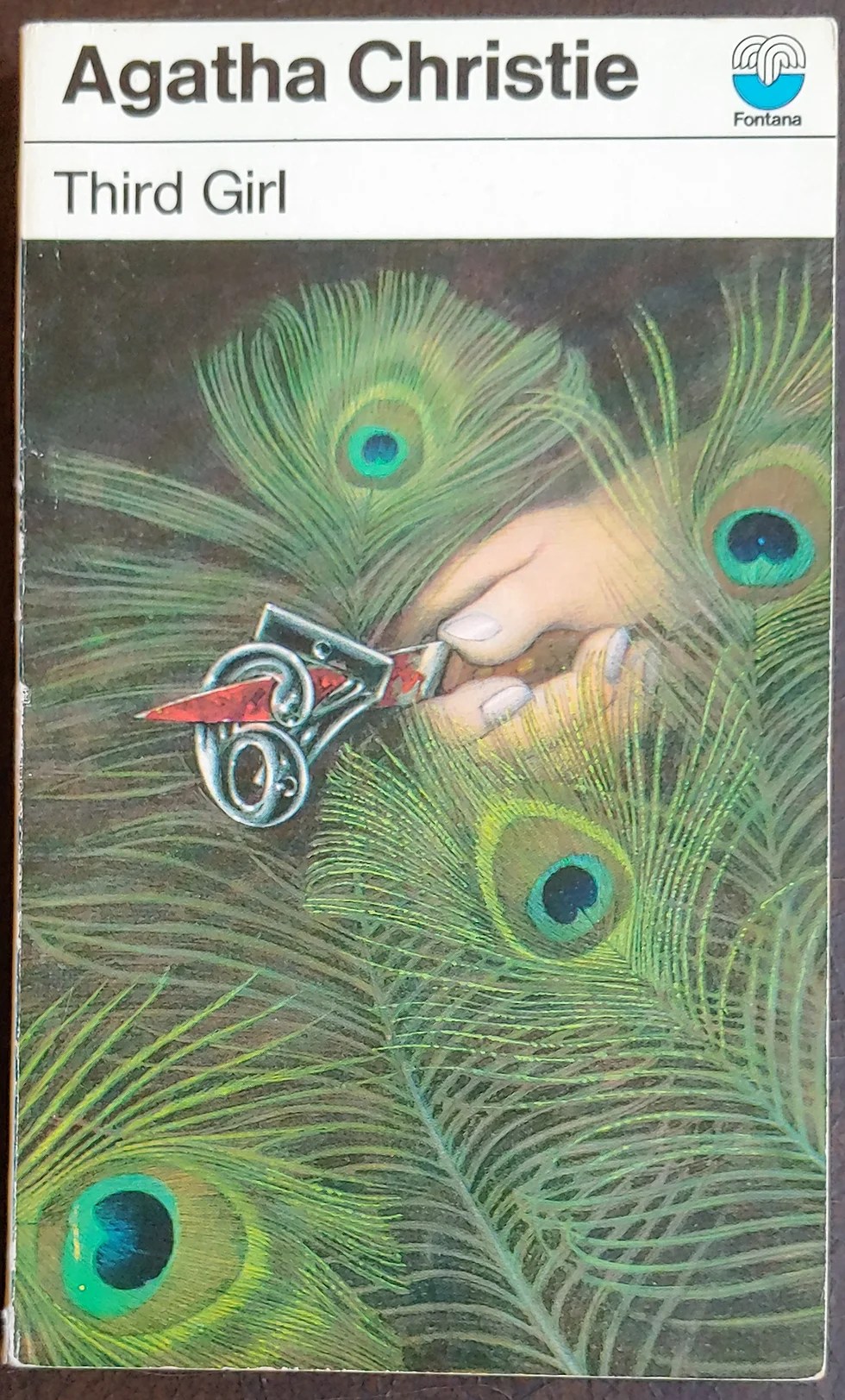
Throughout her career, Christie often employed the tropes of The Imposter and The Use of Disguise. Sometimes, she is incredibly clever about it, and other times she tends to overdo. (At some point next year, I have to face this fact with a re-read of Murder in Mesopotamia.) Third Girl employs both of these tropes; in fact, Christie re-aligns a number of tried and true plot ideas and sets them in the milieu of drug-addled youths. It doesn’t really work for me. I don’t care how many Purple Hearts or dream bombs a young woman takes – I find it too hard to believe that she won’t recognize that someone she lives with is a member of her own family in disguise. What raises this one in my esteem is the prominent presence of Ariadne Oliver, who is my favorite Watson in the Christie canon and one of my favorite characters overall.
Number 8 – The Clocks

I like the opening. I like Miss Pebmarsh and the juxtaposition of the spy plot. I like Colin Lamb, and Mrs. Hemmings and her cats, and the little girl in her sickbed who becomes an ace witness. I like poor Edna Brent. But it drives me crazy that here is another mystery with a set of clocks that have no real significance to the plot. Most of the neighbors are boring characters who barely appear and scarcely matter to the plot. And while I love the idea of Hercule Poirot writing a treatise on mystery authors, it’s a crying shame that most of the ones he discusses are fictional. At the age of 70, it would have been very cool to hear Christie’s reflections through her sleuth about some of the great mystery authors who were her contemporaries and friends.
Number 7 – Hallowe’en Party

The opening to this one is strong. We get Christie’s take on the holiday, Mrs. Oliver on Page One, and a charming depiction of a village community getting ready for a party. The murder of Joyce Reynolds is utterly shocking, something we haven’t seen the author do before; it’s a nastiness that continues right up to the very end. Oh, and the central clue to the murderer’s identity is pure, wonderful Christie. The rest, however, feels like a rehash of old bits stirred together with some unsatisfactory dull new stuff. The various past mysteries that Poirot and Mrs. Oliver explore in search of a murder victim feel like shadows of crimes we’ve come across in Christie before and are not particularly interesting here. It’s hard to pinpoint an actual list of suspects once the party disperses, and it’s really hard to buy the partnership that forms the basis of this murder plot.
Number Six – By the Pricking of My Thumbs
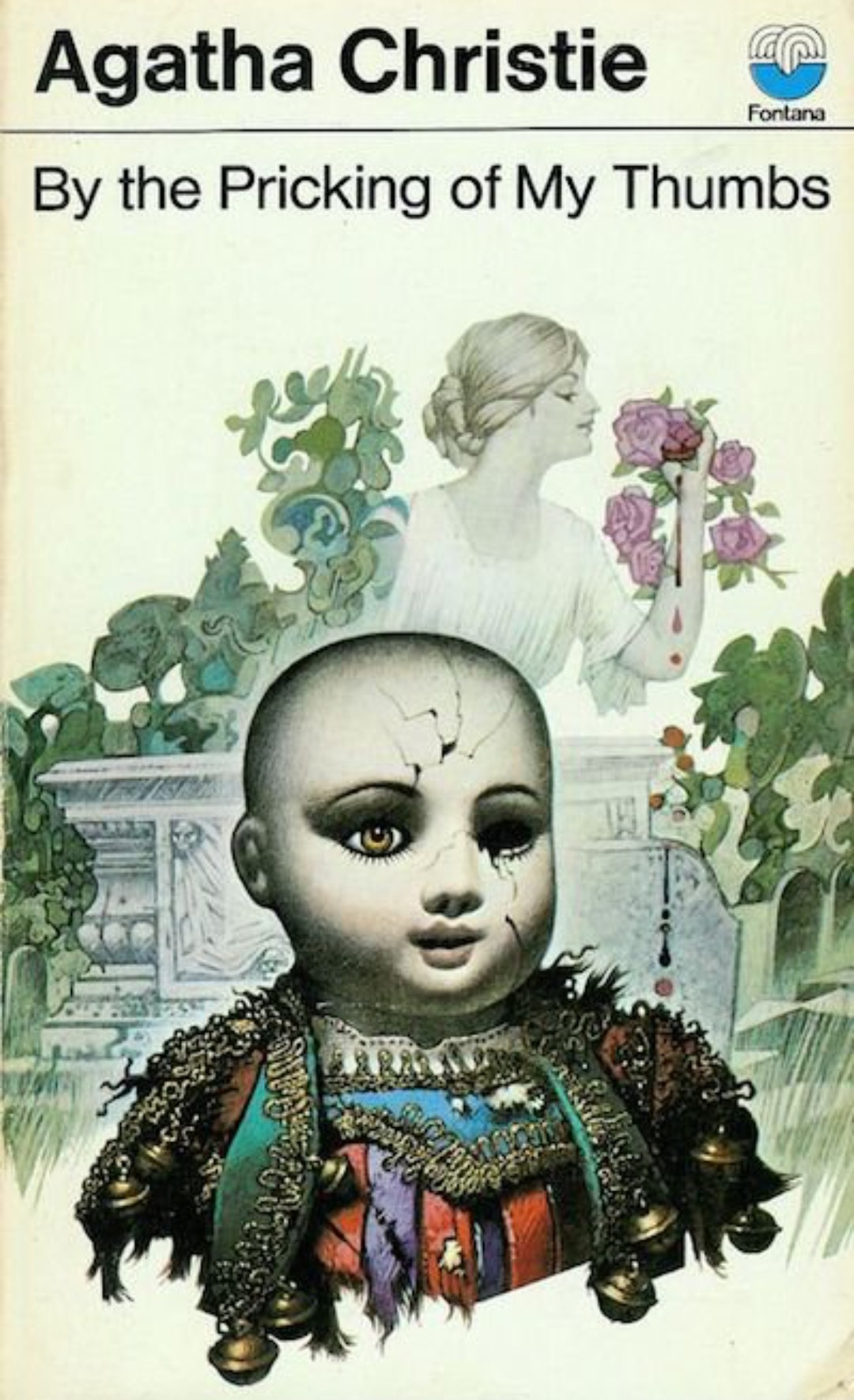
Another glorious beginning, for two reasons. For those of us with a fondness for Tommy and Tuppence Beresford, this is a reunion twenty-seven years in the making! And since this constitutes Christie’s only attempt at literature in real time, it’s always interesting to see how the Beresfords are doing, how they’ve aged and under what circumstances. The other reason is a hook that Christie has been practicing with since the 1940’s (although we don’t know that yet): the parable of the old lady and the haunted fireplace that appears in Sleeping Murder and The Pale Horse as a disturbing fragment at last finds fruition in a visit to see Tommy’s aunt at an old folk’s home. The juxtaposition of the homely and the horrible is pure Christie and quite fun. And I’ll double down on that: Agatha has found a humdinger of an ending to slap onto this one. True, it echoes a late 30’s title that has similar gifts – and drawbacks – to this one, but the final confrontation between Tuppence and a killer here stands on its own. But, oh, how that middle section drags for me. It seems like Christie has lost control of the narrative and/or let her creative juices meander, along with Tuppence, all over the English countryside. As all too often happens in the 60’s, we’re dealing not with a murder mystery but with a “thriller with a twist” – admittedly not unusual for the Beresfords – and while the final twist is a good one indeed, it hardly feels earned.
Number Five – Endless Night
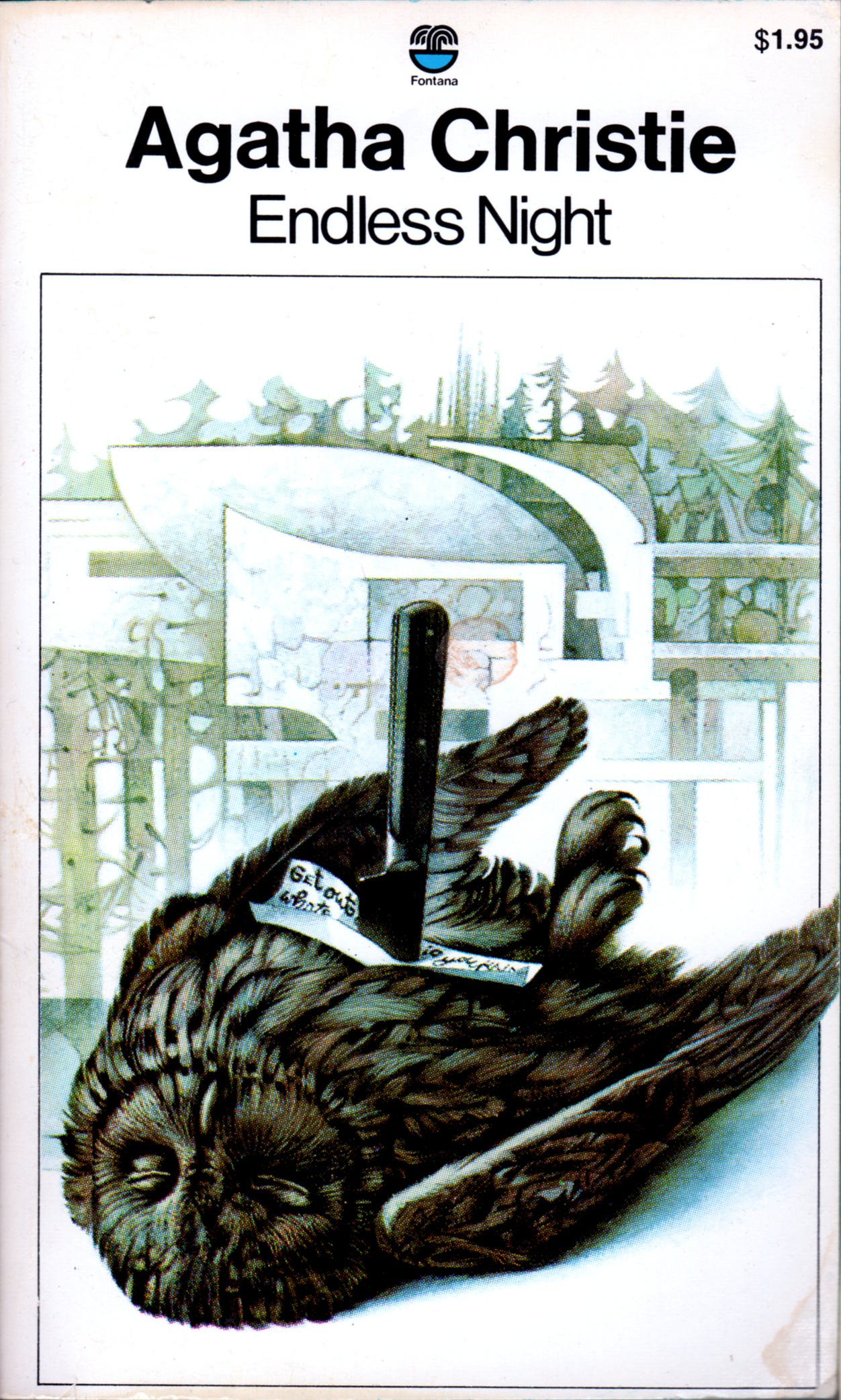
I’m sure this will be the most controversial placement on my list. I freely admit that it’s wholly subjective: there is no doubt that EN is an extraordinary achievement for a 75-year-old author; nestled as it is in the bibliography between the lesser titles listed above, it feels even more impressive. Even if I don’t like spending time in his company, Michael Rogers is one of Christie’s most original characters and is beautifully conceived. And Agatha has done a brilliant job of combining tried and true plotlines, dating all the way back to The Mysterious Affair at Styles, into something wholly original and fresh. What can I tell you – I just don’t love this book. Part of it might stem from unfair prejudices stemming from my first read: I wanted another whodunnit, and I didn’t get one. And as Dr. John Curran points out, if you try reading this as a whodunnit, you’re going to be frustrated. I have tried to recalibrate my mindset with two subsequent re-reads, and it simply hasn’t worked. So hurl your invectives at me, people! There are four titles on this list that I simply like more.
Number Four – The Mirror Crack’d from Side to Side

At the heart of this lies a twofold narrative of such power that I can confidently place it in the top half of the list despite my reservations with it. The story of Marina Gregg is a true tragedy, made all the more obvious when you compare it to the story of Gene Tierney or the Dutch royal family that I believe inspired it. And the story of Miss Marple, grappling with increased old age (I reckon she’s about 107 here!) and with the overwhelming changes to her beloved village landscape makes for a gripping read. Add to this the presence of Dolly Bantry, Dermot Craddock, and Doctor Haydock, and the domestic war between Cherry Baker and Miss Knight, and there is a wealth of treasure to be found here. The problem is that you can’t use the “thriller” appellation to excuse this book’s faults. It is definitely a whodunnit, and there are simply no viable alternatives to the truth. The only substantive red herring, Ella Zielinsky, is killed, and the other possibilities – the Hollywood crowd, the abandoned adoptees, and the surprise presence of an early husband – range from the poorly developed to the ridiculous. As every history of this book includes the concerns of the publishers that the ending glaringly obvious, why couldn’t Christie have given us a better suspect list? Other than that, it’s a powerful little book.
Number Three – A Caribbean Mystery
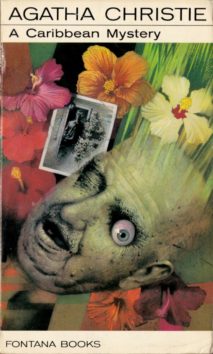
I can’t remember the faintly derogatory term that Mark and Gray used to describe this one on All About Agatha, but the sense was that it’s a bit of an old-fashioned throwback in a decade where Christie was swinging everywhere else. And there was some dissing of the central clue which, excuse me, is one of those magnificent moments that, ahem, stare you right in the face from the beginning and yet you never see it. This was my first Miss Marple novel, and thus I acknowledge the emotional power it has over me. But compare it to the others on the list: it is the only Marple that is a true whodunnit, with viable suspects and a twist ending. It handles the “past crimes” element far more sharply than Hallowe’en Party. And it puts us in Miss Marple’s head from Page One, which is a delightful place to be. I like to place this book side by side with Evil Under the Sun and compare how Poirot and Aunt Jane handle crime while on vacation at the beach. Finally, ACM sets up the final one-two punch of Nemesis, the true ending to the Miss Marple saga, and that’s no mean feat!
Number Two – Cat Among the Pigeons
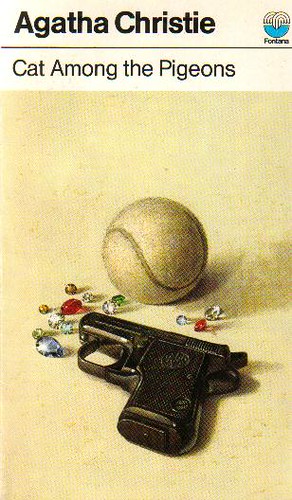
Gray and Mark placed this one at Number Nine, which, if played backwards, is “Turn me on, dead man!” and which, at any rate, is ridiculous. Cat has an abundance of riches: the academic setting, a twisty double-plot, and the wonderful Julia Upjohn who, in a different world, would headline a series of juvenile mysteries. Christie wrote a dozen books that feature a masked super-spy; this is my favorite of them all. Even Dr. Mark Aldridge, the academic, has to admit that Christie nailed the faculty of Meadowbank School, and they provide an excellent suspect list. I have re-read every Christie novel except two (sorry Chimneys, sorry Sir Stafford Nye), most of them multiple times, and there are a handful that I anticipate with immense pleasure every time I pick them up. This is one of those books, and I am proud to place it in my top two.
Number One – The Pale Horse

For this one, seventy-year-old Agatha Christie reached back to remember a truly monstrous individual from her early days in a hospital dispensary. From there, she created what I consider to be her finest thriller, a book that feels like a celebration of her past feats and something that is truly modern. The weaving together of black magic and modern science, the inclusion of past characters from across the spectrum of Poirot and Marple in a non-series novel, and the depiction of both modern city and village life are simply stunning. Some people don’t like Mark Easterbrook – maybe they’ve relied on the butt-ugly adaptation by Sarah Phelps – but I enjoy his romantic travails and the way he gets sucked into this terrifying case. I still remember the first time I read this and got to the part where Ginger Corrigan has volunteered to be the bait. Through a series of phone calls, we chart the romantic progress between Ginger and Mark as the ominous first signs of the “black magic” working on her begin to manifest. The suspense is just gorgeous, and one has to be sneakily grateful to the horrid little pharmacist with a God complex who inspired Christie to write this fifty years later.
So there you have it – my own rankings of the 1960’s Christie novels. Perhaps someday I’ll try this exercise with eachdecade, but I have a feeling that task would be extraordinarily difficult. As always, your own opinions of how these eleven novels should be ranked would be most welcome.
One more time . . .
BRAD’S LIST
- The Pale Horse
- Cat Among the Pigeons
- A Caribbean Mystery
- The Mirror Crack’d from Side to Side
- Endless Night
- By the Pricking of My Thumbs
- Hallowe’en Party
- The Clocks
- Third Girl
- At Bertram’s Hotel
- Passenger to Frankfurt
 Ah Sweet Mystery!
Spoilers in this post:
My list would probably be pretty close to yours, though I would definitely switch Bertram’s Hotel with Third Girl. My reread of Third Girl this year wasn’t rewarding at all (meaning I was bored from start to finish). And while I (and with a lot of good will) maybe could believe Norma not recognizing what’s going on due to the context, what about Claudia Reece-Holland? Doesn’t she know the family as well?
I would probably also switch Caribbean Mystery and Endless Night, but then this would be pretty much my list.
And I totally agree that Cat Among the Pigeons is a gem.
LikeLiked by 3 people
Good point! I can’t believe Claudia wouldn’t sense that something was off with Frances – or recognize the woman behind all that make-up whenever she met Mary Restarick! Just about impossible to swallow!
LikeLiked by 1 person
Everyone reads Agatha differently. My 86-year-old mother recently read Passenger to Frankfurt and she adored it! She’s also a naturalized German citizen, coming to the U.S. when she met my dad, an airman at the nearby airbase, marrying him, having me, and arriving at Dover Air Force Base in 1961. Perhaps her German background makes the difference.
I dunno.
Each of the 60’s books has their charms. They’re all so different!
A few thoughts.
At Bertram’s Hotel: Elvira Blake is utterly selfish. Her mother, Bess Sedgwick — something I didn’t realize then but thanks to Caitlin Davies Queens of the Underworld, now I do, is probably based on a real, smuggling pirate queen and debutant, Noreen Harbord!
The Pale Horse: Agatha handled the witches very well. It’s clear which one is in it for the money, which one has her faith shattered, and which one has real power and quietly disappears back into the village where she’ll be called upon as needed by knowledgeable residents. It’s also a terrific updating of one of her classic tropes: if it looks like supernatural means were employed to kill people, look closer and discover mundane reality.
Cat Among the Pigeons: events that happen far away can directly affect the most unlikely place. No place is isolated from other places, even if you can’t see the connection.
By the Pricking of My Thumbs: multiple child murder and the passage of time that destroys us all.
Endless Night: a book you can only read once. Wistful, elegiac, creepy, not a mystery at all, and then in the last two chapters, Agatha burns the house down around you. It’s also an interesting reworking of the triangle at the heart of Death on the Nile.
The Mirror Crack’d from Side to Side: this novel gained tremendous power for me after I had children.
LikeLiked by 3 people
I have a strange fascination with the Christie novels of the ’60s. As I have written elsewhere, she was the only Crime Queen who, by that time, was a) still writing or b) still writing the traditional puzzle mysteries of the Golden Age. (Marsh’s novels by this period read more character focused dramas with murder and Allingham’s later Campion books are more akin to psychological thrillers than straight whodunnits. The decade also saw the emergence of P.D. James and Ruth Rendell both of whom, while indebted to the past, were writing books of a very different kind.) As such, these works take on an “out of time” element even though Christie is very much rooting them in their present context.
Though I haven’t gotten around to all of them, Pale Horse and Endless Night very much top the list. Pale Horse has a way of breaking into my top 10/15 Christies as was demonstrated on our Draft so many moons ago. Mirror Crack’d would be a close third with Hallowe’en Party and By the Pricking of My Thumbs almost tied for fourth place as books where the concepts are so strong but the execution doesn’t stick the landing.
LikeLiked by 4 people
I love, love, love Cat Among the Pigeons, although that may (at least in part) be related to the fact that Harriet Walter played Honoria Bulstrode in the adaptation, and I think she is absolutely wonderful.
LikeLiked by 2 people
I loved, loved, loved Death on the Nile long before I saw Angela Lansbury play Salome Otterbourne. Now it’s almost impossible to re-read without thinking of Lansbury’s hound dog face and slushy voice saying, “Misssster Porridge!”
LikeLiked by 1 person
Great fun Brad! I have to say, CAT does little for me and I much prefer ENDLESS (you really are a bit too too mean about it – it works fine as a whodunit). But glad to see THUMBS treated honourably – I am, as you know, a great fan of that one.
LikeLiked by 2 people
Well, there’s no accounting for taste, Sergio. Incidentally, I watched JOYRIDE: a lot of it felt tediously 80’s to me, but the ending was a nice twist. I couldn’t figure out the secret of the subtitles for the Italian films; I didn’t see any and didn’t know how to make them appear.
LikeLiked by 1 person
I’ll email you some screenshots 👍
LikeLiked by 1 person
Just click on CC at the bottom of the screen ! The subtitles will start appearing
LikeLiked by 1 person
OK, I had to join the fun. Full disclosure, there was ZERO methodology that went into this list. The rankings are from the heart, from my most recent rereads.
LikeLiked by 1 person
I thought Endless Night was trash.
My list:
Don’t hate me, jmo
LikeLike
To date, I don’t think a single PALE HORSE adaptation has included Ariadne Oliver, which is such a crime. And most don’t get Osborne (a fascinating character to me) right either.
I also actually like the set up with Father Gorman, a figure not unlike those in several Marples (or Miss Marple himself), and even how Agatha divvied up the three witches in the final analysis (one is basically a sensationlist, one *has* at least some degree of second sight/gifts that’s genuine, and one is the brains schemer manipulating the others).
Plus the whole Soho/Bohemian culture picture felt less weird than the teddy boys in THIRD GIRL. Plus as you noted, basically being a kind of Christieverse crossover book.
LikeLiked by 1 person
I will always consider Pale Horse a much better book than Third Girl, and I’ve always enjoyed its depiction of the youth scene more as well. In fairness, the “generation gap”
– a volatile social experience – was hardly in effect in 1961, so the relationships between old and young characters are more positive. And, yes! If they can jam Miss Marple into the story, why on earth can nobody stick Mrs. Oliver where she belongs?!?
LikeLiked by 1 person
I get why they omit the Calthrops and the Despards (they’re fun for book readers but not really involved in the events), but Mrs. Oliver really lives up to her first name (I forget where, possibly the BEDSIDE BATHTUB ARMCHAIR COMPANION, I first read an essay which noted that like Ariadne in the Greek myths, she doesn’t solve the case but provides the crucial thread, as well as just being a joy in every scene.)
I think we get the most concentrated glimpse of her actual writing process in PALE HORSE. And Mark Easterbrook is a better developed outsider protagonist than many of his counterparts (Luke Fitzwilliam, I’m looking at you).
Side note: I’m not a big fan of the movie version of THE MIRROR CRACK’D but I was reminded of one of the highlights for me, not the big name stars, but character actor Richard Pearson as Dr. Haydock (those scenes, they nailed!) I agree that he and Dolly Bantry are among the highlights of the book. (I tend to picture Miss Knight as an Edna May Oliver type, without Edna’s sense of humor).
(Also, I don’t know how or why I typed “Miss Marple himself” in my first comment. I’m tired.)
LikeLike