After blogging for ten years on classic crime – with a focus on Agatha Christie, mind you – I could still forgive myself for not having written closely about . . . The Secret of Chimneys . . . or Hickory Dickory Dock . . . or Elephants Can Remember (although the last two will be rectified before the year is out.) But Ackroyd? The book is is in my Top Ten, for God’s sake (it’s number nine)! It sparked one of those precious discussions with my pals Moira Redmond and Jim Noy on Jim’s podcast In GAD We Trust. I have plenty to say on the subject. Let’s leave it at this: time got away from me, but now it’s time to give the book it’s due.

And yet, what is there left to say? The Murder of Roger Ackroyd has been analyzed to death. So much so that it became the focal point of a screed against classic detective fiction (that would be Edmund Wilson’s famous essay “Who Cares Who Killed Roger Ackroyd?”). And then there was the French psychoanalyst Pierre Bayard who in his misplaced analysis Who Killed Roger Ackroyd? tried to be so clever about the artifice of Christie and her kind by “proving” that Hercule Poirot – and, by extension, his creator – had gotten the solution wrong. Enough is enough, right? And yet . . . here I am, being a Christie completist, promising you no new insights or surprises. I’m just getting my opinion on the record. So here we go . . .
For a retired policeman, Hercule Poirot lived quite an exciting life between 1920 and 1926. No sooner had he hit England’s shores than he found himself setting the police straight on a country house murder, armed with his little grey cells and his very own Watson. By 1923, Poirot and Hastings were playing “Holmes Sweet Holmes,” both in a series of short adventures chronicled in the Sketch (later collected as Poirot Investigates) and during a trip to France, where Poirot beat out the Sûreté just as he had Scotland Yard while Hastings got engaged to an acrobat and moved to the Argentine.
In 1924, our heroes reunited to do nothing more than save the world, after which Hastings returned to his Cinderella, and Poirot made this fateful announcement: “The great case of my life is over. Anything else will seem tame after this. No, I shall retire. Possibly, I shall grow vegetable marrows! I might even marry and arrange myself!”
And that is exactly what Poirot did! Well . . . not the marriage part, although I would have loved to see Poirot tackle a series of cases with the voluptuous Vera Russakoff by his side. In 1926, fans treated The Murder of Roger Ackroyd as the next chapter in the life of their beloved detective. Yes, he had “retired,” but the title suggested this would be more of a busman’s holiday, thank God. And that observant, slightly crusty man who narrated the story must be the replacement Watson; hell, he was even a doctor!

It’s unfortunate that Ackroyd is one of the few novels that did not receive Christie’s notebook treatment. Instead, the author herself describes the book’s genesis in her Autobiography:
“I got hold of a good formula there – and I owe it in part to my brother-in-law, James, who some years previously had said somewhat fretfully as he put down a detective story, ‘Almost everybody turns out to be a criminal nowadays in detective stories – even the detective. What I would like to see is a Watson who turned out to be the criminal.’ It was a remarkably original thought, and I mold over it lengthily. Then, as it happened, very much, the same idea was also suggested to me by Lord Louis Mountbatten, as he then was, who wrote to suggest that a story should be narrated in the first person by someone who later turned out to be the murderer.”
Such becoming modesty, but let’s give Christie her due. She had already toyed with this idea in an earlier thriller, where eight of the thirty-three chapters came from the villain’s diary. (Hadn’t Louis read this?!?) We must also be fair: nefarious narrators and wicked Watsona were not new ideas. (SPOILER ALERT: Read Anton Chekhov’s only novel, The Shooting Party from 1884, or Sven Elvestad’s 1909 masterpiece, The Iron Chariot, to find hidden killers in the first person. And Anthony Berkeley’s debut crime novel, The Layton Court Mystery, which may have been written simultaneously with Christie’s book but was published a year earlier in 1925 grapples with a similar idea. END SPOILERS)
Maybe Agatha got some help here, but when you consider Lord Mountbatten’s convoluted idea concerning a friend of Hastings named Genny who writes letters to the Captain in the Argentine describing a murder in which Genny and Poirot were involved, you can’t help but be grateful to Christie for the marvelous filter she had when sifting all the raw ideas people must have proffered to her. First, she created her own plot, albeit inspired by the unsolved Charles Bravo murder case, for which Christie had her own theories as to the culprit. Then she turned her novel into a two-sided game: a well-crafted puzzle plot of a whodunnit, complete with clues for Poirot to sniff out, and a brilliantly inverted narrative – brilliant because we don’t discover the inversion until the very end.

Being as young as I was when I first read Ackroyd, I ignored the second part and concentrated on the puzzle plot. I adhered to what I would later come to discover was author Robert Barnard’s opinion, in his appreciation of Christie, A Talent to Deceive. He thought the solution “sensational” but the rest of the book – its plot and characters – pretty conventional. He thought there were better Christies.
I, too, have more favorite novels, including those that I enjoy better (The Hollow, A Murder Is Announced, After the Funeral) and those which I believe are better (Death on the Nile, And Then There Were None, Five Little Pigs). But when one grows up and gets smarter and re-reads this book with the solution in mind, and then analyzes how brilliantly Christie wove that solution into the thread of her narrative, beginning on page one – it’s impossible to adhere to Barnard’s dismissal of Ackroyd as a “conventional” mystery.
* * * * *
The Hook
“Mrs. Ferrars died on the night of the 16th-17th September – a Thursday. I was sent for at eight o’clock on the morning of Friday the 17th. There was nothing to be done. She had been dead some hours . . . To tell the truth, I was considerably upset and worried. I am not going to pretend that at that moment I foresaw the events of the next few weeks. I emphatically did not do so. But my instinct told me that there were stirring times ahead.”
Thus begins a brand-new chapter in the life of Hercule Poirot, village sleuth and vegetable expert! What a delightful way to change up things, to keep Poirot’s story fresh and original. The first four chapters are spent introducing us to the setting for these new adventures and, most important, to Poirot’s neighbor, Dr. James Sheppard.

Their introduction to each other is definitely a “meet cute” story: Poirot accidentally chucks a rejected marrow nearly into Sheppard’s head! The doctor is both wary of, and a bit snobbish towards, this effete foreigner, whom rumor suggests is a retired hairdresser. But Poirot disarms him, both in his reminiscence over his much-missed friend Hastings and in the fact that Poirot also knows Roger Ackroyd, one of Sheppard’s closest acquaintances.
The narrative both charms and disarms us into accepting Dr. Sheppard as the “new” Boswell/Hastings. And he’s such a different sort of character – older, keenly observant, a bit sour on life. He is sure to be an excellent source of information as to the comings and goings – and scandals – of the residents of Kings Abbot, particularly as they concern Roger Ackroyd and the inhabitants of Fernly Grange. Who knows what future adventures await this pair as Poirot learns that detectives cannot retire or go on vacation without murder rearing its head? And by the end of Chapter Four, murder has done just that!
The first section ends on a powerful note: Ackroyd has summoned his best friend Dr. Sheppard over to his house for dinner in order to confide in him the truth about his lover, the late Mrs. Ferrars. It is as Caroline Sheppard had suspected: Mrs. Ferrars had killed her abusive husband. Ackroyd reveals that somebody had figured out the truth and was blackmailing Mrs. Ferrars, which led that lady to commit suicide.
I’ll admit it’s awfully convenient that at this moment a letter from the poor woman arrives with everything Roger needs to know about what happened and who’s responsible. And while we might quibble about his decision to withhold the blackmailer’s name from his friend, that is Roger’s right. And it’s Christie’s way of ramping up the suspense before the murder. Considering that this was only her sixth book and third detective story, Agatha is writing like a pro here!
Score: 10/10
The Closed Circle: Who, What, When, Where, Why?
Who?
“The motto of the mongoose family, so Mr. Kipling tells us, is: ‘Go and find out.’ If Caroline ever adopts a crest, I should certainly suggest a mongoose rampant.”
If you want evidence of Barnard’s accusation of “conventionality,” look no further than the cast of characters. They conform to the strictures of countless country house whodunnits of this type. There are the family members – stepson, sister-in-law, niece – all of whom need money and/or independence. And then there are the servants: housekeeper, butler, parlor maid, secretary – all of them with secrets. It’s a perfectly serviceable closed circle of suspects; Christie even throws in a handsome big-game hunter for good measure. They’re better than Barnard might have remembered them – especially the stepson, Ralph Paton, who makes for an attractive main suspect/patsy. Still, they are conventional suspects, all of them given to conventionally prowling about the house and grounds, spilling false clues out of their pockets!

Roger Ackroyd isn’t in the novel for very long, and even Dr. Sheppard considers him a conventional sort of person: “He reminds one of the red-faced sportsman, who always appeared early in the first act of an old-fashioned musical comedy, the setting being the village green. They usually sang a song about going up to London. Nowadays we have revues, and the country squire has died out of musical fashion.”
Ackroyd is well-off, having made a small fortune in the manufacture of wagon wheels, but he is generous with both his funds and his time regarding village concerns. He is no villain, but murder victims in Christie are often nice people who exercise too much control over the people they love. Roger offers them his own vision of a happy future, and his wrong-headed beliefs inspire, not gratitude, but motive. The suspects don’t blend together as badly here as in, say, Three-Act Tragedy, but they represent “types” rather than real people. (I challenge you to rattle off three facts about Geoffrey Raymond right here, right now!)
Christie’s murderers are often the best-developed characters in her books, a fact which may give the canny reader a heads up as the solution approaches. While that is certainly the case here, it is mitigated by the structure of the novel and the placement of the killer in the scheme of things, making it less likely to give the game away. Dr. Sheppard is one of Christie’s finest creations, and not just because of his unique placement in the canon as a narrator/murderer. How can we not relish Sheppard’s opinions of his town and the people that surround him, his relationship to his sister and then to Poirot. It’s true that much of what Sheppard tells us – or at least the way he tells us things – amounts to clues in the end. But the ride to that final confrontation with Poirot is highly enjoyable, making the Doctor’s unmasking a powerful moment even when you re-read the book and know exactly what’s going to happen.
Christie even gives us a huge bonus with Caroline Sheppard, the doctor’s sister and a character even more interesting than the killer, in the person of his sister. If she is indeed an inspiration for Jane Marple, she is by no means a copy. Caroline is sharp as a tack, but she is also a figure of fun, as the quote about the mongoose crest above suggests. We laugh at her lack of tact, the network of spies she has amongst the servant class of Kings Abbot, and the way she can turn an afternoon playing Mah Jongg into a one-act comedy.
In retrospect, we may enjoy her for her snooping, her staunch pronouncements, and the way she undercuts her baby brother, but Caroline is also an instrument of her brother’s downfall. Without realizing it, she plays against James at every turn: defending the Doctor’s sacrificial lamb, Ralph Paton, giving away her brother’s secrets to Poirot, pointing out James’ weaknesses. She may possess some of the deductive intuition of Miss Marple, but Caroline is more imperious and less clear-eyed. Her blind spot is her inability (or unwillingness?) to realize the dark path her brother has taken. Christie’s gift to us is that she never makes us bear witness to Caroline’s loss.
What?
“The letter had been brought in at twenty minutes to nine. It was just on ten minutes to nine when I left him, the letter still unread. I hesitated with my hand on the door handle, looking back and wondering if there was anything I had left undone. I could think of nothing. With a shake of the head, I passed out and closed the door behind me.”
Roger Ackroyd is found stabbed to death in his study before he can reveal the name of Mrs. Ferrars’ blackmailer. Given what Dr. Sheppard tells us, it seems evident that somebody overheard his conversation with his host and decided to shut Ackroyd’s mouth forever. Either it was someone in the house, passing by the study door, or it was someone walking down the road who stopped to eavesdrop at the study window.

But, wait! As the investigation begins, we start to learn that many people had their own reasons for wanting Roger dead. Ralph wants the freedom to set up a life with the parlor maid, Ursula Bourne. Mrs. Cecil Ackroyd wants her daughter’s marriage to Ralph to be a marriage of fortune. But Flora wants to disobey Uncle Roger’s wishes and marry Major Blunt. The housekeeper has a secret. The butler also has a secret. Maybe Ackroyd’s death has nothing to do with Mrs. Ferrars at all!
The story is perfectly solid and – damn you, Robert Barnard! – conventional. It’s my chief problem with the book: the road to one of Christie’s best endings is a series of searches for clues and interviews with suspects. The reason I love the book a lot more now that this surprise is behind me is the joy of reading the interactions between the Three Investigators, Poirot, Sheppard, and Caroline. Isn’t that odd? Knowing the solution makes this book better for me! That is probably true for every one of my Top Ten Christies – except Murder on the Orient Express, which I like less (and sometimes consider bumping for Cards on the Table or The A.B.C. Murders.)
When and where?
“Our village, Kings Abbot, is, I imagine, very much like any other village . . . Able-bodied men are apt to leave the place early in life, but we are rich in unmarried ladies and retired military officers. Our hobbies and recreations can be summed up in the one word,’ gossip.’”
If my memory doesn’t deceive me, Kings Abbot is the first distinct village in the canon. Just as Styles gives us a grand taste of country life, Ackroyd supplies, if not a wealth of salient physical details, then certainly a strong dramatic sense of what it must have been like to reside in a small village, with two houses of importance (belonging to the Ferrars and the Ackroyds), “a large railway station, a small post office, and two rival ‘General Stores.’” Christie was never long on description, but Kings Abbot feels lived in, and there’s an argument to be made that if Hercule Poirot hadn’t had the poor sense to move in next door to a murderer, then we might never have come across the next – and even better – village, St. Mary Mead.
Score: 8/10
The Solution and How He Gets There (10 points)
In the discussion I had with Moira and Jim about this novel, I made the flippant comment that, like The Mysterious Affair at Styles, where people dropped thirty clues all around Mrs. Inglethorpe’s bedroom, the wealth of objects and information in and around Fernly Park is staggering! I prefer all the narrative clues Dr. Sheppard drops while playing his own game, but since obviously Poirot didn’t get to read the manuscript, he must rely on physical clues, character clues and time discrepancies to get the job done.

Christie is assured enough in her understanding of her readers’ psychology that she can wield her clues openly and frequently. Thus, we are given a double set of clues, some for Poirot and others for our eyes only. Only we know how much Sheppard worries and frets about the activities around him. Only we read those now famous passages about Sheppard parting with Roger or being left alone with the body: “I did what little had to be done. I was careful not to disturb the position of the body, and not to handle the dagger at all. No object was to be attained by moving it.” We might understand why the Doctor didn’t tell Poirot about his second meeting with Ralph Paton . . . but why on earth didn’t he tell us?!?
Piece by piece, Poirot evolves a portrait of the murderer (“ . . . a very ordinary man. A man with no idea of murder in his heart. There is in him somewhere a strain of weakness deep down.”) and matches Sheppard to the description. Who would be most likely to know the true cause of Mr. Ferrars’ death? Who came into money recently through “a legacy?” who had the mechanical knowledge needed to manipulate the dictaphone? For a long time Sheppard’s seemingly perfect alibi plays havoc with Poirot’s legitimate concerns, like why it took Sheppard ten minutes to walk from the study to the gates when it usually takes five.
Ultimately, Poirot examines the stilted nature of the words Roger was overheard to speak, as if he was dictating a letter, and realizes how much of Sheppard’s testimony – such as that of the mysterious phone call that dragged him out of the house – cannot be corroborated. In a fascinating discussion between the two men in Chapter 13, Poirot gives a little lecture to the Doctor on preparing oneself for the possibility that a witness could be lying. And then it gets personal, first by wondering if Sheppard’s statement about leaving Fernly Park at 8:50 might be a lie, and then by doubling down:
“’At nine o’clock you run into a man – and here we come to what we will call the Romance of the Mysterious Stranger – just outside the park gates. How do I know that that is so?’
“’I told you so,’ I began again, but Poirot interrupted me with a gesture of impatience.
“’Ah! But it is that you are a little stupid tonight, my friend. You know that it is so – but how am I to know?’”
This is so audacious: Christie is calling our attention to the time discrepancy here, plus she is showing us that Poirot takes nothing on faith, not even the words of the narrator, whom we readers have been trained by experience to trust. We would do well to heed Poirot’s advice: read more carefully and don’t take anything on faith!
Score: 10/10
The Poirot Factor
“I shall retire. Possibly, I shall grow vegetable marrows! I might even marry and arrange myself.’”
I repeat this quote from the end of The Big Four because, like most of that novel, I don’t really believe it. Maybe it comes from my perspective of having read the entire Poirot canon many times, but I know that he is a cosmopolitan who hates getting his patent leather shoes dirty, requires his rooms, his eggs, his life to be square and the same size. What local chicken is going to provide that for him? Who is going to attend to him like George did? Where is the symmetrically arranged abode? The gourmet restaurants? In short – I don’t for a moment buy into Poirot retiring to Kings Abbot. It’s simply not in his nature.
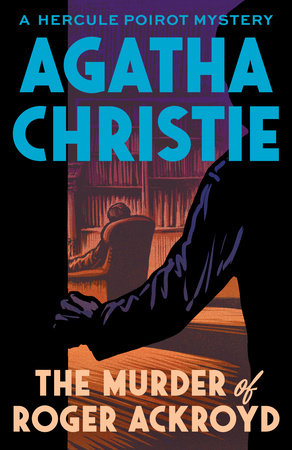
However . . . putting that objection aside, Poirot is perfection here. I love how he is not only not offended by everyone thinking he’s a retired hairdresser, he encourages it in order to create the privacy he seeks. I love his affection: he misses Hastings so much that one has to ask whether he has given up detecting, not so much because after you save the world what else is there to do, but because he needs a companion to reflect the brilliant shine of his little gray cells. Poirot transfers these feelings quickly to Sheppard (“You must have indeed been sent from the good God to replace my friend Hastings.”), which goes such a long way toward our acceptance of Sheppard as a good man that once their relationship begins to change – a fact to which the Doctor himself calls attention – we attribute this to any manner of reasons but the true one.
In our first read of the novel, we see Poirot the detective at full flourish. Upon re-reading, we are witness to such a cat-and-mouse game as would put Columbo to shame. The moments that Sheppard chronicles of Poirot leaving the doctor out of his confidence (Chapter 14) or sending him on a wild goose chase in order to interview his sister (Ch. 17) take on new significance. So does Poirot’s open insistence on not taking Sheppard at his word without corroborative evidence, or the clever moment when he agrees that Sheppard doesn’t know where Ralph Paton is – something that seems to clear the doctor at first read but becomes much cleverer when we learn that Poirot has moved Ralph from where the doctor stashed him!
This may not be the Poirot we come to know in the 1930’s and beyond, but after all this is only the third of his adventures (fourth, if you count The Big Four as having come out earlier in magazine form), and this is my favorite version of him in the 1920’s. He is evolving – as a man, as a detective, and as an adversary!
Score: 10/10
The Wow Factor
In 1929, Father Ronald Knox gave unto the world his Decalogue, the Ten Commandments of writing detective fiction. The very first rule? “The criminal must be someone mentioned in the early part of the story, but must not be anyone whose thoughts the reader has been allowed to follow.” In explaining this rule, Knox feels it necessary to allude to “some remarkable performances by Mrs. Christie.”

Agatha didn’t invent the trick, but she did it as well or better than anyone else. What’s more, Ackroyd, more than most of the canon, demands re-reading as an inverted mystery. We then see how ingeniously Dr. Sheppard paints a true picture of himself and how, through him, Christie manipulates the reader into falsely interpreting the meaning behind his worries and doubts, his secretive protection of Ralph, the moments he allows to remain off the page (those precious ten minutes in Roger’s study, the appointment he “keeps” after receiving the faked telephone call). The brilliance of Dr. Sheppard is that, while he intended to write a chronicle of one of Poirot’s great failures (which makes absolutely no sense, so don’t think about it too hard!), he plays fair with the reader on both the authorial level (revealing his mistakes and the clues that tell against him, along with the red herrings) and the personal.
Let me share one of my favorite examples of this. To the reader, it seems that Dr. Sheppard has a special fondness for Ralph Paton. And so, when Roger Ackroyd tells him that Mrs. Ferrars had been blackmailed, a disquieting picture forms in the Doctor’s mind:
“Suddenly before my eyes, there, arose the picture of Ralph Paton, and Mrs. Ferrars side by side. Their heads so close together. I felt a momentary throb of anxiety. Supposing – oh! But surely that was impossible. I remembered the frankness of Ralph’s greeting that very afternoon. Absurd!”
Sheppard is being quite frank about his feelings here, and we, of course, misinterpret them. Is handsome, charming Ralph the blackmailer?! Only at the end do we realize the true cause of Sheppard’s anxiety: could Mrs. Ferrars have spilled the blackmailer’s name to Ralph? How absurd – considering Ralph’s open greeting to him later that day! And yet Sheppard’s growing doubts are eating him up. He’s like Raskolnikov from Crime and Punishment, only hidden. It’s Christie at her best!
Perhaps the most important point, albeit one left unsaid in the book, is that this must be the case that sends Poirot out of retirement and directly back to London! This is the best news yet!
Score: 10/10
FINAL SCORE FOR THE MURDER OF ROGER ACKROYD: 48/50
THE POIROT PROJECT RANKINGS SO FAR . . .
- The Murder of Roger Ackroyd (48 points)
- The A.B.C. Murders (46 points)
- Three-Act Tragedy (42 points)
- Cards on the Table (36 points)
- Death in the Clouds (35 points)
- One, Two, Buckle My Shoe (34 points)
- Dead Man’s Folly (28 points)
- The Mystery of the Blue Train (26 points)
- The Big Four (21 points)
Next time . . .

The fates have decided that our next read includes a very different sort of narrator . . . and one of the most problematic books in the canon! See you next month!
 Ah Sweet Mystery!
Pingback: MY AGATHA CHRISTIE INDEX | Ah Sweet Mystery!
Being close to 80, I can never decide whether the first time I read Roger Ackroyd gave away the mystery in the sentence stating: “ The letter had been brought in at twenty minutes to nine. It was just on ten minutes to nine when I left him, the letter still unread. I hesitated with my hand on the door handle, looking back and wondering if there was anything I had left undone. I could think of nothing. With a shake of the head, I passed out and closed the door behind me. ”
Perhaps it seems so obvious now because of all the Christies and other detective books I’ve read. But I do wish I could go back and read it again for the first time, to find out!
LikeLiked by 1 person
The fact of the matter is that if I found Aladdin’s magic lamp and was granted three wishes, I would ask for a killer bod, a scrumptious cottage in England, and the ability to forget the endings of all my Christies so that I could read them again. Wealth untold, indeed!
LikeLiked by 1 person
Regarding the supporting characters in this book: While they are certainly types and also far from the quality of several characters in later Christie’s (particularly from the second half of the 1930s to the first half of the 1950s), I also think that they are pretty fine. It’s IMO easily her best cast of the 1920s novels, even if we exclude the Sheppards.
Flora Ackroyd is neither a fiesty heroine nor a damsel in distress but a relatively well rounded characters with several vices and virtues. And while the domestic staff are certain types, Ursula Bourne, Miss Russell and even Parker are more layered than the dim-witted and chatty housemaids from some of the later Christie novels. The first two are also quite sympathetically written.
Of course we learn later that Ursula is really from a “different class” and therefore worthy enough to marry the young heir. This diminishes her characterisation a bit. But she’s still an intelligent and calm young woman, who has to work as a housemaid to earn her livings, which is what we barely see in a Christie novel.
LikeLiked by 1 person
I can’t help wondering if this is another gift of having a much more literate and observant narrator. Hastings would have never seen beyond the tropes. The gift of Dr. Sheppard keeps on giving!
LikeLiked by 1 person
Wonderful analysis, as usual.
Proofreading alert: at the end you forgot to change the title in the final score line, which reads: “FINAL SCORE FOR THE BIG FOUR: 48/50“! Words surely nobody had ever written before!
LikeLiked by 1 person
I have no idea what you’re talking about, Alejandro! Why, that would be madness!!! A parallel universe!! It simply couldn’t be!!!!!!!
(Thanks for catching that!)
LikeLike
I’m one of those readers who never got to experience the finale properly as I figured it out very early due to annoying “hints” in spoiler free reviews. Putting that aside, it was never my favourite because I preferred the more spectacular ABC. But a recent re-read (initiated of course by you, mon ami) did finally make me love it. Not disagreeing with your scoring here chum 👍
LikeLiked by 1 person
In a way, I pity those who have to read this one for the first time. They could very well spend most of the novel thinking “What is so special?” until they get to the end. I truly believe my high score is due to this being a re-read (well, the fourth or fifth re-read) and to my belief that a deep re-read of this one yields untold rewards!
LikeLiked by 1 person
When we annotate Agatha Christie and Dorothy Sayers, we have our adult kids read the novels to underline anything they don’t understand.
Dear Daughter avidly read Ackroyd and while doing so, regaled us with her theories as to the murderer. When she reached the last page of the book, she screamed. Then she ranted for days about how she’d been completely fooled. That ending still works.
As to the film versions. There are three; awful, pretty good, and superb.
Sadly, the David Suchet which you’d expect to be the gold standard was awful. The writer, director, and producer didn’t trust the material or the audience. Poor Suchet. He did his best.
The pretty good was the Japanese version with Mansai Nomura. It actually follows the plot very closely, while making it over into an intensely 50s Japan. That is, it’s faithful yet adapted to the local culture. What I didn’t like was the ending where Dr. Shepherd was given a softer motive and a more loving relationship with Caroline. But otherwise, it works beautifully.
If you can find it (we got lucky on Daily Motion), the Russian version with Konstantin Raikin was superb. Astonishing. It actually has a potentially bleaker ending than the novel, although you’ll have to extrapolate it from the clues onscreen. It is so close to the novel that you can probably watch it without English subtitles. Watch a scene, read that passage, then rewatch the scene. It really ramps up the almost antagonistic relationship between Dr. Shepherd and his sister, Caroline. She senses his bred in the bone weakness, runs his household and his life to keep him on the straight and narrow, and he resents her for it.
This adaption is that great rarity. It is extremely faithful to the novel, 4 hours and 20 minutes long, and yet not boring or stodgy. We’ve seen it four times now and each time, we were riveted.
LikeLiked by 1 person
I freely admit to perhaps remembering incorrectly, especially as this is a novel I’ve never studied carefully. But isn’t the question of how sensible is the concept of Dr. Sheppard intending the manuscript to be received as an account of one of Poirot’s failures dependent upon two omissions in the manuscript perhaps as important as what Dr. Sheppard was doing during those all important ten minutes? Namely: how he intended the manuscript to end, and when he intended it to be released to the world.
What if he did not foresee the exoneration of Ralph Paton, and expected the story to proceed with Paton‘s conviction and ultimate execution followed only then by Sheppard’s revelation— to the reader but not Poirot— of the truth of the matter? And that he also he intended the manuscript only to be released and published after his own (presumably natural) death many years later… or perhaps (more believably) with the stipulation that it not be unsealed until after both his and his sister‘s deaths?
This would still be considered a matter of a failure by Poirot, as he would have demonstrated that Poirot had been given ample clues to see the truth (those very ones which Poirot actually does employ to solve it) but did not. Poirot might never realize it to to be a failure, but Sheppard would have the satisfaction that ultimately— as a later, more artistically motivated Christie murderer was to state— “someone should know just how clever I have been….”
Sheppard presumably wouldn’t want to suffer the consequences of his guilt during his lifetime, but perhaps wouldn’t mind later generations knowing that he was a rather wicked man if they also knew he was brilliant enough to outwit the great Hercule Poirot. Would not that explanation— or if not, something along those general lines— make sense of Sheppard’s assertion of intent?
LikeLike
I freely admit to perhaps remembering incorrectly, especially as this is a novel I’ve never studied carefully. But isn’t the question of how sensible is the concept of Dr. Sheppard intending the manuscript to be received as an account of one of Poirot’s failures dependent upon two omissions in the manuscript perhaps as important as what Dr. Sheppard was doing during those all important ten minutes? Namely: how he intended the manuscript to end, and when he intended it to be released to the world.
What if he did not foresee the exoneration of Ralph Paton, and expected the story to proceed with Paton‘s conviction and ultimate execution followed only then by Sheppard’s revelation— to the reader but not Poirot— of the truth of the matter? And that he also he intended the manuscript only to be released and published after his own (presumably natural) death many years later… or perhaps (more believably) with the stipulation that it not be unsealed until after both his and his sister‘s deaths?
This would still be considered a matter of a failure by Poirot, as he would have demonstrated that Poirot had been given ample clues to see the truth (those very ones which Poirot actually does employ to solve it) but did not. Poirot might never realize it to to be a failure, but Sheppard would have the satisfaction that ultimately— as a later, more artistically motivated Christie murderer was to state— “someone should know just how clever I have been….”
Sheppard presumably wouldn’t want to suffer the consequences of his guilt during his lifetime, but perhaps wouldn’t mind later generations knowing that he was a rather wicked man if they also knew he was brilliant enough to outwit the great Hercule Poirot. Would not that explanation— or if not, something along those general lines— make sense of Sheppard’s assertion of intent?
LikeLike
I freely admit to perhaps remembering incorrectly, especially as this is a novel I’ve never studied carefully. But isn’t the question of how sensible is the concept of Dr. Sheppard intending the manuscript to be received as an account of one of Poirot’s failures dependent upon two omissions in the manuscript perhaps as important as what Dr. Sheppard was doing during those all important ten minutes? Namely: how he intended the manuscript to end, and when he intended it to be released to the world.
What if he did not foresee the exoneration of Ralph Paton, and expected the story to proceed with Paton‘s conviction and ultimate execution followed only then by Sheppard’s revelation— to the reader but not Poirot— of the truth of the matter? And that he also he intended the manuscript only to be released and published after his own (presumably natural) death many years later… or perhaps (more believably) with the stipulation that it not be unsealed until after both his and his sister‘s deaths?
This would still be considered a matter of a failure by Poirot, as he would have demonstrated that Poirot had been given ample clues to see the truth (those very ones which Poirot actually does employ to solve it) but did not. Poirot might never realize it to to be a failure, but Sheppard would have the satisfaction that ultimately— as a later, more artistically motivated Christie murderer was to state— “someone should know just how clever I have been….”
Sheppard presumably wouldn’t want to suffer the consequences of his guilt during his lifetime, but perhaps wouldn’t mind later generations knowing that he was a rather wicked man if they also knew he was brilliant enough to outwit the great Hercule Poirot. Would not that explanation— or if not, something along those general lines— make sense of Sheppard’s assertion of intent?
LikeLike
I freely admit to perhaps remembering incorrectly, especially as this is a novel I’ve never studied carefully. But isn’t the question of how sensible is the concept of Dr. Sheppard intending the manuscript to be received as an account of one of Poirot’s failures dependent upon two omissions in the manuscript perhaps as important as what Dr. Sheppard was doing during those all important ten minutes? Namely: how he intended the manuscript to end, and when he intended it to be released to the world.
What if he did not foresee the exoneration of Ralph Paton, and expected the story to proceed with Paton‘s conviction and ultimate execution followed only then by Sheppard’s revelation— to the reader but not Poirot— of the truth of the matter? And that he also he intended the manuscript only to be released and published after his own (presumably natural) death many years later… or perhaps (more believably) with the stipulation that it not be unsealed until after both his and his sister‘s deaths?
This would still be considered a matter of a failure by Poirot, as he would have demonstrated that Poirot had been given ample clues to see the truth (those very ones which Poirot actually does employ to solve it) but did not. Poirot might never realize it to to be a failure, but Sheppard would have the satisfaction that ultimately— as a later, more artistically motivated Christie murderer was to state— “someone should know just how clever I have been….”
Sheppard presumably wouldn’t want to suffer the consequences of his guilt during his lifetime, but perhaps wouldn’t mind later generations knowing that he was a rather wicked man if they also knew he was brilliant enough to outwit the great Hercule Poirot. Would not that explanation— or if not, something along those general lines— make sense of Sheppard’s assertion of intent?
LikeLiked by 1 person
Sure, why not?
LikeLike
why do my comments get duplicated. I can’t stand WordPress
LikeLike
Yours got quadrupled! Go figure!!!
LikeLike
so,
1: can you delete the redundant duplicate comments for me (or or tell me how to do so?)
2: so my explanation of Sheppard’s manuscript does make sense?
LikeLike
so,
1: can you delete the redundant duplicate comments for me (or or tell me how to do so?)
2: so my explanation of Sheppard’s manuscript does make sense?
LikeLike
Pingback: THE POIROT PROJECT #10: Murder in Mesopotamia | Ah Sweet Mystery!
Pingback: SIX SKIDOO: My Favorite Mysteries of the 1920’s | Ah Sweet Mystery!
Pingback: THE POIROT PROJECT #11: Hickory Dickory Dock | Ah Sweet Mystery!
Pingback: THE POIROT PROJECT #12: Elephants Can Remember | Ah Sweet Mystery!
Pingback: THE POIROT PROJECT #13: Hallowe’en Party | Ah Sweet Mystery!
Pingback: THE POIROT PROJECT #15: Peril at End House | Ah Sweet Mystery!