The concept of “Noirvember” was created fifteen years ago by Marya E. Gates, a film critic, as a jazzy way to celebrate the beloved genre of film noir. Last year, the word was co-opted by Ah Sweet Mystery when Sergio, Nick and I drafted The Best Noirs of 1944. And now, another Noirvember draft is brewing: this year, we examine the best of 1955.
To prepare us, our resident Noir-Master Sergio came up with a list of thirty-six films. (You can find the list here.) I’ve viewed some of these in the past, but many are new watches, and I clearly have my work cut out for me. So do you, my friends, if you care to play along!
My plan is to cover the list in alphabetical order and present my thoughts on each film to you – three at a time, three times a month. I’m not going to give away all my ranking secrets as I have a game to play against Nick and Serge! But I’ll rank the three films I cover each time to give you a little hint of whether or not I might play them in the final draft.
So here we go . . .
* * * * *
5 Against the House
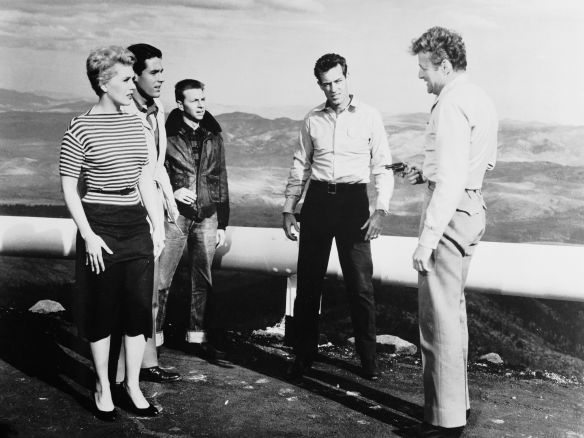
Four happy-go-lucky college boys decide to live it up during a short stint in Reno. If you’re wondering why these boys all seem to be pushing 35, it turns out that they’re all Korean War vets attending school on the G.I. Bill and trying to recapture their lost youth. Al, their level-headed leader (Guy Madison) allows the gang one hour in the famed Harold’s Club casino to drink, gamble and meet the ladies before they have to head back. Ladies man Brick (Brian Keith) seems to hit it off with a sleek sexy dish, while rich boy Ronnie (Kerwin Mathews) tries to use his genius to game the system, accompanied by comic relief Roy (Alvy Moore).
Circumstances lead to Ronnie and Roy accused of acting as accomplices in a robbery attempt. Al steps in and makes things right, but when Ronnie overhears a cop say that Harold’s cannot be robbed, it sets his mind whirling with possible ideas. Back at school, Al pursues the gorgeous club singer Kay (Kim Novak, who would not become a star until her next picture Picnic) while Ronnie regales Brick and Roy with his “perfect scheme” for a casino heist. His plan is completely theoretical: he wants to rob Harold’s Club to prove he can and then give back the money. Brick and Roy are in, but they need a fourth, and Al’s too lost in the clouds trying to get Kay to marry him.
At this point, I was baffled. Why was this sorta funny, kinda slick buddy movie on our film noir list. It isn’t mentioned in any of my books on the subject; even Wikipedia calls it merely a “heist film.” But things start to get a bit more promising when Brick steals another guy’s girl at Kay’s club and then nearly kills the man when he protests. It turns out that Brick has a serious case of PTSD and spent time – not enough time, it seems – in a mental hospital. (From then on, Brian Keith’s eyes twitch every minute or so to remind you that he is a loose cannon!) And so, while Ronnie and Roy set all the plans in motion for a lark, and a blissfully ignorant Al and Kay decide to join the party in order to get married in Reno, Brick has a more sinister plan in mind.
This isn’t a heist film in the Ocean’s 11 sense. I don’t think the film spends more than 15 minutes in the casino during the final act. I also think Ronnie’s plan is ridiculous, but I won’t spoil it for you – watch and judge for yourself. Once they start the plan in motion, the suspense rises, thanks to Brick and his interactions with a casino employee, well played by William Conrad (usually the heavy in films like this!). And there’s a lovely climax set in a parking garage which, according to Eddie Muller, was hastily put together by director Phil Karlson and writer/producer Sterling Silliphant once they got to the location and saw the possibilities.
Ultimately, though, everyone gets let off the hook, and with no real consequences and so much bright lighting and comic dialogue, the noir nerd in me was left wanting.
* * * * *
The Big Bluff
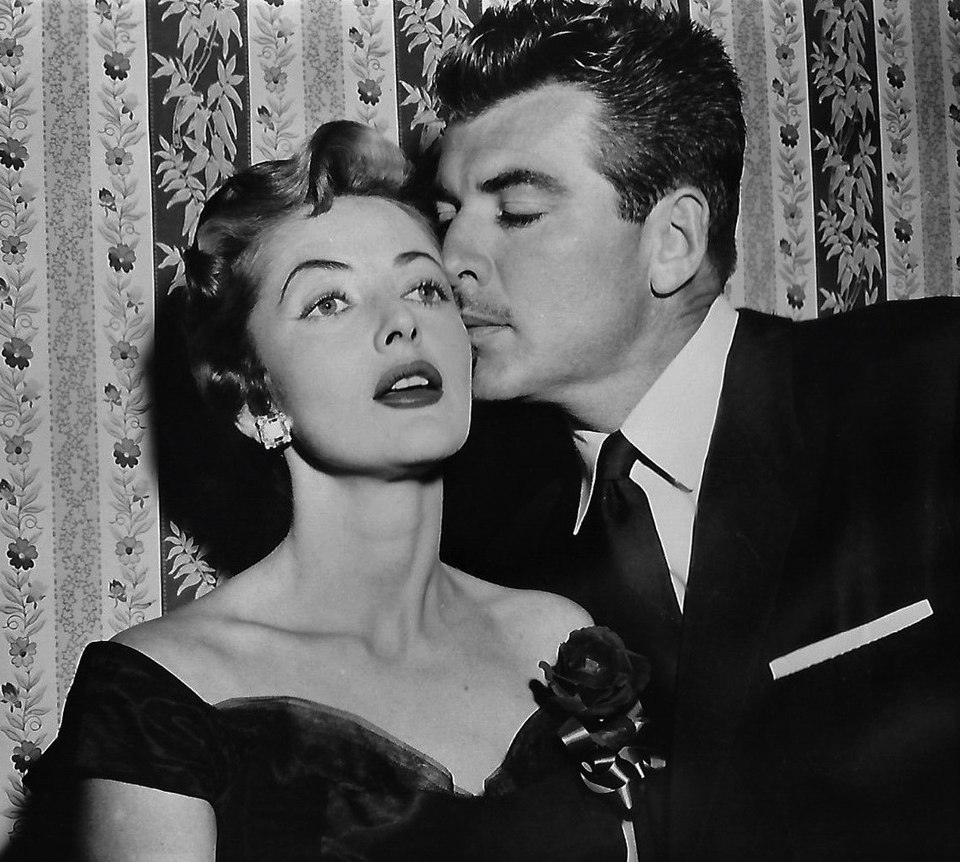
Party girl Valerie Bancroft (Martha Vickers) is banned from life in the fast lane due to her ailing heart. In fact, her doctor and her best friend Marsha (Eve Miller) agree to keep from her the news that Valerie is terminal. Enter Ricardo “Rick” De Villa (John Bromfield), a sleazy lothario who has run out of money with which to entertain his sexy married dancer mistress Fritzi (Rosemarie Stack). Rick sweeps the wealthy Valerie off her feet, and when he finds out she is dying, he marries her and then keeps her busy playing tennis and running up stairs. But Rick didn’t figure that love is the cure for what ails ya, and when he learns that Valerie is, in fact, recovering, he takes different steps to secure his inheritance.
If I had my doubts about the bona fides of 5 Against the House, rest assured that The Big Bluff is film noir through and through. It’s also a really bad movie! Evidently producer-director W. Lee Wilder learned nothing from his baby brother Billy. As for the screenplay, let’s call it practice on the part of Fred Freiberger, who went on to produce much better stuff for television (Ben Casey, The Wild Wild West, Star Trek). Martha Vickers is famous for playing the promiscuous litter sister in The Big Sleep, where she is fantastic. She’s good here, too, but the role is thankless. Bromfield and Stack make the best out of their villainous roles, but the script and direction work against them. (And how can Stack walk around in all those long slinky outfits without tripping down the stairs and breaking her neck?!?)
I read a bunch of reviews that suggested the film is saved by its twist ending. I say twists have to be earned, and these are so artificially created that it saps most of the fun out of this bleak final twist of justice.
* * * * *
The Big Combo
I saw this one a few years ago, and I offer you a mild reworking of the assessment I gave it then:
The Big Combo was directed by Joseph H. Lewis, known for the earlier noir classic, Gun Crazy, but its greatest asset is its cinematographer, John Alton, who turns a pretty standard crime drama into something beautiful to behold. A crime syndicate with a stranglehold on the Big City is led by the cruel Mr. Brown (Richard Conte) who directs his goons to commit all sorts of horrible crimes, although he is perfectly happy to get his own hands dirty if it will profit him. (And Conte is deliciously evil throughout.)
Brown’s nemesis is Lieutenant Leonard Diamond (Cornel Wilde). Diamond is a clean cut, by the books sort of policeman – up to a point. He harbors a yen for Brown’s girl, a lissome blonde named Susan Lowell (Jean Wallace, who was married to Wilde at the time), and he hopes to both win her heart and blatantly use her to capture and imprison the cagy Brown and bring down The Big Combination that is strangling the city.
The screenplay is . . . just okay, and it’s hard to know who to blame because the credited writer, Philip Yordan, served mostly as a front for blacklisted talent. Basically, the story comprises a series of set pieces where Diamond seeks out one lead after another in order to get the goods on Brown, laid side by side with a series of horrible crimes committed by Brown and his goons. Folks get tortured, gunned down, blown up, and generally brutalized for 87 minutes. A sterling cast, including Brian Donlevy as Brown’s faithless Number Two and John Hoyt and Ted de Corsia as doomed witnesses, helps bring it off, but it’s Alton who makes each scene shine with his glorious camera work, creating stylized moments that make the endless violence, not bearable exactly but oddly riveting.
Combo is also striking for its sexual frankness, both in its dialogue and its imagery. The relationships between Brown and Susan and between Diamond and his sometime girlfriend, a dancer named Rita (Helene Stanton) is crackling with sex; it’s clear that both women are torn between their knowledge that the man in their life is Mr. Wrong and their carnal desire for him. And then there’s the all but overt presentation of queerness in the characters of Fante and Mingo (Lee Van Cleef and Earl Holliman), Brown’s hitmen/bodyguards who share close digs and even closer feelings. Sure, the things they do may be terrible, but they also provide some of the few moments of tenderness in the film. It’s quite stunning for a film made in ’55!
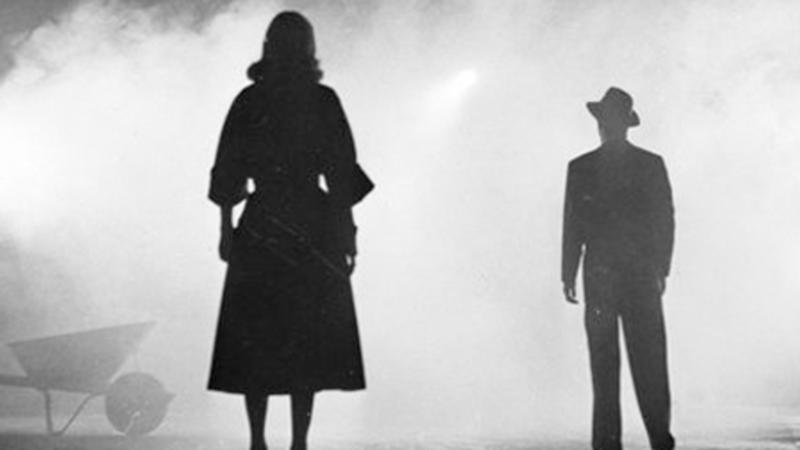
Every scene in The Big Combo looks terrific, even if the story it tells feels a bit stale. It culminates in a shot at an airport that owes everything to Casablanca and ranks and one of the iconic images of film noir. For Alton’s sumptuous work alone, this one is worth a close look.
* * * * *
The rankings?
- 1st place – The Big Combo wins this one by a mile.
- 2nd place – 5 Against the House is a wayyyy distant second.
- 3rd place – The Big Bluff only comes in third because I can’t rank it anywhere lower.
I’ll be back in ten days or so with three more reviews!
 Ah Sweet Mystery!