On Sunday, I met with my buddies Sergio Angelini and Nick Cardillo for our latest game of list-drafting. After tackling Christie, Hitchcock, Sherlock Holmes and Charlie Chan, we decided to broaden our focus on a more general look at the mystery genre in film. Each of us did our research and came together armed with many years of film-watching experience. Our goal was to create our own lists of thirteen favorite mystery films.
Normally, we conduct our drafts using the rules from Screen Drafts, my favorite film podcast. But with a topic this general, we decided to return to the format we used when drafting our choices for the best in classic detective fiction (you can find those lists here). This format comes from the podcast The Big Picture, and it made things a bit easier for us in that we drafted off of specific categories rather than each of us trying to pull a general “Best of” list out of thin air.
Of course, we could have each brought a finished list with us and then sat down and compared. But that would have been too easy – and no fun at all. So, here are the rules of this game:
- Each player must contribute a title to each category.
- The order of play will be selected through random draw. Play will follow this pattern: A – B – C – C – B – A – A – B – C – C – B – A . . . and so on till the end. (For your information, Nick used a randomizer, and the results were: Player A – Sergio; Player B – Nick; and Player C – Brad.)
- Once a title gets named, it cannot be placed anywhere else on the list. A film like The Big Sleep might fit several categories – Best Film Noir, Best adaptation of a novel, Best portrayal of a classic sleuth – but once the film gets played by one person in one category, it cannot be played by anyone else in the same, or any other, category.
- Any film is eligible, as long as all three players agree that the film has enough mystery elements to qualify and that the choice fulfills the expectations of the category.
You see how Rule #3 especially makes the game a bit trickier for us. Even though we tried to play nice and be copacetic all around, more than once a film I was dying to play got pulled out of contention by one of my competitors. This affected results: for example, my choice for “Best Film made specifically for the movies” ended up being far from my first choice, but Sergio and Nick kept playing my other options.
As fun as it was to go through the twists and turns of game play together, I’ll bet what you came for are the lists themselves. So here we go: I’m going to show you our choices category by category, and then I’ll put the general lists side by side at the end. I’ve asked Nick and Sergio to provide brief commentary on each of their choices, and I did the same.
CATEGORY 1: PORTRAYAL OF A CLASSIC SLEUTH
Sergio: Edna May Oliver as Hildegarde Withers
For me the best Sleuth / actor combo – she is just perfect in the role and it really feels like Stuart Palmer had her in mind when he created the character. The three films she made as Withers are utterly charming comedy mysteries.
Nick: Basil Rathbone as Sherlock Holmes
When it comes to homes on the big screen, it was obvious there was only one direction to go, especially if I’m choosing the actor who portrayed Holmes in the way that was most representative of Arthur Conan Doyle’s original. Rathbone – especially in the two films made at 20th Century Fox and in the early films at Universal – inhabited Holmes like few others. He looked the part and held audiences captive with his authority and impeccable delivery. And, crucially, while playing the colder, clinical side of the detective, Rathbone never sacrificed the warmth of Doyle’s original character. His scenes with Nigel Bruce as Dr. Watson never failed to display their powerful on-screen chemistry.
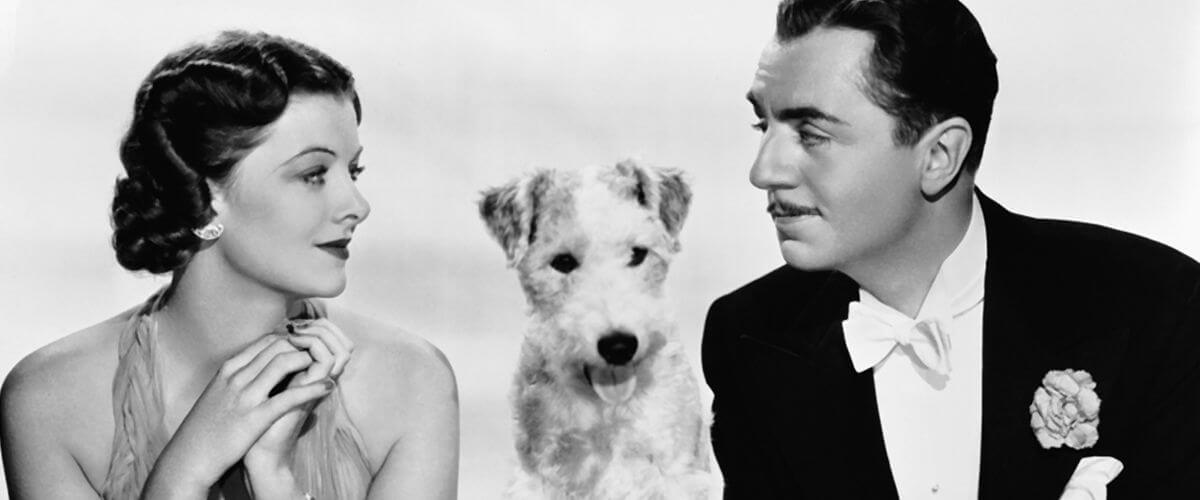
Brad: William Powell and Myrna Loy as Nick and Nora Charles
I love Humphrey Bogart, both as Sam Spade and as Philip Marlowe – but they’re pretty much the same character. I love Alistair Sim as Inspector Cockrill, but I think Green for Danger would (or, at least, could be just as good without him.) But nobody else could capture the magic of the Charleses like Powell and Loy did. They are what makes The Thin Man a classic. They are the reason for a series of six films, with admittedly diminishing returns. But these two actors, joined together, could pretty much defeat all the domesticity and bad scripts thrown at them and still be more than watchable. Observe them together in any non-Thin Man film to see the magnificent chemistry that exists between them. And then come back and binge ten or so hours with Nick and Nora. It’s something I do with great regularity!
CATEGORY 2: PORTRAYAL OF A DETECTIVE CREATED FOR THE MOVIES
Sergio: Paul Newman as Harry Ross
Robert Benton’s 1998 private eye movie Twilight (no, not that one) is a superb valentine to film noir. It has an amazing cast (Susan Sarandon, Gene Hackman, James Garner, Stockard Channing, Reese Witherspoon, Giancarlo Esposito, Liev Schreiber), a really good script and is also a film about people who are older, which is always rare in Hollywood. Originally produced as Magic Hour, it is a superb film.
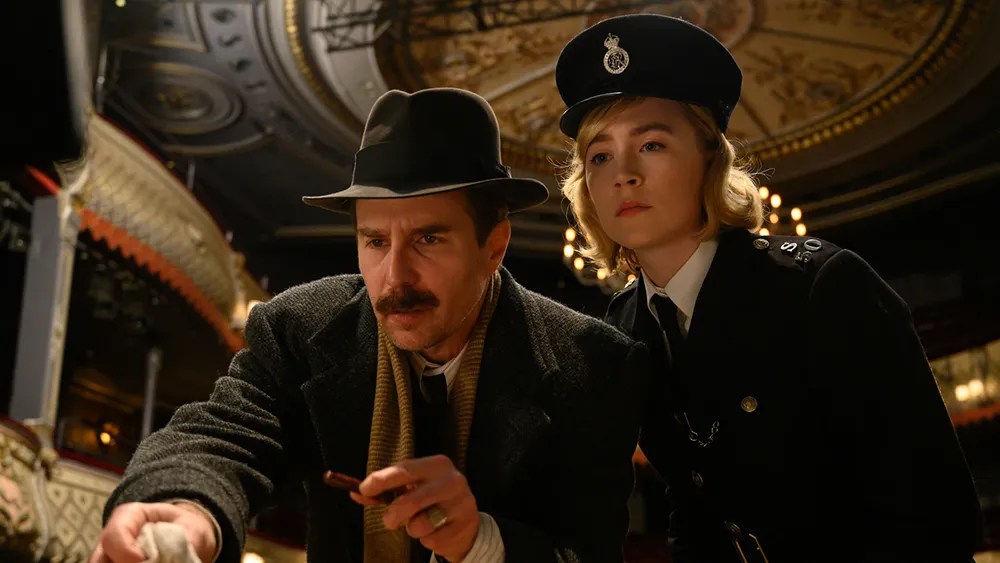
Nick: Sam Rockwell and Saoirse Ronan as Inspector Stoppard and Constable Stalker
Look, if I had fully grasped the rules of this draft, I would definitely have slotted Jack Nicholson as a JJ Gittes in here. But because Chinatown, 1974 was an early an obvious draft pick, I thought that anything associated with that movie was off the board. So . . . See How They Run might be a divisive film, and I may not love Sam Rockwell’s grizzled Scotland Yard detective as much as Nicholson’s nuanced characterization, but it is undeniable that part of the charm of the now memory hold 2022 comic mystery is a delightful on-screen pairing of Rockwell and Ronan. I love these two characters together and – as unlikely as it might be – if the duo was reunited for another film that gently satirized another classic mystery writer, I would be first in line.
Brad: Daniel Craig as Benoit Blanc
Far be it from me to try and saddle director Rian Johnson with the task of keeping the Knives Out series of films going in perpetuity. To be honest, I figured out the killers in both of the first two films. Still, watching the trailer for the next one (Wake Up, Dead Man) made the hair on my arms stand up with excitement. Half the fun is in watching Daniel Craig’s take on the classic sleuth and hearing that Southern drawl spew out so many facts that true Golden Age fans understand the best. I truly hope that Johnson and Craig find enough joy in all this to form a years-long partnership and bring many more sequels to us.
CATEGORY 3: BEST FILM FROM A SERIES (the series must include at least six films)
Sergio: Sherlock Holmes and the Spider Woman (1943)
From the Universal series this feels like the best and most representative – The Scarlet Claw is better overall but is not very representative of the series. I love Gale Sondergaard as the eponymous femme fatale and this is just marvelous, pulpy entertainment.
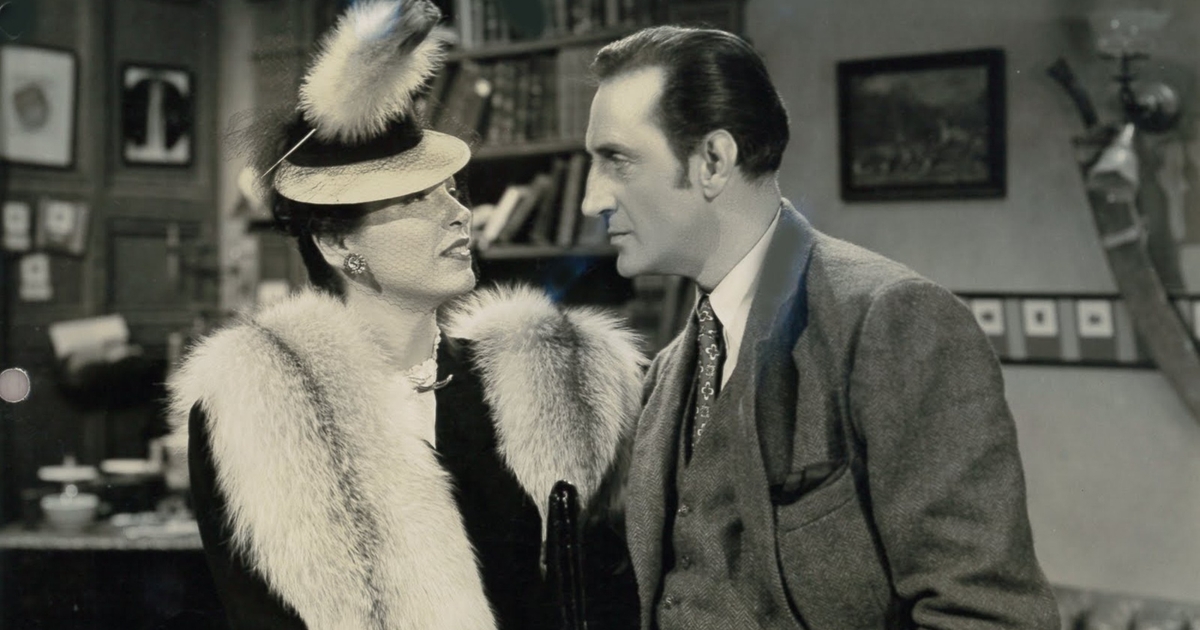
Nick: The Kennel Murder Case (1933)
I have a soft spot for most of the Philo Vance movies of the 1930s, but The Kennel Murder Case easily tops them all. William Powell seems, by default, the best actor to take on S.S. Van Dine’s snobbish sleuth; you can’t help but be charmed. On top of that charismatic performance is a technically brilliant film that feels years ahead of its contemporaries. It really goes to show what is possible when you have an assured hand like Michael Curtiz behind the camera. There are flashbacks, tracking shots, and unique camera angles galore that help to make a pretty complex genuine locked-room mystery feel easily digestible for all audiences. Kennel Murder Case deserves its reputations as one of the best bona fide whodunnits every put on film.
Brad: Charlie Chan at the Opera (1936)
Okay, my first choice was actually The Kennel Murder Case, but since that was taken, I figured I’d go all sentimental and place (SPOILER ALERT!) our first choice for the Fox Charlie Chan Draft here. Warner Oland faces his greatest opponent (and best red herring) Boris Karloff, who chews the scenery as a once-great opera singer driven mad by his wife’s betrayal. Now he roams a busy opera house during a performance (the opera was written especially for the film by Oscar Levant!) while detective William Demarest makes mincemeat of the case and Number One Son Keye Luke marches merrily as a supernumerary. It’s one of the best-filmed, best acted entries in the series – and a great starting point for the neophyte Charlie Chan at the Movies fan!
CATEGORY 4: BEST GIALLO OR SLASHER FILM (from any era)
Sergio: Deep Red (1975)
Dario Argento’s Profondo Rosso (Deep Red) is probably the best Giallo there ever was, with a superb performance by David Hemmings, an extraordinary score (mostly by prog rock heroes, Goblin) and quite extraordinary visuals from cinematographer Luigi Kuveiler (who shot Wilder’s criminally under-regarded, Avanti!). While the horror is not for the faint of heart, the whodunit is superb and the final clue, once seen, will never be forgotten.
Nick: Blood and Black Lace (1964)
Not all Giallo films are beautiful to look at, but Blood and Black Lace certainly is. From its evocative, percussive opening montage to its bonkers finale, the screen is awash in bright, bold colors that bring an exclusive fashion house to life. While the film may lack the harder edge of later Gialli – there’s much less blood and gore on display here – what it does have is a genuine closed circle of suspects that make it feel truly apiece with the best of the Golden Age. Blood and Black Lace is the perfect bridge between classic mysteries and the more modern sensibilities of horror cinema.
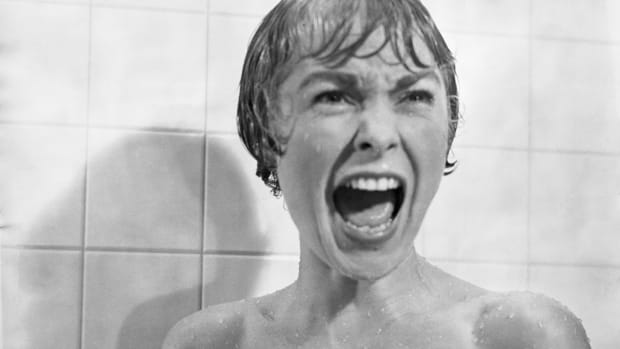
Brad: Psycho (1960)
Psycho is not a giallo film, but it establishes the concept of “slasher” film at an artistic level that few other filmmakers came close to reaching. (Brian De Palma probably merged the slasher and giallo best of all.) Anyway, if you haven’t seen Psycho, you’re crazy!!! Come and root for Marian Crane, who breaks countless laws in the name of love. Stay to cheer on Norman Bates, who steps on the rules to protect his monstrous mother. And leave with the rug pulled firmly out from under you by Alfred Hitchcock, who made this film despite the studio’s protests for under a million dollars, grossed 32 million that first year, and became the most famous director of them all!
CATEGORY 5: A BOOK THAT HASN’T BEEN ADAPTED YET – BUT SHOULD BE!
Sergio: He Wouldn’t Kill Patience (1944)
Some people give the later Sir Henry Merrivale books an unfairly hard time – this novel, based on a bet Carr made with Clayton Rawson on how to commit a murder in a hermetically sealed room, is utterly superb and has a fabulous climax that would work incredibly well in a movie.
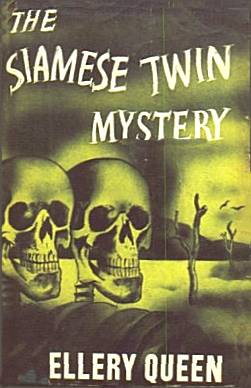
Nick: The Siamese Twin Mystery (1933)
Carr and Christie had already been taken, where else was I to turn? The Siamese Twin Mystery may not have aged as well as a lot of Golden Age mysteries, but the dramatic possibilities of this novel cannot be ignored. Ellery and his father, traveling through some mountainous region, get waylaid at a mountaintop clinic and soon cut off from the outside world by a raging forest fire. Murder inevitably follows, and Ellery must rise to the challenge of apprehending the killer even as their own deaths seem more and more certain. It is a winning formula for drama and even a loose adaptation, using this scenario as its launching pad, feels like a winner. Hollywood execs take note: cast someone like Josh O’Connor as the young, bookish Ellery, with pince-nez and all! I’ll be waiting!
Brad: Death Comes as the End (1945)
The plan was to choose Dashiell Hammett’s first novel, Red Harvest, for this category. But Sergio told me that there already is an adaptation, albeit a lesser, poorly received, film that has scant to do with the original plot. Being surrounded by sticklers for the rules, I had to change my plans – and so I went loyalist. Death Comes as the End was theoretically set to receive the adaptation treatment by the BBC. Evidently, the pandemic intervened, but fans speculate over other things: the cost of recreating ancient Egypt or hiring a cast of non-white actors to play Christie as the novel demands. I say “Bushwah!” to all of this. The book is a singularly visual treat, with almost as many murders as And Then There Were None. And some of those deaths are doozies! Everybody needs to get their act together and make this dream of mine a reality!
CATEGORY 6: BEST SCREWBALL OR COMIC MYSTERY
Sergio: The Ex-Mrs. Bradford (1936)
A delightful pairing of William Powell and Jean Arthur and a classic screwball “comedy of re-marriage” (as per Stanley Cavell) – with a murder mystery thrown in. Wonderful.
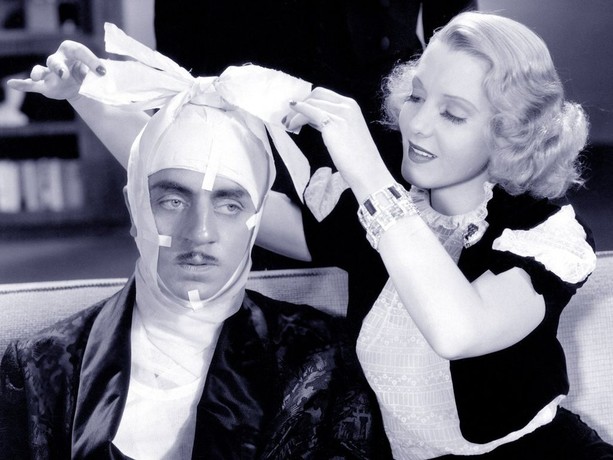
Nick: A Shot in the Dark (1964)
I didn’t grow up watching the comic antics of hapless Inspector Clouseau, but I’ve come to appreciate them, and, more specifically, the outrageous performance of Peter Sellers in each. A Shot in the Dark, the first sequel to 1963’s The Pink Panther, introduces many elements that would become hallmarks of the series, including Clouseau’s exaggerated French accent, and Herbert Lom’s twitching, manic performance as Commissioner Dreyfus. Not originally intended as a Clouseau film, A Shot in the Dark is all the better for its fully formed plot that is also a hilarious French farce. The opening sequence is a comedic tour de force in itself: it depicts all the characters making midnight assignations with one another, leading up to the titular shot in the dark. And there’s George Sanders – which, to me, is always a good thing. As The Kinks said, even covered in garbage, he would still have style.
Brad: The Thin Man (1934)
Why is The Thin Man so good? I think one phrase sums it up: “pre-Code William Powell and Myrna Loy.” The whodunnit is no prize, mostly a linchpin on which to hang one of the most exciting, sexy and fun marriages of the Golden Age (of both Mystery and Cinema). Director W.S. Van Dyke had just worked with the pair on Manhattan Melodrama, and he convinced MGM to keep them together for this, despite reservations about Powell’s age and Loy’s range. Every frame they’re in proves Louis B. Mayer wrong, and it’s to my regret that I don’t imbibe cocktails anymore because I can only imagine the joyful mischief I would have gotten up to with the Charleses!
CATEGORY 7: BEST FILM NOIR MYSTERY
Sergio: Harper (1966)
Terrific adaptation by William Goldman of the first Lew Archer novel by Ross Macdonald. An amazing cast (Paul Newman, Janet Leigh, Lauren Bacall, Robert Wagner, Pamela Tiffin, Julie Harris, Shelley Winters) and beautiful cinematography by Conrad Hall – a film on the cusp, at the tail end of classic Film noir and the beginning of Neo-Noir – Bacall is the link between the two eras and the open ending points to the new direction of travel.
Nick: Brick (2005)
Few filmmakers today understand possibilities and permutations of the mystery genre like Rian Johnson, and in Brick he proves that he had this innate understanding right from the beginning. Brick is a noir mystery set in and around a high school in L.A.. All the characters are students and young people, their social circle is dictated by who they eat lunch with, and the world weary P.I. isn’t hauled in for questioning by the fuzz, but by the vice-principal (played by Richard Roundtree.) Joseph Gordon-Levitt is the star of this youthful take on The Maltese Falcon, and he is pitch perfect delivering the hard-boiled dialogue. It sounds incongruous coming out of the mouths of teenagers, but that’s the point. Brick proves that these kinds of stories, these kinds of characters, can work in any time and any place, and, from a film-making perspective, it proves that these stories can be made anywhere. Johnson’s talent is on full display from the first image, and there are a few times where I still have no idea how they pulled off a few of the more complicated shots!
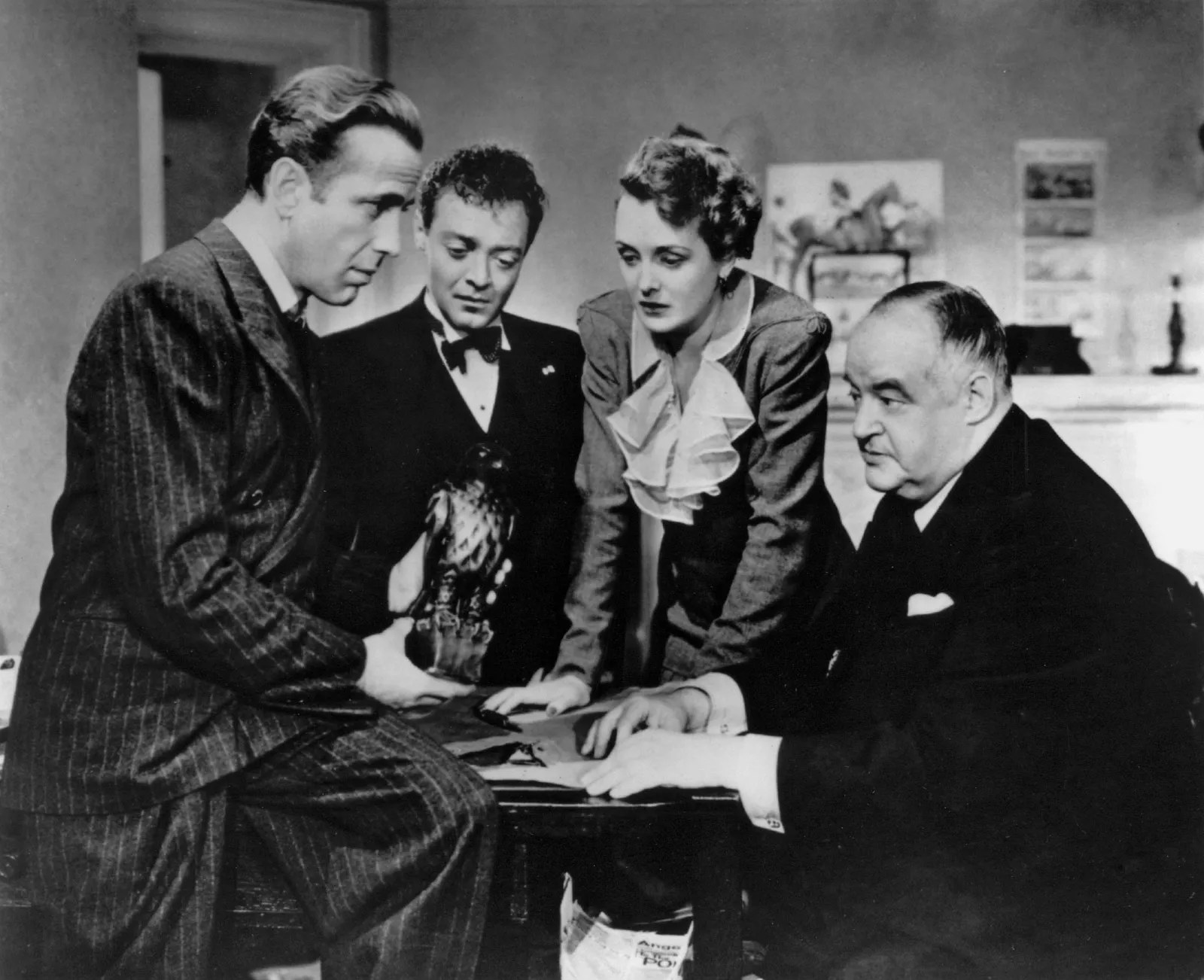
Brad: The Maltese Falcon (1941)
I have watched Falcon dozens of times. It’s impossible to get tired of it. In fact, when Effie walks into Sam’s Spade’s office and says, “You’ll want to see her – she’s a knockout!” or raises her weary head from her desk and moans, “She’s in there!” or brings in the card redolent of gardenias, or screams as Walter Huston stumbles into the office clutching a mysterious package – when these things happen, I shiver with excitement, not because I wonder what’s going to happen next but because I know, and I can’t wait to see it again. And since I’m a man who likes to talk to a man who likes to talk, I could sit and talk about The Maltese Falcon for hours: its perfect cast, its brilliant direction by John Huston (a first-timer!!!), its sparkling dialogue, mostly lifted verbatim from the novel by Huston, that I have almost memorized! You know what? When a man’s partner is killed, he’s supposed to do something about it! And there’s no better chronicle of how that plays out than this film.
CATEGORY 8: BEST INVERTED MYSTERY (you know who the criminal is from the start)
Sergio: The Unsuspected (1947)
Superb adaptation of the Charlotte Armstrong novel with a fabulous role for Clause Rains, beautifully directed by Michael Curtiz and the radio setting alone is worth the price of admission.
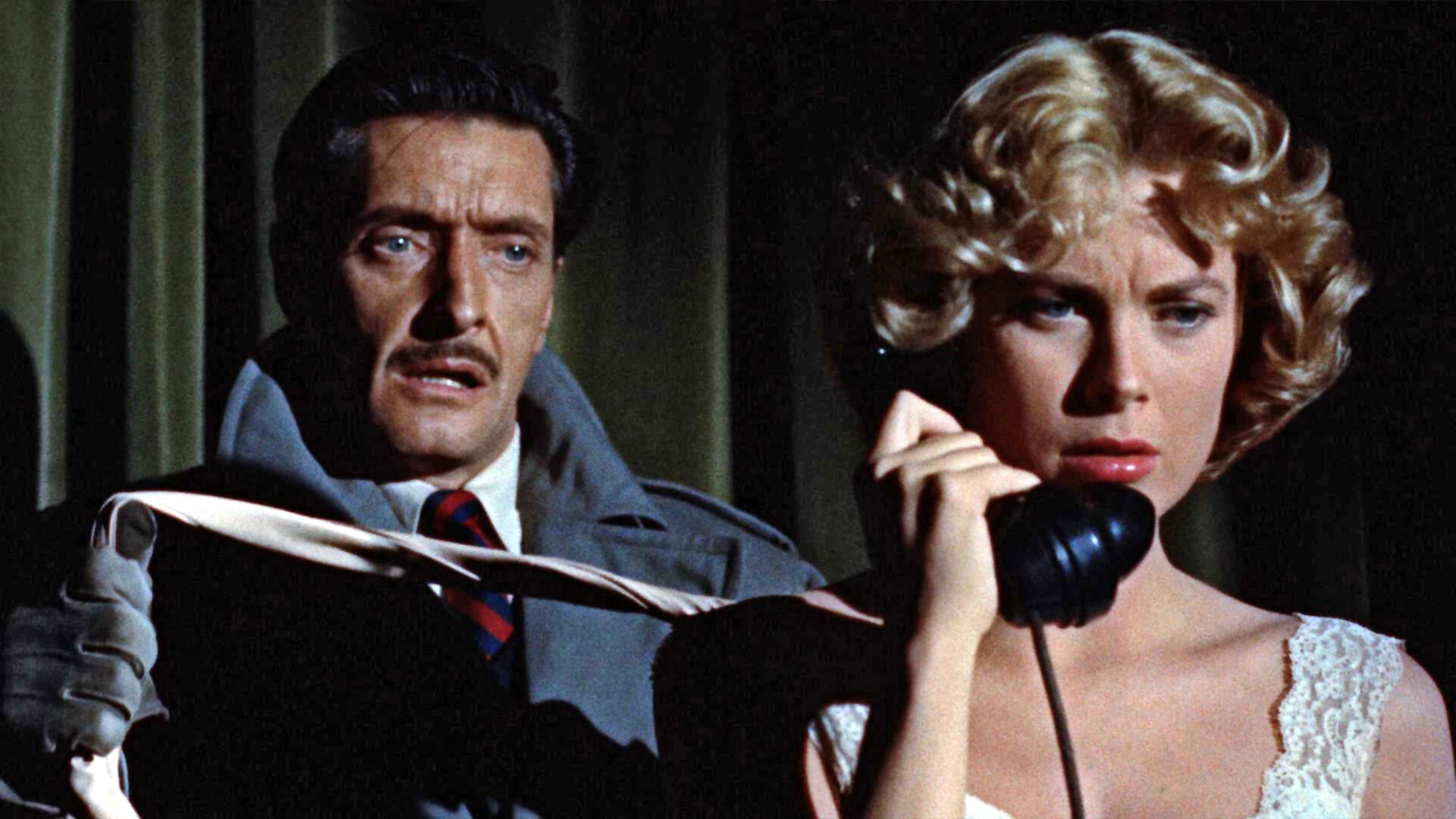
Nick: Dial M for Murder (1954)
Brad, Sergio, and I have discussed Dial M aplenty elsewhere. It is not our favorite Hitchcock, but it is an excellent showcase for the Master at the height of his powers. It feels stage-bound . . . until it isn’t and Hitchcock takes us into a God’s-eye-view shot of Ray Milland and Anthony Dawson plotting murder. It’s effective and exciting, even if the Frederick Knott script becomes a little difficult to untangle with all the talk of raincoats and latchkeys. John Williams, as the intrepid detective, is fantastic, and Grace Kelly – in her first collaboration with Hitchcock – is, of course, a luminous figure on the screen.
Brad: Double Indemnity (1944)
James M. Cain published his tight little novel the year before, but Billy Wilder (with help from Raymond Chandler) turned it into a classic. Insurance man Walter Neff (Fred MacMurray) and faithless wife Phyllis Dietrichson (Barbara Stanwyck) get all the attention (ankle bracelets will do that for you), but the deep abiding love that gives this movie its heart is that between a man and his boss. Barton Keyes (Edward G. Robinson) is grooming Walter to take over as the moral compass for the company, and the real heartbreak comes as Keyes’ inexorable journey to the truth reveals the hollowness of all the faith he placed in his right-hand man. I’ve never smoked, but the ending of this film illustrates (as it does in Now Voyager) the advantages of the cigarette as a prop.
CATEGORY 9: BEST TWIST ENDING
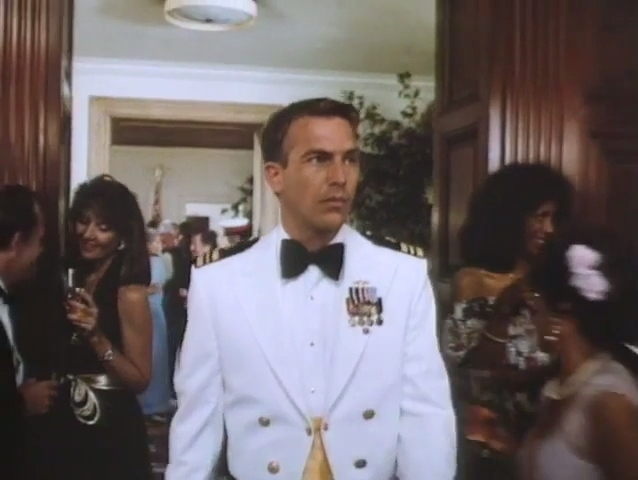
Sergio: No Way Out (1987)
A very clever Cold War adaptation of Kenneth Fearing’s The Big Clock that has terrific suspense sequences, a sweet love story and one of the best twist endings of the movies – one that was more than adequately prepared for and which is still a huge surprise.
Nick: The Usual Suspects (1995)
I was born two years after the release of The Usual Suspects so I have always lived in a world that knew the identity of Keyser Söze, so dodging spoilers for this film was always going to be tricky for me. Despite that, the power of this twisting, turning thriller was in no way diminished when I saw it for the first time at age 15 and it has not lessened in the time since. The Usual Suspects is in my top 25 films of all time – if not top 15 or top 10 depending on the time of day. My relationship to the film has grown somewhat thorny and complicated in the years since certain facts came to light about talent behind and in front of the camera, but the incredibly clever screenplay, courtesy of Christopher McQuarrie, remains unimpeachable. The characters are well-defined and complex; endearing while never compromising on their truly despicable nature. And that ending: it remains an all-timer for me. Just when you think The Usual Suspects has dealt its final card, there’s always one more just up its sleeve.
Brad: Memento (2000)
This sealed the deal for me with Christopher Nolan: if he isn’t the first to tell a story backwards, he is the one who best utilized the concept to create a perfect noir. It helps not to think too hard about Fight Club coming out the year before and using a few of the same tricks. I just employ some of that anterograde amnesia that Leonard Shelby suffers from before I rewatch this. Guy Pearce is remarkable as a man not only trying to solve his wife’s murder but also attempting to get control of a life gone nuts. SPOILER: he manages to do this in a way that makes our jaws drop and that puts us through the same shock of existential bleakness that marks the endings of the very best films noirs. Carrie-Anne Moss and Joe Pantoliano offer fabulous support, and each segment brings new twists and forces you to reassess everything you’ve watched before. What a ride!
CATEGORY 10: BEST ADAPTATION OF A PLAY
Sergio: Murder at the Vanities (1934)
A pre-Code entertainment that is more or less in real-time, like the original show, with a musical revue on stage and murder and mayhem in the wings. Hugely entertaining, well worth looking out for.
Nick: Sleuth (1972)
Fans of mystery cinema will know what a debt they owe to Anthony Shaffer, who had a hand – to one degree or another – in bringing a number of Agatha Christie’s novels to the silver screen in the ‘70s and ‘80s. It is no surprise, therefore, that Shaffer’s own original play is an incredibly clever warped love letter to the genre. I first encountered Sleuth on the stage, but the film adaptation remained elusive for many years. When I finally got around to seeing it, it did not disappoint. Both Lawrence Olivier and Michael Caine were nominated for Best Actor Academy Awards, and their performances were most deserving. In fact, I think that Olivier is doing some of his career-best work as mystery novelist Andrew Wyke, who is introduced dictating the denouement of his latest novel, the finale of which is pleasingly outrageous. Olivier goes from affable to ridiculous (with tongue firmly planted in cheek), to coldly sinister – sometimes in the span of just a few sentences. Caine does similarly fine work, especially in the back half, even if the nature of the film’s central twist falls somewhat flat on his shoulders. I’ve never been as critical of it as others, though. After all, you have got to love a mainstream film that casually mentions S. S. Van Dine!
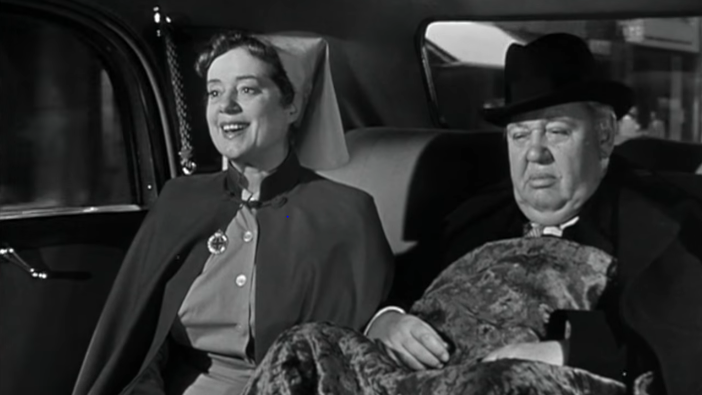
Brad: Witness for the Prosecution (1957)
Billy Wilder may just be my favorite director after Hitchcock. And while Agatha Christie herself took her little story and translated it into a brilliant play, Wilder (with the writing help of Harry Kurnitz and adaptor Larry Marcus) mined gold out of the original. Charles Laughton does his career-best work as Sir Wilfred Robarts, and the decision to invent for him a nurse, played by his wife Elsa Lanchester in an Oscar-winning role, is sheer genius. You can carp that Tyrone Power is too old or that Marlene Dietrich is too . . . Marlene. I’m not listening to a bit of it! Meanwhile, look at the roster of amazing actors filling in the smaller roles: Norma Varden, Una O’Connor, John Williams, Henry Daniell, Torin Thatcher, Ruta Lee. Last year, at the Agatha Christie Festival, it came down to this vs. Death on the Nile as the best Christie adaptation, and the audience pushed Witness to the top. And now I want to go watch it again!
CATEGORY 11: BEST ADAPTATION OF A MYSTERY NOVEL
Sergio: Maigret Sets a Trap (1955)
Jean Gabin is a superb Maigret and this is a clever police procedural serial killer tale (a pretty early one for the movies) with a great supporting cast (Lino Ventura, Annie Girardot) and a very neat twist at the end. All shot in the studio, a tightly controlled classic in my view and a very faithful adaptation too.
Nick: Murder on the Orient Express (1974)
There are several reasons that the 1974 adaptation of the Agatha Christie novel remains an all-time favorite for me. Many of them, I admit, are nostalgic. MOTOE was my introduction to Christie. I have fond memories of the double VHS rented from the library, watching it, and not understanding a single word. The film demanded close attention and repeat viewings from my 8-year-old self. I came to understand, then respect, then love the film on those repeat viewings. Curiously, nowadays most Christie fans seem to hold the film in lower esteem than regular cinephiles who, no doubt, admire the film for its powerful ensemble and assured direction from Sidney Lumet. And while the film may dispense with the more maudlin touches of Christie’s original novel, the polished, effervescent tone feels fitting for a film that drips with this much class. Albert Finney holds court as Hercule Poirot and he remains my favorite iteration of the fastidious Belgian sleuth. Finney, while perhaps excessively broad, commands attention. His final summation of the case – which dominates the film’s final 25 minutes – is titanic in a way that no other actor (not even the great David Suchet) has quite been able to match.
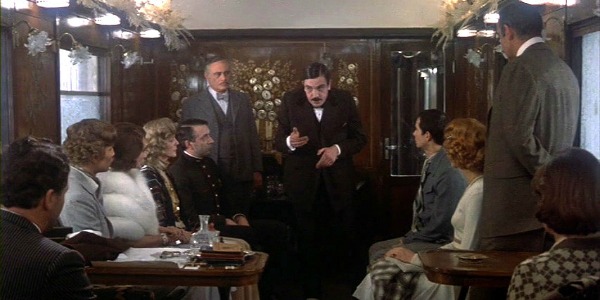
Brad: Green for Danger (1946)
In a perfect world, Alistair Sim would have gone on to make a series of “Inspector Cockrill” movies: Tour de Force, Death of Jezebel, Suddenly at His Residence, The Rose in Darkness. In some parallel universe, repertory houses are having a tribute to all the Christianna Brand films that should have been made. Instead, we have two: a pretty poor version of Death in High Heels and a practically perfect adaptation of Brand’s 1944 novel, Green for Danger. This is one of the best wartime mysteries ever written, and director Sidney Gilliat lovingly recreates the look and atmosphere of a military hospital at the height of the Blitz. A brilliant cast plays the doctors and nurses who should have saved the life of an unimportant postman. His murder on the operating table and the subsequent murder of a nurse who knew too much are models of suspense. By all means, read the book first because it’s full of great stuff that had to be cut here. But then watch the film and see exactly how book adaptations should be done.
CATEGORY 12: BEST MYSTERY CREATED FOR THE MOVIES
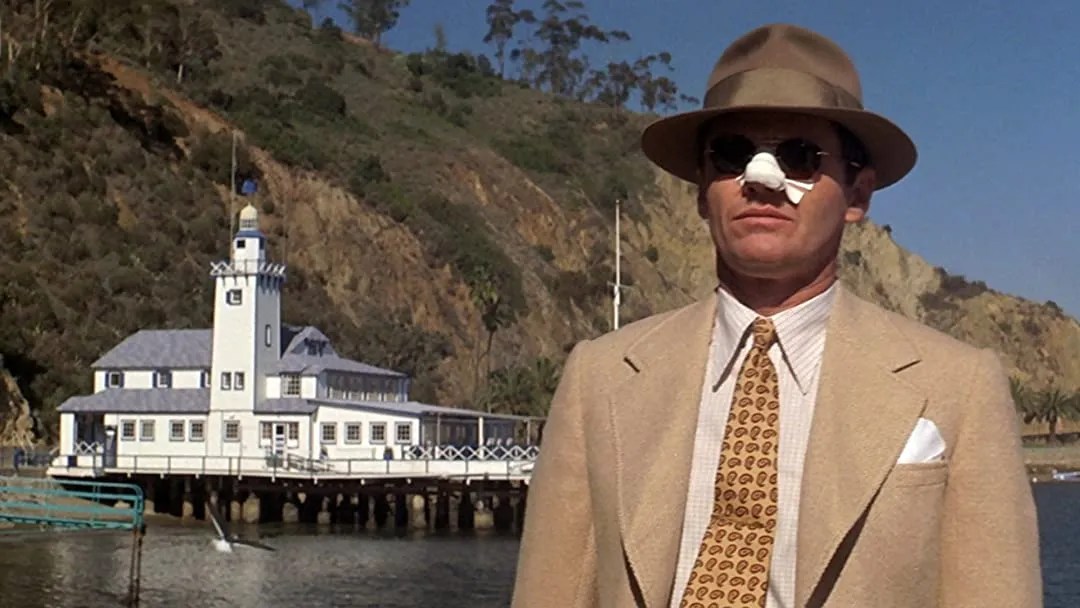
Sergio:Chinatown (1974)
An Oscar-winning success, and a film with a famous twist that is part of a serious film that investigates mysteries of event and character. Beautifully cast, shot and scored and brilliantly written and directed.
Nick: Gosford Park (2001)
Robert Altman has never been one of my directors, but there will always be a special place in my heart for Gosford Park. Perhaps it’s the exemplary screenplay by Julian Fellows, which excoriates the minutia of English manor home life. Perhaps it’s the cast – an assortment of the finest-ever British thespians with familiar faces populating both the above – and below-stairs sets. Or perhaps it’s the interrogation of class; a constant theme that runs almost undetected throughout the best classic mysteries and which is brought to the surface here. Gosford Park is witty and intelligent – I love the running joke about Inspector Thompson, who can never properly introduce himself – but it is also deeply moving and poignant. It proves that, even without an abundance of clues, shifting alibies, and hidden motives, a murder mystery can work if the characters are complex enough and the setting fully realized.
Brad: Identity (2003)
I acknowledge that this is the selection I’m least proud of, but my mind went blank after Sergio chose Chinatown! And, actually, I do enjoy this modern take on And Then There Were None, even if our conversation about it revealed that a lot of films were using the same trick in a multitude of ways. Still, this is a dark, funny slasher, stylishly directed by James Mangold, with a great cast and a lot of clever touches by way of clues (check out the characters’ names). The huge twist hits you far earlier than you might expect: that’s because writer Michael Cooney wants to take you on a surreal ride before he dumps an even bigger final twist in your lap. I know there are better films, but there were no takebacks. So pick this one up and have some fun!
CATEGORY 13: WILD CARD (no criteria need apply; just a fantastic mystery film you need to have on your list!)
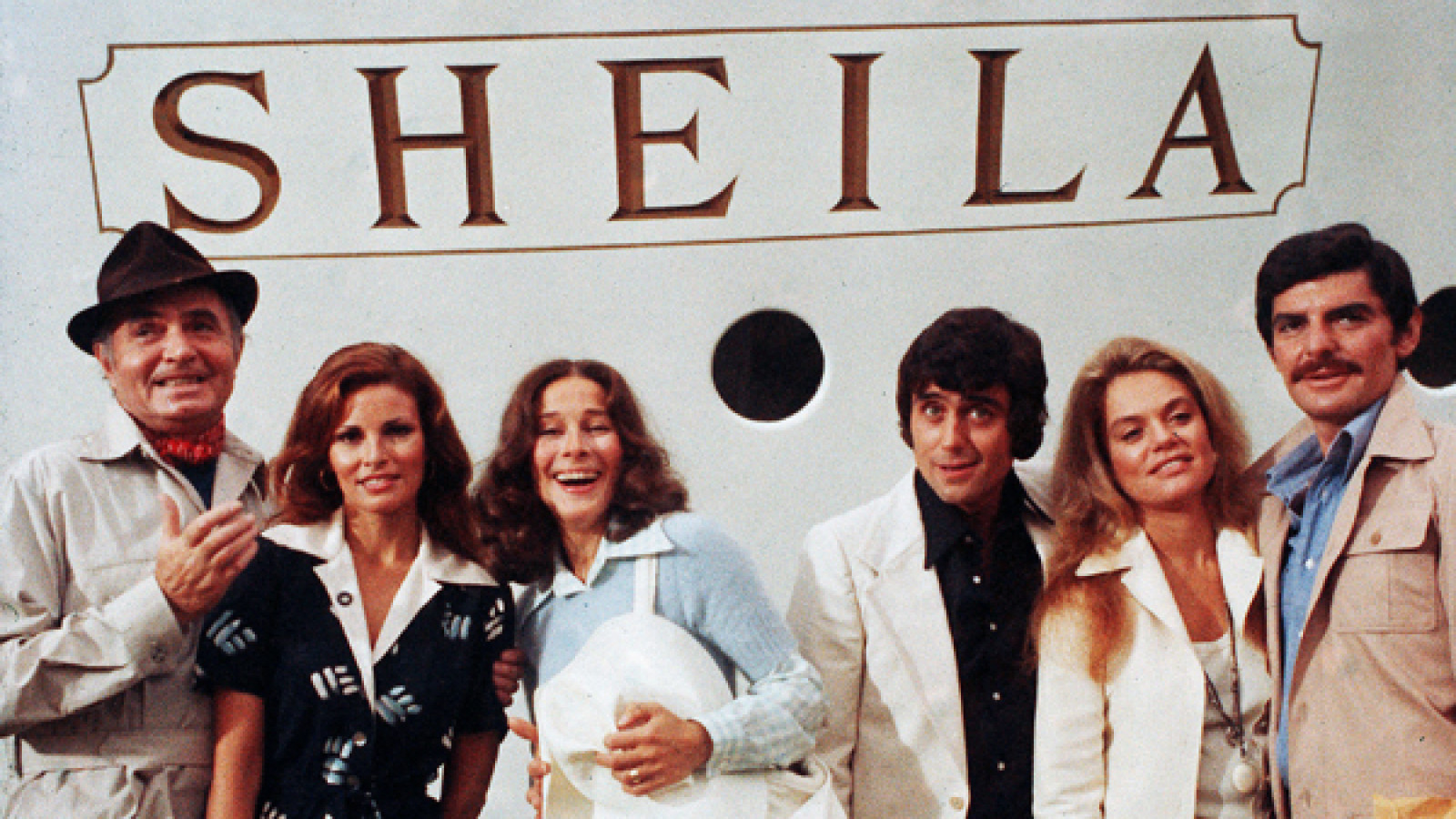
Sergio:The Last of Sheila (1973)
One of the cleverest movies ever written in terms of plot – and a film I can happily re-watch too. It is perhaps a little chilly but, well, it is hard to do a proper whodunit and make suspects too sympathetic – they might turns out to be the killer. I love it, and of course it’s the inspiration for a recent classic, Glass Onion.
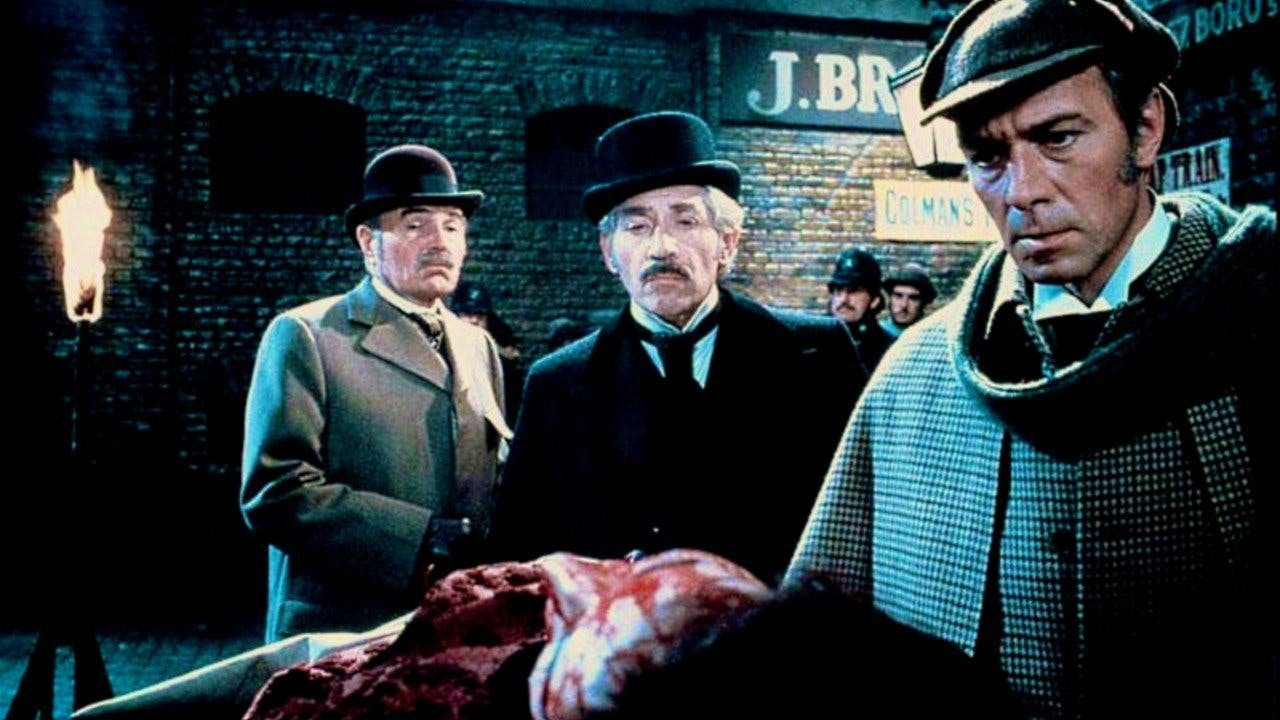
Nick: Murder by Decree (1979)
The second of two Sherlock Holmes versus Jack the Ripper films (after 1965’s campily charming A Study in Terror), Murder by Decree is my favorite Sherlock Holmes film. An exploration of the Whitechapel Murders in the autumn of 1888 blending fact and fiction, the film presents the now-debunked but ever-entertaining notion that there was a royal conspiracy behind the killings. In this way, the film positions itself as the “post-Watergate” Sherlock Holmes films; a film that is as redolent of the decade’s cultural anxieties as The Parallax View, Klute, and All the President’s Men. At the center of this heady brew of Masonic ritual, lobotomies, and illegitimate children is Christopher Plummer’s atypical portrayal of Sherlock Holmes, but his performance is all the stronger because he eschews the Doylean mold in favor of a warm, compassionate take on the Great Detective. Holmes and Watson (beautifully played by James Mason) represent figures for good in an otherwise cynical and morally grey world and Holmes, presented more coldly in character, would feel out-of-place here. The film is enlivened by a wonderful cast, featuring the likes of Donald Sutherland, John Gielgud, and a stellar Genevieve Bujold. I could have picked a lot of classics of Sherlockian cinema for this spot – The Private Life of Sherlock Holmes or The Seven-Per-Cent Solution are equally worthy – but Murder By Decree is and always will be just a cut above. (No pun intended!)
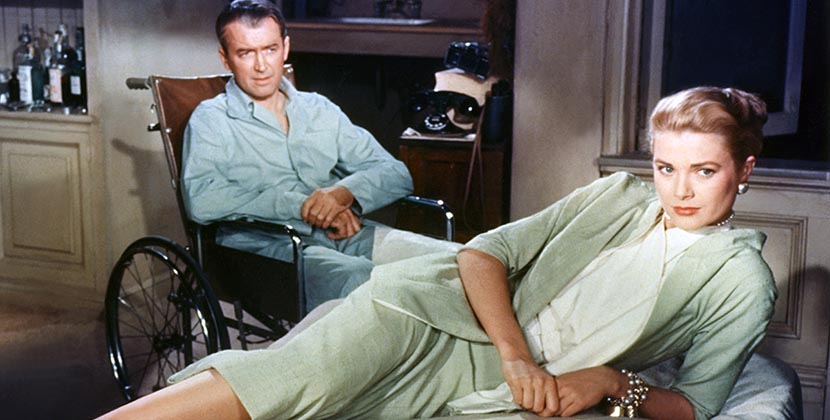
Brad: Rear Window (1954)
I’ve written extensively about it here. Suffice it to say that Rear Window is my favorite movie of all time and has to be on any list of greatest mystery films. Alfred Hitchcock took a perfectly decent little story by Cornell Woolrich and created the consummate Hitchcock film, using a suspected murder to shine his own light on the vicissitudes of love, the erotic sin of voyeurism, and the propensity of humankind to avoid their neighbors. (Everyone needs to watch the scene with the dog today!!) The film is bursting with suspense and wit, plus it has the greatest set, the greatest kiss, the greatest sidekick (Thelma Ritter steals the show!), Raymond Burr three years shy of Perry Mason, and Grace Kelly as fashion-plate Lisa . . . Carol . . . Fremont, the ultimate Hitchcock girl!
* * * * *
I hope we included some of your favorites and inspired you to seek out films that you’ve never watched. I even hope we made choices that you disagree with so strongly that you’re willing to write about your own preferences in the comment section below.
The Three Amigos’ next get-together will be for the NOIRVEMBER ’55 draft. Currently, I’m watching all thirty-six possible titles and writing my thoughts about each film from now through October. (You can read about the first three titles on the list here.) Once again, I hope you’ll play along!
Finally, here side by side are our complete lists:
| CATEGORIES | A – SERGIO’S PICKS | B – NICK’S PICKS | C – BRAD’S PICKS |
| Portrayal of a classic sleuth(Actor/sleuth) | Hildegarde Withers (Edna Mae Oliver) | Sherlock Holmes(Basil Rathbone) | William Powell and Myrna Loy (Nick and Nora Charles) |
| Detective created for the movies(Actor/sleuth) | Harry Ross (Paul Newman) | Inspector Stoppard and Constable Stalker (Sam Rockwell and Saoirse Ronan) | Benoit Blanc(Daniel Craig) |
| Best film from a series (six or more) | Sherlock Holmes and the Spider Woman (1943) | The Kennel Murder Case (1933) | Charlie Chan at the Opera (1936) |
| Giallo/slasher film (any era) | Deep Red (1975) | Blood and Black Lace (1964) | Psycho (1960) |
| Book that hasn’t been adapted but should be | He Wouldn’t Kill Patience (1944) | The Siamese Twin Mystery (1933) | Death Comes as the End (1944) |
| Screwball/Comic Mystery | The Ex-Mrs. Bradford (1936) | A Shot in the Dark(1964) | The Thin Man (1934) |
| Noir Mystery | Harper (1966) | Brick (2005) | The Maltese Falcon (1941) |
| Inverted Mystery | The Unsuspected (1947) | Dial M for Murder (1954) | Double Indemnity(1944) |
| Twist Ending | No Way Out (1987) | The Usual Suspects(1995) | Memento (2000) |
| Adaptation of a Play | Murder at the Vanities (1934) | Sleuth (1972) | Witness for the Prosecution (1957) |
| Adaptation of a Mystery Novel | Maigret Sets a Trap (1955) | Murder on the Orient Express (1974) | Green for Danger(1946) |
| Mystery created for the movies | Chinatown (1974) | Gosford Park (2001) | Identity (2003) |
| Wild Card(no criteria) | The Last of Sheila (1973) | Murder by Decree(1979) | Rear Window (1954) |
 Ah Sweet Mystery!
This is certainly a big job! Making it into a game was a brilliant way to handle it.
I am certainly no mystery movies expert, but I join you in your love for Benoit Blanc.
LikeLiked by 1 person
We are indebted to two terrific podcasts – Screen Drafts and The Big Picture – who created these games. Both make for a terrific listen!
LikeLiked by 1 person
I love this list! It includes most of my favorites for one reason or another (though I would say that Sidney Lumet’s direction is one of the weak points of a terrific film — different people’s flashbacks of the same scene don’t match, but it turns out to not be meaningful, just carelessness).
LikeLiked by 1 person
Terrific lists! And I definitely agree with so many of yours, Brad.
LikeLike
Thank you! I wrote all the titles down.
Eventually, we’ll get around to watching and reviewing mysteries, leading to Murder, She Watched, a book dedicated to murder mystery movies. Jane Austen, She Watched is next on the list.
I want mysteries; thus The Godfather is not a mystery but Clue most definitely is.
When we finally get around to this project, I’ll ask for suggestions!
LikeLike
I’ll repost my list of my favorites that have not been mentioned, as well as some (also not offered) runners up— with the recognition that many of my top favorites were already played by the Sergio-Nick-Brad trio:
Portrayal by an actor of a classic sleuth (adapted from books)
Adolph Menjou as Thatcher Colt – Runner up: C. Henry Gordon as Lt. Valcourt
Detective created for the movies
Darryl Zero in Zero Effect (1998) – runner up: The Great Gambini in The Great Gambini (1937)
Film from a series of films
Bulldog Drummond Strikes Back (1934) – the six-entry minimum really cut possibilities down here. I considered Charlie Chan in Paris (1935), The Case of the Curious Bride (1935), or Murder on a Honeymoon (1935), but I really do wish Brad hadn’t mentioned The Thin Man…
Giallo or slasher film (any era)
Peeping Tom (1960)
Screwball/comic mystery
Another Thin Man (1939) – doesn’t break rule #3, right? Runners-up might include Mister Dynamite (1935 – with the greatest quotient of wisecracks-per-minute, even if it’s a matter of quantity over quality), The Westland Case (1938 ), and Fast Company (1938 ).
Film Noir Mystery
The Third Man (1949) – Runners up: Out of the Past (1947), Citizen Kane (1941 – I’m assuming accepted as noir, definitely a mystery)
Inverted Mystery
Guilty as Hell (1932) – Runner up: Terror Aboard (1933)
Twist ending
Love Letters of a Star (1936) – Runner up: The Verdict (1946)
Adaptation of a film from a mystery play
Affairs of a Gentleman (1934) – Runners up: Crime on the Hill (1933), The Ninth Guest (1934), Guilty as Hell (1932), Night of the Party (1934), The Crime of the Century (1933)
Adaptation of a mystery novel
Death on the Nile (1978) – Runners up: The Night Club Lady (1932), The Name of the Rose (1986)
Mystery created for the movies –
The Phantom of Crestwood (1932) – Runner up: From Headquarters (1933)
Book that should be adapted but hasn’t been yet
Till Death Do Us Part – Runner up: Death of Jezebel.
Wild Card
The Nursemaid Who Disappeared (1939) – Favorite mystery film few have seen, along with the aforementioned Love Letters of a Star.
LikeLiked by 1 person