The real fun with my Book Club occurs when we toss aside the traditional “Read-of-the-Month” format and talk about books in general. When we read something together, we make quick work of our discussion: if we all loved it, we cover that love in twenty minutes; ditto if we all despised it. And if we disagree with each other, we tend to keep things brief so that our arguments don’t become too testy. That leaves us time to chat about the whole GAD world around us.
Recently, we have come up with an alternative assignment, that of taking a general question and creating our personal lists to share. So far, this has focused on chronology in the naming of our favorite mysteries of the 1930’s and 1940‘s. We haven’t made it easy on ourselves: with a limit of ten titles per list, and certain favorite authors who churned out one banger after another each decade, we are limited by a self-imposed rule allowing only one title per author on our lists.
This has actually turned out to be a stroke of genius, as it sets the stage for fascinating conversations about the more prolific authors, and it inspires us to think harder of those less well-known titles we’ve read and loved. We find ourselves disagreeing on what is the “best” Christie or Carr or (oh, okay, Puzzle Doctor), Flynn! So far, I think I’ve risen to the challenge – but with this month’s question about our favorite 1920’s crime novels, I have had a devil of a time.
You see, the 1920’s are simply not my decade. Which is just plain weird because I know my history: by the end of the 1920’s the Golden Age of Detection was half over! Oh, there are a few authors I like who wrote plenty from which to choose – Christie, of course, and Anthony Berkeley and S.S. Van Dine), but there are plenty of “famous” writers for whom I have not developed a thirst, like Sayers, Chesterton and Crofts, as well as the many who wrote pre-GAD, like Freeman, Futrelle and Orkzy. Just because my tastes trend toward the 30’s and 40’s and 50’s, I should put my nose to the grindstone and cover more of the early stuff. But you know what? Life’s too short, and there’s a lot of great stuff I have yet to cover before I attempt to become a completist.

The good news is, I’m not the only Book Club member who feels this way, and so we took pity on ourselves by reducing the required titles on these lists by half. Coming up with even five books was still challenging for me, but in the end, I’m offering up six titles to you, with the following two-part caveat.
First, one of my choices is a “favorite” by default, due to how poorly read in the period I am. Oh, I enjoyed it well enough, as my recent review can attest, but if I were to stumble upon a 1920’s title in the future that I adored, this would get bumped off the list right away. Secondly, that extra title on my list is one of my favorite books of all time. It has a couple of murders, and you don’t know who the killer is for one of them right away. In fact, the novel contains dozens of “mysteries” – I know because I had to write about them all in high school and college papers! Still, I cannot look you all in the eyes and say that this is a genre mystery. I include it so that you can decide what you think.
Here, then, in chronological order (except for that mystery “non-mystery” book, which I place at the end) is my list:
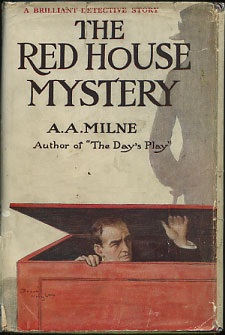
1. The Red House Mystery by A. A. Milne (1922)
This is the one that could get bumped! Consider it one of my favorite mysteries where the puzzle plot vaguely disappoints, the promise of a locked room mystery evaporates, and the closed circle of suspects includes one, maybe one-and-a-half people. In spite of all that, this is actually a delightful read, as warm and funny as you could hope the creator of Winnie the Pooh could be when writing for adults.
In Antony Gillingham and his enthusiastic young Watson, Bill Beverley, we find a delightful duo to spend our time with – which is good as most of the book covers their many conversations from the murder to just after the inquest when Antony reveals all. (It’s sort of a My Dinner with Andre for the Sherlock Holmes set.) And the solution isn’t half bad, really; I simply wish that Milne had juggled more potential balls in the air so that I had a greater chance of being surprised.
Interesting footnote: since my review came out, I have been informed that Antony Gillingham was the model for Kosuke Kindaichi, the famous Japanese detective created in 1946 by Seishi Yokomizo. Discuss their similarities amongst yourselves.

2. The Murder of Roger Ackroyd by Agatha Christie (1926)
I think 1920’s The Mysterious Affair at Styles deserves kudos, both as an authorial debut and as the premiere performance of one Hercule Poirot. Then came four more novels, your enjoyment of which depends on your tastes. Do you hate Tommy and Tuppence? Then skip The Secret Adversary. (I like the Beresfords myself, but TSA can feel like a slog, depending on my mood.) Murder on the Links features the return of Poirot and Hastings – but don’t get used to them. (Personally, it’s a case I have never warmed to.) If you poll the fans, you’ll find a huge number of them count The Man in the Brown Suit to be their favorite thriller. I wouldn’t go that far, but the split narrative is quite clever and definitely a harbinger of – well, before we get there, we have to deal with The Secret of Chimneys. Raise your hand if Chimneys is your favorite thriller.
I thought not.
By sheer happenstance, I wrote about Roger Ackroyd only last month; you can read all about it by clicking the title above. Suffice it to say that this is the first in Christie’s sizable compendium of “classics” – and deservedly so. I would call it her finest achievement of the decade, and while the lesser works of the next few years exemplified her rough emotional state, Ackroyd was an apt predictor of Agatha’s brilliant output from 1930 through 1950.
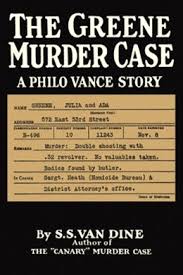
3. The Greene Murder Case by S. S. Van Dine (1928)
I freely admit that The Bishop Murder Case might be a stronger selection, but ever since Scott K. Ratner voiced his disaffection for a book where a nursery rhyme killer has the great good fortune to live on the same block as folks named Cock Robin, H. Dumpty and M. Hubbard (okay, maybe I’m exaggerating), I haven’t been able to look at that book the same way again. And I have always had a fondness for this perverse Cinderella story. It’s hardly a fair play mystery – Philo Vance nabs the killer mainly because just about everyone else is dead – but lack of fair play is the trouble with a lot of the 1920’s books I have come across, This is an excellent, blood-soaked brownstone mystery, and Philo Vance is kept so busy finding bodies that he has a bit less time for his usual “kick-in-the-pance” behavior.
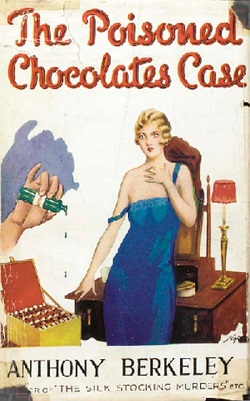
4. The Poisoned Chocolates Case (1929) by Anthony Berkeley
Berkeley was always jumping the gun to take down the tropes of classic detective fiction even as his compatriots were inventing them. Here, he proves beyond a shadow of a doubt that “the facts of the case” can be twisted to serve the imaginations of any detective. Who poisoned the box of chocolates? Who was the intended victim? Berkeley’s supremely egotistical – and often wrong – sleuth Roger Sheringham turns his club’s tragedy into a contest. He and five friends propose one solution after another, each one clevererand seemingly more foolproof) than the last. In the end, however, Roger once again goes down in flames as little Mr. Chitterwick makes fools of them all and unmasks a most surprising killer.
To my utter dismay, despite reading this one at least twice, I’ve never reviewed it on the blog – which gives me the perfect excuse to reread it. The British Library edition includes two extra solutions, one by Christianna Brand (I hear it’s pretty weak) and a brand new one by author/editor Martin Edwards (I hear it’s very clever). Sounds like a lovely project for 2026!
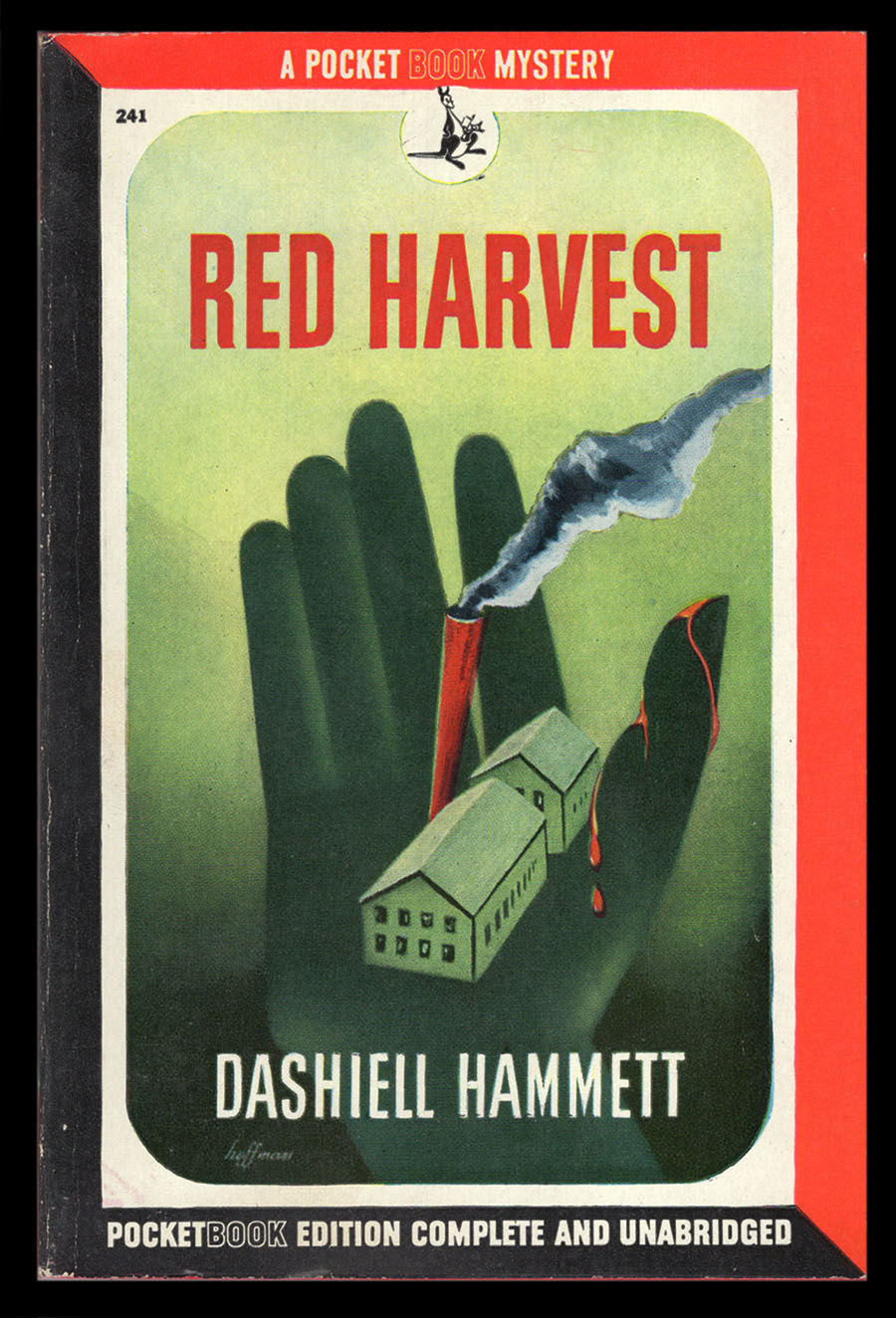
5. Red Harvest (1929) by Dashiell Hammett
This is my favorite Hammett novel – and another book that I should reread and write about here. Originally serialized in four installments in Black Mask magazine, this is the supreme merging of pulp fiction and legitimate mystery. The Continental Op is summoned to Personville, a California title with a delicious nickname, to – well, he’s not sure what he’s supposed to do because the guy who summoned him is dead by the time the Op gets there. Filled with a series of puzzles and dangerous devices, as well as one of the earliest and most original femmes fatales in the person of Miss Dinah Brand, Harvest is an epic work, still impervious to film adaptation (it needs to be a mini-series!!) and jam-packed with so much stuff that it merits multiple re-reads. Which I’m going to have to do very soon . . .
And, finally, that controversial bonus “mystery” I was telling you about . . .
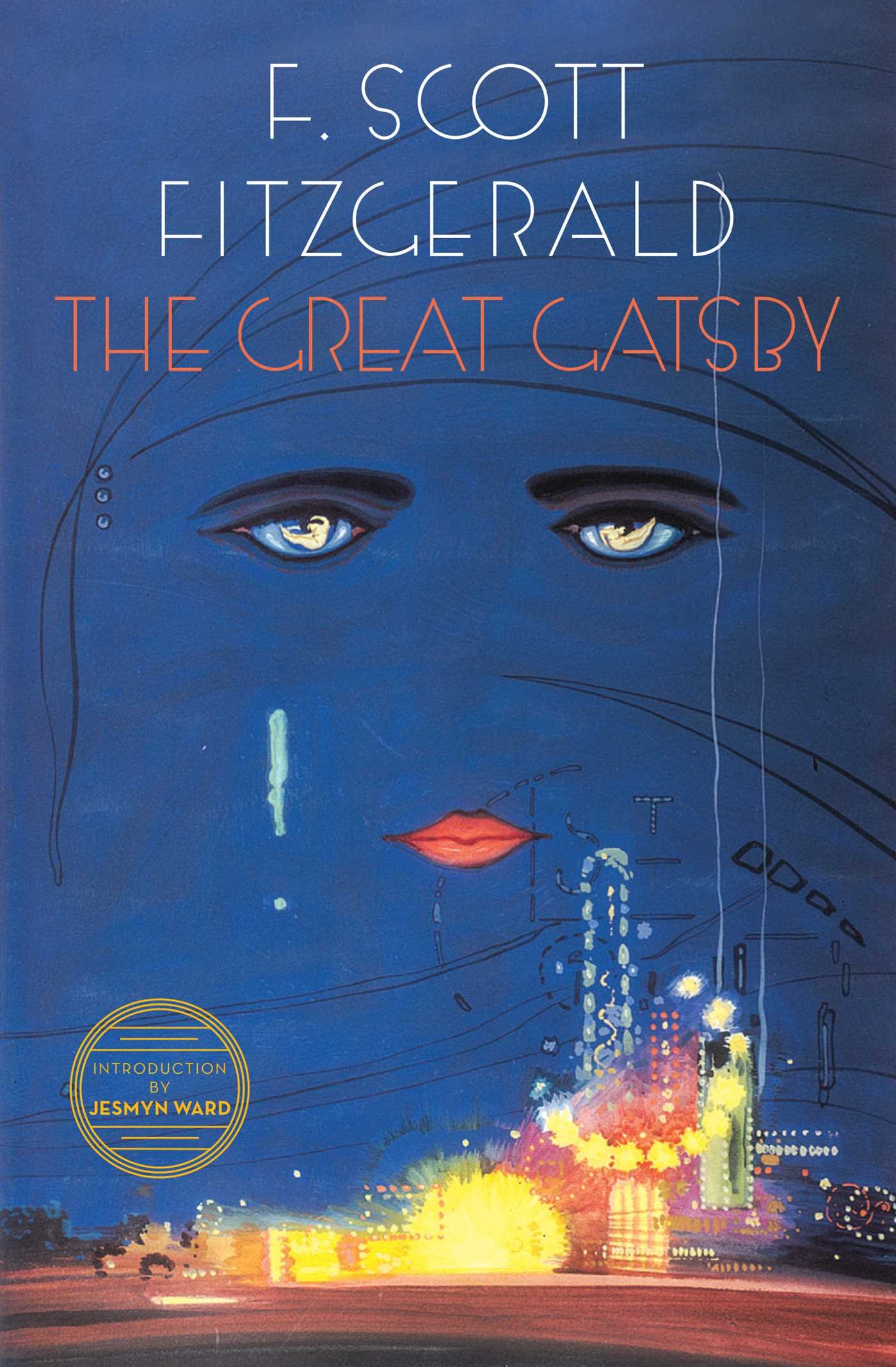
6. The Great Gatsby (1925) by F. Scott Fitzgerald
Alright, bear with me here! This book is full of mysteries – at least it was to every high school journal ever assigned to write a paper about the strange green light, or Gatsby’s shirts, or the sexuality of Nick Carraway and Jordan Baker, or the eyes of Dr. T.J. Eckleburg. It’s also stuffed with furtive acts and violence, including a hit-and-run killing at the end which stays mysterious for . . . a few pages at least! I used to read other books besides mysteries, and Gatsby will always be one of my favorites. Who’s to stop this genre fan from grabbing hold of a classic and sliding it into his deck! Go on – try and stop me!
Okay, Book Club, I stumbled through the 1920’s – now can we turn to that 50’s-60’s mash-up you promised???
 Ah Sweet Mystery!
Of course GATSBY counts – a great choice and a magnificent book of course. Great list Brad, though one point off for giving me acidic flashbacks to SKIDOO, a truly appalling film with only its great Nilsson score to redeem it 😁
LikeLiked by 1 person
Payback for making me rewatch FEMALE JUNGLE!!! 🥱
LikeLiked by 1 person
🤪
LikeLike
There are some excellent novels from the so-called “humdrum” writers in the 1920s. The Duke of York’s Steps by Henry Wade, The Starvel Hollow Tragedy by FWC, and The Case with 9 Solutions by JJ Connington are all first-rate in my opinion.
The Death of Laurence Vining by Alan Thomas and The Mystery of the Peacock’s Eye by Brian Flynn would probably make my top 10 list as well.
LikeLiked by 1 person
Memorable books for me from the decade include:
LikeLiked by 2 people
I would go with (in no particular order):
The Red House Mystery by A. A. Milne
The Clue of the New Pin by Edgar Wallace
Whose Body by Dorothy L. Sayers
The Murder of Roger Ackroyd by Agatha Christie
The House of the Arrow by A. E. W. Mason
Murder in the Maze by J. J. Connington
The Desert Moon Mystery by Kay Cleaver Strahan
The Barrakee Mystery by Arthur W. Upfield
The Poisoned Chocolates Case by Anthony Berkeley
LikeLiked by 1 person
Would either of the Margery Allingham mysteries from the twenties be allowed ?
The White Cottage Mystery (1927)
The Crime at Black Dudley / The Black Dudley Murder (1929).
LikeLiked by 1 person
Of course they would! I’m just not a big Allingham fan myself.
LikeLike
Pingback: My Top 5 Mystery Reads from the 1920s – crossexaminingcrime
I’m not sure that disaffection is an accurate description of my attitude toward the Bishop Murder Case or Van Dine. I actually enjoy Van Dine— including the Bishop Murder Case— IMMENSELY. And in terms of providing an intriguing premise, Bishop probably tops the lot. It’s just taking Van Dine seriously I consider a problem.
For the biggest flaw of The Bishop Murder Case, IMO, is not its long list of jaw-dropping coincidences. That aspect is admittedly kind of hilariously stupid, again it’s hilariously so, and hilarity can be lots of fun. No, the greatest fault of the novel is that its mouth-watering collection of intriguing clues— Mother Goose, chess, Ibsen— have absolutely no bearing on the solution. The mark of a great mystery writer— Christie, Carr, Brand, Berkeley, Queen— is that they give us a series of odd details and then a solution that explains why those odd details are present. This is something Van Dine doesn’t— and apparently can’t— provide. The solution to the Bishop Murder Case is not particularly stupid, it’s just inordinately disappointing. On the other hand, a whodunit with the premise of Bishop but with a solution to match would probably outstrip all of Carr, Christie, and Brand as my favorite mystery novel.
LikeLike
Pingback: Top Ten: 1920s Mysteries and Crime Fiction – Mysteries Ahoy!