Recently, I shared photos with you as evidence of my wall to wall to wall to wall assortment of mystery books. Interspersed amongst the novels and plays and story collections are books about mystery fiction. There are the historical, like Martin Edwards’ The Golden Age of Murder i(2015), the critical, like Julian Symons’ Mortal Consequences (in Britain Bloody Murder, 1973) and the playful, like Dilys Winn’s Murder Ink (1977). Ever the ambitious writer, John Curran’s latest book, The Murder Game: Play, Puzzles & the Golden Age, manages to be all three of these and more.

Part survey of the Golden Age of detective fiction (including a lengthy discussion over when that Age even occurred), the book has a simple, specific argument to make: that Golden Age mystery authors were engaged in a most delightful and hugely popular game with their readers. The stakes of the game were comparatively nil, considering that for much of the period in question, the world was engaged in war, plague and economic disaster. And yet, for lucky readers, the game focused their intellect and energies on far more enjoyable pursuits, from wandering through picturesque villages haunted by serial killers to coming upon wealthy men bludgeoned to death behind the locked doors of their private sanctums.
Dr. Curran brings to bear a near lifetime of experience as a reader and scholar of mystery fiction to give us a manuscript that is lucid, just as his previous treatises on Agatha Christie, Agatha Christie’s Notebooks and Murder in the Making were, and well-clued – the bibliography at the end is fifty-six pages long. The book is also ludic. Yes, ludic . . . a word that I am sorry to say that in my nearly seventy years of considering myself well-read, has managed to elude my grasp. A shame, really, because I am a ludic person, oh yes I am!
To be ludic is to be playful, and Curran writes about the playfulness of classic detective fiction. It seems that most authors of the period made mention of it, too, and the compendium of definitions and mission statements made by these writers, famous and inconspicuous, is one of my favorite parts of the book. One of the most – oh, let’s call it lucid – definitions came from A. E. W. Mason (The House on the Arrow) in 1935 and lays the game being between author and reader:
“The author’s aim is to keep the reader guessing, where the puzzle, the whole puzzle, and nothing but the puzzle is his intention, the crime is discovered in the first chapter or thereabouts, the circumstances are made conventional so as not to distract the reader from the riddle; and the characters one after the other are shown to be all so obviously suspect or all so obviously innocent that no one shall be able to spot the criminal until in his last words the author hands him over to the police.”

Many authors published variations on this same theme throughout the years, adding their own points of interest. Dorothy L. Sayers stressed the importance of “setting a problem and its solution by logical means,” while Father Ronald Knox, who would go on to write one of the most significant sets of rules about the game with his Ten Commandments, talked about the importance of arousing a reader’s curiosity with one’s story.
Then there was Agatha Christie, whose summation of the game can be found in her Autobiography. Curran reminds us that her manuscript was largely spoken into a dictation machine, “which accounts, in all likelihood, for the odd syntax.” I prefer to think that Christie was being ludic when she wrote this:
“The whole point of a good detective story was that it must be somebody obvious, but at the same time, for some reason, you would find that it was not obvious, and he could not possibly have done it. So, really, of course, he had done it.”
The Murder Game explores the historical antecedents of the Golden Age and then gets down to brass tacks, discussing the gamesmanship of dozens of authors, right down to the various rules created by Knox, his fellow writer S. S. Van Dine, and other contributors to the game, from A. A. Milne to John Dickson Carr. In examining the difference between crime stories and thrillers, those action-packed adventures which may or may not engage the reader’s sense of gamesmanship, with the detective story, which must do so, Curran lays out the various elements prevalent in the latter, including, of course, the presence of a detective, a closed circle of suspects, and a crime – usually murder – which is then investigated and solved, but not before all the essential information needed to solve the case is paraded before the reader.

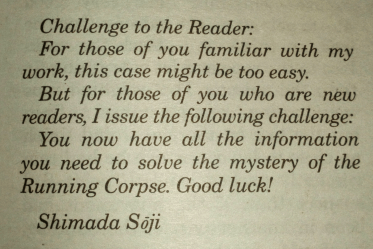
The trick, according to authors like Sayers, is to give the reader everything they need to play detective in a manner that will hopefully cause them to lose the game. (I can safely say, after years of experience, that it’s a game I play often and enjoy losing just as much, if not more, as I enjoy winning.) Thus, when Ellery Queen, in a book like The French Powder Mystery (1930), lays down his “Challenge to the Reader,” we are theoretically capable of coming up with the who, how, and why of the crime – but I challenge you to look over the twenty-eight pieces of evidence presented to you and then determine which of the twenty-one suspects “dunnit.” Take your time: in my volume, Ellery speaks for forty pages before he unmasks the killer!
According to Curran, one above all the elements found in detective stories defines the sub-genre and proves necessary to play the game: “The one fixed element is the presence, and presentation to the reader, of clues. It is these clues, and their interpretation, that will lead inexorably to the truth; and, crucially, it is these clues that distinguish the detective story from all other forms of the crime story.”
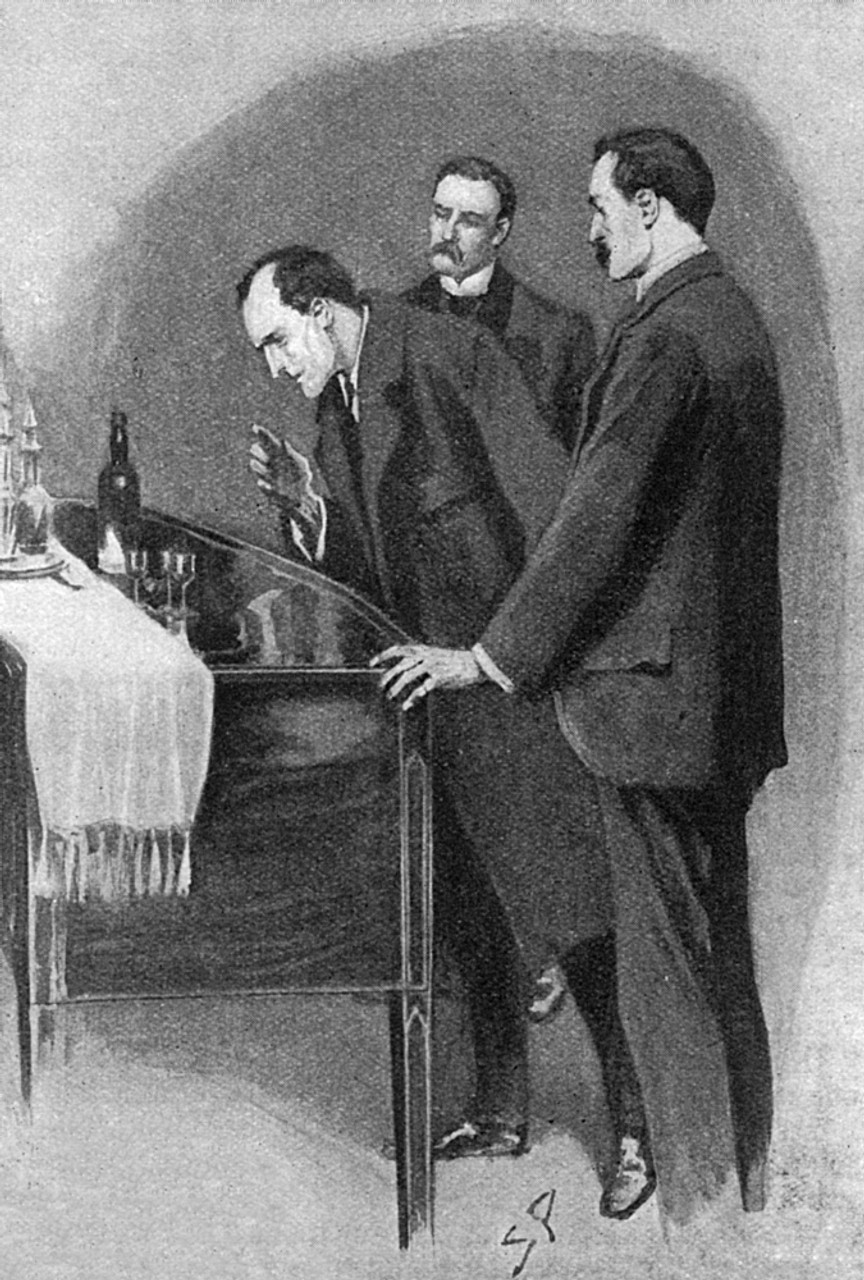
Curran’s book is itself well-clued with a number of spoilerish interludes analyzing the gamesmanship in specific titles by Christie, Carr, Anthony Berkeley, John Sladek and Anthony Horowitz. We are also treated to related expositions on the beloved board game Cluedo and the passion shared by most mystery lovers for crossword puzzles. Combining the intellect of a scholar and the wit of a fellow game player, John has written another essential text for the mystery reader’s bookshelf – even overstuffed shelves like mine! – as an adjunct to the classic detective stories we love to read and play.

I waited until I had received the book and read it to check out Jim Noy’s interview with John on his podcast In GAD We Trust! Be sure and give it a listen!! Meanwhile, there are two boxes on my doorstep, each containing a book!! More opportunities for me to play The Murder Game!! Over the next week, I’ll let you know how well I fare with both of them!


Sounds great, thanks Brad. Might make for a decent Christmas read …
LikeLiked by 1 person
And now I have to buy another book! Will this madness ever stop?
(I hope not!)
LikeLiked by 2 people
Wait till you get to the end and find the list of titles you don’t own yet, Julie – I’m putting my house on the market!!!!!!!!
LikeLike
Pingback: BECAUSE YOU LIKE THE LISTS . . . Brad’s Top Ten Reads of 2025 | Ah Sweet Mystery!