My annual Secret Santa book exchange is often a lesson in SUSPENSE!!!! That’s because most of the participants in our game live across the water, and you never know exactly when the package will arrive!! Imagine my SHOCK!!!! when I received a MYSTERIOUS!!!! package in early October and discovered a stack of objects ensconced in cheerful Christmas wrappings.
EXCEPT FOR ONE!!!!!!!!!!!!!
Yes, a single wrapped object contained a special note which read, “You have official Secret Santa permission to open this book in October, ahead of Christmas day.” WAS THIS A TRICK????? Frankly, I didn’t care because I’m a sucker for presents. And so I tore off the gift paper and discovered that someone had decided to indulge my newfound enjoyment of British suspense author Celia Fremlin by gifting me her spooky short story collection, Don’t Go to Sleep in the Dark. Proof positive that Santa sees you when you’re sleeping, knows when you’re awake . . . and just possibly belongs to my Book Club.

The Faber cover certainly suggests that the thirteen tales contained therein are sure to raise your hackles. “Grips like grim death,” cries The Spectator. “. . . chill(s) the blood . . .” screams The Telegraph. I questioned whether I would ever open it because, frankly, I’ve gone off horror. I used to like it, back in the days of Universal monsters and slick Hammer creepshows and elegant thrillers that unsettled you rather than made you sick. The gorefests of today are no friend of mine; I’ve even stopped reading Stephen King!
AND YET!!!!!!!!!!
(Sorry, it starts to become a habit.) And yet, I figured that Celia Fremlin didn’t operate on this plain. The Jealous One managed to be disturbing and funny at the same time, and I wondered if Fremlin’s “spooky” stories might not be after the same effect. Plus, the Sunday Times called this collection a “sly, subtly feminist take on the ghost story,” so it appears that Fremlin was giving us a slyer take on fear. And sure enough, for the most part, the things that go bump in the night here stem not from family curses or haunted graveyards but from the horrors attached to growing up, falling in and out of love, raising children, or growing old. With all this every day tsuris, who needs to summon a demon from Hell!?!
We’re also not dealing with the nasty people that populate the short works of King and other standard horror writers. Those people deserve the nasty fates that await them for their greedy tamperings with the supernatural. The people who do bad things – or, mostly, think bad thoughts – in Fremlin’s work are not bad people. They find themselves in a dark place, sometimes literally but always figuratively, and they must get out of their own heads to survive. Fortunately, in most cases, Fremlin bestows upon her characters a sort of grace – a Christmas spirit in the midst of Halloween, if you will. Her characters tend to survive whatever brush with the unknown they experience and to be changed for the better.
Of course, sometimes, they’re just . . . changed.
The first story, “The Quiet Game,” explores the pressures on mothers raising children in the strict confines of the city. You can’t help but feel sorry for this young mum whose kids are – well, they’re just kids, but everything they do seems to disturb the obnoxious neighbors living beside and beneath their apartment – until the mother conceives of a drastic way to distract her children.

“The Betrayal” poses an intriguing question: would you help ease the suffering of a person who once made you suffer? Unfortunately, this one goes by too quickly to leave more than a tiny sting at its tail.
“The New House” is a meatier story. A spinster has raised her niece to become a lovely young woman. Now the girl is engaged and plans on moving out, but the aunt can’t help feeling that something is wrong with her fiancé. Her anxieties give way to a favorite device of Fremlin’s – disturbing dreams – and the story culminates in a nice, if unsurprising, twist.
“Last Day of Spring” is another wisp of a tale, but oh, such a rich exploration into the horrors of aging! The ending is ambivalent, but then what exactly do we know about our transition into the beyond?
One of my favorite stories in the collection, “The Special Gift,” concerns Eileen, who hosts a writer’s group filled with a motley assortment of characters about whom I could honestly read a whole novel. An unwelcome stranger arrives who wishes to share his three-volume autobiography with the group. I can’t say I always understood what was going on here: maybe it’s because dreams figure into it again, and Fremlin is adept at presenting the disturbing illogic of a dream. But the ending is quietly terrifying.
The next pair of stories, “Old Daniel’s Treasure” and “For Ever Fair,” return to the theme of aging, but in starkly different ways. Daniel is a lonely old man, tolerated rather than loved by his daughter and granddaughter. For some reason, he has never told them about the great treasure he has hidden in the trunk in his room. And then he finds himself alone in the house, menaced by furtive noises coming from outside . . . In “For Ever Fair,” a middle-aged woman, appalled at her husband’s all-consuming interest in a pretty young thing, looks for a miracle in the form of a youth serum. Even as she faces the “shabby, shifty” Dr. J. Morton Eldritch, who has invented this supposed magic potion, she is not so much angry at the obvious fact that he is fooling her but that his con is so poor:
“Where was the dark, hypnotic gaze that should by now be fixed on me, boring into my very soul? Where was the rich, mellifluous voice, warm with concern (however bogus) for my pitiable middle-aged problems? Where was the practiced smile, the perfect teeth, the calculated aura of father-figure-cum-admirer that should by now be making me feel feminine and desirable again? Surely this is what one paid for in these rackets . . .”
I was absolutely convinced I knew where this tale was going, but I was completely fooled!

“The Irony of Fate” begins with a disaster: “A railway accident! I’ve been in a railway accident! She repeated to herself with a sort of bewildered pride. A real railway accident, and I wasn’t frightened at all. It was – fun! . . . Wasn’t it?” Typically for Fremlin, we worry about Frances, not because of her injuries, but because she tries to use the accident in a childish attempt of revenge against her disinterested husband. There are so many ways that the fate of a woman in her mindset could go wrong. That Fremlin is kinder to her characters gladdens me, but the ending here feels reminiscent of a lesser episode of The Twilight Zone.
“The Babysitter” explores the fears of a young mother leaving her child alone for the first time. Little Sally has been so fretful lately – waking up in terror over a creature she calls The Hen with Great Big Eyes. Daphne’s husband finally convinces her to leave Sally with a babysitter, but even though she comes highly recommended, Mrs. Hahn is so tall, and Daphne can’t help but notice her hair, “brushed back and up from the sides to form a sort of ridge on top” and her arms “flailing like great wings . . .”
“The Hated House” is another favorite, not so much for its perhaps too-familiar twist but for how Fremlin uses it here, and for the truly gorgeous writing that evokes the tormented inner life of a teenager. Lorna is relieved to spend an evening alone without the presence of her temperamental father and doormat of a mother. She musses the carefully arranged sitting room “with slatternly, spread-eagled violence” and plays pop records because they always make her dad angry. And then the telephone starts to ring incessantly, and a stranger’s knock is heard at the door. What follows may be familiar to most of us, but it’s haunting, lovely and sad all the same.
“Angel Face” is a disturbing tale, with an ending that is hard to fathom. The narrator has married the man of her dreams, only to be saddled with his young son. Of course, this is Fremlin, so even though the stepmother tries her best to be kind and motherly, we are horrified at her true thoughts about the boy, who has just learned about angels in school and is having terrible dreams each night about their hovering over him . . . with their sharp talons and protruding beaks!!!
“The Fated Interview” is as close as we come to a crime story in this collection. Lydia is so devastated after being dumped by her lover at work that she abandons her terrific job and apartment and becomes a Market Research drone. And then, one day, she stumbles into an interview that changes her life. I very much enjoyed the humor Fremlin injects here about the job, which reduces all people to types and all answers to multiple choice.
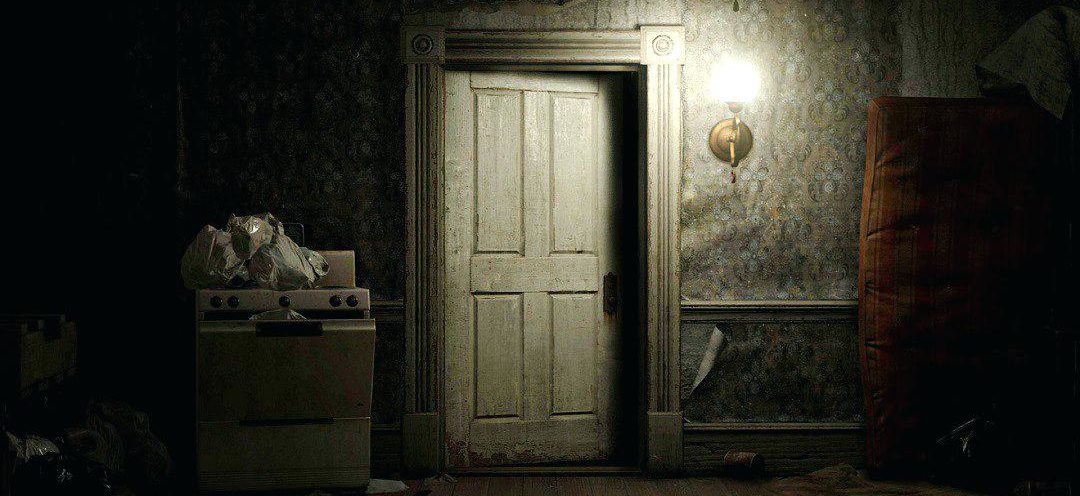
The final story, “The Locked Room,” begins: “A door banged in the empty flat upstairs.” Pretty, dark-haired Margaret, a mother left alone in her ramshackle house with two small boys, is not neurotic or jealous or sad – she’s simply trying to read her murder mystery when she hears the noises. Is it a ghost? Is it the serial killer who has been killing dark-haired mothers of young children in ramshackle houses? It’s a fine ending for the collection, and Fremlin pulls out all the stops. Yet once again she delivers a moral steeped in mercy – where even monsters deserve grace.
With its distinct lack of blood and guts, its ambiguous touches of the supernatural, and its often merciful final twists, Don’t Go to Sleep in the Dark was the perfect Halloween treat for this horror-averse reader. And it made me even more excited about exploring Celia Fremlin’s work again. Thanks again, Spooky Santa!
 Ah Sweet Mystery!
Great review and I am sure your Spooky Santa will be impressed at your speedy turn around on reading the book.
LikeLiked by 1 person
I’m sure HE will – considering what a fast reader HE is!! 🤣
LikeLiked by 1 person
I remember reading “The Locked Room” and being really shaken by it, especially the ending. In my inexpert opinion, Fremlin is the Hitchcock of suspense writing.
LikeLiked by 1 person
I went to look up this book on Amazon and found the magic words ‘you already own this item’. I read it in 2017, and don’t remember much, so am going to reread it with your magical words to look forward to afterwards. I’m not always a big fan of short stories, but will make an exception for Celia. Also, I love it that you and Jim do story-by-story critiques – I am far too lazy to do that myself, but very much like it when other people do
LikeLiked by 2 people
We do it so you don’t have to! However, if you ask me about clothes in books, my vast descriptive powers and knowledge of fashion will look like this: “He wasn’t naked.”
LikeLiked by 1 person
Pingback: BECAUSE YOU LIKE THE LISTS . . . Brad’s Top Ten Reads of 2025 | Ah Sweet Mystery!