Ten years ago, English-speaking fans of the classic Japanese mystery fiction known as honkaku and shin honkaku would have been lucky to find one newly translated novel a year to enjoy. Nowadays, there’s practically a glut of them, thanks largely to publishing house Pushkin Vertigo and the talent and non-stop effort of translators like Louise Heal Kawai, Ho-Ling Wong, and Brian Karetnyk. This year alone, we’ve had two Bizarre Mansion cases by Yukito Ayatsuji, The Labyrinth House Murders and The Clock House Murders, Murder in the House of Omari by Taku Ashibe, The Black Swan Mystery by Tetsuya Ayukawa, and Yasuhiko Nishizawa’s The Man Who Died Seven Times. I reviewed Labyrinth House and Omari, I’ve got Clock House on my TBR pile, I did not review Nishizawa’s book because, sadly, I did not get on with it, and I neglected to buy the Ayakawa because it was being compared to the work of Freeman Wills Crofts. (Can anybody tell me it it’s any good?)

Let’s face it, honkaku is hot! Then why have I been feeling so lukewarm about it? I find the books interesting for the historical background the older titles provide and the light that the newer ones shine on Eastern culture and attitudes. But the mysteries themselves, said to be inspired by the work of Ellery Queen and John Dickson Carr, haven’t always lived up to their bizarre premises and Golden Age trappings. And the characters? Author Soji Shimada warned us in his introduction to the first honkaku I ever read that characterization is virtually non-existent, just like in the good old days of Western crime fiction. As I get lost in the large cast lists of these books, I realize that characterization is actually a good thing, particularly when the mechanics of some of these mysteries inevitably disappoint.
But that doesn’t mean I don’t keep trying: already there are whispers of exciting new titles in the coming year, and 2025 couldn’t end without the delivery of a new translation of the Master. I’m speaking, of course, of Seishi Yokomizo, creator of seventy-seven books featuring the whimsical sleuth Kosuke Kindaichi, who deserves a place in the pantheon of eccentric detectives. The latest title, lovingly translated by Brian Karetnyk, is 1973’s Murder at the Black Cat Café. Pushkin Vertigo has issued a lovely paperback edition, and the first thing you notice is how slim it is! We haven’t had a title come in at under three hundred pages since The Honjin Murders – Black Cat is 220 pages long and feels smaller in your hands.

The surprises keep coming: this is not a novel, but a pair of novellas (or, rather, a novella and a novelette). You would think this means that Yokomizo has no time for his usual sprawling reach into the history of a family or a geographic region, and I wondered going in if this would necessitate a conciseness that might prove helpful in sorting out my growing ambivalence about honkaku mysteries. At the same time, these are the bits that I usually enjoy; would reducing or eliminating these elements make the stories even less enjoyable.
As it turns out, the amount of space doesn’t matter to Yokomizo: I learned just as much about post-war Japanese geographical history here as in the longer works, and one of these stories – the shorter one! – features a multi-generational saga involving three families!!!
But let’s begin at the beginning. The title story opens with a charming foray into meta-fiction. It seems that author Y (Yokomizo to all of us fans) once found himself recovering from an illness in a small village when he was confronted by none other than Kosuke Kindaichi! The two had never met before, and Yokomizo was embarrassed to learn that Kindaichi had read the books about his exploits that Y had written – without permission from the sleuth!
Fortunately, it turns out that Kindaichi is delighted with the author’s efforts (although he does comment, “If I could suggest one thing, it would be that you write a little more about what a handsome devil I am!”), and their conversation should prove delightful to classic mystery fans. (It was my favorite part of the book.) After all the intriguing locked room and impossible crime mysteries that Yokomizo has covered, his one wish is that Kindaichi might come across a less-traveled sub-genre of detective fiction known as the “faceless corpse” mystery.
I’ll give you a moment to think of your favorite case that involved a body whose face has been mangled beyond recognition. Mine is Agatha Christie’s After the Funeral. (She also tackled this trope in One, Two, Buckle My Shoe and perhaps others that I can’t think of until I’ve had my coffee.) Believe it or not, Yokomizo offers here a “faceless corpse” lecture that could have stepped right out of J.D. Carr, where he complains that most of these cases hinge on a simple manipulation of identity. The author Y wishes Kindaichi could come upon a case that utilizes this gory element in an interesting new way.
Black Cat mostly takes place in the spring of 1947 in a village that had the good fortune to escape most of the physical ravages of the war. The downside to this is that Japanese citizens have fled the burnt-out cities and suburbs and built up small communities like this with housing and businesses, and they have brought with them the sins that plague the cities, like drunkenness and prostitution. One venue that caters to all these delights in the Black Cat Café, which occupies a space next to a graveyard and a temple, most of whose priests have died in battle.

The café has been owned for a year by Daigo Itojima and his beautiful wife O-Shige. The couple had met in China during the war, and then both of them were repatriated back to China, not together but within six months of each other. Now they run this café with the help of three female employees and the café’s namesake, a big black cat that keeps an eye on the property. Nothing about this is wholesome, beginning with the geography: the café occupies a space on the wrong side of town, next to a crumbling graveyard and an all-but-deserted temple. The three women who work for the Itojima’s are prostitutes, and the couple themselves have each taken a lover.
Just after midnight on the 20th of March, a patrolling constable interrupts one of the last two temple priests digging in the café’s garden. When the policeman investigates, he discovers the decaying body of a woman, completely nude and with her face horribly disfigured by blows. In a bizarre stroke worthy of E. A. Poe, she has been buried with a black cat, its throat slit so severely as to nearly separate the head from the body.
Naturally, several mysteries arise out of this tableau. Who is this woman? Who killed her, and why? What has happened to the Itojimas, who recently sold the property and hightailed it out of town? And if their cat has been murdered, then who is that ebony feline prowling about the café and graveyard???
It’s a nice, creepy set-up – but, for me, it crumbled into a disappointingly standard case. Kosuke Kindaichi turns up, with a personal connection to one of the suspects, and he’s great – except he solves the case more like Miss Marple than Poirot; that is, he uses his insight into human nature and a lot of guesswork to come up with the solution, which is a mildly interesting variation on the standard “faceless corpse” mystery, although it still has everything to do with identity. The most interesting aspect of the case is the reason for killing the cat. Other than that, I became impatient during Kindaichi’s lengthy explanation at the end, which is couched in terms of certainty (“this must be . . . “and “I analyzed . . . “) but amounts to little more than guesswork about the actions of a group of strangers over a fairly lengthy period of time.
Yokomizo’s The Devil’s Flute Murders, the longest of his novels yet to be released in English, lists twenty-two characters in his cast, divided into four different clans and a team of investigators. “Why Did the Well Wheel Creak?”, the 79-page novelette included with Black Cat Café, contains just as many characters, knocked down from four families to three, and enough gore and plot twists to fill Gokumon Island. The structure is interesting: this is an epistolary tale, comprised of six letters sandwiched between a narrative that opens with a huge exposition dump and closes with . . . well, I’m not mean enough to tell you that.
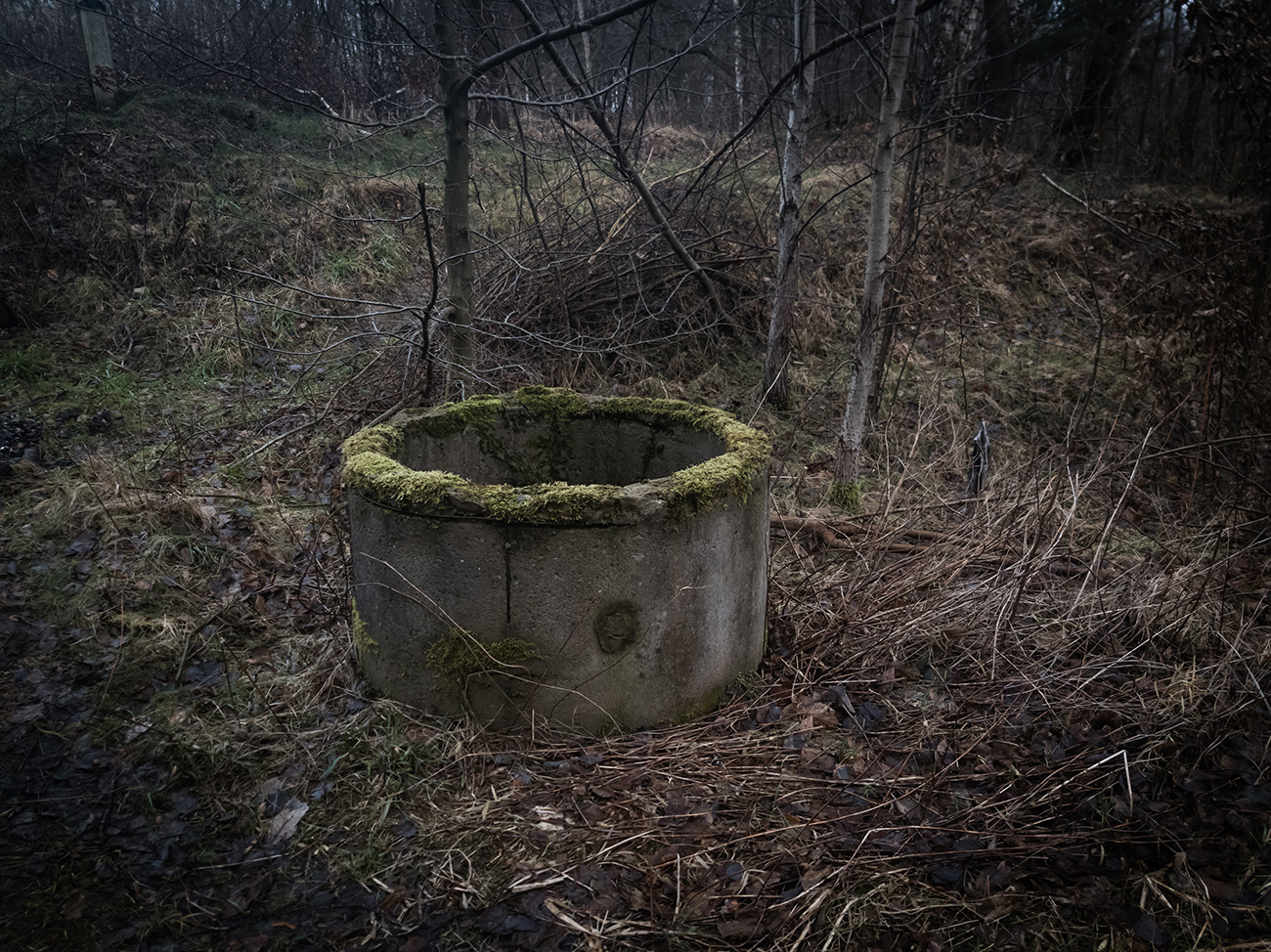
Unfortunately, I was perhaps too wrapped up in the cares of everyday life to give this story the full attention it deserves and requires: the history of the various connections between these three clans is complex and could have made an excellent novel, and yet it serves as mere background to the present-day story of bloody murder and madness that follows. It’s a more involving tale at half the length than the one set at the Black Cat Café, but – and I can’t believe I’m going to say this – it feels short, like one of Yokomizo’s novels has been squished into a t-shirt cannon and fired at you full blast! Kosuke Kindaichi makes only the barest of appearances at the end – and that isn’t necessarily a bad thing; clearly, Yokomizo was attempting something different here. My plan is to put the story away and give it another try in a few months.
I’m probably leaving you with a sense that once more I’ve had a less than satisfying experience with classic honkaku. And yet, Pushkin Vertigo is coming out next year with a number of new titles, including Yokomizo’s She Walks at Night, and I’m pretty darn certain I’ll be adding them all to my collection. Perhaps they will entertain me as much as The Inugami Curse or The Decagon House Murders or The Moai Island Puzzle did. Or perhaps, like Kindaichi, I will scratch my skull in perplexity until my head shakes. Perhaps I will start a whole new series of reviews under the mantle Honkaku Kvetch!
I would love to hear about your own experiences with this, or any, honkaku mystery!
 Ah Sweet Mystery!
The most recent honkaku title I enjoyed is The Samurai and The Prisoner by Honobu Yonezawa. It is actually a critically-acclaimed work in Japan, winning lots of mystery and general literary awards. However, it is seldom reviewed by English readers, probably because it is published by Yen Press, which is not well known by mystery bloggers. It is an interconnected short story collection, but I love how it all ties everything in the final chapter. The amount of Japanese names might feel intimidating at first since it is a historical mystery, but overall it is a pretty impressive title. I read this right after finishing the Meiji Guillotine Murders by Futaro Yamada (published by Pushkin), and it is interesting to see the similarity and differences of these two titles. I also recommended Meiji, though I personally enjoyed Samurai more.
Another honkaku-inspired novel that I seldom see reviewed is The Borrowed by Chan Ho-Kei. It is also an interconnected short story collections, and the way those stories are connected is very unique and clever. The Hong-Kong setting is really nice as well and very readable.
LikeLiked by 1 person
Thank you for the title suggestions! I bought Meishi Guillotine last year but never got around to it. Blame it on my truly teetering TBR pile, but none of my blogging friends seem to have picked it up either.
LikeLike
I’ll keep my eye out for these.
LikeLike
Finished this yesterday and I have to say, your description of the t-shirt cannon was very apt! 🙂
LikeLiked by 1 person
Pingback: Murder at the Black Cat Cafe by Seishi Yokomizo, translated by Bryan Karetnyk – Mysteries Ahoy!