Back in January, I promised you that this spring the Three Amigos – Mystery Scholar and Film Noirist Extraordinaire Sergio Angelini, actor and Holmes Pasticher Nick Cardillo, and stagestruck Agathologist Yours Truly – would gather together and draft a list of the Twenty Best Literary Detectives of All Time!!! Well, my friends, the Game is Afoot!!! After a mere five hours of chuckles and chicanery, we have created a list that is, if not absolutely, undeniably definitive, then it’s assuredly, most positively . . . well, it’s a list!
I know you’re all waiting with bated breath for the results, Dear Readers, because YOU had a part to play in them. I asked each of you to choose a nominee for the list and promised that the top two vote-getters would be placed on the list as Readers’ Choice! Well, folks, you nominated, and you came up with forty different detectives!! These sleuths hail from crime fiction all over the world; some of them I have never heard of and, translation issues considered, may sadly never have the chance to read. Still, I deeply appreciate your enthusiasm for the project, and I want you to know that the results have been recorded and that the top two vote getters will indeed appear as your choices when they pop up. One note: after a close discussion, the group decided to take manga detectives off the table. Frankly, we felt that there were so many brilliant options to choose from in standard prose that to add this subset of sleuths would only muddy our waters. And we honestly haven’t read enough of their exploits to fairly judge them. (In other words, give us more translations, please!!)
Here is how the draft worked: Nick, Sergio and each received six turns on the draft. During each turn, a player named a detective, explained why he or she deserves to be on this list, and suggested a novel or story that, in the player’s opinion, epitomizes that detective’s greatness. The order in which we placed our picks was determined randomly, and then we selected on a round-robin basis – WITH THIS EXCEPTION: any player at any turn could announce that he was placing one of the Readers’ Choice detectives on the list. This did not count as one of that player’s turns; he simply played a turn for the readers.
Following the concept of my favorite film podcast Screen Drafts, each player received a bonus in the form of a veto. A person plays a veto when he wants one of two things to happen: either he wishes to show his displeasure at a name being on the list at all, or he is concerned that the name has been played too low. Once a choice is vetoed, it goes back into the pick ether and can either disappear forever or be played again at a higher spot by any player. A player may veto one of the Readers’ Choice selections, but both these names have been guaranteed a spot on the list, so the player vetoing either of these picks must do so because he wants the name to appear higher on the list – which it eventually must do!
Is everybody clear on the rules? Then here we go! The randomizer selected the following pick order: I went first, Sergio picked second, and Nick picked third. (Readers Choice picks could affect the number at which we placed, but our order remained the same throughout.) My fellow drafters spoke for themselves about their picks, and I include their thoughts here. As for me . . . well, watch me fall into a trap towards the very end!!
And with that, here comes my first pick:
* * * * *
TWENTY
I picked Frederick Dannay and Manfred B. Lee’s Ellery Queen – EQ hasn’t aged well in the blogosphere, but he was the second GAD author that I started reading after Christie, beginning with the Signet reissues of First Period Queen (the ones with the babes on the cover, which is not how I think of Ellery.) Dannay and Lee reinvented the character at least twice, maybe as many as four times! The first incarnation is completely of the Van Dine school of detection, and young Ellery is at times more obnoxious than Philo Vance. What follows in the late 1930’s is a more romantic Ellery, one who dates ladies and fits well into the template of women’s magazines. And then, in 1940, we get Third Period Ellery – more thoughtful, more spiritual, more uncertain. These are my favorite books of the canon.
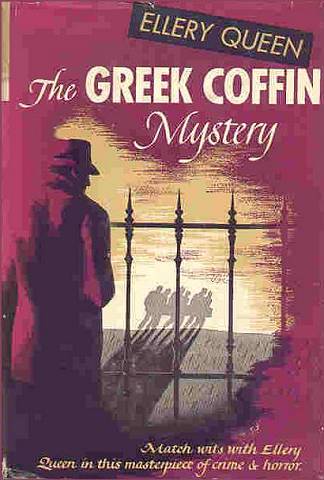
Ironically, I do not suggest starting with later Queen. Read The Greek Coffin Mystery (1932) to see a young, brilliant and overly cocky Ellery get knocked off his high horse over and over again. Or read The Siamese Twin Mystery, where Ellery tackles one of the series’ better dying messages – all while a raging forest fire threatens to end our hero’s career before he ever makes it to Wrightsville!
NINETEEN
Sergio picked S.S. Van Dine’s Philo Vance. “I remain utterly devoted to Philo and Van Dine, a Sherlockian pair who inhabit a rarified and fantastical world that is bizarre and quite sublime. Vance is genuinely erudite, and the first seven books in the series explore such subjects as architecture, philosophy, archaeology, anthropology, and much, much more besides. While the guilty parties are often easy to guess, in all these books the air fizzes with intellectual energy.
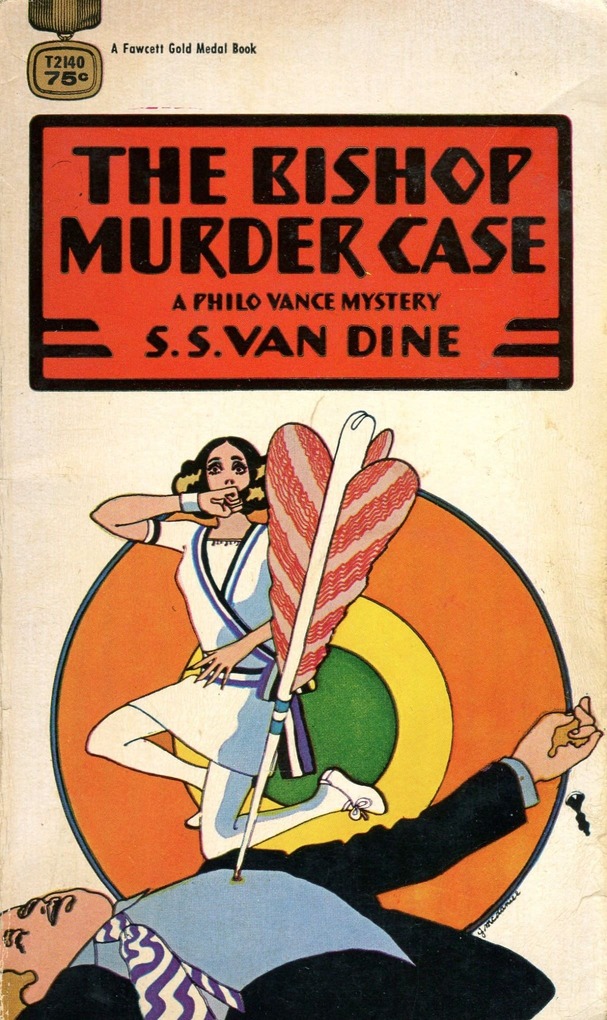
“For me, The Bishop Murder Case (1929) is the finest of them all, combining nursery rhymes, archery, chess, quantum mechanics, Henrik Ibsen’s plays, Freudian psychoanalysis within a very clever mystery!”
EIGHTEEN
Nick picked John Le Carre’s George Smiley. “I was not sure how the other players would receive my play of Smiley at number 18 since he doesn’t fit the conventional mold of the literary detective. Though the mystery genre and the spy genre are close relations, they operate by their own set of rules as do their characters. George Smiley, however, is an interesting figure caught somewhere in the middle. He operates as a detective in the novels in which he appears: first in Call For the Dead which blends a pure detective investigation with Smiley’s spy craft, then in A Murder of Quality, an outlier in the le Carré canon dispensing with the Intelligence “Circus” altogether.
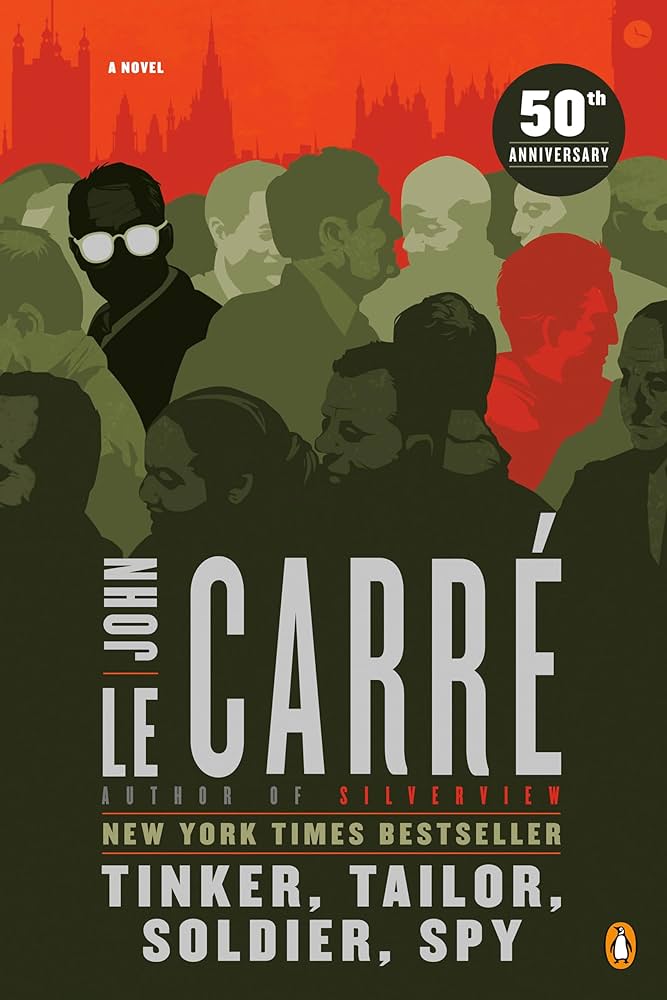
“My favorite of the Smiley books is the much-lauded Tinker, Tailor, Soldier Spy (1974) in which Smiley is brought out of retirement to find the Soviet Mole who has infiltrated the upper echelons of British Intelligence. Smiley’s methods are the same as any great sleuth: he pores over documents and written testimonials; he interviews witnesses, and he used observation and deduction to find the culprit. Smiley was created to represent the polar opposite of that other world-famous literary spy, James Bond, and it’s because Smiley relies on his brains, intuition, and investigative skill that I felt he was worthy of representation on our list.”
SEVENTEEN
I picked Dashiell Hammett’s Sam Spade. Via one novel (plus three short stories that I haven’t read yet), Dashiell Hammett created possibly the greatest hard-boiled private eye of all time. Certainly he’s the most human – a man who can cheat on his partner with the man’s wife yet risk his life to solve the man’s murder because “when your partner gets killed you’re supposed to do something about it.”
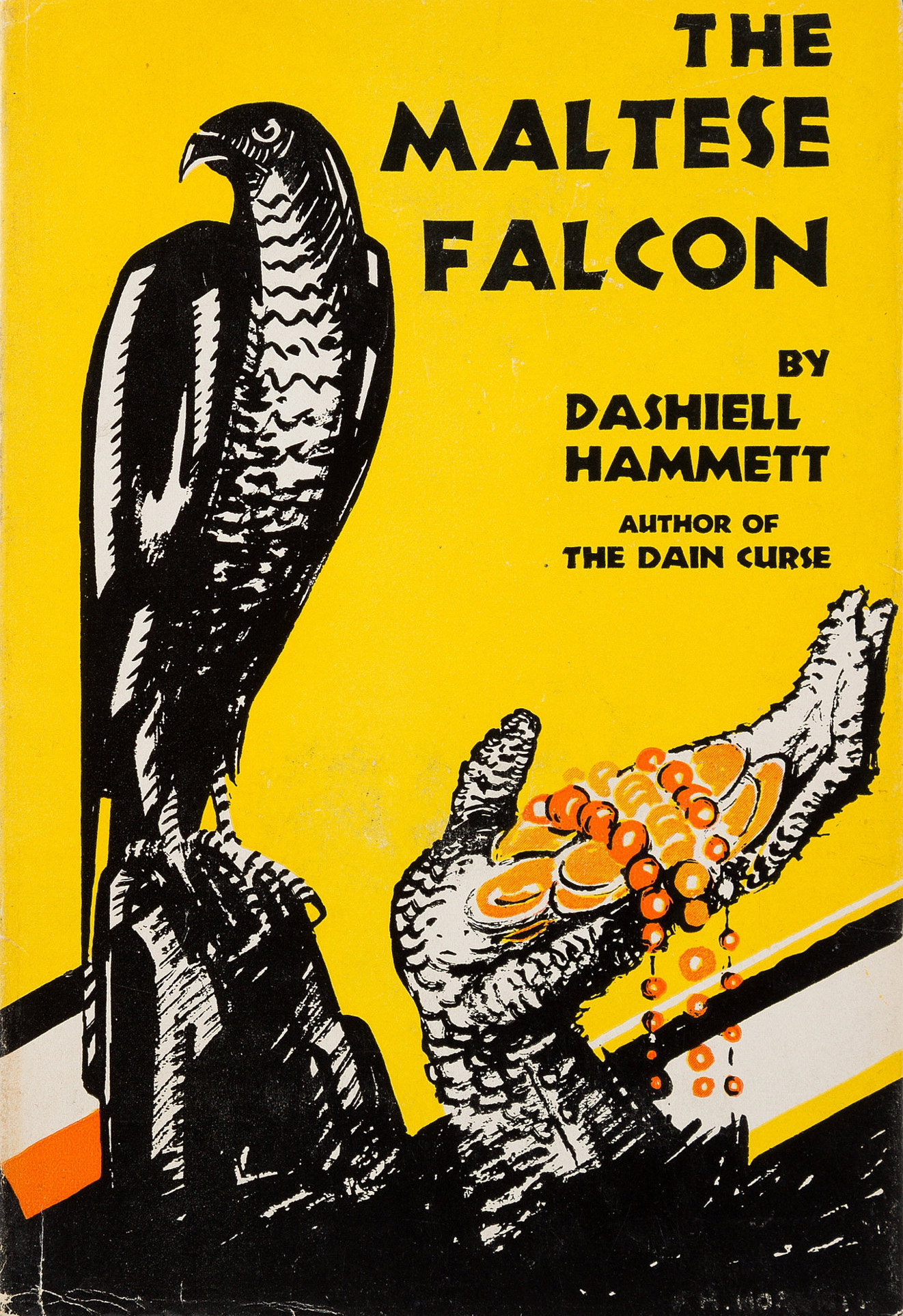
The Maltese Falcon (1929) is pivotal in my life as both novel and film. The 1941 film establishes Humphrey Bogart as the seminal film P.I., and yet he hardly resembles the Spade of the book, at least physically. John Huston lifted the dialogue wholesale from the book for his screenplay because – why mess with perfection. And yet, there are telling details about the case – and about the man – that make Falcon required reading.
SIXTEEN
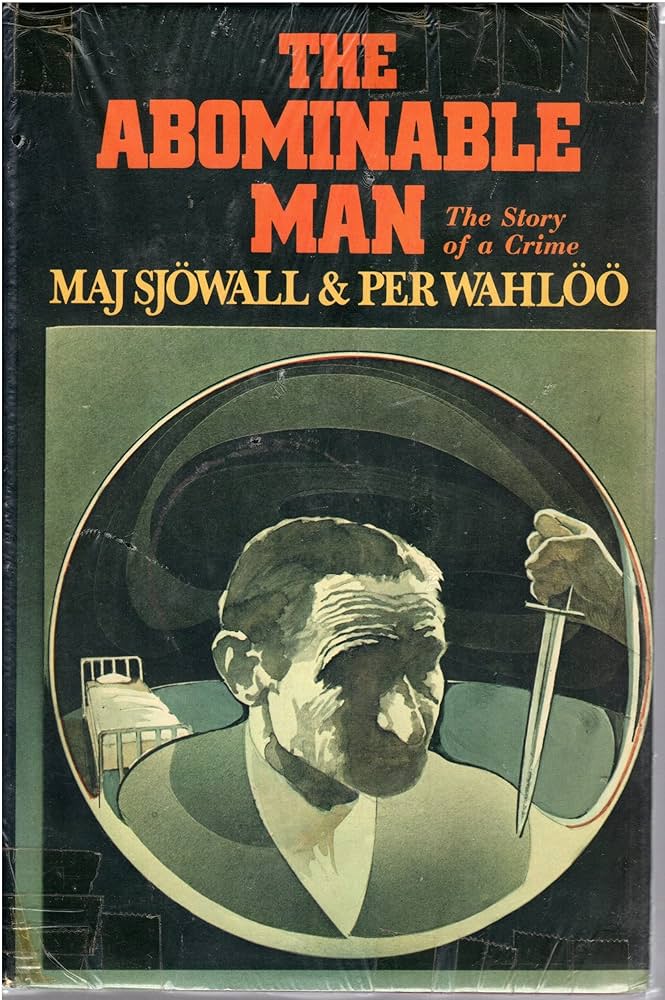
Sergio picked Maj Sjöwall and Per Wahlöö’s Martin Beck. “A policeman denied by his very ordinariness, Beck is a compelling figure because we can completely relate to him. The protagonist of ten novels, written between 1965 and 1975, that took as their subject the modern state of affairs of contemporary Sweden from a left-wing point of view. This is an exceptional achievement. My personal favorite – and my recommendation – is The Abominable Man (1971).
FIFTEEN
Nick picked P.D. James’ Adam Dalgliesh. “I chose Dalgliesh for several reasons, not the least of which is that P.D. James has become one of my favorite mystery writers and I wanted to do justice to her books and their central character. On our list, I wanted Dalgliesh to represent a certain kind of detective: the steadfast official policeman represented by the likes of Ngaio Marsh’s Roderick Alleyn, E.C.R. Lorac’s Inspector Macdonald, and Ruth Rendell’s Inspector Wexford. These characters and many others are in Dalgliesh’s DNA. His methods may be workmanlike and bureaucratic, but his background as a poet shines light on a nuanced, deep interiority. In her books, James allows us to peer into Dalgliesh’s innermost thoughts: he oftentimes becomes quite involved with the suspects that populate the mysteries he is investigating. He may wrestle with these emotions, but they never diminish his standing as a character.
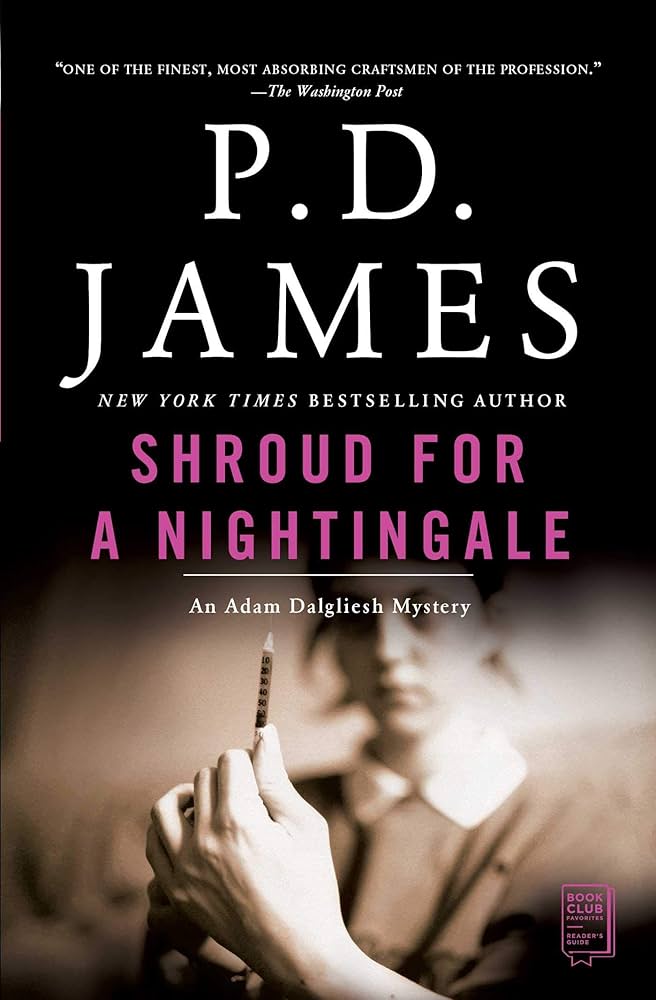
“As a representative work, I chose one of my favorite James novels, Shroud for a Nightingale (1971), a haunting and atmospheric mystery set in a nurse’s training school. For fans of the classical mystery, there is much to enjoy here as James weaves a complex tale of jealousy, hatred, blackmail, unrequited love, and secrets from the past, all brought to life by her peerless prose.”
FOURTEEN
I picked Christianna Brand’s Inspector Cockrill, the gnarly and funny Kent police inspector who manages to make an impression in a mere half dozen full length mysteries and some short stories. His logical mind unravels Brand’s clever puzzles, but not before he manages to come up with three or four equally stunning – but wrong – solutions. Often the most fun is to be had watching that bloom between “Cockie” and the suspects or his fellow crime solvers (i.e. the wonderful solving “contest” in London against Inspector Charlesworth in 1948’s Death of Jezebel.) He may be one of the funniest crabs in all of sleuthdom, but he also has room in his stingy heart for compassion – often saving the most of it for the murderer.

I would tell a friend to start with the best, 1944’s Green for Danger, which finds Cockrill on his home turf on a twisty and emotional case. The finale, which pits the good Inspector against everyone as they try and protect the killer, is a marvel. And the 1946 film is one of the best adaptations of a mystery novel of all time!
THIRTEEN
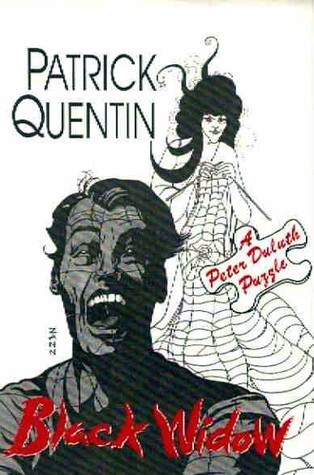
Sergio picked Patrick Quentin’s Peter and Iris Duluth. “Most husband-and-wife teams are facsimiles of Nick and Nora Charles, but the Duluth series is much more realistic, with an increasing interest in presenting and resolving plausible problems that engage the heart as well as the intellect. Their penultimate case, Black Widow (a.k.a. Fatal Woman) (1952), combines a really neat plot with very strong characterization.”
TWELVE
Nick picked Colin Dexter’s Inspector Morse. “Morse stands at the center of a mystery empire; fans of the genre are undoubtedly well-versed in the TV series starring John Thaw as well as the spin-offs Lewis and Endeavour which have captivated audiences for decades. The origin for all of this is, of course, the novels of Colin Dexter which, in comparison to their televised counterparts, are liable to surprise devoted fans. Dexter’s novels are gritty, grimy, and grotesque; populated by “earthy” characters obsessed with life’s baser instincts. Indeed, Morse himself is not immune to such blunt characterization. On the page, he is every bit as nasty as some of the killers he and Sergeant Lewis catch. But the magic trick of the Morse books is that we ultimately still route for Inspector Morse: we want him to conquer his health woes, to enjoy a pint and a crossword, and, perhaps, to find love.
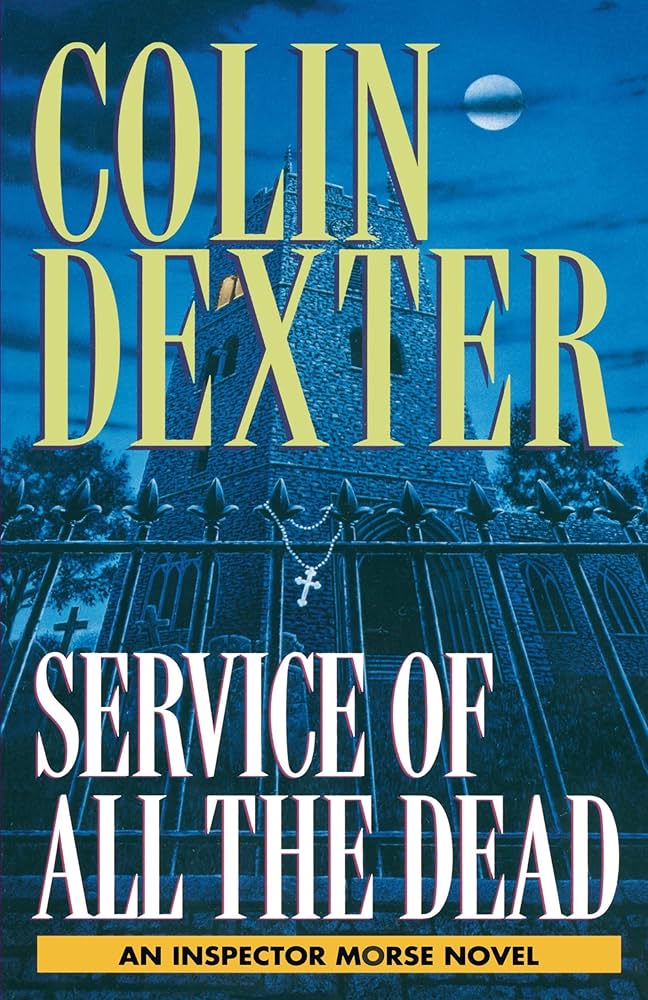
“Morse is poised on the precipice of romance in my favorite of the Dexter novels, Service of All the Dead (1979), a complex but jaw-dropping high-wire act that Dexter weaves around a series of murders in an Oxford church. The body count is high, surpassed only by the number of reveals and surprise revelations throughout. Dexter worked his plots like Morse’s beloved crosswords, and few are as genuinely rewarding as this one.
ELEVEN
I tried to place on of the Readers Choices here – Sir Henry Merrivale – and got vetoed by Sergio. So I picked Erle Stanley Gardner’s Perry Mason. He’s the world’s best defense attorney with the most solid team behind him in the form of secretary Della Street and detective Paul Drake; even Mason’s antagonists, Homicide detective Lieutenant Tragg and District Attorney Hamilton Burger, are perfection. The eighty-two novels and four shorter works featuring Mason outwardly appear formulaic: the client comes to Mason for help, a murder is discovered (often by the lawyer himself), and the attorney gets his client acquitted by finding the true culprit. Oh, and an awful lot of characters are involved in the mining industry!! Turns out, however, that there are all sorts variations to be had on this pattern, not least of which are the ways Mason and his gang operate throughout. These books are anything but “cozy” reading, and yet a Perry Mason novel provides me comfort more than any other series I know.
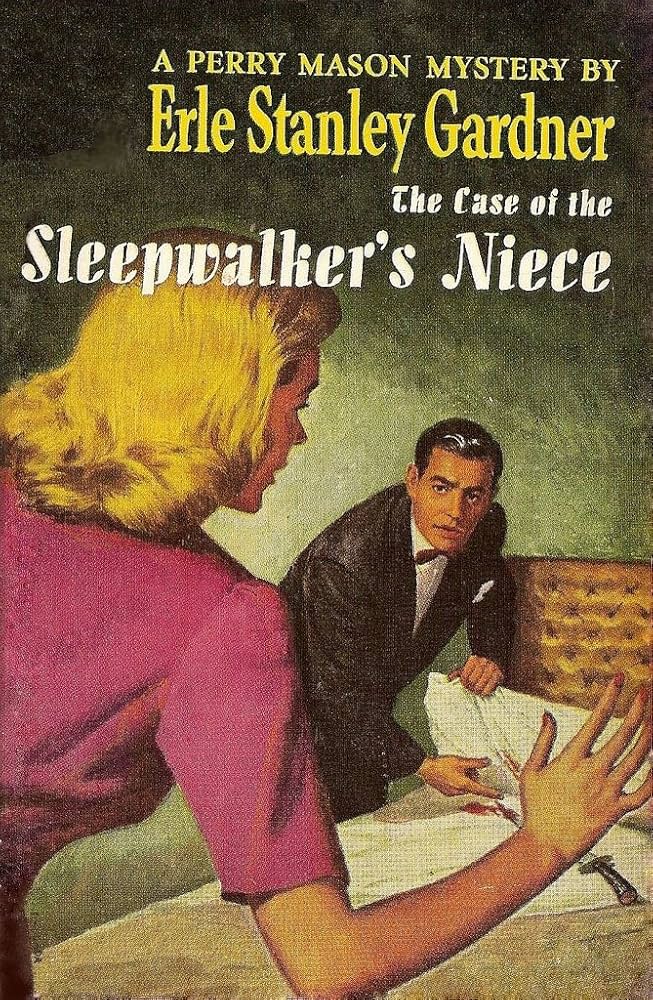
With such a long career, it was inevitable that the quality would vary and then fall off in the 1960’s. I would recommend a title from the 1930’s (very noirish and sometimes barely whodunits) or 40’s, which sees Erle Stanley Gardner at the top of his game. The Case of the Drowsy Mosquito may be my favorite, but it’s so special I would save it. I’m going to go with the first truly terrific combination of Mason and Friends with a fine whodunit: 1936’s The Case of the Sleepwalker’s Niece. It’s a real country house mystery, and Mason’s one of the guests!
TEN
Figuring that his favorite Carr detective should at least make the Top Ten on our list, Sergio opted to use the READERS’ CHOICE second highest vote-getter: Carter Dickson’s Sir Henry Merrivale: “HM seems to be a polarizing figure, but I know not why; he is funny, clever, wise, outrageous, diginified and is both part of the Establishment but perfectly capable of knocking it down. I love him! The humor is often used to distract from clues, and there is nothing I like more than having The Old Man give us his explanations.”
TEN
The reader suggestion for a first Sir Henry novel was She Died a Lady (1943). Sergio recommends The Judas Window (1938): “It’s possibly the best locked room mystery ever published (Robert Adey thought so!), so it’s my choice – but lots of others would serve.”

NINE
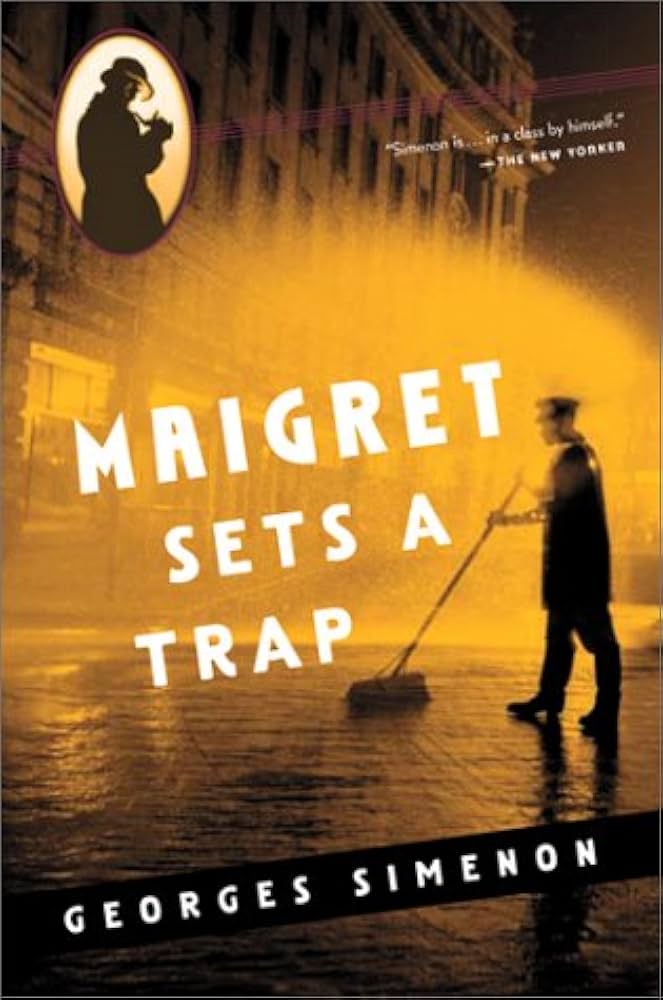
Resuming his own turn, Sergio picked George Simenon’s Inspector Maigret, “a unique figure from the Golden Age of Detection and in some ways my favorite. He is a real person mixed up in often sensational crimes committed by plausible people with relatable issues. The dream-like logic is not for everyone but the attention to mood and atmosphere is second to none. My suggestion for a first read, Maigret Sets a Trap (1955), has a really neat plot that sees the Inspector at something like his best.”
EIGHT
Nick picked Miss Jane Marple. “Anyone who knows me knows that I ride or die for Monsieur Poirot. However, lately, I have grown incredibly fond of Christie’s other series sleuth, Miss Marple. The Miss Marple books are an entirely different flavor of Christie: they are not as focused on the puzzle plot, instead these books are fascinating portraits of life, communities in England (be them villages or country houses), and the complexities of human nature. No other detective on this list operates quite like Miss Marple, eschewing the examination of footprints and analysis of tobacco ash for careful study of people and their circumstances. The fact that Christie – though she was loath to make the comparison – was able to draw upon her own life experience as she created Miss Marple (just read those passages of reminiscence in At Bertram’s Hotel) makes her a deeper, more fully-realized character than Poirot, a collection of quirks and mannerisms albeit delightful ones.
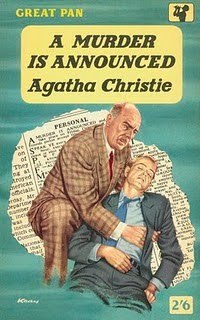
“There are a number of excellent Miss Marple books: I really recommend A Pocket Full of Rye (1953), but there are few Christie books – Miss Marple or otherwise – finer than A Murder is Announced (1950). It is one of her most carefully crafted mysteries with some of her very best clues (“She wasn’t there” sends a shiver up the spine every time), complemented by a portrait of an England recovering from World War II that serves as fascinating social history.”
SEVEN
I opted to place the READERS’ CHOICE top selection of John Dickson Carr’s Dr. Gideon Fell. Carr was my third discovery of Golden Age authors, after Christie and Queen, and I devoured all the cases I could find about outrageous figure inspired by no less than fellow crime author G. K. Chesterton. Fell appeared in twenty-three novels: I’m not sure if I’ve read them all, but he presided over such a different type of mystery than Ellery or M. Poirot that he stood apart – indeed, no man could look less like Poirot!! I was so enamored of this caped and mustachioed Father Christmas that I refused to read any books about his “rival” Sir Henry Merrivale. (Hey! I was a child! And it meant discovering a treasure trove of “new” Carrs when my head cleared as an adult!)
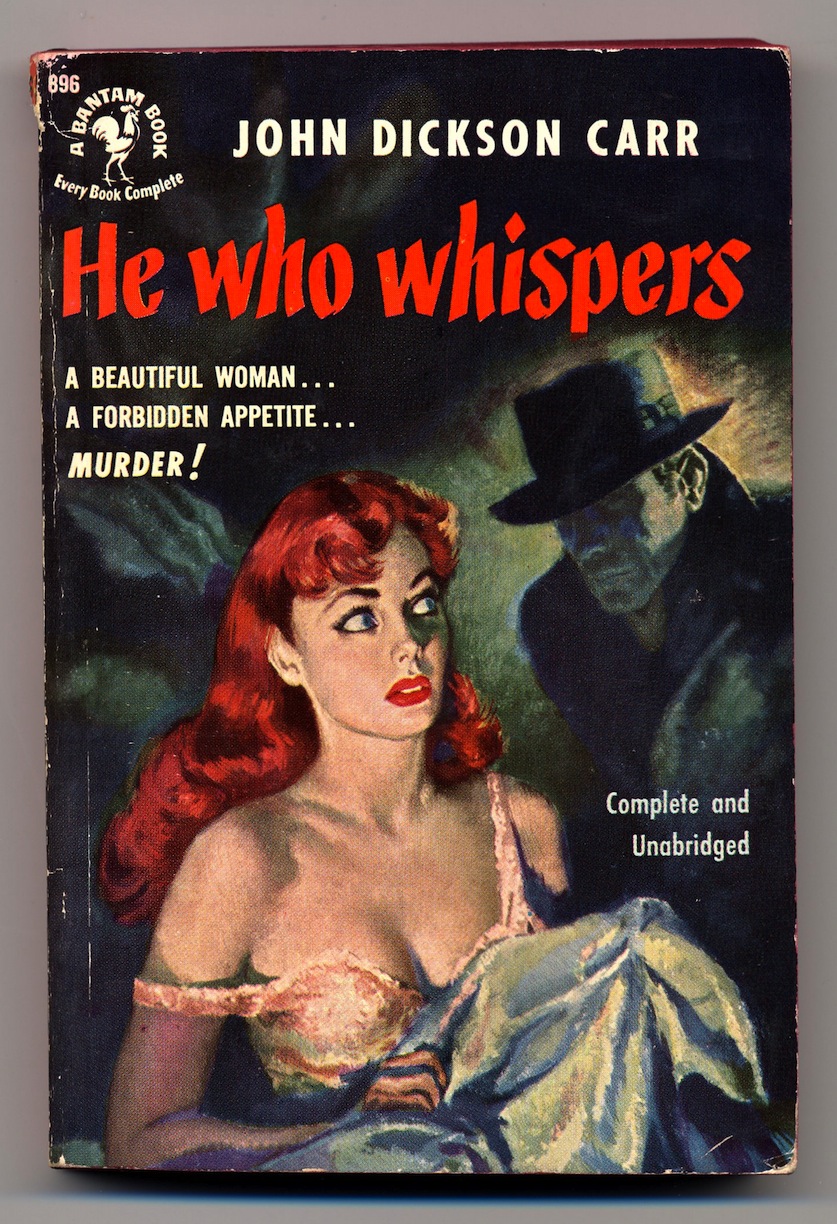
Throughout my youth, I probably counted The Crooked Hinge (1937) as my favorite Dr. Fell novel. I still love it, but the best of them all for me is He Who Whispers (1946). The Doctor takes on Fay Seton, who is possibly a vampire and definitely one of the best female characters in the canon.
SIX
My turn again! I picked Rex Stout’s Nero Wolfe, and I’ll be the first to admit that I don’t read Rex Stout for the puzzles. I have yet to find one that really engages me. No, I read these books to spend some time with Nero Wolfe and Archie Goodwin, a modern-day, truly funny Holmes and Watson. (And remember, the Holmes stories weren’t much as puzzles either.) Sometimes the set-ups are very cool, and Stout may be the only writer to be equally successful writing novellas as he was with the full-length novel. Our feisty pair are surrounded by a community of great side characters as well, so even if the murder(s) to be solved are ordinary, at least we get to dine on Fritz’ classic gourmet menus, hang out with Theodore Horstman in the orchid room, go on a stakeout with one of Wolfe’s ops, or hang out on the dance floor with Archie and Lily Rowan.
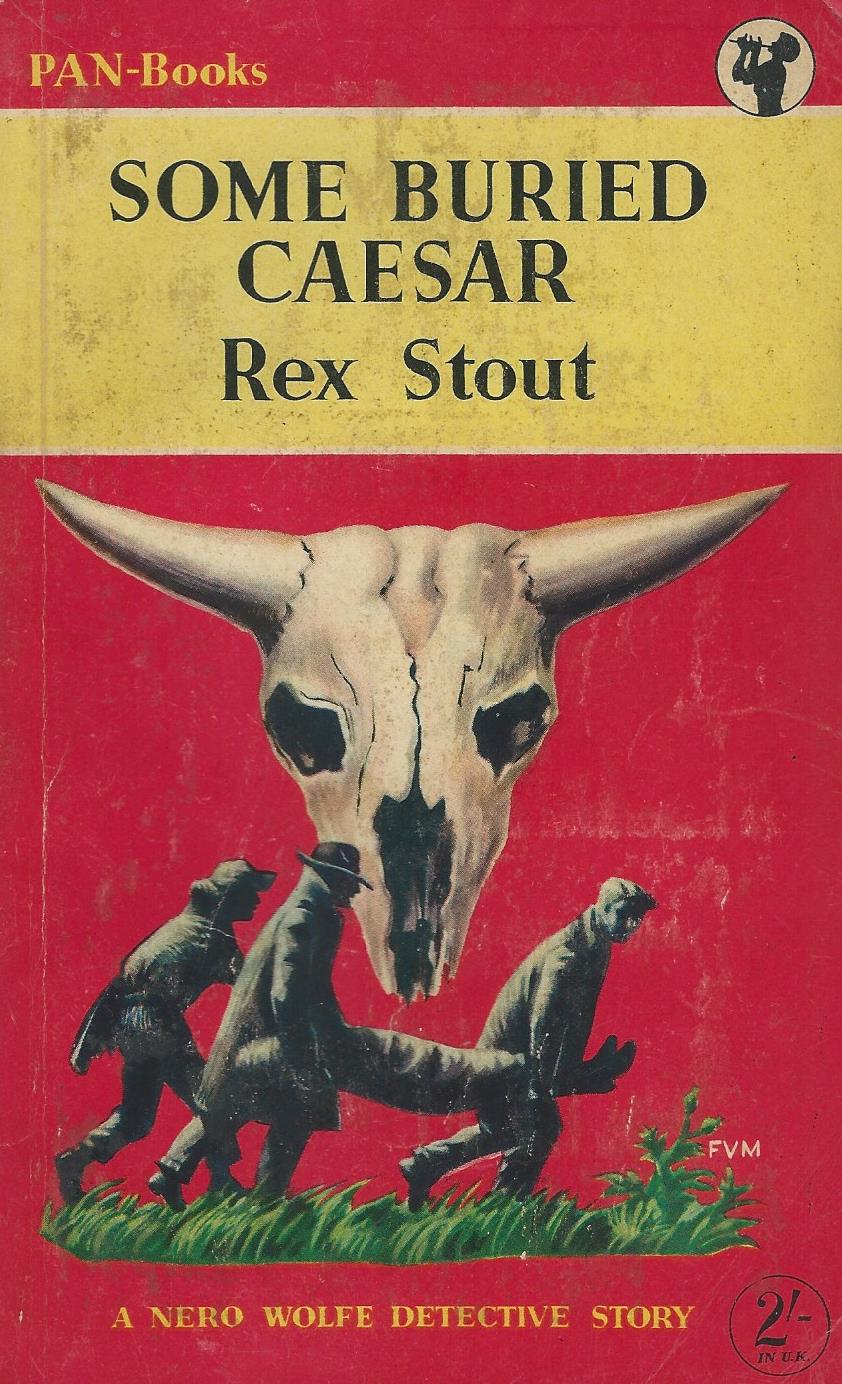
For my suggestion of a first read, let’s deviate from the formula of a client coming to see the notoriously housebound Wolfe and go with Some Buried Caesar (1938), not least for the sight of Nero Wolfe shying away from a mad bull!!
FIVE
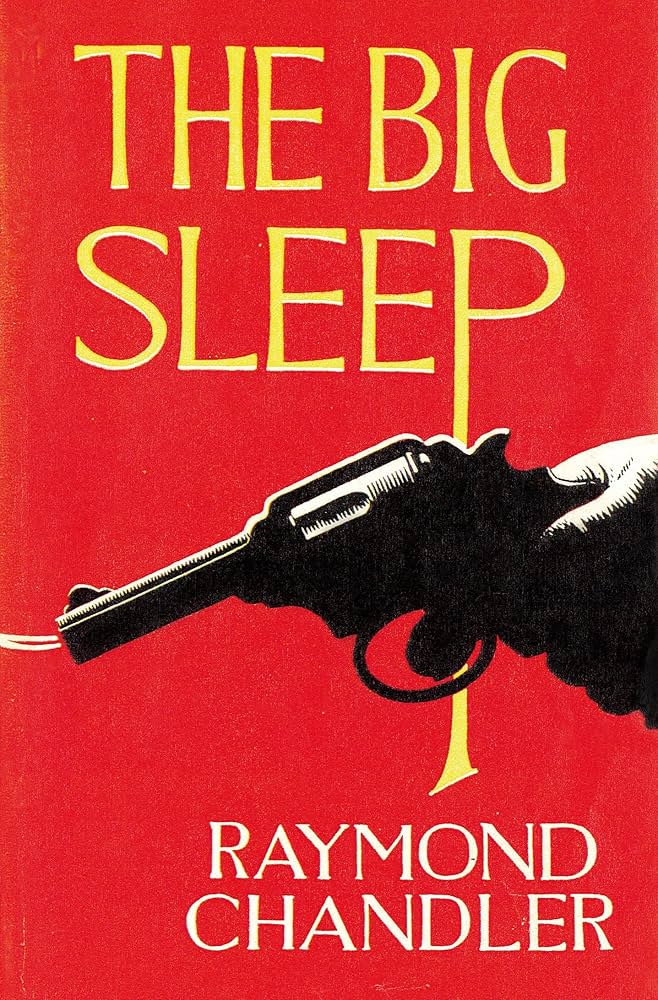
Sergio picked Raymond Chandler’s Philip Marlowe, whom he calls “the hardboiled private eye par excellence – he is the most famous and, as a series character, in the very top tier. Not as hard as Sam Spade nor as introspective as Lew Archer, but he solved some of the toughest crimes of the lat 1930s and 1940s. Chandler’s best novel is probably The Long Goodbuy, and Marlowe’s toughest, most complex case was probably The Lady in the Lake – but his debut, The Big Sleep(1939), is my choice as his most representative. It’s beautifully written and has a clever circular structure (Marlowe instinctively knows he’s basically on the right trail but doesn’t know why) and a well-hidden villain. What more could you want?
FOUR
Nick had the gall to play Hercule Poirot. Brad used his veto to stop the madness. Nick then picked Dorothy L. Sayers’ Lord Peter Wimsey. (Brad and Sergio both grumbled – a lot – but there was nothing they could do!)
“As Christie is the only other Golden Age Queen of Crime whose work is represented on this list, it is fitting that her contemporary, Dorothy L. sayers, should also be included. In the complete history of the mystery genre, Sayers’ name must loom large as does her creation, Lord Peter. I will be upfront and honest: Sayers’ is the work that I have the toughest time with. Invariably, however, when I am immersed in her books, they are great fun. The plots are unique, innovative, and cleaver, and her prose is some of the best in the genre. And when Lord Peter leaves behind some of his tics and emerges as a fully-fleshed character, I actually think he is pretty great. It is undeniable that Albert Campion, Roderick Alleyn, and I would argue the aforementioned Philo Vance and Ellery Queen, would not exist without Peter Wimsey.
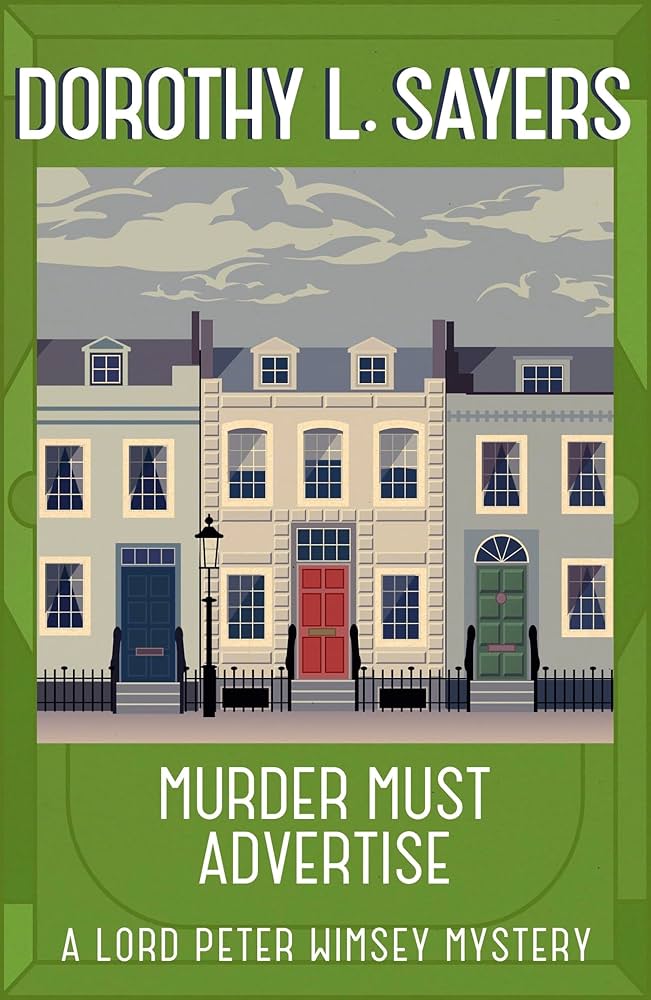
“Some of Wimsey’s adventures are my very favorites of the genre: The Nine Tailors (1934) is an epic masterpiece. However, I have chosen Murder Must Advertise (1933) for this list. I love interesting and unusual settings in my mystery novels and the advertising agency that becomes the backdrop for a puzzling murder, and with links to a drug ring, is one of the best. Sayers, of course, evokes verisimilitude from lived experience and, despite its length, it is one of her.”
THREE
Okay, here’s where I fell into the trap! (This happens to the GMs on Screen Drafts all the time, so I don’t feel too bad.) I had a sentimental idea for my first pick at the back of the list and then ignored it and went with Ellery Queen. My biggest goal here was to get Miss Marple and Hercule Poirot as high up on the list as possible. And then Nick played Miss Marple! That gave me the room to add Nero Wolfe, but when we got to my final pick – and we all knew what the final two choices should be – I had to wrack my brains. Nobody I picked would be better than Miss Marple or Nero Wolfe; no detective could be more historically important than Peter Wimsey or Philip Marlowe.
In the end, I went with my heart and picked Franklin W. Dixon’s The Hardy Boys. I picked them because they (and Encyclopedia Brown) were my entry into the world of mystery fiction, before Doyle, before Christie and all the great writers who followed. Frank and Joe, sons of Detective Fenton Hardy, debuted in 1927. “Franklin W. Dixon” was a pseudonym for whatever ghost writer was assigned to the series by the Stratemeyer Syndicate, a book packaging company who produced The Hardy Boys, Nancy Drew, and many other series for children. There are literally hundreds of Hardy Boys books and a massive history of rewrites and modernization. But the gist here is that a little boy could read about other little boys like him getting caught up with thieves and smugglers and spies and other assorted villains – and catching the bad guys and solving the mystery.
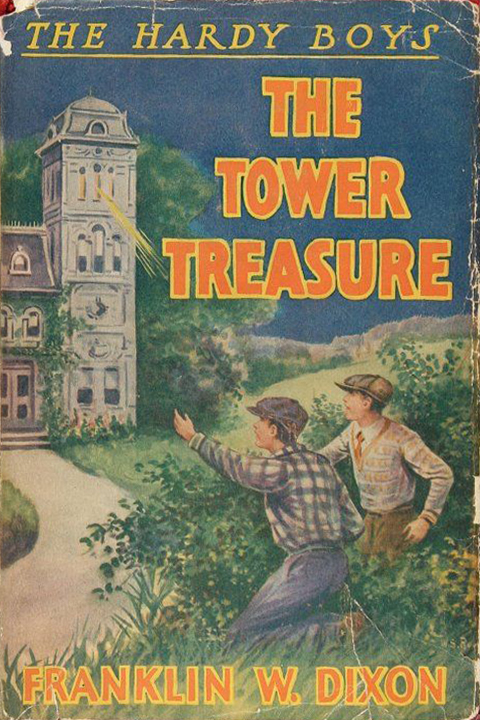
For my selection, we might as well start at the top: The Tower Treasure (1927). I still remember watching Tim Considine and Tommy Kirk play Frank and Joe in an adaptation of this novel on The Mickey Mouse Club. Hell, I probably owe it to Mickey that I’m here today, waxing nostalgic about my love of murder mysteries!
TWO
Sergio picked Agatha Christie’s Hercule Poirot. “He was bound to be in the top three and fair enough overall. Christie is a power unto herself and led the pack in popularity from very early on. Poirot is also hugely influential as a character (the foreigner who can see, by virtue of his ‘otherness’ what locals cannot.)”
The Three Amigos had a LIVELY chat over which Poirot should be a neophytes first Poirot! While Brad and Nick went with a favorite, Death on the Nile (1937), this was Sergio’s pick – and yet he couldn’t decide between The Murder of Roger Ackroyd (1926) or The A.B.C. Murders (1936). The best thing to do? Read all thirty-three of them!!

And for the NUMBER ONE DETECTIVE OF ALL TIME, Nick has chosen (can you doubt it?) . . . Arthur Conan Doyle’s Sherlock Holmes. “A list of this kind that didn’t place Holmes at the very top wouldn’t seem right. Holmes’ shadow looms over the entire mystery genre to this day. Sherlockiana has become a market and niche interest in and of itself. Ask anyone on the street what they picture in their mind when you say the word, “detective” and they will describe someone smoking a pipe, wearing a deerstalker hat, and peering through a magnifying lens. Holmes defines the very notion of the detective in print and in culture itself. He has been immortalized on screen for over 120 years; his exploits have been chronicled, parodied, and added-to by hundreds of writers the world over (myself humbly included); and there is no sign that interest in the character is waning.
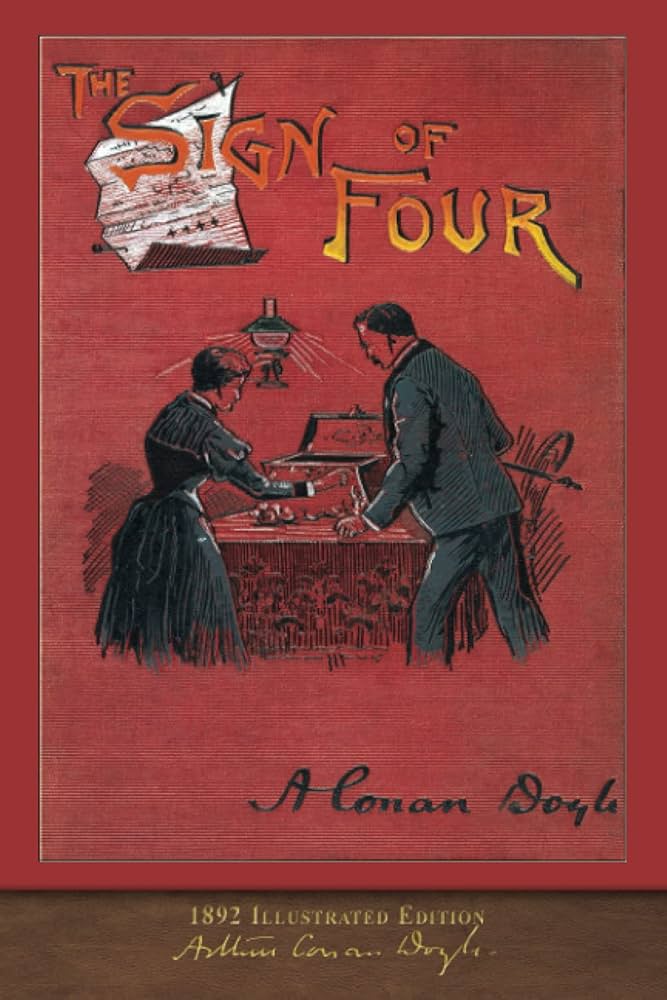
“Though the best of Sherlock Holmes comes from the 56 short stories penned by Conan Doyle, I chose The Sign of the Four (1890) to represent the character because it is also the best representation of everything that Doyle could do and did with the character and the genre. The Sign of the Four is equal parts murder mystery, thrilling adventure, Gothic horror story, and romance. Only a character as versatile as Holmes could link these disparate elements together.”
And that’s our list. One female sleuth only is shameful, and I apologize in advance to all the Hildegarde Withers, Miss Silver, Lily Wu, Tuppence Beresford, Haila Troy, Jane Brown, Cordelia Gray and Kinsey Milhone fans – and MORE! I nearly played Nancy Drew instead of the Hardy Boys . . . it’s just possible that Nancy and Frank Hardy are one and the same person! And I feel bad for other favorites (Gervase Fen, Basil Willing, Duncan MacLain) who didn’t make the list!
I’m sure you all have . . . thoughts, and I am steeled to would love to hear them. Let us know your feelings in the comments below and start getting geared up for the summer, when the Three Amigos return with our Top Twenty Movie Detective Portrayals Draft. We’re saving all those great TV detectives for another draft, but when you look at the last hundred years of film history, the choices are overwhelming. There are sure to be some fireworks – and, once again, YOU will get to be part of the action.
Details to follow!
 Ah Sweet Mystery!
Sergio using his veto to push H.M. up one spot was a daring move… Kudos that it paid off.
A great list as always. Really enjoyed reading this – thanks for sharing!
LikeLiked by 2 people
🤣
LikeLike
I’m glad you enjoyed it! I just got a very nasty note from Roger Sheringham!
LikeLike
It was huge fun – but didn’t we agree on AFTER THE FUNERAL for Poirot?
LikeLike
That’s what I thought, but I used the revised copy that you sent me. I wanted to honor whatever choice you made.
LikeLiked by 1 person
Oh no Brad, AFTER THE FUNERAL was a great choice buddy. Sorry about my typos (hell, I meant to say HM was UNdigjified ….)
LikeLike
These discussions are always the most fun and an afternoon in the company of these super sleuths was no exception!
LikeLiked by 1 person
A great list, although a little too American centric for my taste. What about Inspector Roderick Alleyn and Margery Allingham’s Campion? I follow a mystery critic who makes Youtube videos (uses the name Summation Gathering) and his top three were 3. Miss Marple (my all time favorite and thank you for calling attention to A Murder is Announced), 2. Sherlock Holmes, and 1. Poirot.
LikeLike