It’s lovely, isn’t it, how one thing can inspire another! My friend Kate Jackson, the proprietor of neighboring mystery blog Cross Examining Crime, started an activity a few years ago that she calls Murder Every Monday! At the start of the week, Kate invites anyone who wishes to participate to post on social media – or even on their own blog – a photograph composed of book covers from their collection that qualify for the weekly theme that Kate has supplied. Only last month, for example, we combed our shelves for covers containing titles with “Q” words in them (Feb. 2), pictures of things a baby would use (Feb. 9), books written by authors born in February (Feb. 16), and titles containing words related to forgery (Feb. 23).
I’ve been taking part in Murder Every Monday since the project began in 2023. I love poring through my collection to see what, if anything fits; luckily, there’s nearly always something that does. I like to get into the spirit of the game, adding a pertinent comment or even composing a little poem in honor of the occasion. Never before, however, have I let a theme inspire me to create a post – until now.
The theme this week was “Crime fiction featuring a spinster sleuth.” The titles alone featuring Miss Jane Marple packed my camera frame so tightly that I needed another picture to capture the Hildegarde Withers and Maud Silver titles I own:
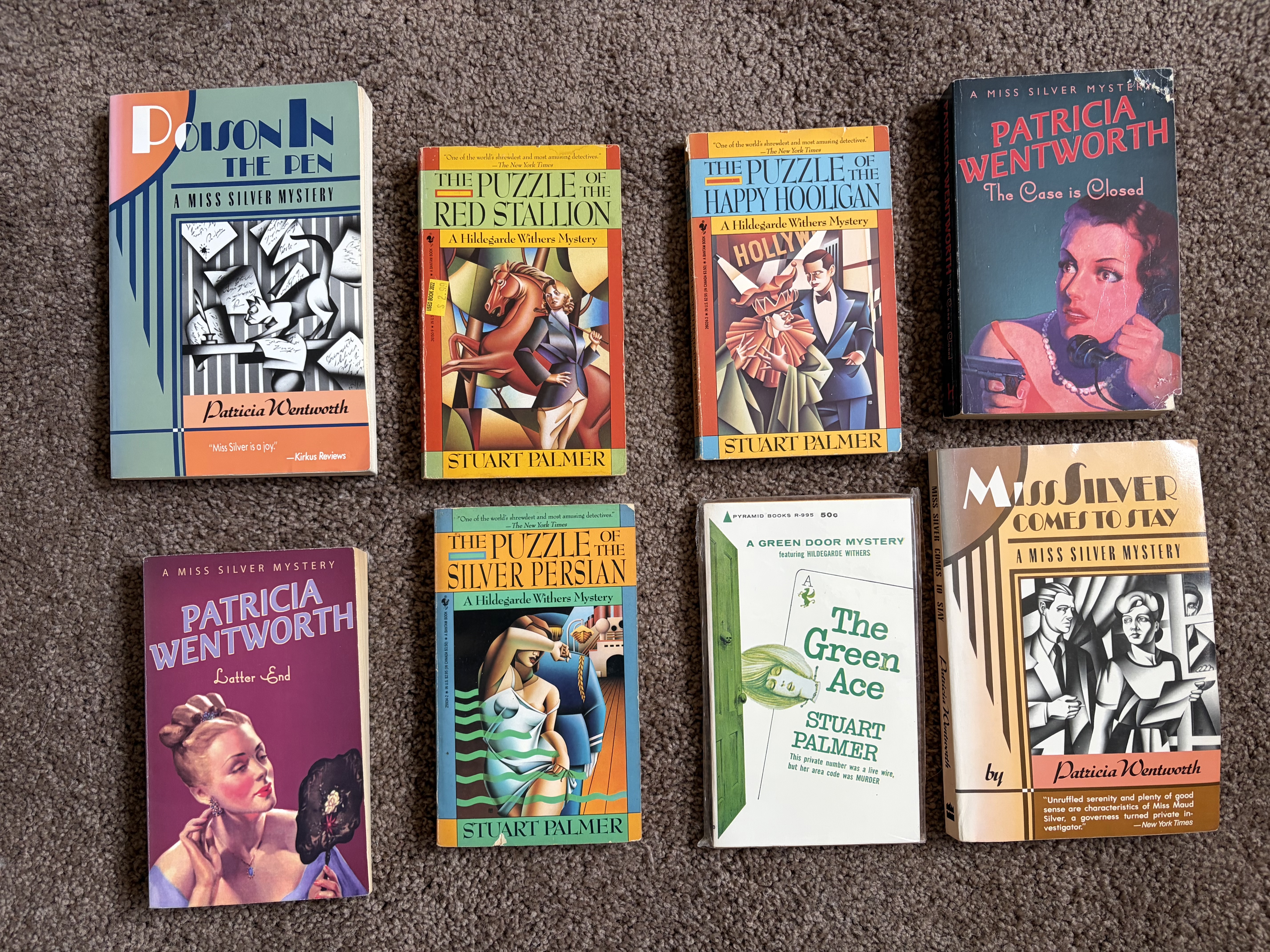
Even as I type these words, I realize that I forgot all about Miss Phipps, the detective novelist/sleuth created by Phyllis Bentley who appeared in a series of short stories. Here you go, Miss Phipps:

When it comes to spinsters, my mind immediately goes to my favorite mystery writer, Agatha Christie, and the wide array of fascinating unmarried women of a certain age that she created. They run the gamut of class and morality, sparking feelings of pity, admiration – even fear! And they’re all wonderful. Although Christie herself married when she was twenty-three, she seemed to have an innate understanding of these women. Women generally come to life more completely than men in her work, and the spinsters she created comprise some of her most indelible characters.
Here then is a list of my favorite spinsters in the Christie-verse.
Ten – Greta Ohlsson, Murder on the Orient Express, a.k.a. Murder in the Calais Coach (1934)
“One of them was a tall middle-aged woman in a plaid blouse and tweed skirt. She had a mass of faded yellow hair unbecomingly arranged in a large bun, wore glasses, and had a long, mild, amiable face rather like a sheep.”
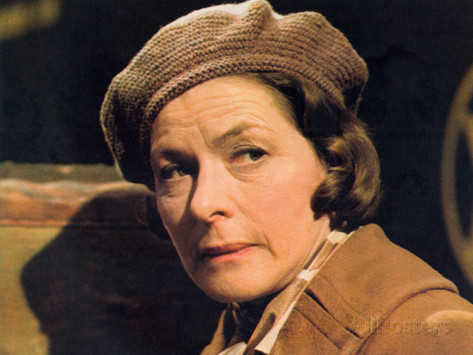
I admit that here I am swayed by a screen performance, that of Ingrid Bergman, whose final film appearance as Greta earned her an Academy Award. Greta is one of the youngest spinsters on our list, a mere forty-nine, and her life has been dedicated to the care of children. When Poirot meets her, she is doing missionary work at a school near Stamboul. How can a woman as simple and kind and giving as this have anything to do with murder???
Truthfully, Miss Ohlsson probably has one of the smallest roles in the book, but then Miss Bergman beat out actresses with meatier roles, such as Madeline Kahn in Blazing Saddles and Diane Ladd in Alice Doesn’t Live Here Anymore, primarily for a single interview scene that makes you smile even as it draws a few tears.
Nine – Miss Bulstrode and Miss Chadwick, Cat Among the Pigeons (1959)
“Your daughter was educated in the way you wished and also in the way Miss Bulstrode wished, and the result of the two together seemed to give satisfaction.”
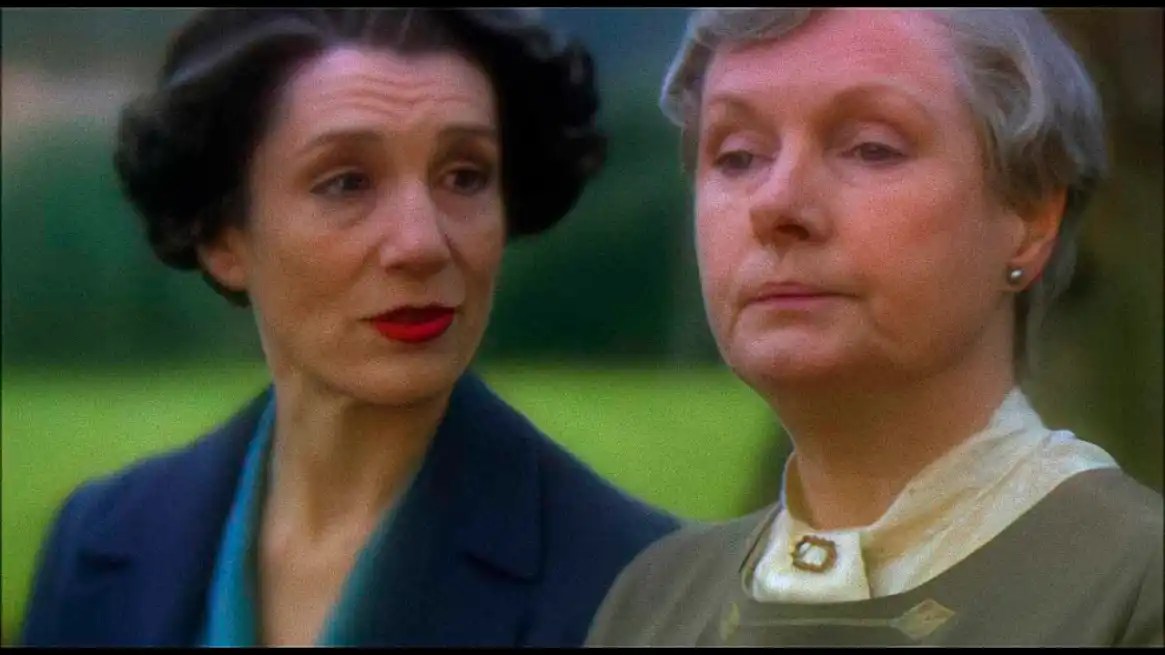
Cat Among the Pigeons is a favorite of mine, not least because of the panoply of excellent women of all ages and types that populate the Meadowbank School for Girls. It’s the only school-set mystery in the Christie canon, and the author makes sure it is properly run. Miss Bulstrode is one of the most accomplished spinsters on our list. Society families entrust the education of their precious daughters to her care, and she does not disappoint – even when murder, kidnapping, thievery and espionage intrude on their education. (How else could Julia Upjohn and Jennifer Sutcliffe remain so calm and sensible in the face of danger?)
A major subplot of the book concerns Miss Bulstrode’s imminent retirement and who is going to replace her. One of the obvious candidates is Miss Chadwick, who with her old friend Miss Bulstrode started the Meadowbank School.
“Miss Chadwick wore pince-nez, stooped, was dowdily dressed, amiably vague in speech, and happened to be a brilliant mathematician . . . it would have been impossible to imagine Meadowbank without her. It never had been without her.”
As the mystery unfolds, it becomes as clear to the reader as it is to Miss Bulstrode that “dear Chaddy” is incapable of running the school herself. Ultimately, this plays a dramatic role in the overall mystery, allowing Miss Chadwick to assume her place as one of the most complex and sympathetic spinsters in the canon.
Eight – Emma Crackenthorpe, 4:50 from Paddington, a.k.a. What Mrs. McGillicuddy Saw (1957)
“She was a middle-aged woman with no very outstanding characteristics, neither good-looking nor plain, sensibly dressed in tweeds and pullover, with dark hair swept back from her forehead, steady hazel eyes and a very pleasant voice.”
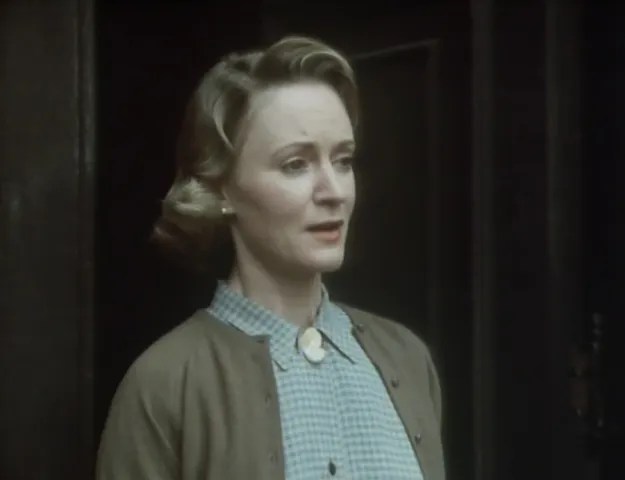
What Mrs. McGillicuddy saw through the train window was a man strangling a woman. The killer in this novel is a man. The first time I read this book, I wasted an inordinate amount of time imagining that Emma Crackenthorpe had dressed up as a man to kill this woman who threatened her inheritance. It’s as good a twist as any – but it’s wrong. Emma is the only clearly innocent person in the book, and she’s pretty much the only likable adult in the Crackenthorpe family. Caring for her miserly father and obnoxious brothers, Emma gets worn down a lot. You can’t help hoping that she’ll find some happiness, perhaps with that nice Dr. Quimper. And if it turns out that Emma is destined for a lifetime of spinsterhood, at least she’ll be a rich one.
Seven – Honoria Waynflete and Lavinia Pinkerton, Murder Is Easy, a.k.a. Easy to Kill (1939)
“O why do you walk through the field in gloves/O lean gray woman whom nobody loves?”
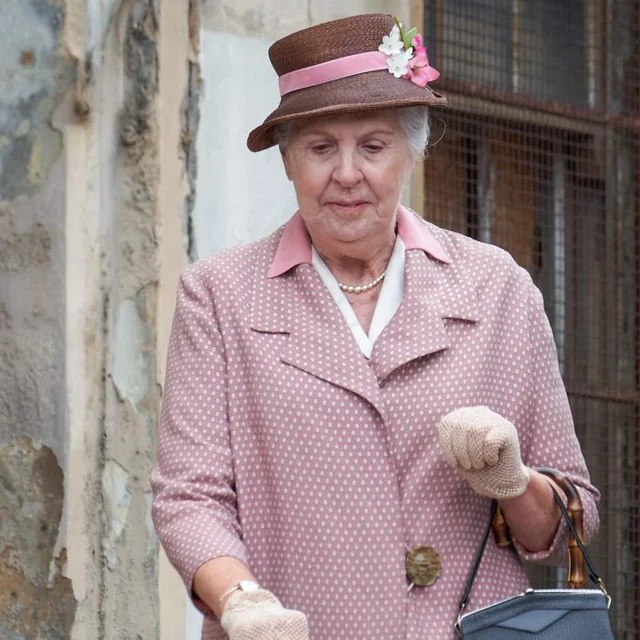
Miss Pinkerton’s appearance in Murder Is Easy is brief but memorable. Retired policeman Luke Fitzwilliam decides to share her carriage because “She reminded Luke slightly of one of his aunts, his Aunt Mildred, who had courageously allowed him to keep a grass snake when he was ten years old. Aunt Mildred had been decidedly a good aunt as aunts go.” Like so many old ladies in Christie, she has pink cheeks, twinkling eyes, and a cat, the pitiable and deadly Wonky-Pooh. And like too many elderly folks, she has an important story to tell that nobody would believe. A man as sensible as Luke wouldn’t believe it, if not for the outpouring of tragic evidence that follows.
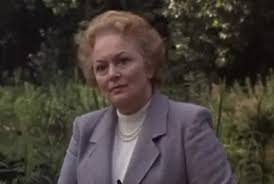
As so often happens in Christie, once the sleuth gets on the scent, he is helped along by a small group of people. In this case, that group includes Miss Honoria Waynflete, the librarian of Wychwood under Ashe. For Luke, she completely embodies the country spinster, in tweeds, with a cairngorm brooch and a smart felt hat. “Her face was pleasant, and her eyes, through their pince-nez, decidedly intelligent.” Miss Waynflete’s sharp insights into the people in her village send Luke in all directions in search of a fiendish killer – not realizing that the fiend stands right in front of him, laughing at him.
Six – Miss Clotilde Bradbury-Scott, Miss Anthea Bradbury-Scott, Miss Elizabeth Temple, Nemesis (1971)
It seems natural that spinsterhood abounds in Nemesis, as it is the book that provides closure for Christie’s greatest spinster. As Miss Marple travels about the English countryside, seeking first the very mystery whose solution she has been tasked with finding, she comes upon a number of fascinating women who provide her with valuable information.
First comes Elizabeth Temple, who is something of a repeat of Miss Bulstrode from Cat Among the Pigeons – if Miss Bulstrode were retired and less satisfied with the outcomes of her life. Miss Temple admits to Miss Marple that she is on a pilgrimage: the sorrow she has felt so long at the loss of a favorite student propels her on a similar search for the truth. Observing the retired headmistress, Miss Marple thinks that “she did not remind (her) of any murderer she’d ever known. In fact . . . she radiates integrity. If she had committed a murder, it would be a very popular murder. Perhaps for some noble reason or for some reason that she thought noble.”
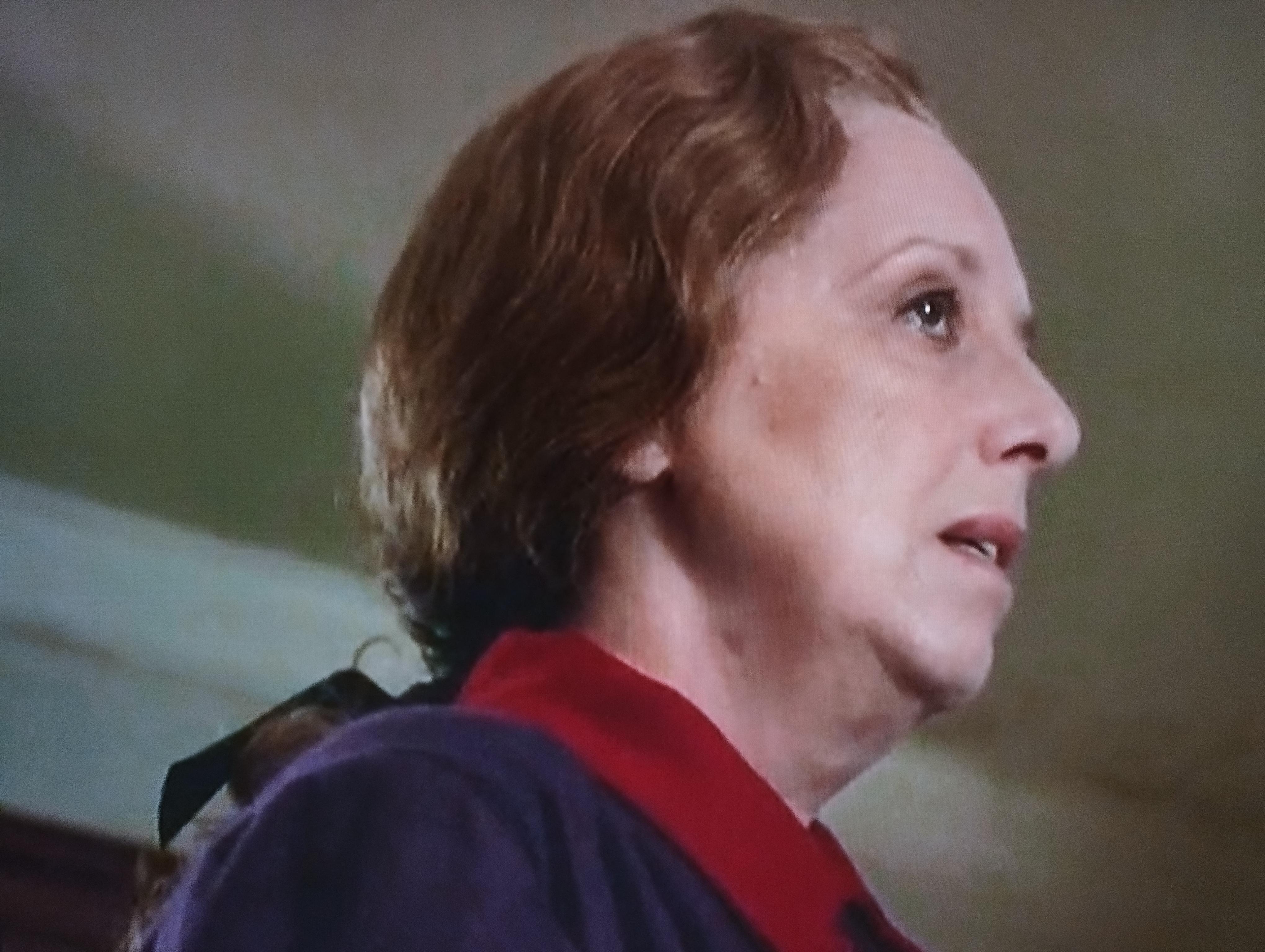
Soon enough, Miss Marple is introduced to the three Bradbury-Scott sisters. Only Lavinia, the middle one, has escaped their lonely house, at least temporarily, through marriage. It’s one of the most telling examples Christie gives us of how normalizing wedded bliss can make a woman. Lavinia is never a serious consideration for murderer, but her sisters, who have suffered in their spinsterhood, are ripe candidates.
Anthea is, almost too obviously, “not quite right.” “(She) had one eyelid which twitched from time to time. Her eyes were large and gray, and she had an odd way of glancing around to right and then to left, and then suddenly in a rather strange manner, behind her over her shoulder. It was as though she felt someone was watching her all the time.” Again, it’s hard to take Anthea seriously as a suspect – which brings us round to Clothilde, who “could have made a magnificent Clayton Nestora – she would have stabbed her husband in his bath with exultation. But since she had never had a husband, that solution wouldn’t do.”
This is a clever line because it reveals the truth – except the more narrow-minded reader will refuse to see it. Clothilde is a compelling figure: academically brilliant and emotionally bereft. In a novel that unfortunately bogs down in the middle, her climactic confrontation with Miss Marple redeems the book.
Five – Emily Brent, And Then There Were None (1939)
“In a non-smoking carriage Miss Emily Brent sat very upright as was her custom. She was sixty-five and she did not approve of lounging. Her father, a Colonel of the old school, had been particular about deportment. The present generation was shamelessly lax – in their carriage, and in every other way . . . “
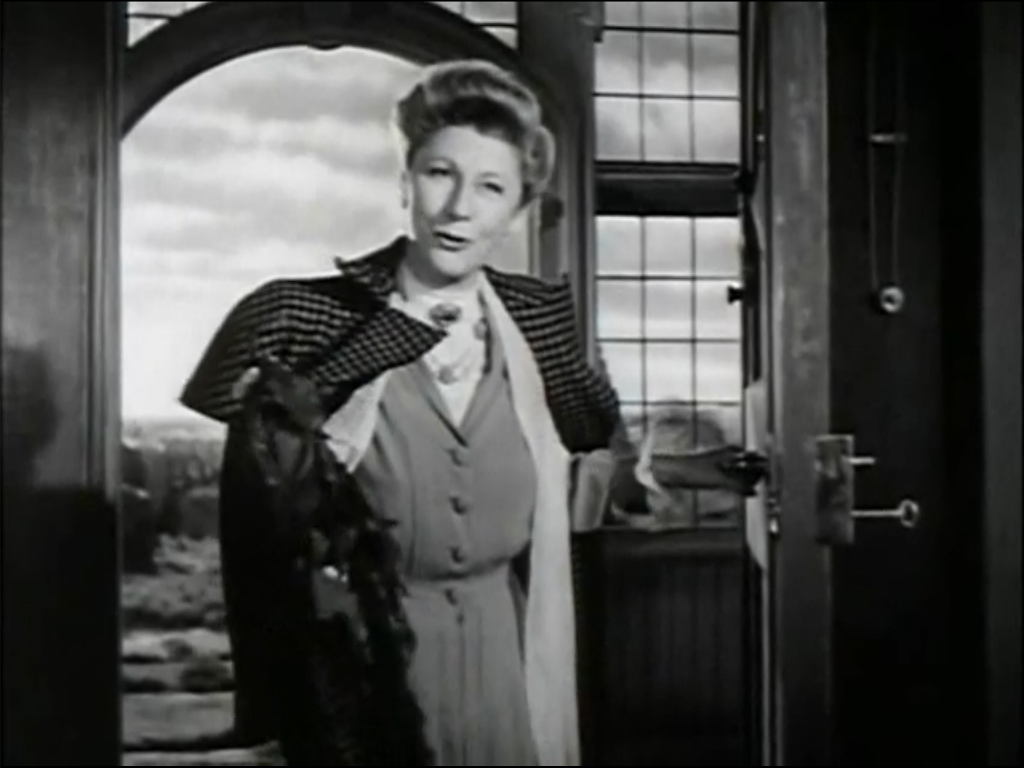
On the one hand, there are a lot of Emily Brents sprinkled throughout the canon: elderly women of reduced means who would jump at the chance of a free holiday. Most of these women, however, would relish the company they find at an island retreat or a charming guest house. Emily Brent is not that sort of all but is, rather, “enveloped in an aura of righteousness and unyielding principles.” She views the rest of humanity as incapable of living up to the high standards her father set for her. And as the days pass and the guest list on Soldier Island dwindles, Emily’s righteousness becomes fanatical, and one can only wonder if her rigid principles have led her to strike down those she finds morally unacceptable.
Christie does a fantastic job of depicting the ugliness coursing through “the solid congealed mass of Emily Brent’s brain.” Having driven a servant girl to suicide by showing her no pity when she becomes pregnant, Emily refuses to acknowledges that she has done anything wrong – until the end, when her unwilling acknowledgement of what she did to Beatrice Taylor breaks her mind.
Four – Caroline Sheppard, The Murder of Roger Ackroyd (1926)
“The motto of the mongoose family, so Mr. Kipling tells us, is” ‘Go and find out.’ If Caroline ever adopts a crest, I should certainly suggest a mongoose rampant . . . I suspect that the servants and the tradesmen constitute her Intelligence Corps. When she goes out, it is not to gather in information, but to spread it. At that, too, she is amazingly expert.”
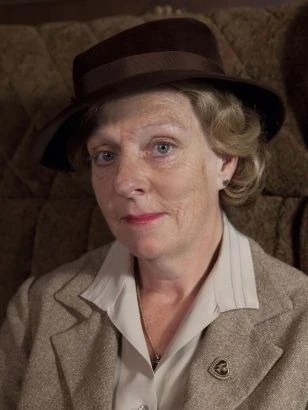
This is the Year of Ackroyd, the centennial of Christie’s first real classic. What is apparent about the book after several re-readings is that the trappings of the story are quite prosaic: a sleepy village, a household populated by people with a nice array of secrets. But most of these characters are defined by those secrets; otherwise, they are rather ordinary. The exception consists of the Sheppard siblings: Caroline and James. I have a feeling we’ll be talking a lot about them at the Christie Festival this year – mostly James, but one cannot overestimate the importance of Caroline. As a book character, she humanizes her brother for the reader, even as she lets slip certain telling facts that play into Hercule Poirot’s discovery of the solution. As a character in the canon, Caroline, the village snoop and gossip, is credited with being the partial inspiration for another character about whom we will have something to say presently.
In 2001, French scholar Pierre Bayard argued in Who Killed Roger Ackroyd? that Agatha Christie has misidentified the killer, who was in reality – Caroline Sheppard. This, of course, is ridiculous: Caroline couldn’t have committed these crimes; if anything, she should have been solving them! And beginning in 1928, in a different village under a different name and guise, that is exactly what she did!
Three – Miss Leticia Blacklock, Miss Charlotte Blacklock, Miss Dora Bunner, A Murder Is Announced (1950)
Being that A Murder Is Announced is a post-war village novel, it’s natural that Chipping Cleghorn would be largely populated by widows, spinsters and fatherless daughters. The women that fill this cast are each and every one a gem, and there are three notable spinsters. (I do not count Hinchcliffe and Murgatroyd who are, in every way but legally, a married couple.)
The first is Letitia Blacklock, who we think we come to know well but actually never meet. Most people in the village know her as “Miss Blacklock.” Those closest to her call her Letty or Aunt Letty. And her late employer, Randall Goedler, and his wife called her “Blackie.” It is from Belle Goedler that we get the strongest impression of Miss Blacklock’s character: “Letitia, you know, has really got a man’s mind. She hasn’t any feminine feelings or weaknesses. I don’t believe she was ever in love with any man. She was never particularly pretty, and she didn’t care for clothes. She used a little make up in different Supervillain custom, but not to make herself look prettier. She never knew any of the fun of being a woman.”
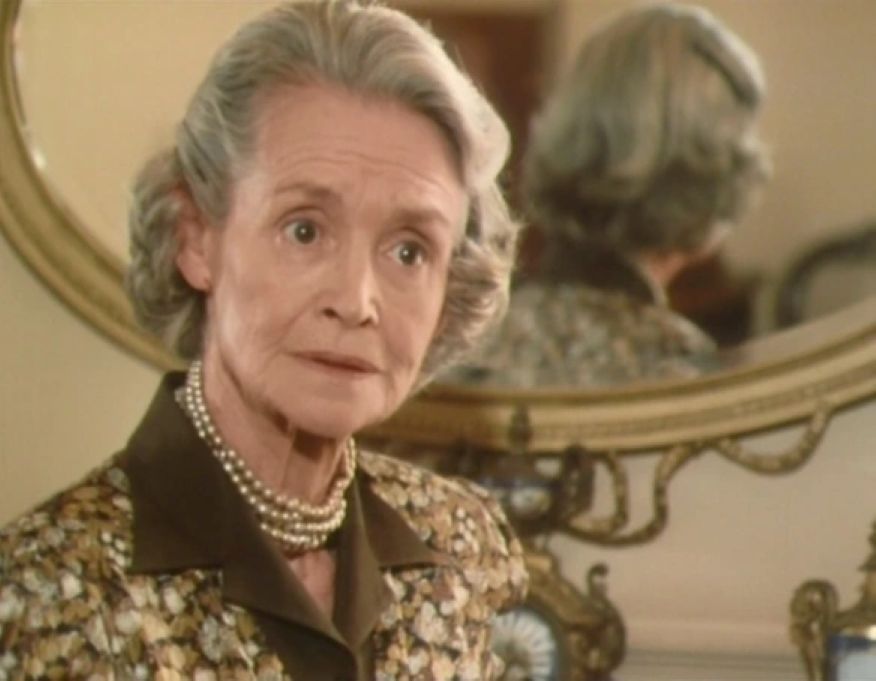
What Letitia had was a head for business and a pure and honest heart. Belle insists that there is no one more trustworthy than Blackie, and the reader accepts the word of this non-suspicious character as truth. And it is the truth – which trips up the armchair detective every time!
In a way, we never meet Charlotte Blacklock either because until the final moments, the woman we believed dead has been impersonating her late sister Letitia. Lotty was the pretty one, thinking of boys and chafing at her overly strict father’s puritanical nature – until she developed a goiter that destroyed her looks. Miss Marple refers to her as a weak, pathetic creature, but in the guise of “Letty,” “Lotty” becomes a much respected member of her community and almost inherits a fortune – and only has to commit four murders and attempt a fifth to maintain her high status.
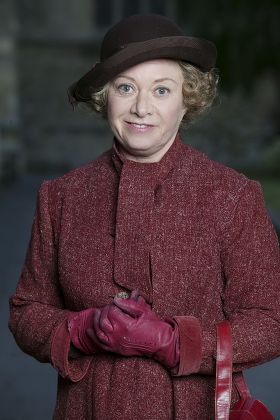
My favorite character is Dora Bunner, friend to the Blacklock sisters, whose awareness of Lotty’s true identity starts out as a relief and then becomes a nightmare. Christie spotlights Dora as representative of a whole class of elderly women whose lives have been upended and ruined by the war and societal change. The scene between Miss Bunner and Miss Marple at the Bluebird Tearooms and Café is pivotal to Miss Marple’s divining the truth, as well as a brilliant character study. Dora wants Miss Marple to understand how deeply grateful she is to her old friend Lotty, er, Letty, for the way Miss Blacklock swooped down and rescued her from utter ruin. (If I were speaking here about theatricality, I would say that the following speech would make a fantastic audition monologue.)
“I’ve heard people say so often ‘I’d rather have flowers on the table than a meal without them.’ But how many meals have those people ever missed? They don’t know what it is – nobody knows who hasn’t been through it – to be really hungry. Bread, you know, and a jar of meat paste, and a scrape of margarine. Day after day, and how one longs for a good plate of meat and two vegetables. And the shabbiness. Darning one’s clothes and hoping it won’t show. And applying for jobs and always being told you’re too old. And then, perhaps getting a job and after all one isn’t strong enough. One faints. And you’re back again. It’s the rent – always the rent – that’s got to be paid – otherwise you’re out in the street. And then these days it leaves so little over. One’s old age pension doesn’t go far – indeed it doesn’t.”
In the cycle of tragedies that permeate this novel, the story of Dora Bunner – her miserable life, her rescue by Charlotte, who then destroys her – is the most tragic.
Two – Miss Gilchrist, After the Funeral, a.k.a. Funerals Are Fatal (1953)
“Of course this Gilchrist woman may have done it. Two women living alone together – you never know what quarrels or resentments or passions may have been aroused. Oh, yes, we’re taking that possibility into consideration as well. But it doesn’t seem very likely.”
If Dora Bunner wishes that she had the wherewithal to take tea at the Bluebird Café every day, Miss Gilchrist’s dream is to own that tearoom – or, rather, a much higher-class establishment, like her previous establishment, The Willow Tree, where “all the china was blue willow pattern – sweetly pretty – and the cakes really good – I’ve always had a hand with cakes and scones.” The Willow Tree was a casualty of the war, leaving Miss Gilchrist with another spinster with thwarted dreams and ambitions, reduced to acting as companion to the insufferable Cora Lansquenet.
I’ve always loved Miss Gilchrist: her ladylike ways and eagerness to please, her talent for art and her clever mind. No wonder All About Agatha crowned her Best Murderer in the canon! Christie was always so clever to hide her killers in plain sight, and a re-read of this book highlights three remarkable passages. First, there is the sequence at the end of Chapter Three, which has followed all the family members as they head home from Richard Abernethie’s funeral. This final page describes a woman who can only be Cora Lansquenet: she is dressed exactly as Cora was at the funeral, and she reminisces about the moment when she announced that Richard had been murdered: “How smug people were – and white hypocrites! All those faces – when she said that about murder! The way they’d all looked at her!”
Then why on earth does Christie not identify her by name? Who even notes that fact after the thrill of the previous chapter? I love it – and I also love that brief sentence toward the end: “She drank up her tea. Not very good tea. She made a grimace.” Surely this is merely a passing character note – and not the first mention of a motive for murder!
Secondly, we have the opening of Chapter Nine, when Susan Banks comes to see Miss Gilchrist just before the inquest. The spinster is putting the final preparations o for her appearance – not all in black because she can’t afford it! And then she looks around her bedroom at all the paintings she has hung and approves of – not like the horrid stuff that Cora or her husband painted which hangs in the parlor. “Her eyes rested with particular fondness on Polflexan Harbor. On the chest of drawers a faded photograph carefully framed represented the Willow Tree tea shop. Miss Gilchrist looked at it lovingly and sighed.” Again, it is a passage that merely seems to denote character, and I wonder how many readers remember the juxtaposition of that painting with that photograph when they reach the end.
Finally, there is the brilliant scene in Chapter Nineteen when the family gathers one final time at Enderby Hall to argue, er, discuss the disposition of the various objects in the house. Miss Gilchrist, as the only outsider besides M. Pontarlier of U.N.A.R.C.O., sits quietly through most of the scene and yet manages to get one line in about the wax flowers on the green malachite table that seals her fate.
I love Miss Gilchrist! I hope that when she went to prison she was allowed to fix up a little teashop for her fellow inmates.
One – Miss Jane Marple
“(Raymond West) looked across the hearth to where she sat erect in the big grandfather chair. Miss Marple wore a black brocade dress, very much pinched around the waist. Mechlin lace was arranged in a cascade down the front of the bodice. She had on black lace mittens, and a black lace cap surmounted the piled-up masses of her snowy hair. She was knitting – something white and soft and fleecy. Her faded blue eyes, benignant and kindly, surveyed her nephew and her nephew’s guest with gentle pleasure.”

In the annals of classic detective fiction, Miss Marple is the greatest spinster ever created. (Josephine Tey’s Miss Pym is my next personal favorite, obviously for entirely different reasons.) Her debut appearance in the story “The Tuesday Night Club” makes her seem ancient indeed. Her “gentle, appealing manner” persists in her first novel, The Murder at the Vicarage (1930), but she seems twenty years younger, boundless in her energy and in her abilities to pick up knowledge. There’s more of Caroline Sheppard in her, although Miss Marple knows how to play the “sweet old lady” card when hunting for clues; Caroline has no need to dissemble when searching for gossip.
Through twelve novels and forty short stories, we learn remarkably little about her. She has a fairly large family, including a presumably deceased sister who was mother to her closest relation, nephew Raymond West. She was educated in Italy for a time. Her age shifts from novel to novel. She is a wonderful trainer of domestic help. She enjoys making homemade wine and gardening and looking through bird binoculars – but rarely at birds. She has a dark view of humanity, but loves and fiercely protects good people. She can certainly parse a clue logically, as seen in A Murder Is Announced. But Miss Marple’s gift lies in her native wisdom – about people, about domestic life – and in her deeply-rooted search for justice.
Without a doubt, my favorite novels in the Christie canon are mostly not Miss Marple novels, and yet she remains my favorite detective. Perhaps it is because, unlike Poirot, Miss Marple’s story only gets better as it goes along. Her existence really takes off in 1950, and with each successive case, we learn more about her and are more deeply invested in her. Poirot takes the case and solves it. Miss Marple commiserates with the other old women in A Murder Is Announced, wallows in nostalgia for her lost youth in The Do It with Mirrors, avenges one of her beloved servant girls in A Pocketful of Rye and protects a young friend in Sleeping Murder and an old friend in 4:50 from Paddington, gives up nostalgia for good in At Bertram’s Hotel, and is anointed “Nemesis” in A Caribbean Mystery and Nemesis.
In the end, Christie sees fit to reward her greatest spinster with a happy ending: a big check for services rendered and a plan for some happy shopping. As Ira Gershwin put it so succinctly, “Who could ask for anything more?”
What did you think of this collection (gaggle? murder?) of spinsters? You may have another favorite in mind when you think of Agatha Christie. Whatever your thoughts, I would love to hear them in the comments below.
 Ah Sweet Mystery!
A brilliant selection. I knew Miss Marple would feature (it would be criminal not to include her in fairness) but I wasn’t sure who else you would go for. I love the variety of spinster characters that you picked and they fill lots of different roles in the books. I wonder what a list of your favourite single gentlemen from Christie would look like. Poirot and Satterthwaite are two obvious choices but where to go from there is the question.
LikeLiked by 1 person
I think most of the bachelors in Christie don’t stay single for long; rather, they are paired off with the most eligible heroine by the end. (But who DID Lucy Eyelesbarrow marry???) Off the top of my head, can I even come up with a list of interesting single gentlemen?
1. Hercule Poirot
2. Harley Quin
3. Justice Lawrence Wargrave
4. Mr. Satterthwaite
5. Mr. Shaitana
6. Steven Norton
7. Major Burnaby/Captain Trevelyan
8. Daniel Clancy
9. Andrew Pennington
10. Mr. Pye
That’s just a first draft! I’m probably missing many obvious ones!
LikeLike
A great list! And yes, Miss Marple is probably my favorite detective. And my favorite Christie novel is A Murder is Announced. I have always found Lotty a sympathetic figure. I wish she had stopped with the first murder (the first victim was not a sympathetic figure and she might have gotten off with a reduced sentence if she said he was blackmailing her). And I know she felt true remorse (SPOILER ALERT?) at killing Bunny. She truly loved Bunny. I also feel that that murder was unnecessary because she could have covered up a lot of Bunny’s lapses by telling people Bunny had dementia. But I am not sure why you say that she killed four people (and was stopped from killing a fifth). She only killed three. There is no indication that she killed her sister. I think she was deeply attached to her sister. As I recall Letty died of complications of influenza. And thank you for not including Hinchcliffe and Murgatroyd in your list of spinsters.
LikeLiked by 1 person
Sorry! I meant to write that she murdered three people and attempted a fourth (Mitzi). I blame the mistake on tariffs and will correct it forthwith!
I waffle on whether I think Lotty is sympathetic. She could have gone to the Goedlers and asked for help. I bet they would have honored their respect for Letty and helped her lonely, disfigured sister! Or after killing Rudy and realizing that Dora was going to give the game away, she could have sat down with the family and explained the situation, asked them to take care of Dora in the final months of her life, and turned herself in – or run away. Her murder of Amy Murgatroyd is unforgivable!
LikeLike
I do agree about the killing of Amy Murgatroyd. I’m also though not even sure it was believable at least if the characters looked the way they did in the Joan Hickson version. Amy was cast as a large strong farm woman and Miss Blacklock was quite petite and frail. I don’t think she would have been strong enough to kill Amy in that way.
And I love your alternative choice. She probably was too insecure to ask Mrs. Goerdler for help (by the time Letitia died Randall Goerdler was dead and Lotty was no longer disfigured because Letitia had taken her to Switzerland to have surgery). But she should have stopped after killing Rudy. I’m not sure what “family” she could have gone to to ask for help with Dora, though. Her only supposed relatives were Pip and Emma who were living under assumed identities. I’m guessing she was rather religious so I suppose she could have asked her priest, who would have been bound by the sanctity of the confessional, even though for Anglicans confession isn’t formal.
LikeLike
Well, I have to disagree about Greta Ohlsson and Ingrid Bergman’s performance. I have always held that that is a classic “I’m a beautiful woman who won an Oscar by allowing them to make me up to be ugly” Oscar. I mean, I guess Bergman read the lines given her well enough, but the character as written in the movie is terrible, and no actress could have made the part as scripted convincing and not cartoonish. Book Greta was not a Mensa candidate but she was NOT the complete moron depicted in the movie. Who on Earth would plot a murder with the simpering idiot Ingrid Bergman played?
Everyone can flame away, but the part as written and played by Penelope Cruz is just one way the Brannagh version is actually a better film. (Another is getting rid of that hideous happily-ever-after toasting scene and showing the conspirators actually still living with the consequences of their actions).
Other than that, an excellent list.
LikeLiked by 2 people
I take your point about Ingrid’s Greta. I’m more bothered by Anthony Perkins’ nod to Norman Bates in his depiction of Hector MacQueen, who has so much responsibility in this plot that he has to be a cooler customer. We can agree to disagree, but I’m glad that, like me, you find much to like about Branagh’s adaptation. I would say that the final quarter of his film is in many ways superior to Lumet’s version.
LikeLike
Your list makes me feel nostalgic for the first time reading each book where these wonderful spinsters appeared.
Miss Pinkerton and Miss Waynflete are my favorites from the list as “Murder is Easy” was an early Christie read as an 11-yearold. It was a gift from a beloved grandmother, who was a Christie fan and spurred me to become one as well. I see why Christie could not have centered this book around Miss Marple. If she had been in the book, she also would have spotted the culprit immediately resulting in no story to tell or worse, been killed off by the villain. We couldn’t have either of those so enter Miss Pinkerton.
LikeLike