I make this confession with a stinging sense of shame: in all my years of reading and re-reading my favorite author Agatha Christie, I have never given Mary Westmacott a chance. I suppose in my early days there was some sense to this decision. I love a good mystery, and the Queen of Crime wrote the very best. But the Westmacotts? At the end of the 20thcentury, they were marketed and jacketed as “romance novels,” with nary a mystery contained therein . . . unless you count the many mysteries of the human condition, which I most certainly did not.
But that was then, and this is now. I have become more interested in Christie the woman and in how her life figured in her work. And since historian and and Christie biographer Lucy Worsley has suggested that “the main reason anyone reads Mary Westmacott today is for what she reveals about the life and opinions of Agatha Christie,” these six novels written between 1930 and 1956 seem like an excellent resource for probing deeper into what made Christie tick.
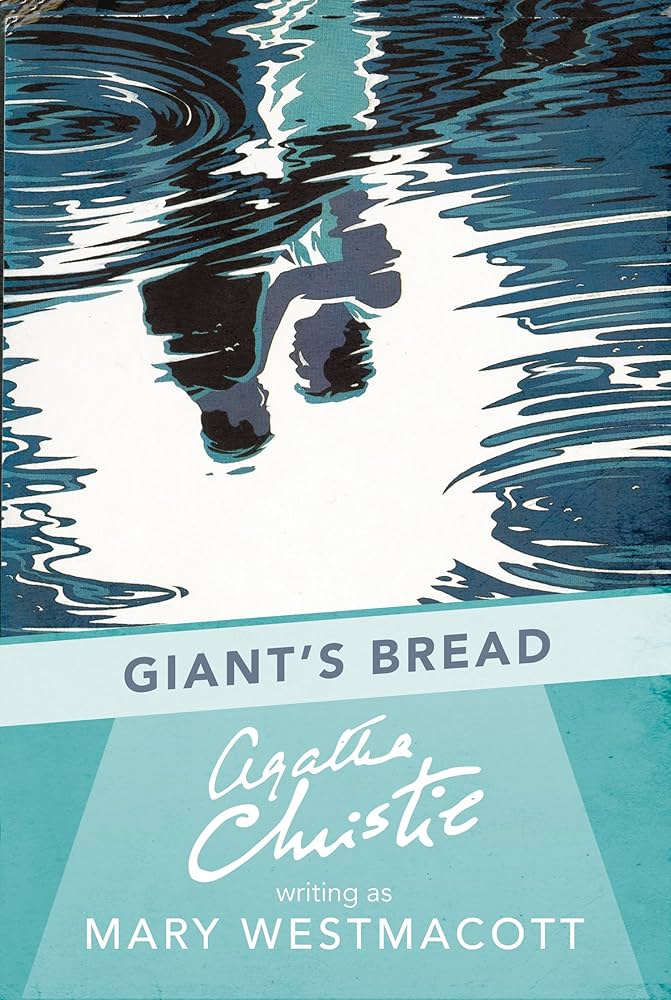
Besides, the timing couldn’t be better, for my buddies and fellow Agathologists, Dr. Mark Aldridge and Gray Robert Brown, those Swinging Christies themselves, have launched a second podcast with the insane title of Westmapod that will deal with all matters related to Mary Westmacott. I’m eager to hear what they have uncovered from various sources, since the Queen herself was notably stingy with details about her writing. In her Autobiography, Christie offers this paltry insight into why she created “Mary”: “What I wanted to do now was to write something other than a detective story. So, with a rather guilty feeling, I enjoyed myself writing a straight novel called Giant’s Bread. It was mainly about music, and betrayed here and there that I knew little about the subject from the technical point of view.”
I know that young Agatha’s ambition had been to become a professional musician; to that end, she had studied piano and singing abroad in Paris. These early dreams would figure strongly in Giant’s Bread, and this delving into aspects of her own life did indeed become, as Worsley suggests, one of the hallmarks of the Westmacott novels. However, this first foray into the “Westma-verse” was revelatory in other ways. Christie’s prose style is quite different here, richer and more literary. (There’s even a sex scene, of sorts!!) In her mysteries, everything from character to social commentary mostly served the main purpose of the book: the puzzle. Here, the plot is almost secondary to the characterization and themes that “Mary Westmacott” explores. Giant’s Bread is far from a perfect novel – and not because there are no murders in it, although it took me a couple of chapters to give up that ghost! – but there is much to admire and much to discuss!
The novel is divided into five sections that chronicle the growth from childhood to adulthood of its protagonist, Vernon Deyre, but it actually begins with a Prologue, set in the “present day,” in the newly opened London National Opera House. We are at the premiere of a new piece called “The Giant” that purports to be the debut of a non-English composer named Boris Groen. This extremely modern piece, a possible signifier of where music is headed, is the Endgame of our story, and the novel explains to us how we got here.
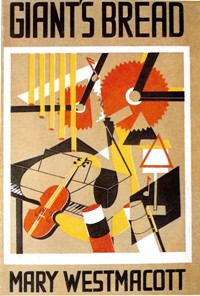
I’m no opera fan, but “The Giant” did intrigue me. Christie’s description of the work reminded me strongly of Fritz Lang’s 1927 science fiction film Metropolis, with its horrifying depiction of the mechanization of the human race. In “The Giant” this is exemplified by the image on the stage of an enormous silver mountain composed entirely of human beings. As a foremost critic wonders at the end of the premiere, what sort of man could have conceived of such a thing? Is Groen a genius or a madman – or, most likely, a combination of both? What sort of “bread” fed this Giant’s creative spirit?
And with that the story proper begins.
The first quarter might be my favorite part of the novel, as it chronicles young Vernon Deyre’s childhood. It is a fascinating portrait of late Victorian upper middle class English life that has long since died out, and good riddance, for it’s a life where one’s every effort and decision went toward preserving a rarefied, highly insulated and deeply prejudiced world. Families lived in their beloved mansions for hundreds of years, sons went into their fathers’ businesses, and daughters were groomed for marriage. The children married for money, often under the instructions of their parents. It was a world where marrying your first cousin wasn’t necessarily a bad thing because it meant that fortunes could be kept within the family!
Yet, it’s also a charming life, and we can’t help but wonder how much of Vernon’s early years resembled the experiences and observations of Agatha’s own girlhood. He lives on a grand estate called Abbots Puissants, which has nourished the lives of his Deyre ancestors for hundreds of years. He is raised by a team of nursemaids led by a wise old nurse and trotted downstairs to dessert to see his mother Myra, a beautiful but neurotic woman and his father Walter, who loves his son but is too distracted by the servant girls to maintain a happy household. Mostly, Vernon is on his own, eagerly exploring his home, the gardens and wistfully hoping to enter the enchanted and, perhaps, dangerous forest that rings his property. How much was Agatha’s childhood at her beloved Ashfield like this?
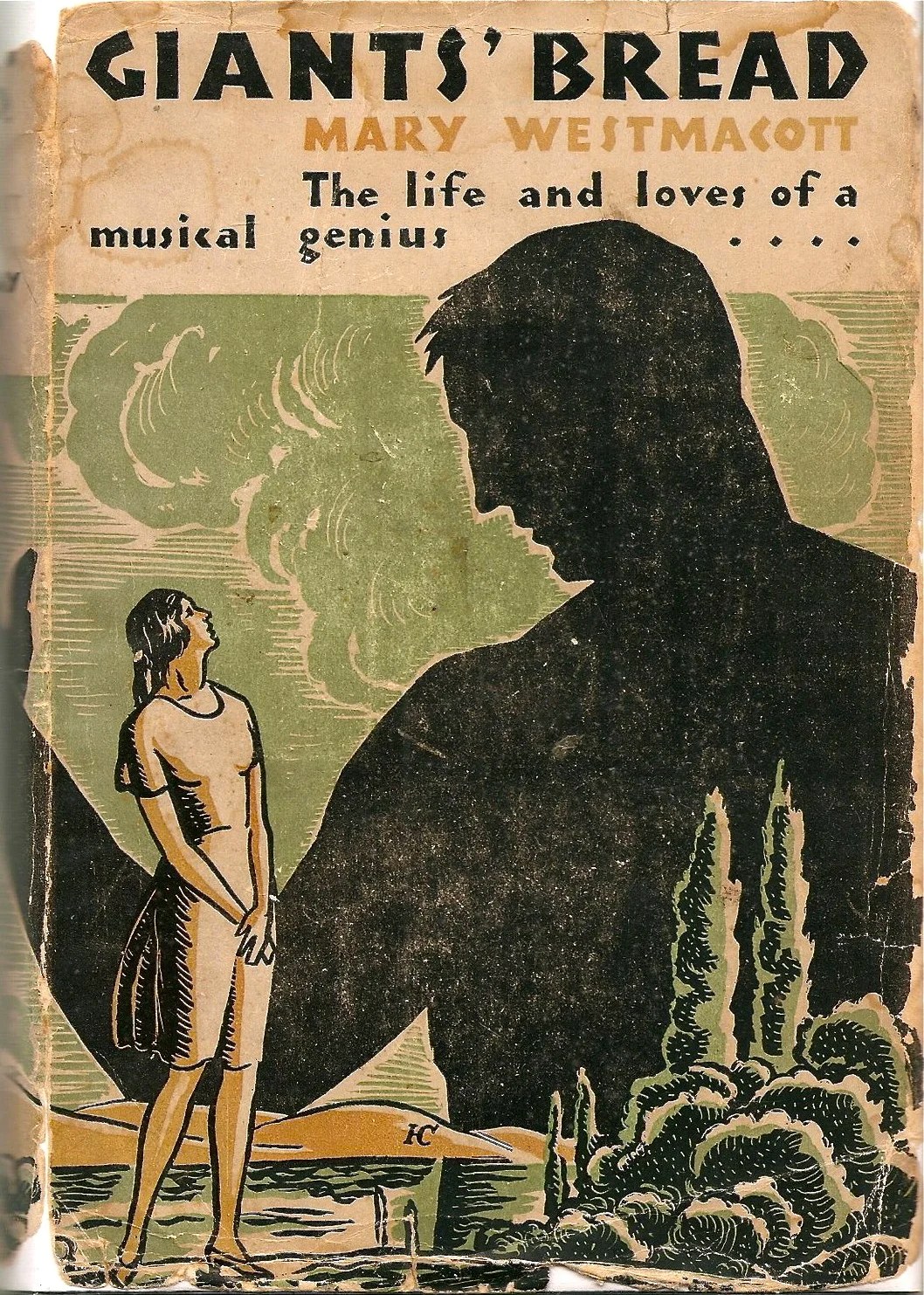
As he grows into boyhood, two characters enter Vernon’s life who will become deeply important to him. One is his orphaned cousin, Josephine Waites, whom he calls “Joe” and who becomes something like a sister to him. The other is a new neighbor, a wealthy young Jewish boy named Sebastian Levinne. For many reasons, Sebastian is the most interesting character in the novel – I’m going to save my thoughts about him for later.
Christie/Westmacott excels in this section, illustrating through one significant incident after another the shaping of a young person. Vernon is like an empty canvas that is brought to life by his parents’ troubled marriage, by deaths and other losses, by the addition of strange new people and new experiences. One of the most significant things about our hero is his weird attitude toward music. Throughout his childhood, the playing of music, particularly the piano forte in his home, seems to cause him physical pain, and this is interpreted as an aversion by Vernon to music altogether. The young boy sees the piano as a monster; he calls it “The Beast,” and its looming presence in his life will have huge ramifications.
The long middle section that follows chronicles Vernon attempts to find himself, both in work and in love. He takes a job in his uncle’s business, which proves disastrous. While the family tries to foist him off on an anemic cousin, he opts instead for the little girl who used to live in the neighborhood and annoy him. Nell Vereker has now grown up to be beautiful, rather timid, and perhaps too conventional, but Vernon deems her his muse and wants to marry her and write music inspired by her.
But then there is Jane Harding, a worldly singer who is ten years older and brings out feelings which both attract and frighten Vernon. This back and forth between the young man and his two women might account for that aforementioned dismissal of Giant’s Bread as a romance novel. I’ll admit that this section sometimes tried my patience, not least because Joe, who had been one of my favorite characters, all but disappears, Nell is quite annoying and so clearly wrong for Vernon, and Vernon himself is wrong for Jane, the best character of this bunch. And all these romantic shenanigans nearly usurp the more interesting story of Vernon’s development as a composer.
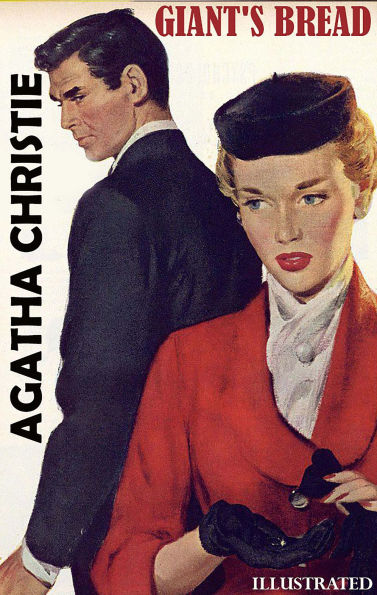
Then World War I arrives and and ignites the final quarter of Giant’s Bread, which is chock full of pure melodrama, including amnesia, switched romantic alliances, and a way too fortuitous disaster on an ocean liner. So much happens in the last hundred pages without a word about “The Giant” that one might almost forgets that it is what we’ve been waiting for. When we finally get to it, the ending seems rushed. Interestingly, these final pages presage one of my favorite endings to a Christie mystery, The Hollow, where in my opinion the author does a far more effective job in depicting the inner life of an artist.
Despite the fact that by 1930, Christie was a well-established and successful writer, sometimes Giant’s Bread feels like an apprentice work. Still, I’m glad I read it, for it showed Agatha laying aside the intricacies of a crime novel and grappling with issues and ideas. It also introduced me to Sebastian Levinne and gave me the opportunity to mull over my feelings about Agatha Christie and her feelings about Jews.
Let’s face it: if you are anything other than a white, straight Anglo-Saxon Christian and you decide to read Agatha Christie (or almost any other Golden Age writer), you have to steel yourself to encountering ugly attitudes aimed at “the other.” England didn’t welcome Jews into their country for hundreds of years, and when the subject came up in art or literature, the depictions of Jewish people were . . . problematical.
Just look at Christie novels of the 1930’s, like Lord Edgware Dies, Three-Act Tragedy and And Then There Were None, and even a post-war book like 1946’s The Hollow, and you might wince at the ways Jews are described or behave. I’m fair enough to acknowledge that quite often Christie wasn’t mocking “the other” so much as the traditional British attitudes towards others. Her experiences during her travels taught her, to a great extent, to look past race and religion in her judgment of people, and she often made prejudiced characters objects of ridicule.
Sebastian Levinne is a central and, arguably, the most sympathetic character in Giant’s Bread. While the introduction of the wealthy Levinne family to Vernon’s neighborhood prompts much reaction from the native British folk, it is they who receive the brunt of Westmacott’s criticism. Still, one can’t deny that the author imbues Sebastian and his family with many stereotypical qualities: Sebastian has yellow skin, big ears and a slight lisp, and his mom is a loud, pushy (but very kind) Jewish mother who comments that no race makes better mothers than the Jews. The family is rich and very interested in making money; interestingly, the money Sebastian makes is referred to as “shekels,” using an ancient term in a flippant way.
Even late in the novel, when we have come to know and sympathize greatly with him, Christie writes sentences like this: “And a sudden quick suspicion came into his shrewd Jewish mind.” I have a feeling Christie means this positively, as she constantly makes it clear that Sebastian is always the smartest man in the room. At one point when he is grief-stricken, Sebastian still has to attend a series of business meetings, which Christie describes thusly: “It is to be doubted if anyone noticed that the great Sebastian Levinne was unlike himself in the smallest detail. He had never been more shrewd in driving a bargain, and his power of getting his own way was never more than evidence.” Again, this may be seen as a positive trait, but I couldn’t help thinking of poor Shylock in The Merchant of Venice, demanding that his Christian enemies see him as just another man:
“Hath not a Jew eyes? Hath not a Jew hands, organs, dimensions, senses, affections, passions; fed with the same food, hurt with the same weapons, subject to the same diseases, healed by the same means, warmed and cooled by the same winter and summer as a Christian is? If you prick us do we not bleed? If you tickle us do we not laugh? If you poison us do we not die?”
Even when she presents him in a more emotional light, Christie’s insights into Sebastian are problematical. At one point, he visits Joe, who was his first friend and who is now seriously ill. She welcomes him warmly, and it prompts a strong reaction in Sebastian: “It was a feeling peculiarly and exclusively Jewish. The undying gratitude of the Jew, who never forgets a benefit conferred. As a child, he had been an outcast, and Joe had stood by him – she had been willing to defy her world. The child Sebastian had never forgotten – would never forget.” Again, I imagine Christie is siding with the Jews here after centuries of torment and expulsion from various societies – including her own! Perhaps it’s the burden placed on Sebastian here to represent all Jewish people that doesn’t sit well with me.
However, Christie also reveals the political liberalism combined with practicality that Sebastian practices, and this time his shrewdness is purely positive. He not only predicts World War I but reasons pretty accurately how long it will last, both from his study of economic factors in Europe and his education regarding history. In one of my favorite scenes in the book, Sebastian discusses the situation with Joe, who is full of fairy tale patriotism about how the war is a wonderful thing because it will bring about a new Eden. Sebastian knows war for what it is: “It made him sick to read the things that were printed and said about the war. ‘A world fit for heroes’, ‘The war to end war’, ‘The fight for democracy’. And really all the time, it was the same old, bloody business it always had been. Why couldn’t people speak the truth about it?ˆ”
While Joe believes (foolishly, as we all know) that this war will end all wars, Sebastian predicts an end to war from a place of logic. Reading this next passage – from Christie, who almost never mixed politics into her mysteries – is fascinating, especially to an American reader who happens to share (perhaps foolishly) the hope behind these words and to despair at the way our current administration is turning away from it.
“I don’t think it’s got anything to do with ideals. It’s probably a question of transport. Once you get flying going on a commercial scale and you fuse countries together. Air charabancs to the Sahara, Wednesdays and Saturdays. That kind of thing. Countries getting mixed up and meaty. Trade revolutionized. For all practical purposes, you make the world smaller. Reduce it in time to the level of a nation with counties in it. I don’t think what’s always alluded to as the brotherhood of man will ever develop from fine ideas – it will be a simple matter of common sense.”
Ah, if we all could embrace such common sense! The extraordinary thing for me, after decades of reading Agatha Christie for her puzzles and her wonderful characters and her gentle satire of middle-class English folk, is to pick up my first Westmacott and find untraditional characters like Sebastian and Joe arguing over ideas like this. It’s a revelation! The novel is imperfect but never uninteresting. I have a feeling that as I continue my journey into this new Christie-verse, astride my Westmapod, that things are going to get increasingly interesting.


You’re finally doing this! Four of the books didn’t have a lot of value for me, but Absent in the Spring is one of my favorite Agatha Christie books. And though structurally a little flawed, The Rose and the Yew Tree is also some of her best writing and contains a few of her most interesting characters.
LikeLiked by 1 person
I have heard that the Westmacotts are delicious in the middle but a bit crumbly at both ends! It’s nice to know I have good things in to look forward to.
LikeLike
Absent in the Spring is the best book Christie wrote under any name.
LikeLiked by 2 people
I am delighted that you’re reading the Westmacotts, Brad! They show a more.personal side of Christie and a glimpse into the way her mind works outside of the mysteries and puzzles. Like, her ideas about the world and people and relationships.
I enjoyed Giant’s Bread but love, love, love Absent in the Spring. She said it’s the one book she wrote in a kind of mad rush over three days and which has satisfied her completely. I love it and keep re-reading it every few years. Can’t wait for you to read it!
Another favourite of mine is A Daughter’s a Daughter, which is a very honest and unusual portrayal of the complexity of a mother-daughter relationship. Beautiful in the middle and crumbly around the edges is sort of perfectly right for the remaining Westmacotts!
LikeLike