When it comes to reviewing titles, my Book Club is rarely copacetic. But when we take a break from the Book-of-the-Month format and pick a general topic, then we really cut loose. After making our lists of Favorite Mysteries of the 1920’s, the 1930’s and the 1940’s, it was only natural that we take a look at the decade that was morally uptight but musically cool – the 1950’s.
At first, some members suggested we combine the 50’s and 60’s, knowing full well that the Golden Age of Detection was essentially over. Some have tried to place the whodunnits that appeared after 1949 under the umbrella of a “Silver Age,” while others have given up altogether. In her biography of Agatha Christie, Laura Thompson wrote, “In 1950 she published A Murder Is Announced, and this set the standard for much of what followed: supremely accomplished, utterly readable, but the product of ‘Agatha Christie’ the phenomenon, rather than Agatha the writer.”
That comment still rankles.
When it came to whodunnits in the classic style, one can argue that by the 50’s there was a great deal of output that gave off a whiff of “been there, done it better” – but if you start to consider the burgeoning sub-genre of psychological suspense, there were plenty of marvelous books to consider. The instructions for Book Club were to come up with five favorites, but here I feel it only proper that I share ten glorious titles with you. The single rule, as always, was that we could only select from a specific author’s output once.
This time, I broke that rule.
There was no way around it. Two of my favorite titles come from the same author (guess who??), and as they are inextricably linked in my mind, I refused to make a choice. Here, then, is my list:
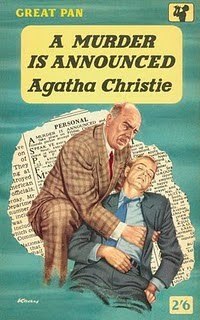
A Murder Is Announced (1950) is my favorite Miss Marple novel for many reasons. More than any other of the twelve, it contains a labyrinth of brilliantly placed clues – physical, verbal, psychological – that guide our sleuth, even more than her precious village parables, to the truth. It is a brilliant reflection on the effect of World War II on village life, and more specifically, on the lives of older women. It contains one of the best opening hooks for a writer who specialized in them. And it is a warm, funny book, even if the mystery at the heart of it is cold and tragic.
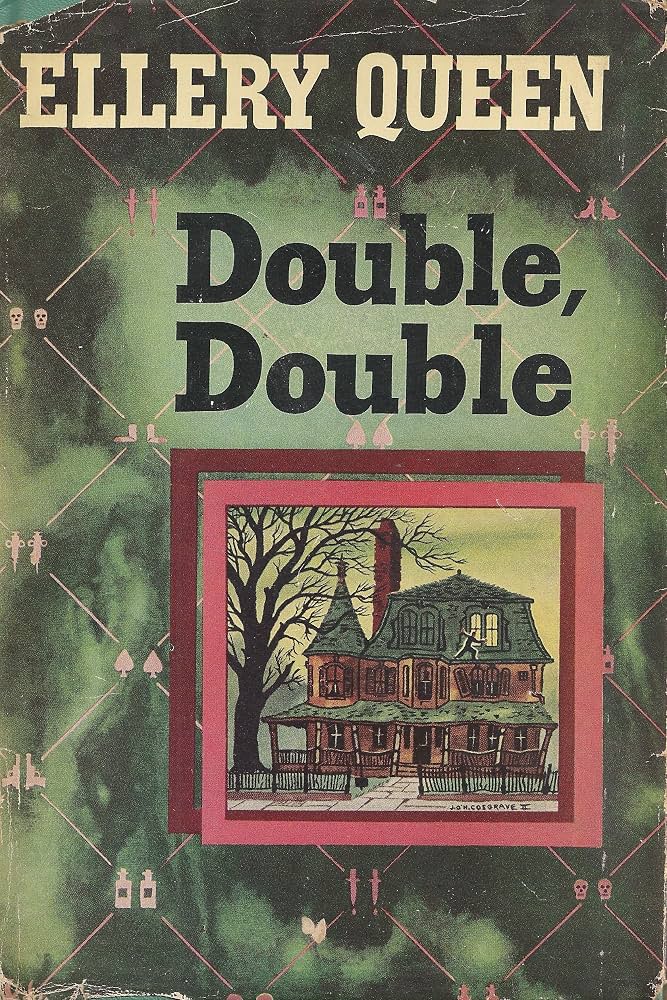
Double, Double (1950) by Ellery Queen, for some ungodly reason, also goes by the name The Case of the Seven Murders. There’s an argument to be made that this is the weakest of the Wrightsville novels. I won’t argue that point (although if we’re going to split hairs, let’s not forget that The Last Woman in His Life takes place in Wrightsville), but I will suggest that this is the most fun anyone has in that bucolic town of horrors. All authors have their favorite tropes that they use over and over again, and the Queens were no exception. Here, the idea of a murderer playing God is lightened up (thank God!), and the ending is one that they used to great effect in a 1940’s novel and would use again in a 1960’s novel. Still, this tale of a serial killer whose pattern must be discovered (and, in true Queenian fashion, rediscovered) is a rollicking good time.
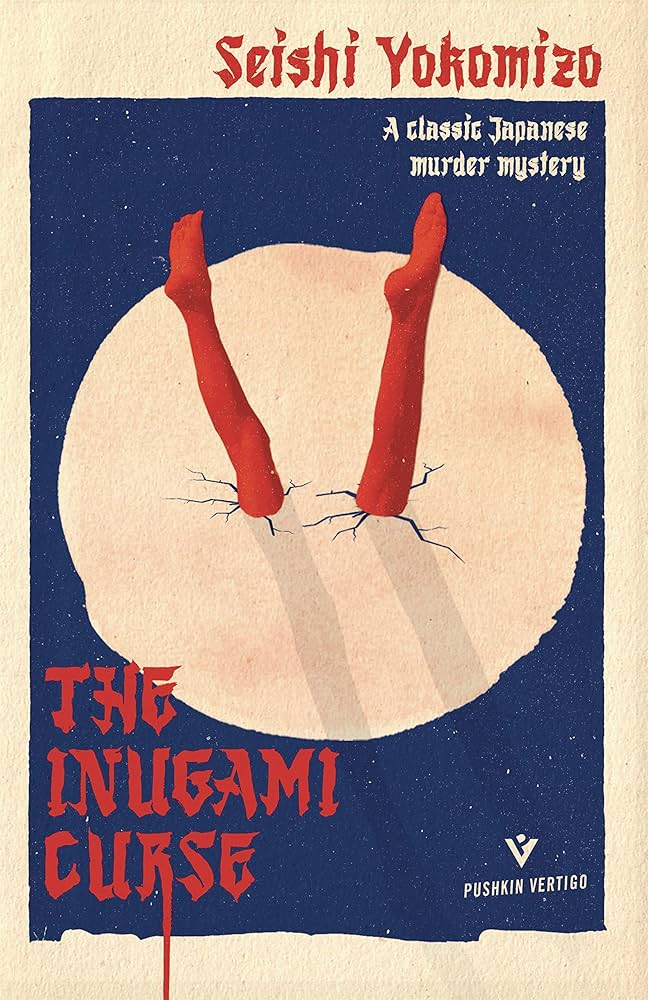
The Inugami Curse (1951) by Seishi Yokomizo is a gruesome wonder! I admit I’ve grown a bit tired of Yokomizo over the last few titles, but early on I got such a kick out of having the opportunity to read the work of another country’s master. Inugami, the tale of a family poisoned by World War II and by inter-clan feuding, is the best and the creepiest. It contains scenes of true horror, of a monster lurking in the shadows, and some gruesome deaths that suggest the supernatural but ultimately lead to a nightmare that is purely domestic.
Black Widow (1952) by Patrick Quentin is the last in a series of books featuring both Peter and Iris Duluth, and it’s arguably the best. This is a no-holds-barred nightmare for Peter as he finds himself accused of both emotional infidelity and murder. That it’s set against a brilliant rendered background of New York theatrical nightlife is more than a bonus. The characters are terrific (the psychology of the victim is especially interesting). It’s also a great movie, starring Van Heflin, Gene Tierney, and Ginger Rogers.

After the Funeral (1953) by Agatha Christie is one of my favorite Hercule Poirot novels for many reasons. The Abernethy family constitutes a wonderful assortment of nasties. It does for post-war country houses what A Murder Is Announced does for villages. The puzzle is brilliantly clued. It contains my favorite murderer in the canon. It also contains one of the best opening hooks for a writer who specialized in them. And it is a warm, funny book, . . . etc. etc. etc.. (You see why I couldn’t decide?)
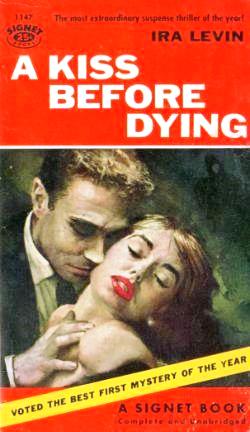
A Kiss Before Dying (1953) by Ira Levin is a book you need to know as little about at possible before diving in! Levin refused to let himself fall into a genre category, instead flitting about to write an enjoyable dystopian adventure (This Perfect Day) two faintly ludicrous but highly enjoyable sci-fi thrillers (The Stepford Wives, The Boys from Brazil), and one of the best horror novels of all time (Rosemary’s Baby). But the best of all is his first – this gripping, twisty tale of a psychotic killer insinuating himself into the lives of a tight-knit, wealthy family.
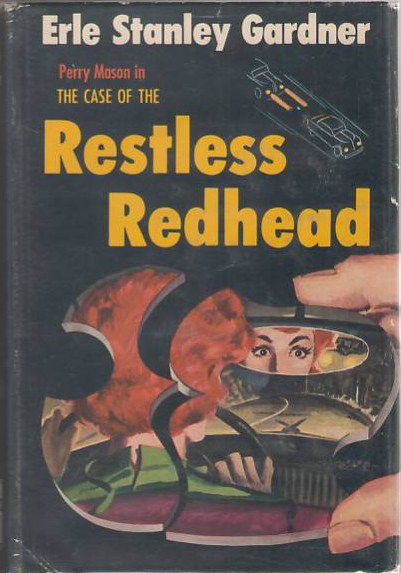
The Case of the Restless Redhead (1954) by Erle Stanley Gardner is special, in that I give this one credit, along with a black-eyed blonde and a borrowed brunette, for jump-starting a closer, more complete reading of Erle Stanley Gardner. Generally, I agree that the 30’s and 40’s titles are superior, but a lot of the 50’s titles, like this one, are great fun. And who knows? Within a couple of years, I may have a new 50’s favorite!
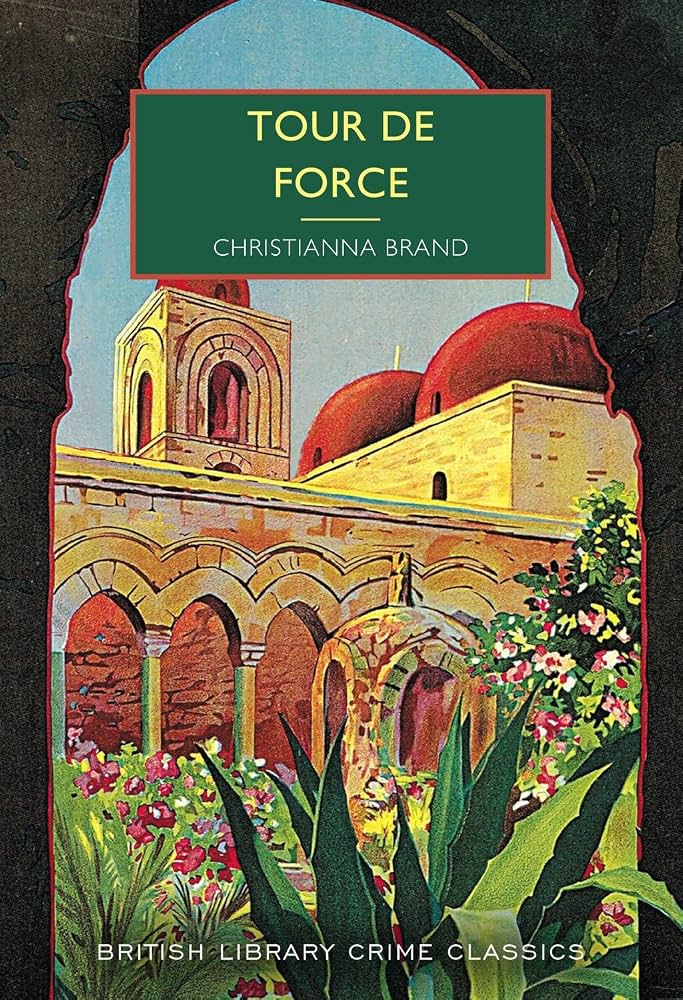
Tour de Force (1955) by Christianna Brand may be my favorite by an author who should have written a dozen more mysteries! And yet, if Brand had only written this and Green for Danger, she would still deserve all the acclaim she has received. Both novels are clever, gripping mysteries and brilliant character studies that hurt your heart when you reach the end. As brilliantly as Brand evoked the milieu of a military hospital in the earlier book, she has a blast creating a tropical island and having fun with the conception of British tourism, epitomized by her sending the hilariously cantankerous Inspector Cockrill on holiday. I’m definitely due for a re-read on this one soon.
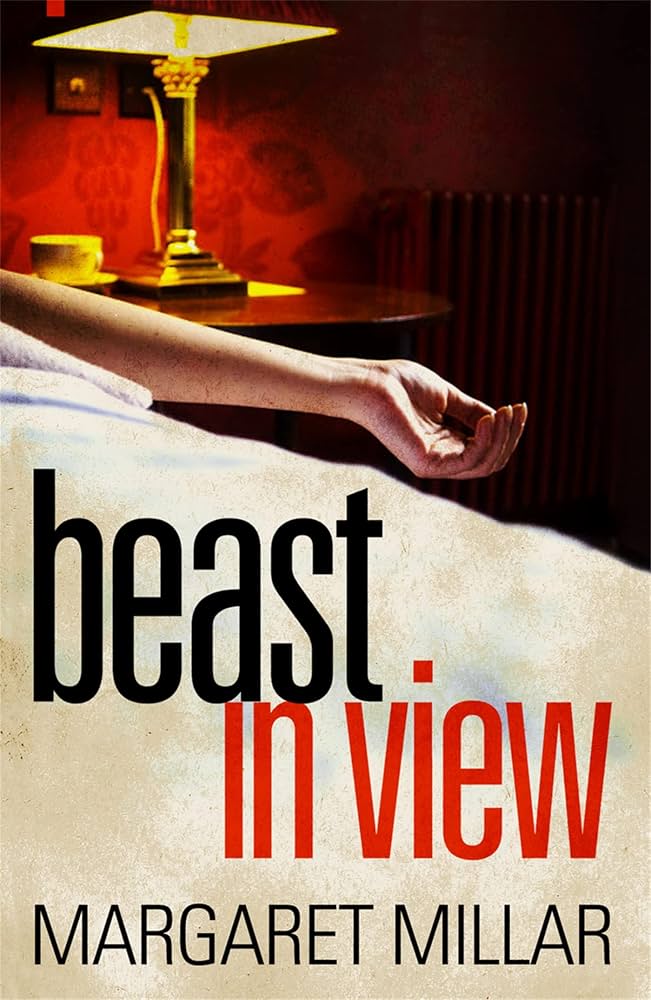
Beast in View (1955) by Margaret Millar is another tour de force! Two women – one a pathetic victim, the other the monster who stalks her, determined to ruin her life. I love a book where you know that something is off, but for the longest time you don’t know what it is. You may suspect – God knows we hard-core mystery fans have been been bombarded with suspicions – but until that final satisfying twist, you can’t know. I’m not sure how much Margaret Millar I will read in my life, but I’m sure glad I made the acquaintance of this dark tale. It may be the unknowing (perhaps) progenitor of a more famous novel to come four years later, but people should know this one better.
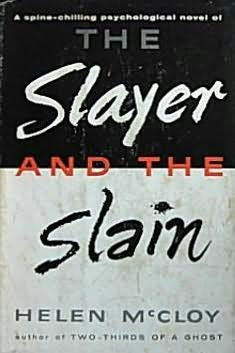
The Slayer and the Slain (1957) by Helen McCloy reminds me to make an early New Year’s resolution: I have to read more Helen McCloy next year. Her series detective, Dr. Basil Willing, has helmed some of my favorite reads of hers, but this stand-alone tale of psychological horror is one of the best guides to the dark side of 1950’s modernism (the description of highways alone might make you park your car in the garage and forget about it); plus, it contains one of the most unique twists of any mystery I’ve ever read.
Let me know what you think about any of these titles. And be sure to tell me what 1950’s mysteries might appear on your lists!


A Murder is Announced is my favorite Christie as well. I loved your review ! Yes it is tragic which many murder mysteries even good ones are not. It could almost stand alone without the murders as a novel about village life. I also love After the Funeral.
LikeLiked by 1 person