Back in May, my buddies Sergio and Nick and I pooled our heads together and came up with our own three lists of the best mysteries from the Golden Age of Detection. Our method of selection was very structured: we came up with thirteen general categories (i.e., “Best wartime” “best locked room” and “best twist ending”) and applied a vast quantity of rules. No author could appear more than once in a category. No title could appear more than once on the sum of all three lists. And so on and so forth . . .
We didn’t get a lot of responses, but those we did get were terrific. And the three of us agreed that we each had found new titles to read in the future, which is pretty much the point of all of this!
And now I have another list for you. This one came up because of a certain level of frustration that has been going on in my Book Club. Every month we pick a classic mystery to read, and every month our conversation is sabotaged by the wide diversity of our tastes. This is not how a discussion about mysteries should go between seven well-read fanatics of the genre. And so we decided to mix things up. For this month, each member was asked to come up with a list of their ten favorite mysteries from the 1930’s. There was only one rule to this game: you could only select one title per authors.
And therein lay the kicker! Because while I could name dozens and dozens and dozens of 1930’s mysteries that I adore, the fact is that most of this list has been generated by a relatively small group of prolific authors. This would prove to be a more daunting challenge than I thought – which, of course, made it a lot more fun.
Book Club met today and shared their lists. Since six of the seven of us are bloggers, it would be most unfair for me to list the titles my fellow club members shared. Whether each of them decides to do so or to let this be a private process among a halcyon collective of mystery fans is their business. However, I will say that John Harrison, my friend who blogs at Countdown John’s Christie Journal and who acted as our de facto moderator for today’s meeting, has already posted his list.
Some people chose the route of creating a Top Ten list with their favorite being at the top and sliding down in favorite status to Number Ten. I went a different route, partly to help me deal with the fact that certain authors, like Christie, Queen and Carr, had too many fine titles to choose from. What I decided to do was to come up with a title for each year, and this ended up making my job a lot easier. Here then, in chronological order, is my Top Ten 1930’s Mystery List:
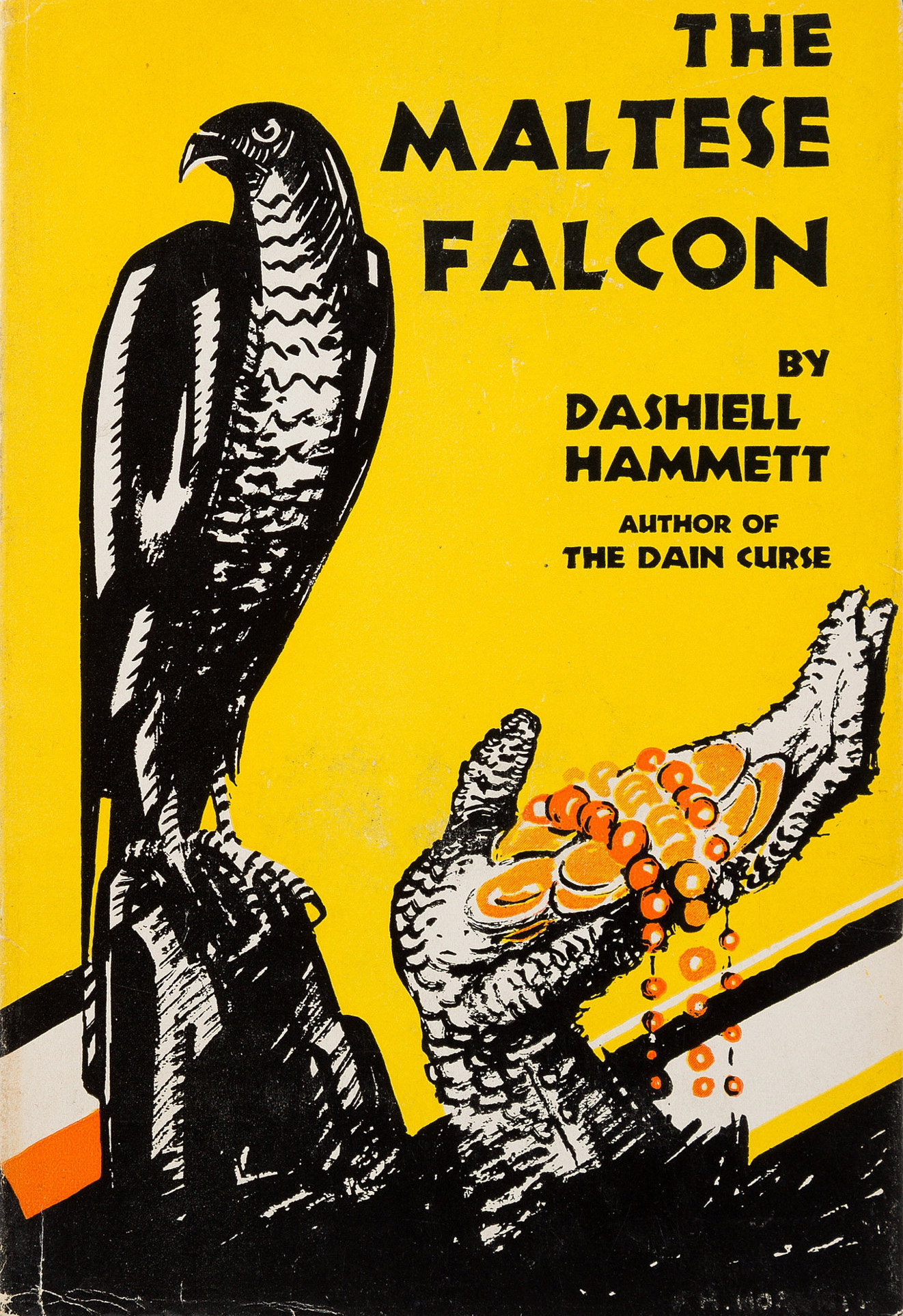
1930: The Maltese Falcon (Dashiell Hammett)
I’m a bit embarrassed to tell you that I have never reviewed Falcon on this blog – at least, not the novel. I did extol the 1941 film version in one of my first posts. The fact is, I came to this tale through that film and didn’t read the novel until after many viewings. Despite the fact that Humphrey Bogart doesn’t in the least resemble the literary description of private detective Sam Spade, he still perfectly embodies the sould of that character and delivers with aplomb dialogue that is mostly lifted by director/screenwriter John Huston straight out of the novel.
Falcon enacts the classic trope of American detective fiction: a client walks into a P.I.s office offering a combination of lies and alluring promises of fortune and leads our hero, a man of slightly dubious morals, on a labyrinthine journey toward a shocking set or truths. There is a wealth of quotable material on nearly every page. Much of this makes it into the film, but there is gold to be found only in the novel as well. If you haven’t read The Maltese Falcon, I highly recommend you do so – and then watch Bogie and Company reenact it for you again. It’s the stuff that dreams are made of . . .

1931: Death Walks in Eastrepps (Francis Beeding)
I have always been a sucker for a good classic serial killer mystery. Let me be clear: the significant word here is “classic.” Eighty percent of modern mystery novels today deal with someone called “The Dollmaker” or “The Clydestown Butcher” and the narrator is unreliable and the deaths are unbearably gory and whoever is doing the investigation must have gone to summer camp in a Scandi-noir town where everyone is a drunken Nazi child pornographer.
Classic serial killer novels have just as much horror, but they also have a veneer of, well, class to them. And Death Walks in Eastrepps, which I read back in 2021 with my Book Club, is one of the best. It is a thrilling whodunnit with a surprise ending, but it is also a brilliant character piece, both in its portrayal of the villagers whose lives are upended by a killer dubbed by the press The Evil, and of the half dozen or so members of the police force who take on the unmasking and capture of this fiend.
Beeding’s method of storytelling by jumping from one character’s interior monologue to another is rich and entertaining. As I mentioned in my original review, few authors can match Beeding’s ability to give life to even the most minor character.
1932: The Greek Coffin Mystery (Ellery Queen)
Like John Dickson Carr, Ellery Queen didn’t get his start until halfway through the Golden Age of Detection, and yet the work of both men seems foundational. In truth, cousins Fred Dannay and Manny Lee were inspired by a true originator, S. S. Van Dine – only they outshone that author at every turn. Nowadays, mystery fans run the gamut in their opinion of Queen’s work. Some prefer his earlier books as pure exercises in ratiocination – characters and feelings be damned! Others love the jauntiness of their middle period, with forays into Hollywood and other climes. And for a lot of readers, Queen’s true greatness began in 1940 with a trip to Wrightsville.
Preferences are moot here because we’re talking about the 1930’s, and really all you have to do is select which International Adjective + Noun + Mystery floats your boat. Even so, I had a bit of a dilemma . . . but I ended up selecting The Greek Coffin Mystery over my other favorite, The Siamese Twin Mystery, because it is the first Ellery Queen novel I ever read, and its structure – a young and vain Mr. Queen comes up with the solution to the bizarre murder of a corpse sharing another man’s coffin, only to discover he is incorrect again and again and again – and solution, where the killer’s identity made this 12-year-old jump out of his chair, helped finalize my lifelong love of the genre. Ultimately, Siamese Twin might be more enjoyable because, with its life-or-death setting atop a blazing mountain, it is a more thrilling and emotional read than the more purely cerebral Greek Coffin. But never fear: other Book Club members named Siamese Twin as their favorite, and I was happy to ensure that Greek Coffin made it on the list.
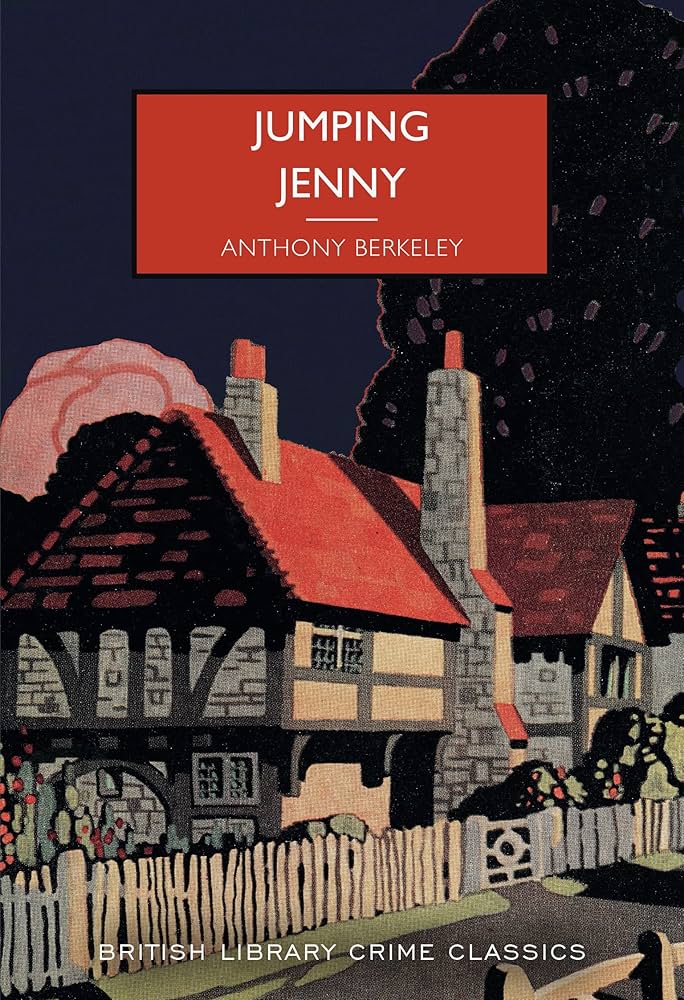
1933: Jumping Jenny (Anthony Berkeley)
When my Book Club tackled this one, things got so heated that if we hadn’t all been on Zoom, we might have come to blows. Considering his placement at the forefront of the Age of Classic Mystery, it’s amazing how enthusiastically Berkeley enjoyed turning the new conventions of the genre on their ear. I hope my pal JJ won’t mind my sharing this, but I had to laugh when he described Jumping Jenny as the best “piss take” of detective fiction ever written. In a way, it is an anti-detective novel, and I am struck by how much we enjoy series sleuth Roger Sheringham considering he really isn’t very good at the job!
The setting is beautifully conventional: a winter house party, where everyone is dressed up as real-life murderers and their victims. One guest in particular is so obnoxious and mean and nasty that she might as well be wearing a sign on her back that says, “KILL ME, PLEASE!” Somebody eventually accommodates her, and from there the book turns into a cuckoo-brain investigation where Roger and his friends do all they can to ensure that the case has a happy ending. Berkeley provides a fine cocktail of an finale, complete with twists.
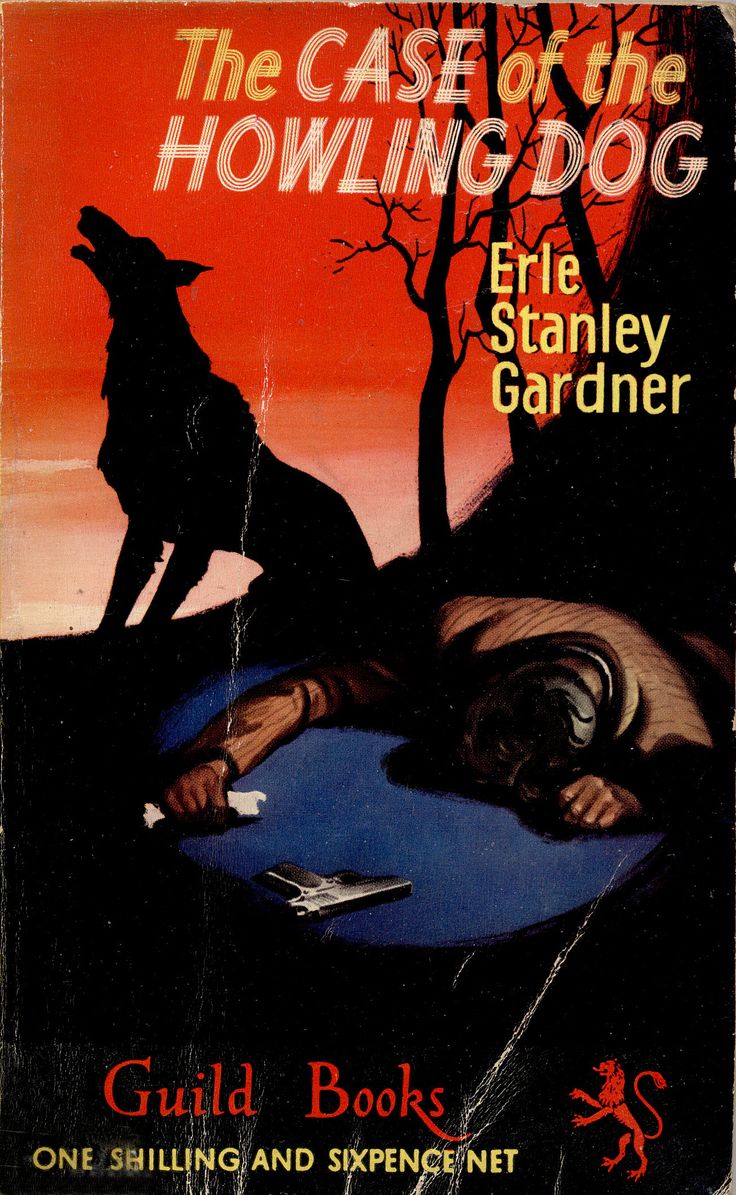
1934: The Case of the Howling Dog (Erle Stanley Gardner)
If you’ve been following along with this blog, you might have figured that Erle Stanley Gardner would end up on my list. The challenge here is that some of the best books he wrote about defense attorney Perry Mason came out in the 30’s, and the wealth of choices made my head spin. In the end, I chose The Case of the Howling Dog, a tight little thriller about feuding neighbors where one secret after another is unearthed. But I could just have easily chosen Substitute Face or Stuttering Bishop or Lame Canary. So let me justify my choice this way: I have read and reviewed Howling Dog, and next year I’m reading and reviewing every other title in the Mason Menagerie. This one was the first with an animal in the title, so I urge you to read it and let it whet your whistle for the other books to come.
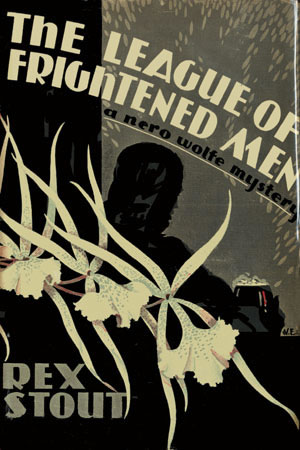
1935: The League of Frightened Men (Rex Stout)
For me, Rex Stout posed a different challenge. I absolutely adore the relationship between Nero Wolfe and Archie Goodwin (who I nominate for the best “Watson” of all time.) However, the 1930’s novels that I have read are not my favorites. I think it took some time for Stout to get his bearings on this pair and make them fabulous. My favorite of the decade is 1939’s Some Buried Caesar; the problem is that I was striving for one book per year, and ’39 was the first year taken (you’ll understand when you get there!)
That left me torn between Too Many Cooks, with its focus on food (always a good thing when you’re reading about Mr. Wolfe) and its surprisingly modern tackling of race issues, and this one about a man’s quest for revenge. Although it’s only the second book, I think League is miles ahead of Fer de Lance in terms of the evolution of our two heroes . . .

1936: Case for Three Detectives (Leo Bruce)
Case for Three Detectives is the most recent Book Club success for me and one of my favorite reads of the year. Again, we have a country house mystery, complete with victims and suspects and FOUR detectives – and in his very first mystery novel, Leo Bruce has some hilarious tricks up his sleeve.
Pastiche is tricky, but Bruce’s depiction of Hercule Poirot, Father Brown, and especially Lord Peter Wimsey is both bitingly funny and full of love. This marks the beginning of the acrimonious relationship between good-natured Sergeant Beef and his unwilling Boswell, Mr. Townsend. It’s also a darn good mystery with some cool impossible elements and a twist that fooled even me! As a result, my freezer, er, book shelf is stocked up with Sergeant Beef, and I look forward to exploring his further exploits.
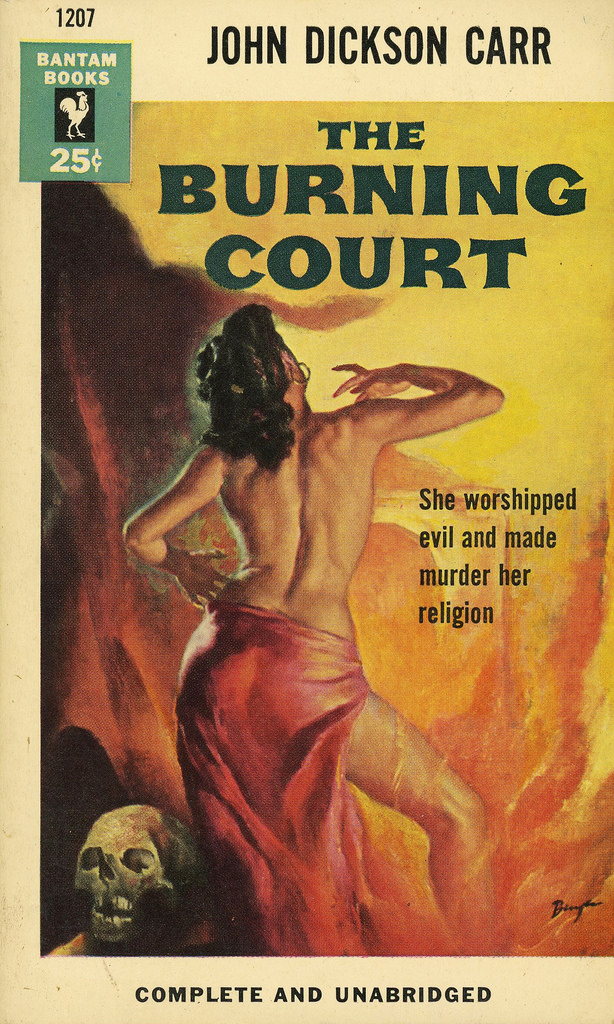
The Burning Court (Carr, 1937)
You may be looking at this title and shaking your head in surprise. Where’s The Judas Window? Where’s The Black Spectacles? Where’s The Crooked Hinge? Well, it’s partly due to the wealth of material provided by Mr. Carr-slash-Dickson, who published twenty-seven novels during the decade, and partly a result of the rules of our game. I could only pick one title per author. I wanted a single title for every year (which meant I would have to choose between Window and Hinge for 1938 and, as I had picked my 1939 book first of all, couldn’t select Spectacles.
And so I went with another favorite, The Burning Court, one of the most unsettling and controversial mysteries of the decade. It comes complete with a knotty impossible problem and, in true Carrian fashion, it embellishes the crazy goings-on with supernatural overtones and an atmosphere of horror – no mean trick when you set your book in modern day Pennsylvania. And that’s all I’m gonna say about this one, just in case you haven’t read it.
Except . . . read it!
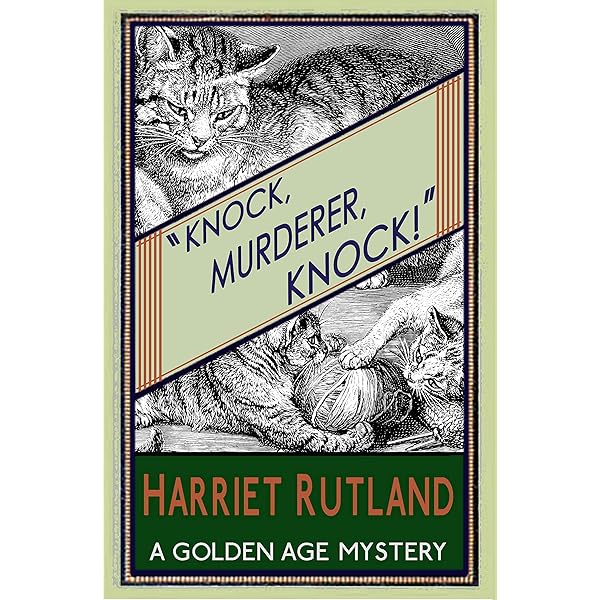
Knock, Murderer, Knock (Rutland, 1938)
Bless Dean Street Press for making so many forgotten authors available again, not least of which was Harriet Rutland, who had the poor taste of writing only three mysteries because she was that good. Her final novel, Blue Murder, is a vicious wartime mystery, and her middle novel, Bleeding Hooks . . . well, I haven’t read it yet because it’s about fishing. But I’ll get there.
And then there’s her debut, Knock, Murderer, Knock, the only mystery I know of (except for one Miss Marple short story) that is set in a hydro. It’s also a serial killer mystery. It’s also hilarious. Sometimes you just want to go up to these authors who only wrote a few and shake ‘em! I urge you to read this one: you’re in for a treat!

And Then There Were None (Christie, 1939)
We started our Book Club meeting with Agatha Christie because we figured that anyone who did not have a Christie title on their list of their Ten Favorite 1930’s Mysteries did not belong in our Book Club! As it turns out, nobody disappointed. Seeing how the 1930’s were Christie’s Golden Age, you would think our choices would be all over the place. Surprisingly, though, our choices comprised only three titles. My biggest disappointment is that Death on the Nile did not make anyone’s list, although it was the runner-up for me and my fellow member who selected this one for their list.
In the end, I chose And Then There Were None because it is my own top-ranking Christie and maybe the greatest (certainly the most successful) classic mystery ever written. It also comes right at the cusp of the 1940’s when Christie wrote most of my favorite titles and some of her richest work. If Book Club ever gets to repeating this exercise with that decade, I am going to have a tough decision to make.
And there you have it. Probably not many surprises here, and I’m sorry if some of your favorite authors (Sayers, anyone?) are not mentioned here. Trust me: the seven members of Book Club ran the gamut of styles and tastes, and we covered thirty-seven authors within our two-plus hour discussion.
I’d love to hear which books might have made your list!
 Ah Sweet Mystery!
Fantastic list Brad – most of these would definitely appear on my list, though have yet to try Rutland (but that is going to change, promise). And I suspect Gardner might not have made my list at all (sorry about that), probably would have snuck a Maigret in there! But I love the 10 all the same – well played sir.
LikeLike
I realize that most of my favorite whodunits are actually from the 1940s (Death of Jezebel, Five Little Pigs, Till Death Do Us Part, etc…) but here’s my 1930’s list (seven of which have been filmed):
1930 – Charlie Chan Carries On1931 – Top Storey Murder1932 – The Greek Coffin Mystery1933 – The Kennel Murder Case1934 – The Case of the Howling Dog1935 – The League of Frightened Men1936 – A Case for Three Detectives1937 – The Burning Court1938 – The Beast Must Die1939 – And Then There Were None
LikeLiked by 1 person
Do we seriously have six titles in common?
LikeLiked by 1 person
Yes, although, as I assume is the case with you, there are some important compromises dictated by the “one title per author” criteria. If it were not for that, i’d say that probably about 7 of the 10 would be titled by just Carr and Christie. And the year 1937 would be a major battleground.
LikeLike
Indeed, without that proviso, my list would probably be:
1930 – It Walks By Night
1931 – Top Storey Murder
1932 – The Greek Coffin Mystery
1933 – The Mad Hatter Mystery
1934 – Murder on the Orient Express
1935 – The Hollow Man
1936 – Cards on the Table
1937 – Death on the Nile
1938 – The Judas Window
1939 – And Then There Were None
LikeLike
Yes, but the rules were designed to prevent lists like this!!!
LikeLiked by 1 person
Let me ask, Brad, taking away both the “one title per author” and “one title per year” restrictions, what would be your top 10 of the 1930’s?
LikeLike
I tried to do what you ask and came up with a far less interesting list. Clearly there would be more Christies, more Carrs, another Queen . . . and the question would be what am I going to cut from my original list? So the only thing I will say in answer to your question is that I would have included Death on the Nile.
LikeLike
Don’t know why the formatting is so screwed up there
LikeLike
Ngaio Marsh’s Colour Scheme is set in a spa/hydro thouugh the treatments are based on wallowing in warm mud, not drinking mineral-rich wateers.
LikeLiked by 1 person
I read this so long ago I can’t remember a thing. But it takes place in New Zealand, doesn’t it? And I have a sense that it was a very good book!
LikeLike
My list with some favorites:
1930 – The Invisible Host – Gwen Bristow & Bruce Manning
1931 – The Mystery at Friar’s Pardon – Martin Porlock (Philip MacDonald pseudonym)
1932 – The Devil Drives – Virgil Markham
1933 – The Siamese Twins Mystery – Ellery Queen
1934 – The Postman Always Rings Twice – James M. Cain
1935 – Heir Presumptive – Henry Wade
1936 – Murder of a Matriarch – Hugh Austin
1937 – The Burning Court – John Dickson Carr
1938 – Death from a Top Hat – Clayton Rawson
1939 – And Then There Were None – Agatha Christie
LikeLiked by 1 person
Scott, you would’ve fit right in with Book Club: your selections coincide with SEVEN titles that various members named! FYI, the choices that are your own are ‘31, ‘32, and ‘36!
LikeLike
Pingback: My Top Ten from the 1930s – crossexaminingcrime
My top ten from the 1930s:
Burning Court – JDC (1937)
Death on the Nile – Christie (1937)
Greek Coffin Mystery – EQ (1932)
Heir Presumptive – Henry Wade (1935)
Suicide Excepted – Cyril Hare (1939)
Clock in the Hat Box – Anthony Gilbert (1939)
Jumping Jenny – Anthony Berkeley (1933)
Some Buried Caesar – Rex Stout (1939)
Beast Must Die – Nicholas Blake (1938)
Hamlet, Revenge – Michael Innes (1937)
My main takeaway from doing this exercise is that the 1940s are probably my favorite decade for mystery novels, followed closely by the 1930s.
LikeLiked by 1 person
I, too, believe that if we perform this exercise for the 1940s, I will have a much harder time narrowing down my list, but I think my self-imposed additional rule of picking one title per year helped me a lot. It certainly helped me narrow down five or six favorite Christies and Carrs.
LikeLike
Definitely your first and last. I would add:
The Invisible Host
Epitaph for a Spy
The Postman Always Rings Twice
Fer-de-Lance
Double Indemnity
The ABC Murders
LikeLiked by 1 person
Pingback: Top Ten: 1930s Mystery and Crime Fiction – Mysteries Ahoy!
Pingback: Not quite top ten detective novels of the 1930s – The Grandest Game in the World
Pingback: A Baker’s Dozen: Favourite Mysteries from the 1930s – a hot cup of pleasure
So glad to see The Burning Court among the top ten.
LikeLiked by 1 person
I checked out your baker’s dozen, and it was filled with titles I have never heard of. Classic mystery is a genre I’m never going to complete!!!
LikeLiked by 1 person
Classic mystery is a genre I’m never going to complete!!!
I agree.
LikeLike
This is such a fun concept and just led to me putting a bunch of new-to-me books on hold at the library! My own (less well read) list would look quite different but I do have to say, I feel like the only dissenter on The Case for Three Detectives. I absolutely love the parodic elements, especially as pertain to the solutions, but IMO Sergeant Beef makes one idiotically fatal fuckup that is so huge and dissatisfying that it retroactively ruined the whole concept of the book for me.
LikeLiked by 1 person
Well, I have yet to read a book that contains only Sergeant Beef, so we’ll see how that goes. Meanwhile, the joke here, for some reason, worked beautifully for me.
LikeLike
Can you elaborate on screwup by Beef, in RO13 if you don’t wanna ruin it for others, as big fan of the book wanna know what alludes me in my reading.
LikeLiked by 1 person
You’ll have to ask Hannah. Beef is NOT a screw-up in CF3D, and that’s the only one I’ve read.
LikeLike
I’m super late here (I only just realized that I’ve been getting email notifications for replies to my blog comments lol) but actually it is in Case for Three Detectives that Beef makes the fuckup IMO. ROT13: Gur snpg gung ur nccneragyl xarj gur zheqrere’f vqragvgl gur jubyr gvzr ohg fgvyy nyybjrq n fvghngvba jurer na nqqvgvbany zheqre jnf noyr gb gnxr cynpr jnf whfg nofbyhgryl ovmneer.
LikeLike
Pingback: Ten Picks From The 1930s – In Search of the Classic Mystery Novel
Pingback: MORE FUN AND GAMES WITH BOOK CLUB: Five Great Mystery Debuts | Ah Sweet Mystery!
Pingback: “I’ve got (another) little list . . . ” Ten Favorite Mysteries of the 1940’s | Ah Sweet Mystery!
Pingback: SIX SKIDOO: My Favorite Mysteries of the 1920’s | Ah Sweet Mystery!