Every once in a while, my Book Club eschews the single Title-of-the-Month format and opts for a more general discussion. We select a topic – say, our favorite mysteries of the 1920’s or the best debut novels by a mystery author – craft our separate lists, and pool them together at our meeting – and discuss! Yes, there are some “great minds think alike” moments (see #3 on my list below), but the talk always leads to great discoveries of books some of us hadn’t considered or had never even heard of! I confess that my TBR pile has risen to even more shattering heights after these meetings.
This month, we sat down to discuss our favorite stand-alone mysteries. We did not limit ourselves to the Golden Age of Detection; in fact, the only rules were, 1) the characters in the mystery could not repeat in multiple stories, and 2) as always, we could only consider one title per author. The challenge for me was that some of my favorite authors never wrote a standalone while others wrote too many good ones!! And while I was only required to think of five, I’m a blogger, and a blogger thinks in terms of ten! My list spans forty-six years, from 1930 to 1976. And notice I titled this “Ten Favorite . . . “ and not “My Ten Favorite . . . “This is because I have a whole bunch of favorite stand-alone mysteries I couldn’t mention here without violating the rules.
Without further ado, here, in chronological order, is my list:
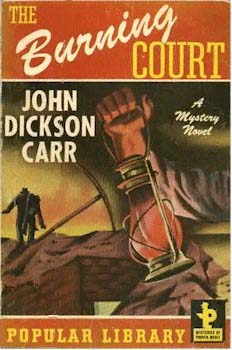
The Burning Court (John Dickson Carr) 1937
We started our Book Club discussion with “The Big Names.” In fact, we started with Christie – see below – because she wrote quite a few stand-alone novels. But even Christie wrote fewer than you might imagine. Ellery Queen managed only a couple, and neither The Glass Village nor Cop-Out were going to end up on this list. Marsh – none. Brand – none, at least in this genre. Which brings us to John Dickson Carr, the most prolific of the bunch.
Carr produced many stand-alone titles, most of them historical mysteries. Of the handful of whodunnits not featuring Dr. Fell, Sir Henry Merrivale or Bencolin, The Burning Court stands out in spades! Carr breaks one of the integral rules of mystery fiction – or does he? The argument over what happens at the end of this book is still raging, and anyone who hasn’t yet joined in the discussion is missing out on one of the most intriguing titles in classic detective fiction.
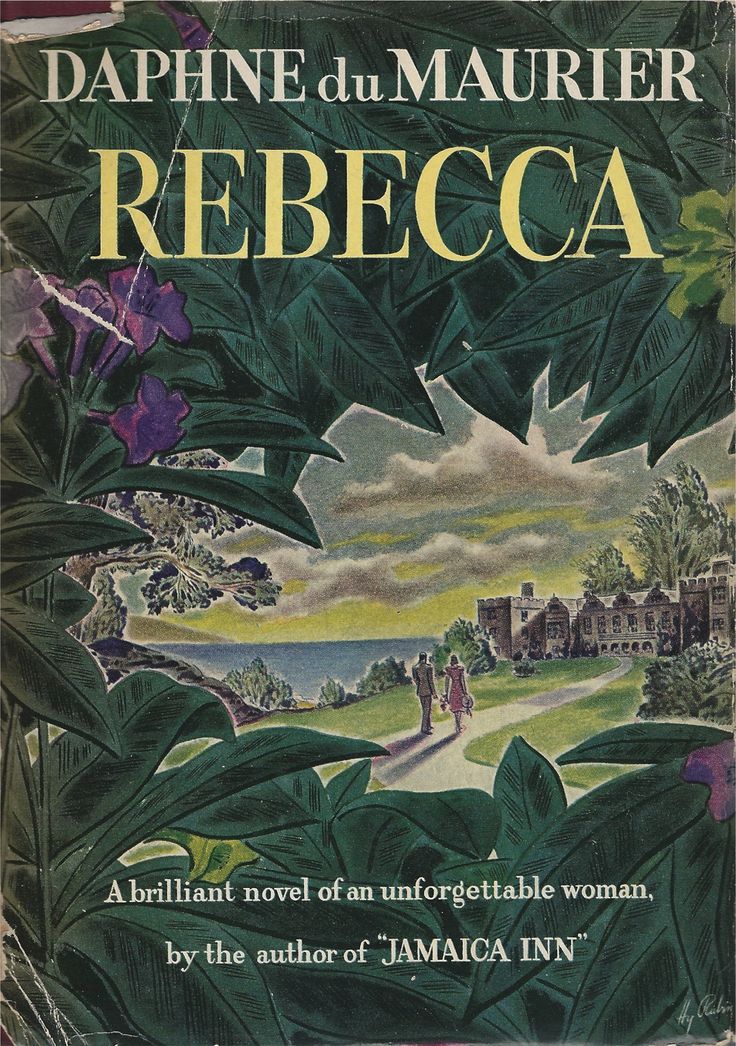
Rebecca (Daphne Du Maurier) 1938
Rebecca is many things: a Gothic masterpiece, whose antecedents lie in the classics (hello, Jane Eyre), a murder mystery (or, at least, a mystery about a death), a ghost story, a love story, and a psychological thriller, with some horror thrown in. Sometimes, it’s also pretty funny. I read Rebecca so long ago that I haven’t reviewed it, and frankly, my TBR pile says it’ll be a cold day in hell before I have time to return to Manderley. But thoughts of the movie are sprinkled around this blog, and Daphne Du Maurier deserves credit for producing a hefty novel that still sends chills down our spines.
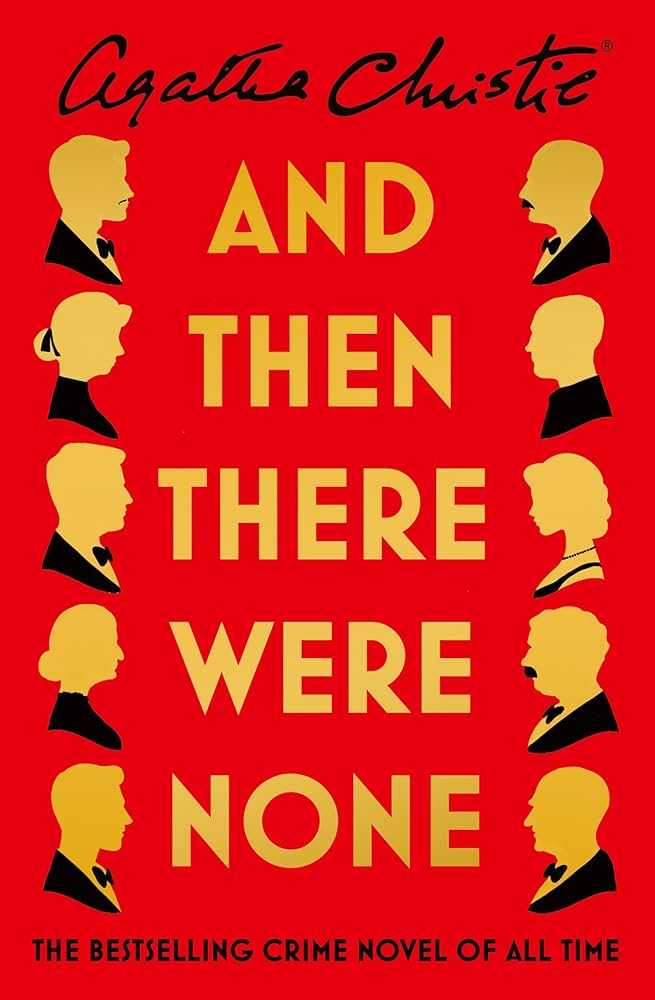
And Then There Were None (Agatha Christie) 1939
Christie wrote sixty-six mystery novels. Subtract Hercule Poirot, and you have thirty-three. Subtract Miss Marple, and you have twenty-one. Take away the pair of Colonel Races and the trio of Superintendent Battles, and we’re left with a dozen stand-alones. These include political thrillers, a historical mystery set in ancient Egypt, a psychological horror story, several fine whodunnits – and arguably the greatest mystery novel of all time.
Certainly And Then There Were None is the best-selling mysery novel of all time, a tale of nine murderers picked off by a jealous psychotic who has always wanted to kill. This is the book that has found its way into school curriculums and has spawned over a dozen adaptations and countless imitations. I would venture a guess that if you polled every person in the world who has claimed to read an Agatha Christie novel, this would be the first (and possibly only) one they picked up. Christie was pushing fifty when she wrote this, and she claims it took a lot out of her to put the whole thing together. I think it led the way to a decade that included some of her finest writing.
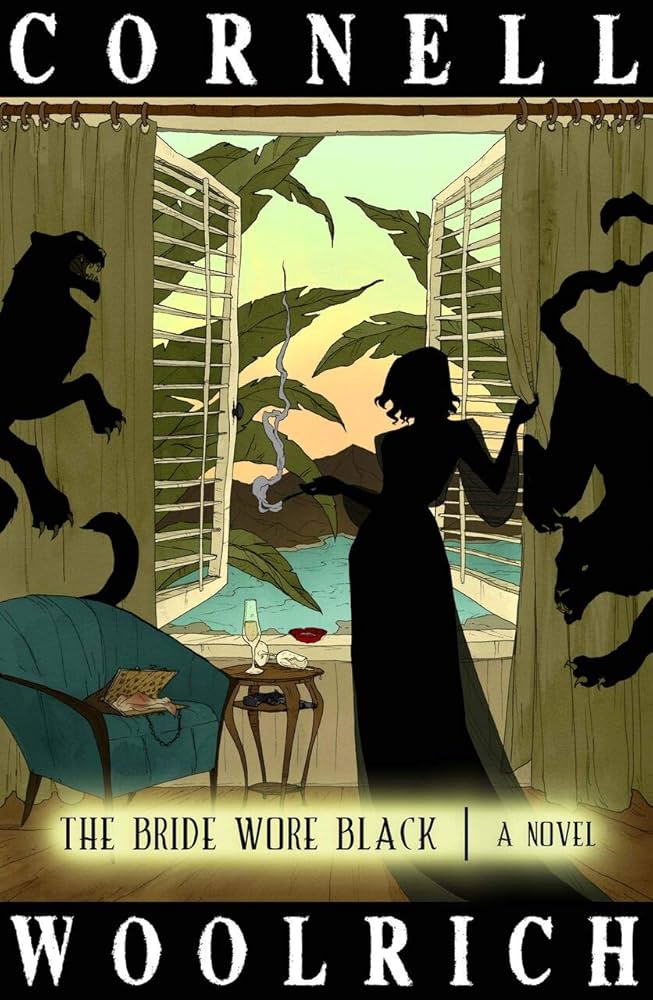
The Bride Wore Black (Cornell Woolrich) 1940
Ultimately, I will read a second Woolrich novel, and a third, and so on. But what a debut he makes here! A serial killer is loose, but this is no babbling maniac. The bride is cold-blooded, and she has a plan. Watching her enact it is chilling and gripping, sometimes even funny. As she murders one man after another in intriguing ways, we cannot look away, and as she is inexorably pursued by the police, we waffle between expectations of her final confrontation with the law and wanting her to get away with it all! After all this, Woolrich drops an ending that makes us curl up in despair. It’s a sure portent of the kind of writing he would turn out for another twenty-eight years – and of the dark soul of a man he was.
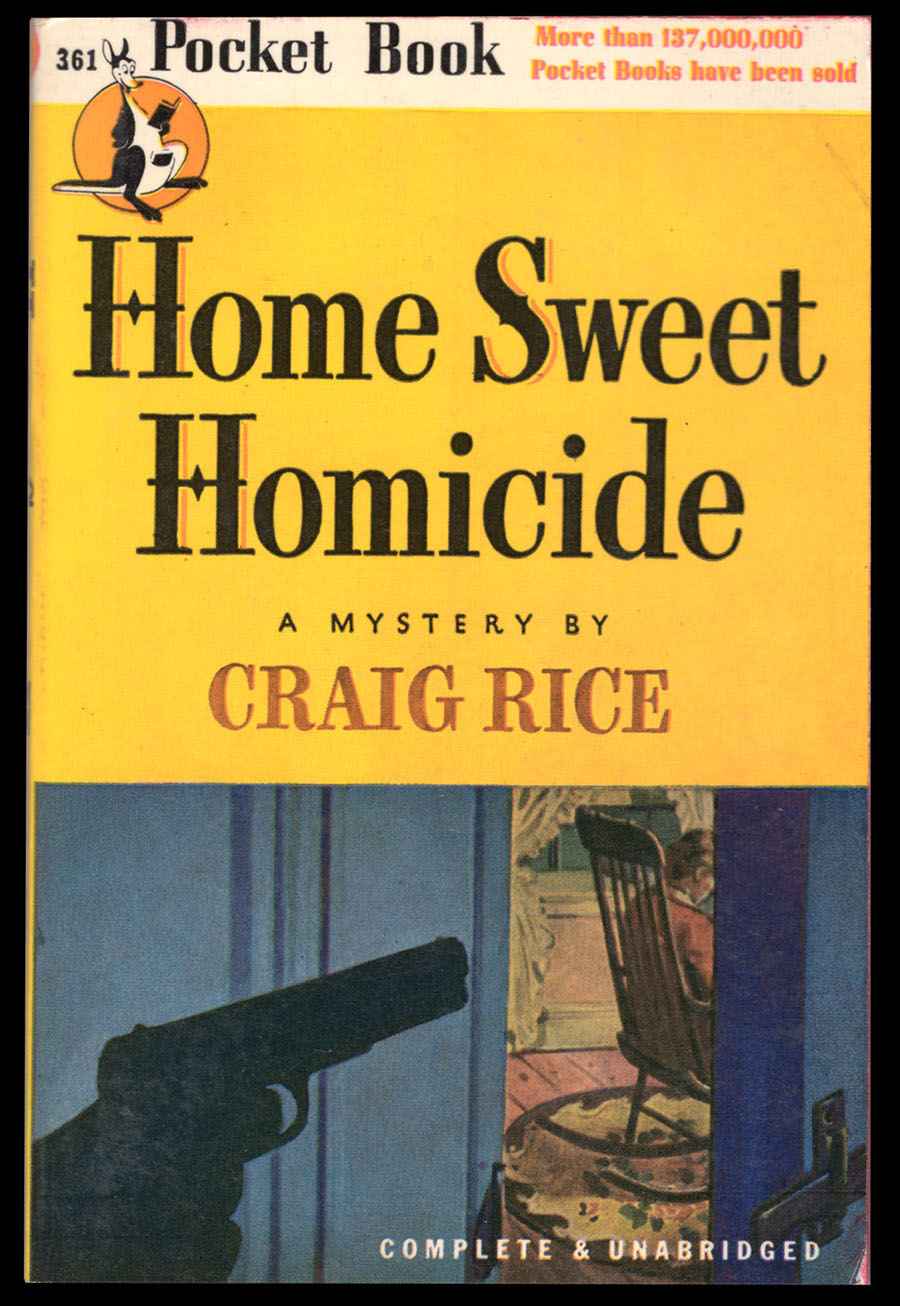
Home Sweet Homicide (Craig Rice) 1944
I can’t think of a sharper veer from Woolrich than this comic delight from the creator of the John J. Malone books. (Oddly and sadly, Rice lived a life full of troubles, much like Woolrich did.) This is my most recent read on the list, and I’ll admit it = I read this specifically in order to include it here, especially after listening to my buddy JJ at The Invisible Event rave about it more than once. Rice pulls off one of the warmest and funniest mysteries ever written about a mystery writer and mother of three (just like Rice herself) who is so busy getting her next book out that she has no idea what her children are getting up to. You will fall in love with the Carstairs kids, root for them to solve the Case of the Murdered Neighbor, and root for their mother to lay her hands off the typewriter long enough to get a turkey on the table and marry the cop in charge of the investigation. And you will be a thousand times grateful for the slang dictionary Rice includes so that you can get hep to the jive of this wonderful story.
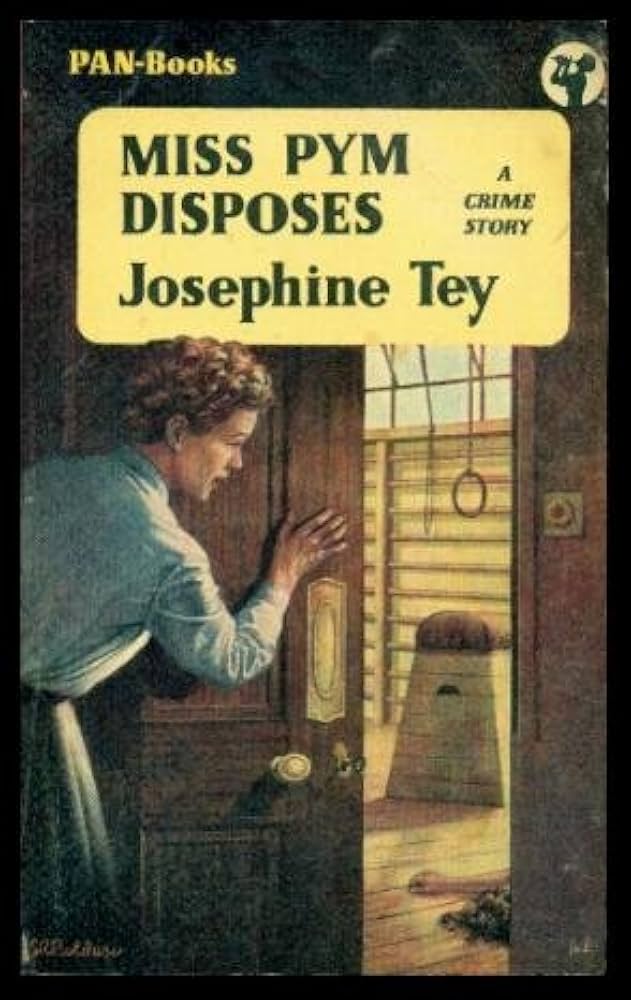
Miss Pym Disposes (Josephine Tey) 1946
An academic mystery with an all-female cast, with a detective who is – what do you call Miss Pym? An anti-hero? A failure? A comic invention par excellence? I love mysteries that play with genre conventions like this one does. Give me Anthony Berkeley’s The Poisoned Chocolates Case or Jumping Jenny – sadly, a series novel – over a bland traditional mystery anytime! Books like that – and like Miss Pym – do all the things murder mysteries are supposed to do, but they also trip us up with their deviation from convention. This slows us down and keeps us from tossing aside another literary carcass and grabbing the next thriller at the top of the pile. Stop and smell the roses, folks!
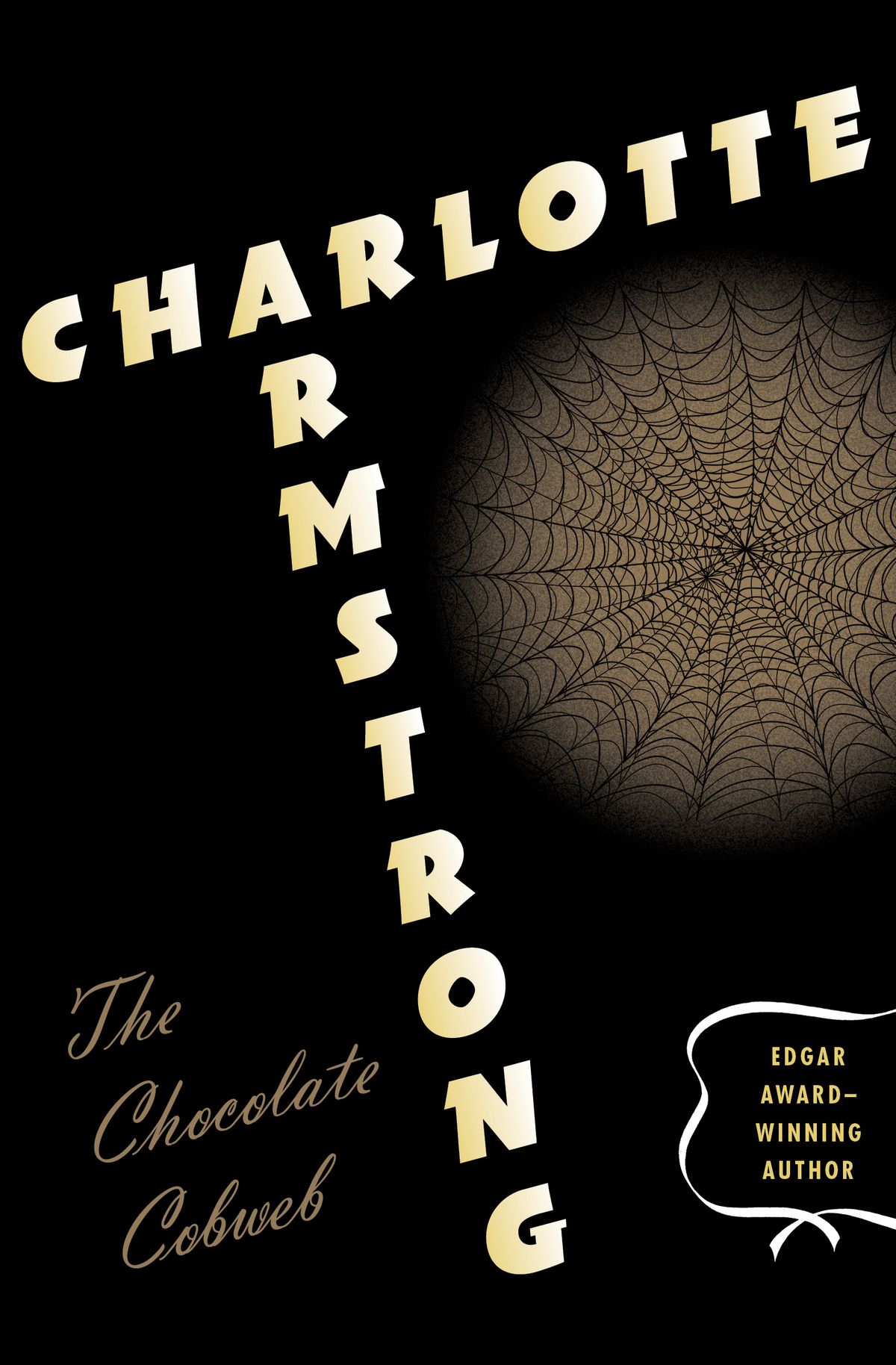
The Chocolate Cobweb (Charlotte Armstrong) 1948
I do love The Unsuspected, Armstrong’s classic about a beloved and kindly radio star who also happens to be a greedy psychopath – but I love this one more. The premise is delicious: from an offhand remark by her mother, a young woman comes to suspect, maybe foolishly, that she was switched at birth and that her true father is a world-famous artist who lives nearby. Entering his household, the woman meets his family and becomes embroiled in a battle to the death with one of the most chilling murderers you will ever meet. In Armstrong’s world, the coziest domestic details clash against the most cold-blooded instincts of an evil mind, and the suspense is almost unbearable.
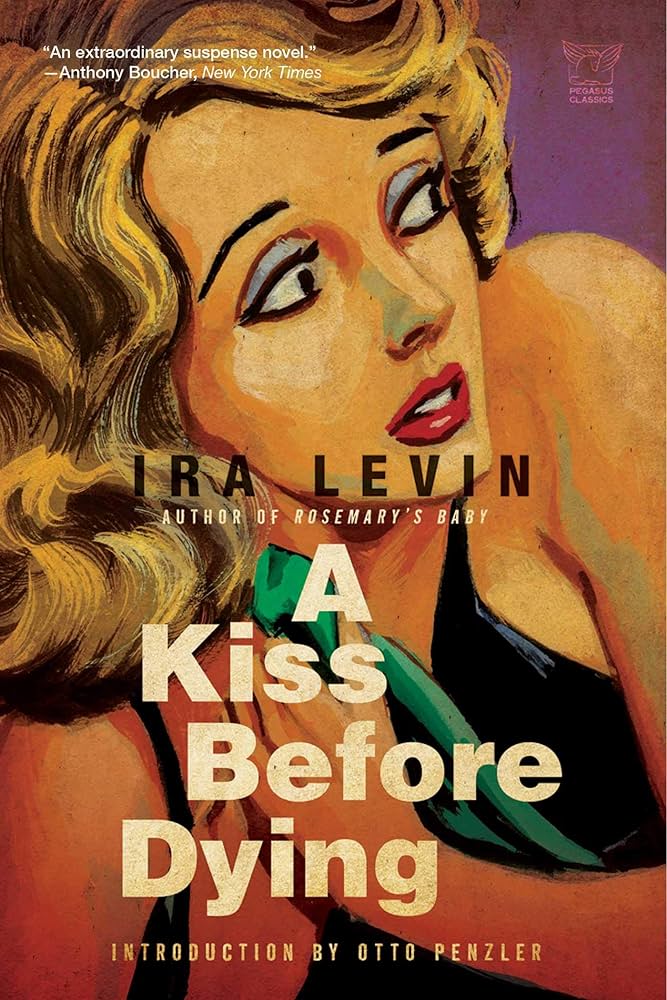
A Kiss Before Dying (Ira Levin) 1953
We need to talk more about Ira Levin. He wrote plays, including a Tony-nominated thriller (Deathtrap) and a nearly forgotten musical (Drat! the Cat!), teleplays, short stories, and seven novels. One of these is a classic (Rosemary’s Baby), four more are great, one is . . . interesting, and one stinks to high heaven – although, considering it’s Son of Rosemary, that stink might be more appropriately sulphuric.
Levin never stuck to one genre, but he only wrote one true crime novel, and that’s A Kiss Before Dying. Occasionally, mysteries are marketed with the warning that the less you know going into them, the better your enjoyment. Suffice it to say, there’s a monster at work, and Levin takes us into the monster’s world from every angle, inside and out. The book twists and turns and leaves you breathless more than once.
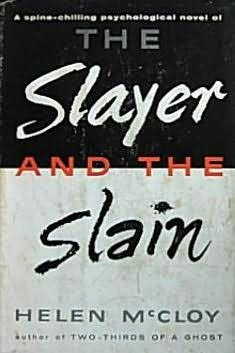
The Slayer and the Slain (Helen McCloy) 1957
I really have to get back to reading more of McCloy’s work. Many of her thirteen novels featuring series detective Dr. Basil Willing are top-notch mysteries, but she also wrote sixteen standalones, most of which I can’t even find! Luckily, one of my earliest reads was The Slayer and the Slain. Instead of a psychologist sleuth, are leading man is a psychology professor, who chucks the academic life when his late uncle leaves him a fortune. He moves back to his home town and hopes he might pick up where he left off with the girl that got away. But things turn very weird very quickly. This one is beautifully written and has a twist that I don’t think you will see coming – I certainly didn’t! As I said, more McCloy has to be in the offing!
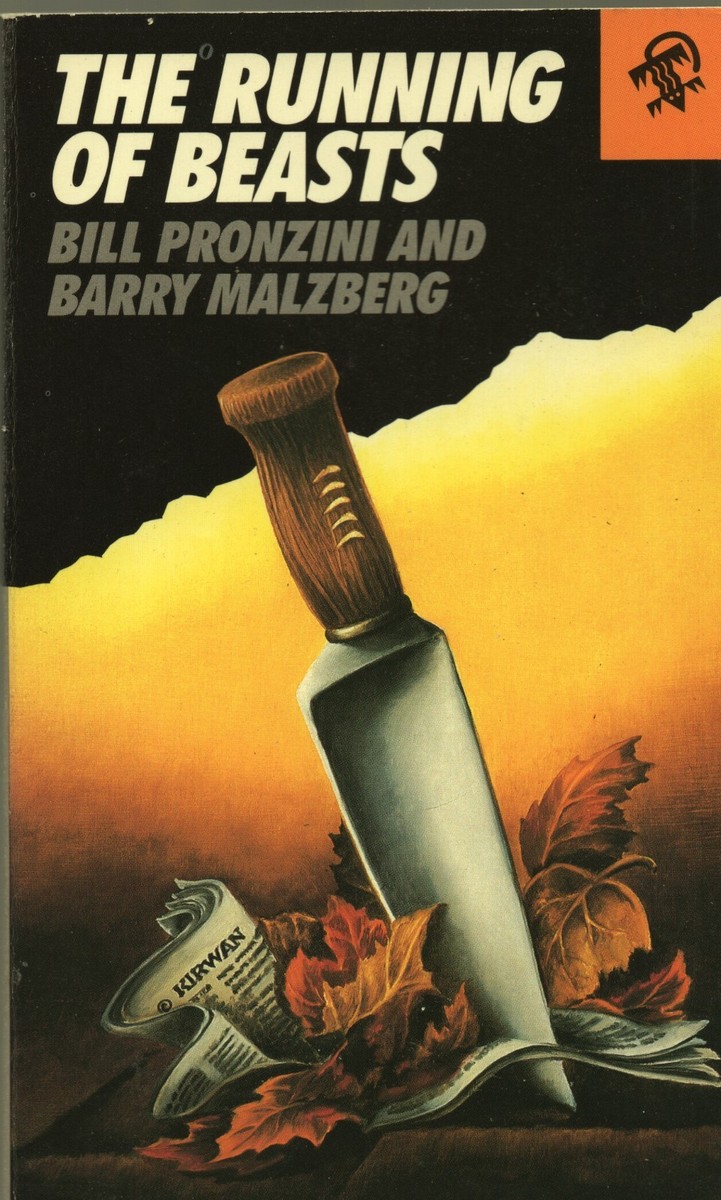
The Running of Beasts (Bill Pronzini and Barry Malzberg) 1972
I had toyed with the idea of doing a series of reviews about some of my favorite serial killer mysteries, but times have gotten so fraught, I haven’t been in the mood to go down that hole. Still, one of the very best comes from the enormously prolific Bill Pronzini, who wrote several books with Barry Malzberg in the late 70’s.
Goodness knows how many novels have featured a serial killer terrorizing a small town. What makes this one so special is its perspective: Pronzini and Malzberg shift from one character to another, focusing on a psychiatrist and a writer who team up to investigate a horrific series of murders against women, and adding the perspectives of the killer, known as The Ripper, and four men – an actor, a newspaperman, a policeman, and a state trooper – who find themselves involved in the killing spree and its affects on the community. One of them is more involved than the others because – he is the Ripper. The authors keep you guessing – and jumping – as the search deepens and leads to an unforgettable finale.
I’ll leave it to my fellow Book Club members to tell you what their lists look like. (You can find Kate’s list here!) In the meantime, I would love to hear from YOU! I could always use some recommendations for great mysteries, so leave your suggestions in the comments below. And remember – there must not be a series character in sight!
And maybe you noticed that the title of this post included the words “Part One!” That’s because I have more Book Club news of the solo variety coming up soon!
 Ah Sweet Mystery!
Not read the McCloy and have a bit of an aversion to Tey – but not read Pym, so will give it a go. A great list and so pleased to see the fabulous Pronzini and Malzberg getting some love!
LikeLiked by 1 person
I had not thought of Helen McCloy in conjunction with standalone mysteries, so good to see one mentioned in your list.
LikeLiked by 1 person
She actually wrote more stand-alones than Basil Willing novels, but I think a lot of the later ones were more like tales of espionage. Jim does not like this book! It would be fascinating to see which side you came down upon if you read this.
LikeLike
Well, I don’t like it, as you say — which obliges Kate to love it 🙂
LikeLiked by 1 person
Oh yes, lot’s of great favorites here.
Rebecca used to be my favorite by Du Maurier, until I read The Scapegoat! Please try if you haven’t read it yet
LikeLiked by 1 person
I have only read Rebecca and a few of the short stories. (“The Birds” and “Don’t Look Now” show how truly creepy Du Maurier could be!). I will certainly look for The Scapegoat.
LikeLiked by 1 person
FWIW, My Cousin Rachel is my favorite Du Maurier (and would have been in my own list, had I not restricted myself to stories with strong detection elements).
LikeLiked by 1 person