Happy June, everyone! Happy harbinger of summer! Happy Pride Month! It’s time to trade slacks for shorts (please ignore my pasty legs) and fire up those grills (unless the CC&R’s of your condo association forbid barbecuing). Grab your towel, trunks and bottle of lotion with SPF500 and head to the beach – unless you live in the San Francisco Bay Area, where you’ll freeze your heinie off. Better yet, let’s stay home and celebrate the sunny, sexy side of . . . Agatha Christie!
There are evidently over seven thousand unique characters in the Christie-verse, and while she best excels at her portraits of women, let’s use the rising temperatures as an excuse to explore one of the most delightful subsets in her oeuvre: the bad boys! I warn you: this isn’t a mere catalogue of killers, although I suppose any male character who commits murder in a Christie tale is, to some degree, bad. Not every bad boy in Christie is a killer – or even a criminal. Some, of course, are guilty of crimes, some of them are victims, and others are . . . well, simply naughty. The only criteria here is that they are bad, bad boys who probably look mighty good in summer attire.
I have divided this group into eight distinct categories. I’ve spoiled a lot of books, which is not nice, but at least I’m warning you ahead of time, which is good of me. Naturally, I can’t discuss every bad boy in the canon, so I have come up with a second runner-up, a first runner-up, and a winner. I trust you will let me know if I get something really wrong. (I might just deserve a spanking!)
THE ROGUE
The rogue may have some wonderful traits, like creating art or saving lives. But when it comes to the opposite sex, a rogue can’t seem to stop himself. They can’t help it, poor things: they were born with something irresistible, and it would be unnatural to repress their charming ways. Here are three of Christie’s best rogues:
2nd Runner-up: Lawrence Redding (The Murder at the Vicarage) – Lawrence fought in the war, is a talented painter and a delightful dinner guest. He also has a tendency to flirt with his models. He makes eyes at the vicar’s wife, (whom he paints in her bathing suit) and the local squire’s teenaged daughter! The old tabbies shake their heads at his behavior, but their eyes gleam when he gives them a bow and a wink. And, of course, he conspires to murder the squire and nearly causes the death of the rector – all in the name of love.
1st Runner-up: Dr. John Christow (The Hollow) – John has all the hallmarks of a medical specialist: his brilliance leads to the cure of the sadly fictional Ridgeway’s disease, but his bedside manner for non-Ridgeway patients is cringeworthy. So, too, is his pattern with women. He cheats on his devoted wife Gerda with his mistress Henrietta, then betrays them both in order to canoodle with former lover Veronica. No wonder he ends up in the swimming pool – minus a suit!
And the Winner is . . .
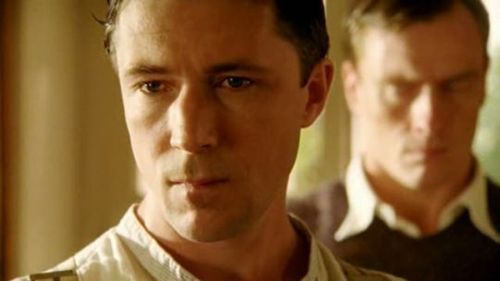
Amyas Crale (Five Little Pigs) – This volatile and brilliant artist is also the ultimate sensualist. His passion for his wife Caroline centers at least partly around the massive fights they have over his serial infidelity. Oddly, though, he may be the most faithful of all the rogues in the canon. Just don’t try to explain that to any mistress he decides to send packing.
THE SOLDIER-OF-FORTUNE
The panoply of military figures who occupy the Christie-verse is vast and varied. Old, young, strong, weak, boring . . . well, a lot of them are old bores! One of Christie’s favorite variations, inspired by her troubled brother Monty Miller, is the man who comes home from war, possibly a hero in battle, who simply doesn’t know what to do with himself. He may be a victim of PTSD or, more likely, a morally dubious man who was able to channel his basest instincts into worthy action during wartime and now finds himself without a proper channel for his impulses. There are a ton of these in the canon (see Lawrence Redding above). Here are three especially bad ones:
2nd Runner-Up: Commander George Challenger (Peril at End House) – This charming older naval officer certainly puts stars in the eyes of Captain Hastings, but he’s also responsible for the dilated pupils and hazy focus of several characters who partake of the drugs he sells. You would think that fighting for his country would have taught him better, but he’s a thoroughly bad lot!
1st Runner-Up: David Hunter (Taken at the Flood) – No doubt about it, David is a dreamboat. He has the gumption to stand up to the weak, sniveling members of the Cloade family and the sex appeal to turn the head of the forthright, sort-of-engaged Lynn Marchmont. In the end, no amount of charm can compensate for David’s bad acts, but then the other fellow is no prize, either, and poor Lynn is left, at least romantically, between the proverbial rock and hard place.
And the Winner is . . .
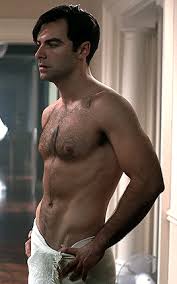
Philip Lombard (And Then There Were None) – Over the course of this classic novel, Lombard assumes the role of suspect, murderer, detective and, ultimately, victim. There is something so appealing about this bad boy that even Christie succumbed to his charms and transformed him into the hero when she adapted her book to the stage. Yet even as we find ourselves attracted to Lombard’s devil-may-care attitude, we have to remind ourselves that his cold-blooded slaughter of a tribe of natives is one of the most evil crimes in the canon.
THE MARRIED MANIACS
The phrase “Till death do us part” takes on a whole different meaning in murder mysteries, where spouses easily rank at the top of the list of killer. Agatha Christie embraced this trope from the very beginning of her career, and the list of horrible husbands is so great it’s hard to cull the list to three. But this is summertime, remember? So I’m going to pick a trio of murderous mates who we literally get to see ply their trade in sunny, sandy climes.
2nd Runner-Up: Tim Kendall (A Caribbean Mystery) – With all the bad spouses running around in St. Honorè, it’s easy to overlook the handsome, affable hotel manager, Tim Kendall, who clearly adores his lovely, troubled, wealthy wife Molly. In fact, one of the cleverest aspects of this case is that the first victim, Major Palgrave, lays out in clear detail the pattern of this Bluebeard – and then we watch Tim carry out the very same plan against his new wife without recognizing what we see!
1st Runner-Up: Patrick Redfern (Evil Under the Sun) – One could say that Patrick is a good husband (if he and Christine are indeed married) and a bad lover, but the pattern is the same: romance a love-starved and narcissistic woman, drain her funds, and leave her dead. This Patrick does over and over again, relentlessly and joyfully.
And the winner is . . .
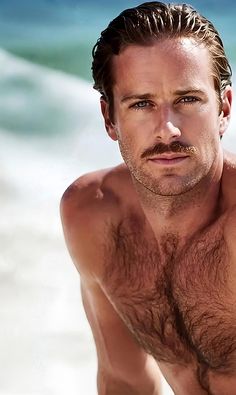
Simon Doyle (Death on the Nile) – Simon may be the stupidest of this trio, but he’s smart enough to be led by his lover Jacqueline in order to ensure that the plan to marry and murder Linnet Doyle for her money comes off. Their plot requires us to sympathize with Simon throughout – and we do. One can compare their perfidy to the Redferns as much as one likes: Simon and Jackie are the superior couple in every way.
THE RADICAL
One must assume that Christie was suspicious of political idealists and social iconoclasts because when she includes one in her plot, he more than likely spells trouble. Maybe his motives aren’t pure, or they attract a mob, or his best intentions get out of control. One thing for certain: the worse a guy he is, the more attractive he seems.
2nd Runner-Up: TIE: Howard Raikes and Frank Carter (One, Two, Buckle My Shoe) – One is a fascist and the other a communist; I defy you to remember which is which! It is clear to Hercule Poirot and the reader that both men are surly and unpleasant. So why do two absolutely lovely young ladies welcome these guys into their hearts? Love is crazy!
1st Runner-Up: Mr. Ferguson, a.k.a., Lord Dawlish (Death on the Nile) – One of these days, I’ll write a lengthy paper on how brilliantly Christie weaves romance, that most dreaded subplot to mystery, into her plots. In Nile, she turns it into a secondary mystery: “Who will Cornelia Robson marry?” The suspects are three, and you think you know where Christie is going. Mr. Fanthorp is too nice, Dr. Bessner too old . . . and then there’s the snarky Mr. Ferguson, whose repartee is so dynamic and nasty (“Mrs. Doyle! She’s the sort of woman who ought to be shot as an example.”) that you figure Cornelia is just the man to tame him. But Mr. Ferguson has a secret: behind all that spouting of Communist ideas of equality, he’s just another petulant nobleman sticking it to his father. And Cornelia is too useful a person to waste away on an estate somewhere.
And the Winner is . . .
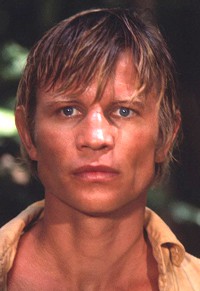
Edward Goring (They Came to Baghdad) – I’m not a big fan of this book because I don’t much care for Victoria Jones. But there’s a wonderful secret to be uncovered here, and it does involve a bit of a comeuppance for our know-it-all heroine. Early on, Victoria is munching on a sandwich on a park bench when she spies “a good looking young man, cherubically fair, but with a firm chin and extremely blue eyes which had been, she rather imagined, examining her with covert admiration for some time.” It’s a “meet cute” situation, and Victoria, who “considered herself an excellent judge of character and well able to check any manifestations of freshness on the part of unattached males” judges this young man to be all right!
And she’s wrong! Edward isn’t only a bad boy, he’s Lucifer Morningstar, the next Hitler, a smug narcissist who plans to be the poster boy for the New Order. His unmasking is all the more chilling for being such an ordinary moment, and admittedly it shows Victoria at her best. It just goes to show you: beware the cute guys humming “Tomorrow Belongs to Me” under their breath! (NOTE: There is no sexy Edward onscreen – yet – but a young Michael York would have been perfect!!)
THE BAD SHEEP
Every family – in a Christie novel, at least – has one of these, the proverbial bad penny who disgraces the family, absconds with the best silver (and possibly the children’s beloved nursemaid), or at the very least refuses to kowtow to a tyrannical parent’s wishes. I suppose one or two turn out to be good eggs, but most of them are rotten to the core. One of their best/worst qualities is that they are so damn attractive, they bring everyone down with them!
2nd Runner-Up: TIE: Victor Drake (Sparkling Cyanide) and Nigel Chapman (Hickory Dickory Dock) – I was torn between these two. Victor is talked about more than he is actually seen in the novel, but his effect on Ruth Lessing, arguably the best character in that book, is stunning. In a sense, Victor is interesting because of what he is able to make Ruth do – which is to become Ruth-Less! As for Nigel, he is a prominent figure in a largely inconsequential cast of characters on Hickory Road, and he is such a jerk that we’re tempted to dismiss him as the red herring. Ultimately, though, he is unmasked as the cause of most of the troubles plaguing the hostel and, most interestingly, he turns out to be the disgraced son of a nobleman. And I mean really disgraced, as in theft and matricide!
1st Runner-Up: Jacko Argyle (Ordeal by Innocence) – Another character whom we never actually meet but learn a great deal about in retrospect. Jacko may sum up Christie’s qualms about adoption: what do you do when you get a bad egg? Jacko is indeed one of the worst, and yet he has the charms of a snake and a serpent’s power to hypnotize an enthralled spinster into doing his bidding. The novel begins with the shocking discovery that Jacko did not murder his mother, but in the end, he is just as guilty as his confederate.
And the Winner is . . .
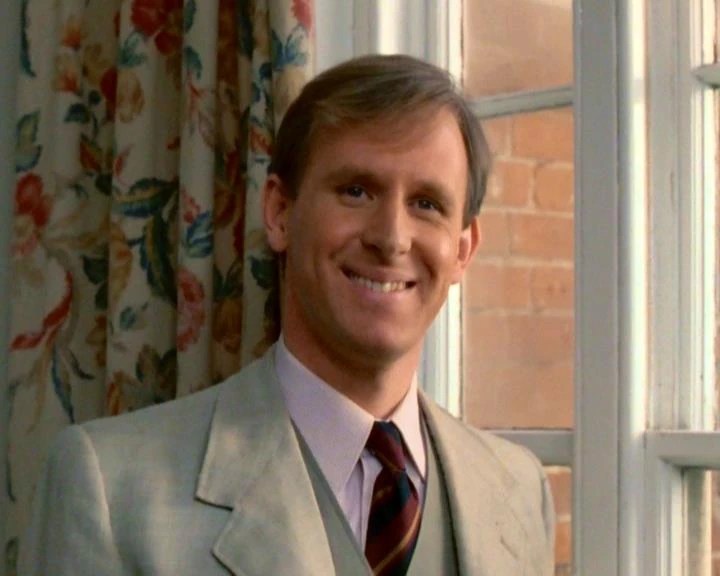
Lancelot Fortescue (A Pocketful of Rye) – How can you not love Lance, despite being told repeatedly that he is a rotter. He even admits it, but since we mostly see him through the eyes of his adoring wife, the one he swears has reformed him, we mostly see an attractive and charming man whom we would love to call our friend. By the end, however, Miss Marple has unmasked Lance as one of the cruelest killers she has ever exposed – think of those horrifying tableaux of the murdered king, queen and, most especially, the maid. Even the most jaded reader can’t help but be shocked by Lance’s cold-blooded moves – and a little ashamed that we ever rooted for the guy.
THE WEAKLING
Maybe I’m being unfair: these boys aren’t bad so much as they are weak, the evidence being that sometimes Christie even gives them a happy ending. Given some of their bad behavior, though, I sometimes wonder if they deserve it! And Christie’s propensity to reward at least some of these men is personally problematic to me!
2nd Runner-Up: Derek Kettering (The Mystery of the Blue Train) – Derek proved to be a disappointment to Ruth, his wife, and to Rufus Van Aldin, his wealthy father-in-law. Perhaps it had to do with their expectations of him, combined with his shaky sense of self-worth, but Derek soon found himself in the arms of a sulky dancer (and Ruth didn’t do any better with the crummy Comte de Roche!) How Kettering ends up with the smart, lovely, and newly rich Katherine Grey in the end beats me, but if anyone can help this guy find his good side, it’s Katherine!
1st Runner-Up: Roderick Wellman (Sad Cypress) – In fairness, both Roddy and his cousin/fiancée Elinor Carlisle have some growing up to do. She has carried a crush on the fellow since they were children, and he hasn’t done anything to dissuade her. When Mary Gerrard enters the picture and Roddy finally finds a woman he can truly love, he handles everything badly. But then so does Elinor, and it takes a murder and a trial – and finally finding the man she truly can love who can love her back – for Elinor to give up her unrealistic romantic dreams.
And the Winner is . . .
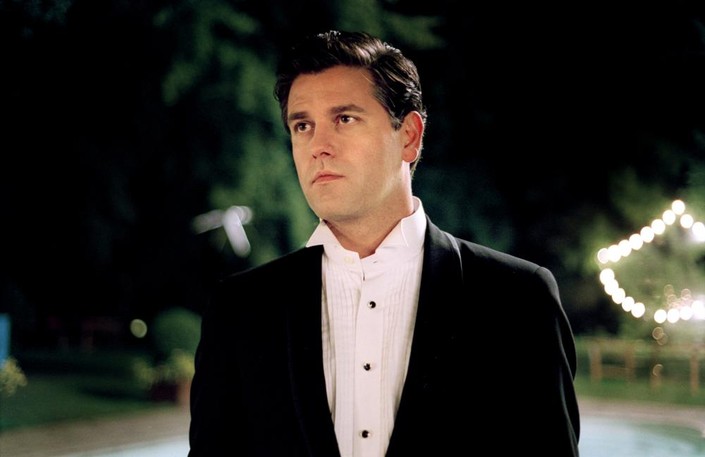
Rowley Cloade (Taken at the Flood) – In this complex novel about the war, Rowley stands out as one of the most problematic characters in the canon. Another cousin, another presumed engagement that should have never been presumed. As other men went off to war, Rowley was forced to stay at home and tend to the family farm. His bitterness over that, coupled with his insecurity over Lynn Marchmont’s sparking interest in war vet David Hunter, pushes Rowley to make, shall we say, poor choices. All of this should seal Rowley’s fate; instead, Christie provides a “happy” ending that frankly makes me a little sick.
THE DEVIL INCARNATE WHO DESERVES TO DIE . . . AND DOES
Men are killed in the Christie-verse for all sorts of reasons: because they’re rich, because they know too much, because they have loved not wisely and not well. And sometimes they are killed because they are very very bad
2nd Runner-Up: Mr. Shaitana (Cards on the Table) and Lord Edgware (Lord Edgware Dies) – You can pull me up on a technicality as to the motive for the murders of these two men. One dies because he knows too much and the other because his wife wants to marry another guy. On a deeper level, though, both Mr. Shaitana and Lord Edgware embrace the louche life: shady, morally dubious, but darkly fun! Who doesn’t want to go to one of Shaitana’s parties? You just might meet one of his collection of murderers there! And Lord Edgware is one of the few characters in Agatha’s world upon whom we can cast the descriptor “kinky!”
1st Runner-Up: TIE: Simeon Lee (Hercule Poirot’s Christmas) – You probably don’t want to see Simeon on the beach; he is, after all, about a hundred years old. But the Simeon of old, now . . . he lied and cheated and spread his seed indiscriminately. What’s more, he goes to his bloody death totally unrepentant.
And the Winner is . . .
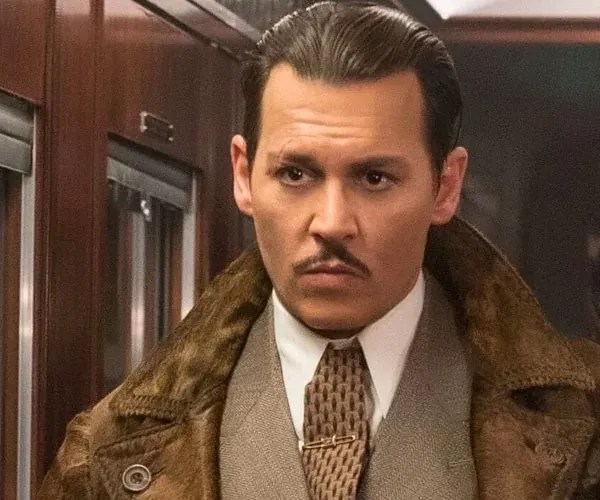
Samuel Ratchett, a.k.a., Casetti (Murder on the Orient Express) – Few men have done as much evil as this man did: kidnapped and murdered a child and sent a family into a spiral of death and loss. And yet there was something compelling enough about him to 1) escape justice in the courts and 2) convince a baker’s dozen of fine citizens to abandon their morals long enough to exact their own brand of justice on this monster.
And our final category?
SOME GUY NAMED MICHAEL
Because I can.
2nd Runner-Up: Michael Rafiel (Nemesis) – One could argue that Michael Rafiel is the inverse of Casetti. His lived a life of dubious worth and may have assaulted a woman or two. And yet a cadre of respectable citizens set out to exact justice on his behalf and succeed in getting him freed from a prison sentence for a crime he didn’t commit. Even at the end, there is no certainty that Michael will evolve into a sterling citizen. However, Miss Marple has given him a second chance because it’s right, and because she wanted to help her late friend.
1st Runner-Up: Michael Garfield (Hallowe’en Party) – Michael is described as a man of “unusual beauty” akin to “Orpheus and his lute.” All he wants is to create and dwell in beauty, right? Or is he attempting to be surrogate for God and tame nature to his own purpose? Whatever lights his fuse, he is willing to kill repeatedly – even destroying his own daughter – to get what he wants.
And the Winner is . . .
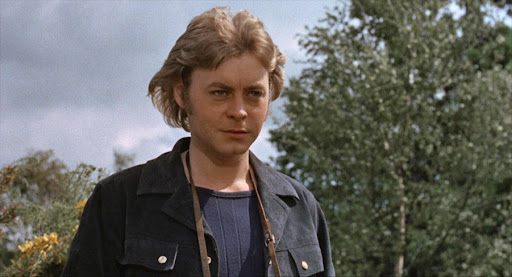
Michael Rogers (Endless Night) – He’s Mike to his friends, of which he has . . . none? Another man obsessed with success, but unlike Michael Garfield, who builds gardens, Mike wants the house of his dreams. Perhaps Christie’s most finely drawn psychotic, personally he is not a character I enjoy spending time with. Still, you can’t really look away, can you?
As Michael Rogers would say, “In the end is my beginning . . . “ – and that’s the end for me, folks. Let me know in the comments below what you think of the list and who you wish had been included. Here’s where I would love to promise that Christie’s Good Boys will get their due in an upcoming post. But really . . . where’s the fun in that?
 Ah Sweet Mystery!
Interestingly, both Victor Drake (Sparkling Cyanide) and Nigel Chapman (Hickory Dickory Dock) are played by Jonathan Firth (in the movie Victor seems to be called Mark). Firth also played a similar rogue in the pilot Midsomer Murders called “The Killings at Badgers Drift”.
LikeLiked by 2 people
That whole first season of Midsomer when they were actually adapting Carolyn Graham‘s novels was fantastic! I remember that episode and how both creepy and attractive Firth was!
LikeLike
Oh come on, Brad…Armie Hammer over Simon McCorkindale?
LikeLiked by 2 people
I’m giving Armie to you and saving Simon for myself! Plus, it seems Simon was too decent a fellow to go shirtless!!
LikeLike
Brad, Brad, oh the themes you come up with! I loved this, shirtless pictures and archetypes and all. The guys named Michael are my favourite. 😀
I also have a soft corner for Derek Kettering, was completely taken in by Victor Drake and Lance Fortescue, and think Simon Doyle is bloody stupid, which makes him unattractive, no matter how hot he is. Case in point: the J painted in blood on the wall. I mean…
LikeLiked by 1 person
I think you’re being unfair to the “J” – since Linnet died immediately, it’s clear that she could not have scrawled the letter on the wall, indicating that someone was trying to frame Jackie. The ol’ double bluff, courtesy of Simon AND Jackie!
LikeLike
I think the J was all Simon. Didn’t Poirot make a remark about how such a move indicates a childishly simple move?
LikeLiked by 1 person
Well, it accomplishes its purpose, but given that both Simon and Jackie have alibis, it isn’t necessary. And yet it doesn’t incriminate Simon, so maybe Jackie rolled her eyes and gave it to him?
LikeLike