I’m a big fan of screen biddies, those wonderful older women who always steal the scene from the big stars with their sarcastic eye-rolling and witty shenanigans. Fred Astaire and Ginger Rogers were all the better for having had Helen Broderick in two of their films. Broderick became the second biddy to play Miss Hildegarde Withers onscreen, and she wasn’t half bad – half as good as Edna Mae Oliver, the Best Biddy of the 1930’s, and twice as effective as Zasu Pitts, whose career as an onscreen biddy was the longest of the three and the most irksome for me.
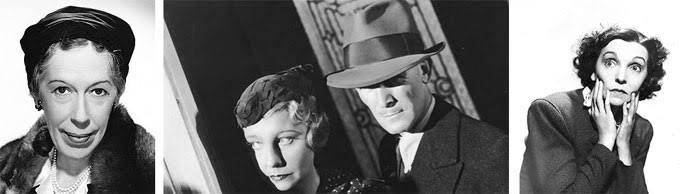
The biddies may be the most powerful women in classic films: most of the time they hold sway over their environment – think of Oliver wielding money and power in Pride and Prejudice, or Beulah Bondi holding her family together in It’s a Wonderful Life, or Gladys Cooper dominating her daughter in Now, Voyager. Most of the time, biddies were used for comic effect, but great producers and directors realized that an old woman can generate more emotions than mere laughter, including fear!
Some of Alfred Hitchcock’s most chilling villains were older women, often ladies of a most noble and prepossessing appearance who harbored dark, threatening secrets. Think of the Professor’s wife (Helen Haye) in The Thirty-Nine Steps or the philanthropic Nazi sympathizer (Alma Kruger) in Saboteur. To my mind, the best of these was Mrs. Townsend, the elegant confederate to James Mason in North by Northwest, played by Josephine Hutchinson.
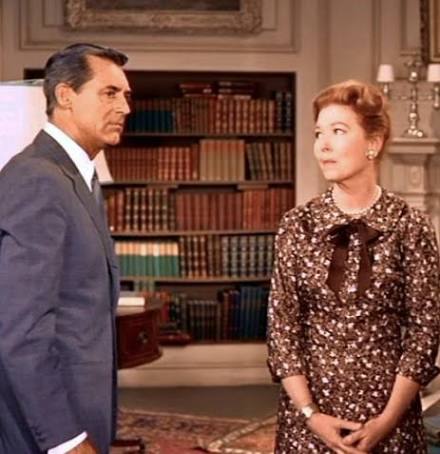
Hutchinson was born in 1903 in Seattle, the daughter of a successful stage and film actress. At thirteen, young Josephine made her film debut alongside Mary Pickford in The Little Princess (featuring fellow future biddy Zasu Pitts as Becky). She studied theatre back home at Cornish College, moved to New York to perform in theatre and went back and forth between the stage and films, successfully making the transition from silents to sound pictures. She co-starred with Paul Muni in The Story of Louis Pasteur and with Basil Rathbone in The Son of Frankenstein.
Like the other three actresses we’re going to discuss here, Hutchinson appeared on the TV series The Twilight Zone. She featured in one of the loveliest episodes, and the only one written by Ray Bradbury: “I Sing the Body Electric” is the story of a father and his children grieving for their lost wife and mother who decide to buy a robot grandmother. Hutchinson embodies all the best of what a grandma has to offer; it is one of the few episodes where artificial life is presented in a positive light.
Over five seasons, Josephine Hutchinson made four episodes of Perry Mason, half of them original teleplays. (She’s especially good as Amelia Corning – the real one! – in Season Five’s “The Case of the Mystified Miner,” based on the 1962 novel The Case of the Spurious Spinster.) We talked about “The Case of the Barefaced Witness” when we discussed Adam West, which leaves us with one original teleplay left – but it’s a doozy: “The Case of the Spanish Cross,” the twenty-eighth episode of Season Two, that premiered on May 30, 1959. This one comes off as a vaguely uneasy mash-up between The Maltese Falcon and Rebel Without a Cause, which doesn’t make it any less entertaining. Peter Miles was a child actor who would go on to a successful writing and teaching career; he was also part of a family of child actors that included two sisters (more about that below). Here he plays Jimmy Morrow, an unlucky teenager saddled with an alcoholic father (Arthur Space) and a framed charge as a car thief.
Fortunately, the victim of the theft, Grace Runyon, doesn’t believe the charges and hires Jimmy to work around the mansion where she lives. Grace has had her own run of bad luck: her husband, Curtis (Donald Randolph), an art collector, is a cold-hearted brute. In the course of an argument, Grace fell down a long staircase and is now confined to a wheelchair. Her cousin Miriam (Hutchinson) comes to take care of her – just as cousin Miriam did in Hush, Hush, Sweet Charlotte, with similarly unpleasant results.
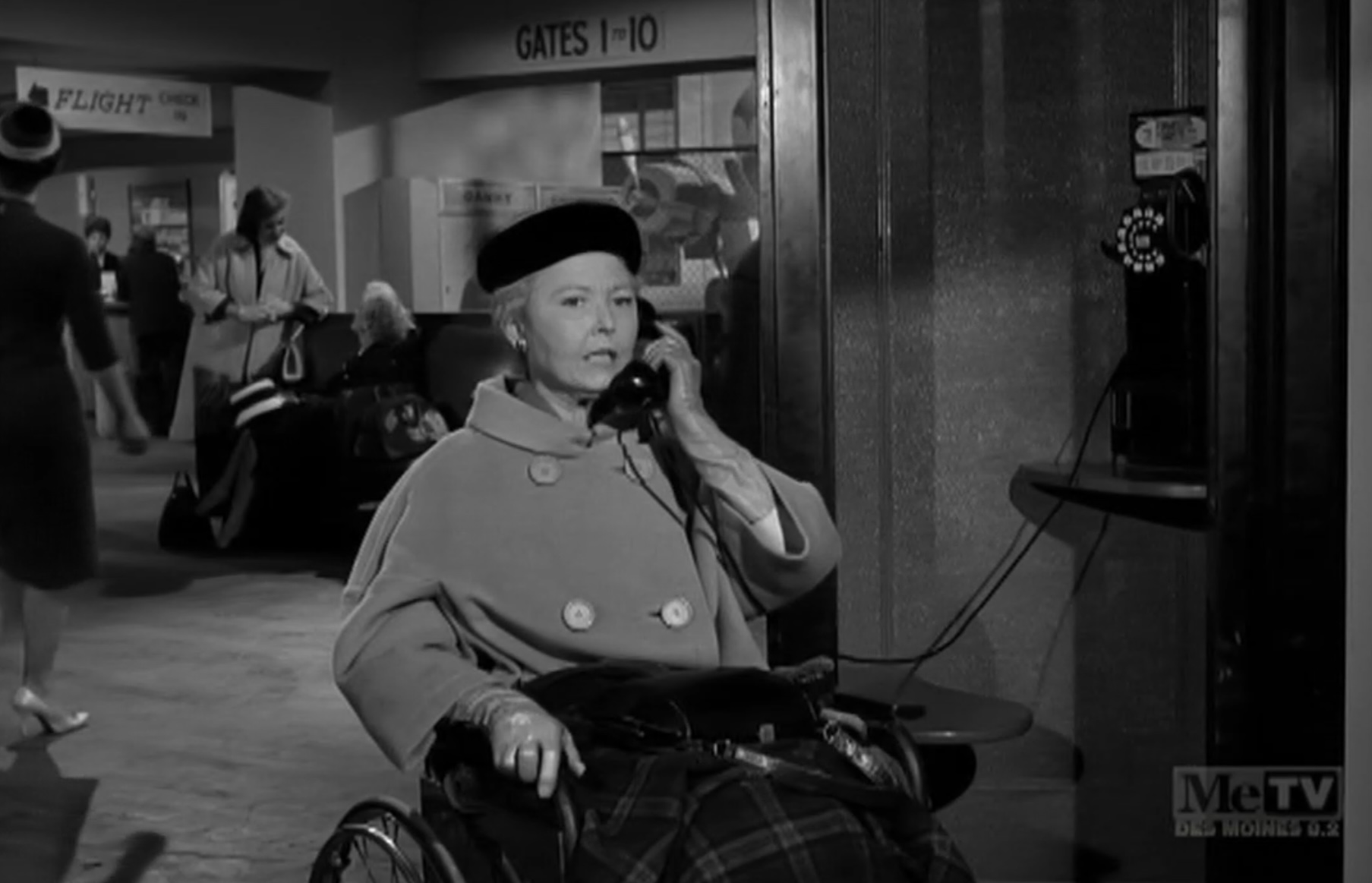
Meanwhile, Curtis possesses La Cruz de Santa Maria, an iron cross made by a sailor, who gave the piece to his captain, Christopher Columbus, to present to King Ferdinand. As the episode opens, Curtis is turning down an offer for the cross made by rival collector Felix Carr (Jacques Aubuchon, channeling Sidney Greenstreet as hard as he can). When Runyon and his secretary, Everett Wormser (Jonathan Hole) return to Runyon’s study, they discover that the cross and its case are missing. And who should be cleaning the pool nearby but poor Jimmy Morrow?
This is one of the most heavily scored episodes in my memory. Whenever the script focuses on Jimmy (who is now on the run), the music is all jazzy and tense. Every time we meet with Jimmy’s father, the score is filled with bathos. And there’s a lengthy scene where Perry tracks Jimmy down and convinces him to come in that could have been written for The Blackboard Jungle or To Sir with Love. All the scenes centered around Felix Carr, whose shenanigans include trying to hire Mason to defend Jimmy (for all the wrong reasons) or giving someone a Mickey Finn to grab the Spanish Cross, offer music more suited to a noirish crime drama.
It’s in Perry’s office that we come upon one of the funniest mistakes of the series. Mason is dictating letters when the buzzer sounds and Gertie tells Della that Felix Carr is there to discuss the Jimmy Morrow case. Perry picks up the newspaper, and we see a picture of Jimmy, under which is a blurb accusing him of murder (there’s been no murder) – and it’s the murder of Mr. Karr (who is not the episode’s victim!!!
Naturally, it’s Curtis who is killed, and Jimmy who stands trial. D.A. Burger is there to prosecute (and the series even writes in actor William Talman’s bout with laryngitis!). If you’re worried that Josephine Hutchinson gets the short end of the stick here, stay for the ending. I’m not saying anything more.
* * * * *
Alfred Hitchcock had a complicated relationship with his own mother, and it is reflected in the various moms we meet in his films – from loopy Marion Lorne, who birthed a psychopath in Strangers on a Train, to the elegant and elusively maternal Jessie Royce Landis, playing both Grace Kelly’s mother in one film (To Catch a Thief) and Cary Grant’s in another (North by Northwest), to the extraordinary Jessica Tandy as Lydia Brenner in The Birds, whose complex relationship with her son and his potential mate is fraught with Oedipal underpinnings.
And then . . . there’s Psycho, a movie so full to bursting with Biddy Energy that it takes three wonderful actresses to contain it. One is a force for good, while the other two . . . well, let’s get at it.
Good comes in the form of Mrs. Chambers, the wife of the Deputy Sheriff, who helps clear up a lot of mystery toward the end of the film. When Lila Crane (Vera Miles) and Sam Loomis (John Gavin) come to talk about Marion Crane’s disappearance from the Bates Motel and of their eagerness to interview Norman Bates’ mother, it is Mrs. Chambers who explains that this will not be possible. Why, Norma Bates is dead, and Mrs. Chambers even picked out the dress she was buried in (periwinkle blue)!
Mrs. Chambers is played by Lurene Tuttle, who was born in Indiana, the daughter of a former minstrel show performer whose own father taught drama. As a child, Lurene studied acting in Glendale, Arizona before the family moved to Los Angeles. After working on the stage, both at the Pasadena Playhouse and in a touring vaudeville troupe, the most successful stage of her career occurred in radio. Tuttle had such a facility for voice characterization that she sometimes appeared in fifteen shows a week, across every genre, and came to be known as the “First Lady of Radio.” She played Effie Perine, Sam Spade’s secretary in The Adventures of Sam Spade – as well as nearly every other female role! (Her co-star Howard Duff would deliver the eulogy at her funeral.)
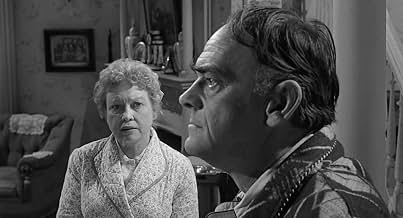
Tuttle’s film and television career was also long and varied. She could be warm and motherly or spicy and bristling. Some of her most prominent onscreen roles occurred in Niagara opposite Marilyn Monroe, Goodbye, My Fancy, opposite Joan Crawford, and in the 1951 noir film Tomorrow Is Another Day, with Ruth Roman. She stuck her nose into other people’s business in more than a hundred roles on television. She did appear on The Twilight Zone in an inconsequential part as a secretary to John McGiver. More exciting are the six appearances she made on Perry Mason that spanned all nine seasons. Half of these episodes were adapted from novels; we’ll look at the three original teleplays here.
From Season Three comes the ninth episode, “The Case of the Artful Dodger,” which premiered on January 12, 1960. Featured here is William Campbell in one of his two appearances on the series as a delightfully smarmy murder victim. Here he is Allen Sheridan, a wastrel living the high life on the trust his father left him, despite the fact that there are two people back in New York depending on him to send them money. He is dallying with the beautiful Joyce Fulton (Patricia Donahue), wheedling money out of financial guy Victor Lattimore (Jerome Cowan, back again!), and up to no good with his buddy Lou Caporale (Peter Leeds).
The episode actually begins in New York, with Lurene Tuttle playing Sarette Winslow, who gave up her comfortable Midwestern life to move to New York and take care of her wealthy widowed cousin Henry. After his death, Sarette discovers that he has left her nothing in his will but has instructed his son Allen to set aside a monthly payment to her at least until he comes of age and inherits the money. Allen has always been sporadic in his payments, but since moving to L.A. six months earlier, he has failed to send Sarette any money.
The other needy recipient is Ralph Curtis (Douglas Henderson), a man who got seriously injured in a fight caused by Allen. Now he is a partial cripple and needs funds to survive, but Allen has reneged on his responsibilities. He is definitely a creep, and so it will come as no surprise when Sarette flies out to L.A. to see him and finds his body on the patio of his home. When she hears a knock on the door, she flees, but not before she gets her heel caught in the patio floor and is spotted fleeing the scene by Lou.
The smartest thing Sarette does is immediately hightail it to Perry Mason’s office because she’s going to need a good lawyer. I have to say that this one is stylishly directed and full of twists, so I won’t tell you anymore about it – except to say that I dimly remembered that one of the William Campbell episodes had an actual surprise ending. This is not that episode, but the killer is better hidden than usual, and the whole final act is quite moving.
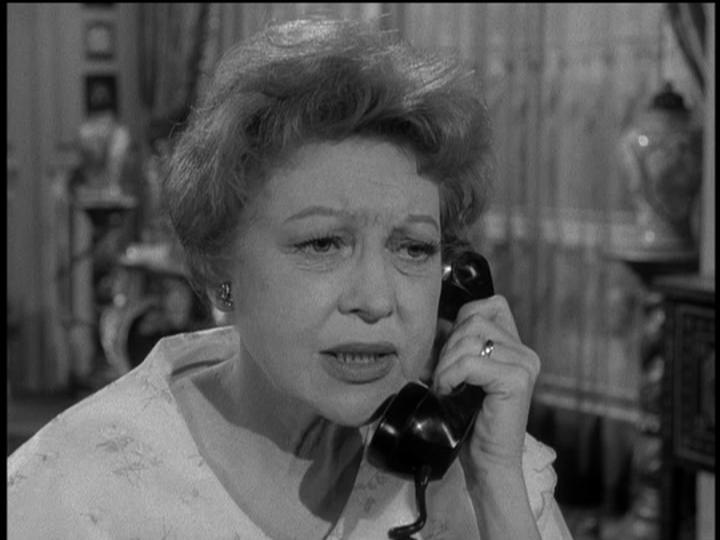
Next is “The Case of the Loquacious Liar,” the tenth episode of Season Four, which premiered December 3, 1960. Rather than taking on the role of defendant, Lurene Tuttle is a suspect . . . sort of. She plays Emma Bailey, a weak and self-involved woman whose late husband owned a successful boat-building business. Now her second husband, Judson Bailey (Bruce Gordon) wants to take over the company by exercising Emma’s proxy and defeating Sam Crane (Regis Toomey), the man who runs the company, and Lester Martin (Wynn Pearce), Emma’s son. On the morning of an important showdown, Lester fails to show up because a man appears in his house, pulls a gun on him, forces alcohol down his throat and then drives him to a secluded gully, seemingly to kill him.
Lester escapes and runs to his mother, telling her that his stepfather arranged his near-execution, but Emma refuses to believe him and spills the news to Judson, who goes out to the beach house to confront his stepson. Naturally, Judson ends up dead, and Lester lands in the dock with Mason trying to figure out just what the plan was and who did the planning.
Tuttle is quite good here at being horrible. You can hardly imagine she would plot against her own son – but did she kill her husband because she knew about his infidelity with “business partner” Lois Rogers (Melora Conway)? Was she too week to confess and save her son? There are some nice twists here, and the finale, where Mason shuffles witnesses before the big confession, is more tense than usual.
Lurene Tuttle’s final appearance on the show was in “The Case of the Avenging Angel,” The twenty-second episode of Season Nine, debuting on March 13, 1966. On the one hand, this is an embarrassingly naïve depiction of the business of rock ‘n roll; on the other, however, it’s a very sweet episode with a really strong cast. Tuttle showcases her versatility by playing Henny McLeod, a former vaudevillian who runs a sort of beach café with entertainment. She’s heavily made up and something of a big-hearted broad who has taken an interest in Sandy Chester (Martin Horsey), a young Brit who wants to be a singer.
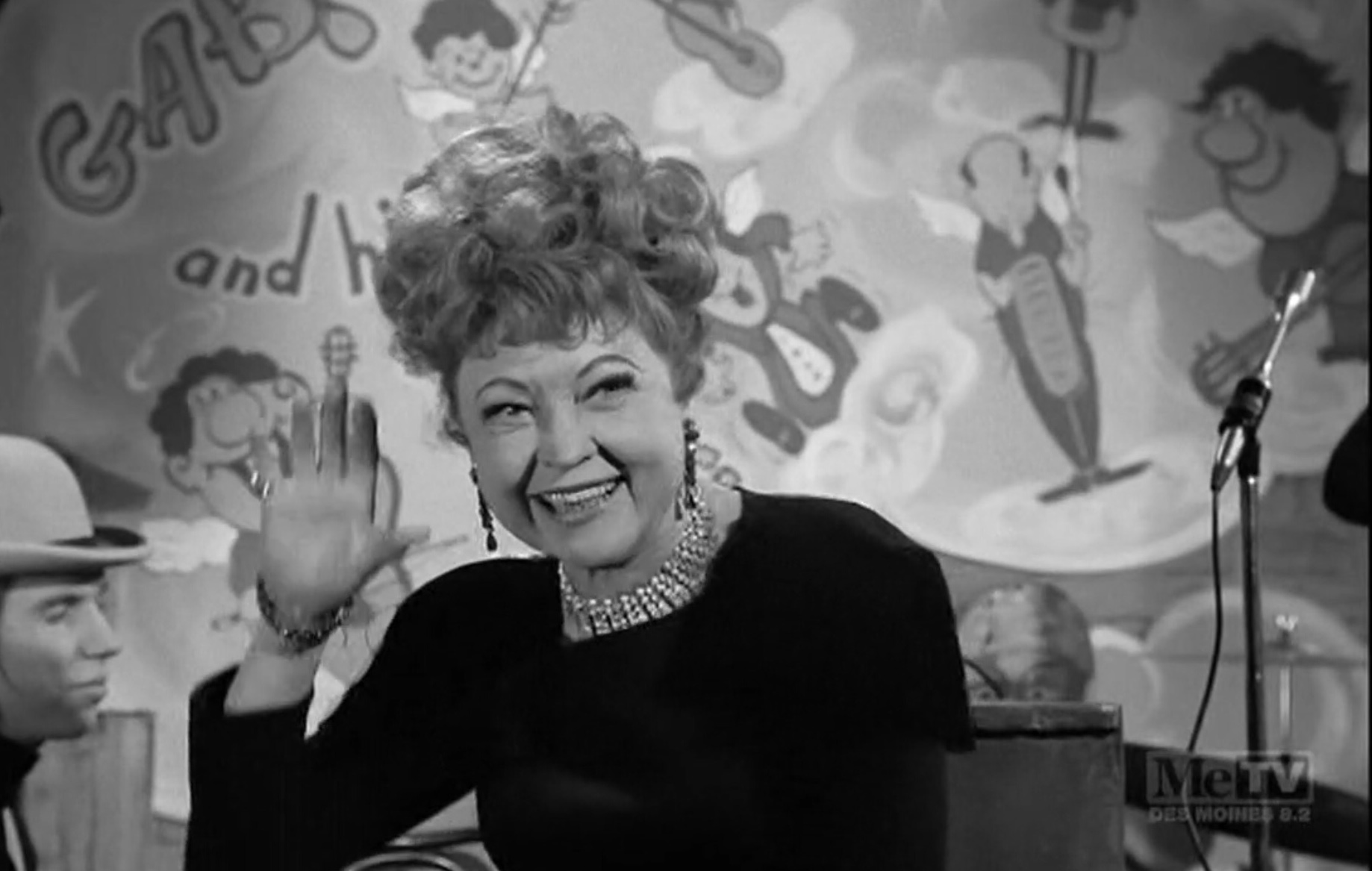
Perry and Della have shown up at Henny’s place to see Sandy sing because a wealthy client of Mason’s, played by Paul Stewart of Citizen Kane and Kiss Me Deadly fame, wants to sponsor Sandy’s career, despite the fact that Sandy’s talent is pretty minimal. On the client’s instructions, Mason hires renowned music manager Clete Hawley (Richard Carlson, channeling a real bastard for a change) to take charge of Sandy’s development. Hawley is a monster with a cynical view of his “properties,” as he calls his clients; he’s also not above using blackmail to sweeten his deals. And frankly he stinks as a rock ‘n roll guy, kicking out gentle pop songs from Sandy’s repertoire to make him sing “Bye Bye Baby,” a 1949 musical theatre charm song from Gentlemen Prefer Blondes!!
After bullying Sandy, cheating Henny out of her cut, stealing songs from accompanist Riff Lawler (Chick Chandler), upsetting Riff’s daughter who likes Sandy (played by Sandy Descher, a young woman I kept feeling I recognized – and then realized she had played the mute little girl in Them!), blackmailing Mason’s client, wooing both the client’s wife (Patricia Owens) and his own publicity manager (Sue Ane Langdon), Clete is murdered quite late in the hour. Even though the murderer was obvious to me, it made no sense at all that this person would allow poor sweet naïve Sandy to end up on trial, and their entrapment on the stand comes out of nowhere.
* * * * *
Evil comes in many forms in Psycho, but the true nexus of horror is the woman who we see silhouetted, first in the upstairs window of the old Victorian behind the Bates motel and then beside a motel room shower. Norma Bates is a selfish woman who becomes her own son’s eternal tormentor, even after her death. To accomplish the task of creating a complex puzzle of a character out of this evil mother we barely see and mostly hear, Hitchcock conceived of the idea of having three actors voice the role. One of them was a man, Paul Jasmin, a friend of the film’s star, Anthony Perkins. The other two were women who shared this role, made appearances on classic episodes of The Twilight Zone and appeared in multiple episodes of Perry Mason.
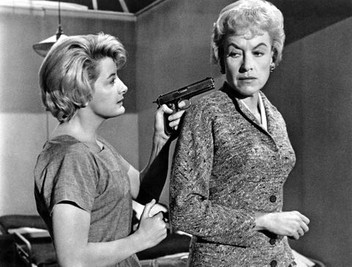
Virginia Gregg deserves the most credit for Norma Bates. It is her voice and hers alone that we hear at the end, in a critical monologue that chillingly sums up her son’s fate. Gregg would go on to voice Norma in both Psycho II and Psycho III. Like so many of the character actors we’ve discussed so far, Gregg was a midwestern girl whose family moved to southern California when she was a child. Like Lurene Tuttle, she had a prolific career on the radio, sometimes playing multiple roles in the same series – the same episode even! She appeared in tiny or supporting roles in a variety of films, from Body and Soul to Operation Petticoat.
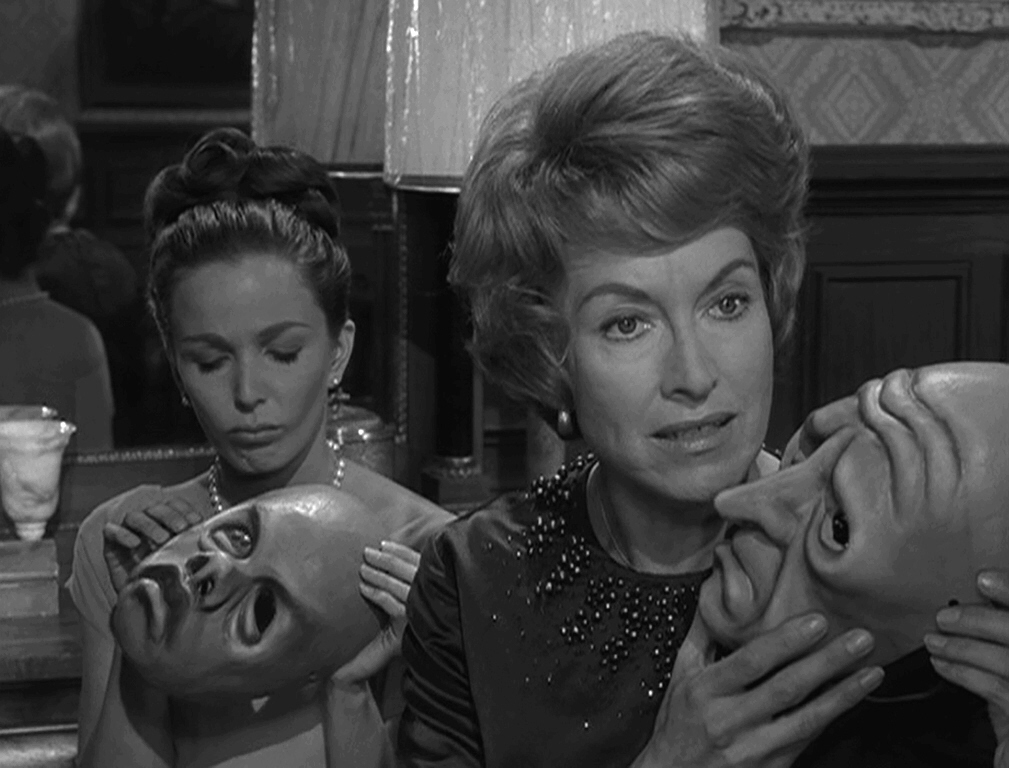
Her career on television was even more prolific than on radio. According to Wikipedia, she appeared on nearly every narrative series between the late 50’s through the early 70’s, usually in the same sort of roles. “When casting people have a call for a woman who looks like the wrath of God, I’m notified.” One of her most striking TV roles was in what for me may be the scariest episode of The Twilight Zone ever: “The Masks.” In this fifth season classic, Gregg plays one of the greedy relatives of a dying millionaire, who promises to split his fortune between any of his family members who agree to wear these hideous masks until midnight. Walk away, you idiots, walk away . . . Gregg also appeared in perhaps my favorite episode of the Zone – but we’ll discuss that later!
She was a guest star in four episodes of Perry Mason, two adaptations of novels and two original teleplays. We’ve already seen her in “The Case of the Pathetic Patient,” which featured Frank Cady of Rear Window fame. That leaves “The Case of the Silent Six,” the eleventh episode of Season Nine, that debuted on November 21, 1965. Some of these late season episodes are so interesting in their attempt to do something a little different from the regular formula. This one is an early example of a social issue that became a popular TV trope: the crime witnessed by neighbors who refuse to come forward and get involved.
It’s also an episode with several unusual features, starting with the murder that happens at the top of the episode before our eyes. It’s late at night in a garden apartment complex when a woman starts screaming. She rushes out her door and yells for help, only to be dragged back inside by a man. The other residents are all veterans of multiple Perry Mason episodes: an elderly gentleman who also happens to be a bookie (Cyril Delevanti), a woman in a wheelchair who happens to be the victim’s wife (Gregg), a frantic young man (David Macklin), and a tawdry woman (Dianne Foster) – none of them seemingly rush to the screaming woman’s aid.
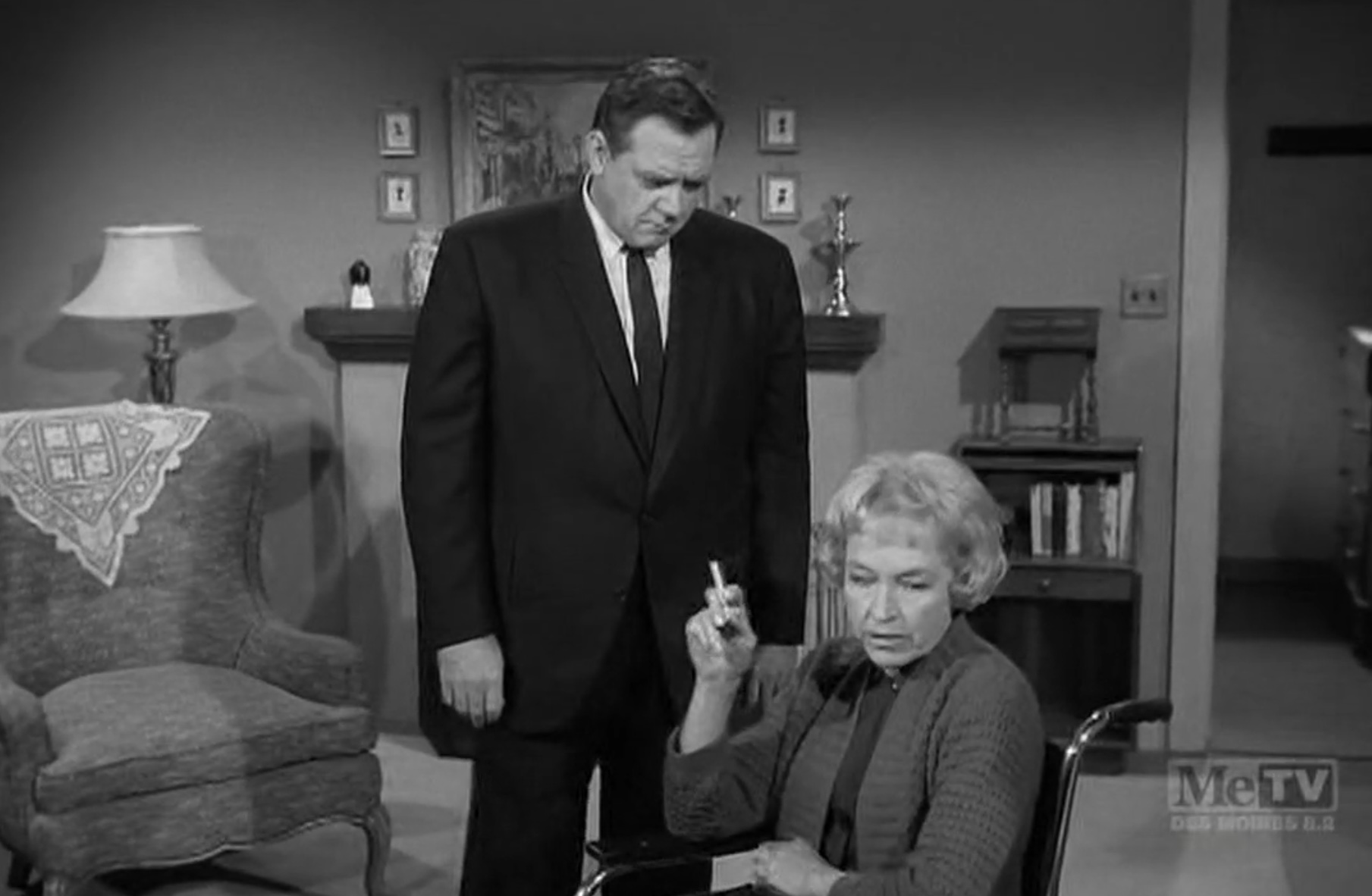
Then it looks like relief is in sight: a police car tears down the driveway, with Steve Drummond (Richard Anderson) and Sergeant Dave Wolfe (Skip Homeier, back for more torment as a defendant) in the car. Drummond begs Steve to let him handle the situation because it turns out that the screaming woman is Dave’s sister Susan (Chris Noel, a veteran beach bunny whose voice sounded like she was hooked up to a helium tank!) and the probable assailant is fellow resident and all-around creep Joe Oliver.
But it’s Dave who runs upstairs and into Susan’s apartment, only to be knocked unconscious. Then Oliver shows up and checks on an equally out of it Susan, only to be shot to death with Dave’s gun by a mysterious assailant. Of course, Dave wakes up, grabs his gun and rushes to the railing to look down upon the fresh corpse and then get arrested by his best friend on the force.
Drummond begs a very busy Perry Mason to defend Sgt. Wolfe, which necessitates he and Paul investigating the four residents who did nothing when Susan began to scream. Most, if not all of these suspects have, in one episode or another, previously confessed to murder, so it’s anybody’s guess who the killer is. And I have to say that this veteran culprit delivers a powerful speech at the end which becomes as much an indictment of their neighbors’ apathy as it is a confession.
* * * * *
Last but most definitely not least, we come to Jeanette Nolan. It’s truly fascinating how many parallels exist in the biographies of all these character actors we’ve been examining. At least Nolan didn’t have to move to Southern California, having been born and raised in Los Angeles, but like so many of her fellow actors she cut her teeth at the Pasadena Playhouse and performed extensively in radio. She had a most auspicious film debut, playing Lady Macbeth opposite Orson Welles in his 1948 film. The movie was panned, but Nolan still managed to have a thriving career on the big and the small screen.
For Psycho, Alfred Hitchcock thought he would confuse the audience by recording three actors saying Norma Bates’ dialogue and alternating haphazardly between them to set the tone of the fractured psyche that dominates Norman Bates and add an unsettling note to the portrayal. I imagine Nolan performed the spicy fights between mother and son that Marion Crane overheard. Incidentally, although they never shared the screen (Nolan was never onscreen), this was one of several occasions where Nolan was in the same movie with her longtime husband, John McIntire, who played the Deputy Sheriff and husband to – Lurene Tuttle! So really, it’s all in the family!!
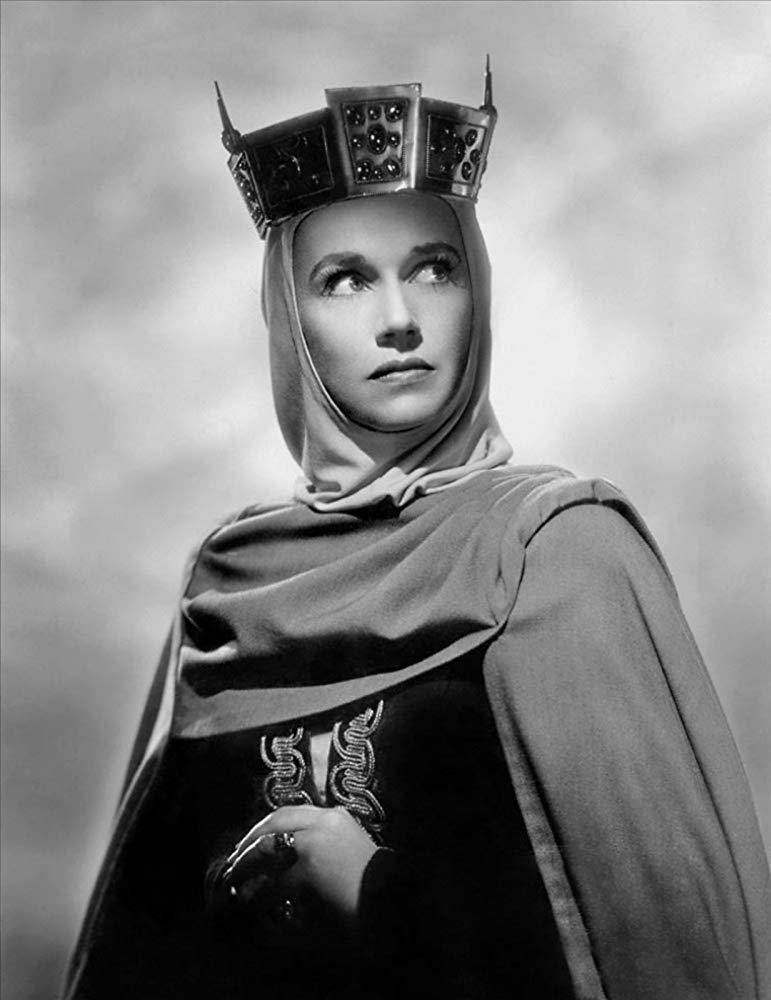
IMDB lists over two hundred credits, and Wikipedia claims she made more than three hundred appearances on TV alone! Nolan showed up in a lot of Western series – all the biddies did, looking careworn in their dusty Victorian garb! She was also featured in two of my favorite Twilight Zone episodes. First came “The Hunt” in Season Three. The focus isn’t on Nolan’s character but on that of her husband, played by Arthur Hunnicutt (who, by the way, himself appeared in two episodes of Perry Mason) who discovers that he has died trying to save his beloved dog from drowning and that he must now outwit the Devil.
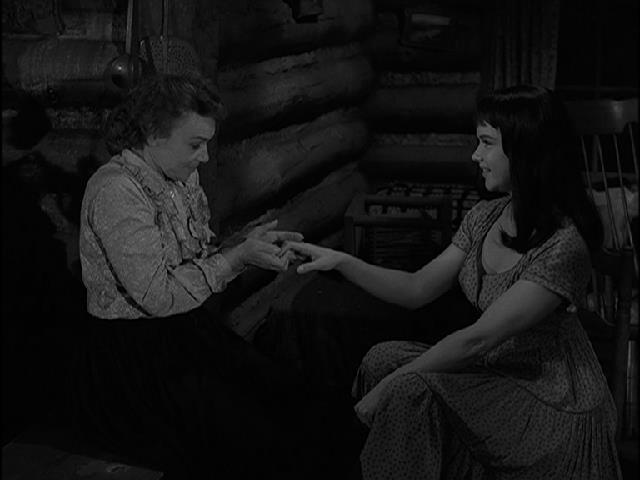
And then there was “Jess Belle,” one of the rare hour-long episodes, a dark backwoods fairy tale about a woman who will do anything – anything! – to get the man she loves. Jess-Belle (Anne Francis) visits a local witch to buy a love potion and learns that true love derived by magic comes with a terrible price. Nolan is fantastic as Granny Hart, the witch, and she manages to convey her evil side without any make-up, just powerful acting and occasional help from the lighting designer. (In what is either a wonderful coincidence or a bit of casting by Rod Serling with a twinkle in his eye, Jess-Belle’s mother Ossie is played by Virginia Gregg!)
Like Lurene Tuttle, Nolan’s tenure as a guest star on Perry Mason consisted of six episodes that spanned the entire series. One of these was adapted from The Case of the Fugitive Nurse, and two more involve other actors whom we will discuss later. Let’s look then at the three original teleplays that are left, starting with “The Case of the Nine Dolls,” which first aired on November 19, 1960, the ninth episode of Season Four.
As we have learned watching “The Case of the Pint-Sized Client” and “The Case of the Spanish Cross,” when Raymond Burr was paired with children, things got very sentimental. This time, Perry Mason is making final preparations for a fishing vacation in Scotland when Della opens the office door and tells him that there is a very fetching young woman waiting outside to see him. It turns out to be Peggy Smith, a little girl of seven or eight who lives in a posh boarding school in L.A. and has a request for the attorney: “Please find out who I am!”
Peggy is played by Lauren Perreau, the youngest of a trio of siblings who all had success as child actors and who all happened to guest star on Perry Mason. Older sister Gigi Perreau made two appearances and by then was playing an adult, while brother Peter Miles happened to have been the star of “The Case of the Spanish Cross!” (And that’s not the only parallel between these two episodes that we will find.)
As Peggy, Laurie Perreau (as she was known then) has a very expressive face and seems able to shed tears at will. Mason visits her school and talks to the headmistress – which is lovely because she is played by Eleanor Audley! – only to discover that there is no information to be had about Peggy’s family. The only clue is that twice a year, at Christmas and on what the school assumes is her birthday, Peggy receives a beautiful doll from a toy shop in Gstaad, Switzerland.
Unable to resist a pretty face, Perry changes his plans and goes to Switzerland, first to Geneva to the bank that pays Peggy’s tuition and then by train to Gstaad. Everywhere he goes, he runs into dead ends, but he meets a trio of young Americans: siblings Linda and Larry Osborne (Margaret Field and John Bryant) and Larry’s wife Helene (Frances Helm), who all seem overly curious about the dolls. Somebody even breaks into Perry’s hotel room, maims a doll and leaves a threatening note.
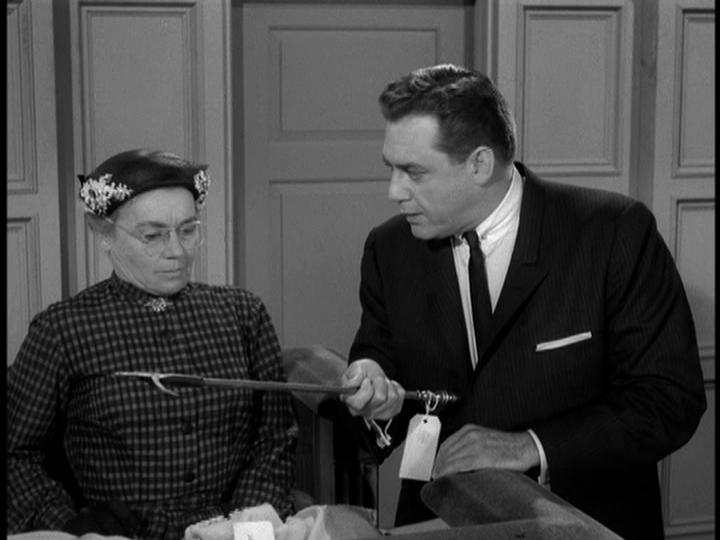
Curious about the Osborne family, Perry returns to Los Angeles and visits with reclusive millionaire Courtney Jeffers (good ol’ Francis X. Bushman) who is the Osbornes’ uncle and who is tended to by a couple, Edgar and Martha Benson (Gage Clark and Jeanette Nolan). Nolan’s role has many things in common with Josephine Hutchinson’s in “Spanish Cross,” and that’s all I’m saying about that!
Because so much time is taken up (and in a perfectly entertaining way) with Mason on the warpath to ensure Peggy has a good home, the murder happens late, the trial is fairly basic, and the ending feels rushed. At least, things turn out well for pretty Peggy. Still, I can’t help hoping that other child-centered episodes, if they exist, are few and far between. (I really am a grinch!!)
Nolan’s penultimate guest appearance was in the fifth episode of Season Eight, “The Case of the Betrayed Bride,” which premiered on October 22, 1964. This one is utterly bizarre. It is a rarity for the series in that it is an out-and-out comedy: everyone is playing their character so broadly and lightly that it’s hard to take the matter of murder seriously. And then, at the end, Mason accuses a murderer of something so dark and nasty that it completely turns the picture around. It’s a clever twist straight out of the Golden Age, but the tone of the episode makes it jarring.
Nolan plays dear Aunt Nellie, whose husband Bernard recently died, prompting her to take a trip to Europe. Now her greedy (and extremely silly) family and friend have gathered at the airport to greet her, all intent on making her part with some of her money for their various projects. But Nellie has the last laugh, showing up with a handsome younger Frenchman (Michael Forest) whom she introduces as her husband!
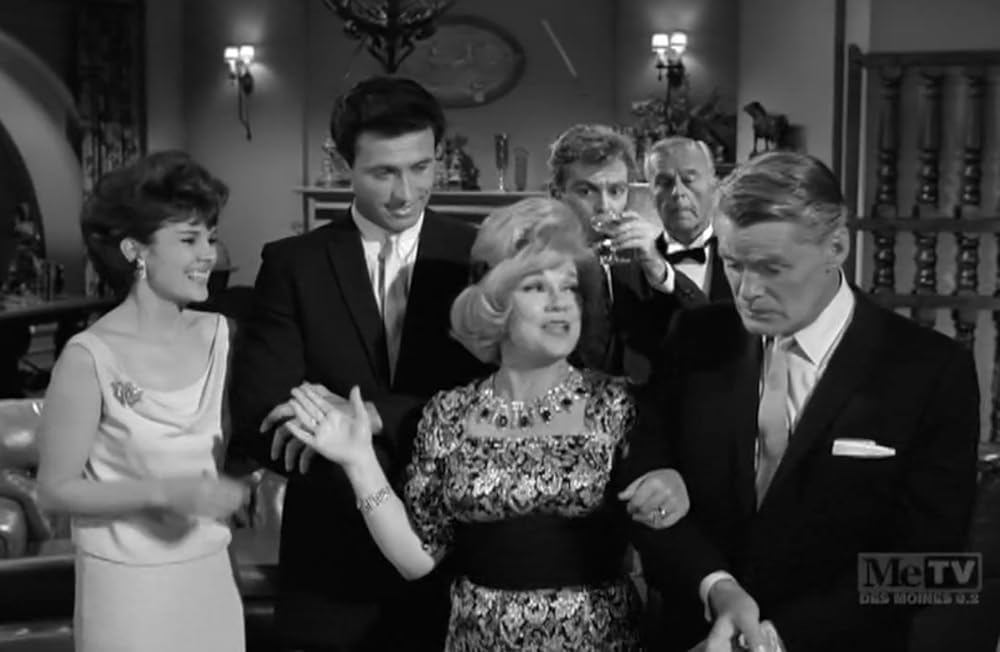
Back home, the shocked relations guzzle cocktails with the butler Billings (welcome back, Neil Hamilton!) and try to figure out a plan. Billings is the smart one, and he decides to hire a pretty girl he has seen hanging out by the estate to be the new maid and to act as bait to make Pierre cheat on his wife. What nobody knows is that Marie, the maid, is actually Pierre’s deserted French bride! Everything then proceeds as you would expect – at least in theory: Pierre is killed, Marie is arrested, and Perry gets her acquitted by finding the real killer. And the choice of culprit is terrific – it’s just that the humor (which I’ll admit I laughed at some of the time) undercuts the power of that killer ending!
Finally, we have “The Case of the Fugitive Fraulein,” first shown on November 28, 1965, the twelfth episode of Season Nine. many had a certain feeling watching this sixty-one years ago when we were right in the middle of the Cold War; today it feels like an unbearably naïve bit of nationalistic propaganda.
Most of the episode takes place in East Berlin, where everyone talks and behaves as if they never left Nazi Germany. Polish actor Wolfe Barzell plays Hans Ritter, a scientist who has escaped imprisonment from the Soviet Union and defected to the U.S.. Now he and his wife, played by Ms. Nolan, have returned to the German border to try and retrieve their young granddaughter Elke from an East German orphanage. (Yes, it’s another child-centered episode, and Raymond Burr has to do a heartrending scene with her on a park bench. At least she is used sparingly here!) They bring their trusted friend Gerte, who tries to sneak Elke across the border but is stopped by evil prosecutor Wolfgang Stromm (Gregory Morton), with the help of black marketeer Franz Hoffer (Ronald Long, a British actor who used to crack me up as a kid with a series of commercials hawking prunes.)
Back in America, Ritter has decided to accept the Russians’ offer to return to East Berlin in exchange for Elke’s release to her grandmother. Frau Ritter has hired Perry Mason to try and talk some sense into her husband because, as we all know, all Russians and East Germans are lying liars. (Oy!) Perry begs Ritter to give him some time to broker a deal, and the Professor agrees – but sneaks back to Germany anyway. Mason, Frau Ritter and Paul Drake follow him and talk him into letting them have a day to negotiate.
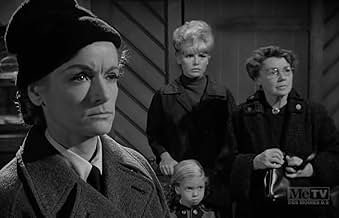
So, on one side we have Perry Mason and Paul Drake, helped along by an American named Sam Carleton (Kevin Hagen) and young Gerte. But both these characters make such shifty eyes for thirty minutes that you know at least one of them must be a double agent. Then on the other side are the prosecutor, the black marketeer, and the matron from Elke’s orphanage (Lilyan Chauvin, actually a gorgeous 40-year-old French actress, but made up here to look like the corpse of Eva Braun). One of these folks gets murdered, Ms. Nolan is put on trial, and Perry Mason has to try defending her in a kangaroo court. With those odds stacked against him, Perry still wins the day because not even Joseph Stalin can stop Perry Mason from getting justice for his client.
* * * * *
It seems to me that we have spent enough space on Hitchcock’s biddies. Next time, we’ll give the men who made the Hitchcock/Perry Mason connection their due. (I found five of them!!)

