It has been just over five years since Janice Hallett introduced us to her modern epistolary storytelling style with The Appeal, easily my favorite read of 2021, both for the multitude of mysteries it contained, which were quite clever, and for its scathingly funny portrait of a small-town community theatre, a milieu that both Ms. Hallett and I know well.
Since then, she has published four more novels and two books for children. All of them share the structure of telling the story of a rather large group of characters through texts, emails, WhatsApp chains and memorandums of various sorts. Hallett also gave us a holiday gift in 2023 with a novella, The Christmas Appeal, that returned us to the Fairway Players of Lower Lockwood, who were stumbling through their attempt to put on a panto. It was enjoyable but slim, especially on the mystery front, and it only contained a cameo appearance by my favorite character from The Appeal, nurse Issy Beck.
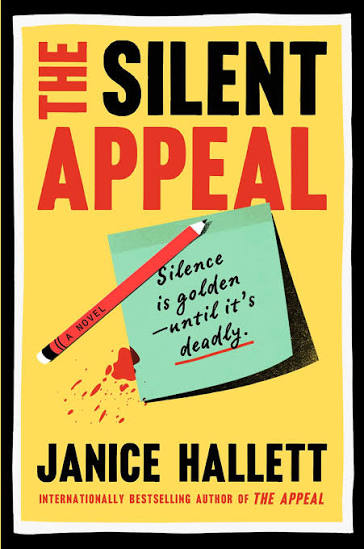
Fortunately, as Hallett explains in her acknowledgments, writing the Christmas story made it seem that “a return to the Fairway Players felt inevitable,” so she set about trying to craft the proper story and came up with a “tale of love gone wrong, and a long-lost sister who returns to disrupt the status quo.” Once again, a retired attorney, Roderick Tanner, KC, reaches out to two former law clerks, now attorneys in their own right, to ask them to look into a situation in Lower Lockwood where “a brutal murder was committed and the murderer recently sentenced.” The convicted person’s own lawyer is baffled by the case and its result and thinks an appeal is warranted, but for some reason, the culprit isn’t interested.
Now it’s up to Femi Hassan and Charlotte Holroyd to return, albeit virtually, to Lower Lockwood via multiple megabytes worth of texts and memos to see if they can spot a specific reason to reopen the case. But first – and, honestly, I’m not sure there’s a rational explanation for this – Tanner wants the two lawyers to immerse themselves in the case without knowing – a. what the case is, b. who gets killed, or c. who gets tried for murder. Thus, while Hallett is obviously familiar with classic mystery tropes, the experience of reading The Silent Appeal is different. In a mystery, the tragedy occurs and someone tries to uncover the truth. Here, through dozens of conversation threads, we bear witness to a dozen burgeoning disasters, any one of which, with some imagination, could blossom into murder.
There’s an added hook for classic mystery fans: this time, the Players are putting on a very special play! As Committee co-chair and play director Kevin MacDonald puts it: “The ancient Greeks may have considered the masks of comedy and tragedy to represent all that is theater, but the ancient Greeks can hold my beer. Because for our next play, we will don a mask of mystery thanks to the queen of murder herself.” That Queen is, of course, Agatha Christie, and the play is The Hollow, which just so happens to be the first Christie play that I ever directed myself.
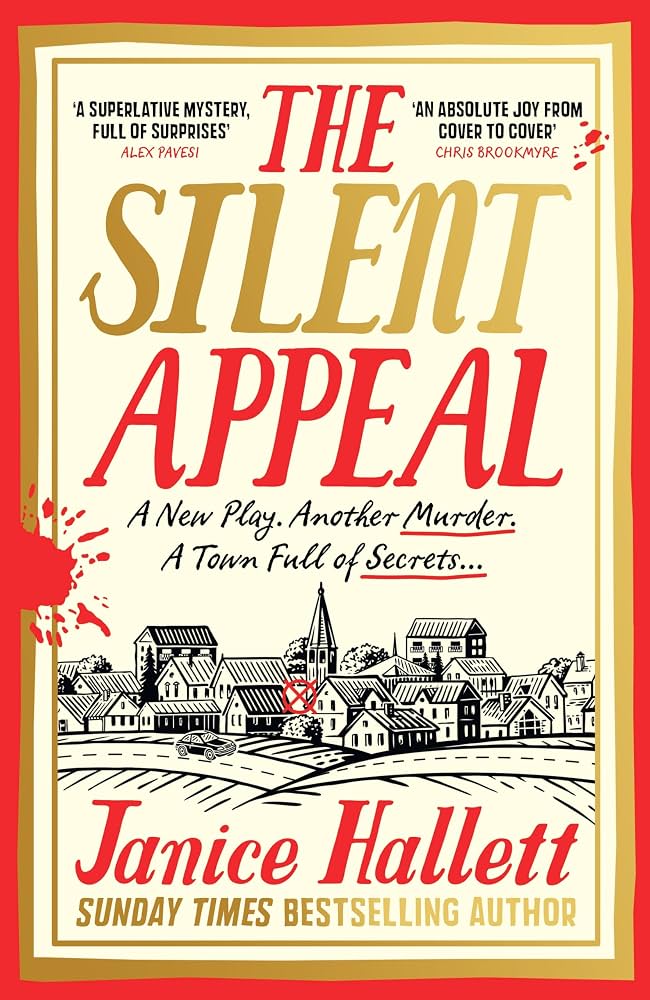
Does it help to know the play going in? On the one hand, Hallett has decided not to spoil the plot – she purposely never tells us whodunnit or who-gets-dun, so those who don’t know The Hollow can heave a sigh of relief. However, familiarity with the characters and the structure of the play will definitely heighten one’s pleasure here. When the audition notice goes out, for example, all the local actresses email the director to tell him which part they want, and their choices didn’t surprise me. The younger ones want the juicy, complex but heroic role of artist Henrietta Savernake, will make do with glamorous movie star Veronica Crale, and will settle for sweet Midge Hardcastle. while the older ones want the grand character role of Lady Lucy Angkatell but will make do with the comic part of Doris the maid.
But nobody wants to play Gerda.
And that’s a problem for me! Sure, Gerda Christow is unhappy. She is gauche. The other characters speak pityingly at best of her and spare little in the way of criticism. Gerda is the wet blanket who always spoils the weekend. And, unfortunately, every woman in Lower Lockwood who is interested in the play is so superficial that the thought of playing an unattractive woman is anathema to them.
This makes no sense, not to those of us who know and love The Hollow. There are a myriad of reasons why playing Gerda would be a wonderful experience for an actor, and I didn’t buy the idea that nobody would be interested in the role. Fortunately, Hallett puts this awkward plot twist to good use, for after a number of false starts, Kevin finds his Gerda! This marks the return of Issy Beck, whose previous tenure with the Players, ahem, did not end well. Issy is no longer a nurse; instead, she works as an assistant ophthalmologist at SpecSavers, where all the crabby elderly patients are fobbed off on her. Issy is, to say the least, overjoyed to play the part of Gerda, but she shows up at a time when personalities are starting to clash, and her presence can only make things worse!
The biggest problem with discussing a Janice Hallett novel is that you don’t want to give that much away. So here’s what I’ll say: the epistolary format is used to chronicle the casting, rehearsals and performances of The Hollow. And in a nice little joke, the play is up for a series of commendations by the National Amateur Drama Awards Society – or, NADA. To help the actors with their nerves, Keven refuses to say at which performance the NADA judge will appear, but you can bet that when they get there, things will happen!
(Here, I will spoil one of my favorite jokes in the book because I have been involved with organizations like NADA on a school level and I have problems with them. The judge who plans to visit the Players writes to Kevin with a list of her demands, which include a premium seat, gluten-free snacks, and a request to interview the playwright. ‘Nuff said.)
Hallett mines both humor and suspense through her modes of communication, particularly in the way people misuse technology and in how a reliance on textual communication can all too often result in bad timing. But this brings up a question that bothered me a lot more this time than it did during The Appeal: when do these people talk face to face with each other? I’m not just talking about friends, but husbands and wives, parents and children, every intimate sort of relationship seems to be mostly conducted through the cloud. Maybe this is why almost everyone in the story wants to kill somebody. Y’all need more face-to-face time, people!
In the end, Hallett ties these dozens of threads together – perhaps less satisfyingly so than she managed the first time – but it’s nice to return to the Fairway Players and to revisit Issy Beck, still odd girl out but a bit savvier and more proactive in apositive way than before. And while the citizens in and around Lower Lockwood are, to say the least, terribly flawed, Hallett has a great fondness for them and, since she believes in karma, you know that, no matter how much tsuris the author throws at them, the Fairway Players will come out okay!

