When Alfred Hitchcock decided to adapt Robert Bloch’s 1959 horror novel Psycho for the big screen, he faced a mountain of objections from the heads of Paramount Studios, who were appalled at the subject matter. Hitchcock’s negotiations included his offer to film on the cheap, in black and white, using the crew from his successful TV series, Alfred Hitchcock Presents. When the studio still refused, Hitchcock offered to give up his salary in exchange for a sixty percent stake in the film’s negative. This turned out to be one of the legendary Hollywood deals: under these conditions, the film got its extraordinary look, and Hitchcock made a personal fortune.

The book was based on the horrific killing spree of Ed Gein, a man whose obsession with his mother led not to the wearing of maternal drag but to covering himself in the skins of his female victims. The Norman Bates of the novel resembled Gein in his unattractiveness, his alcoholism and his more overt madness. Hitchcock’s brilliant idea was to make Norman more appealing and sympathetic in order to aid in the audience’s transfer of their sympathies from Marion Crane to Norman after Marion’s death, and to increase the shock to their senses when “Mother” was finally unveiled.
The star power of Perkins and Janet Leigh increased the draw of audiences to the marquee, but the rest of the cast was equally effective, and many of them had resumes primarily filled with TV credits. We previously discussed a few of the women who appeared in the film and also happened to guest star on Perry Mason. Now, it’s the men’s turn.
I came up with five actors who crossed over from the Bates Motel to the L.A. legal landscape. One of them, Frank Albertson, appeared in only one episode, “The Case of the Prudent Prosecutor,” which we discussed all the way back during our look at Dennis Patrick and the Dark Shadows connection. In Psycho, Albertson has a juicy little role as Tom Casssidy, the obnoxious client who enters the real estate office near the top of the movie and makes a play for Marion Crane. His odious manner helps tip the scales regarding her ambivalence about stealing his down payment in order to be with her boyfriend Sam.
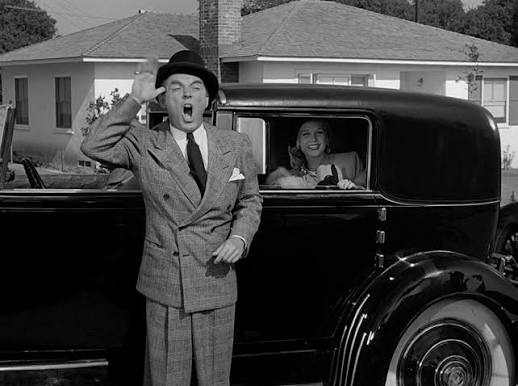
It turns out that Albertson made key appearances in some of my favorite movies. In Alice Adams (1935), he plays Alice’s lout of an older brother Walter. He is also the main character’s brother in Fury (1936), the wonderful Fritz Lang thriller about a decent man (Spencer Tracy) nearly lynched by an angry mob who assume he is guilty of some robberies. In It’s a Wonderful Life (1946), he plays Sam Wainwright (“Hee-haw!”), George Bailey’s rival for his beloved Mary’s attention. And in the 1963 musical Bye Bye Birdie, Albertson plays the pompous mayor, whose wife lets go of her repressions as soon as Conrad Birdie swivels his hips!
Moving on, we come to John Anderson, who in Psycho plays “California Charlie,” the friendly used car salesman whose eagerness to help Marion trade in her own car falters when he can’t help but notice her suspicious behavior. It’s a wonderful scene that can’t help but lull the audience into forgetting that this movie is called Psycho and is most definitely not a romantic comedy!
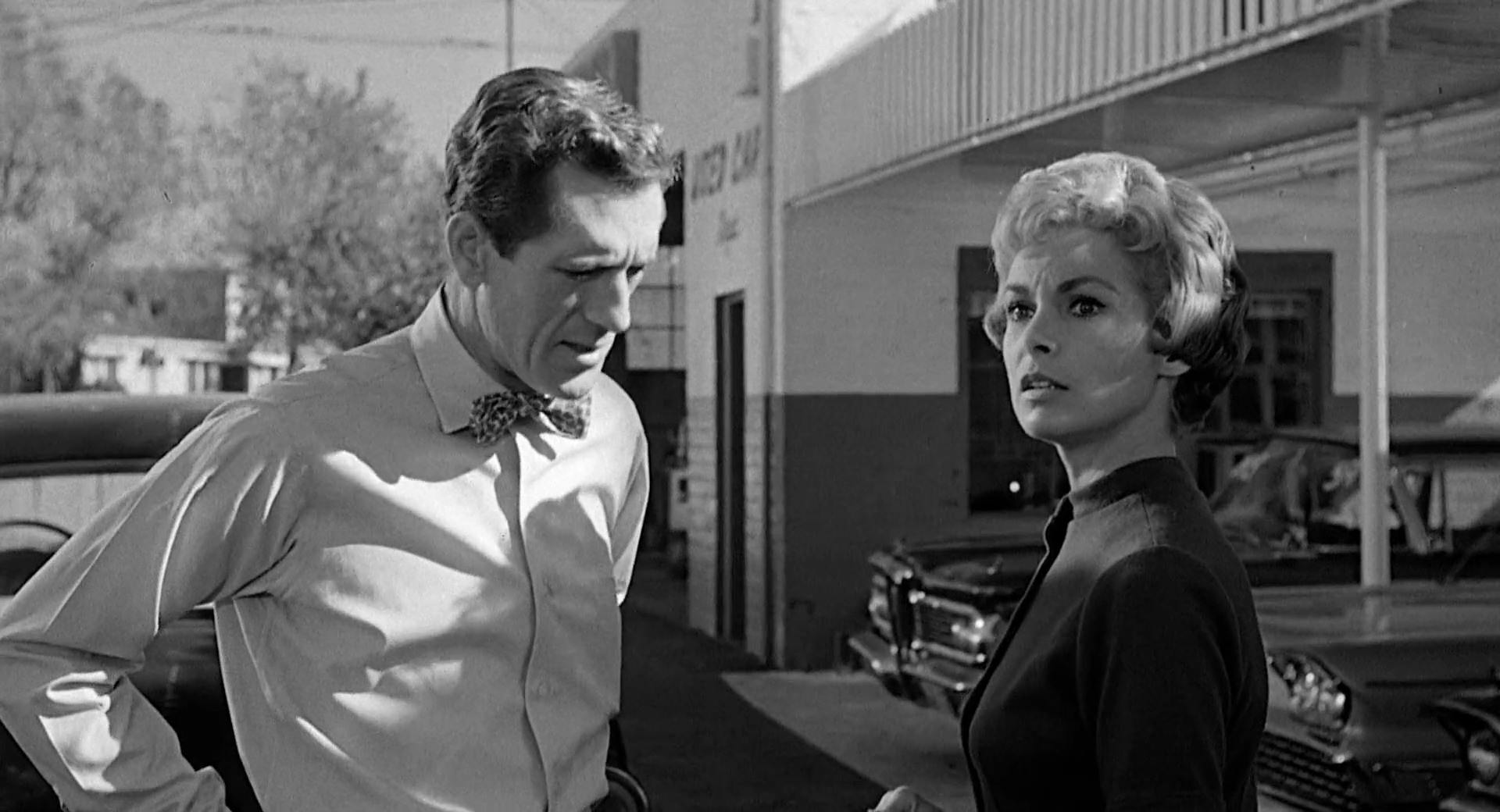
Anderson followed the trend of many of our subjects here: hailing from the Midwest, he studied theatre, did his service during World War II, went to New York where he had an illustrious stage career in everything from Paint Your Wagon to Cat on a Hot Tin Roof and ended up in Hollywood, where he has over five hundred TV appearances to his credit! Due to a similarity in appearance, Anderson played President Abraham Lincoln three times, on the big and small screen.
On TV, he appeared in a lot of Westerns, including a dozen appearances on Gunsmoke. He was in four episodes of The Twilight Zone, usually playing decent men dealing with awful men in episodes such as “Of Late I Think of Cliffordville” and “The Old Man in the Cave.” He also guest-starred on Perry Mason three times: first, in the adaptation of The Case of the Calendar Girl, then in “The Case of the Bartered Bikini,” which we discussed when we talked about Peyton Place and Paul Langton. Anderson’s final PM performance was in “The Case of the Greek Goddess,” the twenty-fifth episode of Season Six, which premiered on April 18, 1963.
World-famous sculptor John Kenyon (John Larkin, veteran of four Perry Mason cases) returns to America after a European tour, including an extended stay in Greece. He is met at the airport by his old journalist buddy, Dan O’Malley (Anderson), who just published a big article about Kenyon in a major magazine and is now working on a sequel, and staff photographer Ken Judson (Robert Harland, three spisodes). But John is not alone: he has brought back a beautiful girl named Theba (Marianna Hill), along with her mother Cleo (Faith Domergue), and he intends to make beautiful art with Theba as his muse.

This is not a pleasant episode if you are at all discomfited by period misogyny. Everyone, including Kenyon’s lawyer and friend Perry Mason, assumes that John is in love with Theba, who happens to be thirty years younger than him (in real life, too!) and incredibly naïve. O’Malley and Kenyon’s man George (a pre-Oscar George Kennedy) positively hate that Kenyon’s thoughts are for a girrr-uuhhhl, while Cleo seems to be pimping her out to a wealthy businessman (Russell Arms, 3 eps), whose boss (Tol Avery, who had a small role in North by Northwest) is involved in some shady dealings with the mom.
Cleo is killed, no surprise. The murderer is obvious from the first moments (literally, a significant look passes between that person and Cleo and it’s never explained), although their motive is a big secret until the end. Meanwhile, Theba is passed around from man to man to man, with the expectation that by the end she will land the right one. In language of the Sixties, she does, not because she chooses it but because John Kenyon does the right thing. Oh, how noble – and how I wish Theba had slapped every one of these “dudes”, headed back to Greece, and opened a business.
* * * * *
What makes Psycho especially brilliant is its structure. While the novel begins with Norman Bates, and his victim, Mary Crane, is only in the book for a couple of chapters, Hitchcock and Stefano centered the first part of the movie around (the renamed) Marion and made the audience root for her, even as she commits adultery and theft, then flees the scene of her crimes. We want her to reach Sam and then somehow find redemption and true happiness. The script keeps putting her in danger, letting her escape, and then endangering her again. Then Hitchcock dangles actual moral redemption before Marion and the viewer – and then pulls it back with a thousand cuts!
One early obstacle comes after Marion has left Phoenix and decides to spend the night sleeping in her car. A passing Highway Patrol officer stops to investigate, causing Marion increasing distress as she imagines the cop is chasing her because of her crimes. (He’s not, but boy, does she act guilty!)
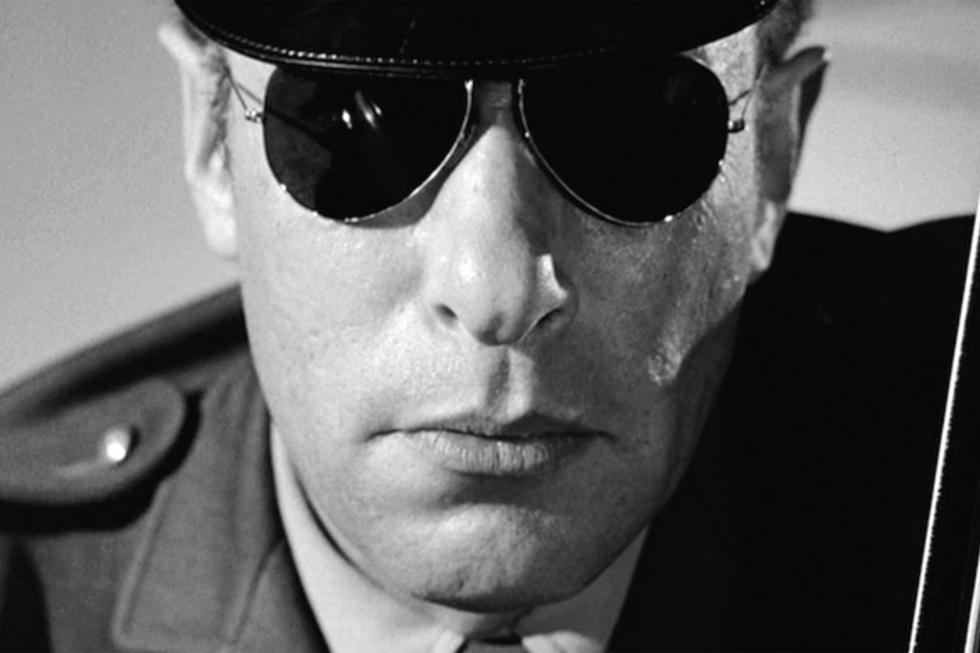
That policeman is played by Mort Mills, a Marine vet whose straightforward masculinity made him popular with film and television audiences. After Psycho, Hitchcock cast him as a spy in Torn Curtain. He could play a villain, but mostly he was a sheriff in the Old West or a lawman on your favorite crime drama. He had semi-regular roles on Man Without a Gun, The Big Valley, and . . . Perry Mason! Yes, Mills appeared in more episodes than most of the people we’ll be covering here: for seven of the eight episodes he guest-starred in, he played Sergeant Ben Landro of Homicide. As often happened with these new or brief regulars, Mills’ debut, in “The Case of the Slandered Submarine,” which we covered when we talked about Bewitched and Robert F. Simon, featured him as a suspect, after which he switched to his “regular” role.
As many of you know, Lieutenant Tragg was the main homicide detective and D.A. Burger’s crony for the first five – six seasons. But Ray Collins was never well, and as the emphysema took over his body, he needed help. Landro was the first “assistant” to support Tragg while Collins was still on the show. Mills would be replaced by Wesley Lau (who we will discuss in a future post), and then Lau would be replaced by Richard Anderson (ditto). The episodes in which Landro appeared span Seasons Four through Eight, and while we have covered some and will talk about others when we get to other actors, Mills gives pretty much the same performance in every appearance. So here is one of his later episodes from Season Six to represent the lot.
“The Case of the Playboy Pugilist,” which debuted on October 11, 1962. Let’s get this out of the way: Mills is fine here and appears in several scenes; in fact, in a somewhat confusing court trial, he testifies twice and appears to be doing so both times for the defense rather than the prosecution.

On the other hand, this is a pretty bad episode, so let me focus on the other people in it. Robert Armstrong was a contract player in the early days of Warner Brothers, appearing in dozens of crime dramas and mysteries. You’ll find him in The Penguin Pool Murder and The Ex-Mrs. Bradford and other fun “B” pictures. Normally, when I’m searching for an actor’s Perry Mason credit on IMDB, I have to scroll down a ways, but with Armstrong hitting his seventies in 1960, this was his second credit. He appeared in four episodes of the series.
Here, Armstrong plays Jimmy West, an old-time fight manager who hopes to have one last good fighter in his stable with Davey Carroll (Gary Lockwood). Lockwood is probably most famous for two roles centered in outer space: he played Keir Dullea’s co-pilot in 2001: A Space Odyssey, and he had a central role in a very important early Star Trek episode, “Where No Man Has Gone Before.” Here he plays a boxer who is so freaking horny all the time that he can’t finish a fight if a pretty girl is nearby. Still, Jimmy believes in Davey and tries to protect him when a big-time promoter, Tod Richards (Mark Roberts) tries to sign the kid. Roberts appeared in eight episodes of Perry Mason that spanned the entire series.
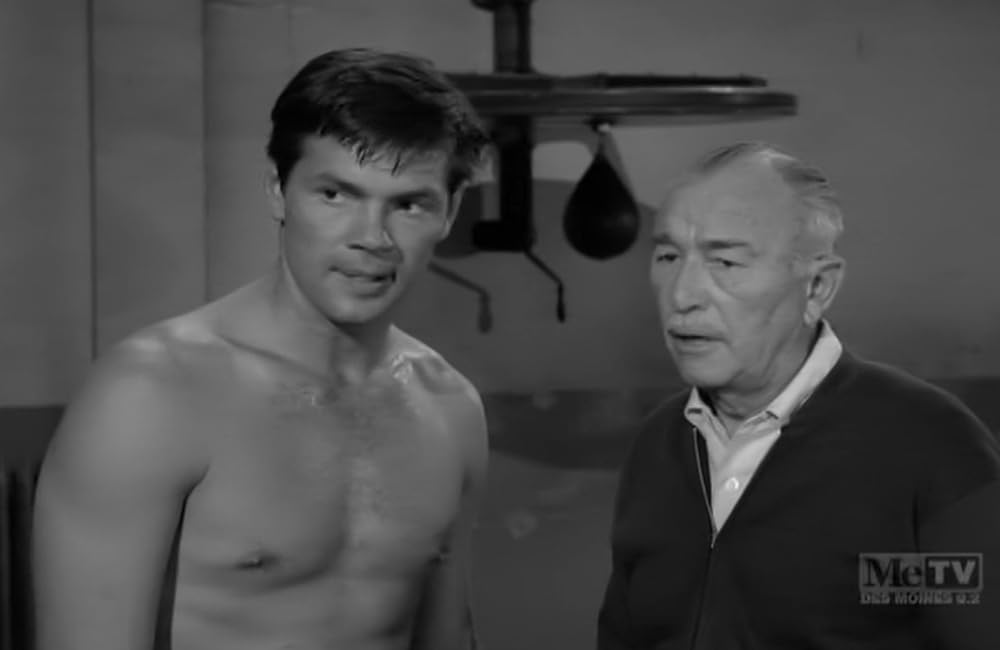
Richards gets Davey to sign with him with the help of his gorgeous secretary Jo Sands (Dolores Michaels, who doesn’t look quite so gorgeous here, thanks to a rather severe haircut and make-up), and to Jimmy’s surprise, Richards creates a contract where he and Jimmy are partners. But it all turns out to be a scam, part of a scheme to blackmail a hotel magnate named Keith Lombard (Anthony Caruso) to sell his newest hotel to Richards for a song. Caruso spent most of his career playing menacing mobsters, but here he is a legit businessman . . . up to a point.
Anyway, everyone ends up at Richard’s estate where Davey parties way too much and makes a play for Richards’ wife Lori (Dianne Foster), although Richards seems to be too much in love with someone else to care. And here I’ll say a word about Dianne Foster: she appeared in four Perry Mason episodes. We’ve already covered the other three, and in every one of them she is fantastic. Someone must’ve said, “Hey, Dianne, have some fun with this role. Why don’t you channel Marilyn Monroe?” So she does, and it’s appalling. She’s a suspect in a murder mystery, and she sticks out like Ginger on Gilligan’s Island.
In the end, Mason ties everything that’s happening to a past crime, a fire in a New York hotel that ended up killing another of Jimmy’s boxers. And then Perry brings in a completely new character that nobody knew existed, least of all the audience. And then he proves that everything he has covered thus far doesn’t matter a bit, leading to a dramatic enough confession and an epilogue where Davey is finally trained enough to land a big fight – which he blows when a pretty girl sitting ringside cheers for him. Yuk yuk yuk.
* * * * *
Maybe Alfred Hitchcock worried that the average audience member wouldn’t understand what motivated the killer, or maybe the director wanted to give the crowd a moment to breathe after the horrifying climax. Whatever the reason, Hitchcock and Stefano added a scene after the killer is captured and brought to the police station: a psychiatrist steps forward and carefully explains to Marion Crane’s sister and boyfriend exactly what is wrong with “Mother.”
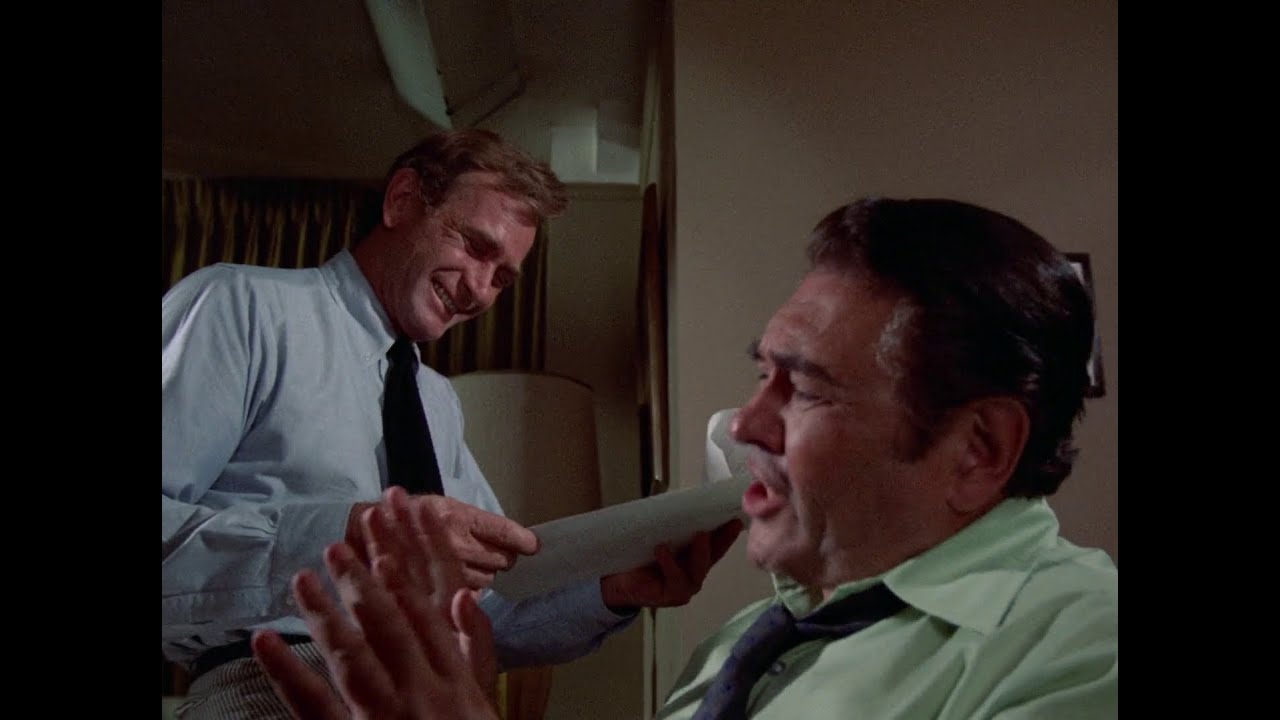
This doctor is played by Simon Oakland, a very familiar face to me from my days of binging old TV shows. My first exposure was probably as the cynical Lieutenant Shrank in the musical West Side Story. A nice Jewish boy from Brooklyn, Oakland nearly missed the opportunity to play hundreds of tough guys in movies and on TV by seeking a career as a concert violinist. By the late 1940’s he had switched to acting and played lots of soldiers and cops (and the occasional thug.) He appeared in two episodes of The Twilight Zone, once as a doomed crook and once as the captain of a submarine. (That second episode, “The Thirty-Fathom Grave,” is especially haunting.)
Oakland was also a regular on a favorite show of mine: Night Stalker featured Darrin McGavin as Kolchak, a shlubby reporter who kept running into monsters. Oakland played his ever-angry editor, Tony Vincenzo. He also had the good fortune to be bumped off twice on Perry Mason. Here we’ll only discuss the first instance: “The Case of the Frantic Flyer” was the twelfth episode of Season Three and debuted on January 9, 1960.
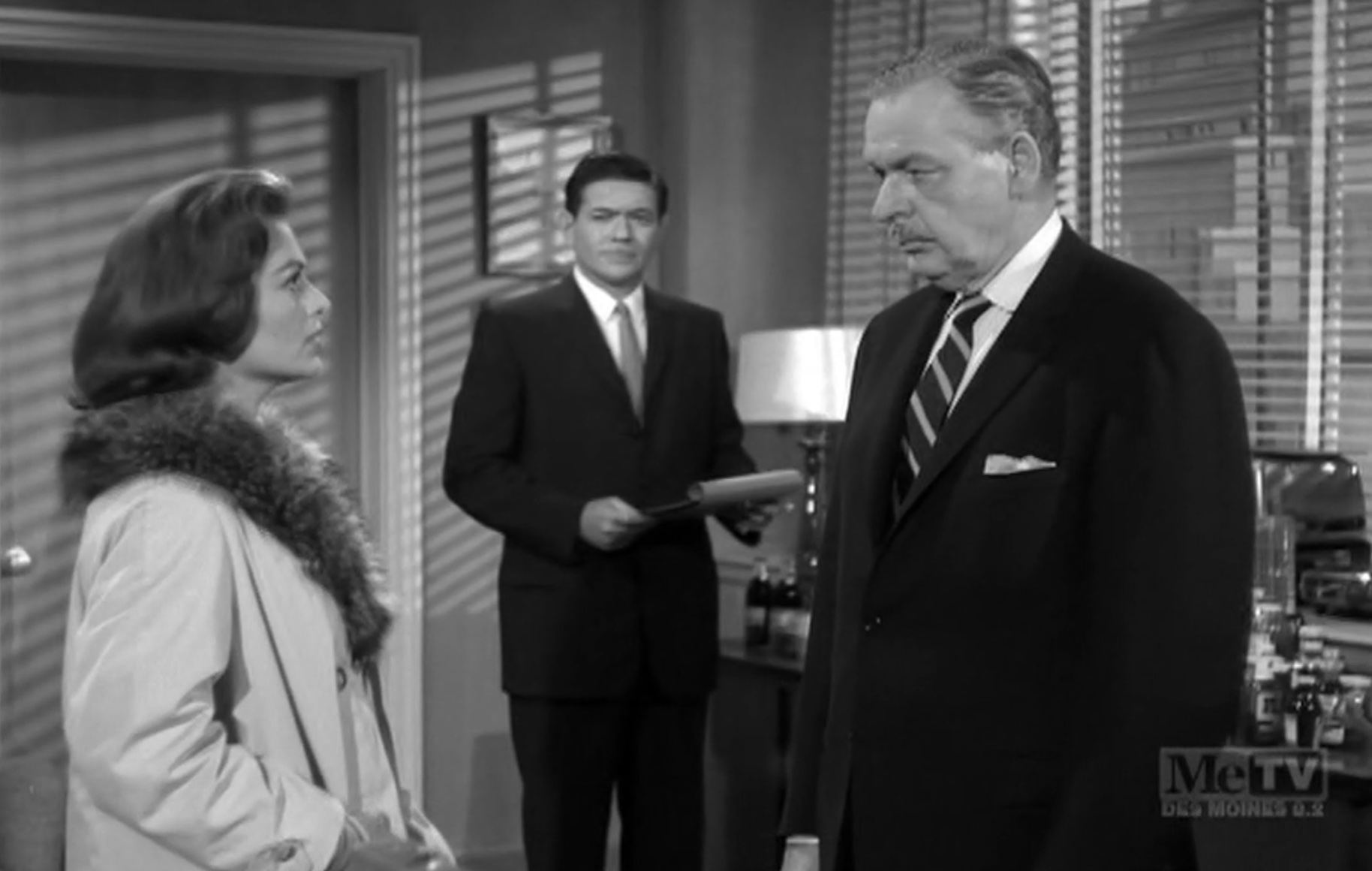
This is an intriguingly tangled story centered around the business of Wade Taylor (Wilton Graff), one of those gruff businessmen you see in dozens of Perry Mason novels. He is estranged from his son Andy, whom he sees as a loser, and he hates his daughter-in-law Carol (Rebecca Welles, who appeared in five PM episodes), whom he mistakenly believes is a fortune hunter. In fact, Carol is the only laudable character in this story! Taylor’s general manager, Howard Walters, is trying to steal $130,000 from the company and blame Andy; Walters’ wife (Virginia Vincent, three episodes) is a doormat, and his mistress Janice Atkins (Patricia Barry, also three eps) is helping Howard steal the money and then plans on betraying and killing Howard with his co-worker Roger Porter (Ed Kemmer, two eps), who is also Carol’s cousin!
When Howard’s plan to crash the company plane, fake his death, and meet up with Janice leads to his breaking a leg, we meet the final character in our play: a backwoodsman named Zack Davis (James Bell, four eps) who seems content to wait out the winter in his snowbound cabin but then turns out to be as rotten and crooked as everyone else.
Oakland is surprisingly young and handsome here, with a full head of curly hair, but the real star of this show is Barry, who plays the most intriguing form of femme fatale, a role she perfected in a number of soap operas, including my own favorite, All My Children, where she played Brooke English’s society mother who also happened to be Cobra, the secret drug lord of Pine Valley!! (God, I miss that show!) Frankly, this time it feels like Perry comes out with the solution through divine providence, but the cast makes this one a lot of fun to watch.
* * * * *
I’ve saved the best for last! Vaughn Taylor was the first actor ever to confess to murder on Perry Mason, all the way back at Episode One! He appeared in eight episodes spanning most of the series, confessing to murder more than once! He played the stuttering bishop in a mangled adaptation of that novel.
A native of Boston, an Army veteran who got his start in stock productions before moving to Broadway and then to films, Vaughn’s story is by now a familiar one to those of you following along. Beginning in 1951, he had small roles in many pictures, including bottom billing in Cat on a Hot Tin Roof, with Elizabeth Taylor and Paul Newman. He was a regular face on early TV anthology series and would show up on various sitcoms and dramas. He made five appearances on The Twilight Zone, including as the salesman who sells robot Grandma Josephine Hutchinson to her new family in “I Sing the Body Electric.” Perhaps his best appearance was in the classic first season episode, “Time Enough to Last” playing Burgess Meredith’s harried boss who insists he stop wasting his time reading.
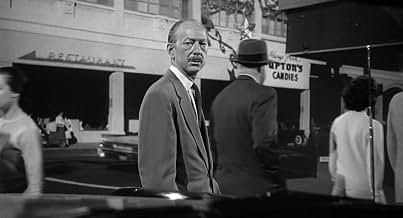
In Psycho, Taylor plays George Lowery, Marion Crane’s boss at the realty. A gentle man, his big moment comes when he fatefully crosses the street in front of Marion’s car as she is driving out of town. But she said she was going home with a headache . . .
We’ve already covered several of the original teleplays in which Taylor appeared, such as “The Case of the Witless Witness” and “The Case of the Drifting Dropout,” but that still leaves us with three episodes to discuss. First up is the premiere episode of the second season, “The Case of the Corresponding Corpse,” which premiered on September 20, 1958.
Taylor opens this one as Harry Folsom, an oily insurance salesman, who is in the process of blackmailing George Beaumont (Ross Elliot) , who is living under an assumed name as a painter in a suburb of Los Angeles after having presumably died in a plane crash three years earlier. George’s girlfriend, Ruth Whittaker, who knows about George’s past life, walks in on their argument and sees George refuse to pay Folsom and then order him out of the apartment. Just to make sure the insurance guy leaves her man alone, Ruth scraps together seven thousand dollars, despite the objections of her odious father (Owen Whittaker, who wasn’t so odious he couldn’t play a judge in another PM episode) and pays the blackmailer off. But when she goes to find George, she learns that he has gone back to L.A. to “face the music.”
At this point, I figured Folsom would also follow George to the city and end up getting murdered. But things take a bit of a turn: Ruth tracks her lover down, only to be told quite gently that George intends to turn himself in to the police for insurance fraud, hope his old attorney, Perry Mason, can get him a light sentence, and then try and get back with his wife Laura. Ruth gets very upset and manages to wield a knife and some threats in front of the motel manager before she leaves.

So it’s George who gets bumped off, and Ruth who ends up sitting next to Mason in the defendant’s chair. All of this pre-trial stuff is great because it’s early days on the series, and Ray Collins is in fine form as Lieutenant Tragg. He has some lovely scenes with Raymond Burr and even stops to light them both a cigarette – which is a little painful when you realize that a few years later he would be dead of emphysema.
Taylor is wonderful as the blackmailer, going from potential victim to suspect to the episode’s comic relief. Laura Beaumont is played by the magnificent Jeanne Cooper. I really should do a “Perry Mason/Soap Queen Connection” post one of these days! Cooper went on to quite a bit of soap work, most famously as Kay Chancellor on The Young and the Restless, the Emmy-winning role she played for nearly forty years. She was also mother to actor Corbin (L.A. Law) Bernson. Best of all, she appeared in five episodes of Perry Mason!
The final suspect is Laura’s business associate who hopes to be something more, played by William Ching. He was a handsome fellow who never quite achieved stardom, but he did appear in some cool films, most notably in a significant role in the film noir D.O.A. (1949) and a less significant role the following year in In a Lonely Place.
The solution of the drama adheres to the series’ formula, but it’s well-acted, and Mason uses a cool map of the crime scene in court, just like one of those you would hope to find in a Golden Age mystery novel!
Next up: “The Case of the Fickle Fortune,” the fifteenth episode of Season Four, which debuted on January 21, 1961, and once again Vaughn Taylor begins the episode as Ralph Duncan, an employee of the State Assessor’s office who investigates the estates of recently deceased people. Going through one woman’s home, he discovers over $150,000 taped under the drawer of a bureau. As he pulls off one stack after another and tosses it all in his briefcase, I thought, “Here we go again: greedy Vaughn Taylor is trying to profit off another’s tragedy. Surely this time he will be the victim!”
But when Duncan brings the briefcase home to his wife Helen (Virginia Christine, who made three Perry Mason episodes before selling tons of Folgers Coffee as Mrs. Olsen in a bunch of commercials) and his skeevy cousin Charlie (Robert Casper, two PM eps), he shows himself to be a clearly honest man who wanted to show his family a large amount of OLD money – greenbacks – that may or may not have any value. It thus comes as a great shock to Duncan when he opens his briefcase and it’s empty! The first twist explains how the money landed in the hands of a con artist named Lloyd Farrell (Liam Sullivan, three PM eps) who ends up dead.
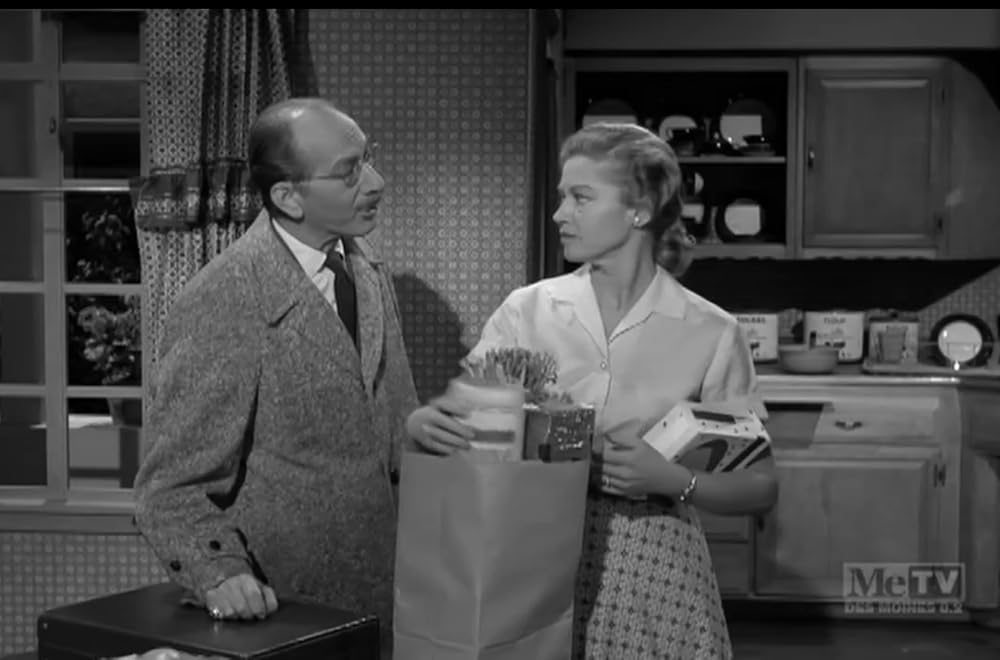
There are lots of fun things about this one, including the fact that for once Vaughn Taylor plays the defendant, as well as the fact that the murderer comes as something of a surprise. (I had it all figured out through a process of elimination . . . except that I eliminated the wrong person!!) Clearly, Taylor’s presence seems to always have a salutary effect on an episode.
Finally, we have “The Case of the Travelling Treasure” debuting on November 4, 1961, the eighth episode of Season Five. If you want any proof that Vaughn Taylor’s presence seems to ensure that the episode will be interesting, look no further than this rare instance of a closed circle, sort-of impossible crime! The prologue sets the stage with the discovery of a major theft of gold bricks from a mining operation. We see the man responsible for the stolen gold: it’s a security guard named Leon Ulrich, who is played by Jackie Searl, a former child actor of the 30’s who usually played the brat in films like Tom Sawyer (1930) and Huckleberry Finn (1931).
Ulrich brings the loot to a shifty character named Karl Magovern (played by another highly recognizable face, Arch Johnson, whose hundreds of credits include five appearances on Perry Mason). We aren’t immediately privy to Karl’s plans, but they involve setting up a boating trip and bringing along Professor Sneider (Vaughn Taylor), a scientist who is working on a process to distill elements from sea kelp for household products. Karl’s voluptuous but angry wife Rita (Lisa Gaye, the perfect femme fatale, who made seven PM episodes) insists on going along because she’s afraid Karl will desert her and abscond with all their money.
As always, Karl books the fishing boat of Scot Cahill (Jeff York, three PM eps and a lot of Westerns), who happens to be friends with one Perry Mason and sadly must cancel a fishing expedition with the lawyer and his buddy Paul Drake. Rounding out the party are Ben Wylie (Ron Gans, 3 eps), who has an obvious crush on Rita, and Max (H.M. Wynant, who made ten episodes of Perry Mason and whom we will discuss again!), a last-minute replacement for the usual deep-sea diver required for Professor Sneider’s experiments.
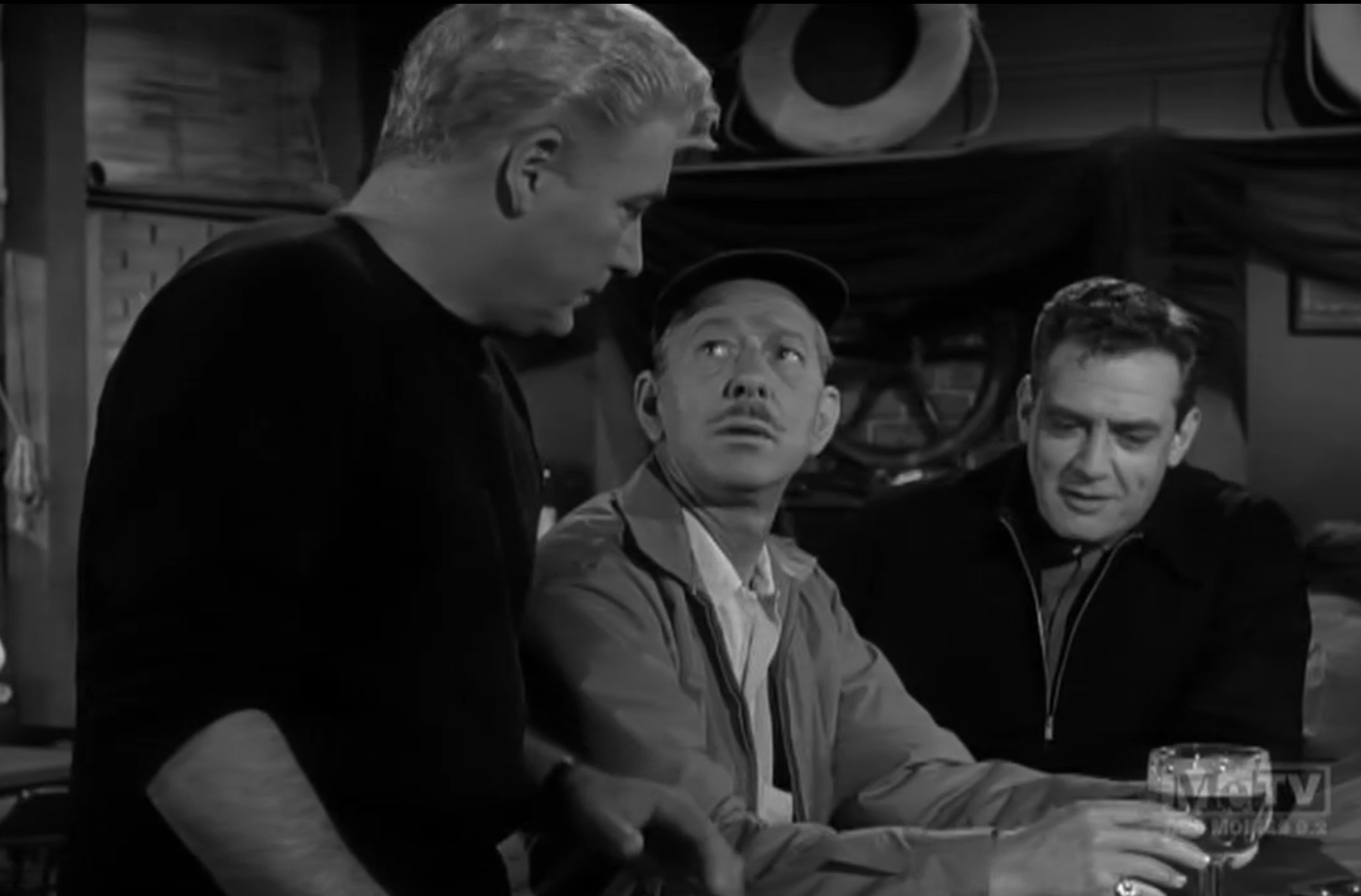
They all set sail on a three-hour tour (naw, not really, but I couldn’t resist!), and Magovern, who had recently broken his leg, stays below in his cabin while everyone around him is doing their job (or, in Rita’s case, sunning herself and tempting all the men). The only person to enter Karl’s cabin is Captain Cahill, who is heard arguing with the guy. Later, a Coast Guard vessel approaches and several officers demand to board and search the ship. One of them discovers Karl Magovern, dead by digitalis poisoning. The drug is found in Cahill’s medicine cabinet, and digitalis is found in the remains of Magovern’s drink. Since Cahill was the only person to be with Magovern in the cabin, Lieutenant Tragg books him for murder.
And that’s where we are: we know that Cahill can’t be guilty, simply because Perry Mason is defending his friend. So who poisoned Karl, and how did they do it? And what happened to the gold? This is a really tight-knit script, with several viable suspects (there’s nary a milquetoast secretary lurking in the background) and some great clues. The issue of the poison is even rubbed in our faces, and beautifully so. It’s the perfect way to end our examination of one of the best guest stars in the series’ history!
* * * * *
Mother tells us it’s time to bid adieu to Psycho – but before we say farewell to Alfred Hitchcock, we have one more of his films to cover, along with the SIX actors who managed to cross over from one part of California to another. (That’s a distance of four hundred and forty miles between the Los Angeles courthouse . . . and Bodega Bay.)


These analyses are a lot of fun! I’ve never seen the Mason TV show, but you make it sound amazing.
LikeLiked by 1 person