Leave it to Alfred Hitchcock to take a Daphne Du Maurier short story about an ornithological Armageddon and turn it into a love story about family healing. By the end of 1963’s The Birds, Melanie Daniels (the Hitchcock blonde who has replaced Du Maurier’s doomed farmer, played by “Tippi” Hedren) has traded in her bitterness for true love and a new family. Yes, they’re all driving toward San Francisco and it’s covered with birds and they’re probably all going to die, but man, woman, mother and daughter will die together and in love.
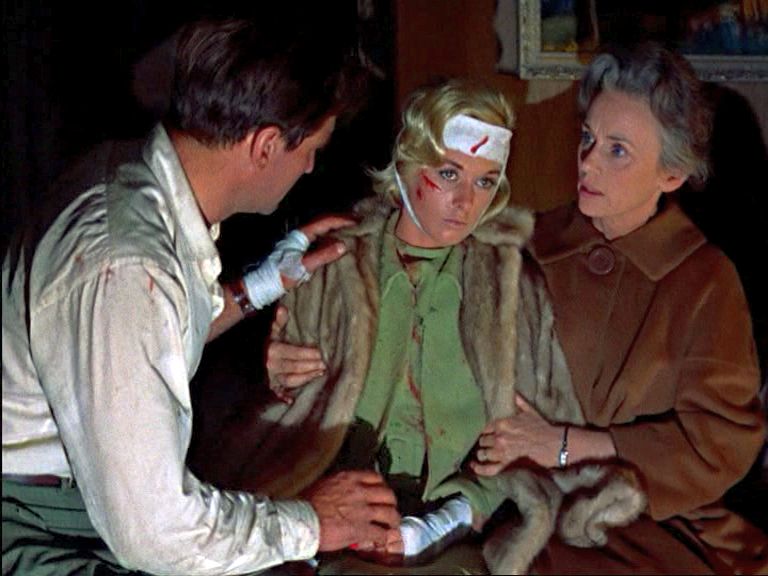
And what do we get? We get Hitchcock’s second horror film of the 60’s, complete with eye-bending special effects, an electronic score, a slightly wooden leading lady who will blow the lid on her director’s lascivious cruelty, and the fourth highest grossing film of the year (it set records for single day ticket sales).
The structure of the film is similar to Psycho: the first forty minutes or so are a romantic comedy, where Melanie (Tippi Hedren) and Mitch (Rod Taylor) meet cute in a San Francisco pet store, and then she goes to enormous lengths to get back at him for accurately sizing her up as a spoiled little rich girl. Hitchcock puts a lot of detail into Melanie’s tracking down of Mitch, her travels to Bodega Bay, and her clever little plot with the lovebirds. And then – around the same moment in time that Mother enters the bathroom in Psycho – a gull swoops down and strikes our heroine. Only she survives this first assault, and then she survives many more – so many that one theory is that the birds are setting their sights on her.
This is what the townsfolk come to believe, and some of them call her a witch. There’s an argument to make that the birds are after Melanie, that their constant attack wears down her ennui towards life and her anger at her mother and turns her into a loving wife, mother and daughter . . . at least long enough for the frame to fade into darkness.
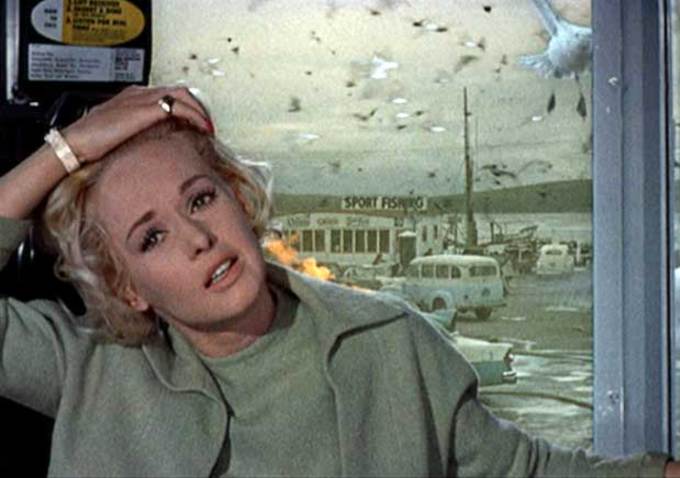
This is far from my favorite Hitchcock film, but once the birds take to the skies, we get one remarkable set piece after another: the attack at Cathy’s birthday party, the aftermath at the farmhouse, the explosive attack on the town, on the school, on Mitch’s home. And that terrifying climax in the attic, which reportedly nearly ended Hedren’s career. The movie terrified me as a kid and now stands as a magnificent artistic achievement. It’s not as rich as the great films of the 50’s, but it’s a rollicking good ride.
And best of all? I found a half dozen (six! Count ‘em, six!) actors who appeared in The Birds and also guest starred on Perry Mason. We’ll take them as follows: lady first, and then in alphabetical order.
* * * * *
“Why are they doing this? Why are they doing this? They said when you got here the whole thing started. Who are you? What are you? Where did you come from? I think you’re the cause of all of this. I think you’re evil. Evil!”
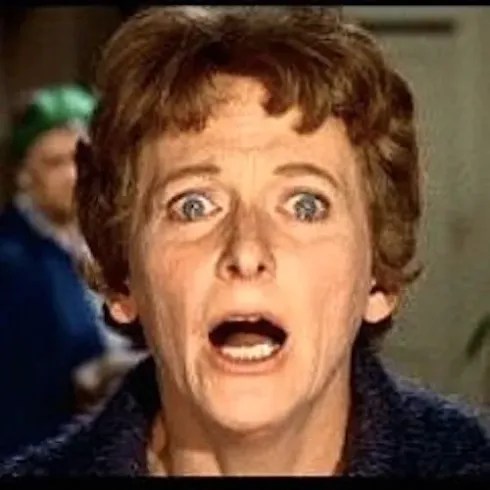
Doreen Lang was born in New Zealand and studied drama in London. She made her way to America and appeared onstage in New York, including a two-year stint as Edith, the maid, in Noel Coward’s Blithe Spirit, a role she reprised in a 1946 TV presentation of the play. She then went on to a perfectly respectable career on television that lasted for fifty years. She appeared only infrequently on the big screen, but she has the distinction of playing playing roles in three Alfred Hitchcock films. In North by Northwest, she shows up at the beginning as Cary Grant’s harried secretary. Before that, she has a wonderful little part in The Wrong Man, playing one of two women who mistakenly identify Henry Fonda as the man who held up their insurance company office. Clearly the other woman is the dominant force in this pair of witnesses, and after the women are called in to a second line-up and this time identify the correct culprit, they come outside and pass by Henry Fonda. That moment is my favorite in the film, and Lang does a wonderful job of portraying in an instant her utter mortification as she realizes what she did to this innocent man.
Lang’s best role for Hitchcock takes place in a pivotal scene in The Birds when a cross-section of humanity is present in the Bodega Bay diner just before the birds attack. Lang plays an out-of-towner, a mother who has brought her young children in for a quick lunch just before making the long drive back home. As Melanie and the locals discuss the weird and disturbing recent misbehavior of the birds, Lang criticizes the nature of their discussion around her children. (Clearly, it’s mom and not the kids who’s getting spooked.)
After the attack forces the survivors back into the diner to take cover, Lang speaks for them all, attacking Melanie and accusing her of being the source of all the trouble. Hitchcock places Lang in the center of the screen and has her address the audience when she questions Melanie – as if we perhaps are complicit in the birds’ behavior. It’s a delicious moment!
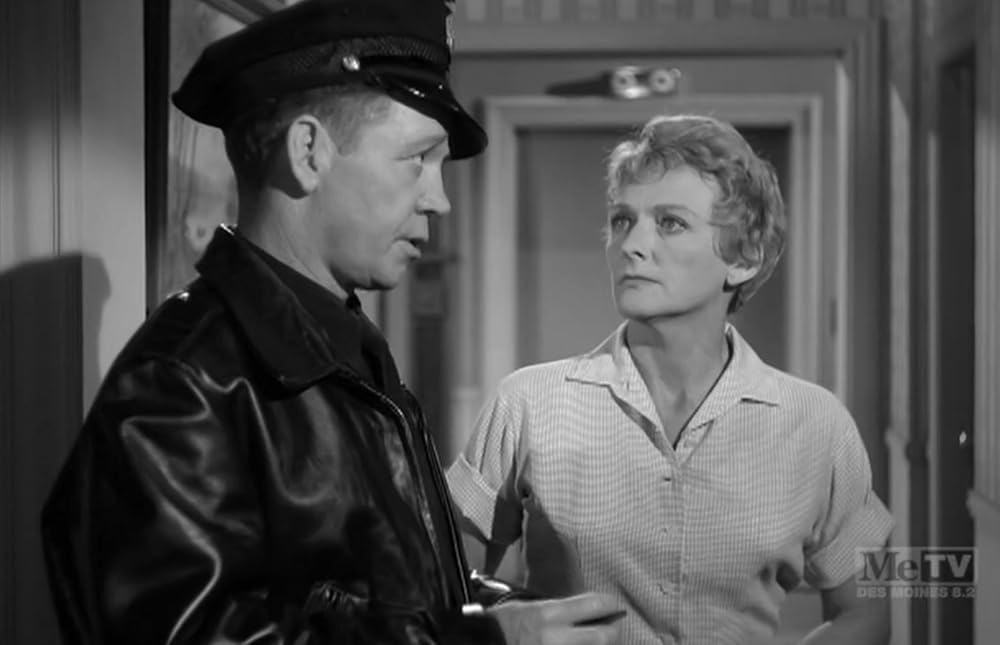
I wish I could talk to you about the single episode of Perry Mason that Doreen Lang made – but I already have. It’s an adaptation of The Case of the Lucky Legs from Season Three. Here is part of what I said back in my review of the book and the episode: “The problem is that everything that makes the novel distinctive . . . is missing from the teleplay. What keeps it from being totally bland is the excellent casting of Jeanne Cooper . . . as Thelma Bell, and Doreen Lang (who played the Terrified Mother in the Diner in The Birds) as the nosy neighbor.”
* * * * *
“Now, Lydia, ‘attack’ is a pretty strong word, don’t you think? I mean, birds just don’t go around attacking people without no reason, you know what I mean? The kids just probably scared them, that’s all.”
Malcolm Atterbury is another one of those faces you see again and again and feel good about seeing, even if you never quite know who he is. Born in Philadelphia, I think he came from a wealthy family because when he started studying drama he did it under an assumed name, and when his true identity was discovered, he financed a theatre season for his acting company.
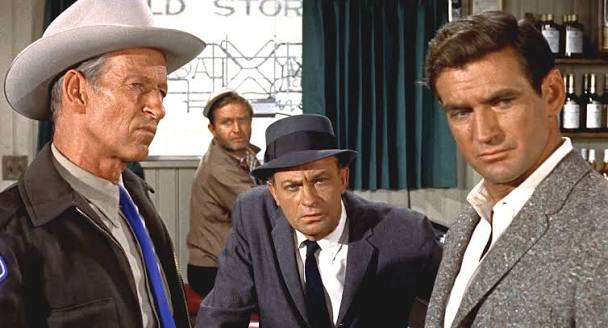
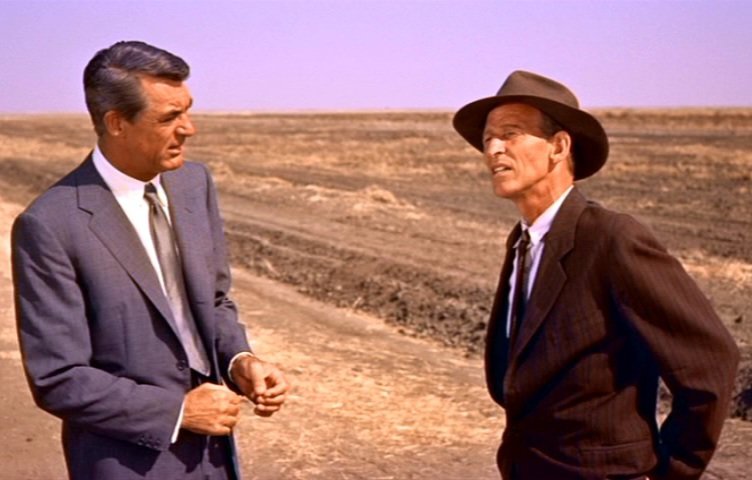
Atterbury loved the stage and appeared on it many times, including in the role of Scanlon in the original Broadway production of One Flew Over the Cuckoo’s Nest. He appeared in films both prestigious and sordid, (he was Michael Landon’s father in I Was a Teenage Werewolf!). In The Birds, he played Bodega Bay’s clueless deputy Al Malone, but his real claim to Hitchcockian fame is in the most famous scene in North by Northwest. Acting on a tip (that we know is a trap), Roger Thornhill (Cary Grant) finds himself at the literal crossroads in a deserted stretch of farmland. Suddenly a bus shows up and deposits Malcolm Atterbury. Could he be the spy Roger is looking for? The two men face each other as if it was a Western showdown, and then Roger approaches his potential adversary. Turns out it’s a false alarm; the man is a stranger. But the stranger is fascinated by a crop duster that keeps circling around. “That plane’s dustin’ crops where there ain’t no crops!” he says before getting on the next bus and leaving Roger to a potential death by airplane!!
Atterbury is another one of those Perry Mason guest stars, like Vaughn Taylor, who either was lucky enough to have appeared in top-notch episodes or who elevated the episodes in which he appeared. “The Case of the Watery Witness”was the second of his five guest shots and the second episode of Season Three, premiering on October 10, 1959. This sort of alternate take on Sunset Boulevard is a tight, sharp, and twist-filled mystery with an all-around excellent cast, and Atterbury is prominently featured.
The opening teaser is one of the series’ best: at a lakeside social club that appears to be closed for renovations, an earnest-looking young man named Fred Bushmiller is peering through windows in search of somebody. (Bushmiller is played by Douglas Dick, who made seven appearances in Perry Mason that spanned the entire series. Dick is also notable for playing the pivotal role of Kenneth in Alfred Hitchcock’s Rope.) Fred notices a speedboat out on the water and a man and woman violently struggling on it. The man is Dennis Briggs, the manager of the club (played by Mr. Atterbury), and the woman – well, we don’t know yet who she is, but she’s played by the legendary actress Fay Wray (King Kong, Mystery of the Wax Museum, and three PM eps!). The woman strikes Briggs with an oar, sending him into the water and then takes off in the boat. Fred unties a rowboat from the dock, rows out to the middle of the lake, and heroically rescues Mr. Briggs.
Except, when we come back from the break, we discover that Fred Bushmiller is no hero: he’s a sleazy detective hired by Briggs to uncover the abandoned daughter of old-time movie star Lorna Thomas (Wray, doing a lighter, saner version of Gloria Swanson as Norma Desmond). Fred gives the information to Briggs and then hightails it over to Lorna’s palatial estate, where he blackmails his way into her household, much to the consternation of her loyal housekeeper, Harriet Snow (Kathryn Card, who played countless housekeepers and uncredited biddies in many a film and TV show, but who is most famous as Mrs. McGillicuddy, Lucy Ricardo’s daffy mother, on I Love Lucy.)
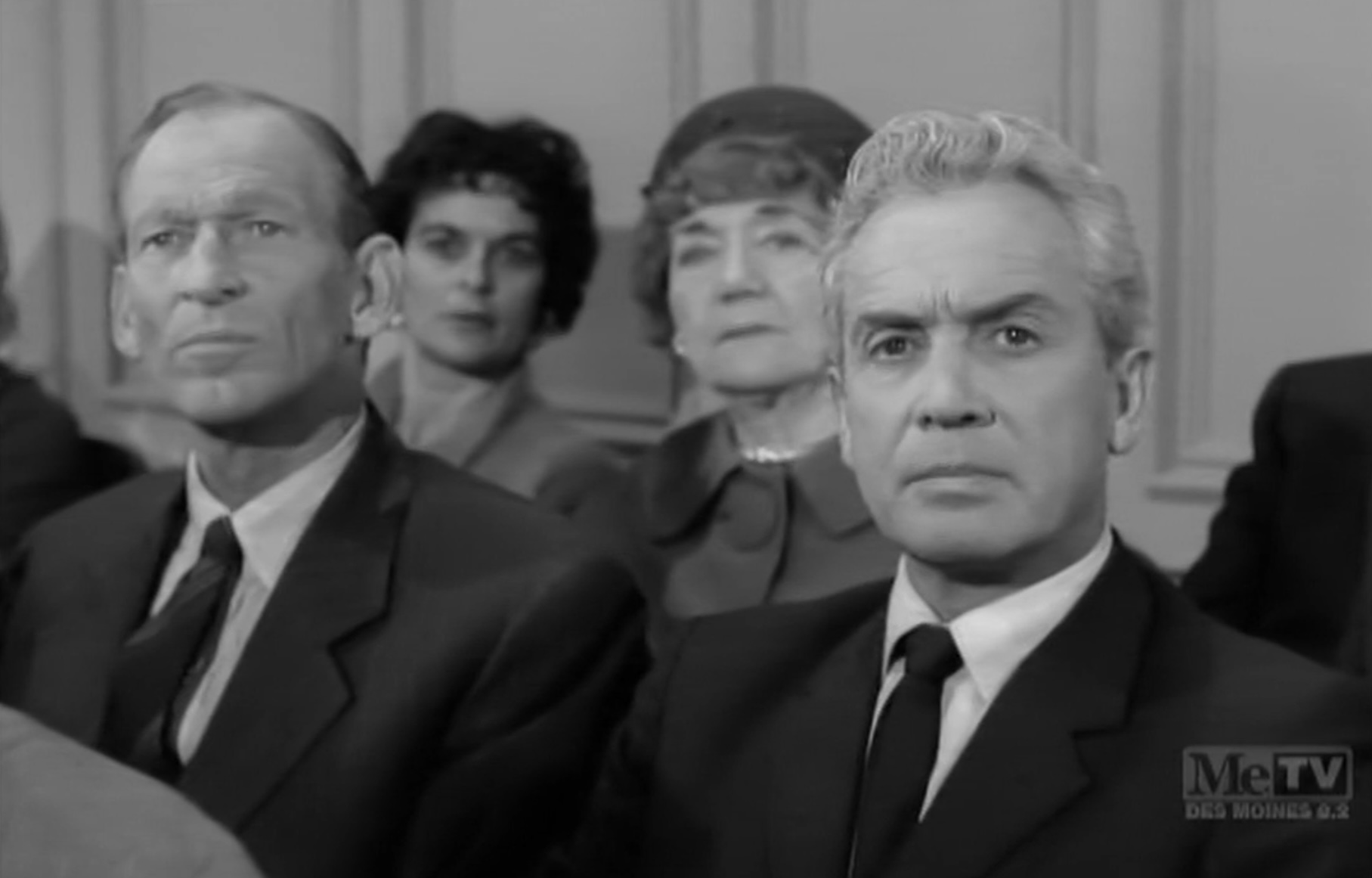
At this point, I assumed that Fred Bushmiller would at some point wind up dead in Lorna’s study. But it’s the movie star herself who is found strangled, her jewelry box open and empty on her desk. The defendant is George Clark (John Bryant, who appeared in six episodes of Perry Mason), the husband of Lorna’s secret daughter Betty (Dusty Anders) who was furious at the star’s angry dismissal of Betty. Also on hand is Lorna’s frequent director, Max von Mayerling, – okay, I’m kidding, his name is Tony Raeburn (Lester Vail), and he and Lorna were about to stage a comeback. (“It’s not a comeback; it’s a return!!)
Perry has to figure out the truth behind the missing jewelry and who exactly was trying to kill who on the speedboat before he can sort out the killer among a solid group of suspects with nary an obvious killer amongst them. All in all, a fine example of the sort of cases Malcolm Atterbury got to be a part of!
* * * * *
“Mrs. Bundy, you don’t seem to understand. This young lady said there was an attack on the school . . . A bunch of crows attacked the school kids.”
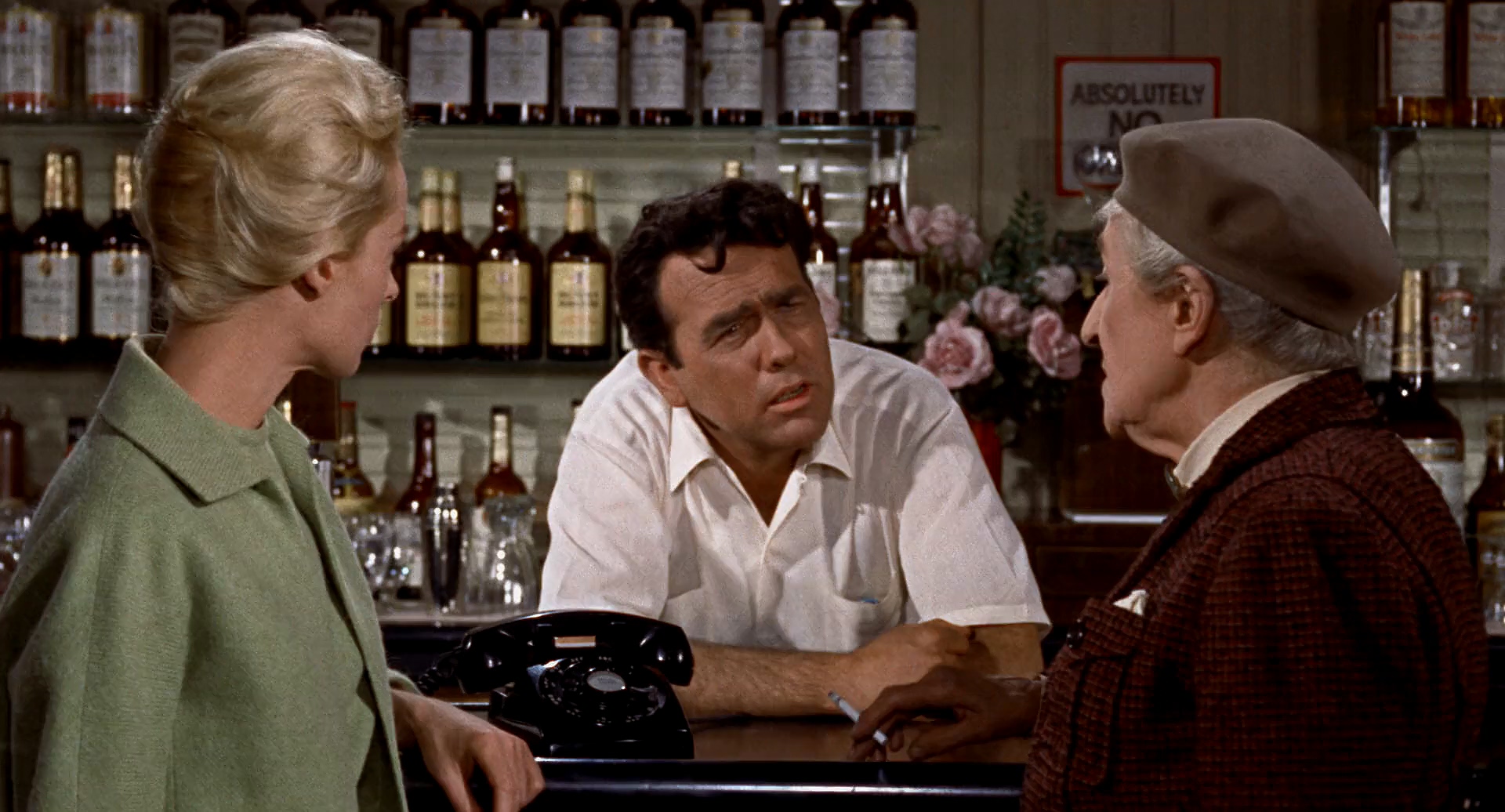
Lonny Chapman exemplifies the life and career of so many of the character actors we’ve been examining in this joyful process. The thirty or so films and over three hundred television performances he made helped finance his true love: live theatre. Born in Tulsa, Oklahoma and raised in Joplin, Missouri, Chapman served five years in the South Pacific during World War II, having enlisted the day after the attack on Pearl Harbor. He then got his BFA from the University of Oklahoma where he became best friends with fellow future actor Dennis Weaver. Together, they hitchhiked to New York, where Chapman was cast as Turk opposite Shirley Booth in Come Back, Little Sheba. (Coincidentally, Weaver became his understudy and eventually took over the part. Chapman developed strong ties to the Actors’ Studio, founded by Lee Strasburg, who had directed him on Broadway.
Chapman taught acting in New York while acting in stage, film, and TV productions. He wrote plays and also spent his summers acting, producing and directing plays upstate in Fishkill, NY, where Barbra Streisand and others got their dramatic start. He made his way to Hollywood in the early 60’s and helped establish a West Coast branch of the Actors’ Studio. In 1973, he founded the prestigious Group Repertory Theatre, a place where actors flocked for the chance to perform onstage. That company still exists; in 1999, its name was changed to the Lonny Chapman Group Repertory Theatre.
If you scroll down his credits on IMDB, you’ll find that Chapman appeared in all the usual places, making multiple appearances in such crime series as Murder She Wrote, McCloud (starring his best bud, Dennis Weaver), Quincy, M.E., and many others. He also had a pivotal guest role during the seventh season of Perry Mason, appearing in the twenty-ninth episode, “The Case of the Tandem Target,” first airing on May 14, 1964. This may have been Chapman’s only appearance, but since the other six key members of the guest cast appeared in a total of twenty-four episodes, they help give a standard episode some pizzazz.
The direction by Irving J. Moore, who went on to helm many episodes of both The Wild Wild West and Dallas, also gives some zip to this story of a hard-nosed businessman named Sumner Hodge who won’t let his stepdaughter marry the man of her dreams – and it isn’t merely because the guy is a motorcycle-riding folk singer! Hodge is played by Philip Ober, who also takes on the role of Sumner’s twin brother Adrian, a kindly antiques dealer. (Sadly, Ober’s lasting contribution to show business was being an abusive husband to Vivian Vance. I once met her: it’s a lovely story that I’ll share with you sometime.)
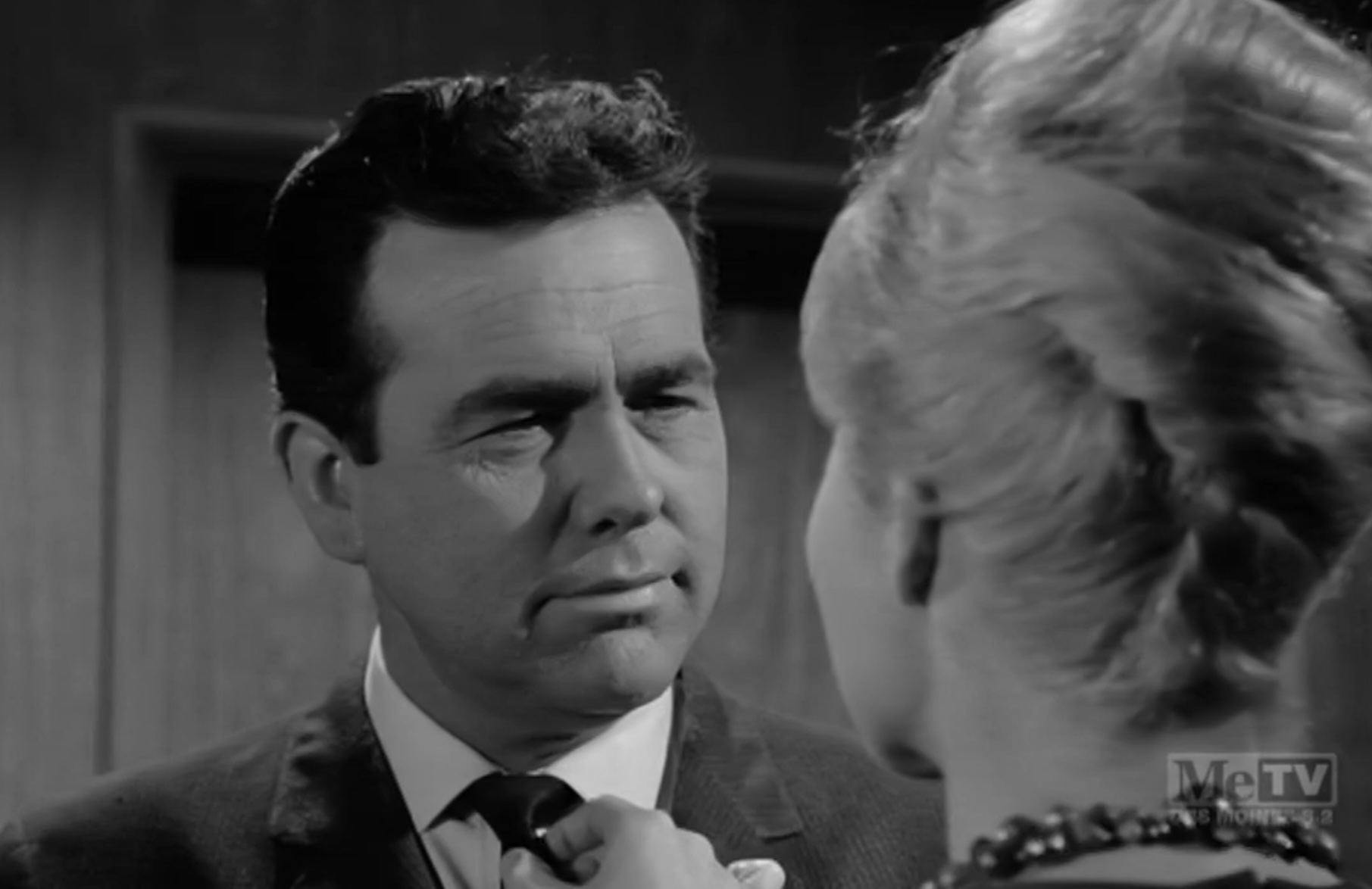
Sumner’s activities make everyone angry: Con, of course (Paul Carr) and his beloved, Irma Hodge (Natalie Trundy), as well as Irma’s mother Mona Hodge (the great Ann Rutherford). There’s trouble at the dental supplies business Hodge runs as well: partner Jack Talley (Chapman) is selling out, secretary Norma Fenn (Pat Priest) has nobody to flirt with, and there seems to have been some funny business with a new formula for metal-free tooth fillings. Leo Lazaroff (Dan Seymour) insists that the formula was stolen from his late brother by Hodge!
Sumner moves his family up to a lakeside resort after two attempts are made on his life. (The identity of that person is the first twist and a good enough one for you to discover yourselves.) Still, fate has it in for Mr. Hodge, whose death is one of the most dramatically filmed in the series! Con is arrested, and Perry Mason who had tried to locate the folk singer to give him a small inheritance, decides to represent him.
Ultimately, the choice of murderer boils down to two people, since most of the suspects are either too minor or too sympathetic to Con to let him suffer in court. The two men left are both seemingly sympathetic, kind individuals who would never hurt anyone – in short, the typical “surprise” murderer in a Perry Mason episode. Still, only one of them had the motive and the opportunity to pull this off, so you might not be terribly surprised when they are unmasked.
* * * * *
“I’d look after them myself, but I’m going away, too. I’m awfully sorry.”
I’ve made it quite clear on this blog, including in the course of writing this series of articles, that one of my favorite series of all time is The Dick Van Dyke Show. This is mostly due to the incredible cast, writing and all-around wonderfulness of the series, but it also has a bit to do with the fact that I knew one of its stars. (If you think this is going to be a Richard Deacon story – it’s not, but I promise I’ll get to him in a minute.)
My great-uncle Mel was a dentist. The joke is that his full name was Melvin Bleadon, D.D.S.. The fun was that his familial appellation was “Dentist to the Stars!” Uncle Mel knew a lot of stars, mostly funny men. He would go down to Palm Springs and play golf with Danny Thomas. And his very best friend of all was Morey Amsterdam, “The Human Joke Machine,” who played Buddy Sorrell on The Dick Van Dyke Show.
When I was around eight or nine, Morey and his wife Kay came up to San Francisco to visit Mel and his wife, Aunt Bernice, who was the younger sister of my grandmother Fay. The Amsterdams came over to my grandparent’s apartment on Green Street for a little gathering, and it was there that I got to meet my first TV star, who also happened to be a featured player on my favorite sitcom.
Morey was a super nice guy, very short, very witty, and not too high and mighty to talk to a mere kid. The apartment had a stunning view of the bay, including Alcatraz Island which, you probably know, used to be an infamous prison and now serves as a bleak little tourist attraction. Morey thought the abandoned prison was a waste of space and figured the best thing would be to put another Statue of Liberty on the island, the better to welcome huddled masses on both sides of the country.
Can you believe the chutzpah of the kid who said, “We don’t need another Statue of Liberty – one is special enough!” But that’s what I told Mr. Amsterdam, and he shook his head and said, “You know what, kid? I think you’re probably right.” I met him a couple more times through the years, including, sadly, at Uncle Mel’s funeral, and he reminded me of that conversation.
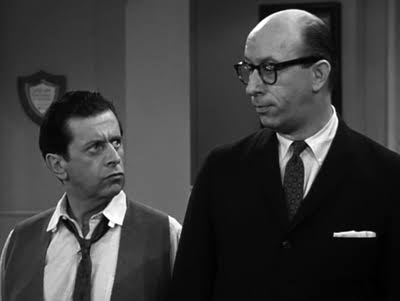
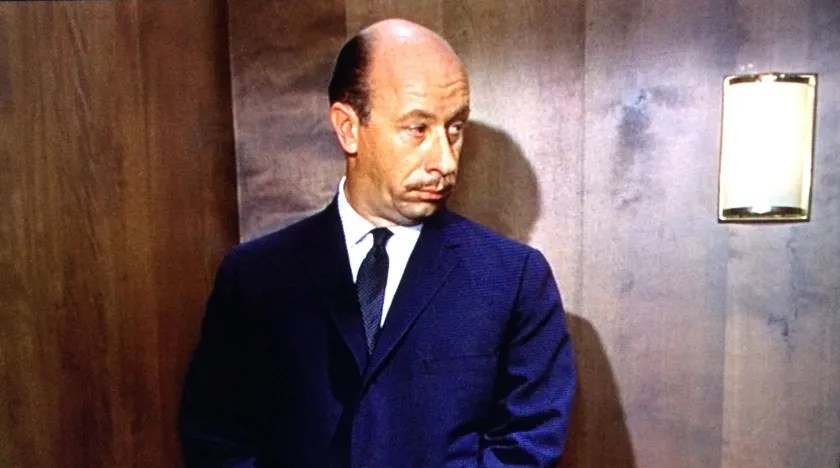
One of the running gags of the sitcom was Buddy Sorrell’s antagonism toward Mel Cooley, the producer of The Alan Brady Show, the variety hour that Buddy, Rob Petrie and Sally Rogers wrote for. Every time Mel entered the office, Buddy would hit him with zingers about his baldness, his intelligence, or the fact that he was Alan Brady’s brother-in-law. I suppose it was bullying plain and simple, but it was always funny, not so much for the things Buddy said but for the way that Richard Deacon, the actor playing Mel, reacted.
Deacon was born in Philadelphia and raised in Binghampton, New York. One of his high school classmates there was Rod Serling, and Deacon would eventually play a leading role in one of Serling’s Twilight Zone episodes, “The Brain Center at Whipple’s,” about a cold-hearted manufacturer who replaces every employee with machines, only to be replaced himself with Robbie the Robot.
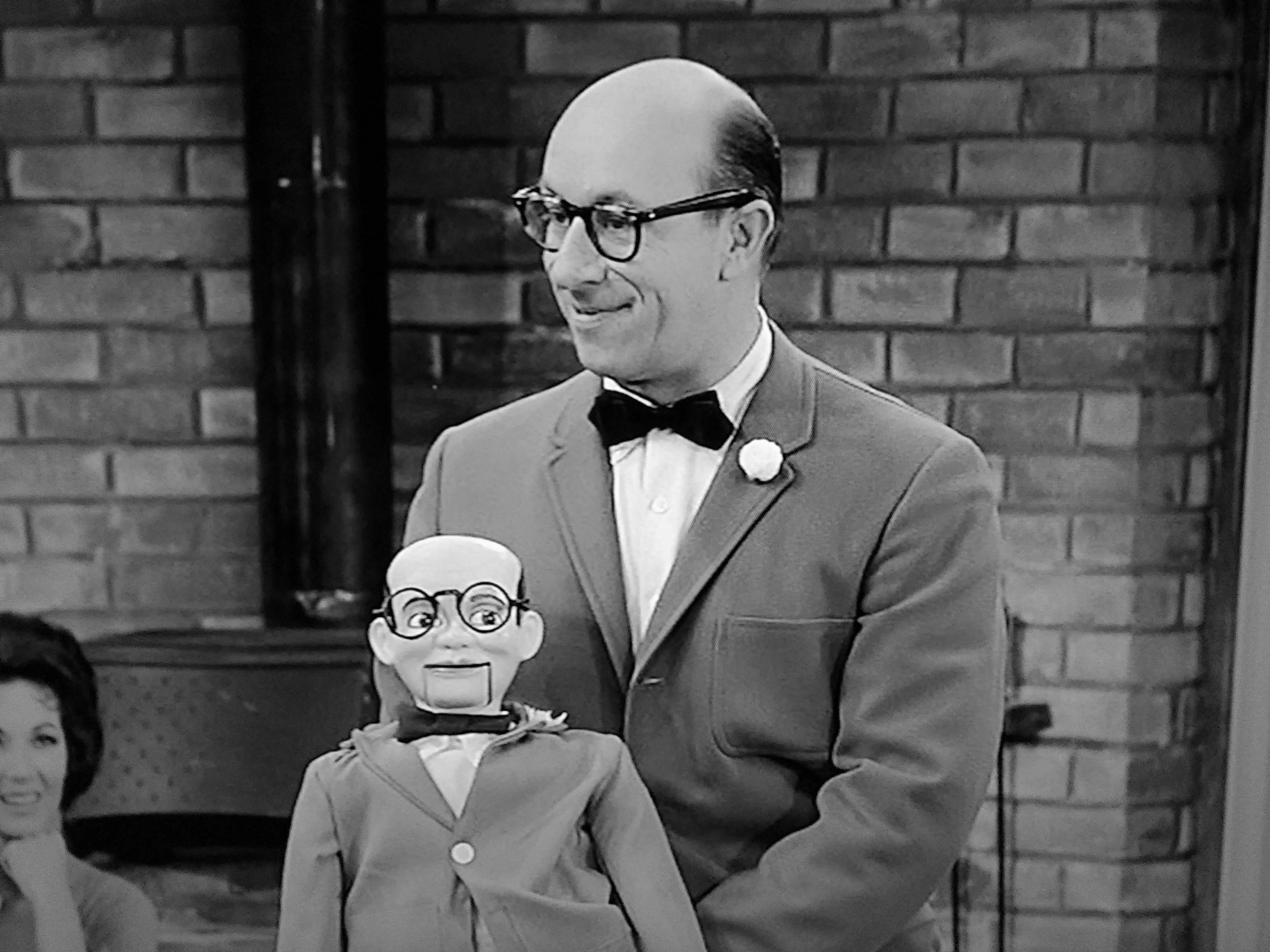
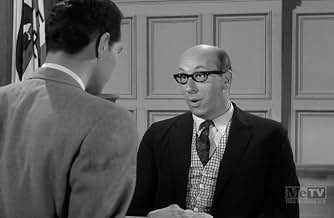
Deacon looked like a Madison Avenue drone and made use of that in many film and TV roles. He played a doctor in the prologue/epilogue that was added to Invasion of the Body Snatchers after audiences objected to the film’s bleak ending. And in The Birds, he plays Mitch Brenner’s San Francisco apartment neighbor who informs Melanie that Mitch has gone to spend the weekend at his home in Bodega Bay. I hate to think of Deacon getting eaten by birds; fortunately, we are spared that tragedy!)
In addition to playing Mel Cooley for five seasons, Deacon also had regular roles on Leave It to Beaver and The Mothers-in-Law. He also had a multi-part guest role on The Beverly Hillbillies – as Granny Clampett’s psychiatrist!! It’s odd to think of this dryly witty man appearing as a suspect or witness on Perry Mason, but that is indeed what happened on December 10, 1960, when “The Case of the Red Riding Boots,” the eleventh episode of Season Four, premiered.
This is a strange little family drama, where one thing after another happens that doesn’t ring true. Burt Farwell (John Archer, veteran of five PM episodes) is a divorced rancher – although it’s unclear why he divorced his beautiful and lovely wife Ann (Elen Willard) who is also the mother of his angry teenaged daughter Jill (Linda Leighton, four eps). Burt just wants his little girl to get along with his new fiancée, Rita Conover (Shirley Ballard) – except Rita is soooo evil and sooooo mean to everyone around her, including Burt, that I frankly don’t understand how she came to be engaged to the man or why she’s even there – except to get murdered.
Jill turns for sympathy to the new ranch foreman, Joe Dixon (Frank Maxwell, three eps), who seems awfully down on Rita (there’s a reason for that!) and who also warns Jill against ranch hand Rennie Foster, who has been seen fooling around with Rita and who seems like a bit of a moron – except there’s a secret between him and Joe that won’t be revealed for the longest time that seems to turn everything around.
Joe goes on trial for Rita’s murder, and Mason defends him because his old friend Ann Farwell asks him to. Frankly, though, I don’t know why Perry doesn’t throw his hands in the air and leave the courtroom: evidence is presented that he clearly knew nothing about, and his client keeps so many important things secret from him – in fact, everyone is lying to protect everyone else – that the only way Mason can solve this is due to the fact that it’s in Raymond Burr’s contract. In the end, the attorney prevents a dramatic courtroom suicide from happening and manages to reunite a divided family. But if you’re keeping count, that leaves only one suspect left, which makes solving this only a process of elimination.
You have to wait a long time to see Richard Deacon, who has a small part as a talent scout from Tennessee, complete with a Southern accent, whose little bit of information throws a giant wrench into Perry’s case. So, at least, it’s a fun cameo to wait for!
* * * * *
“What’s the matter? Is something wrong out here?”
William Tyrell Quinn, hereafter known as Bill, plays Sam, the cook in the diner in The Birds. While this may be a small role, I want you to remember that all day long Sam is cooking up fried chicken, turkey sandwiches and Birdseye peas, which means that the whole avian nightmare plaguing the world is probably his fault!
Bill was born in New York City in 1912. His mother, Lillian Tyrrell, was a film actress and Broaday chorus girl, and her son began performing in films and vaudeville in his teens. In 1934, he began working in radio, but from the silent era on he was an in-demand character actor on film. His career spanned seven decades and over 150 roles. Some of the most significant are Dr. McCoy’s dad in Star Trek V: The Final Frontier, Mary Richard’s dad in The Mary Tyler Moore Show, Felix and Oscar’s doctor in The Odd Couple (on TV), and a blind regular at Archie Bunker’s Place.
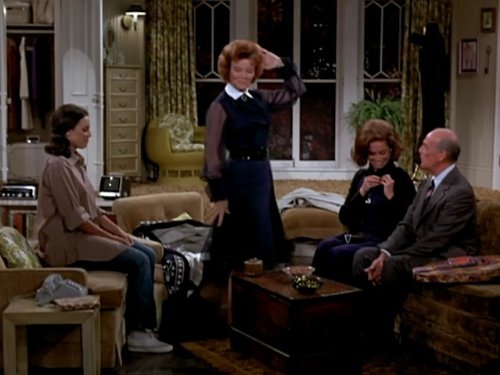
Quinn appeared in three episodes of Perry Mason, starting with an adaptation of The Case of the Substitute Face. He was also in “The Case of the Cowardly Lion,” which we covered when we talked about xxx xxx. Unfortunately, Quinn has little to do in his final appearance, “The Case of the Fickle Filly.” This was the eleventh episode of the same season and premiered on December 13, 1962. This one’s set in the world of horse-racing, and Quinn plays a minor role as a race commissioner.
The first quarter of this episode is one of the speediest in my memory, with two hours of exposition jammed into fifteen minutes. Jennifer Wakely (Joan Freeman) has been a horsewoman all her life, and while her father is recovering from a heart attack, she takes her favorite filly, Tiger Lil, to a fairground and races her three times. When the horse wins every race, Jennifer rejoices with boyfriend Brad Shelby (Robert McQuain), trainer Joe Mead (the great character actor Strother Martin, who appeared in four Perry Mason episodes before making cinema history in Cool Hand Luke by striking down Paul Newman and saying, “What we’ve got here is failure to communicate!”) and her father’s secretary Roberta Harper (Lisabeth Hush, 3 eps).
Everything goes wrong for Jennifer when a fire breaks out in the stables. The horses are saved, but Dad suffers another heart attack in the rescue and dies. Brad takes off and marries a rich older woman (Jennifer Howard, who appeared in five PM episodes and played the head pig nurse in the classic Twilight Zone episode, “Eye of the Beholder”) and then buys Tiger Lil from under Jennifer. And Uncle Emmett (Bartlett Robinson, veteran of six episodes), the executor of the estate, has to inform Jennifer that she’s broke. But nothing will stop a girl from reuniting with her horse, and before you can say, “Whoa, Nelly!” Brad is dead and Jennifer is under arrest.
Through the investigation and the trial, it seems like all Jennifer’s enemies want is the best for the girl. Ultimately, this proves to be true – every everyone but one person. The final confession is a long one because Mason delivers some last-minute information in court that exposes an unfairly hidden motive. Listen, a horse is a horse, of course, of course, but this episode is pretty much for the birds.
* * * * *
“Look at the birds of the air: they do not sow or reap, yet your Heavenly Father feeds them . . . It’s the end of the world!”
Like most of the others here, Karl Swenson appears in the diner sequence of The Birds weaving about and spouting apocalyptic warnings. He’s pretty much played for laughs – except, of course, he’s correct!
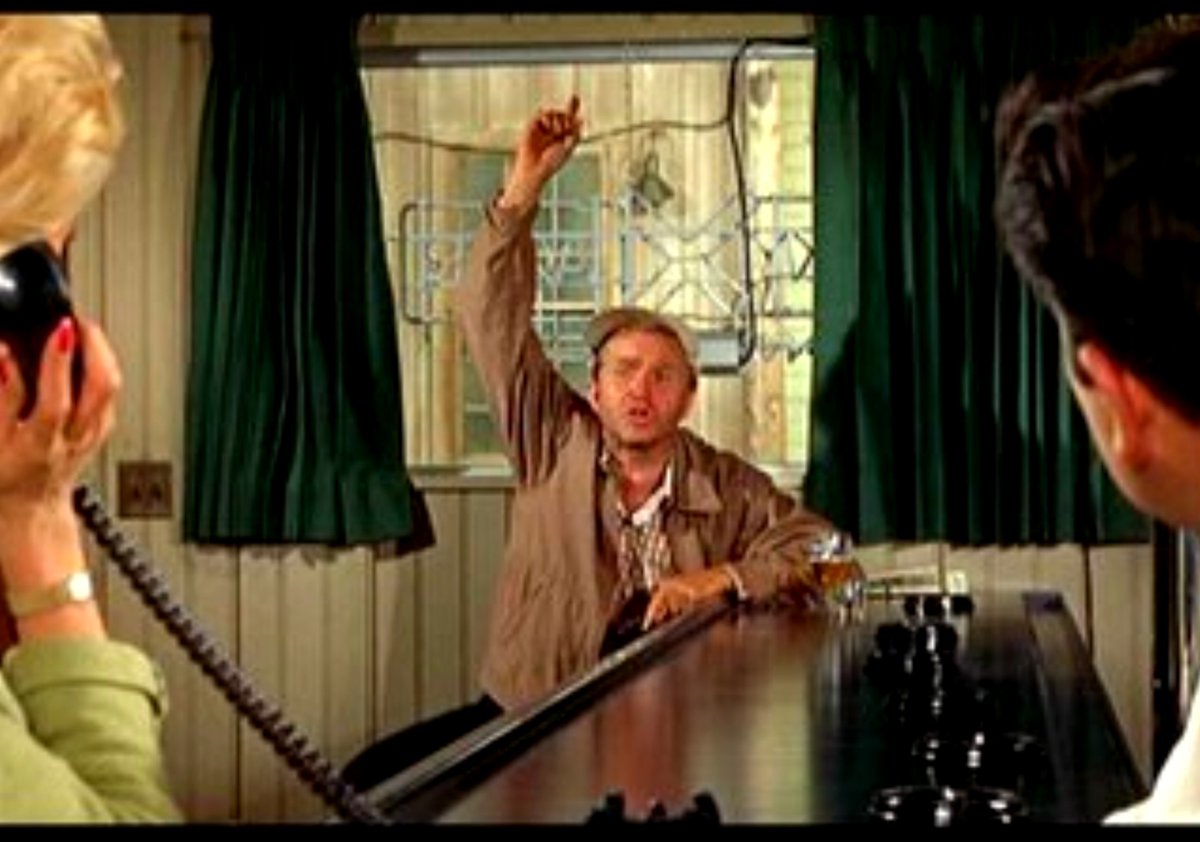
The son of Swedish immigrants, Swenson hailed from Brooklyn, NY and had a prolific career on the stage, screen and radio. For two years in the early 1930’s, he adopted the stage name of Peter Wayne and worked in Baltimore with the University Players. Some of his fellow unknown actors in the company were Margaret Sullavan, Mildred Natwick, Henry Fonda, Joshua Logan, and James Stewart.
Reverting back to his birth name, Swenson spent many years on the radio; of special interest to mystery fans is the fact that he played the title role in The Adventures of Father Brown in 1945. Two years earlier, a couple of wartime documentary shorts launched his film career. One of his creepiest roles is as a doctor in John Frankenheimer’s Seconds, starring Rock Hudson. In Judgement at Nuremberg, he played Dr. Heinrich Geuter, a lawyer representing Lehman Feldenstein, a Jewish merchant who had been executed under Nazi law for having a relationship with an Aryan girl and whose case provides proof at the Nuremberg trial of German atrocities.
Swenson appeared in four episodes of Perry Mason. We spent a lot of time discussing his series debut, “The Case of the Tarnished Trademark,” when we discussed Dark Shadows and Dennis Patrick. Swenson played the defendant and tripleddown on his Swedish heritage with the accent (yah, sure)!! Here we’ll discuss his final appearance, “The Case of the 12thWildcat,” the eighth episode of Season Nine, that premiered on October 31, 1965.
The Wildcats are a professional football team partly owned by Ellen Payne (Mona Freeman, three PM eps) and her husband Burt (Bill Williams, four eps). Ellen is a saint, and Burt is a hard-drinking, compulsively-gambling lout, who has dropped a hundred grand in Vegas betting against his team and now wants to sell his ten percent to tycoon Harvey Skeen (Roy Roberts, of Bewitched fame), even though Burt has no right to sell without Ellen’s permission. Skeen sends his emissary Judson Warner (John Conte, five eps) to close the sale onboard the train carrying the team down to Los Angeles, much to Ellen’s surprise and consternation.
Considering this is a pro ball team, the travel accommodations are terrible. And the team staff’s average age is sixty-five. Swenson plays “Unk” Hazekian, and if that’s an Armenian accent Swenson is sporting, I’ll eat my glkhark. The sports announcer hired by the team, Andy Grant, is played by veteran actor Regis Toomey, who appeared in Hitchcock’s Spellbound as well as in films like The Big Sleep and Guys and Dolls (as Arvide Abernathy). At one point, Andy announces that his wife is going to have their sixth child; considering that at the time of this episode, Toomey was sixty-seven, I assume Andy married well.
There’s also a coach in love with Ellen (Robert Quarry, who appeared in two episodes and played the vampire Count Yorga in two films), and all these fellows spend the first ten minutes of the episode coming up to Ellen and spelling out why they want to kill Burt. During the train ride, a chemical fire destroys the car where Burt was sleeping, and when the train stops, the police discover that Judson Warner is missing. Ellen is arrested for murder and accused of conspiring with Warner to kill her husband.
Sharp mystery fans will be able to spout off the SURPRISE TWIST ENDING before we get to the trial, so the fun here is really in the little trappings of the episode. Director Jesse Hibbs, who made a football film in 1953 called All-American, starring Tony Curtis, has fun combining old movie-making cliches with cutting edge experimental filmmaking. The train ride is reduced to a montage with the names of the cities (San Luis Obispo! Oxnard!) emblazoned on the screen. A visit to interview the coach during practice is clearly filmed in the studio with stock footage playing behind it. But when Perry interviews Ellen in jail, the camera cuts back and forth to their eyes, cutting off their mouths – it’s really weird. And the climax is a big chase scene in and around the Los Angeles Colisseum, that leads to the SURPRISE TWIST ENDING that will fool nobody.
* * * * *
I hope you’ve all had some fun exploring the fantastic actors who we have recognized but couldn’t identify from those Hitchcock films and Perry Mason episodes. So far we’ve covered sixty-five out of 196 original teleplays. I’ll try and get a couple more “Connections” posts out to you before I head to England!


Some deep cuts from The Birds!
Bill Quinn’s daughter married Bob Newhart, and there’s a story that may not be true, but it should be. When Bill Quinn was walking Virginia down the aisle, Tony Randall said, at a fully audible volume, “Look who they got to play the father!”
LikeLiked by 1 person
Oh, let it be true!
I taught drama in a beautiful school auditorium that was rented out to a Speakers Series. When Bob Newhart came, he didn’t want to walk downstairs to use the dressing rooms, so I offered the use of my office, which was right offstage. He wrote me a thank you note! ❤️
LikeLike
So happy to hear that story. Newhart was such a world-class talent, and it’s always encouraging to hear that talented people can be nice, too.
LikeLiked by 1 person