“Agatha Christie changed my life. I discovered her at the age of eight, when I had the good fortune to attend the world film premiere of Murder Most Foul (1964), which (weirdly enough) was held in a tent during a summer fete in Cheshire . . . I went home that evening in a happy daze and discovered my grandmother’s shelf of Agatha Christie paperbacks. I began to read The Murder at the Vicarage . . . and was hooked from page one. From that moment, I only had two serious ambitions in life. First, to read as many detective stories as I could find. Second, and even more important, to write and publish detective stories of my own.”
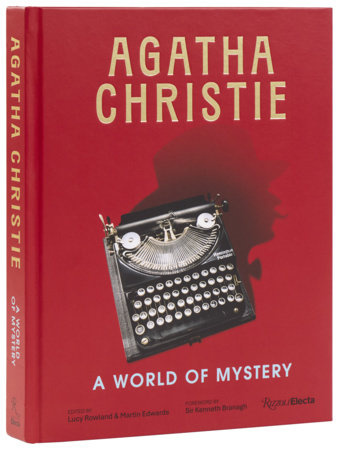
Crime novelist Martin Edwards tells us this story in his introduction to Agatha Christie: A World of Mystery, the volume that has been published as an accompaniment to the upcoming exhibition of the same name at the British Library. Beginning on October 30, visitors will have an unprecedented opportunity to examine rare photographs, documents and objects related to the life and career of Dame Agatha Christie. It has been 136 years since the author’s birth, 106 years since the publication of her first novel, and fifty years since her death – and still Christie is the Queen of Crime, the best-selling novelist of all time, and an object of fascination for her fans, old and new.
I became a new fan exactly one year after Martin Edwards; now, I suppose, we’re both old fans. I dreamed of writing mysteries as well: I managed a number of plays, but the novel never happened (at least, so far it hasn’t!) Instead, I became a student of Christie. I let her guide me to other authors. I taught about her and about classic mysteries to my students for thirty-one years. I directed some of her plays. And for the past eleven years, I’ve been writing about her in this space.
Every fan of Christie’s has an origin story to tell. I imagine those of the forty-seven writers, scholars, actors, and fans who contributed along with Edwards to this book are varied and interesting. Nowadays, thanks to television, new fans spring up all the time. I have no idea how many of them go on to read her books (and are somewhat surprised when the stories contained therein seem frightfully different to what they watch on TV!), but the books keep selling, biographers and specialists keep writing about her, and the adapters keep adapting.
And now a ten-month long exhibition of her life and work is about to open in London! Not bad for a shy trader in genre fiction, who loved both world travel and her homelife, who liked to garden, had a sweet tooth, loved to swim, had once cherished a hope of being an opera singer, adored her dogs, didn’t think much of the press or movie-makers, and liked to remark about how much she loathed the character who made her most famous and is at the top of the list of the most famous fictional detectives of all time.
I probably won’t be able to attend the exhibition, having just returned from England and needing both a financial and emotional recharge from the expense and exigencies of travel. For those of us who adore Christie from rather farther afield, this book, put together by Martin Edwards and the exhibition’s curator Lucy Rowland is a godsend. They have gathered together luminaries from the worlds of Christie scholarship, film and theatre, crime literature, and notable fans from around the world to put this volume together.
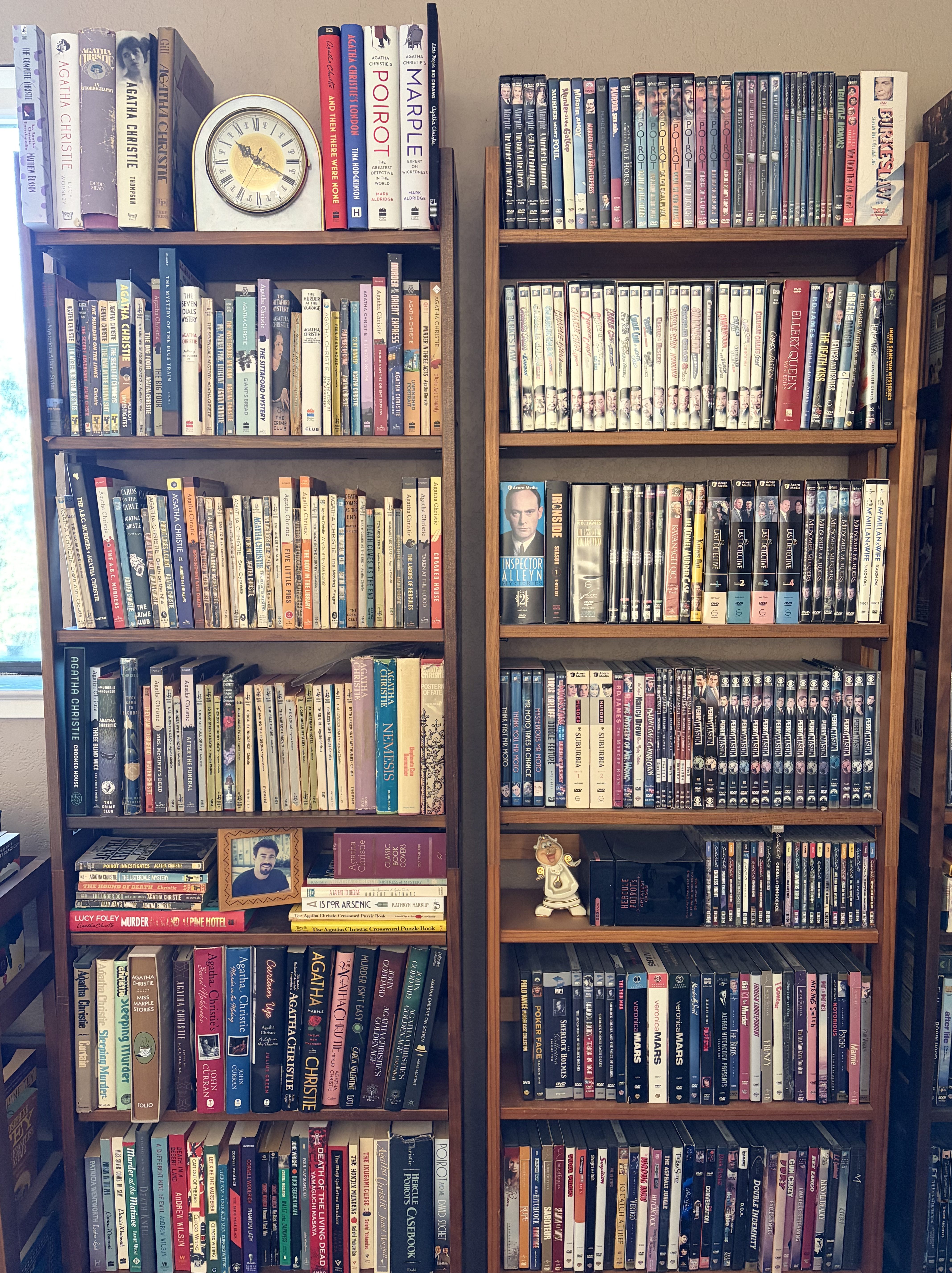
It’s not an inexpensive book. I argued with myself over whether I really needed it. I’m not a collector of fine books in any way. Here are my shelves of Christie books; most of them are the dogeared Pocket Book and Dell copies I bought in the late 1960’s. I have most of the books written by the scholars represented in this book. What, if anything, could I possibly learn about Agatha Christie that I don’t already know or couldn’t discover in the books I already own? For a few dollars more, I could buy a nice pair of slippers.
Depending upon your point of view, I won (or lost?) the argument. The book came wrapped in protective plastic. It looks special. I will not be sipping tea or eating my lunch while reading it. Rather than read the whole thing straight through, I intend to savor it over the next few weeks or months; therefore, instead of reviewing the book for you, I’ve decided to preview it, just in case you’re thinking of having a similar argument with yourselves about buying it.
The book begins with a foreword by Sir Kenneth Branagh. I’d be fascinated to know which of you, after reading this sentence, is impressed and who amongst you is bristling. Branagh has become such a polarizing figure within the Christie fandom that his presence here immediately sets up a dynamic which I, for one, find exciting. And since he opens with a simple statement of fact: “she is half-American,” – a fact I would like my British friends to well remember! – I think I come down on the pro-Branagh side of things.
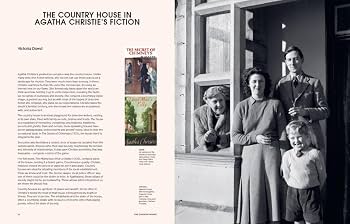
After introductions from both Rowlands and Edwards, the book is divided into five sections. First comes The Country House: Origins and Influences. Even casual readers of Christie can point to some of their favorite stories that brilliantly utilize this standard setting of mystery fiction. What her real fans know is that Christie herself loved houses. She grew up in the country, in her beloved Ashfield. Her sister Madge held court in nearby Abney Hall. Her home with Archie was named Styles. Her beloved summer home with Max was Greenway House. These homes and others shaped her life; most of them make their way into her fiction.
Part Two is called The Dispensary: Poisons and Process. The experience Christie gained as a V.A.D. in World War I and through her work in a hospital dispensary during both world wars gave her knowledge about drugs and poisons that would be of invaluable assistance in her fiction. This section discusses that and more about Christie’s understanding of the medical and legal systems that would play a part in her work.
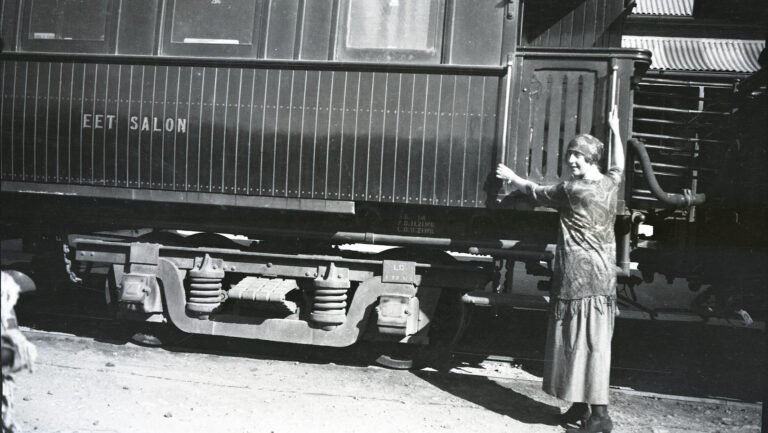
In Part Three, The Train: Travel and Inspiration, we learn about how Christie’s travels inspired her, both as a writer and a woman, and how it inspired her readers. Author Jean Kwok talks about “Reading Christie to Learn English,” while her fellow writer Vaseem Khan looks at Christie’s influence on Indian crime fiction, while Ragnar Jonasson examines the structures of her mysteries that give us such joy. Sir David Suchet talks about playing Hercule Poirot. (Yes, he’s done it before, but . . . who better?) We even get a piece on “Agatha Christie, the Surfer” from journalist (and fellow surfer) Peter Robinson.
Part Four is called The Dig: Archaeology and Experiences. Not only do we learn more about Christie’s experiences working with Max in the Middle East, but here we discover her passion for photography. (I had the opportunity to witness this first hand at the recent Festival when John Mallowan, Christie’s nephew, brought some “home movies” Christie had taken of Max at work on a dig.) We know how the archaeological work influenced some of the mysteries, but Caroline Crampton also finds connections to the creation of Christie’s alter ego, Mary Westmacott.
The final section deals with The Theatre: Audience and Legacy. Author and scholar Julius Green rightfully leads the charge here in an examination of Christie’s influence on the theatre world, including discussions of some of her most famous plays. Actor Zoe Wanamaker talks about playing Ariadne Oliver. And the section closes with how Christie’s legacy has moved past stage and film to embrace modern communications, like podcasting (Mark Aldridge and Kemper Donovan), foreign translation (Jonassen again) and adaptation (Lucy Foley).
If you really want to know about Agatha Christie, you have to look further than this book. You must read John Curran’s writings about the author’s notebooks. You need to explore David Morris’ website, collectingchristie.com, to find out everything you want to know about her publishing history. You should listen to All About Agatha and The Swinging Christies and Shedunnit. You need to watch the better movies, like 1957’s Witness for the Prosecution, 1974’s Murder on the Orient Express and 1978’s Death on the Nile, plus Suchet as Poirot and Joan Hickson as Miss Marple. You should peruse my blog! Above all else, you should read Christie’s novels, stories and her Autobiography. And if you’ve done all that and are lucky enough to be in London over the next ten months, buy a ticket for the British Library exhibition.
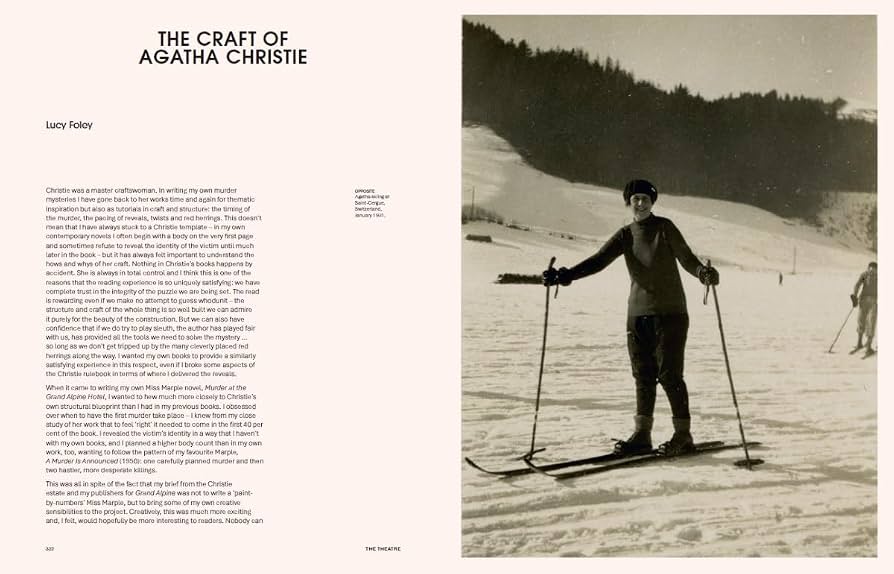
Agatha Christie: A World of Mystery is crammed with so many fabulous photos I have never seen, as well as careful descriptions of some of the exhibits, that it almost – almost – makes me feel as if I’m there. I’m happy to know some of the writers represented in this book, and their knowledge, their love and respect for their subject is evident on every page. To those of you who will be attending the opening of the exhibition on October 30, I will be there with you in spirit. No mystery author more deserves this honor. For the rest of us, Agatha Christie: A World of Mystery is a fitting souvenir, an exhibition in absentia, to savor for years to come.

