“It’s my contention, Della, that an attorney doesn’t have to sit back and wait until a witness gets on the stand and then test his recollection simply by asking him questions. If facts can be shuffled in such a way that it will confuse a witness who isn’t absolutely certain of his story, and if the attorney doesn’t suppress, conceal, or distort any of the actual evidence, I claim the attorney is within his rights.” Della Street nodded. “In this case,” Mason went on, “the facts keep shuffling themselves. Usually the police get the main suspect, but have difficulty finding the murder weapon. Here they have the murder weapon and have so many main suspects, they don’t know what to do.”
If you do a search of the phrase “Sin City,” you learn that this is a popular nickname for – where else? – Las Vegas, Nevada. Another phrase, “What happens in Vegas stays in Vegas,” conjures up images of some wise guy, all natty in spats, sporting a gat, and hosting the Rat Pack at his sumptuous gambling den on the strip.
Back in the day, my grandparents, Flo and Ed Koppich, loved to drive from San Francisco to Sin City and gamble. They were valued customers and were often comped breakfast at their hotel. Sometimes a gentleman in a slick suit would stop by their table and schmooze a little. Sure, he was packing a rod and had a record as long as your arm, but the customer service in Vegas, even from mobsters, was impeccable. If Ed or Flo won, they would return with a new fur for Grandma and cashmere sweaters for my mom and her sister. If they lost – well, as Tommy Edwards told us in 1958: “Many a tear has to fall, but it’s all in the game.”
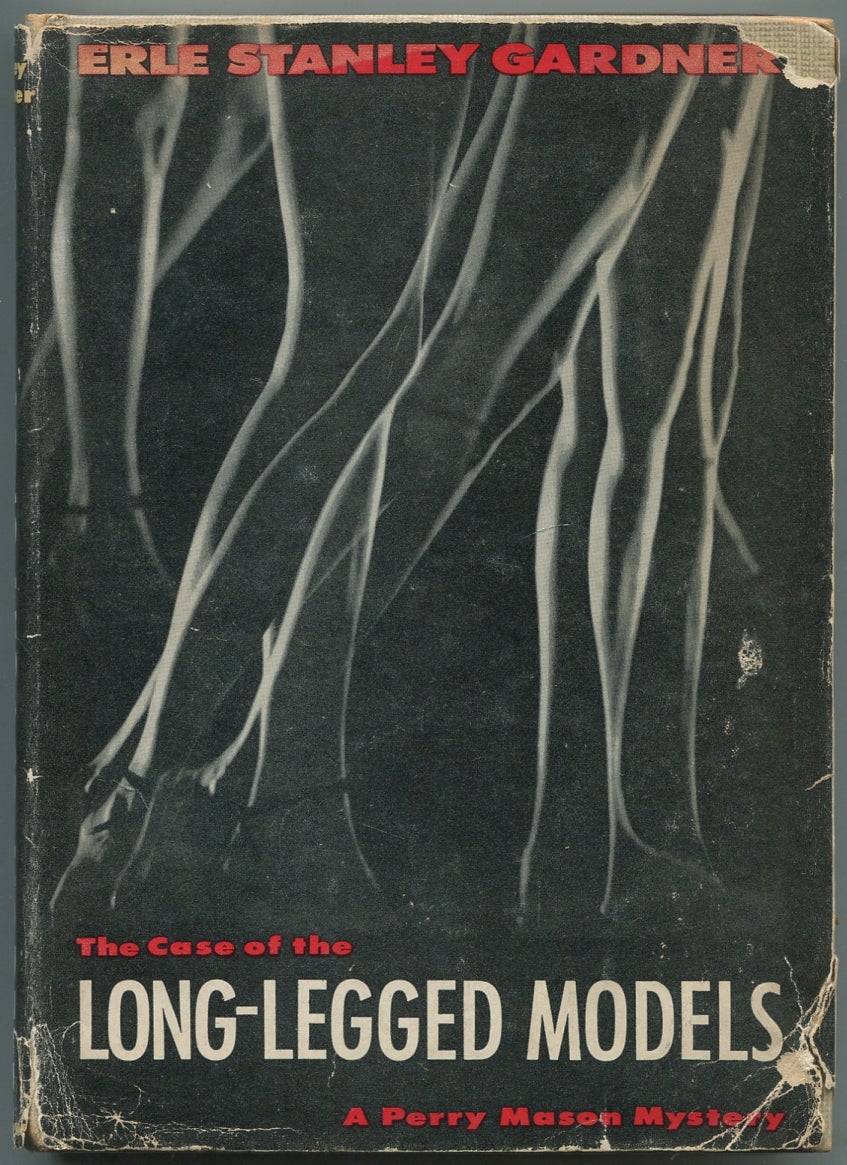
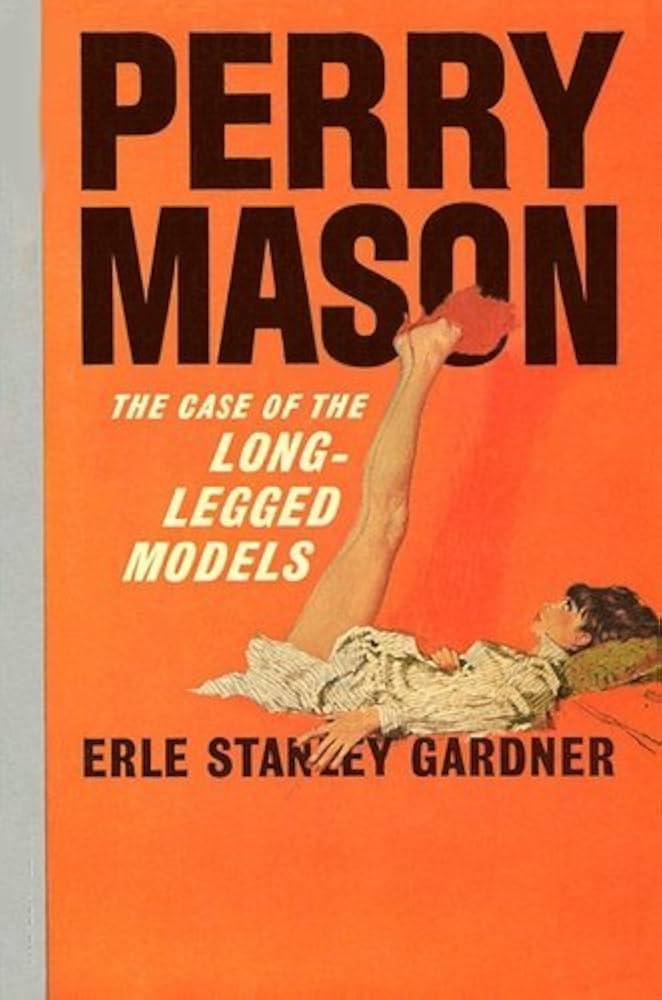
Speaking of 1958, Erle Stanley Gardner, who made extensive use of Las Vegas in his books (I’ll bet the city had its own special notch on his plot wheel) includes Vegas in the start of 1958’s The Case of the Long-Legged Models, the latest title in our year-long “Perry Mason and Girls! Girls! Girls!” celebration. In fact, it’s dirty doings in Sin City that bring Mason’s latest client into his office.
Stephanie Falkner is cool, beautiful and, of course, long-legged, and she has a whole mess of problems. Her gambler father has been murdered, possibly by the Mob, so that the syndicate can seize his small Vegas motel for a song and add the property to the new luxury resort they intend to build. A sinister shill named George Casselman, possibly a mob front or possibly acting on his own, has been busily buying up stock. But Stephanie has inherited forty percent of the place, and another fifteen belongs to Mason’s long-time client, Homer Garvin, Sr. Until recently, Stephanie was engaged to Homer Garvin, Jr., and her ex-future father-in-law has grown fond enough of her to want to do right by Stephanie with the stock – and protect her from the Mob.
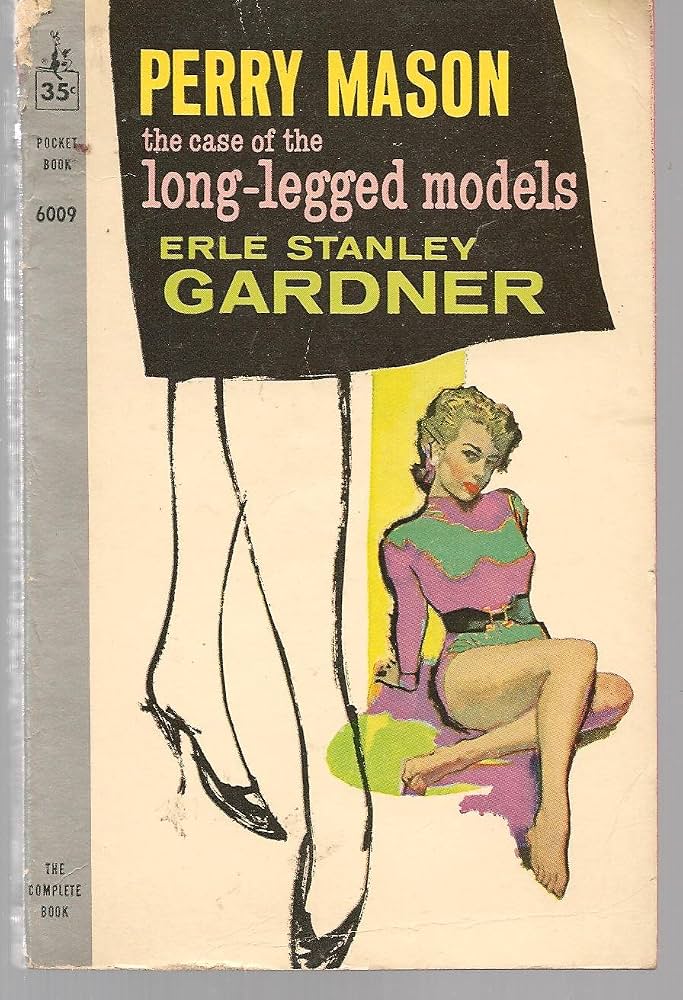
This tale has its roots in gambling, but it’s a sure bet that Casselman will be found dead, that Stephanie will be charged with his murder, and that Mason will be faced with several obstacles – and several more long-legged beauties – before he is required to call the real killer’s bluff in court. Sure, Perry comes up with a slick plan to confuse the D.A.’s office, but this plan goes awry almost immediately and causes no end of trouble. Sure, Hamilton Burger is absolutely one hundred percent surefire positive that this time he can get Mason disbarred for legal malfeasance, moral turpitude, and general contempt of court. Wanna bet, Mr. Burger?
Mason has some fun figuring out the whereabouts of three identical guns and causing courtroom fireworks with that knowledge. I has some fun, too, as I always do with a Perry Mason mystery. Still, this late entry rarely deviates from formula. Oh sure, Della Street may stick her neck out a little further than usual, and Paul Drake may be more cautious than normal. The biggest problem is that most of the small cast is so damn likable that there’s never any doubt who the murderer will turn out to be. And while they say getting there is half the fun (I imagine Grandma and Grandpa said that a lot as they drove to Vegas), this time the “getting there” feels like half as much fun as in the better cases.
I did enjoy a running gag involving one of the suspects, a go-getting young salesman who owns a used-car lot and tries to sell Perry Mason on a hot, barely-driven sports car. Their test drive together is a comic delight:
- Garvin: Ever driven one of them?
- Mason: No.
- Garvin: Get in, try it and overcome both your prejudices and your ignorance at the same time. Greatest little job on earth! Compact! Efficient! Snappy! Distinctive! That’s the kind of job you should be driving, Mr. Mason.
- Mason: Hang it! In a car like that I’d stand out like a sore thumb. I’d go to call on a client and a hundred motorists driving by would see the car parked in front of the place and would say, ‘Why, that’s Mr. Mason’s car. He must be in there calling on a client.’
- Garvin: Would that be bad?
- Mason: That would be fatal.
Frankly, I grew more invested in whether or not Perry would ultimately buy this car than I did in the murder trial. The answer to one of these mysteries is quite satisfying, while the other ends up feeling like an afterthought. I’ll leave you to discover which is which.
* * * * *
“The Case of the Long-Legged Models” premiered on May 17, 1958 as the thirty-third episode of the first season of Perry Mason. When you think of it, this is incredibly quick turnaround for an adaptation of a novel published that same year – except I saw two publication dates on my copy, which makes me wonder if this one was serialized first.
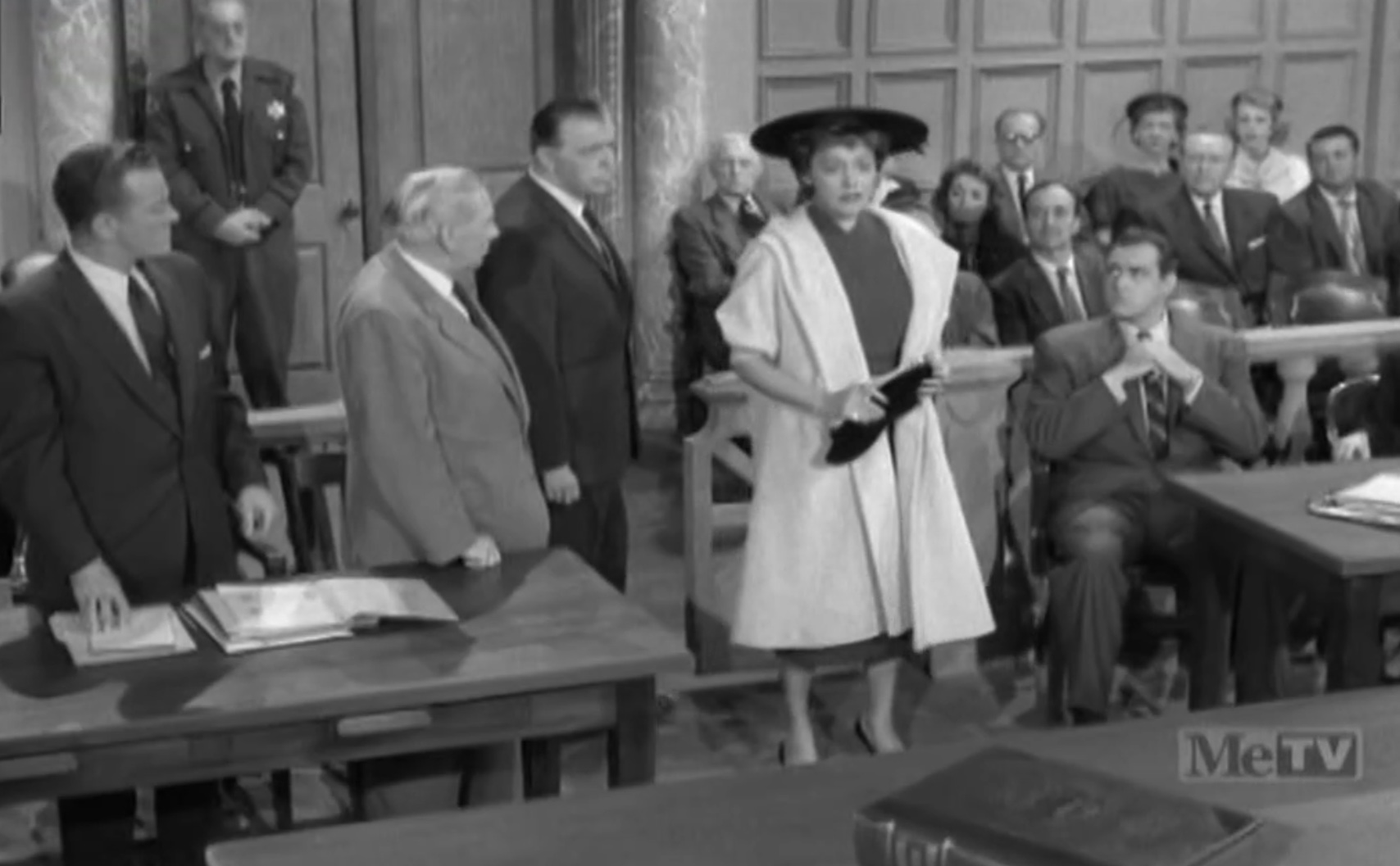
I think the most fascinating thing about this adaptation is that there are no long-legged models!!! All the characters are somewhat muted from the book except, possibly, the aforementioned used-car salesman. We do get an actual prologue set in Vegas which beefs up the character of the murder victim. The central romantic relationship, which was something of a May-September affair in the novel, becomes a creepy May-November relationship; veteran actor Lyle Talbot plays Homer Sr., and although he was only fifty-eight at the time, he looks much older. The fact that the episode pillages the novel for dialogue and yet leaves some of the book’s most charming details on the cutting room floor makes me appreciate Gardner’s writing all the more.
Next month, we stick with 1958, which seems to have been a good year for Perry Mason hanging around with models. This time, he defends one of them on a charge of murder – the same charge for which Mason himself got her arrested in order to save another client! Sound intriguing? See you in November!

