Our American society has long been set up to ease us into retirement around the age of sixty-five. We rise late, sip our morning coffee instead of gulping it, stop and smell the roses, start a blog . . . we’re living the good life with a Capital “G”!
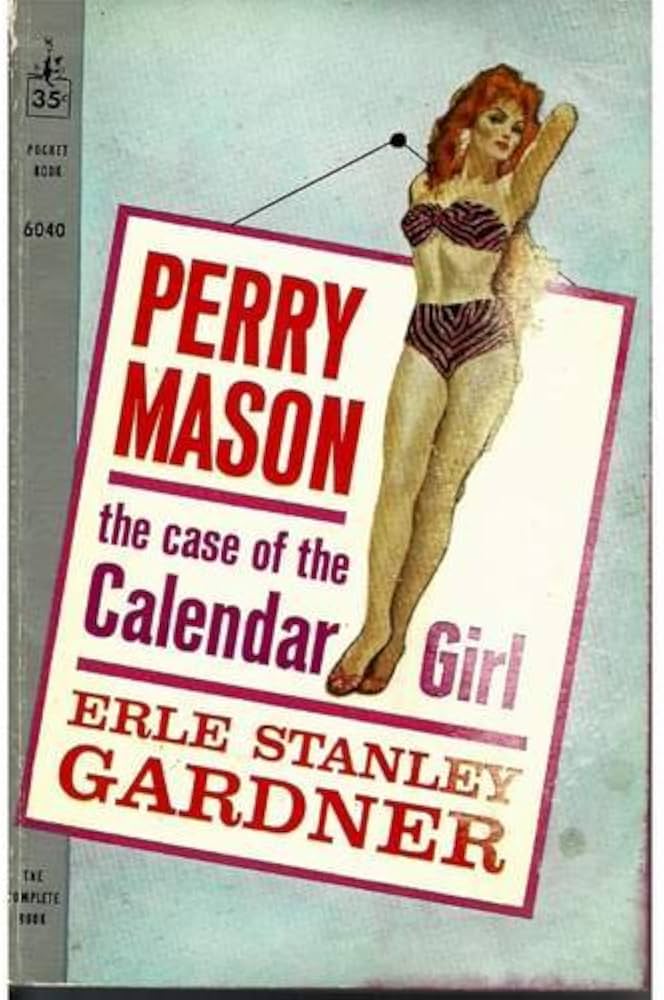
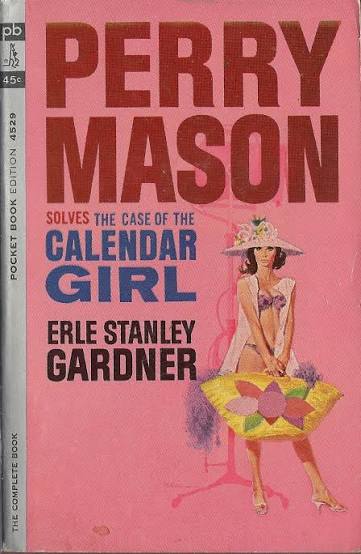
Not Erle Stanley Gardner! At sixty-five, he was still producing between three to five novels a year! In 1958, just shy of his seventieth birthday, he published four: one Cool and Lam adventure and three Perry Mason mysteries. All three of these titles qualify for our 2026 “Girls! Girls! Girls!” theme; last month, in fact, we covered the first of these, The Case of the Long-Legged Models. We’ll leave The Case of the Footloose Doll for another day and move on to The Case of the Calendar Girl, which features more models and more confusion about guns. So, yes, while on the surface one might feel that Gardner is phoning it in, or at least is relying on the spin of the proverbial plot wheel to get him through another book, there are a few juicy elements included here that make this sixtieth entry into the Mason canon worth discussing.
Variation #1: We don’t start in Mason’s office. Perry doesn’t make his first appearance until the beginning of Chapter Two, as a perfect evening is drawing to a close: “Perry Mason and Della Street, enjoying a leisurely dinner (I’ll bet it was steak with all the fixings!), had sat through the floor show, had danced twice and were finishing up with brandy and Benedictine when Della Street looked up with a slight frown of annoyance at the young man who was approaching their table with a businesslike directness which indicated that he had some definite objective in mind.”
The young man, George Ansley, has a doozy of a story to tell, all of which takes up Chapter One of the book. It involves a corrupt political operative, an automobile accident, and one or two beautiful women. Once Perry and Della get involved, Gardner tosses in a pair of snarling Dobermans, a thrilling escape over a wall topped with broken glass, and a couple more attractive ladies. And if you haven’t guessed that the politician by now is lying shot to death in his bedroom or his study – or, in this case, the photographic studio where he likes to take “tasteful nudes” of pretty girls, then this might be your first go-round with Perry Mason.
The hapless attorney is stuck with the task of interviewing one beauty after another in order to protect his client and himself, since he is in trouble with the police for disturbing the Dobermans. And, of course, each woman tells a story that directly contradicts everyone else’s. In other words, it’s the same old same old! But then we come to –
Variation #2: Perry is in a cafeteria enjoying a simple lunch of “stuffed bell peppers, diced carrots, fried eggplant, pineapple-cottage-cheese salad and a pot of coffee” when in walks Lieutenant Tragg. The two engage in lively banter, as usual, but then they go on an adventure together. This gives us a fascinating glimpse into the mind of one of our favorite characters and a chance to see how Tragg – and probably Gardner – views the difficult job of being a policeman. At one point, his complaints veer toward the personal:
“Think of when you get on the witness stand, and some smart lawyer, is walking all over you, asking you how the guy was dressed, what color socks he had on, whether he wore a tie pin, how many buttons on his vest, and every time you say you don’t know, the guy sneers at you and says, ‘You’re a police officer, aren’t you?’ . . . and the jurors just sit there and grin, getting a great kick out of seeing some lawyer make a monkey out of a dumb cop.”
People who read a lot of Perry Mason novels might be shocked at how little time the attorney actually spends in court. In my experience, the trial, as it were, might only cover one or two chapters within the last quarter of the novel. But in Variation #3, the trial here begins just shy of the book’s halfway point. This time, the assistant district attorney is sharper than usual and the judge has strict notions about what should be accomplished in a preliminary trial and that does not include “dramatic developments” on the part of a certain defense attorney who is famous for them!
The fun of this trial, therefore, is watching Mason slowly change the judge’s mind. Which leads us to Variation #4: in order to cast doubt on his client’s guilt, Mason heaps piles of evidence against another suspect. And then, once he gets the charges dismissed and the other suspect is arrested, Perry Mason takes her on as a client and gets her acquitted!
I wish I could say all of this results in a great example of Mason at his finest; unfortunately, the mystery here is weak, and the guilty party is more obvious than usual. We also are treated to a more than usually smutty attitude toward women. There’s a moment where the judge is ogling nude photos of the defendant that is a bit disgusting; on the plus side, at least, Mason uses those photos to prove his client’s innocence. In conclusion, this may be one for the completists, but at least we get to see Della dancing and getting athletic with Perry. There’s too little use of Paul Drake this time around, but the extra bits with Tragg, plus some subtler than usual gloating by D.A. Hamilton Burger (before his inevitable sputtering downfall), make up for the loss.
* * * * *
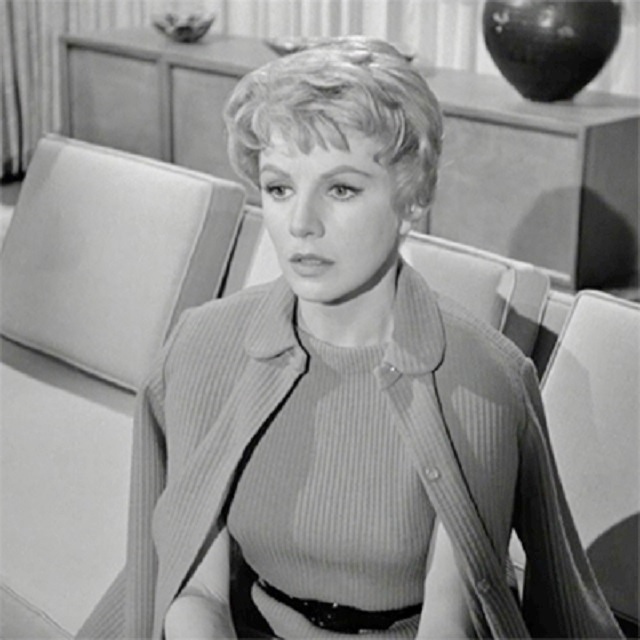
I’m not accusing Erle Stanley Gardner of writing these later books specifically with the Perry Mason series in mind. But that opening chapter plays really well in the adaptation, which debuted on April 18, 1959, six months after the book was published, as the 24th. episode of the second season. It’s a reasonably faithful adaptation, although it includes a scene that I would argue subverts the solution it presents. At least it features a fine performance by Kasey Rogers, who, under the name Laura Elliott, has played Miriam, the faithless wife of Farley Granger’s beleaguered hero in Alfred Hitchcock’s Strangers on a Train. (She would later go on to take over the role of Louise Tate in Bewitched.)
Next month, we end the year with a 1959 title that promises lots of intrigue, according to Barzun and Taylor: “The court scene is excellent; the characters, though thin as usual, are amply credible; and the pace never flags.” Sounds like a reasonably good way to bring our Girls! Girls! Girls! saga to a close!

