Happy Thanksgiving to all! Today I’m giving thanks for my family and my health, my friends in and out of the blogosphere – and to Noirvember itself! That word was invented back in 2010 by Marya E. Gates, a Chicago-based writer and critic, who thought the combination of the month and the style would nudge people to watch as many films noirs as they could each November. (You can hear her on recent episodes of my favorite film podcast, Screen Drafts, co-creating a list of the best films noirs directed by women – Marya knows her stuff – and, co-commissioning a draft of Robert Mitchum’s best noirs. In fact, Marya will be moderating, along with host Clay Keller, a series of noir-centered drafts each year at this time, up through the 20th anniversary of the “Noirvember” moniker’s creation in 2030! Good times!)
I’m happy, and a bit relieved, that this portmanteau was created by a woman because, on the surface at least, women did not do well by classic film noir. Some noirs do away with women altogether. (Note, however, that one of the best of these testosterone-fueled films, 1953’s The Hitch-hiker, was directed by a woman, Ida Lupino.) Of the rest, women are generally depicted in one of two ways: as loyal helpmeets, either secretaries or wives (or secretaries who will become wives), or as that epitome of evil, the femme fatale.
As far as I can tell, both types of women were invented by men (I could only find a few noir titles that were co-written by women), and it tells you a lot about our sorry sex. The good girls tend to be dull and are easily put aside by the bad girls, while the bad girls will destroy you. Over the course of the last few months, in researching for both the recent Dead Men Don’t Wear Plaid Draft and in watching all those Perry Mason episodes, I’ve been inundated with home-wrecking, soul-crushing women. Men leave their wives and mothers for these girls, commit crimes for them, and are punished with the loss of all they hold dear: their freedom, even their lives.
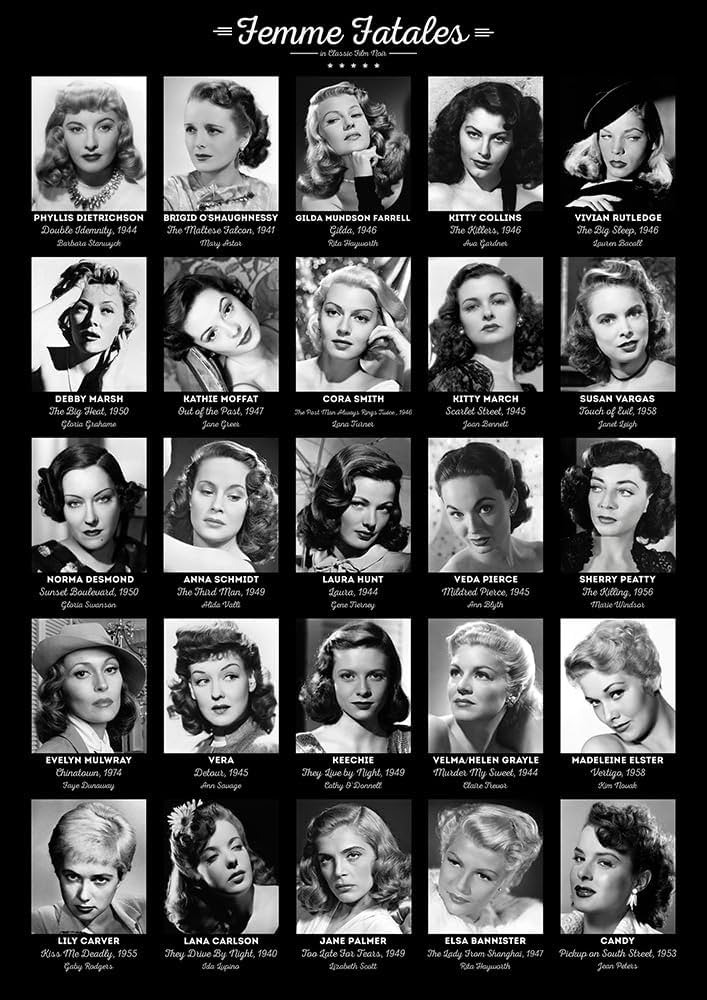
We don’t want to think too hard about this because it will spoil all the fun. But the monsters who created the femme fatale did so with dichotomous purposes in mind. First, these villainesses stand as a warning against women who can thrive on their own, who wax ambitious, who use their sex as a trap for money or power. Then producers cast the most beautiful women they can find to lure men into the theatre, to titillate them, get them all hot and bothered, and then let them down with a crash. Don’t you dare fall for Yvonne de Carlo! Watch it when you stare at Stanwyck’s anklet! Careful when Martha Vickers bites her thumb – you’re next!!!
Women have been getting a bum rap since long before film noir entered the picture. Think of the lustful Madame Bovary, the gluttonous Marie Antoinette, that trouble-maker Saint Joan! Think all the way back to Eve, all naked and yearning to be Adam’s partner, not just a literal extension of his being.
But I’m wading too deep into these waters. Nowadays we watch classic noir and readjust our perspective on these characters. Are they evil? Sure. But they’re also smart and funny and fun. And they are the progenitors of a whole new generation of interesting women in film whose goals and dreams are as complex as those of men. In modern noir, the femme fatale can be the hero (Bound), and a woman can be a flawed and troubled protagonist as much as a man (Red Road). The film industry goes through waves presenting these women because, let’s face it, the film industry has always been a patriarchal system, rife with misogyny. Still, the femme fatale is often the most fascinating character in the movie, and while many of them are very bad indeed, they are much more interesting than, say, the male villains in a noir.
With that, I’d like to present my list of the Greatest Femmes Fatales in Classic Film Noir. If your favorite isn’t on here, that’s okay: my viewing history and knowledge is imperfect. I would love to hear your thoughts on the characters I’ve selected and get your suggestions of those I may have overlooked. Slip them in the comments below and help me grow my own list of favorites.
* * * * *
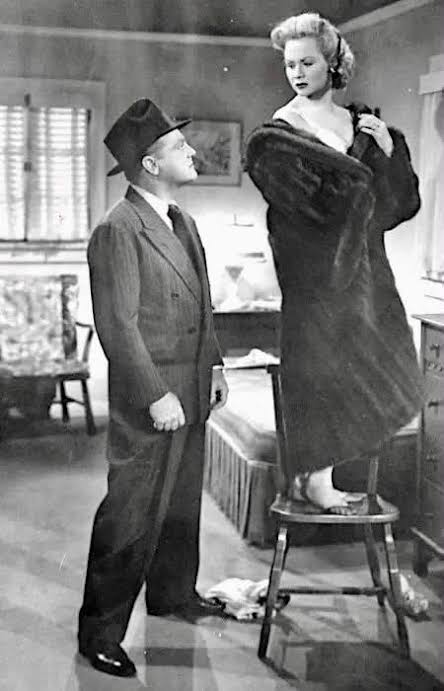
12. Virginia Mayo as Verna Jarrett in White Heat (1949)
It’s not a huge role, but I love Virginia Mayo here. She’s so freaking bored with her life tending to her psychopathic monster of a husband, Cody (James Cagney) and dealing with his abominable mother (Margaret Wycherly) – and she does deal with Ma finally! Mayo lights up every scene where she appears in this otherwise testosterone-fueled crime movie; I only wish we got to see more of her before she, like everyone else, gets what she deserves in the end.
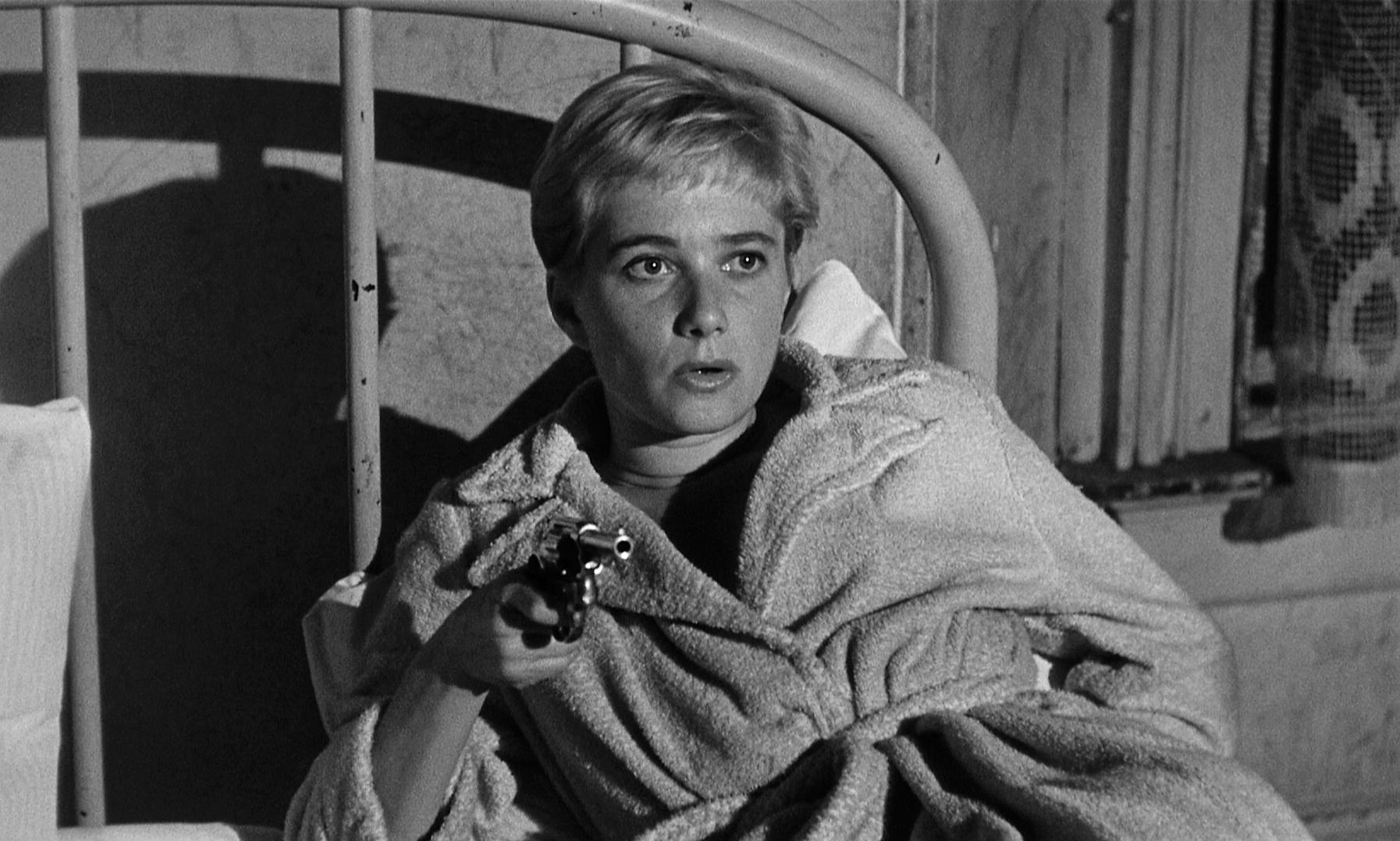
11. Gaby Rogers as Lily Carver/Gabrielle in Kiss Me Deadly (1955)
Rodgers’s might be the most offbeat performance on this list. A German actress/director who only made two films, she scored big in Robert Aldrich’s adaptation of Mickey Spillane’s 1952 Mike Hammer novel. Rogers plays Lily Carver, the roommate to poor doomed Cloris Leachman. She tells Mike Hammer that she is afraid, that she is in danger . . . but there’s something a bit off about her. It turns out that this scrawny little waif is the most dangerous woman – and she proves it by shooting Mike Hammer and then unleashing Armageddon on the world. We can applaud her end . . . but it might be too late for the rest of us. Her part is rather small, but she makes a big bang when she’s onscreen.
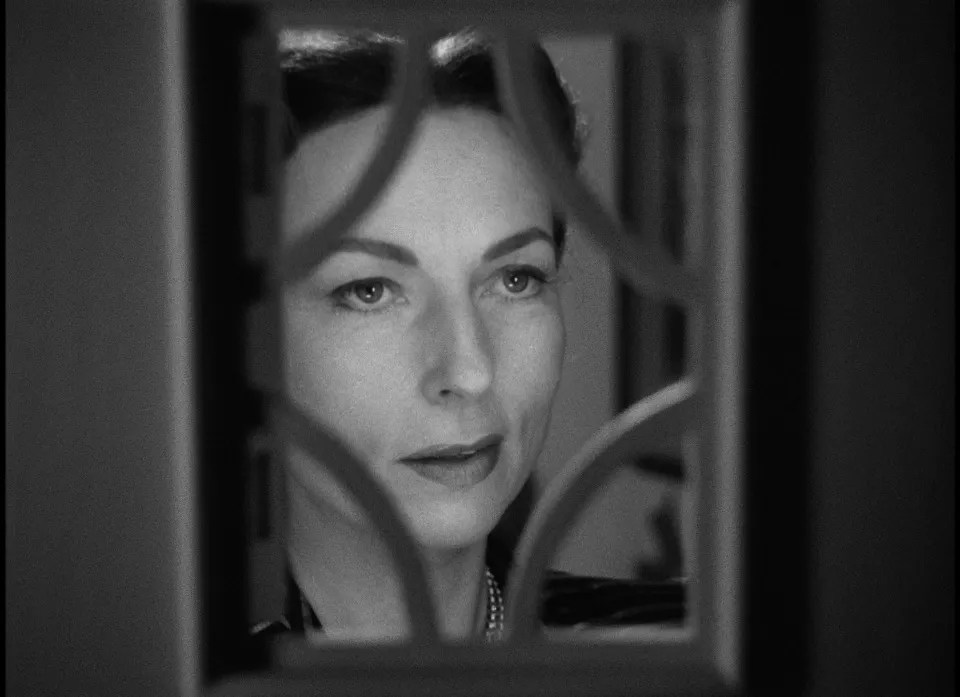
10. Agnes Moorhead as Madge Rapf in Dark Passage (1947)
I would wager that there are two things that most obsess fans of this film: first, it stars Humphrey Bogart, and yet we don’t see his full face until over an hour into the movie. It’s my favorite use of the subjective camera, and it’s a testament to Bogey’s talent that he still carries this film even when he’s not onscreen. Secondly, the film co-stars Lauren Bacall, and she has never been more beautiful or sympathetic opposite her beloved Bogart. It’s neither her best performance nor their best film together, but they ooze chemistry when they share the screen, and it’s a testament to her presence that the chemistry is there even when the camera focuses solely on her.
But, oh, this film wouldn’t be a noir without Agnes Moorhead. Madge Rapf isn’t particularly beautiful; she’s also arch to the point of meanness, and there’s something cold and nasty about her when she becomes sexually charged. She’s vaguely repellent, which perhaps makes her more of a straight-on villainess than a femme fatale. But hers is one of my favorite noir performances by a woman, and her ultimate fate is a highlight of the film.

9. Lana Turner as Cora Smith in The Postman Always Rings Twice (1946)
Like Jack’s mother in Into the Woods, I wish a lot of things: I wish I liked Postman as a film more; I wish I liked Lana Turner as an actress more. But I can say that she cuts a fine figure in the film as Cora, whose dreams are actually quite small: she wants to own and run her husband’s diner. To that end, she embarks on an affair with handsome drifter Frank Chambers and goes to great, if nearly hopeless, lengths to murder her husband.
Cora is much worse in the novel: she harbors contempt for her husband because of his working-class Greek heritage (excised in the film) and her desire for Frank is more overtly sexual and frankly sado-masochistic. But Turner is excellent at portraying Cora’s self-serving ways and, given the constraints the censor put on her, manages to convey a lot with a mere glance. In the book, her death in an auto accident while Frank is driving happens by pure chance – divine retribution, if you will, for Frank is wrongfully convicted of Cora’s “murder.” The movie has to further clarify its demand for morality by having Cora “cause” the accident by being too alluring to Frank to let him concentrate on his driving.
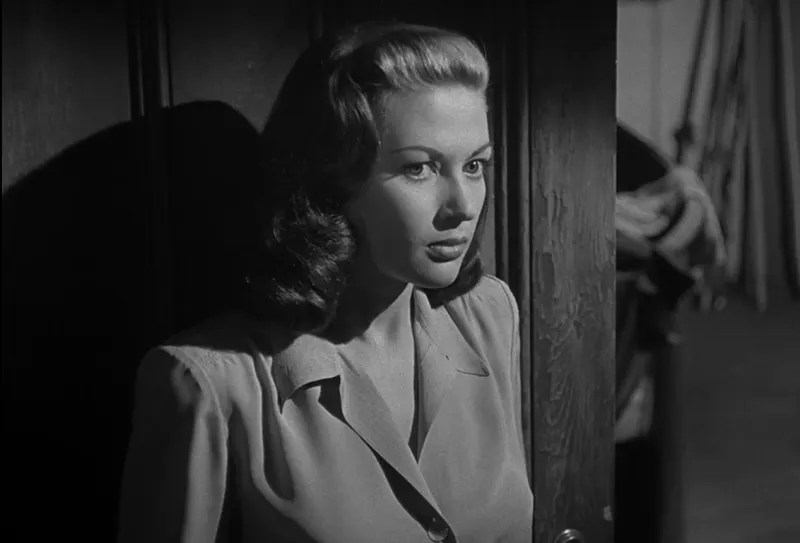
8. Yvonne de Carlo as Anna Dundee in Criss Cross (1949)
This was directed by Robert Siodmak, and in its invocation of post-war Los Angeles, it is visually stunning, thanks to the camera work of Franz Planer. Like so many actors who achieved their greatest fame playing a silly TV character, Yvonne de Carlo often gets overlooked, but she excels here as the woman who Burt Lancaster can’t get out of his heart. The best noirs are the ones where the so-called hero is completely aware of his fatal flaw and eventual doom, and Lancaster conveys that beautifully here.
When I watched this film five years ago, in a double bill with Brute Force (also featuring de Carlo), I was struck by the feeling that Anna is truly a modern woman, or, as I put it then, “a woman who would gladly embrace domestic bliss, so long as it doesn’t tamp down her natural instinct to have, and be, fun.” In 1949, she is punished for her exuberance and sensuality: the bad man in her life beats her, and the good man first shames her and then chooses criminality to win the heart of a woman whom he judges as only “wanting” evil. She is ultimately punished for her willingness to “push back against the idea that happiness needs to be muted and proper.” And while it’s likely that 1949 audiences were meant to shake their heads in pity and admiration for Lancaster as he goes down in Anna’s arms, he really is part of the problem here.
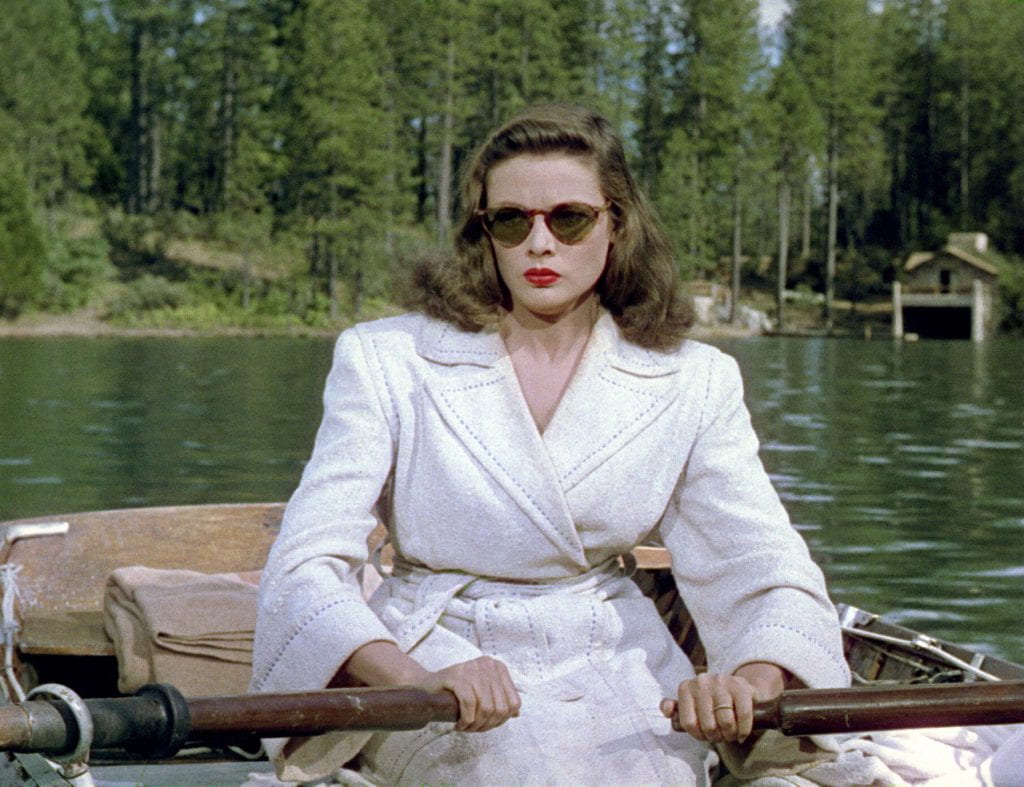
7. Gene Tierney as Ellen Berent Harland in Leave Her to Heaven (1945)
So much of this film stands out from the rest: it’s one of the only noirs on the list that spends most of its time in the light of day and in the countryside (one other film here does that to even more powerful effect). It’s also one of the only films here that is in color, which accentuates how utterly beautiful Tierney is as Ellen, a classy Boston sociopathic, er, socialite who falls for an idiotic novelist played by Cornel Wilde.
If only Richard Harland had noticed when he met Ellen Berent on a train how intently she stared at him, he might have stood a bit of a chance to resist her charms. If only he had paid closer attention as she rode astride a horse, scattering the ashes of her adored father across the New Mexico landscape . . . Richard might have concluded that Ellen was batshit crazy!
Alas, he falls in love with the woman and marries her, leading to a path of death and destruction that nearly annihilates the writer. Tierney is so good at playing evil here that it is painful to watch. And while she has to get her comeuppance – the censors said so! – her hit list is unforgettably awful.
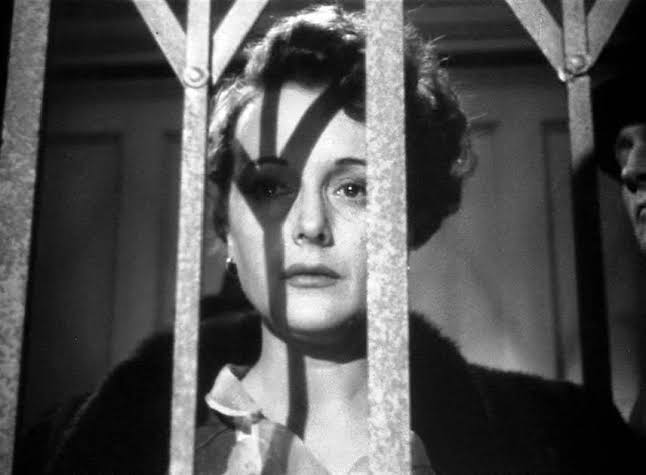
6. Mary Astor as Brigid O’Shaughnessy in The Maltese Falcon (1941)
People have argued since 1941 over whether or not Astor was miscast as the deceitful Brigid. I side with the pro-Astor contingent, as I find her ability to move back and forth from a classy dame to a hissing cat quite effective. She more than holds her own with her fellow conspirators Greenstreet, Lorre, and Cook, Jr., and if you never quite believe that she and Sam Spade will get together well . . . I think that’s on Bogart, who seems almost allergic to women as sexual playthings. (See him sneer at Mrs. Archer!) Plus, he’ll always have Effie, my favorite “good girl” in all of noir. That’s okay, though: watching Astor standing dead-eyed in the elevator at the end, the shadows making it look like she’s behind bars as the elevator goes down, is the best!
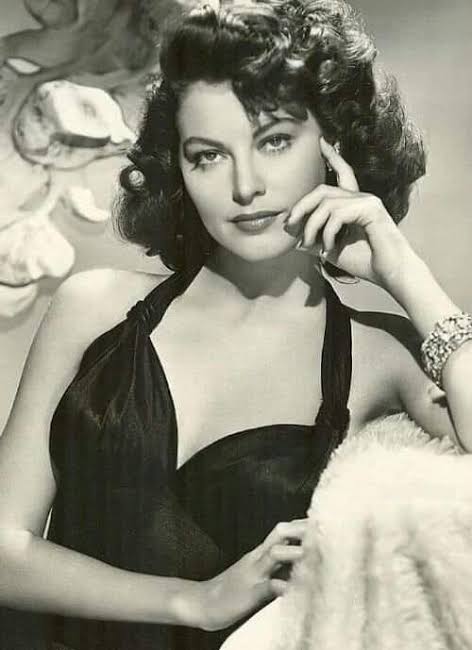
5. Ava Gardner as Kitty Collins in The Killers (1946)
Believe it or not, I didn’t get to watching this one until this year, in preparation for The Plaid Draft. The opening alone makes it a classic, with two dead-eyed killers coming into a small town and gunning down the hero of the film within the first twelve minutes. (Maybe this is because the opening covers the plot of Ernest Hemingway’s short story.) This isn’t a new phenomenon in noir: the intriguing part is the degree of resignation – maybe even welcome? – with which The Swede (Burt Lancaster) accepts his fate.
This brings about the inevitable flashback, where the Swede gets involved with gangster “Big Jim” Colfax (Albert Dekker) and his girl, Kitty Collins. For much of the movie, Kitty captures your attention by just being there, standing by a piano (that sultry voice singing “The More I Know of Love” is Gardner’s own!), or lounging on a piece of furniture.
Kitty reveals her true colors at the end when she begs her dying lover to absolve her of any criminal responsibility with his final breath. Here’s something I get a kick out of: Bosley Crowther, the notoriously fussy film critic of the New York Times back then, loved the film and praised Robert Siodmak’s “subtle” direction. One imagines Crowther didn’t know that Siodmak was so frustrated with Gardner’s inability to achieve Kitty’s emotional fragility at the end that he threatened to beat her until the terrified actress laid it all out onscreen.
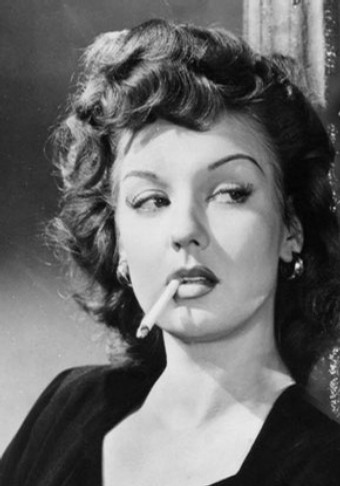
4. Ann Savage as Vera in Detour (1945)
Is Vera the most vicious woman in all of film noir? That’s what Al Roberts (Tom Neal) the loser at the center of Edgar G. Ulmer’s masterpiece, would have us believe. When he hitchhikes across the country in pursuit of his beloved Sue, who has fled to Hollywood, Al makes the first in a series of terrible choices, the worst of which is picking up this bedraggled, possibly dying, and totally horrible creature, who takes him further down the pit of despair than he ever imagined himself going. When he stumbles into killing her in the end, it’s almost a relief for the viewer as well, so shocked are we at her dirty hair, frowsy appearance and grating voice.
It was Ulmer who uglied up the pretty actress and pushed her to become what Savage herself later described simply as “a real B-I-T-C-H!” But think about this: the whole film is a flashback related by Al to the audience to explain why he finds himself ready to be arrested. This monster he describes to us . . . is she really as bad as he presents her? Or is she just an excuse for the terrible things this sorry excuse of a man has done? The answer may be worth pondering, but the resulting film is a mesmerizing nightmare.
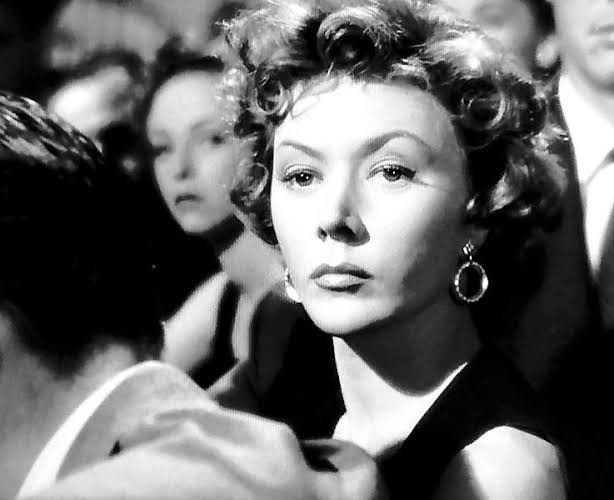
3. Gloria Grahame as Debby Marsh in The Big Heat (1953)
Here’s the thing about Gloria Grahame: even when she plays a bad girl, you can’t help but like her. She rarely takes herself too seriously; she’s more devil-may-care than devilish. She’s serious in In a Lonely Place, but there she’s the good girl. (And a more complex, troubled good girl in noir there never has been.) You could call her the femme fatale of It’s a Wonderful Life, a fantasy upon whose noirish antecedents more than one scholar has commented. Violet Bick is one of the most fascinating characters in the film: in George’s nightmare of Potterville, she’s a half-mad strumpet, despised by all. That’s because Mr. Potter views her through the lens of the patriarchy. In George Bailey’s world, she is endearing. (“This old thing? I only wear it when I don’t care how I look.”)
In The Big Heat, Debby Marsh makes the mistake of thinking she’s grabbed the gold ring by hooking herself up with psycho mobster Vince Stone (Lee Marvin). It makes her careless. The assault on her with a pot of boiling coffee is the most shocking moment in a film brimming with violence. It costs Debby the only thing she has really cared about: her looks. But it also awakens some inner strength, admittedly borne of hatred and a thirst for vengeance. But hey! Who else will help Glenn Ford’s cop stand up to the mob in this dirty town?
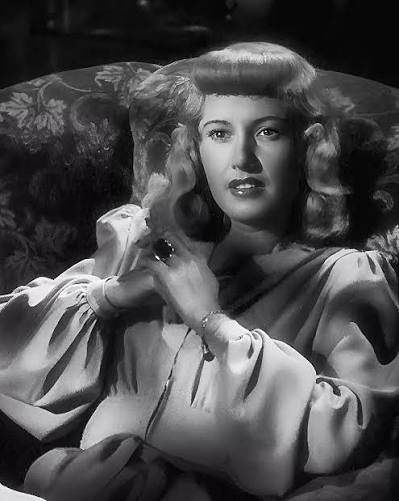
2. Barbara Stanwyck as Phyllis Dietrichson in Double Indemnity (1944)
Just as I’m thankful that I never read Dickens until college, so am I glad that I didn’t discover the breadth of Barbara Stanwyck’s career until I became an adult. Her pre-Code film characters manipulated men with their sexuality decades before the term femme fatale was coined. So did her screwball heroines in Ball o’ Fire and The Lady Eve, two of my favorite films ever. Her older characters, like Jessica Drummond in Samuel Fuller’s 40 Guns, and even Victoria Barkley in The Big Valley, are fierce with the hunger to control their place in a man’s world.
Phyllis Dietrichson is all these things, but she also gets to express her need through Billy Wilder and Charles Brackett’s dialogue. Every scene with Fred MacMurray, a man I grew up thinking was an amenable dad, is riveting, sexy, funny, and/or deadly, from that mile-a-minute first seduction to their final deadly confrontation in the dark. Don’t get me wrong: I think MacMurray is sensational here, but Stanwyck makes him even better. Their union is a constant comingling of sex and violence, where you are never quite sure where the sexual heat leaves off and the ploting begins. The best criminal couples in noir get off on their crimes and, conversely, are nothing without them. Stanwyck and MacMurray are the gold standard of this principle.
And the #1 femme fatale on my list is . . .
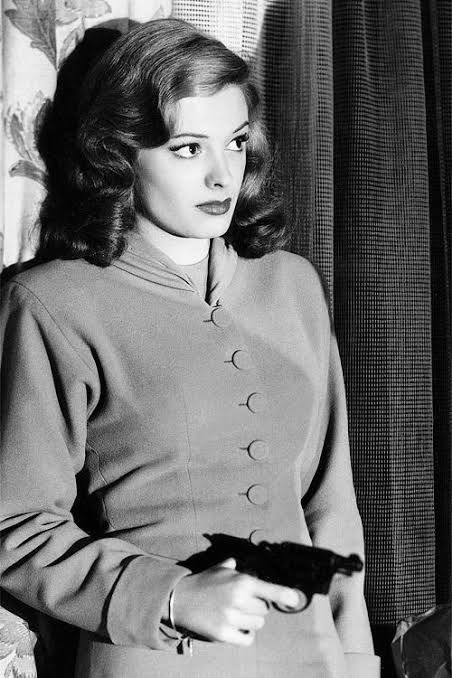
Jane Greer as Kathie Moffat in Out of the Past (1947)
The film begins with a soaring score playing over vistas of an idyllic landscape tucked in the mountains and a sleepy-eyed man going fishing with his girl. Never has so bucolic and peaceful an introduction presaged such a dark, fatalistic film. I’m sure David Lynch was paying attention before he created Blue Velvet – except in Lynch’s film the rot comes from inside; here, it arrives, out of the past.
This is probably my favorite film noir, and Kathie Moffat is my favorite bad girl because no matter how much she steals and lies and betrays, she has captured the hearts of two men who should know better but who can’t let her go. For Kirk Douglas’ Whit, it’s a matter of pride: nobody jilts him and takes $40,000 of his money away with her – but he keeps her around when she comes back to him.
For Robert Mitchum’s Jeff, it’s something else. Call it love, call it a need, it doesn’t matter, he just wants her. On the beach in Mexico, she pleadingly tells him how much she hates Whit, but she could never steal from him. Her voice throbs with, “Don’t you believe me?” to which Jeff responds, “Baby, I don’t care,” – and then kisses her. And in Jane Greer’s performance, you can understand why he feels that way. Her beauty, her humor, her true affection for him are all mingled with her greed, her selfishness, and this glint that comes in her eyes when men fight over her.
The couple is doomed. What’s more, I think Mitchum knows it from the start. But there’s still a lot of plot to get through before the end, and all the characters and scenarios and tricks and turns are a blast to witness. I mean, the woman openly plots his downfall and he still wants her? That makes her Number One!
Give me your thoughts in the comments below. Happy Thanksgiving, everybody!


Good piece Brad. I’ve only seen a few of these so I’m adding the rest to my list.
Happy Thanksgiving!
LikeLiked by 1 person
Happy watching, John! Love to you, Natasha and the boys!
LikeLike