The centerpiece of every mystery is the crime itself. Procedurals usually begin with the finished product: a police team rushes to the scene of the crime and begins to piece together the events by sorting clues and interviewing witnesses. The classic detective story might begin with a client approaching the world-famous sleuth with a question: Why did the company hire me to copy down encyclopedias, Mr. Holmes? Where’s my sister, Mr. Spade? Did my father kill my mother or was it the other way around, M. Poirot? These initial meetings are like scenes from a good play, in that they introduce a new character with an intriguing problem, whetting both the detective’s and the reader’s appetite for a new case.
This is just my preference, but a whodunnit is at its best when it sets up the crime by first introducing the elements – the characters and their relationships, the setting and the background. It’s all a build-up to the crime itself, and what a thrill when that crime is magnificent! It may be public – standing before a crowd, the victim clutches his throat and falls senseless to the ground. Or it may be private – the body is found sprawled under a beach umbrella set above the tide, dressed in a tuxedo worn backwards, with nary a footprint in the sand and a torn scrap of paper scrawled with the formula “E=MC² clutched in their hand. Whether the murder is the inciting event or “Zero Hour,” it’s the moment that can get our pulses racing and send us on a journey to separate these appearances from reality.
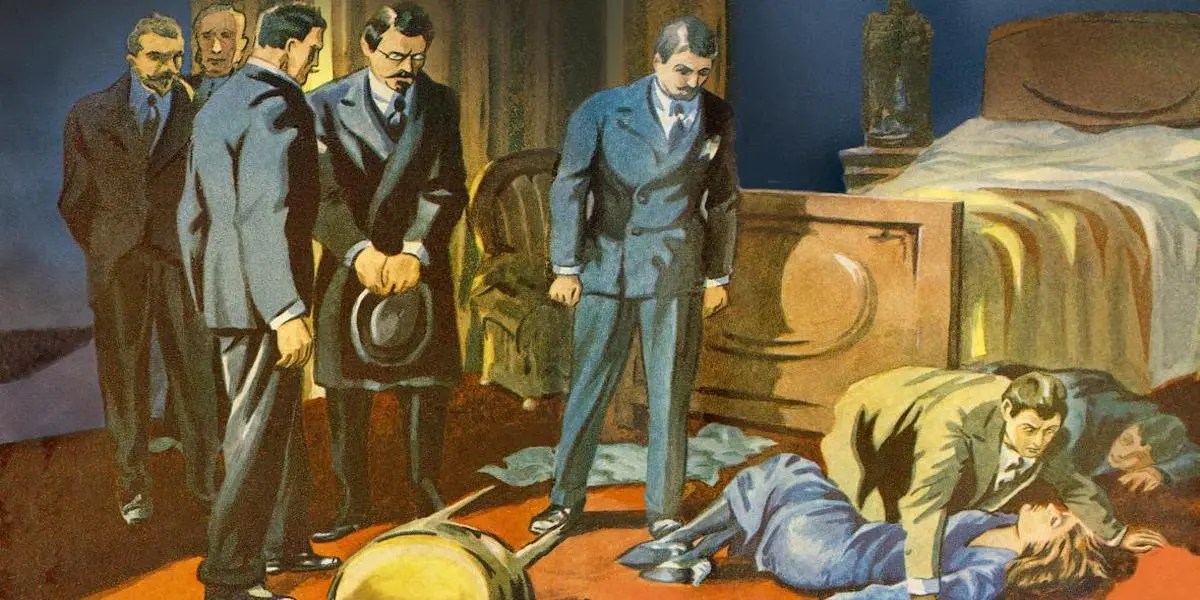
Certain murders warrant a greater sense of theatricality. Impossible crimes hide the mundane truth of “howdunit” with various degrees of spectacle. John Dickson Carr was a master of using supernatural effects and/or sleight of hand to mask the “simple” truth of a crime. The killer hides his methods in plain sight, forcing you to “look over there!” or focus on the colorful red herrings strewn about while you ignore the salient detail that’s right in front of you. Christie’s killers excelled at this! Whether the setting is a country home, a prosaic village, or some luxury transport bound for an exotic land, and whether the weapon is a blunt instrument or the rarest of poisons, Agatha frequently incorporated the Aristotelian elements of drama to create her memorable crimes.
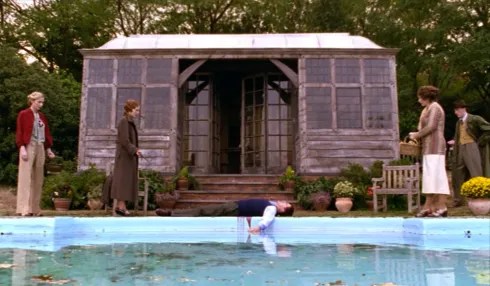
We have seen earlier how this occurs in The Hollow. As soon as Hercule Poirot arrives at the swimming pavilion, he is greeted with a spectacle, a scene of the crime that feels more like a stage set. This is not merely a sensitive impression on Poirot’s part. As he will learn, at the behest of the victim himself, the closed circle of suspects have assumed roles as part of a conspiracy to protect John Christow’s killer. Let’s examine other ingenious examples of Christie’s use of spectacle to set her crimes apart.
The Supernatural Setting
Christie’s love of the unexplained is apparent, both in her non-mystery stories of otherworldly miracles, and in her frequent use of supernatural elements in her crime stories. In our discussion of the 1938 story “The Dream,” we saw how the murderer attempted to fool Hercule Poirot into believing in prophetic dreams through the use of disguise and clever lighting. Also during the 1930’s, Agatha employed the setting of a séance, a popular recreational activity, twice – in the 1931 novel The Sittaford Mystery and in the 1937 Poirot case Dumb Witness. What is so effective about both examples is that the seances not only provide dramatic atmosphere but provide important clues to the solutions of their respective crimes. What mutes our experience of the séance in Dumb Witness is that it is told only in retrospect by witness testimony: the Tripp sisters recount to Poirot their witnessing of an apparent possession of Emily Arundell by spirits, who are manifested as a phosphorescent essence emerging from her mouth – a brilliant juxtaposition of superstition and science. The Sittaford Mystery opens with a séance, and it is a juicy scene populated with characters whom we initially exclude from suspicion because it seems impossible that any of them could have killed Captain Trevelyan at the exact moment that his “spirit” is announcing his own murder.

One of the earliest and best examples of a “supernatural” setting comes in the Miss Marple story “The Idol House of Astarte” (first published in January 1928 in The Royal Magazine; featured in the 1932 collection The Thirteen Problems).It illustrates one of my favorite precepts of the impossible crime, that “magic” is sometimes simply a matter of fortuitous timing.
The story is narrated by an elderly clergyman, Dr. Pender, who tells the Tuesday Night Club about the time he witnessed a miracle: “I saw a man stricken to death by apparently no mortal agency.” Like the best impossible crimes, this works because the simplicity of the solution is masked by the author’s sure hand with atmosphere. It takes place at Silent Grove, the charming estate in Dartmoor of Sir Richard Haydon that “looked out over the panorama of the Moor, vast rolling hills crowned with weather-beaten Tors.” (Shades of Baskerville Hall! Late ‘20’s Christie is still inspired by her love of Doyle.)
The property is set on land teeming with antiquities, including what Hayden believes is an authentic Grove of Astarte, the Phoenician goddess of fertility and sexual love. Wild pre-Christian rites used to be performed here, and Hayden has honored Astarte’s memory by erecting an Idol House in the center of the grove. One of his guests, the exotically beautiful Diana Ashley, wants to stage an orgy there that evening, but she has to settle for a fancy-dress party to mollify the proprieties of her fellow guests.
Thus, on the night of the murder, the house party is costumed, and the lighting consists of the rising moon filtered by the dense grove of trees. The moonlight shimmers on the “diaphanous gauze . . . with two crescent horns rising from the dark masses of (Diana’s) hair.” She has taken “center stage” at the threshold of the Idol House and commands attention in her role as a Phoenician priestess. “Beware how you approach me, for I hold death in my hand,” she cries, and Sir Richard, who adores her, cannot help but be lured by the spectacle of her presence. The reader is equally entranced and distracted by the exotic and primitive allure of Diana’s performance, with its strong hint of cruelty and, perhaps, evil. When she holds up her hand and cries, “One step nearer, and I will smite you with the magic of Astarte,” and Richard falls to the ground, we can’t help but associate one move with the other.
Ultimately, this is a case of romantic rivalry and of a killer who takes last-minute advantage of a fortuitous accident. Leave it to Christie to elevate a simple crime with the delicious trappings of ancient pagan ritual.
While the evolution of the genre in the 1940’s and 50’s would preclude overt uses of the supernatural, Christie tackles it again in “The Flock of Geryon” (first published in The Strand Magazine in August 1940, then collected and published in 1947 in The Labors of Hercules.) The story of a diabolical con artist who preys on lonely, wealthy middle-aged women by establishing a religious cult and plying his victims with drugs is one of those tropes that can be repeated over and over again and never loses its appeal.
What captivates both the criminal’s marks and the reader are the trappings with which Christie imbues the rituals of the cult. The ceremonies that take place at Green Hills are pure theatre, calming and reassuring the members that they have found a paradise apart from the cruel world. But it is in the seasonal ceremonies that the villains do their worst, as Hercule Poirot’s adorable spy, Amy Carnaby, finds out first-hand:
“The Festival took place in the white, glittering, concrete building, called by the Initiates the Sacred Fold. Here the devotees assembled just before the setting of the sun. They wore sheepskin cloaks and had sandals on their feet. Their arms were bare. In the center of the fold on the raised platform stood Dr. Anderson. The big man, golden haired and blue eyed, with his fair beard and his handsome profile had never seemed more compelling.”
The atmospheric theatrics of the ceremony – combined with a dose of liquid hashish – convinces the lambs that they have had a transcendent spiritual experience. The subsequent dosing at the Autumn Festival will be more deadly – as in Dumb Witness, it is a blending of spectacle and science. It combines to create one of the most entertaining stories in the Labors.
Costume: A Matter of Shawls
Any designer will tell you how the choice of costume will attract the eye of any audience. Agatha Christie knew how well costume can establish (truly or falsely) a sense of identity. Remember how Arlena Marshall made her entrance in Evil Under the Sun, how a combination of flesh and fabric (and that hat!) drew the attention of every man on the beach. And then that same hat is pulled into double duty as a mask for one of her killers! Or remember how a shabby buckle provides Hercule Poirot with an important clue about identity in One, Two, Buckle My Shoe!
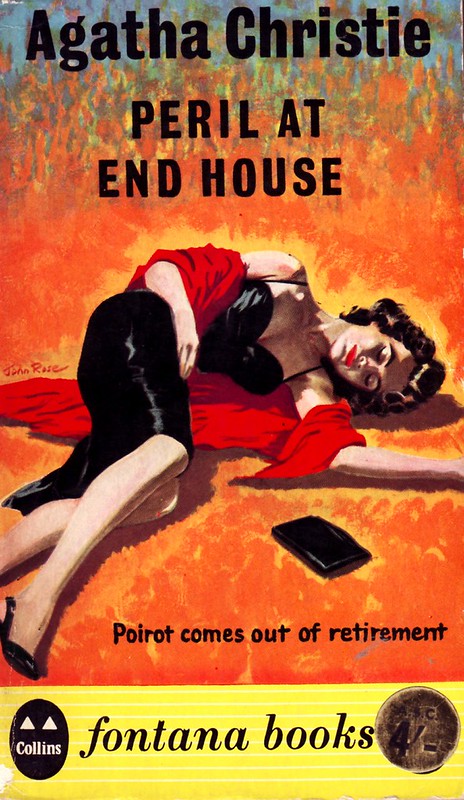
On two occasions, Christie employed the use of a shawl for this purpose, and what is significant is how in both cases, the drama of the scene is heightened by spectacle. In 1932’s Peril at End House, Poirot’s investigation into several attempts on Nick Buckley’s life reaches its crisis point at a party Nick throws for all her suspect friends. Nick is dressed in “a marvelous kimono covered with dragons,” but she later changes into “a black frock and round her was wrapped a marvelous old Chinese shawl of vivid lacquer red.” At Poirot’s urgent suggestion, Nick has invited her cousin Maggie, the only person she can trust, to stay with her. At the crest of the evening, the party is regaled by magnificent local fireworks – which do their job to mask the sound of a gunshot. And then Captain Hastings describes it:
“We were within a hundred yards of the house, and just in front of us, between us and the open French window, there lay a huddled figure wrapped in a scarlet Chinese shawl . . . “ Appearances are, of course, deceiving: it is Maggie who has been killed after Nick lent her the shawl.
Thirty-two years later, Christie performs a variation on the same trick to equally dramatic effect in A Caribbean Mystery. In the wake of a murder, Molly Kendall, the charming and pretty co-proprietor of the Golden Palm Hotel, has grown increasingly unstable. Nervous episodes and hallucinations have led to a suicide attempt. Toward the novel’s climax, Molly disappears and wanders around the hotel grounds wearing the pale green embroidered shawl that so many people had admired.
The discovery of the body is a dramatic highpoint. Molly’s husband Tim pushes through the group of people who have gathered by a creek that leads out to sea. (Note the theatrical reference included here): “(Tim) slowly dropped onto his knees. Miss Marple saw the girl’s body clearly, lying there in the creek, her face below the level of the water, her golden hair spread over the pale green embroidered shawl that covered her shoulders. With the leaves and rushes of the creek, it seemed almost like a scene from Hamlet, with Molly as the dead Ophelia. . . .”
The reveal of identity is even more dramatic than in Peril at End House, and Christie uses a striking bit of lighting to achieve her purpose: “The moon had been behind a cloud, but now it came out into the open. It shown with a luminous silvery brightness on Molly’s outspread hair. Miss Marple gave a sudden ejaculation. She bent down, peering, then stretched out her hand and touched the golden head. She spoke to Evelyn Hillingdon, and her voice sounded quite different. ‘I think,’ she said, ‘that we had better make sure.’”
Again, a corpse has been misidentified by its costume: Lucky Dyson, also blond and beautiful, had admired Molly’s scarf and bought one just like it. Christie brilliantly utilizes the same scene for different purposes: in one, the murderer has purposefully arranged for the witnesses to conclude that the wrong person has been murdered; in the other, the killer has genuinely made a mistake.
Corpus Delectible
Plenty of Agatha’s murders, like those of countless other authors, are presented after the fact. As we’re concerned here with theatrical vision, however, let’s look at some of the juicier mise en scenes that Christie presented to tantalize us all.
Emily Inglethorpe, The Mysterious Affair at Styles (1920)
In the third section of the chapter in her Autobiography called “War,” Christie she describes the planning that led to writing her first novel. She found that “a very unusual kind of murder for a very unusual motive . . . did not appeal to me artistically.” This murder would be “intime,” and it would involve a family. The central figure, a wealthy elderly woman, would be murdered, and the suspects would be her husband, her stepsons, and other relations. Much of the characterization came from Christie’s observation of people on trains and in other real-life pathways. Her trick was that the killer would be the most obvious suspect but that she would heap so much suspicion upon them that readers would reject this solution as being too obvious. In addition, she would create a closed circle well drawn enough that we can balk at the idea of any one of them being the killer even as, one by one, we plump on each as our chief suspect.
The first two chapters of the book begin ordinarily enough by introducing us to the Inglethorpe/Cavendish clan and giving us just enough observation of Emily to explain why those around her might wish her dead. A natural climax to this section would begin in Chapter Three with a maid knocking on Emily’s door with a morning tray and discovering her body. Instead, Christie’s first scene is a masterpiece in terror. As anyone who studies the author will realize, her application of theatricality has both a dramatic and a utilitarian purpose: we stand in horror with Captain Hastings as he recounts Emily’s slow tortured death, and we bear witness to the symptoms of the poison that killed her.
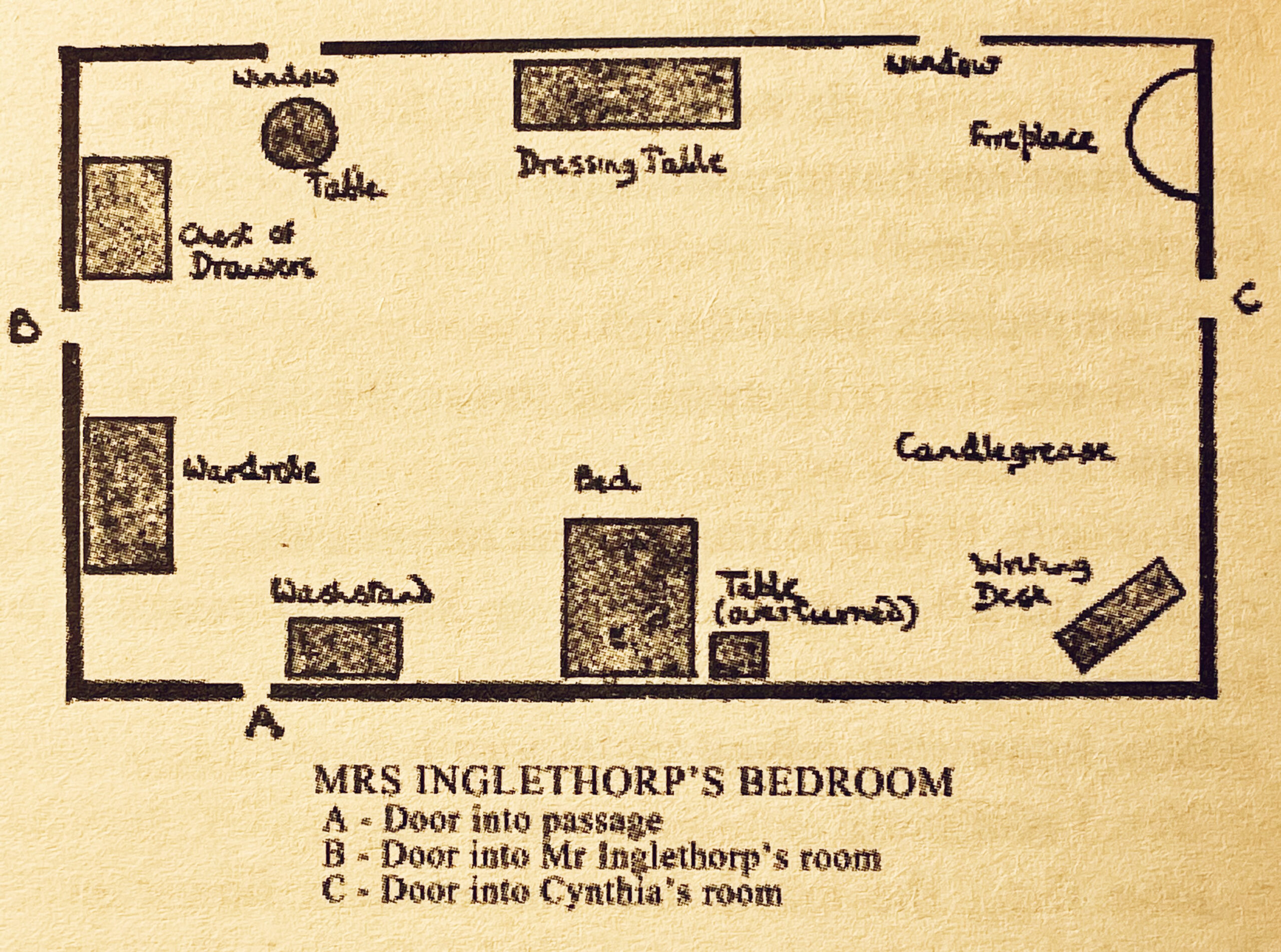
The setting (complete with map) is well-drawn and is fit for inclusion in a well-made play: the central focus is at the center of the room, where Mrs. Inglethorpe lies moaning in her bed. Three entrances, all of them locked at the beginning of the scene, allow entrances and exits from all the characters (all but the guilty parties, I might add!) There’s a door into the upstairs passage, a door between Mrs. Inglethorpe’s room and that of her husband, and a door into that of her protégé, Cynthia Murdoch. The room is dramatically lit, first by candlelight and the dying embers of a fire in the chimney, then by gaslight. The main focus is on Emily, who ebbs and flows through fresh waves of suffering, while Captain Hastings provides sharp observation of this and of the veritable tableau of suspects, either coming and going or standing frozen in shock.
Simeon Lee, Hercule Poirot’s Christmas (a.k.a. A Holiday for Murder, 1938)
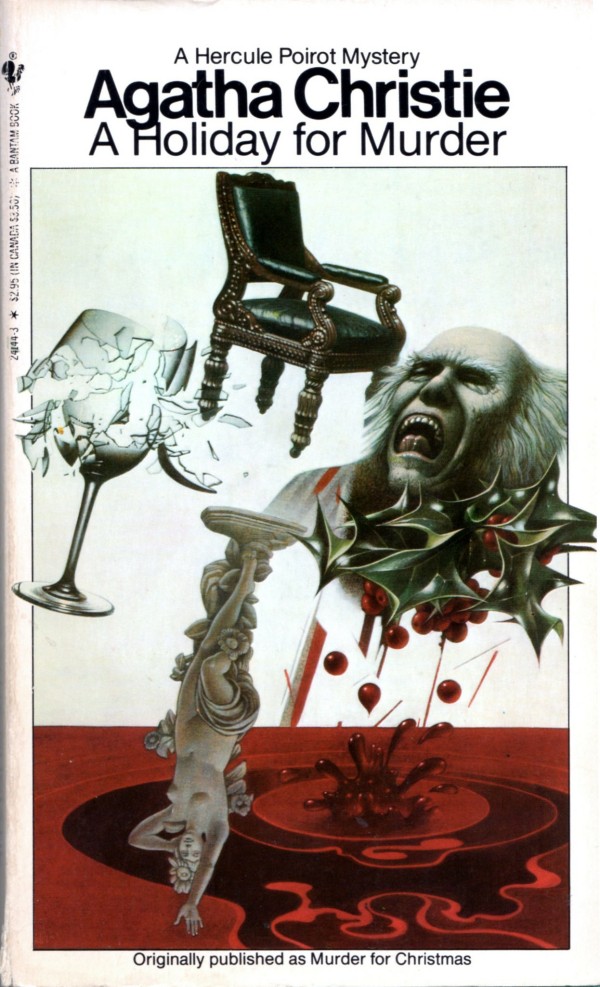
We move from an elderly matriarch in her bedchamber to an elderly patriarch in his. Unlike Mrs. Inglethorpe, Simeon Lee is an overt monster who has tormented his family and pits them against each other for his own perverse amusement. In this genre, at least, he deserves a violent, dramatic death! Again, Christie’s plotting has a utilitarian purpose: to create one of her rare instances of a locked room mystery that obfuscates the time of death in order to provide an alibi for Simeon’s killer. To do this, she taps into every aspect of theatricality, from sound effects, to costume (the ladies are dressed to the nines, as butler Tressilian, a connoisseur of women’s clothing notes), to blatant violence – or at least the suggestion of violence.
The scene is even scored: David Lee plays the Dead March on the piano, until he is interrupted by a “noise from overhead . . . a crashing of china, the overthrowing of furniture – a series of cracks and bumps.” The cacophony of sound ends on a thrilling note: “And then, clear and high, came a scream – a horrible high wailing scream that died away in a choke or gurgle.” The family rushes upstairs and, as in Styles Court, finds that the entry is barred and must be battered down. The scene that greets them is horrific:
“There had clearly been a terrific struggle. Heavy furniture was overturned. China vases lay splintered on the floor. In the middle of the hearth rug in front of the blazing fire lay Simeon Lee in a great pool of blood . . . blood was splashed all round. The place was like a shambles.”
Christie punctuates this moment with two uttered phrases, both of them theatrical. The first is spoken by David Lee and is a proverb attributed to the Greek playwright Euripedes: “The mills of God grind slowly . . . “ The second, uttered by Lydia Lee, is a line of Lady Macbeth’s: “Who would have thought the old man to have had so much blood in him?” As Poirot investigates, he will uncover a case worthy of both Euripedes and Shakespeare, one founded on themes of patricide and revenge.
Lawrence Wargrave, And Then There Were None (1939)
There are elements of theatricality running throughout this entire novel, arguably the greatest mystery novel of all time, and they are intentional. Justice Wargrave, the director of all that occurs here, wants to inflict fear, guilt and suspicion among the island’s inhabitants. From Tony Marston’s shocking death to the climactic confrontation between Vera Claythorne and Philip Lombard, every moment, every choice seemingly made, is directed by the guiding hand of Wargrave, a.k.a. U.N. Owen.
The most dramatic murder isn’t a murder at all, but a red herring conceived by Wargrave and co-directed by his accomplice/dupe, Dr. Armstrong. The ten little soldier boys have been reduced to five, and tempers are frayed. Because the butler is dead and the house’s power source hasn’t been attended to, the rooms are dimly illuminated by candlelight. All the plan requires is that someone break away from the others to provide a distraction, but one must consider Wargrave’s powers of direction almost supernatural in that he predicts that this person will be Vera. He has planned accordingly for her, and when she goes up to her room she is greeted by a nasty surprise that draws the others up the stairs and to her side.
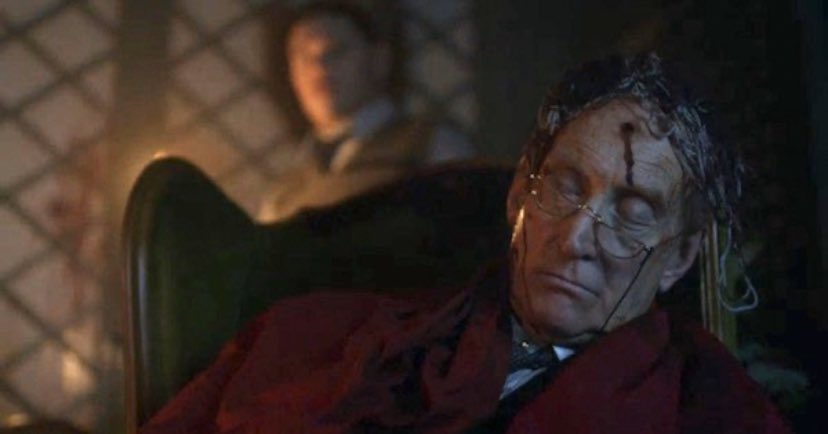
All but Wargrave. After Vera’s panic has subsided, she notices that the judge is absent. She and the others hurry downstairs and are greeted by a sight: “Mr. Justice Wargrave was sitting in his high back chair at the end of the room. Two candles burnt on either side of him. But what shocked and startled the others was the fact that he sat there robed in scarlet with a judge’s wig upon his head . . .”
The expert use of costume and lighting adds to the horror of the moment, casting the judge in the role of head of Chancery Court as befits the rhyme, but as always it serves a dual utilitarian purpose of bringing the houseguests up short so that Dr. Armstrong can approach the “body” alone and certify (falsely) that Wargrave is dead, leaving the killer free to roam the island and carry out the final act of his murder drama.
Amyas Crale, Five Little Pigs (1942)
Few death scenes in Christie exert as much retrospective emotional power as that of artist Amyas Crale. We discover early on that he was poisoned with coniine, an alkaloid found in hemlock which paralyses the body. We know that only six people had the opportunity to administer the poison, and we’re reasonably certain that the wrong suspect went to prison for the crime. After teasing us with the possibility that Amyas was killed by a child – Angela Warren did not want to be packed off to school – Christie delivers a most chilling solution. While it appears like the delicate balance among the inhabitants of Alderbury has been permanently torn asunder by the artist’s affair with his model, it is Elsa Greer who learns that she cannot break up the outwardly volatile but solid marriage between Amyas and Caroline.
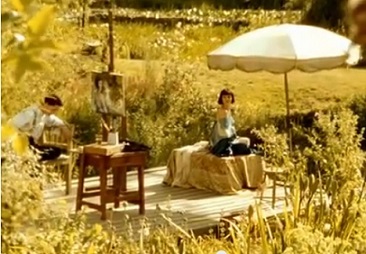
Elsa poisons Amyas’ beer, then sits and poses for him, watching as he slowly succumbs to the drug’s effect. People come and go. Caroline brings Amyas the cold beer doctored by Angela as a prank to punish her brother-in-law’s teasing. Others make their appearances to add to the complexity of the scene. Ultimately, though, it is those final moments between the lovers that matter – and are even captured in art. As he explains his findings to the Five Little Pigs, Hercule Poirot gazes up at the portrait of Elsa that hangs in the abandoned house she thought to claim as her own. He says, “I should have known when I first saw that picture. For it is a very remarkable picture. It is the picture of a murderess painted by her victim – it is the picture of a girl watching her lover die . . . “
Miss Marple at the Scene
My adoration for Miss Jane Marple prompts me to conclude this chapter with a section devoted to her books. We learn immediately that the fluffy old spinster will not limit herself to bucolic village mysteries (although she has filed the behavior of her fellow villagers into a sort of card catalogue in her mind to act as a resource when she is sleuthing). The stories compiled in The Thirteen Problems are rich with theatrical settings and effects. We have previously discussed disguise in “The Blue Geranium” and setting in “The Idol House of Astarte.” To this we can add the scene play of a deadly duo in “The Blood-Stained Pavement”, the dramatic effect of supernatural chicanery in “Motive v. Opportunity”, impersonation and the importance of costume in “The Companion”, a body substitution gambit that calls to mind Evil Under the Sun in “A Christmas Tragedy”, and . . . well, my favorite story of all, “The Affair at the Bungalow,” centers around the remarkable personality of actress/storyteller and would-be miscreant, Jane Helier.
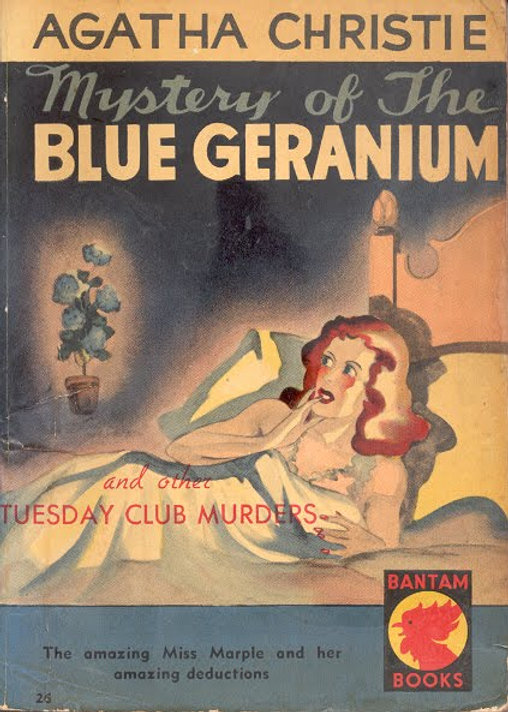
“The Blue Geranium” doubles down on spectacle as the killer makes magic out of science and turns a lady’s bedroom, which should be a haven of comfort and safety, into a terrifying deathtrap. How wonderful that Miss Marple knows all about the powers of litmus paper! Clearly, she feels right at home in a world of theatrical effect, and a remarkable number of her novels fuel this idea. Both Murder at the Vicarage (1930) and The Body in the Library (1942) rely on the importance of costume and appearance. Miss Marple (mistakenly) clears Anne Protheroe of culpability by observing the tight dress she wore to the vicarage and deducing that she could not have concealed a gun on her person. And, as we have discussed, it is the fingernails on the body in the library that allow our spinster sleuth to expose the impersonation that the murderers have wrought.
A Murder Is Announced (1950) begins with a newspaper announcement that is a play on old marriage announcements, but it also serves as an invitation to a veritable play. Many of those present have assumed roles: Charlotte Blacklock is playing her late sister Letitia, Julia Simmons is actually Emma Stamfordis, and Phillipa Haymes is her sister Pip. The guest of honor, Rudi Scherz, comes disguised as a burglar and unwittingly assists in his own murder. The investigation centers around all the exits and entrances in the parlor at Little Paddocks and the placement of the company, with poor Amy Murgatroyd sealing her fate when she realizes one of the actors has pulled a trick on the assembly (“She wasn’t there!”)
As the book’s title indicates, the murder in They Do It with Mirrors (1952) hinges on a magic trick: how can a man be in two places at one time? The magician’s “stage” is the sitting room at Stonygates, where the audience listens to the argument between Lewis Serrocold and Edgar Lawson. At the exact moment, someone enters Christian Gulbrandson’s guest room and shoots the man dead. Only Alex Restarick, a theatre producer, figures out how the murderer established an alibi, and before he can reveal what he knows he and an innocent bystander are both killed – on a stage with a counterweight!
Theatrical elements abound in 1957’s 4:50 from Paddington, some of which we’ll save for later. The opening sequence where Elspeth McGillicuddy witnesses a murder is borderline cinematic, the murder revealed by the rising curtain and framed within the borders of a passing train’s window: “At the moment when the two trains gave the illusion of being stationary, a blind in one of the carriages flew up with a snap. Mrs. McGillicuddy looked into the lighted first-class carriage that was only a few feet away. Then she drew her breath in with a gasp and half rose to her feet. Standing with his back to the window and to her was a man. His hands were around the throat of a woman who faced him, and he was slowly, remorselessly, strangling her.” Even as the authorities dismiss Miss Marple’s report of her friend’s experience, they use theatrical language: “I suggest that your friend may have witnessed a scene such as she described but that it was much less serious than she supposed.”
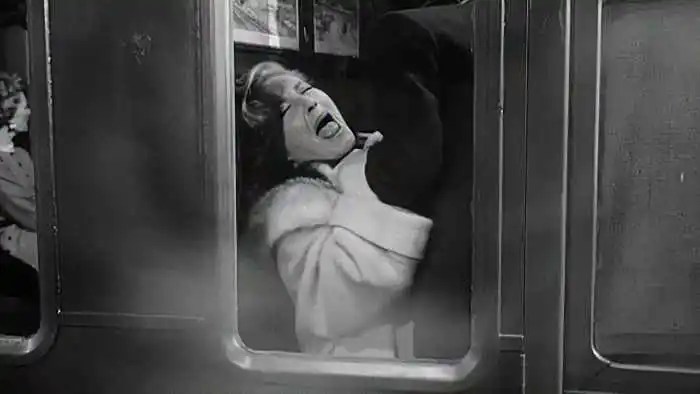
An actual theatre performance triggers the investigation into past crimes in the posthumous Sleeping Murder (1976). Ever since she purchased Hillside, a charming house in the village of Dillmouth, New Zealander Gwenda Reed has been plagued by vague memories suggesting that maybe this isn’t her first trip to England. As these incidents grow stronger and darker, Gwenda flees to the London embrace of her husband’s friends, Raymond and Joan West, and is invited to attend a production of John Webster’s The Duchess of Malfi. At the climactic moment when Ferdinand, the Duchess’ twin brother, beholds her dead body and exclaims remorsefully, “Cover her face; mine eyes dazzle: she died young!”, something triggers Gwenda to scream, rise, and exit the theatre.
Many Christie scholars seeking to pinpoint the actual writing of the novel suggest that this moment was prompted by a well-known revival of the play starring John Guilgud that was produced in the West End in 1945. The experience unlocks dark memories in Gwenda of peering through the stair banister at Hillside, looking down at the blue, strangled face of a golden-haired woman, while a creature with clutching wrinkled, gray monkey paws for hands uttered that same damning phrase.
For me, this moment gave away the ending of the mystery before I even met any of the suspects because I figured that Christie was giving us a clue as to the relationship between the murderer and the victim. What is striking here is that, at the point of causing the death of perhaps the most important person in his life, the killer utters a line from Jacobean tragedy, which helps him put this murder into context, memorialize and then compartmentalize it. By the end, the killer goes utterly mad, but by then both his “normal” and murderous selves have merged. He even blames Gwenda for this: “Why did you have to bring – her – back? Just when I’d begun to forget – to forget . . . You brought her back again – Helen – my Helen.”
When an actor takes on the role of a character in a play, he has to strike a balance between the real person – who must remain ever in control of the situation onstage – and the part he is playing. He must assume the physical and mental qualities of that character, but he must never let them subsume him without risking loss of control and potential psychological damage. Perhaps Christie is suggesting here that, in order to commit the gravest sin of murder, a person must also separate some part of themselves from the act in order to carry on with their life after their crime. And part of this process is the transformation of an ordinary place – a room in one’s home, a garden, the cabin of an airplane – into a crime scene.


Again, that’s the thing I don’t understand about The Hollow. When is that protective conspiracy decided upon? Is there any time to come to a collective agreement? Again, I’m not saying it’s wrong, it’s just something I do t understand. Maybe it makes sense, but I don’t get it. It’s always been to me as if there’s a missing explanatory pragraph (at least) missing from my copy of the book.
LikeLike
And apart from Henrietta and Lady Angkatell, what exactly is everyone else doing to contribute to the conspiracy? And why does the conspiracy seem to include inexplicable actions by Veronica Cray? And what makes Poirot figure out any of it? Yours is definitely not the only copy in which there seem to be missing paragraphs, Scott. (Whatever issues I have with the plotting of The Hollow, I very much enjoyed this essay in the series, Brad. Made me look at several scenes and stories in a new way.)
LikeLike
This confused me too when I read the book. I’d been spoiled on the conspiracy part and was surprised when Poirot didn’t really explain it. I think the idea was that, outside of Henrietta and Lucy, everyone kind of knew (well, “knew” without proof) that Gerda did it and just didn’t say anything about it. So it’s really just those two primarily.
LikeLike
And yes Brad, thank you for this very interesting series!
LikeLike
Thank you for the explanation. I do think you’re correct that it’s generally a conspiracy of silence, but that just makes it even harder to understand Poirot’s solution. His only real insight into what happened involves the conspiracy, but it mostly consisted of no one doing anything, so I have no idea how he figures out what happened.
Christie claimed that she regretted including Poirot in the novel, and I believe it. Most people interpret that regret as relating to the attempts at deeper characterization in the novel (extremely successful with regard to Henrietta; less so with everyone else), but I think the problem with Poirot’s presence is that it emphasizes the lack of clues and mystery plotting because he has nothing much to do and no real way to solve the crime. He is simply all-knowing just in time, and that’s not really how Poirot usually functions.
LikeLike