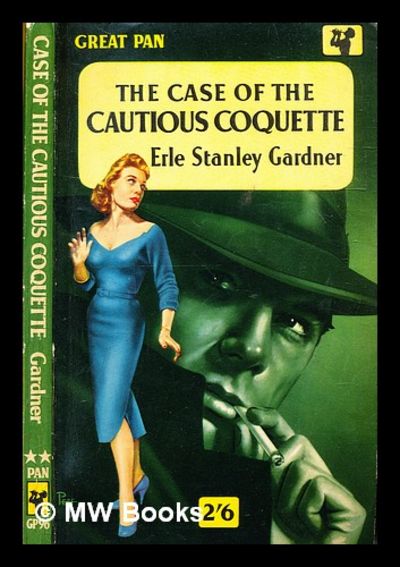
For those of you with a shaky vocabulary, “coquette” is a French term for a flirty woman. That fits in perfectly with our ’26 Perry Mason theme of Les Femme! Les Femme! Les Femme! But before we get to it, I can’t help wondering what sort of mystery might have arisen if the title had been slightly altered to . . .
The Case of the Cautious Croquette – A curvaceous blonde housewife worries that the salmon patties she made for dinner are slightly off and so refuses to eat them; her philandering husband, however, wolfs them down and dies – of arsenical poisoning!!
The Case of the Cautious Croquet – A mining executive invites his family down to his Southern California ranch to tell them of changes he is making to his will, but before he can summon his attorney he is found on the spotless lawn with his head bashed in by a mallet!!
Is it too far-fetched to believe that either of these alternatives could be manufactured from a few spins of Gardner’s plot wheel? What we get instead in 1949’s The Case of the Cautious Coquette starts out rather fascinating and full of twists but soon devolves into a B- version of Gardner’s standard fare.
At the start, we land in the middle of another case – let’s call it The Case of the Fractured Frat Boy. Mason’s client, Bob Finchley, is a kind and decent college kid who was driving along with his mom when a dark sedan sped out of nowhere, hooked the Finchley’s car and sent it spinning before fleeing the scene. Bob was thrown out of the car and fractured his hip, and now he lies in the hospital where the costs for his injuries threaten a promising university career.
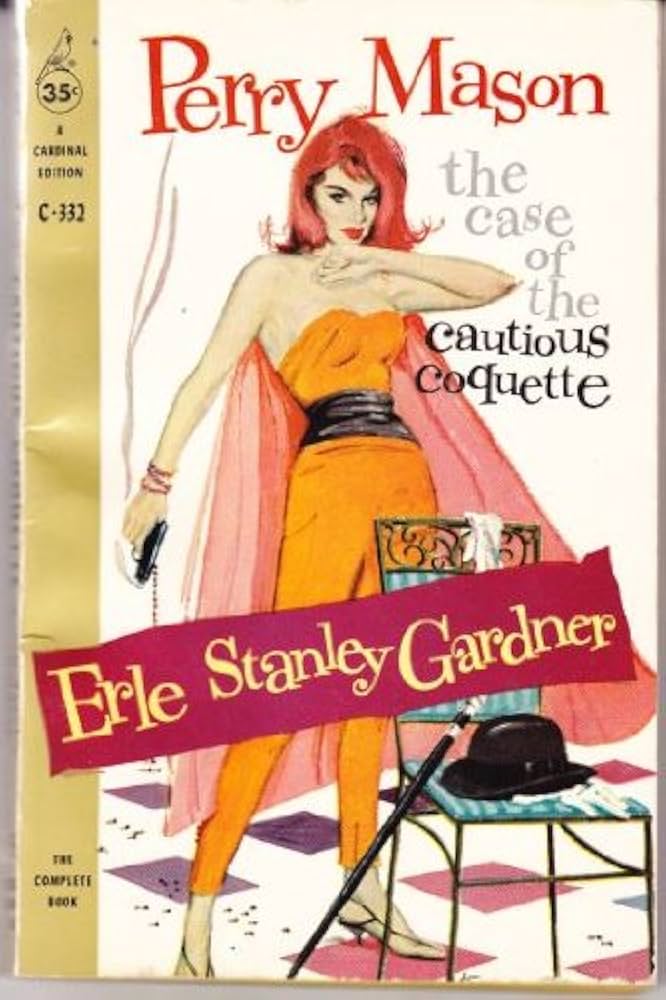
Fortunately, there seems to be a witness. A man and women were beside a nearby car, and while the man was changing a tire, the woman seems to have seen the offending sedan speed by and write down the license plate before taking off with her friend. If only Mason, who hates hit-and-run drivers, can find this witness, who happens to be young and beautiful, then he can put offender on the stand and “rip him right open.”
Perry’s best bud, private investigator Paul Drake, puts an inquiry in the paper, with immediate results. An anonymous letter arrives, announcing that the witness is one Lucille Barton; whether or not Lucille is willing to testify – for some reason, she seems overly cautious about getting involved!! – the license number of the sedan can be found in a drawer of the desk in her apartment. The letter-writer even supplies a key to Lucille’s place! Although Perry and Paul and secretary Della Street agree that this is probably some sort of trap (“What do you bet I don’t walk in on a corpse, Della?”), they all agree it’s worth the risk, and Perry Mason sets off to make the acquaintance of our cautious coquette.
Have no fear, Perry will come across a dead body – but not until the end of Chapter Nine. Before that, he gets involved in a rollicking ride of a case involving Lucille Barton, one of those women frequently found in Gardner’s books who tells enough lies that she gets into horrible trouble but has enough charm that you almost forgive her for it. Truth to tell, I almost didn’t forgive Lucille, who blathers falsehoods at her attorney right down to the wire.
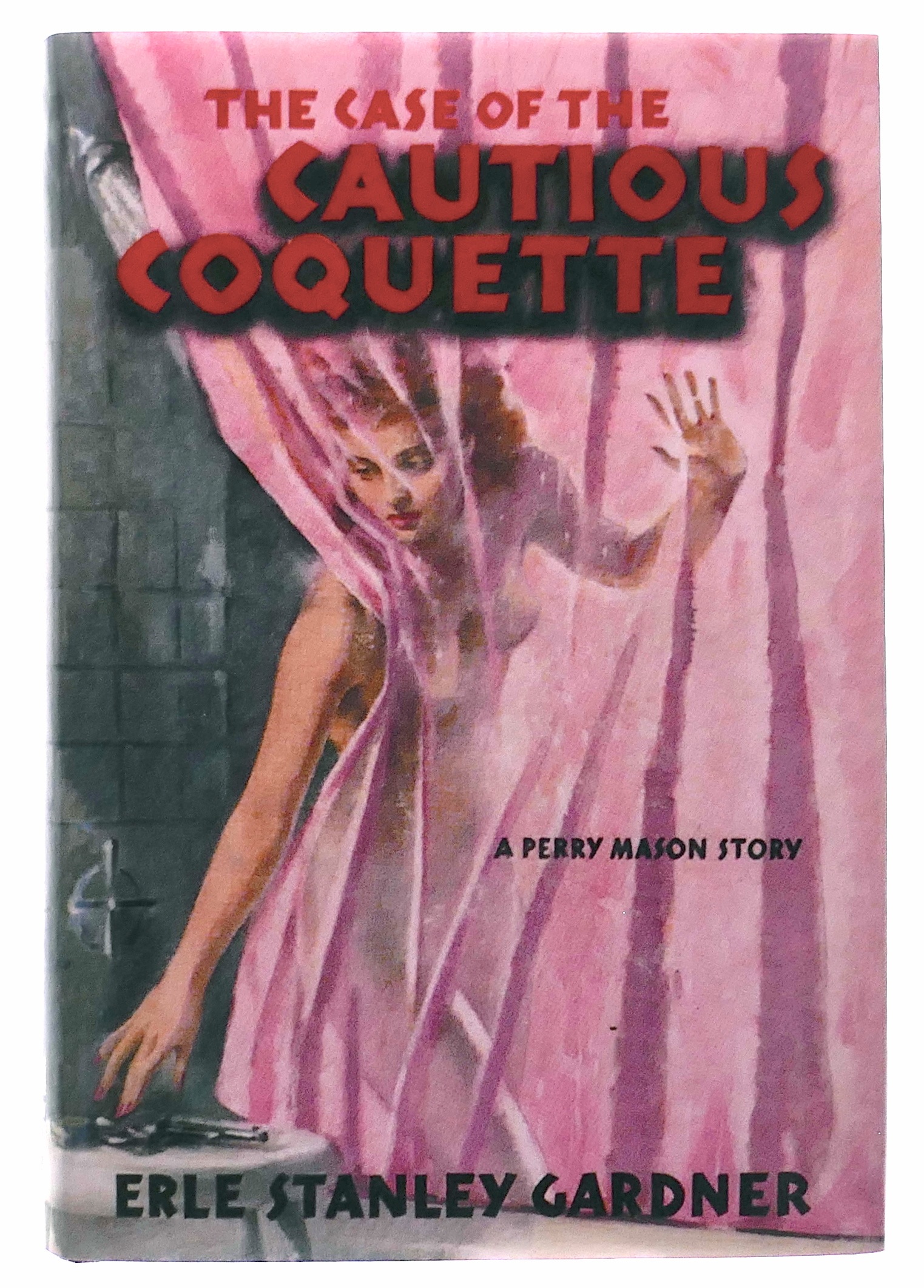
The section before the corpse comes a-calling is the best part of the novel. Mason’s search for a bad driver takes many twists and turns that frankly leaves our hero feeling confounded. True to form, the subsequent discovery of a body threatens Mason’s livelihood and reputation. And so, as he often does, Perry conceives of a plan to stymie the police, help his client and rescue his law license.
These moments are fun, and it’s always entertaining to watch District Attorney Hamilton Burger and local idiot Sergeant Holcomb, Mason’s two main nemeses, approach their attack with such certainty and have the smugness wiped off their faces by some canny cross examination. This time, however, a couple of problems arise. First, we are in on Mason’s counter-defense from first plan to execution, which makes the whole replaying of it in court feel redundant. More damaging is how Mason’s chicanery in service to his own needs delays the needs of the case until the problems of the cautious coquette feel extraneous.
The solution comes at the very end and is clever enough – except it involves at least two people who seem to be important to the case but whom we never meet. The murderer’s plan is overcomplicated yet no more or less so than one might find in a Christie or a Carr; still, it relies on too many coincidences to go down easily, and Lucille’s blithe attitude toward things like marriage and, oh, truth makes her a hard defendant to care much about.
* * * * *
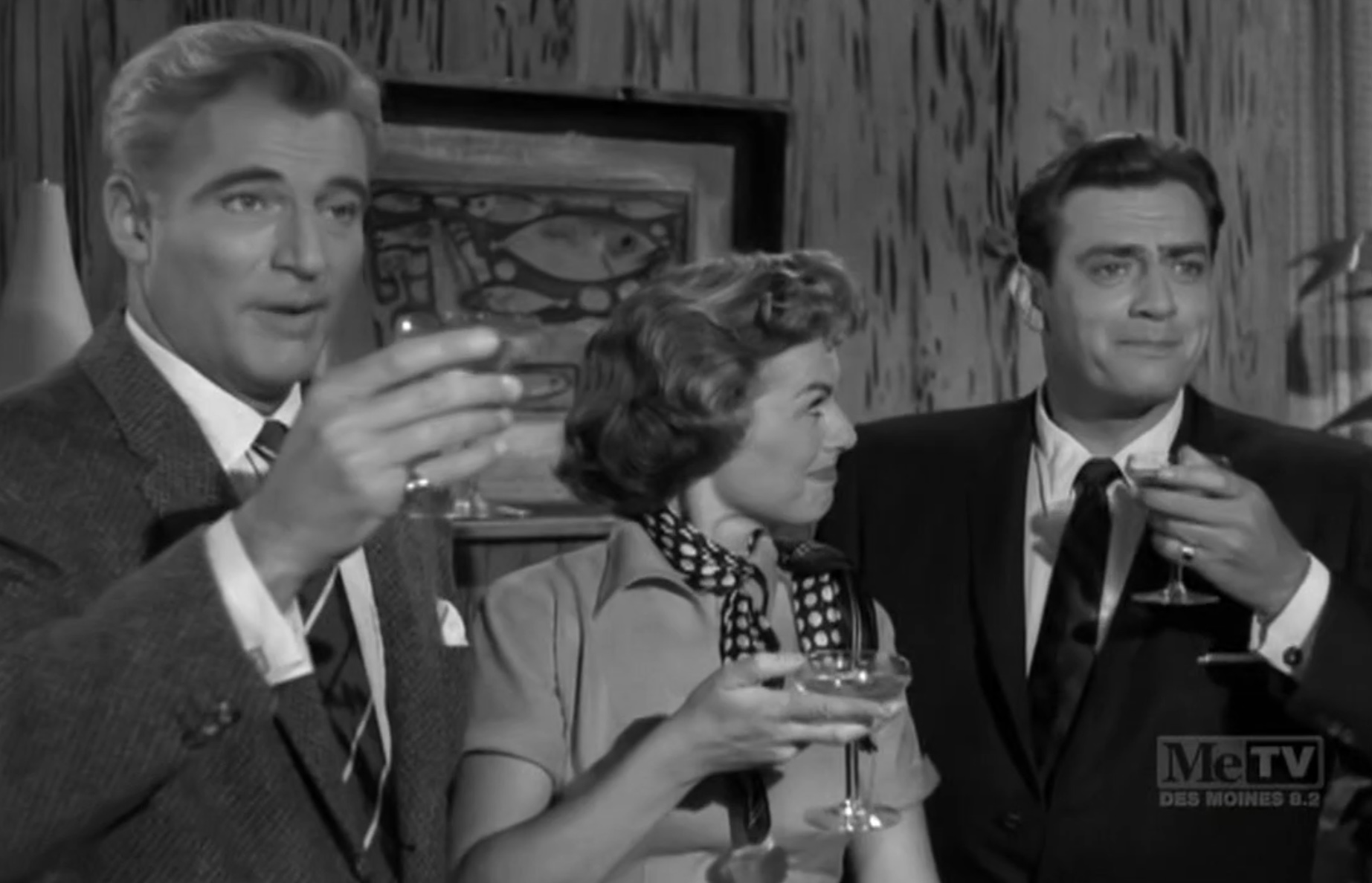
“The Case of the Cautious Coquette” debuted on January 18, 1958, the eighteenth episode of the first season of Perry Mason. Let’s say it’s faithful to the gist of the novel, but it goes to great lengths to simplify the plot. The result is it’s extremely easy to solve, as there are only two suspects to consider. One of these, a character not present in the book, is played by Virginia Gregg, the voice of Norma Bates in Psycho. This is her first of four appearances over the course of the whole series, and she is the best thing here. The other outcome of all the plot editing is that the episode becomes boring, as all the stuff that gives us pleasure in the book has been excised.
Next month, we turn to the 1950’s and to a case which finds Perry Mason out in the country, in a canoe, dealing with a damp damsel and a devious dog! Join us, won’t you?


Brad:
Enlightening review and just in time; I recently acquired The Case of the Cautious Coquette and The Case of the Substitute Face – I know which one I’ll be reading tonight!
LikeLiked by 1 person
Substitute Face is wonderful – Perry and Della on a romantic cruise!! ❤️
Enjoy!
LikeLiked by 1 person
Pingback: THE ERLE STANLEY GARDNER INDEX | Ah Sweet Mystery!