You all know how much I love Erle Stanley Gardner, especially his most famous creation, defense attorney extraordinaire Perry Mason. For the past few years, I’ve been weaving across the Mason canon and, as is my wont, whenever I review a novel, I like to cover any film adaptations that exist. On that score, I tend to strike pay dirt, due to the early Warner Brothers films and, most importantly, the original Perry Mason series that began in 1957 and ran for nine seasons. The downside of my journey is that, as much as I loved this show, what I have discovered is that as book adaptations go, the series episodes are pretty meh.
Sure, it’s hard to squeeze a full-length novel into fifty-three minutes. And not all of the book plots fit easily into the proscribed “whodunit” formula of the series, meaning that plots, characters and even solutions had to be reconfigured. Another problem is that, as much as we all love the cast of Perry Mason, the characters on TV bear little resemblance to the characters in the book. They’re older and more “respectable,” meaning that we lose a lot of action from the books, especially from the older, more noirish novels.
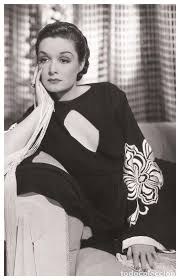
For fans of the show, however, there’s a silver lining. Out of 271 episodes in the series, an estimated 144 are not adaptations but wholly original stories. Many of you probably know that the show’s executive producer was Gail Patrick Jackson. As Gale Patrick, she appeared in over sixty films, usually as the bad girl or the other woman. She is one of my favorite parts of my favorite screwball comedy, 1936’s My Man Godfrey, and she is equally evil in the following year’s smash comedy, Stage Door.
And then, in 1948, Patrick gave it all up to devote herself to her third husband, Thomas Cornwell Jackson, who ran the Los Angeles office of the J. Walter Thompson agency. One of his most prestigious clients was author Erle Stanley Gardner, and Gail, who had studied the law for a while and had a great interest in it, tried to convince Gardner to let her produce a TV series based on the novels. But the author, twice burned by the Warner Brothers movies he hated and a radio series he despised, balked for a long time until, eventually, he came to trust Gail. In 1957, the Jacksons and Gardner formed Paisano Productions and began what would become one of the most successful creative collaborations in the history of television: Perry Mason.
For its first season, the seriesadapted books for all but two of its thirty-nine episodes, but with the show’s success, it became clear to the Jacksons that they would have to expand their options. Several writers, including mystery author Jonathan Latimer, provided the teleplays, and their efforts hewed closely to the formula of the series while allowing the writers the freedom to invent their own characters and situations that might fit even better into the TV formula than the book plots had.
Like millions of fans, I first watched the show when it appeared on CBS every Saturday night. I probably only caught the last few seasons (the seventh season during 1963 – 64 ran as I turned eight), but the show played in perpetuity in reruns, and of course I eventually bought the whole thing on DVD to rewatch at my pleasure. These last few years, I’ve only been looking at the adaptations as I read the books. It never occurred to me to review all the original stories written for the series.
Until now.
The prospect of a chronological survey of the 144 original teleplays was daunting enough to encourage me to find another way to explore this material. Like the books, I would rather hopscotch my way through these gems. At last, I found a way, and wouldn’t you know it? I found inspiration from another favorite TV show of my youth: Dark Shadows!
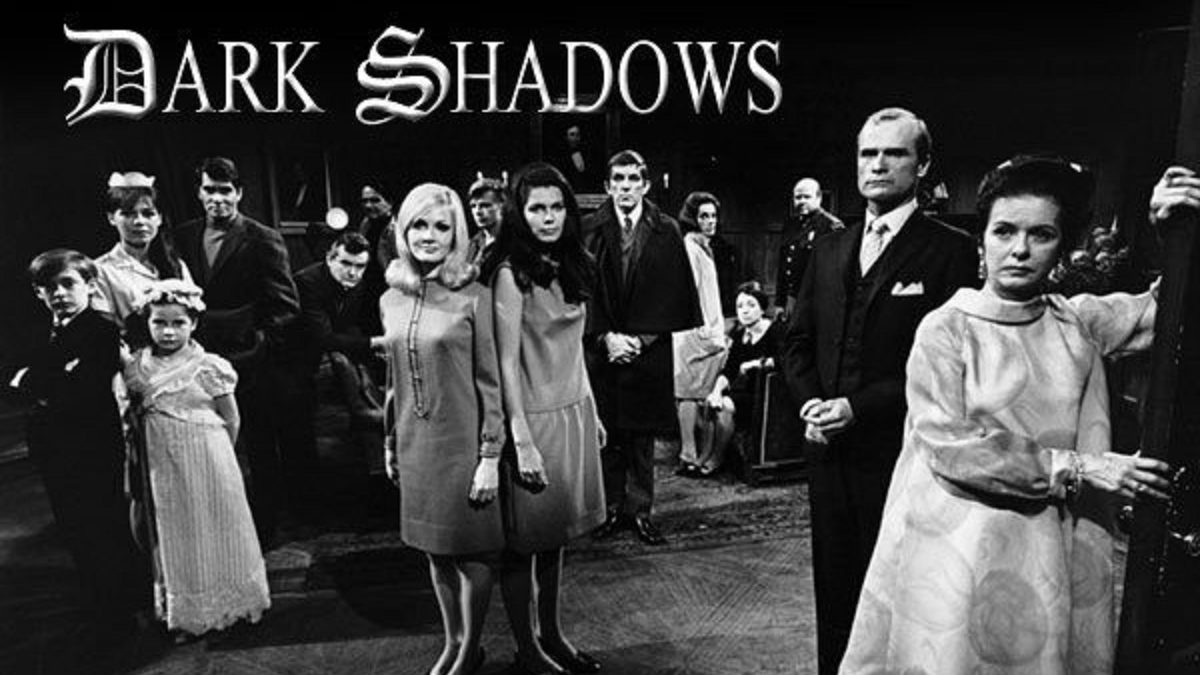
Dark Shadows was the first soap opera to center around the troubled romantic lives of a vampire, a werewolf, a witch, and other assorted monsters. Known for the tendency of many of its actors to forget their lines and for a lot of the potentially intriguing special effects to simply not work, Dark Shadows was still for me gripping television! The show premiered in 1966, and the intention of its creator, based on a dream he had (!), was for it to be TV’s first Gothic soap. Set in the perpetually foggy town of Collinsport, Maine, the show centered around the tormented members of the Collins family. Most soap opera characters seem cursed to a life of travails; the Collins family, it seems, was literally cursed.
At first, Dan Curtis tried to keep things vaguely realistic: heroine Victoria Winters arrives at Collinwood to become governess to young David Collins, a budding psychopath, but really she is there to investigate her own mysterious origin story and find her true parents. (She never does because Curtis got distracted and forgot to finish that story.) For a while, it seemed that the only thing truly cursing the Collins family was bad ratings. That’s when Curtis came up with a daring idea: during an otherwise ho-hum murder mystery, he introduced a couple of ghosts: the murdered man would haunt a couple of folks, and a long-dead ancestor, Josette Collins, would communicate with David and, later, Vicky, for a variety of reasons.
The audience perked up, and Curtis decided to go for broke by starting a new plot thread grounded in fantasy. Laura Collins, the formerly insane wife of Roger, the ne’er-do-well father of young psychotic David, returns to Collinwood after ten years to reclaim her son. This situation, along with the various issues of marital infidelity, accidental murder, and revenge that followed, may be typical fodder for soap operas. The difference here is that Laura had another reason for wanting David: she was a Phoenix, the mythological bird that rises from the ashes to live a life of immortality. She wanted to get hold of her son so that she could burn him to a crisp and have him join her in immortal flight!
Yup!
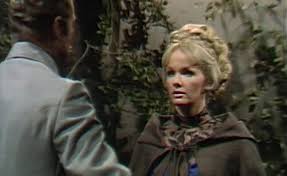
It was a pretty interesting storyline, thanks largely to the spooky performance by actress Diana Millay as Laura. And it was helped when another character entered the story: a largely unknown but prolific TV actor named John Lasell played Dr. Peter Guthrie, the first of many Van Helsing-type characters to appear on the show, who believed that all the problems plaguing the Collins family were due to supernatural phenomena. Since the actors all wanted to keep their TV jobs, the Collins family members quickly accepted what Dr. Guthrie had to say, and at the last minute the Phoenix was exposed and, for the time being, vanquished!
And then, in order to capitalize on the spike in ratings, Dan Curtis doubled down on the fantasy and created a modern version of the Dracula story, introducing vampire Barnabas Collins for a short run that saved the show and made actor Jonathan Frid a household name for five more years. Other characters were introduced just before Frid, including of the a thoroughly bad lot named Jason McGuire, played by Dennis Patrick, who tormented the Collins family so much that his death at Barnabas’ fangs did a lot to turn the villainous vampire into a hero in the eyes of the growing audience.
If you’re intrigued, you can watch all of Dark Shadows on Tubi and most of it on Amazon Prime. My purpose for mentioning it was that I happened to look up Diana Millay to find out more about her career, and I learned that she had appeared in three episodes of Perry Mason. Just for fun, I did some more searching and found that John Lasell – and, honestly, who has ever heard of this guy?!? – had also done three episodes. And Dennis Patrick had been in four!! The fact is, Perry Mason featured hundreds of actors, and many of them made multiple guest appearances on the show.
And that’s how I’m going to hopscotch through these original episodes. Today, I’m going to look at Diana Millay’s trio of episodes and go from there. After I’ve exhausted the Dark Shadows connection, I’ve come up with plenty of other actors to use as my starting point.
Diana Millay began her career as a child model and performed several seasons of summer stock from high school onwards. Dark Shadows was filmed in New York, and a large number of its actors, including Millay had a thriving career on Broadway and in live television productions. Millay brought both theatrical energy and an other-worldly vibe to the role of Laura Collins, who, to be honest, spends most of her air time staring moodily into a fireplace (the fire seems to give her her life force!) Her career on the soap, while spanning several years, was limited because while other actors got into the swing of the show’s eventual time-jumping and played various ancestors in the Collins clan, Millay told Dan Curtis she would only play Laura. Curtis obliged by having the Phoenix wreak havoc in both Revolutionary and Victorian times, and Laura became a sort of minor enemy to Barnabas Collins.
Millay’s forte at playing manipulative characters becomes instantly apparent in her first Perry Mason appearance. “The Case of the Resolute Reformer” debuted on January 14, 1961, the 14th episode of Season Four. It begins with Millay, playing a wealthy minx named Debra Bradford, sitting in a car outside a busy restaurant or nightclub necking with a very drunk young man named Peter Caine (Douglas Dick). He wants to go back inside for another drink, but Debra insists he drive her home, where she will reward him with some of her own scotch. On the way, Peter drives so recklessly that you know what’s going to happen: he sideswipes a man in the road and then passes out at the wheel. Debra examines the unconscious pedestrian and then drives Peter back to his home. The next morning, she tells him that he has hit a poor farmer who will need multiple surgeries to recover. The best thing Peter can do to help the victim out, is to buy his farm for $9,000 so that the man has the money to recover and retire with his wife.
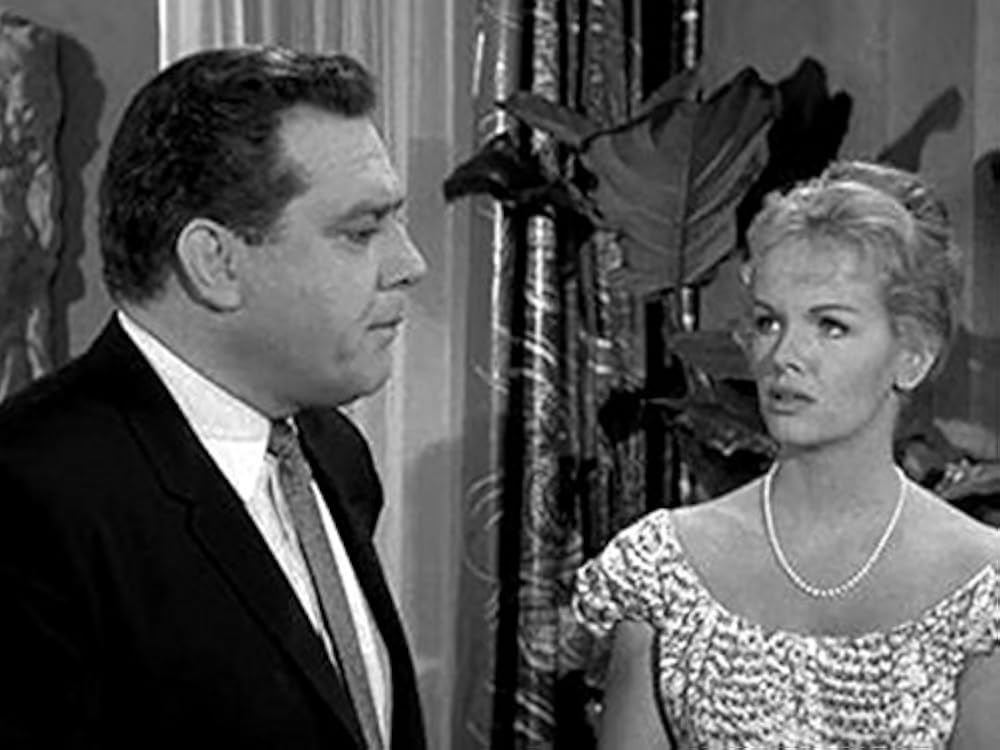
Five minutes in, it’s a sure bet that Debra is a bad girl and that Peter is another in a long line of Perry Mason patsies. But then, something wonderful happens: the episode starts to get complicated and introduces a whole bunch of characters who could easily be the victim, the defendant or the murderer. Peter’s father, William Harper Caine (played by the wonderful character actor John Hoyt) is the county engineer in San Marcos who despairs of his wastrel son but gives him the money to cover the expense of the pedestrian’s farm. Caine then attends a city meeting where he must decide whether to support a contractor who wants to tear down a local aqueduct or the local citizens who want to protect it (and who are represented by Perry Mason.)
There’s an energy about this whole sequence that is missing from a lot of the episodes based on the novels. I started to remember why I liked Perry Mason so much. While Perry and Paul Drake do discover the body, as is usually the case, the circumstances of that discovery are much more interesting than just uncovering a corpse. The trial commences with five strong suspects, including a hilarious turn by a long-lived film, stage and TV actress named Maxine Stuart, who plays the “bereaved” wife of the hit-and-run victim and has a wonderful scene where she drunkenly attempts to seduce Paul Drake! (I’ve never seen William Hopper look so uncomfortable!!)
Millay proves an excellent suspect and gets the “big” scene in court where Mason tears her lies apart and forces her to confess to everything but murder. Unfortunately, the killer conforms so clearly to the “Ralph Morgan” argument of classic cinema that I spotted him from his first entrance. That doesn’t stop this from being a fine episode, and the exploration of a troubled father-son relationship provides more emotional oomph than usual.
Millay returned the following season for Season 5, Episode 14: “The Case of the Unwelcome Bride,” which debuted on December 16, 1961 – my sixth birthday!!!! This time, instead of the cunning suspect, Millay plays the beleaguered heroine/defendant, Sue Ellen Frazer, a former club singer now married to Gregson, weak-willed son and heir of Walter Frazer, who hates his daughter-in-law so much that he offers her $50,000 to divorce his son. Greg, who is really a crumb, breaks up with his wife to regain his father’s favor and winds up dead on the study floor. And while it’s Amanda who is found with the murder weapon in her hand by Walter and his attorney (guess who?), Mason decides to defend her anyway.
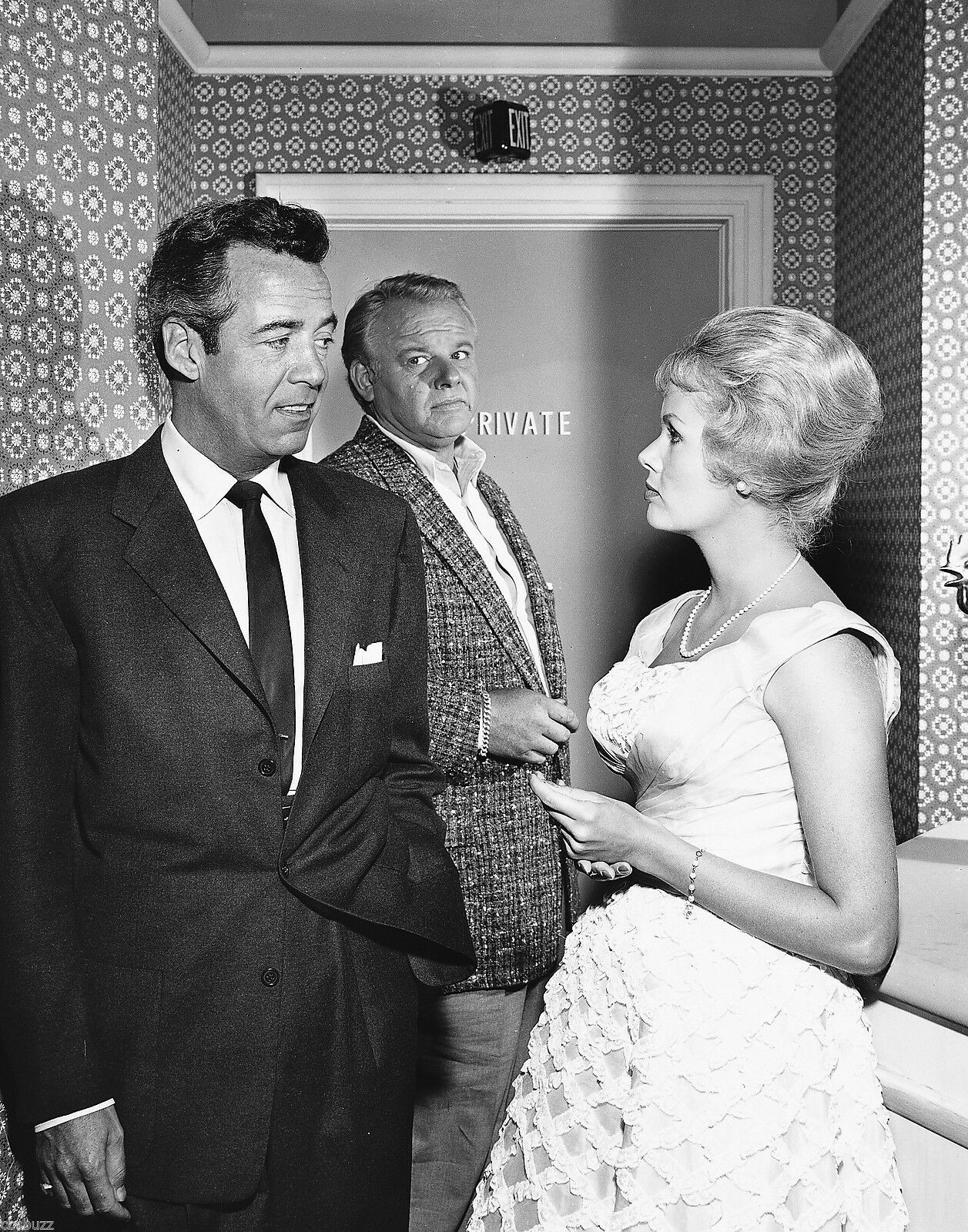
This is a terrific episode all around, beginning with a wonderful cast of suspects. Walter is played by Torin Thatcher, who was always great at playing heavies. His stepdaughter Amanda, a real shrew, is played by Melora Conway, who appeared in no less than five episodes of Perry Mason, including three other original stories and “The Case of the Shoplifter’s Shoe” (covered here.) Note to self: add “Melora Conway” to my exploration of original episodes!
The suspect list just gets better: Amanda’s henpecked spouse, who deserves the promotion more than Greg, is played by DeForest (Dr. “Bones” McCoy) Kelley; the owner of the club Sue Ellen worked at is played by Gerald Mohr, a perpetual heavy on screen but the voice for Philip Marlowe, Archie Goodwin, and The Lone Wolf on radio; and a private detective hired by Walter Frazer is played by Alan Hale, Jr., the skipper from Gilligan’s Island. It’s a great list, and the killer is more of a surprise than usual. Plus, Perry Mason goes all “Freeman Wills Crofts” in this one, setting up a timetable board in the courtroom and slowly uncovering one slot after another during the trial until he traps the killer in a lie.
Diana Millay’s final performance on Perry Mason premiered on December 11, 1963. “The Case of the Bouncing Boomerang” was the eleventh episode of the seventh season. Instead of a suspect or the defendant, Millay goes full monster as the victim, Eula Johnson. Her hair is long and sultry, and her behavior is utter bitch throughout. Alan Hale, Jr. is back as well, and another fine character actor in the cast is Parley Baer, one of those recognizable faces from films and TV who appeared in – wow! – six episodes of Perry Mason, all of them original teleplays. (Yup, I’ll add him to the list!)
“B” movie Western star Rod Cameron is the perfect fit to play Grover Johnson, a hapless rancher who had the misfortune to marry for love a woman who certainly did not love him back. Eula is a beauty but an ornery one, dead set on turning her back on the dying ranch and her much too-old husband (Cameron was twenty-five years older than Millay). Soon, Grover finds himself embroiled in a complicated grift that has so many twists and turns I don’t want to give any of it away.
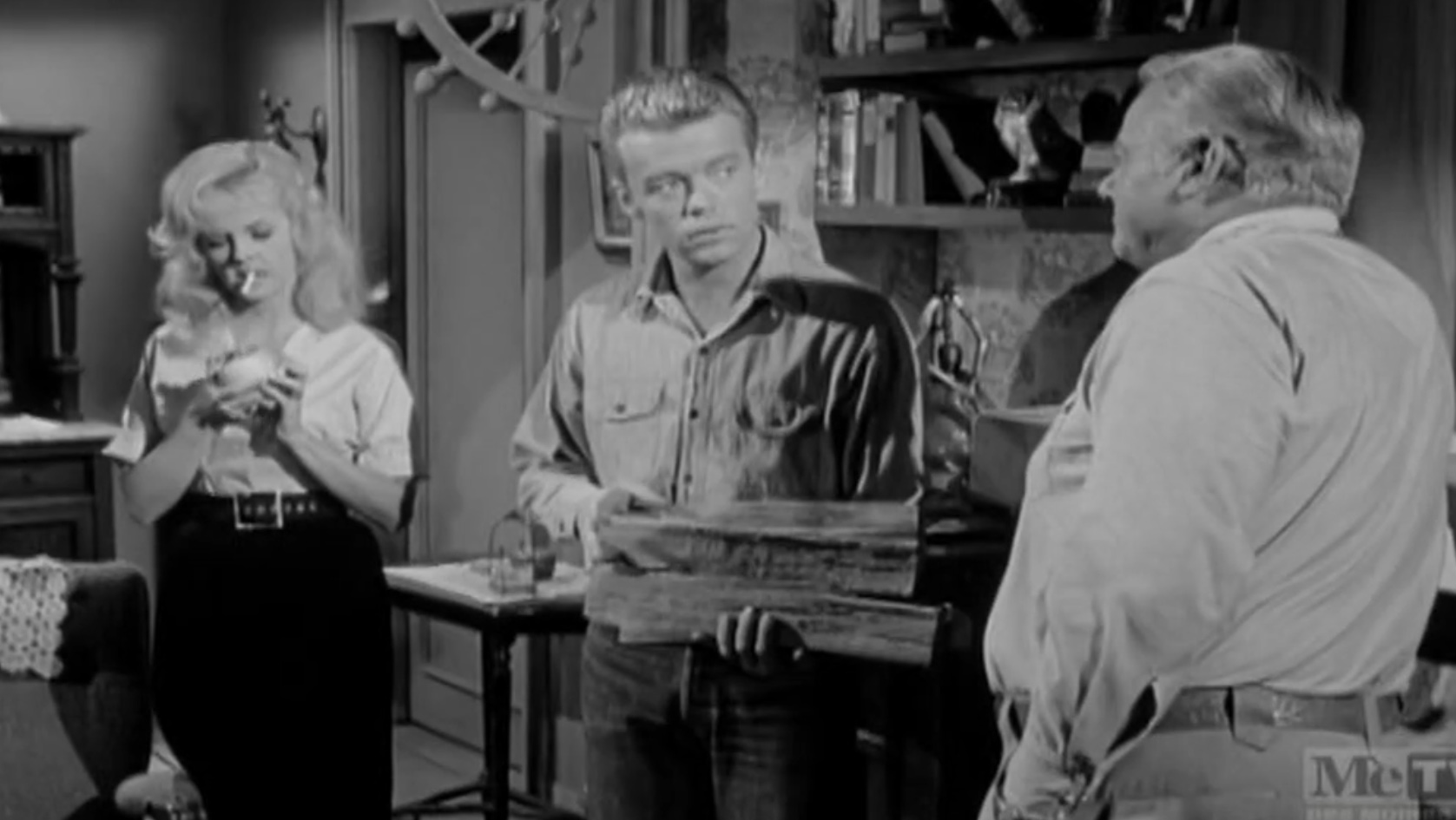
Suffice it to say that this bodes well for Millay, whose conniving witch doesn’t die until two thirds of the way in, leaving behind a sucker for a husband who is accused of her murder, and a parcel of suspects who, for once, share equal measures of suspicion. I had a feeling about who the murderer would be, and I’m happy to say that I was wrong – which doesn’t happen to me a lot on Perry Mason.
I’m aware that most of you have probably never heard of Diana Millay, but she acquitted herself well on all three of the episodes in which she appeared. We can see the makings of the evil Laura Collins in two characters, and after watching “Unwelcome Bride” we can understand why everyone in Collinwood sympathized with Laura at one time or another.
I’ll be back periodically with more of these original Perry Mason episodes. Next time, we’ll focus on the three that John Lasell (who?) made, followed by Dennis Patrick. Meanwhile, I’ve discovered another ten names (including Melora Conway and Parley Baer) who made multiple appearances on the series – which looks like this blog has found another fun way to leapfrog around the storied career of Perry Mason!


Another fine piece and great catch, I totally missed the Dark Shadows link. LOL
LikeLiked by 1 person
Wait’ll you see the even bigger link I found to another of my favorite ‘60’s TV shows!!
LikeLiked by 1 person
I don’t have much connection with all this, though I was once directed by Dan Curtis, and I did appear with a couple of actors who appeared in Perry Mason, and another who appeared in a later Perry Mason TV Movie.
Although I can understand why Gardner had problems with the WB, it’s never really made sense to me that he could hate them so and yet be pleased by the 1950’s TV series.
LikeLike
I don’t have much connection with all this, though I was once directed by Dan Curtis, and I did appear with a couple of actors who appeared in Perry Mason, and another who appeared in a later Perry Mason TV Movie.
Although I can understand why Gardner had problems with the WB, it’s never really made sense to me that he could hate them so and yet be pleased by the 1950’s TV series.
LikeLike
This is terrific! Diana Millay was perfect for Perry Mason, I’m surprised the writers didn’t lobby to have her on every week.
LikeLike
Pingback: THE PERRY MASON/DARK SHADOWS CONNECTION, PT. 2: John Lasell | Ah Sweet Mystery!