It should come as no surprise to you how much I love and admire The Maltese Falcon. It seems I’m always ranking the book or the film on one list or another. Why, only recently, I named it the best film noir of all time. As for detective Sam Spade, I placed him among the Top Twenty Greatest Literary Detectives and the NUMBER ONE greatest film detective of all time. I have called the novel my favorite mystery of 1930. And I have compared the film to Citizen Kane as one of the great sources of all we love about noir.
Of course, when I talk about the film, most of you assume that I am discussing the 1941 classic, the directing debut of John Huston, that stars Humphrey Bogart, Mary Astor, and Company. And you would be correct! However, long ago – more years ago than I can count – I went to an early Bouchercon in San Francisco and discovered that the film I had discovered as a kid was actually the third incarnation of Dashiell Hammett’s novel. In one mind-blowing night, I watched all three films: The Maltese Falcon from 1931, starring Ricardo Cortes as Spade and Bebe Daniels as Brigid O’Shaun – nope! Ruth Wonderly; the 1936 follow-up called Satan Met a Lady, starring Warren William as Sam Sp– nope! Ted Shane and Bette Davis as Bri– oh, no! Valerie Purvis!!! This was followed by a showing of the ’41 classic – and it is the classic and deserves to be, like no other film before it!
You can rent the 1931 version on Amazon Prime, and I suggest you do! It’s lighter and more comical in tone than Huston’s version – that’s kind of how they did things in pre-Code Warner Brothers days – but it’s mostly faithful to the novel, right down to the lifting of dialogue from the book. In fact, it is arguably more faithful than the ’41 film because its pre-Code status allowed it to be as risqué as the book had been. There’s no hiding the homosexual relationships between Caspar Gutman, Joel Cairo, and Wilmer, the gunsel. (The word “gunsel” means “an armed hoodlum,” but historically it also refers to the young male companion of an older man.) And Bebe Daniels is a much less, er, repressed anti-heroine than the often prim performance of Mary Astor.
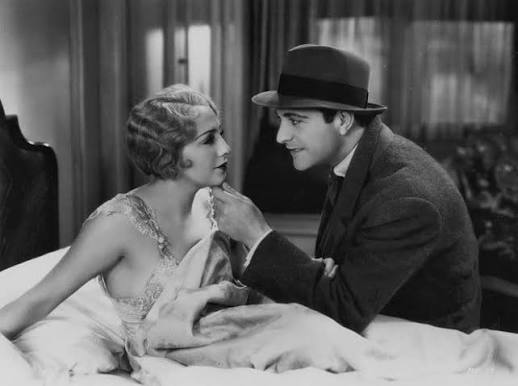
Directed by Roy del Ruth, the 1931 film was a big success – but then it ran afoul of the Hays Code for its overtly sexual content. Warner Brothers sought to amend things by remaking the film as a broad comedy. The result, Satan Met a Lady, is frankly atrocious. Variety called it “an inferior remake” of the original, Bosley Crouther of The New York Times described it as “a classic of dullness.” The most succinct and accurate critique came from the star, Bette Davis, who labeled it – “junk.” John Huston may have been forced to rethink some of the more salacious content of the book when he created his own version, but he managed to distill the greatness of the novel – and avoid the pitfalls of Satan Met a Lady – and to populate it with one of the greatest casts of all time.
But I’m not here to praise or damn any of these films. You know the reason we’re gathered together, don’t you? It just so happens that many people who were onscreen in The Maltese Falcon . . . . also appeared on Perry Mason!!! In truth, I’m being a little tricky here. The Sam Spade figures in both 1931’s Falcon and the 1936 travesty, Ricardo Cortes and Warren William, each had their turn playing Perry Mason in the 1930’s Warner Brothers films. But when it comes to the 1941 film and its connection to the TV series, we strike gold!
The most surprising fact is that William Hopper, the son of Hedda who played private detective Paul Drake throughout the series, had an uncredited bit role as a reporter in the film. (I challenge you to find him, though!) Moving along, there are three actors from the movie who also made multiple guest appearances in Perry Mason. Eight episodes feature one of these actors, seven of them original teleplays. We’re going to discuss four of these cases today.
* * * * *
“Well, Wilmer, I’m sorry indeed to lose you. But I want you to know I couldn’t be fonder of you if you were my own son. But, well, if you lose a son, it’s possible to get another. There’s only one Maltese Falcon.”
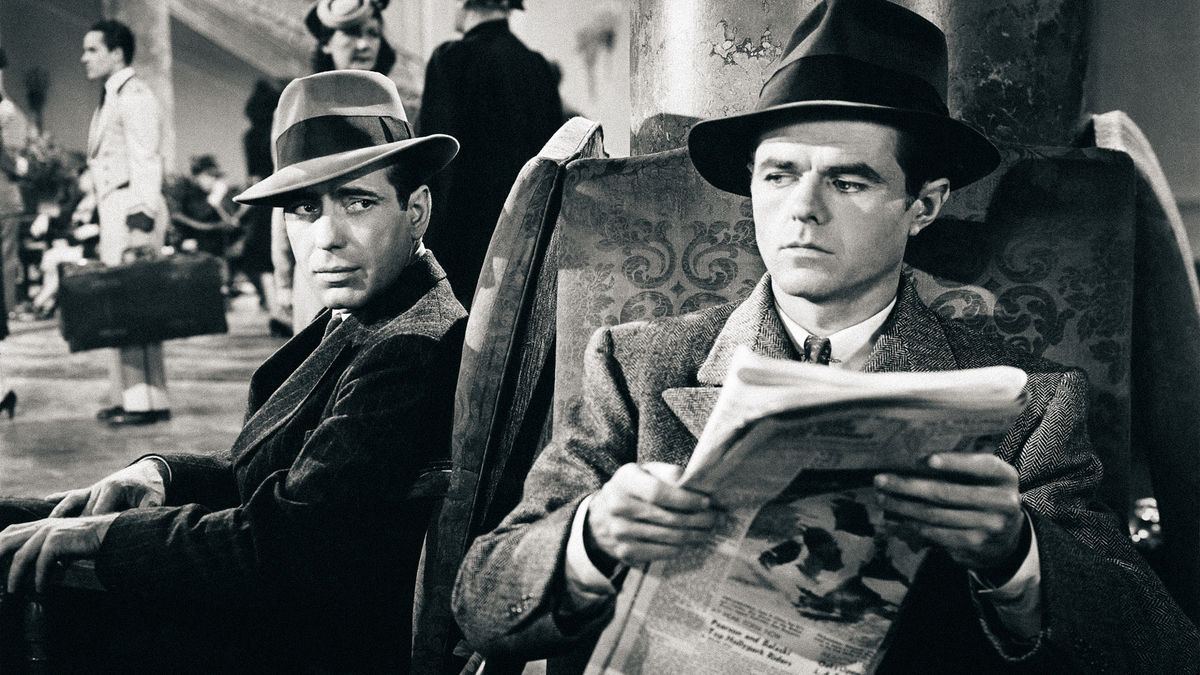
You’re reading this article because when I watched “The Case of the Pint-Sized Client” for our look at Eleanor Audley, I was thrilled to see Elisha Cook Jr. playing one of the suspects. Cook and I are both 5’5” and were born in San Francisco. Cook soon moved to Chicago and made his debut in vaudeville and stock theatre by the time he was fourteen. In 1930, he went to Los Angeles and made his first film, but by 1933 he was back in New York where Eugene O’Neill himself picked Cook to play the leading role of teenager Richard Miller in Ah Wilderness, which ran for two years.
By 1936, Cook was back in Hollywood, and for the rest of the decade, he was fairly typecast as egghead collegiate types in films like Pigskin Parade (Judy Garland’s film debut), Love Is News and Life Begins in College. He had a dramatic turn in 1936’s They Won’t Forget, a dramatization of the wrongful lynching of Leo Frank (the same case that became the source material for the musical Parade): Cook played the young boyfriend of Lana Turner, whose murder turns sweet Joe into a member of the vengeful mob.
There was something deeply intense and kinda scary that could be summoned up in Cook, and in 1941, John Huston took advantage of it by casting the actor as Wilmer Cook, the hired gun – and something more – of the Fat Man, Casper Gutman (Sidney Greenstreet). Cook’s nearly speechless role is highly memorable because of his eyes, which speak volumes (many of them verging on psychopathology), and his betrayal at the hands of – well, everyone, is one of the best moments of the movie’s climax. Cook followed this film up with an even more prominent role in another favorite early noir of mine: I Wake Up Screaming.
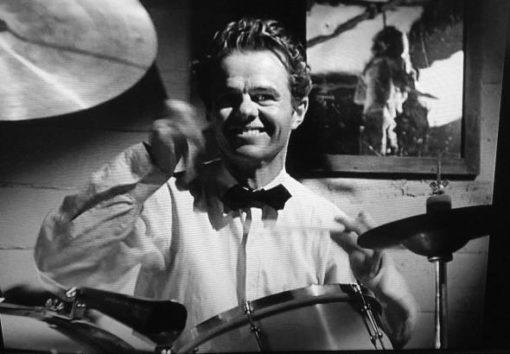
From then on, he could almost be guaranteed to pop up in similar roles as emotionally “distraught” young men with whom you’d rather not be alone. One of my favorites is Cliff, the drummer, in Phantom Lady where he’s still scary, but he’s a nice guy. He comes to a bad end here, as well as in The Big Sleep where he plays small-time gambler and informant Harry Jones, who learns to his regret that nobody lies to Eddie Mars!!! Much later, in Rosemary’s Baby, Cook was cast against type as one of the only non-Satanic characters in the film!
Cook lived to a ripe old age and had a long career in film and television, including a choice role in an episode of Star Trek as defense attorney to Captain James T. Kirk! Early on in his television career, he made two appearances in Perry Mason. Besides “Pint-Sized Client,” Cook appeared in the tenth episode of Season Eight, “The Case of the Reckless Rockhound,” which debuted on November 26, 1964.
In my reviews of the Perry Mason novels, I often tease how it seems that every tycoon in the canon made his fortune through mining. And here we have a tale set in a small mining town: Years ago, the Burgess diamond mine, run by Reba Burgess (the great noir actress Audrey Totter) and her husband, was the biggest concern. But then the husband died and his partner Bascom (Jeff Corey) skipped town. But now Bascom is back, and he wants the raw diamonds that Reba keeps in ten $100,000 pouches in the bank run by her friend Mal Malone (Bruce Bennett – more on him in another post!).
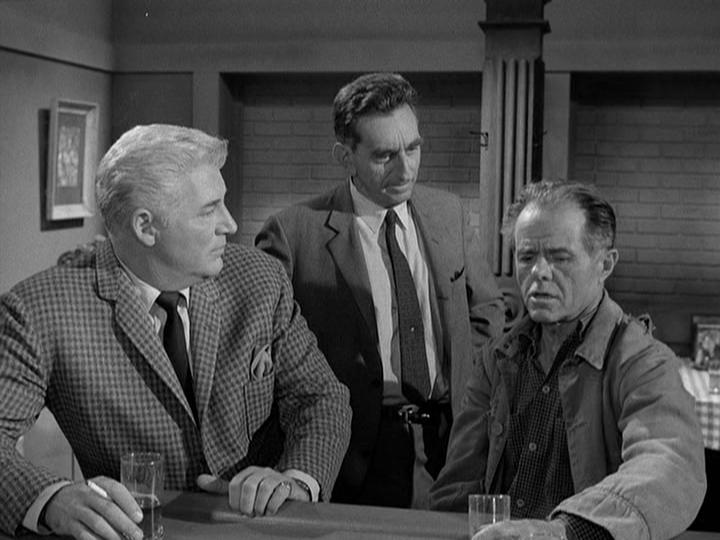
Bascom is found dead at the mine, and Reba is arrested. She had already contacted Perry Mason about the situation and then withdrew her request that Mason help her. Still, he flied to this small town and defends Reba. In court, he’s up against a D.A. named Clark (Donald Buka, who’s either channeling Don Adams as Tennessee Tuxedo or Eugene Levy in Waiting for Guffman!). The suspect list includes Mal and all the friendly townsfolk who either work at the bank or at the mine and all love Reba – including Ben Johnson, before his Oscar-winning performance in The Last Picture Show, and Elisha Cook Jr. as the town drunk, with the colloquial sobriquet of “Reelin’ Pete.”
The machinations of all the characters are very Freeman Wills Croftsian – who was at the bank at what time opening which box? – but it’s a nice assortment of folks. And while the killer was easy to pick out, he does give a nice confession in court.
* * * * *
“Miles hadn’t many brains, but he had too many years of experience as a detective to be caught like that, by a man he was shadowing, up a blind alley, with his gun tucked away in his hip and his overcoat buttoned. But he would’ve gone up there with you, Angel. He was just dumb enough for that. He’d have looked you up and down and licked his lips and gone, grinning from ear to ear.”
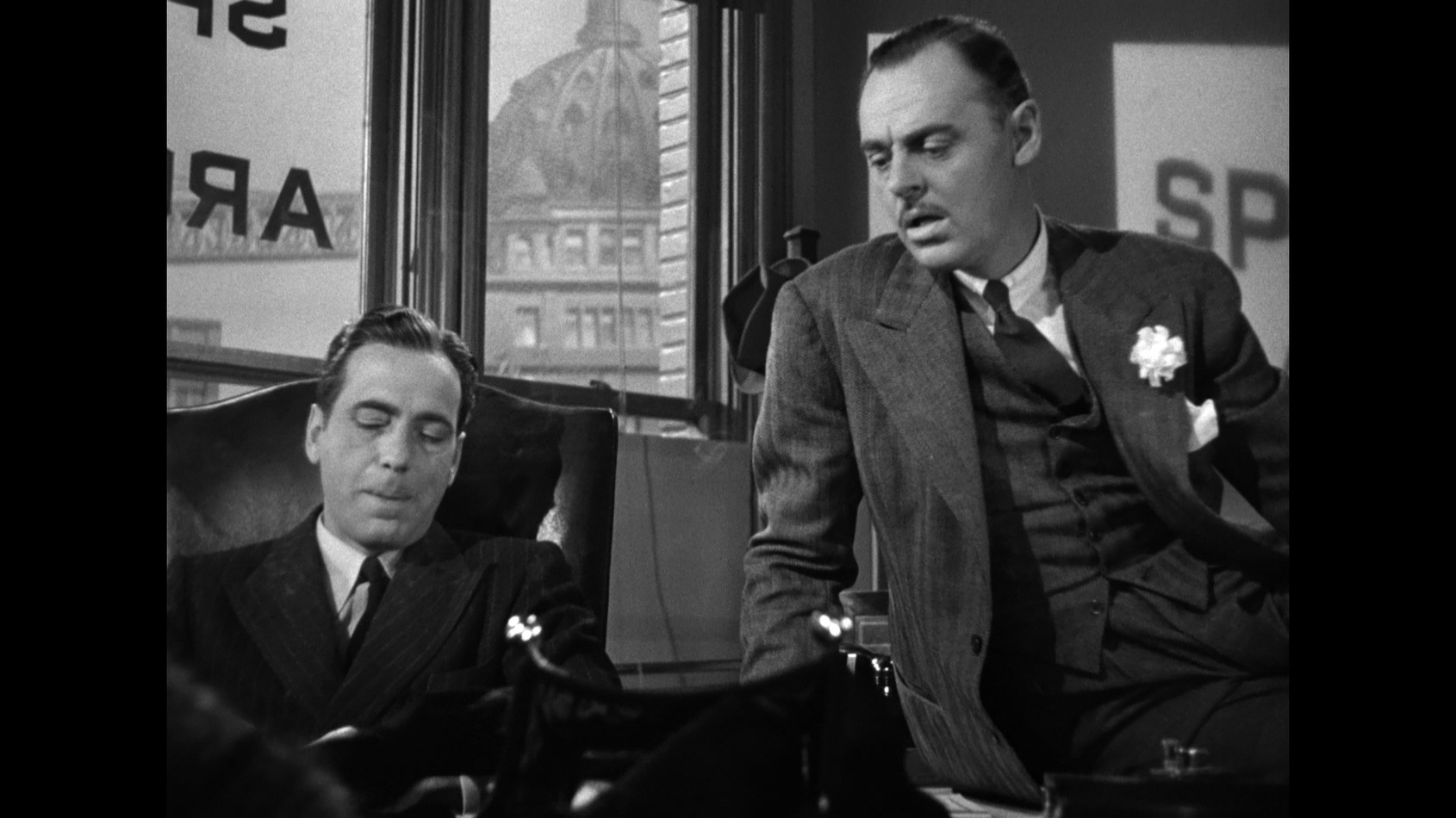
Jerome Cowan had a face that always seemed sunny and about to burst into a grin. Even playing a sleazeball like Miles Archer, Sam Spade’s doomed partner, you couldn’t help but like the guy. And when he had to prosecute Kris Kringle on Christmas Eve in Miracle on 34th Street, there was no pure badness in him, like you see in a Frank Capra movie; sure, Cowan was the bad guy, but you felt for him and hoped he got that last-minute present for his kid.
Cowan spent the 1930’s on the Broadway stage and started playing role after role in movies around 1936. He often played the star’s manager or business associate, always out to profit from the situation (like he did for Ginger Rogers in 1937’s Shall We Dance?) He played a suspect in some “B” movie pictures, like a personal favorite, Murder in the Music Hall (1946). His TV career wasn’t very prestigious, although he did appear in one of my favorite early episodes of The Twilight Zone, “The 16-Millimeter Shrine,” playing something he rarely got to play in the movies – a leading man.
Cowan appeared in two episodes of Perry Mason. We’ll save the second for another day, but his debut on the series was in the twenty-first episode of Season Two, “The Case of the Lost Last Act,” which premiered on March 21, 1959. Cowan is shot to death before our eyes by the first commercial break, but before that he has a ball as playwright Ernest Royce, a mediocre talent and a rotten person, whose plays still seem to get produced on Broadway, no matter how bad they are. Now he has gathered together his team of talented theatre folk – producer John Gifford (David Lewis, who did seven episodes of PM before spending a couple of decades on General Hospital as Edward Quartermaine), Helen Dwight, leading lady and wife to the producer, Michael Dwight (Robert McQueeney), Gifford’s business manager and Helen’s brother, and Jim West (Richard Erdman, who appeared in six episodes of PM), the team’s cynical public relations guy – to read them his latest play.
Also present is a young wannabe-actress, Faith Foster (Joanne Gilbert), who’s there because her boyfriend, ex-mobster Frank Brooks (Stacy Harris) put up $75,000 with the proviso that Faith be in the play. The second act ends with the character of the play – clearly based on Royce himself – sitting down to write the third act and getting shot. When Royce tries to begin reading Act Three, he discovers that the pages have been stolen and replaced with blank paper. The group around him is just as upset, but for a different reason: clearly the play is based on true events, a gangland murder that occurred twelve years earlier, and all those present were potentially involved.
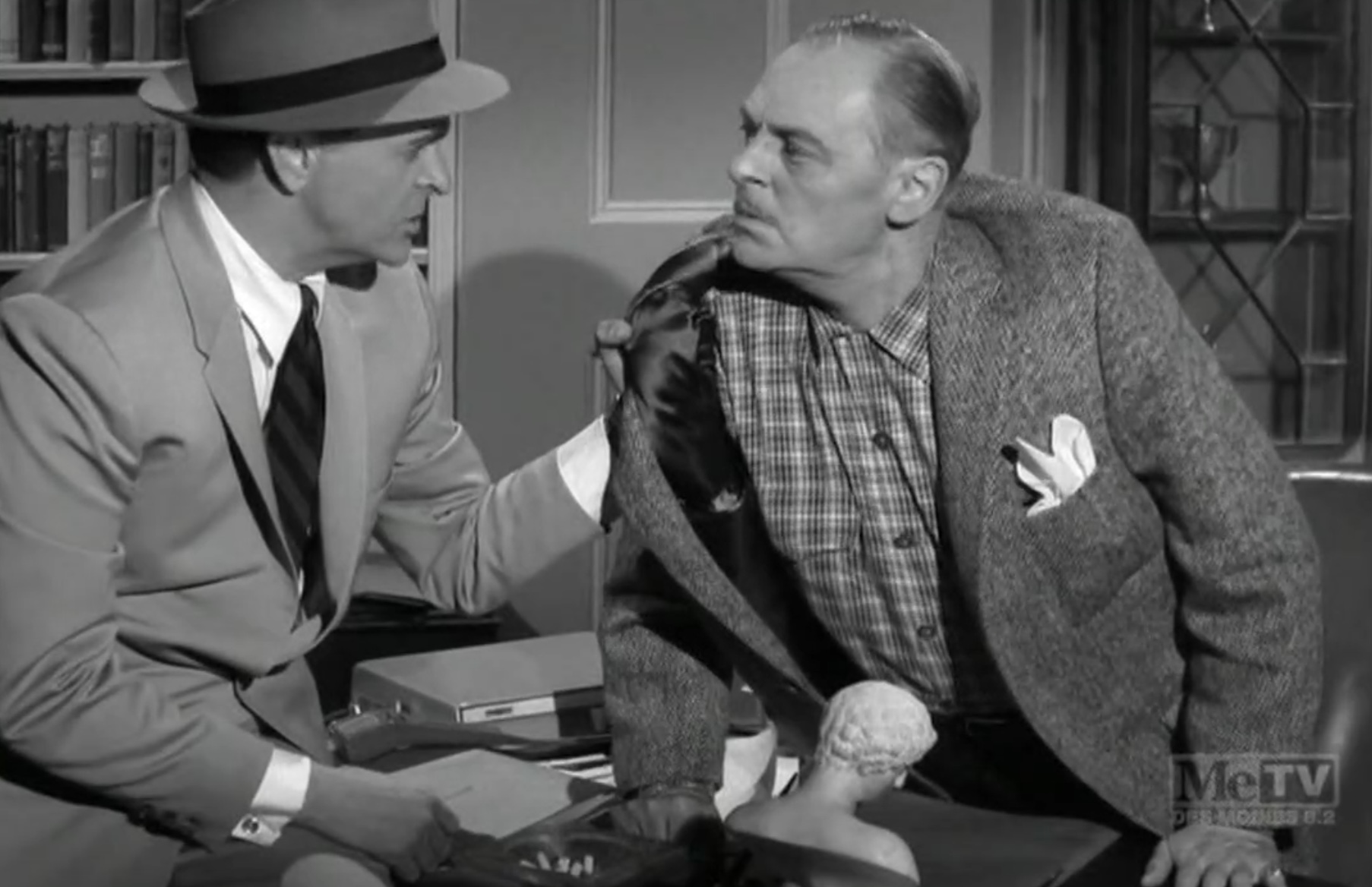
After promising he will rewrite the third act, Royce sends everyone away – all but Faith, with whom he is having a fling. Just then, Frank Brooks arrives, and Faith hides just in time to overhear Frank burst in and tell Royce he knows about the affair and is pulling his money and his girl from the show. It turns out (quite the coincidence!) that Frank was also the second lieutenant to the mobster whose slaying inspired Royce’s play. And by an even bigger coincidence, it’ll be Frank’s gun that killed both men!!
Someone will have to explain to me why Royce, who built his whole career on blackmail because of what he knows about this murder, would blow up his whole existence by writing a play exposing the guilty parties involved. Other than that, this is a special episode because all four of the suspects are well-drawn and sympathetic people. At the heart of the story is the great romance between the actress and her producer; the other two people are there to protect the pair whom they love. In other words, any unmasking is going to hurt us, and while emotional fireworks are meat and potatoes to Perry Mason, rarely do we feel any sort of regret at the thought that anyone of this circle of suspects will be unmasked.
* * * * *
“Tom says you were in too much of a hurry to even stop and take a look at your dead partner. And you didn’t go to Archer’s house to tell his wife: we called your office, and the girl there said you told her to do it. I’ll give you ten minutes to get to a phone and do your talking to the girl; I will give you ten minutes to get to Thursby’s joint, Gary and Leavenworth, you could do it easily in that time . . .”
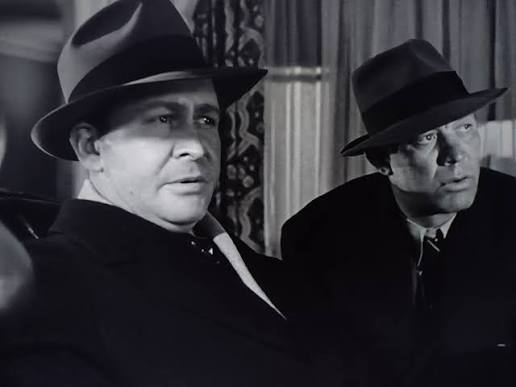
As Lieutenant Dundy and Detective Tom Polhaus respectively, Barton McLane and Ward Bond made the ultimate Bad Cop/Good Cop team in The Maltese Falcon. Although both suspected P.I. Sam Spade of murdering his partner (Spade was, after all, shtupping Archer’s wife), it was Dundy who constantly rode Sam, until Bogie would snarl, “Stop riding me!” and Tom would gently say, “Aw, give us a break, Sam!”
I sure wish that Ward Bond had made an episode of Perry Mason because it would be fun to talk about these two together. MacLane was born in South Carolina in 1902, Bond in Nebraska a year later. Both were big boys who distinguished themselves playing college football; it was Bond’s good fortune that his teammate and best friend was a guy named John Wayne. While Bond went straight into the movies after he, Wayne and the entire USC team appeared in John Ford’s 1929 film Salute, MacLane by that time was already a Broadway veteran. After several acting roles, he actually wrote a play called Rendezvous, in which he also performed when it debuted in 1932. This caught the attention of Warner Brothers, who signed MacLane to a contract.
From then on, he compiled a long list of strong supporting roles in movies like the Marx Brothers debut The Cocoanuts,High Sierra and The Treasure of the Sierra Madre. More often than not, MacLane’s characters had a rank before the name, whether as a policeman or a soldier or a cowboy. He appeared opposite Glenda Farrell in seven of the nine Torchy Blaine pictures as her boyfriend, Detective Steve McBride. In the 1935 Perry Mason film The Case of the Curious Bride, he played a homicide detective, and he would play a friend of Mason’s on the force in one of his four guest appearances on the 50’s series.
Bond had a similar career, although he specialized in Westerns. (He did have another fine turn as a “good cop” in It’s a Wonderful Life, although this time his Officer Bert was teamed up with cab driver Ernie (Frank Faylen)! Both Bond and MacLane ended their acting careers with roles on popular TV programs. Bond was the star of Wagon Train until his premature death at the age of 57. MacLane starred in another, less successful Western show called Outlaws and then had a recurring role as an Air Force General on I Dream of Jeannie. Three of those episodes aired after his death in 1969.
Incidentally, Falcon may have been the only time MacLane worked with both Jerome Cowan and Elisha Cook, Jr., but MacLane and Cowan worked together a half dozen times in mysteries and musicals, for directors as diverse as Fritz Lang, Raoul Walsh, and Frank Capra. And, of course, all three actors found their moments to shine in Perry Mason. MacLane’s four appearances included the adaptation of The Case of the Footloose Doll, which I haven’t read yet and may not get to for a while. But let’s look at two of his three other episodes here.
“The Case of the Violent Village” was the eleventh episode of Season Three and premiered on January 2, 1960. The premise is one of my favorites: a man returns to his hometown as a reviled transgressor, gets into worse trouble as the townsfolk threaten to become a mob, and then is redeemed in the end as the citizens have their own mistakes and responsibilities smeared in their faces. The only problem with this case is that it’s a ninety-minute story jammed into a fifty-minute long episode. As a result, everything has to happen quickly, and we don’t get enough time to dwell on the emotional tension of the situation.
Young Phil Beecher was convicted of vehicular manslaughter after an accident on an icy road caused the death of Aggie Norris, one of two daughters of the town sheriff (MacLane). Ten months later, Phil returns to beg his wife Kathi to forgive him. Kathi is played by Jacqueline Scott who, over the course of five decades, might have been in every dramatic series that ever existed, including three appearances on Perry Mason. In appearance she resembles Judy Garland, and she was great at playing tremulous wives of troubled men.
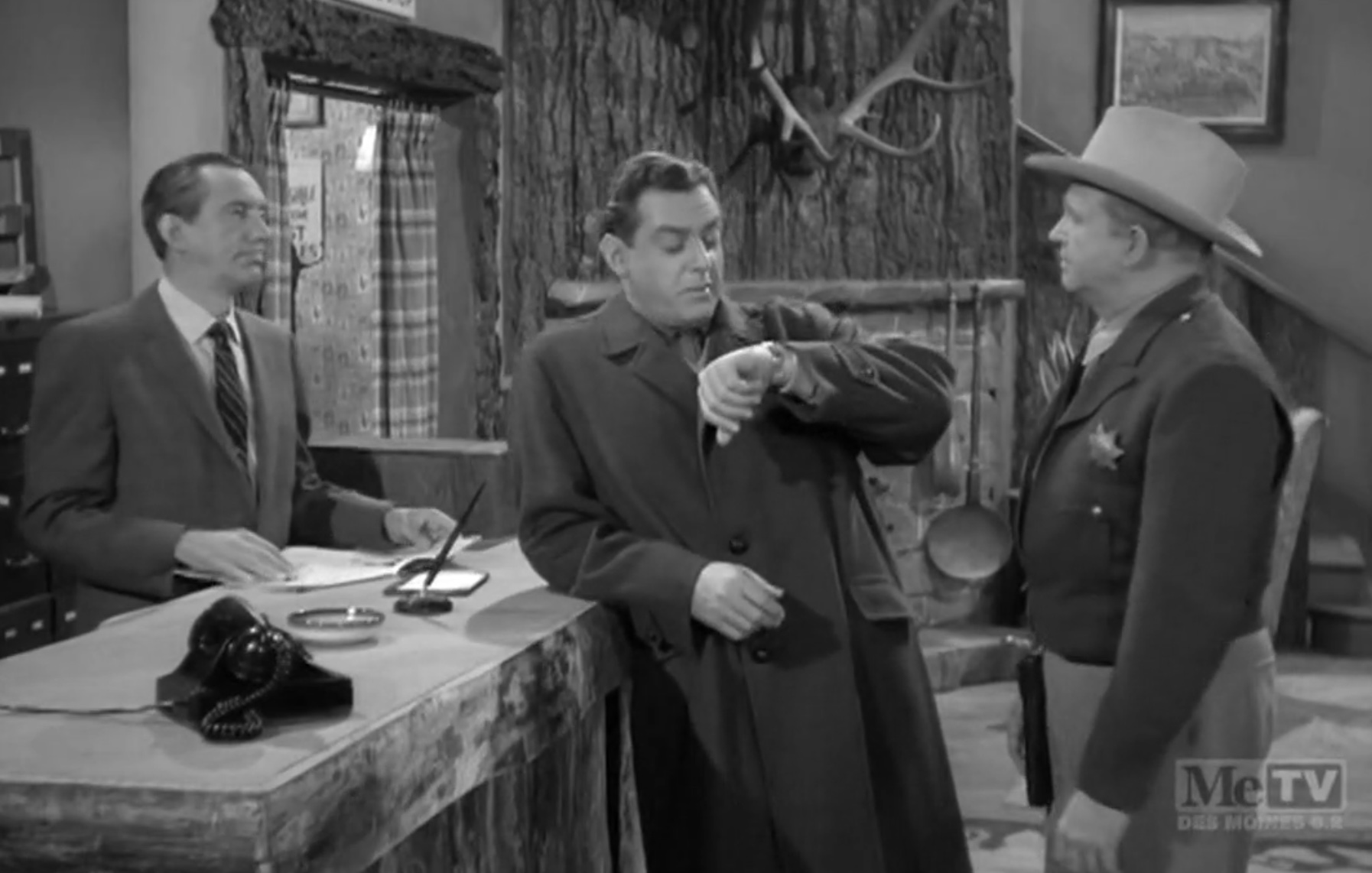
Before Kathi can reconcile with Phil, he falls victim to a scheme by the sheriff’s vengeful other daughter, who winds up dead. Things look black for poor Phil, who is on trial for murder and theft of $40,000. Not even the sheriff is capable of looking at this one objectively. Fortunately, his old fishing buddy is in town, a certain defense attorney who is more than willing to stand up for the underdog. This gives MacLane the opportunity to play one of the most vulnerable parts I’ve seen him do: he even breaks down in tears on the stand!
Sure, I knew who the killer was as soon as I heard the gunshot fired. It’s still a fun episode, even if it feels way too rushed. It’s also the rare case where Mason is alone, without his usual allies or enemies. (Della makes a brief phone call, but all the other regulars took a vacation week!) Fortunately for Perry, the judge is played by Willis Bouchey, who shows up as a judge in almost two dozen episodes and is more sympathetic to Mason than a typical small-town justice might be. (We’ll talk more about the judges further down the road.)
Another favorite guest star is Ann Rutherford whose long film career included several appearances as one of Andy Hardy’s girlfriends, a spot as Scarlett O’Hara’s sister Careen in Gone with the Wind, and a delightful turn as the murderer in one of my favorite “B” mysteries (don’t ask, won’t tell!)
McLane’s final guest shot was in “The Case of the Ruinous Road,” Episode fourteen of Season Eight, which first aired December 31, 1964. (Can you imagine? Perry Mason was so special that it wasn’t preempted for New Year’s Eve programming!!) A less than trenchant story about land development makes for a better-than-expected episode due to some canny casting. Adam Conrad (Allan Case) is a straight and true engineer working on a big project for tycoon real estate developer Archer Osmond (an older, grayer but no less forceful MacLane). It’s early days, but the project is already going into cost overruns, and Osmond demands that Ed Pierce, the head of the construction company (Les Tremayne) find a cost-effective way to build a road between the highway and his new housing development. Meanwhile, Conrad’s shifty boss, Joe Marshall (Bert Freed), is trying to shift the blame for everything onto poor Adam.
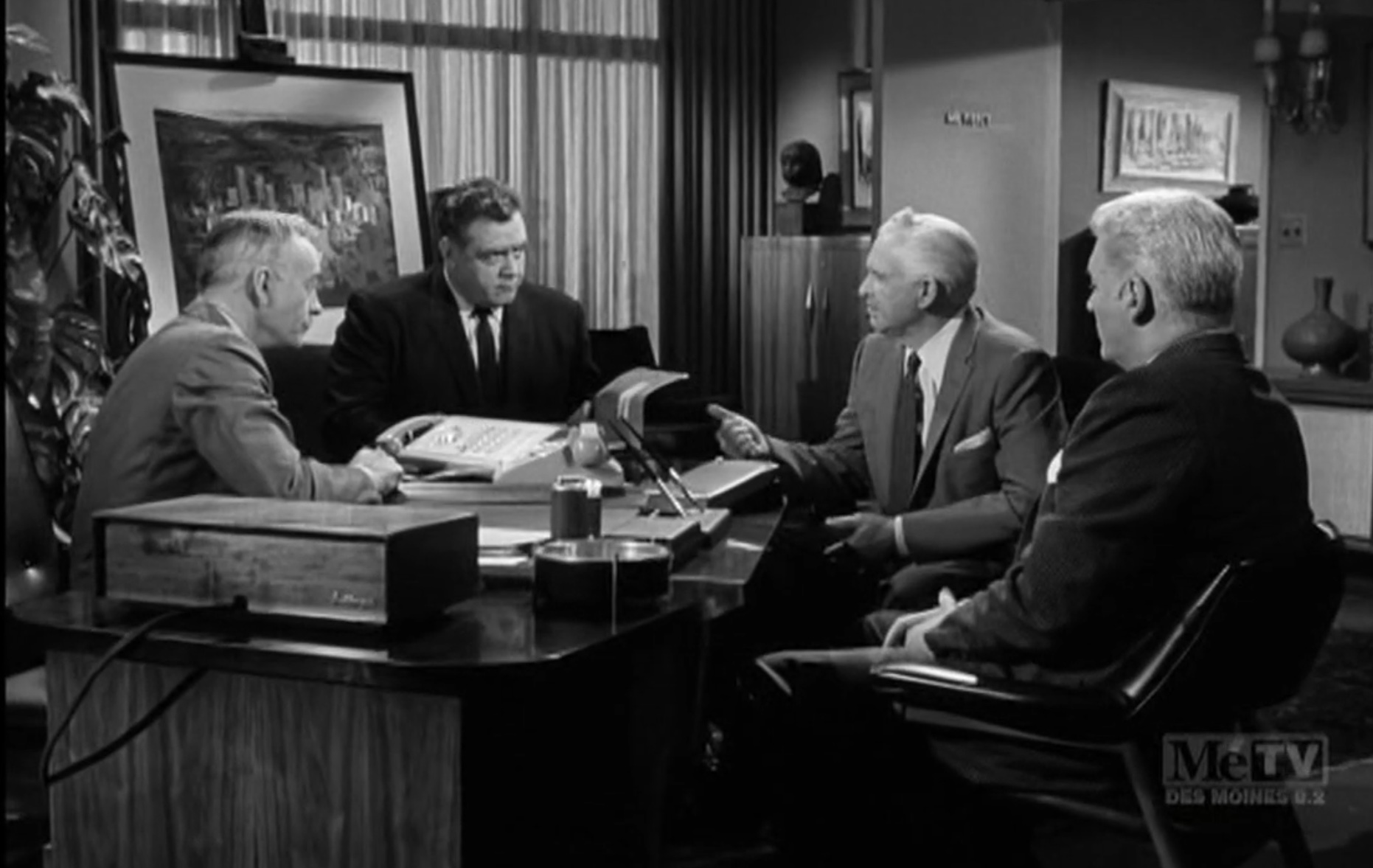
The plan for a road is determined; the trouble is, it means tearing down the historical home owned by Marguerite Keith (Meg Wylie, one of the great “biddies” of the mid-20th century). Alan feels bad about this, but his girlfriend Joan (Hilary Blackman) feels worse, and she goes to handsome but cynical newspaper editor Quincy Davis (Grant Williams, the Incredible Shrinking Man himself) with the story. Davis doesn’t want the house torn down, so he writes an expose column which gets everyone – Adam, Pierce, Osmond and Marshall – in trouble. And then Marshall accuses Adam of embezzling from the company. It’s no wonder that Act One ends with Adam fleeing Marguerite’s house, leaving behind Marshall’s body, bludgeoned to death.
Perry Mason happens to be Marguerite’s attorney and friend, and she begs him to help “that nice young man” Mr. Conrad. Another suspect is introduced quite late in the game: Harley Leonard (John Howard) is a neighbor of Marguerite’s who might have used his wealth to influence the course of the construction project. All but one of these actors have experience in the series, most of them having appeared in three or four episodes. I spotted the killer in the first few minutes, based on their positioning and their history with the series . . . and I was wrong!!!! This is one of the rare instances where Perry Mason pulled the rug out from under yours truly, with a surprise killer and motive straight out of Agatha Christie – and I loved every minute of it.
* * * * *
It’s lovely to bask in the memories of a classic like The Maltese Falcon while strolling down memory lane with Perry Mason. Next time, we begin a new series exploring actors who guest-starred on Perry Mason after featuring in movies made by my favorite director, the Master of Suspense – Alfred Hitchcock! And I think that one of these actors may provide the biggest twist so far!!
* * * * *
ADDENDUM
In my memory, I have never added an addendum to an article I have already posted, but if you check the comments below, you will find one from my friend Scott K. Ratner, who can recite the full careers of more unknown or unremembered actors than you can ever imagine!
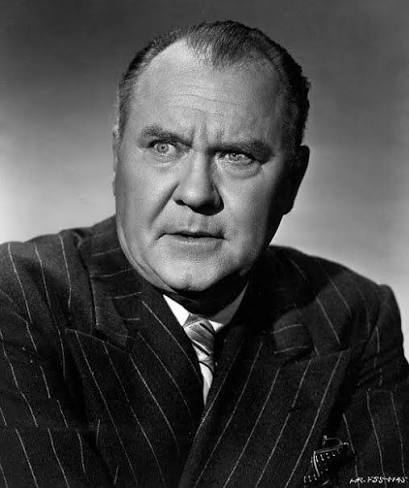
Scott was kind enough to point out to me that I had forgotten to include two other actors who appeared in both The Maltese Falcon and Perry Mason. You will, of course, remember Emory Parnell, even if you can’t say his name. Parnell began his career on the concert stage as a violinist, performing primarily in vaudeville. (Evidently, he was something of a one-man band!) Even after he began working in films, Parnell would travel around the country, performing with his family, and would even entertain the troops during the Korean War.
Parnell made over 250 films over thirty-six years. His big, blustery face made him perfect for playing frustrated and enraged characters: cops, doormen, businessmen. Yes, in his career he ran afoul of The Three Stooges, but Parnell was also part of Preston Sturges’ stock company and was featured in The Miracle of Morgan’s Creek (1943) as a, well, an enraged cop!
I guess you could say that Parnell was cast against type in The Maltese Falcon, playing a ship’s mate. I assume this was on the La Paloma, the ship that Wilmer (Elisha Cook, Jr.) burns to the ground; maybe this very act enraged Parnell’s character!
He brought his enraged businessman act to Perry Mason in “The Case of the Latent Lover,” which we covered when we were talking about John Lasell. Unfortunately, this was Parnell’s only appearance on the series.
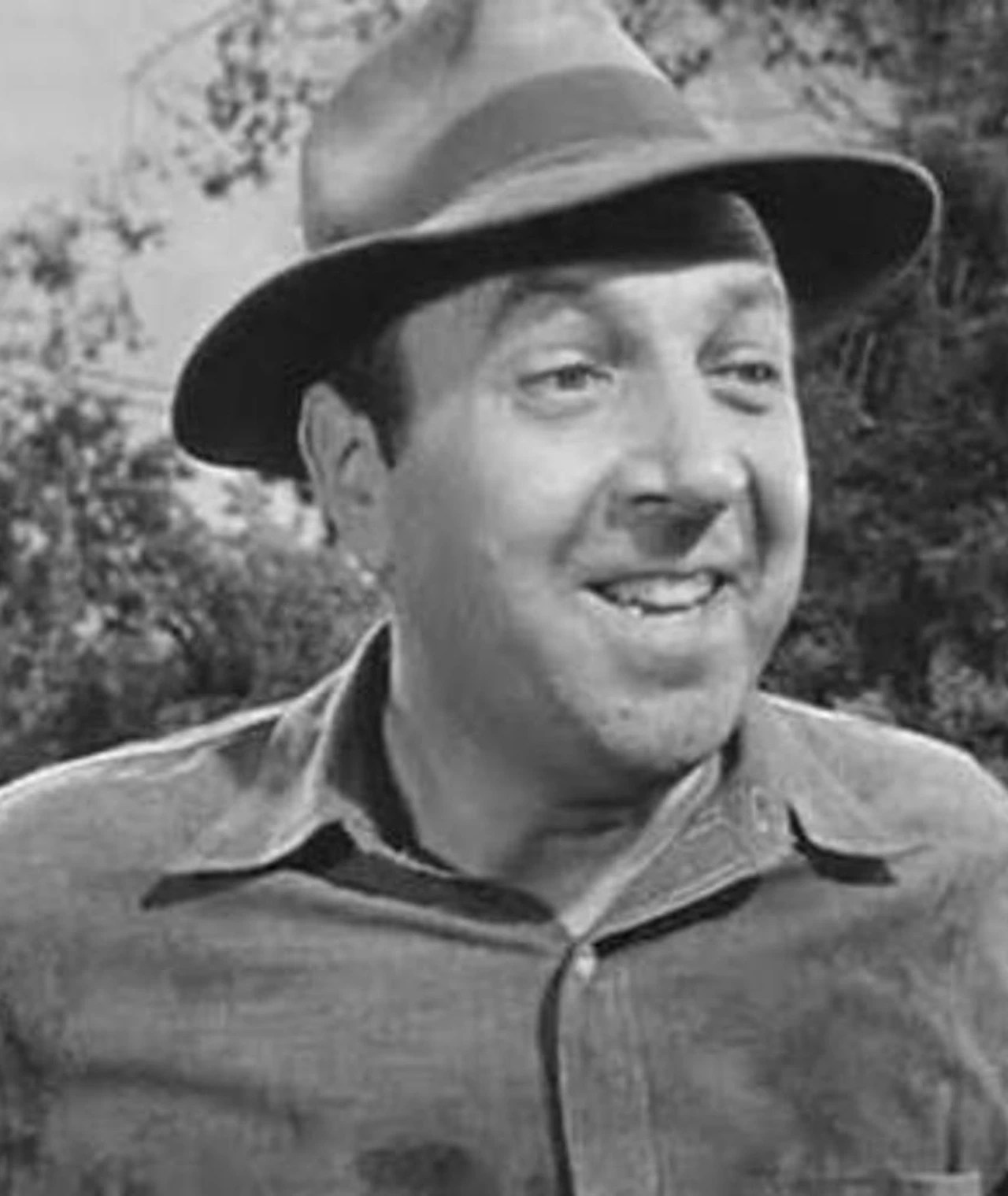
Robert Foulk was another big, lumbering actor with a vast film and television career who specialized in policemen, sheriffs and guards. He was comfortable in both drama and comedy. He also worked with Broadway director George Abbott as an assistant director, and he would take charge of staging Abbott shows in regional tours. In The Maltese Falcon, he actually worked behind the scenes as the film’s dialogue director.
Foulk appeared in four episodes of Perry Mason. Two of them were adaptations: he played a sheriff in “The Case of the Buried Clock” and a deputy in “The Case of the Grinning Gorilla.” He also appeared in two original teleplays, one of which we will be covering with another actor and the other, “The Case of the Potted Planter,” we will discuss here. This was the twenty-seventh episode of Season Six and premiered on May 9, 1963. It’s another case set in a small Southern California town where the lives of the residents are hopelessly entangled with one another.
Andrea Walden (Diana Brewster) used to perform on the local radio but gave it up and married the station’s owner, Martin Walden (Robert Bray). She convinced her husband to sell the station to her friend Nelson Tarr (Joe Maross), which was fine with Walden – until he wrongly starts to suspect that Andrea and Nelson were lovers. He then plans to pull ownership of the station away from Nelson, with help from banker Chris Hearn (Harry Lauter) and lawyer David Pinter (William Allyn).
Meanwhile, Martin’s sister Frances (Constance Ford) is jealous because she used to keep house for her brother before Andrea came along. So she plans to frame Mrs. Walden for adultery by sending her nephew Roy Mooney (Mark Goddard) to work for Uncle Martin, steal one of Andrea’s handkerchiefs, and find an unwitting witness to feed the story that he and Andrea are involved. That witness is Melinda Tarr, Nelson’s rebellious daughter, who is in love with Roy – and who happens to be the one who discovers Martin’s body in his greenhouse, killed with a flower pot (the potted planter, get it??). Yet it’s her father who is arrested and who depends on Perry Mason to get him out of this fix.
Speaking of fix, the local district attorney is played by Paul Fix, who did the same duty five times over six seasons! Robert Foulk is typecast as the local sheriff, and his part is so small he doesn’t even get to testify.
Thanks to Scott for calling my attention to this oversight. And now, back to our regularly scheduled programming.


Two others as well— both rather ubiquitous character actors: Robert Foulk and Emory Parnell.
LikeLiked by 1 person
Thank you, Scott! In your honor, I have inserted my very first addendum to a published post in order to cover both of these actors!!
LikeLike
I must point out that the word “gunsel” parallels beautifully in shape and sound with “damsel.”
LikeLiked by 1 person
And I imagine both damsels and gunsels would enjoy a glass of damson gin!
LikeLiked by 1 person
love when a crowd is completely locked in like that, too. It makes the whole experience feel so much bigger than just watching a performance. Sounds like you guys absolutely rocked that stadium! 🤘🏽🎶
LikeLike