Before witches became petulant teenagers on Netflix or haunted multiple seasons of American Horror Story, there was Samantha Stephens. Premiering (after a long period of development) on September 17, 1964, Bewitched was the perfect sitcom for a nine-year-old boy with a romantic soul and a love for fantasy. The concept of a beautiful witch falling in love with a hapless mortal was nothing new. Creator Sol Saks based the show on two movies that dealt with that very subject: 1942’s I Married a Witch, starring Fredric March and Veronica Lake, and 1958’s Bell, Book and Candle, starring James Stewart and Kim Novak.
Despite the fact that the show’s pilot began rehearsal on November 22, 1963, a fateful day in American history, (Bill Asher was actually a friend of President Kennedy) and ran for eight seasons during a period of great social turbulence, Bewitched felt appealingly retro. Sure, Samantha had all the powers, but her husband Darrin wielded the power in the house (or thought he did) by demanding his wife give up her witchcraft and let him provide for his family in a totally mortal way. Samantha didn’t mind this at all – in theory – because it meant her husband loved her for herself and not for what she could bestow upon him.
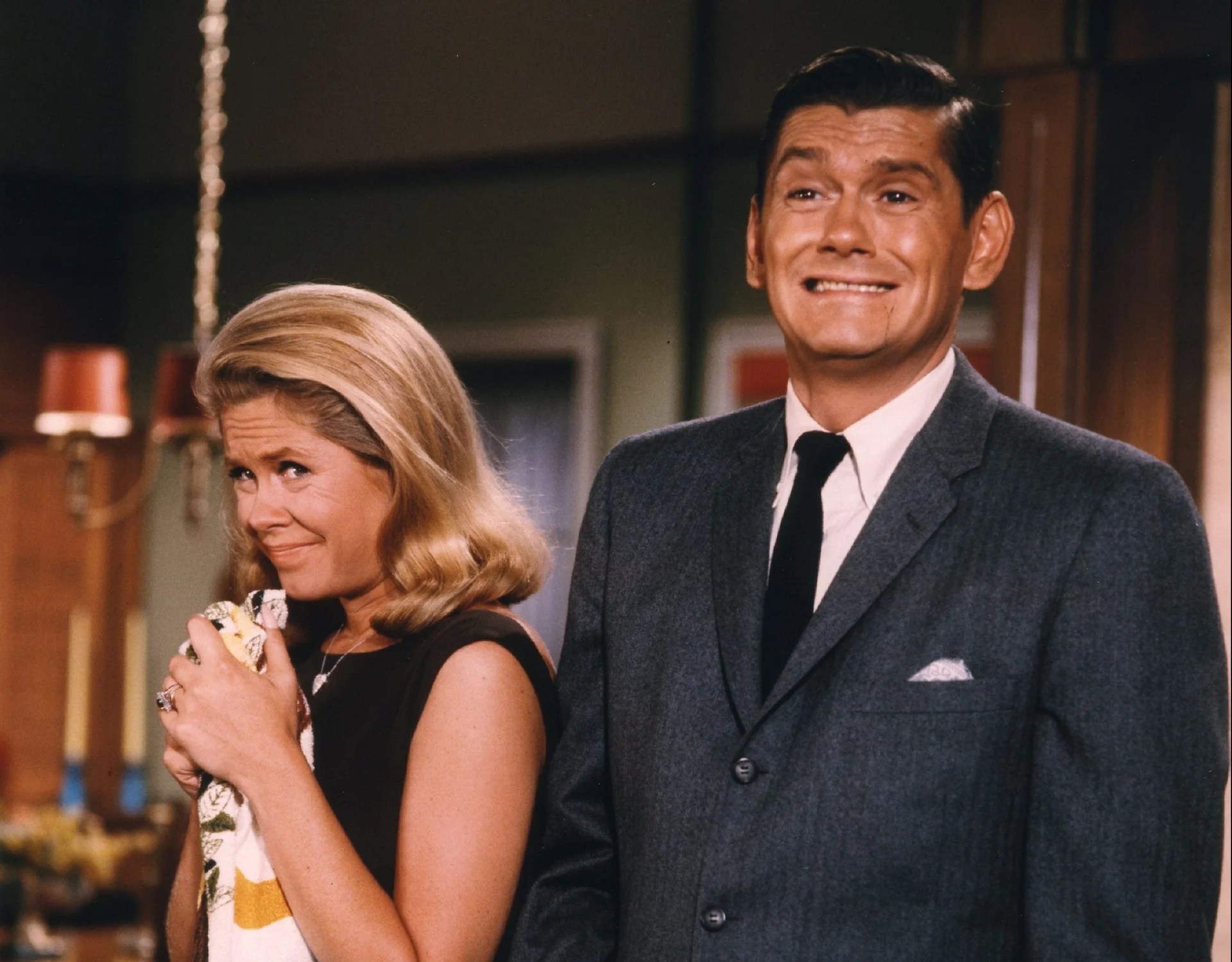
This “mixed marriage” didn’t sit well with all the witches and warlocks in Sam’s family, and the humor of the series centered around Darrin being in conflict with Sam’s powerful family: mom Endora (Agnes Moorehead, the show’s chief delight), dad Maurice (frequent guest star Maurice Evans), madcap Uncle Arthur (Paul Lynde) dotty Aunt Clara (Marion Lorne), and evil twin cousin Serena (Montgomery). These performers were all delightful, but the main focus of the early black & white seasons was on a couple adapting to married life while hiding the magic that inevitably erupted from Darren’s family, the neighbors (especially Mrs. Kravitz next door) and Darren’s boss, Larry Tate (David White) who ran an ad agency in New York.
Then the network butted in: they wanted more magic, more focus on the colorful witch family (the show switched to color at the start of Season Three), more farce. You could sense that these changes didn’t sit particularly well with Montgomery, but she and Bill Asher were at the mercy of ABC. What became even more challenging was the large number of changes that had to be made to the regular cast. Marion Lorne died; so did Alice Pearce, who played Gladys Kravitz. Lorne was irreplacable, but Gladys was recast with Sandra Gould. Larry Tate had a wife, played by two actresses. Darrin had a father, played by two actors.
The biggest change of all was that Samantha had a husband – also played by two actors! When Dick York could no longer work due to back troubles, he was replaced by Dick Sergeant. Sergeant was snarkier and lacking in much warmth; personally, I thought the chemistry between him and Montgomery was nil, and their relationship became more antagonistic in the final seasons.
Most of this judgment is in hindsight; at the time, I had a blast watching the show and all the funny characters who showed up. And wouldn’t you know it? A whole slew of these wonderful actors also appeared, multiple times in fact, on everybody’s favorite law drama! Over the course of the next two posts in this series, we’re going to highlight a lucky seven of them: these folks appeared in a sum total of fifteen episodes of Perry Mason, all but one of them original teleplays. We’re going to look at nine of these cases.
* * * * *
Let’s start with Bernard Fox, who was, as they say, “born in a trunk” in Wales in 1927, the son of two stage actors in a multi-generational family of thespians. Fox’s film career began in 1956 and included thirty films. There were dramas, like two versions of the story of the Titanic (in the first, Fox uttered the line, “Iceberg, dead ahead, sir!”), but mostly Fox was known for comedy. He specialized in high status bumblers and fish-out-of-water British servants. His credits include multiple appearances on Hogan’s Heroes, The Danny Thomas Show, and The Andy Griffith Show. He played three different roles on The Dick Van Dyke Show, including a creative writing teacher who falls in love with Laura Petrie, and a neighbor, whose pretty little daughter, Priscilla Darwell, keeps beating up Ritchie Petrie.
By far, Fox’s most famous role was as witchcraft’s answer to the HMO, Dr. Bombay. Whenever a character caught some bug that made their ears grow or their body float, Samantha would shout out, “Calling Dr. Bombay!” and he would pop up – although, like any medico these days, he always seemed to be on vacation when summoned. He also had a low success rate in curing whatever ailed a person, which is where much of the humor came from.
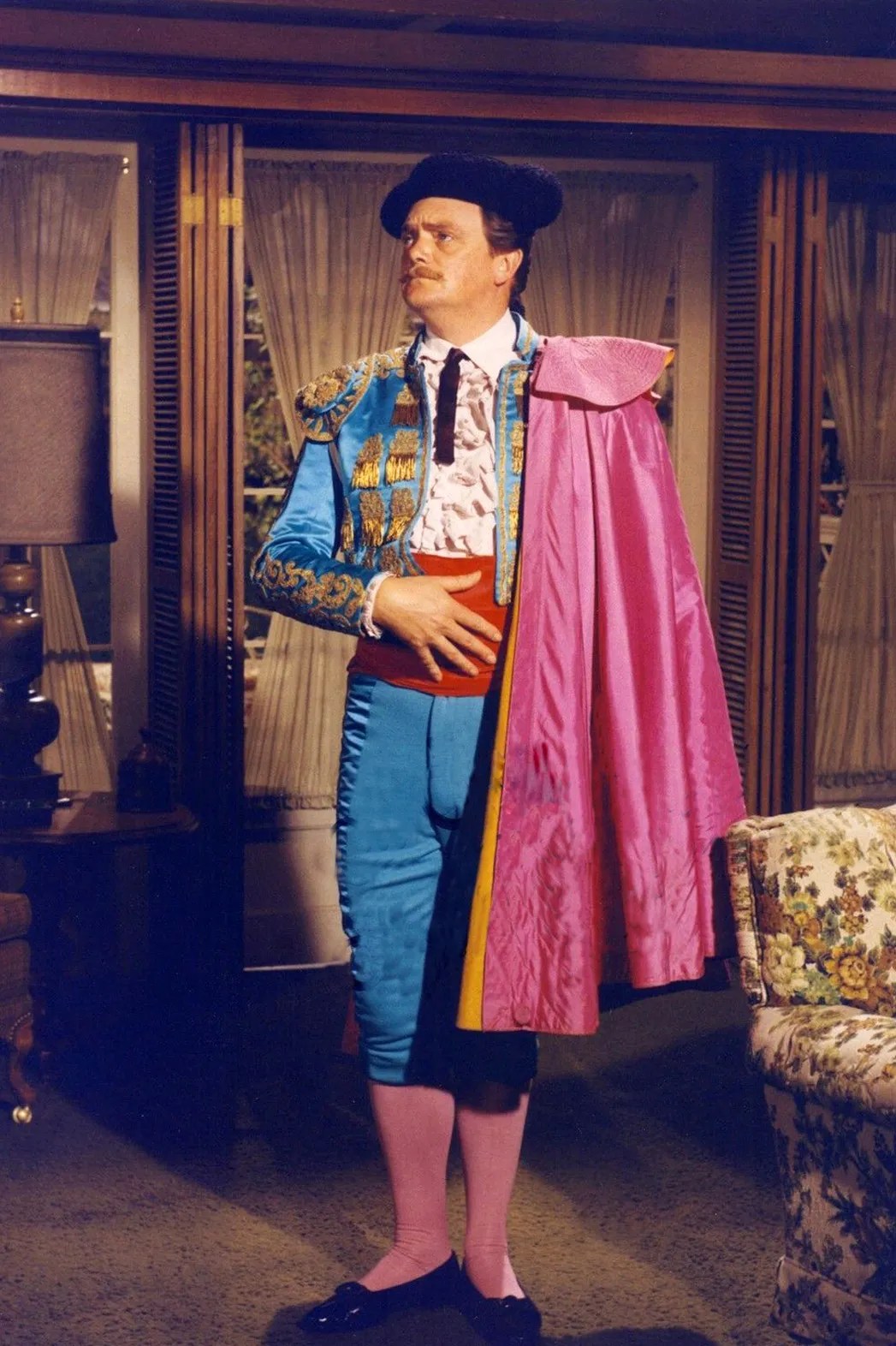
The character was cut out of the final season of the series in 1971-2, which gave Fox the opportunity to play Dr. Watson opposite Stewart Granger as Sherlock Holmes in a TV-adaptation of The House of the Baskervilles (which did not make any lists on a recent draft of the best Holmes films on Tipping My Fedora.) However, this was not the end of Dr. Bombay. Fox reprised the character twice, first on Tabitha, a spin-off of Bewitched about the Stephens’ magical daughter, and then, most intriguingly, on the daytime drama Passions, a truly crazy soap opera that featured Juliet Mills as a vengeful witch named – Tabitha!
Fox made one appearance on Perry Mason in “The Case of the Laughing Lady,” the first episode of the series’ ninth and final season, that premiered on September 12, 1965. I know some believe that the quality of Season Nine was spotty, but I think there were some fascinating choices made here and there, and this first episode has some interesting features. Chief among them was the creation of Clay’s Grill, a fine dining establishment run by Terrence Clay (Dan Tobin, whom we will discuss at a later date) that served as a regular place for Perry, Della and Paul to eat – and for them to meet up with District Attorney Hamilton Burger and new regular detective Steve Drummond (Richard Anderson). This was a good season for William Talman’s D.A., with some fiery courtroom action and more out of court scenes for the character.
But this episode begins in a woman’s prison, where Carla Chaney (Jean Hale) is awaiting trial for the murder of her boyfriend Gerald Havens. She has fired her court-appointed attorney and has no representation as yet, so she has been stewing in jail. Then one night, the prisoners are watching a TV program about a huge charity affair going on at the the Los Angeles branch of the prestigious Devore Galleries, and Carla is shocked to hear a bizarre laugh off-camera. This is the same laugh she heard the night she went to see Gerald and found him stabbed to death. It reminds her that she also saw a woman – the woman who she now sees on the TV screen – and she realizes that this woman is the real killer.
However, the woman happens to be Leona Devore (Constance Towers, who we will also discuss), the owner of the gallery, who insists that she was conducting gallery business in the Orient on the night of Gerald’s murder. Despite this contradiction, Perry agrees to take Carla’s case pro bono. His reasoning for this is expressed in a speech to Della Street that reminds me of all those passionate speeches Mason would give in the early novels about defending the weak. There’s a lot of great scene work between the series regulars here, and yet Mason still has time to crash another charity event, where he succeeds in recording that same mysterious laugh using a microphone disguised as a martini olive!
Bernard Fox has a great role as a major suspect, a wealthy art collector who has been financing the galleries; I have to say, though, that his dramatic work here is far less interesting than the comic roles he was better known for. Other suspects are played by Allison Hayes, John Dall, and John Abbott, who, between them, appeared in eleven Perry Mason episodes. Hayes is most famous for playing the title role in “B” sci-fi classic, Attack of the 50-ft. Woman; here, the beautiful blonde woman embarrassingly plays a Chinese character named Cho Sin. Dall, an openly gay actor whom I imagine was a friend of Raymond Burr’s, has two significant credits: as one of the murderer/lovers in Hitchcock’s Rope, and as the troubled protagonist of the classic noir film, Gun Crazy.
If some of the series’ final episodes find the regulars seeming tired and ready to go home, here they are bursting with energy and very happy to be back filming together. With a good cast, a strong set of trial scenes, and an entertaining unmasking of “the laughing lady,” it’s a charming episode.
* * * * *
Nancy Kovack had it all – brains, beauty, and talent – and eked out a lovely career in film and television before she gave it all up to devote herself to her marriage to famed conductor Zubin Mehta. Perhaps, if she had continued, she would have become better known, but it’s just as likely that her career would have stayed on the same level. I remember her first of all as Medea in the Ray Harryhausen mythic epic, Jason and the Argonauts (1963). She made some good movies and worked with some big stars, from Kirk Douglas to the Three Stooges. She never really made her mark on the big screen, but she was all over the major TV channels. She had a striking role in an episode of Star Trek, made four appearances on Burke’s Law (another show I loved but with a stricter formula than even Perry Mason), and played the murder victim in Too Many Suspects, the pilot episode of Ellery Queen (an excellent adaptation of The Fourth Side of the Triangle). She also had a delightful guest spot on Batman as Queenie, the first to play evil moll opposite Cesar Romero’s Joker.
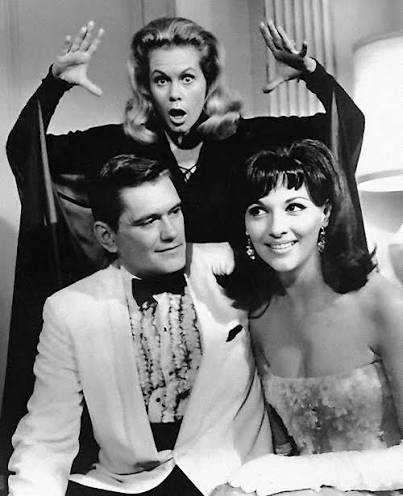
Nancy appeared five times on Bewitched, three of them as Darrin’s devious ex-girlfriend Sheila Sommers and then later on as a witch. As Sheila, she was the perfect, slinky foil to Samantha, who couldn’t help but put the imposed ban on magic aside to give the woman everything she deserved.
Ms. Kovack appeared twice on Perry Mason. We already discussed The Case of the Golfer’s Gambit when we talked about Dennis Patrick. Often cast as a femme fatale type, here Nancy is surprising as an essentially good woman who is pressured by the victim to be a bad girl. Her first appearance was in the twelfth episode of Season 7, “The Case of the Badgered Brother,” which premiered on December 19, 1963. Like so many episodes I’ve recently watched, this one involves the fashion industry. The owner of a chain of high-end clothing stores dies, and everyone expects him to leave his fortune and his stores to his older son, Martin. A few years earlier, the younger son Todd had tried to run the store but had been accused of stealing and left in a cloud. Now Todd has returned to hear the reading of his father’s will from Perry Mason, and it turns out that dear old dad takes most of the responsibility for their estrangement and offers Todd the chance to make good.
For most of its run, this is a pretty straightforward episode, with a cast that plays the melodrama of the situation to the hilt. Todd and Martin are diametrically opposed: Todd is so decent that there’s no way he would have stolen that money, and he wants to start a whole line of clothes based on designs by a former employee, Joseph Rinaldi, (played by Gregory Morton, a veteran of six episodes of PW!) who had fallen apart due to alcohol but is now getting his life together. Meanwhile, Martin wants to slap his family’s good name on cheaply made dresses so that he can make a quick buck.
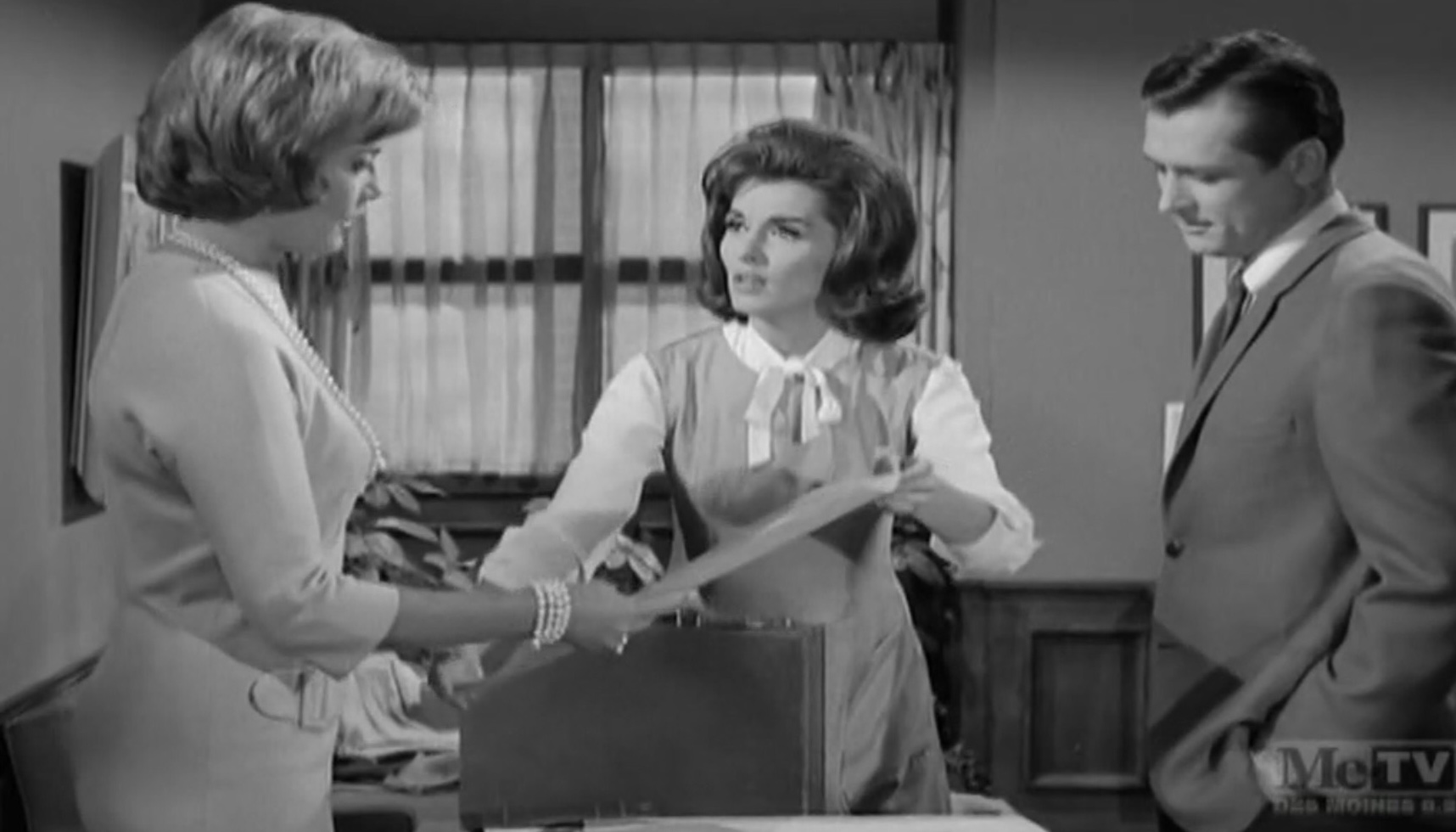
Nancy Kovack plays Joseph’s niece, who clearly has a thing for Todd. She is sooooooo perfect and good and decent and moral and . . . oh, never mind! Nancy Kovack’s good girls were just as intense as her bad ones, but much less fun! The solution, when Perry Mason reveals it in court, comes as a complete surprise – but that’s because everything he reveals comes out of nowhere!! No foundation is laid for the killer’s motive, and a secret relationship is impossible to have deduced or even noticed. I imagine the killer’s look of utter shock on the stand very much resembles the faces of the audience when the ending finally arrived!
* * * * *
Despite getting his start on stage in the Pasadena Playhouse and appearing in several prestigious films, including Sweet Smell of Success, The Apartment and the classic, The Happy Hooker Goes to Washington, David White was first and last a television actor. He was appearing on those little tiny screens as early as 1949, and like so many stage actors, he popped up on many of the “Playhouse” types of shows, as well as sitcoms and dramas. He featured in two episodes of The Twilight Zone, including the lead in an adaptation of Ray Bradbury’s “I Sing the Body Electric.” He made the rounds of all the early 60’s Warner Brothers shows, like 77 Sunset Strip and Hawaiian Eye, did a few episodes of Alfred Hitchcock Presents and made appearances on both Dallas and Dynasty toward the end of his career.
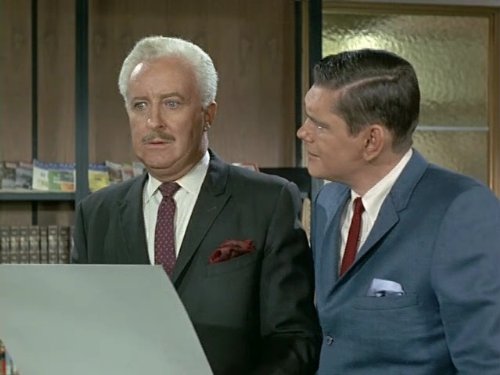
By far, White’s most famous role was as Larry Tate, Darrin’s boss in Bewitched. He appeared in 191 out of 254 episodes and was a perfect straight man to the all the farcical hijinx happening over at the Stephens home. Aside from a dream sequence, Larry never discovered the truth about Samantha, and while his “near miss” opportunities to witness magic stretched credulity to its limit, somehow White played it so perfectly that you always went along with the gag.
Like Nancy Kovack, David White also appeared in two episodes of Perry Mason, and again we have already visited one of them – “The Case of the Madcap Modiste” – when we discussed Leslie Parrish. White’s second appearance, “The Case of the Witless Witness,” debuted on May 16, 1963, the twenty-eighth and final episode of Season Six. This is a gripping story, beautifully written (by Samuel Newman and Marshall Houts) and acted by a fantastic cast.
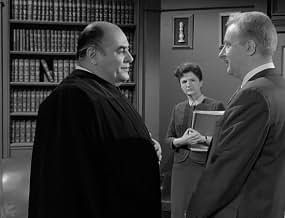
David White plays Victor Kendall, a big-city publisher who seems to have the nomination for Lieutenant Governor locked up, until the sure thing is upset by the entry into the race of esteemed judge Daniel Redmond (Robert Middleton). Yet, after securing the nomination, Redmond is suddenly thrust into a more notorious spotlight, accused by a Senate sub-committee of committing fraud against the U.S. Government when he was an assistant attorney general in Washington D.C. twenty years earlier.
We know that Redmond is a good man – and why? Because Perry Mason says so. We meet Redmond in court when he is handing down a judgment in a civil case against Mason (that’s right! Perry Mason loses a case!), and their post-trial conversation indicates two men who have a deep respect for each other. When Della suggests that the judge’s decision was influenced by his concerns over the election, Mason insists that Redmond is too decent and fine to let something like personal gain sway him.
Which is why Mason insists on helping Redmond fight these accusations and then defend the judge when the key witness (Vaughn Taylor, whom we will discuss again) is murdered with heart medication belonging to Middleton’s loyal secretary (Florida Friebus). Clearly there’s some sort of conspiracy at work here, which might involve Victor Kendall trying to eliminate his rival, or Middleton’s assistant (Steve Brodie) switching political sides, or a bitter ex-girlfriend of Middleton’s (Rita Lynn) seeking revenge, or a sleazy lobbyist (Jackie Coogan) seeking to profit from the Judge’s predicament.
It’s a wonderful episode from start to finish, and since everyone has an agenda, there’s no obvious culprit in sight. Moreover, it’s a delight to watch all the scenes of two decent legal figures like Perry Mason and Judge Middleton sparring over the law. Mark this one as a definite “To Be Watched!”
* * * * *
I saved Abner for last! The source of “mortal” humor on Bewitched was divided into three areas: Larry Tate, Darren’s parents (whom we’ll talk about next time), and the Kravitz’, who lived next door to the Stephens’. Granted, Gladys Kravitz was a snoop, but she had the misfortune to witness at least one magic spell per episode. She would go running to her husband, screaming “Aaaabbbnerrrr!”, and her husband would begrudgingly investigate and always missed the magic.
That was the joke, repeated in episode after episode – and it worked, thanks to the chemistry between the actors playing Gladys and Abner. At least . . . it worked beautifully with the first Gladys Kravitz because Alice Pearce had spent years perfecting a single role, that of a neurotic woman with post-nasal drip. (She steals every scene from Frank Sinatra and Betty Garrett in On the Town as Garrett’s roommate, Lucy Shmeeler!) As Mrs. Kravitz, Pearce looked like she was on the verge of a breakdown before the magic started.
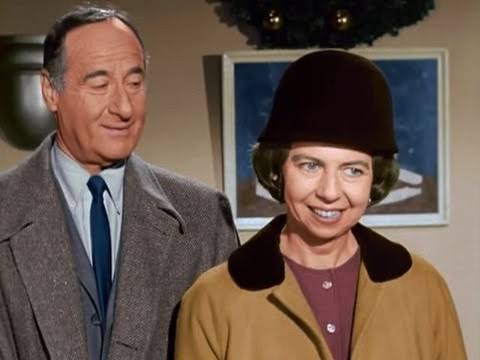
When the actress died, the show’s producer knew that the bit was too important to retire, so they recast the role with Sandra Gould, who was prettier and more grounded in the part – funny, but not as funny, even with her stretched out “New Yawk” accent. I also think that she didn’t possess the same comic chemistry with the actor playing Abner as Pearce had.
George Tobias was born into a family of Yiddish theatre performers. His parents begged him to be a doctor or a lawyer, but he wasn’t listening. At fifteen he made his stage debut, and by the age of 23, he was on Broadway. Tobias had a long stage career before he was scouted by Warner Brothers and brought out west to make pictures. He had a long and varied film career, acting opposite Hollywood greats, like James Cagney, Gary Cooper and Bette Davis. He wasn’t just a comic actor; in fact, in the 1950 film noir Southside 1-1000, he played a ruthless killer. His television career was dominated by his stint as Abner Kravitz, a nice shlub of a man saddled with a crazy woman for a wife. Or so he thought!
Tobias appeared in a single episode of Perry Mason: Season Seven’s 26th episode, “The Case of the Antic Angel” premiered on April 16, 1964, mere months before Bewitched debuted. This is a tidy little thriller, worthy of a Cornell Woolrich noir tale, and it gets all the things right that the Nancy Kovack episode we discussed above gets wrong. William Sherwood (Peter Breck, in his second of three appearances on PM, after which he would go on to star in The Big Valley) is a successful businessman and recovering alcoholic whose wife died in a plane crash years ago. The story starts one night as Sherwood is walking past a club and passes a couple. He stares at the woman and cries out, “Ruth!” He is certain that this is his “dead” wife, so he calls his AA buddy Harry (Richard Erdman, who appeared in six episodes) and then begins drinking. What follows is a living nightmare that leads to William standing trial for the murder of a woman he thought was already dead.
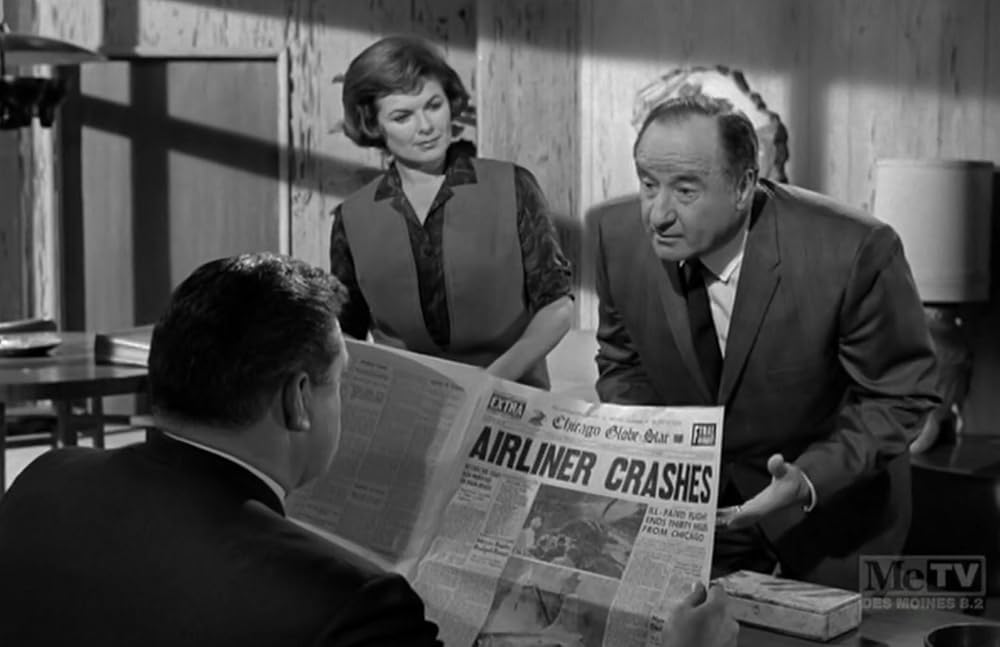
I don’t want to give away too many details here. The list of suspects is small but colorful and includes George Tobias, largely wasted here as William’s boss, Cathleen Cordell as the victim’s extremely overwrought sister, Michael Ansara as . . . well, for most of the time a mysterious figure, and Bek Nelson (in the last of three appearances) as the secretary with a heart of gold. During the trial, Perry unearths a complex situation bit by bit so that the final surprise unmasking of the killer (maybe not so much of a surprise, considering the actor) feels earned.
* * * * *
We’ll return soon with three more actors and five more episodes when we share the second part of our examination into the Perry Mason/Bewitched connection.


Pingback: RISING TEMP-ERATURES! The Case of the Terrified Typist | Ah Sweet Mystery!