In our exploration of the original teleplays developed for Perry Mason and all the terrific character actors who appeared on that show, we’ve been looking at the crossover these performers had with other favorite shows of mine from the 1960’s. Last time, we looked at four actors who crossed over from the sparkling ABC sitcom Bewitched to everyone’s favorite courtroom drama over at CBS. Today, we’re making room for three more performers, whose appearances on PW added up to nine episodes.
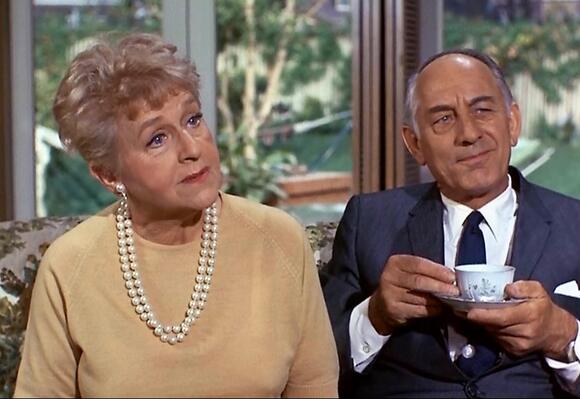
Nobody can accuse Bewitched of being topical or trend-setting, so when I tell you that Darren Stephens had two dads, I’m talking about recasting, a common practice throughout the series’ eight seasons. Actually, in the case of Frank Stephens, it’s a little bit more complicated than that: the two actors didn’t simply follow one after the other; rather, they alternated a bit, depending on availability.
In the early seasons, Darren’s dad was played primarily by Robert F. Simon. Simon began his stage career in Ohio in 1935 before moving to New York and appearing in many plays on Broadway. He even replaced Lee J. Cobb in the original production of Death of a Salesman in 1949. He moved to Los Angeles in 1954, and from then until 1985, he never stopped working in film and television. He was adept at both drama and comedy, appearing on the big screen in tons of Westerns, including The Man Who Shot Liberty Valance and episodes of Rawhide, Bat Masterson, Laramie, Gunsmoke, Bonanza and many more. He also played a lot of military man and cops and radiated a quiet moral strength – although, as you’ll see, that didn’t make him immune to murderous impulses.
“The Case of the Desperate Daughter,” premiered on March 22, 1958. This 27th episode of the first season, directed by Arthur Hiller on the road to his becoming a prolific film director, was the first time Perry Mason tackled a case not adapted from Erle Stanley Gardner’s books. Former child actor Gigi Perreau plays teenager Doris Bannister, whose life on her father’s horse ranch is a strange one. She and her dad (Simon) don’t get along, but her stepmother Lisa (Osa Massen, in her first of three appearances) is Doris’ favorite person. When a mysterious man named Stefan Riker (Werner “Colonel Klink” Klemperer) shows up claiming to be Lisa’s cousin from East Berlin, Doris can tell from her stepmother’s shocked reaction (and maybe also from her suicide attempt) that Stefan is actually Lisa’s tormenter.
Doris’ response? She will save the day by seducing Stefan. This doesn’t make any sense at all, and watching Gigi Perreau make out with Werner Klemperer, who was twenty-two years older than her, is gross. Next thing we know, Doris stumbles into Perry Mason’s office, claiming to have amnesia, and Stefan Riker is discovered dead. The cops think Doris dunnit, so Perry agrees to defend her. There are only three other suspects – Dad, Stepmom, and an overly horny ranch hand named Gary (Don Durant, better known on early TV as the Ringo Kid), so Perry has an easy time of it – especially when a clue turns up in the form of two holes in the ground that D.A. Burger assumes came from a ladder, even though one of the three suspects hobbles around on a pair of crutches!
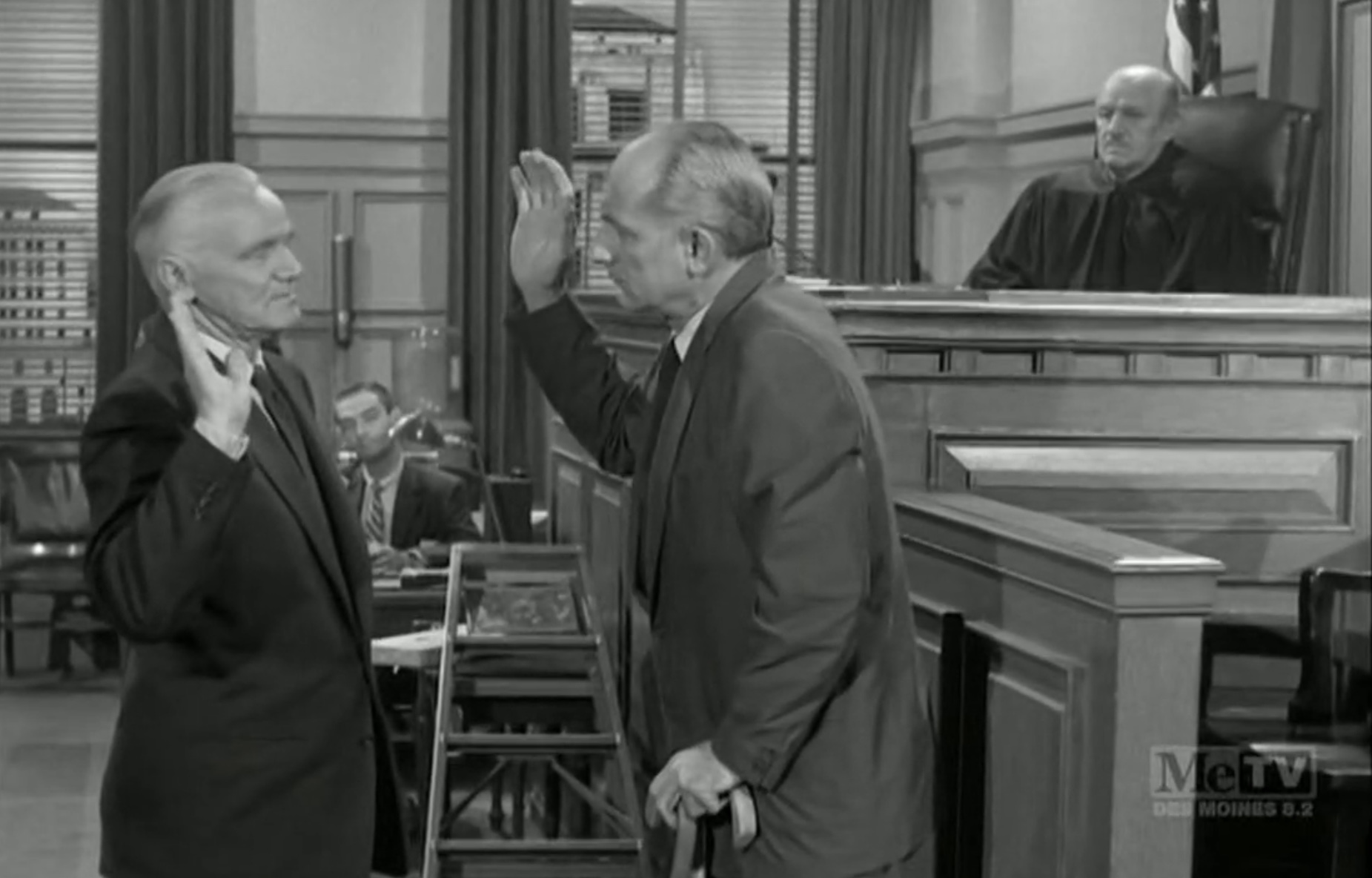
It’s great seeing Raymond Burr look thin and handsome and energetic, and in these early days, the relationships with Della and Paul are fun. But there are some sloppy mistakes going on in this one. My favorite happens after Doris enters Perry’s office, all unkempt and claiming amnesia, and Perry takes her to the hospital and then puts her picture in the L.A. paper with the caption, “DO YOU KNOW THIS GIRL?” Except . . . the picture on the front page of the paper is a glamor shot of Gigi with a lovely bouffant and pearls. What the – huh?
For Simon’s next appearance, we jump to Season Three, Episode 23, “The Case of the Slandered Submarine,” which premiered on May 14, 1960. As you can imagine, this is a mystery with a military setting, with some of it taking place on an actual submarine that was built during World War II and decommissioned after the filming of this episode. It features two actors, Robert H. Harris and Hugh Marlowe who, between them, featured in twelve Perry Mason cases; we’ll talk about both of them separately.
The episode begins well: a local café singer has been murdered, and a sailor was seen lurking about. The police suspect that the killer is a crew member of the U.S.S. Moray, and it does seem that most of the sailors on board were familiar with this “good time” girl – especially Seaman Robert Chapman, who we will eventually discover was regretfully married to the girl. Marlowe plays Cmdr. James Page, the previous captain of the Moray, who is back on board to guide tests on new equipment manufactured by Alpha Electronics to see if the Navy wants to go with Alpha or another company. Page meets with the two representatives from Alpha (one of them played by Harris) and is shocked to discover that an interest in the company has been bought by none other than his father-in-law (Robert F. Simon’s role).
The big surprise to me here was that I thought Marlowe, playing an essentially decent guy, was being set up to be the defendant, but he is actually the victim, having made his wife, her dad, and some of the sailors unhappy. Perry Mason had been brought into this when Simon’s character tried to hire him to block Marlowe’s participation in the test in order to ensure that Alpha got the contract. Instead, Mason ends up defending poor Robert Chapman in a military court martial, against a prosecuting soldier played by Edward Platt, most famous as the Chief in Get Smart.
The trial is sadly as dull as ditchwater, and the killer, while not necessarily any more obvious than anyone else, is wearing the worst toupee I’ve ever seen on television – and not on purpose!
Moving on quickly to Simon’s final appearance on PW, we come to Season Six, Episode 18, “The Case of the Two-Faced Turn-a-bout,” which debuted on February 14, 1963. This is another one in that special series of episodes where Raymond Burr had taken a leave to have surgery and different stars replaced him. This time, it’s sexy Hugh O’Brian, who was just two years away from playing Philip Lombard in that weird production of Agatha Christie’s Ten Little Indians set atop an Austrian schloss.
Known for his action roles, O’Brian wasn’t going to play a brainy attorney; no, he’s described as “a playboy entertainment lawyer.” He also used to work in the O.S.S. during the war, and this plot is a cockamamie and confused amalgam of spy thriller and murder mystery. A Balkan dictator has killed himself and left behind THE VOLNEY PAPERS!!! which detail all the corruption in his government, including potentially the names of traitors to the U.S. cause. A righteous Balkan official has arrived in America, willing to hand off the papers to Elihu Laban, leader of a group of political exiles – but only if the deal is made via a mysterious O.S.S. spy known only as “The Umkehren” or “Turn-a-bout.” A group of men are involved in the set-up to this, all of them looking like they appeared in either Get Smart or Hogan’s Heroes (they did!), and the Umkehren, who turns out to be lawyer Bruce Jason (O’Brian) seems to betray Laban and possibly kill the courier in a fun house ride!
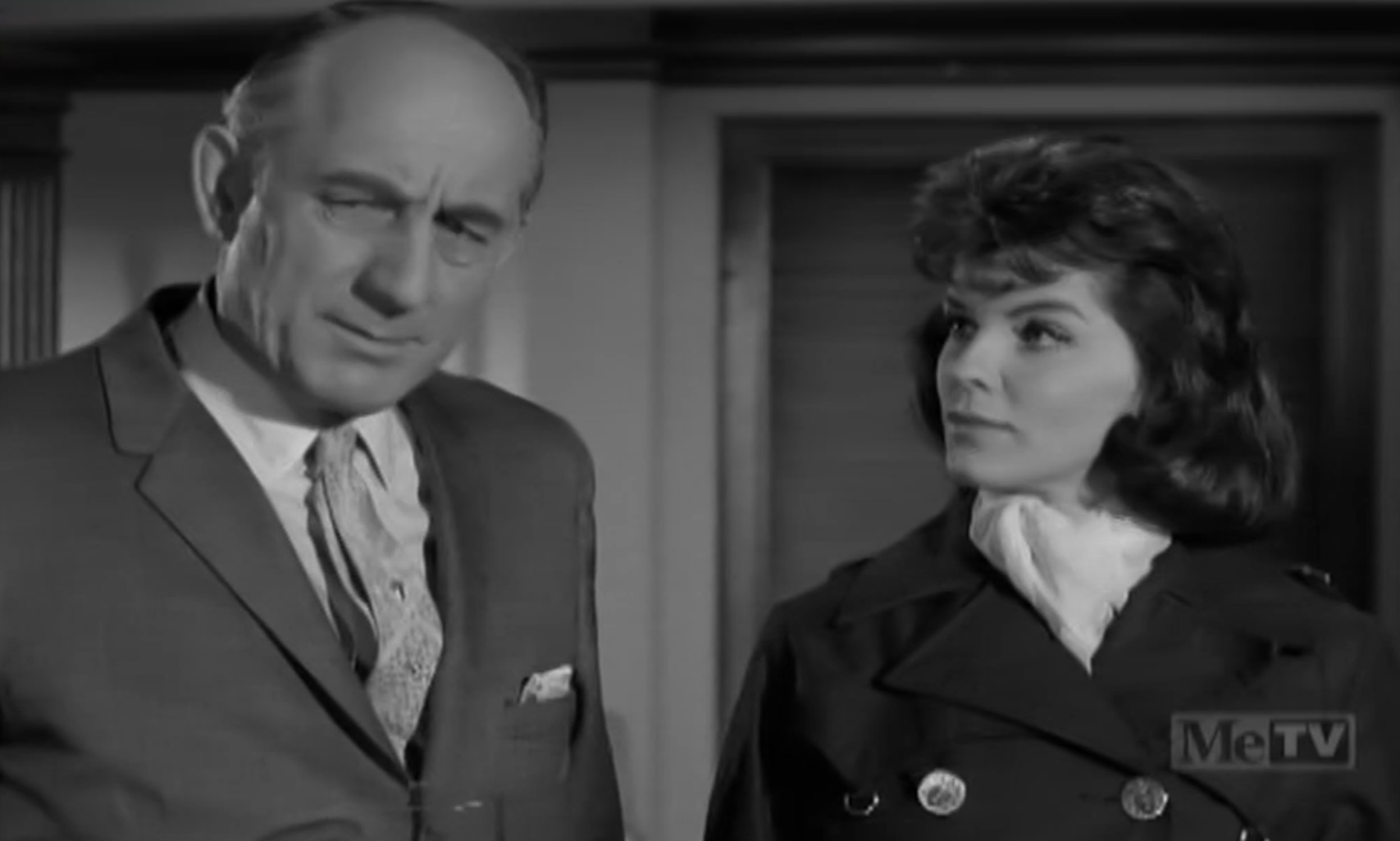
I did not enjoy this episode! First of all, it’s a tour de force for O’Brian rather than a good Perry Mason mystery (the script was actually a back-door pilot for a new series that would have starred O’Brian). Next, I spotted the murder within the first five minutes simply from the staging of the character!!! And, finally, since O’Brian can’t be a traitor and a killer in this format, there was only one solution to that problem.
Still, there are some good things in this: Werner Klemperer is back, this time playing a good guy (I think?). Clearly the producers wanted O’Brian to have the back-up of a lot of folks familiar with the series, so they cast Lisa Gay (with seven episodes to her credit) in the only female role, Berry Kroeger (also seven episodes), Gregory Morton (six episodes), Simon (here in a tiny role as an attorney), and other multi-episodic actors as suspects. And it’s good to see Raymond Burr well on his way to recovery – all dressed and performing in two scenes! – because if the guest star scripting had gone on in this direction, I would have jumped ship!
* * * * *
If you know Roy Roberts strictly from television, you might conclude that he was primarily a comic actor; certainly, he did more comedy than Robert F. Simon. But Roberts was adept at dramatic roles as well, in westerns, war pictures, and even film noir, where he appeared in everything from Nightmare Alley to Chinatown. Wikipedia states that, between stage, film, and TV, Roberts appeared in over nine hundred productions over his forty-year-long career!
Born in Florida in 1906, Roberts began acting in local and touring theatre before moving to Broadway. His film career spanned forty years, right up to his death in 1975. As for television, if a situation comedy or Western needed a banker or a company president or a mayor or a judge, they probably called on Roy Roberts, whose air of firm command and positive authority made him perfect for these characters. He was in everything, sometimes playing recurring roles in several series at once, and he appeared opposite most of the great names in television comedy: Lucille Ball (he played a more benevolent banker than Gale Gordon in fifteen episodes of The Lucy Show), Jack Benny (playing another banker – naturally!), Danny Thomas, Andy Griffith, George Burns and Gracie Allen. Roberts appeared in two episodes of The Dick Van Dyke Show: “Sol and the Sponsor” (Roberts, of course, played the sponsor) and “My Husband Is Not a Drunk” (playing the sponsor again).
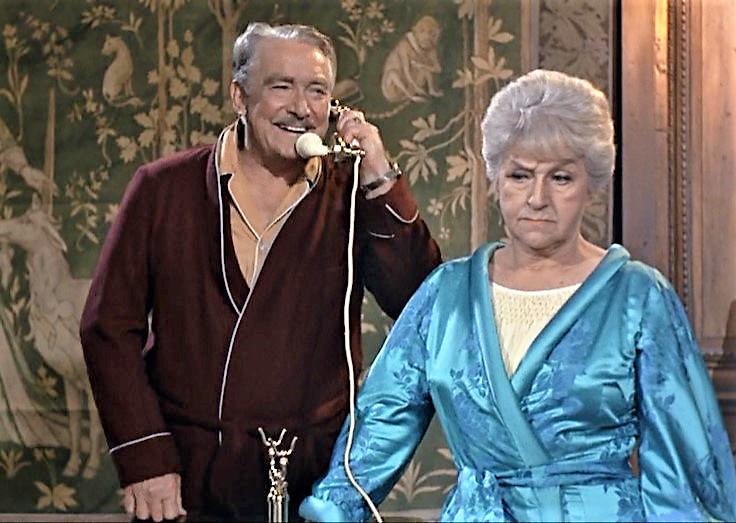
It isn’t that Roberts replaced Robert F. Simon on Bewitched so much as they alternated the role based on availability. Still, Roberts was Mr. Stephens through most of the final seasons, and his joviality balanced the sourness I felt emanating from Darren #2, Dick Sergeant.
Based purely on my watch history so far, I’ve got a feeling that actors who made multiple appearances on Perry Mason got to play the murderer at least once. Some who we will discuss were born to confess on the stand, but others, like Roberts, would probably come off as more of a surprise, given how steady and calm they could seem. Rest assured that Roberts did play the murderer in at least one of his four appearances on the show. I’m just not going to tell you if the episode we’re about to discuss in the one.
“The Case of the Lover’s Gamble” marked Roberts’ third appearance. It debuted on February 18, 1965, the twentieth episode of Season Eight. S8, Ep. 20) I can’t believe I don’t remember this one because it’s a real stand-out! It’s the only episode directed by Harry Harris, who had a distinguished career in television. He directed for Irwin Allen (Voyage to the Bottom of the Sea, Land of the Giants) and helmed over sixty episodes of Gunsmoke, as well as multiple episodes of heartwarming dramas like The Waltons and 7th Heaven. You wouldn’t expect something so atmospheric and thrilling coming from a director with this resume, but Harris takes a twisty script by Jackson Gillis and Samuel Newman and runs with it, imbuing scenes with off-kilter angles and minimal scoring.
The story begins on a stormy, fateful night as a couple, Frances and Philip Stark, is driving down a rain-soaked highway, deep in an argument about the husband’s faithfulness. Any true-blue mystery fan couldn’t fail to notice that the actress playing Frances never turns her head toward the camera; we see her either with her back turned to her husband or from the outside of the car focused on the steamy windshield. The distracted couple end up in a collision with a truck carrying flammable material – and we cut to Los Angeles several months later. A pretty young art student named Betty Caster (Margaret Blye, who I would like to think is most famous for a horror movie called The Gingerdead Man and its sequel, Gingerdead Man 2: Passion of the Crust) arrives at her beloved professor Philip Stark’s home and is invited to stay there and care for his recovering wife.
Betty reluctantly accepts the position, and the next twenty minutes are an account of her slowly coming to believe that Philip wants to kill Frances, who is about to inherit two million dollars. Matters seem confirmed when Betty spies Philip kissing a beautiful blonde on the street, and she slowly makes her way home. The scene of Betty alone in the house would do any horror movie proud: lots of silence, broken by the phone ringing – but it’s only Perry Mason, who met Betty when she came to the office to ask her friend Della Street about wills. Betty makes her way up to Frances’ bedroom, only to discover the bed’s occupant is dead. And it’s not Frances – it’s Philip!!!
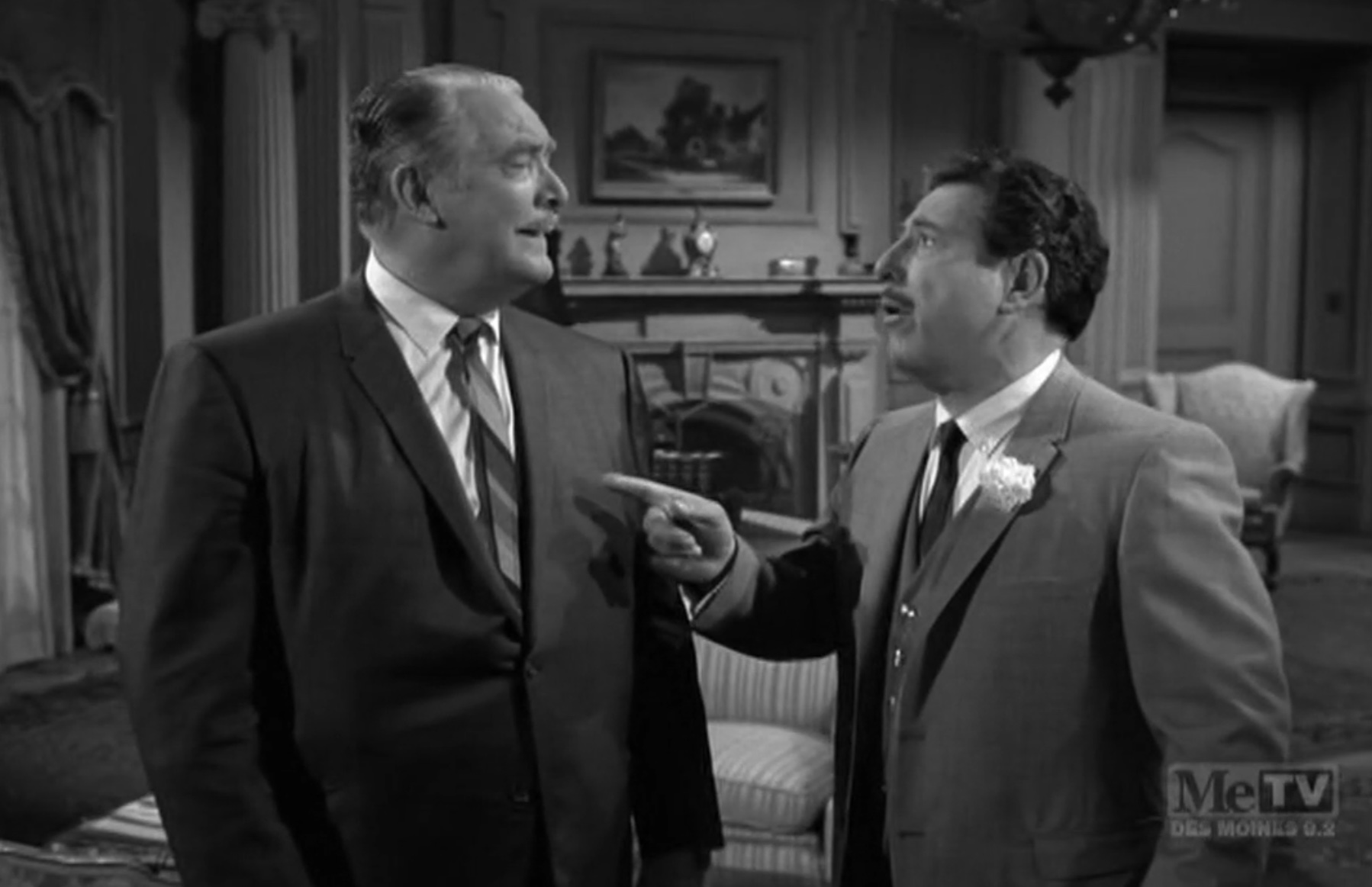
The second half of the episode is equally gripping. Betty is on trial for murder, Frances is missing, and a trio of greedy relatives (including Roy Roberts) is circling the wagon, waiting to find out if Frances’ inheritance will come to them. Most of the testimony comes from Jill Fenwick (Joan O’Brien), the beautiful blonde from the street, who claims she barely knew Philip, (I know Ms. O’Brien from a charming episode of The Dick Van Dyke Show; the girl could sing!), and from the housekeeper, played by Minerva Urecal, an alarming-looking woman with a huge resume in film and television playing alarming ladies; she was the forbidding Mayor’s wife in The Seven Faces of Dr. Lao.
The episode ends not in the courtroom but with a gathering of all the parties, where Perry unravels a long, tricky plot and unleashes twist after twist. I can’t recommend this one enough!!
* * * * *
Before we bid goodbye to the Perry Mason/Bewitched connection, let’s look at one more actor. Last time we talked about the character of Larry Tate (David White), who was Darren Stephens’ boss. Larry was married to Louise Tate, who initially was played by an actress named Irene Vernon for thirteen episodes covering the first and second seasons. Verson was romantically linked to a producer who clashed with the other creators and was forced to leave. Vernon was asked to leave with him.
Meanwhile, another hit show on ABC was Peyton Place, based on Grace Metalious’ book and possibly the first nighttime soap opera on TV. Kasey Rogers had a leading role as Julie Anderson, whose daughter Betty was the town troublemaker. (We’ll talk more about this . . . next time!) Rogers was a fan of Bewitched and was thrilled when Bill Asher asked her to assume the role of Louise Tate, with no audition necessary. And so Kasey left Peyton Place and appeared as Louise Tate in thirty three episodes, most of them in the middle of the series and slacking off to three per season as the series was winding down.
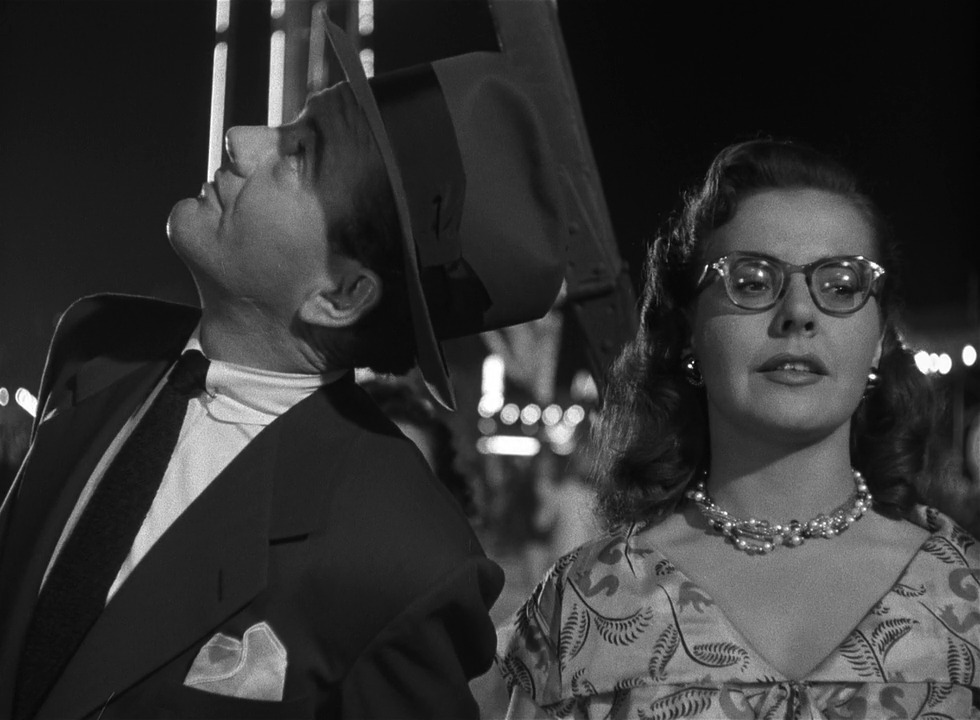
She was born Josie Imogene Rogers in 1925 in a small Missouri town. The family moved to California when she was two. As a child she demonstrated so much talent – with a baseball – that her friends nicknamed her “Casey.” So when she went into the film business and got a contract with Paramount, it made sense to change her name – to Laura Elliot. She made quite a list of movies, but the one she is most famous for is Alfred Hitchcock’s Strangers on a Train. Rogers/Elliot is mesmerizing as Miriam Haines, Farley Granger’s conniving wife, and her slow stalking and murder by Bruno Anthony (Robert Walker) is one of the greatest sequences in Hitchcock’s filmography.
Once she left Paramount, she dropped the name the studio had assigned her and created a moniker that was both sentimental and fitting. Rogers loved her time on Bewitched. She became good friends with Sandra Gould (I guess recast actors have to stick together!) and Gould wrote the introduction to one of the Bewitched-themed cookbooks and craft books that Rogers co-wrote with friend Mark Wood.
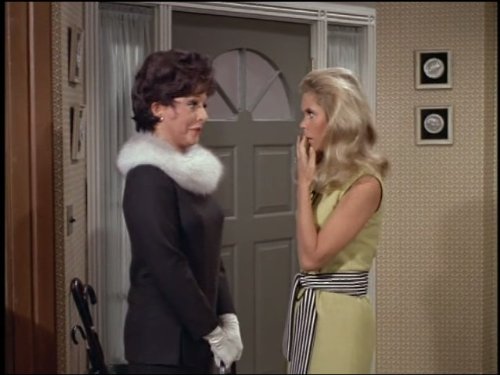
Rogers appeared in two episodes of Perry Mason. The first was in an adaptation of the novel, The Case of the Calendar Girl. We’re going to talk about the second: “The Case of the Irate Inventor,” which debuted on May 28, 1960, the twenty-fifth episode of Season Three. The titular inventor is James Frazer (Thomas Coley) who is on the verge of perfecting a new anti-collision device that will revolutionize the airline industry. But he’s distracted because his wife Thelma (Ce Ce Whitney) is apparently having an affair. (I say distracted, not upset, because Coley possessed an acting range of one emotion – blank.) Frazer disappears for three months. Is he working? Is he dead? Thelma wants to know, and so do the Hayden brothers (Ken Lynch and Douglas Odney), who are partnered with Frazer but want to buy him out and keep the invention, making their protégé Calvin Boone (Manning Ross), who is actually Thelma’s lover, the inventor of record of the anti-collision device. Thelma’s fighting the lot of them, and she tries to get Perry Mason’s help in her fight. But then Frazer returns from his mysterious sojourn, right on the evening that Thelma is murdered in her husband’s lab and the room set ablaze.
A lot of the acting in this one is just plain bad: the defendant is a dud; so is Odney and so is Ross, and I’m 50/50 on Ce Ce Whitney. However, Kasey Rogers is terrific in the pivotal part of Thelma’s “good friend and neighbor” Lois Langley, who is accused wrongfully by the victim of having an affair with the irate inventor. Rogers is great at keeping you guessing: is she a good girl or a bad girl? The answer to that is the most interesting thing of all. I also want to give another shoutout to Ken Lynch, another actor with a slew of TV credits, usually as some sort of law enforcement official. (He appears to have been a regular on the Dennis Weaver detective classic McCloud. I know he can also be funny playing a straight man to comic actors: he appeared in three episodes of The Dick Van Dyke Show, once as a police detective, once as a warden, and once as the proud dad of a twelve-year-old flamenco dancer!
It’s also fun to see Mason in action stymying the attempt by the Hayden brothers to cheat James Frazer. This often happens in the novels: early on, Mason faces down a powerful antagonist and makes mincemeat of their plans, only to suffer a reversal when murder strikes and his client is arrested. Here, we only have 53 minutes, so both things happen pretty much at the same time.
And now, with a twitch of the nose, we complete our exploration into the Perry Mason/Bewitched connection. Don’t say goodbye to Kasey Rogers yet, though . . . or, at least, don’t say goodbye to her work. Next time, we’re going to explore the connection between our favorite defense attorney and FIVE actors who worked with Kasey Rogers, committing all sorts of mayhem on one of the most popular dramas of the mid-1960’s.

