“It’s the most frightening tiiiiime of the year . . . “
Halloween is just around the corner, and while it’s a holiday I pretty much got over after I turned twelve, this seems like a good time to turn our spotlight on a few monster makers who, when they weren’t cackling and concocting, made time to guest star on Perry Mason.
If you arbitrarily divided the screen actors of Hollywood between those who have appeared in a monster movie and those that haven’t, you would come up with three lists: first, there’s the majority of actors who wouldn’t be caught dead (sorry!) in a horror film (John Wayne, Katharine Hepburn, Norma Shearer); then there are the actors who specialized in horror movies – and probably wish you knew they made other types of films as well (Karloff, Lugosi, Lorre, Price . . . I don’t even have to give you their full names); and, finally, there are those who might surprise you for having appeared in a horror movie.
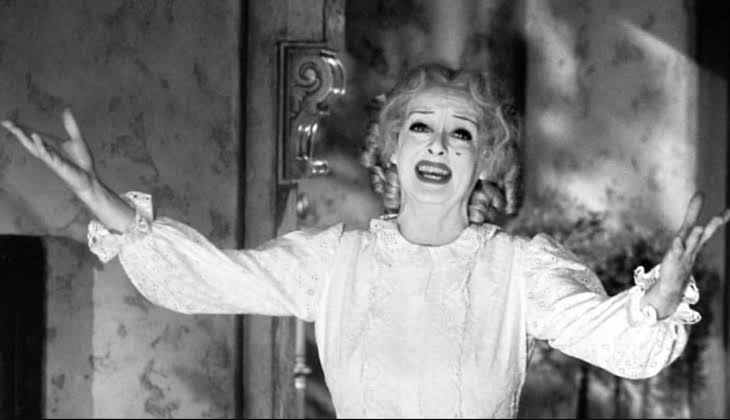
Think of all the Golden Age starlets who became the queens of “hag horror” in the 60’s and 70’s: Davis/Crawford in Whatever Happened to Baby Jane? Crawford in Strait Jacket, Berserk, and Trog. Shelley Winters and Debbie Reynolds in What’s the Matter with Helen? Winters alone in Who Slew Auntie Roo? Sweet Betsy Palmer as Mrs. Voorhees in Friday the 13th! The list is a long one!
The stars of Perry Mason all had their shots at monster movies. After Godzilla came out in Japan in 1954, Raymond Burr filmed special footage that was edited into the American release. William (Paul Drake) Hopper was the leading man in two monster movies of 1957: The Deadly Mantis and 20 Million Miles to Earth. He also played the doting, unsuspecting father to a child psychopath in The Bad Seed (1956). And Barbara (Della Street) Hale played an astronomer in 1975’s The Giant Spider Invasion.
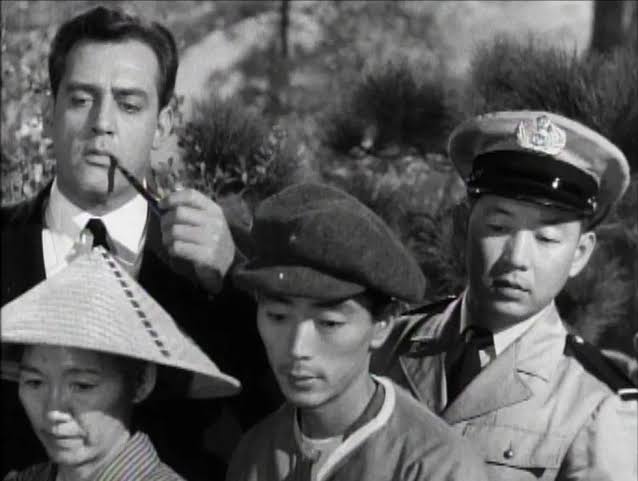
Today, we’re going to talk about three actors who guest-starred on Perry Mason after gracing the world of horror. We’re talking about two men who made monsters, plus a man who actually was a monster. On Saturday, it will be the women’s turn. Then, next week, I have a special two-part treat from a galaxy far far away. Now, let’s open the crypt doors and enter . . . IF YOU DARE!!!!
* * * * *
John McArthur Hoysradt was born in the New York state village of Bronxville in 1904. The son of a prosperous investment banker, John attended Yale University and taught history for a couple of years at the prestigious Groton School in Massachusetts before deciding to embark on a career in the theatre. His Broadway career began in 1931 and lasted well into the 1940’s. For many years, he was a member of Orson Welles’ Mercury Theatre Company and appeared in Welles’ acclaimed 1937 production of Caesar, which placed Shakespeare’s play in modern day and likened the court of Caesar to Fascist Italy and Nazi Germany. He was also an adept comedian, known for his impression of Noel Coward, which probably helped him land the Coward-inspired role of Beverley Carlton in the original production of The Man Who Came to Dinner.
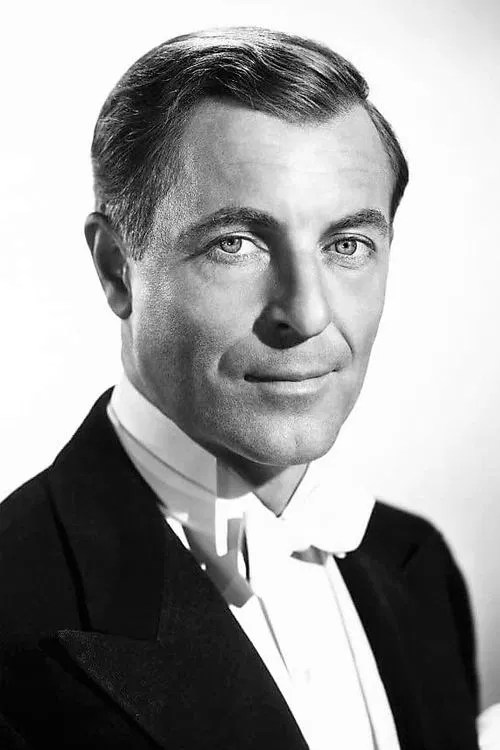
In 1945, Hoysradt shortened his name to Hoyt and the following year began a long career in films and television. Notable roles include the out of touch principal in The Blackboard Jungle and supporting roles in big budget epics Spartacus and Cleopatra. Perhaps my favorite film in which Hoyt appeared in the 1947 prison noir Brute Force, in which Hoyt plays one of Burt Lancaster’s circle of doomed prisoners.
But we’re here to talk about monsters! In 1961, Hoyt played a key role in one of my favorite Twilight Zone episodes, “Will the Real Martian Please Stand Up?” It’s basically a whodunit featuring a group of bus passengers stranded in a diner who come to realize that the weird things happening to them are the responsibility of aliens from Mars who have come to take over the planet. They slowly come to realize the distinct possibility of one of their own group being part of the alien vanguard, but, being stupid Earthlings, they refuse to believe this “nonsense.” The episode ends with a visually delightful double twist. Then, in 1964, Hoyt played the main alien in “The Bellero Shield,” the most striking of three episodes of The Outer Limits in which he appeared.
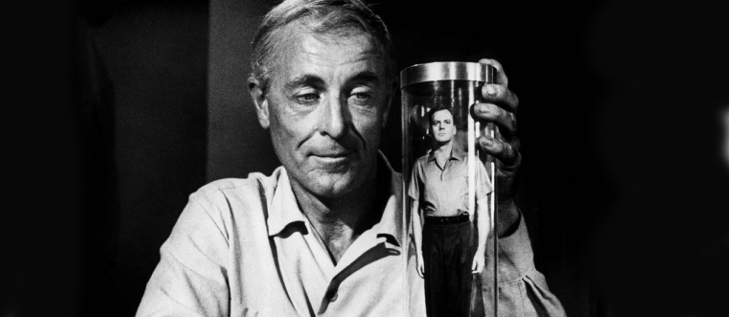
I first saw Hoyt when he assumed the role of “monster” maker in the perhaps silly film, The Attack of the Puppet People(1958). Hoyt played a kindly toymaker named Mr. Franz who used his shrinking ray to turn ordinary people into living dolls. It really was a ridiculous story, but I loved it as a kid, and I was crazy for the “hit” song sung by one of Franz’ victims called “You’re a Dolly!” (Seriously!)
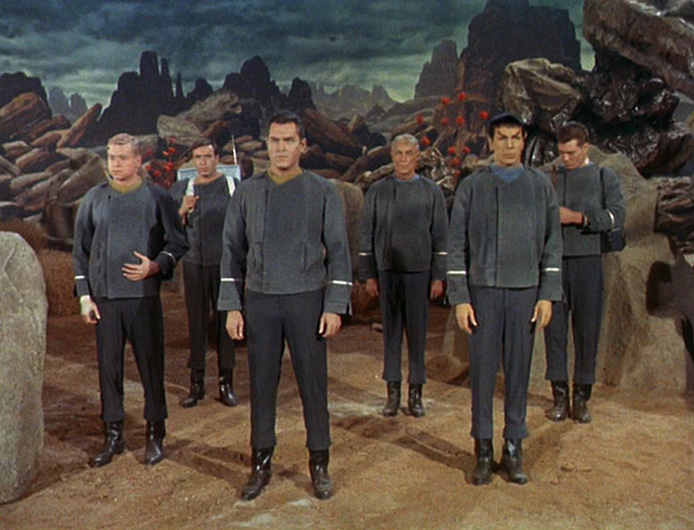
I wonder if Hoyt would have become more famous had “The Menagerie,” the pilot for Star Trek, actually worked. He played Philip Boyce, the ship’s doctor, and while he was no “Bones” McCoy, he was an irascible and interesting character. It might have made him famous where his long and distinguished career never quite allowed him to break into real stardom. I suppose his regular role on the Nell Carter sitcom Gimme a Break as Grandpa Stanley Kanisky had a similar, if less prestigious effect.
John Hoyt appeared in five episodes of Perry Mason that spanned the whole length of the series. His debut was in the thirty-sixth episode of Season One, “The Case of the Prodigal Parent,” which debuted on June 7, 1958. Hoyt plays Joseph Harrison, the defendant accused of murdering his stepson Philip Larkin (Terry Becker, best known for playing Chief Sharkey on Voyage to the Bottom of the Sea.) As a result, Hoyt doesn’t have much to do but lie to his attorney (oh, they all do!) and then sit helplessly in the defendant’s chair. Ethel Harrison, Larkin’s mom and Harrison’s ex-wife, begs Perry Mason to defend Joseph because she’s clearly in love with him and knows her son was a creep. Ethel is played by none other than Fay Wray, and since Wray is known for being the love object of one of the most famous movie monsters of all time, we’ll wait until our next post to talk about her.
Honestly, this is a terrible hour of television. It was the third original teleplay in the series, and since the first two (described elsewhere) were much better, there’s no excuse for how formless and generic this one feels. Harrison used to work in an import/export company, and a lot of characters float around that firm, all of them with problems of their own: Harrison’s role has been taken over by George Durell (Herbert Rudley, in his first of four PM appearances) who is married to the awful Claire (the great Ann Doran, in her first of three appearances). Claire is confined to a wheelchair due to an accident caused by her husband, and it has left her mentally unstable, for she accuses George of having an affair with his beautiful young secretary, Lorraine Stevens.
Lorraine is played by Andra Martin, who also became a sort of monster in 1958’s The Thing that Wouldn’t Die. Here she plays a sweet innocent, looked after by her boss, Mr. Durell, and by the head secretary of the company, Irene Collaro (Virginia Field, in her first of six appearances.) And she, for whatever reason, wants to protect Fay Wray. There’s also the Harrison’s loyal housekeeper, Sarah Winslow, who is played by Nancy Kulp, of Beverly Hillbillies fame. Sorry, folks, I’m just rattling on here because that’s exactly what this episode does. Lots and lots of people seem just barely connected. The best thing about this one is that a great deal of the early investigation is shown from the point of view of the D.A.’s office, so we get a rare amount of pre-trial Hamilton Burger and Lieutenant Tragg working together. I only wish it was enough to make this episode sing!
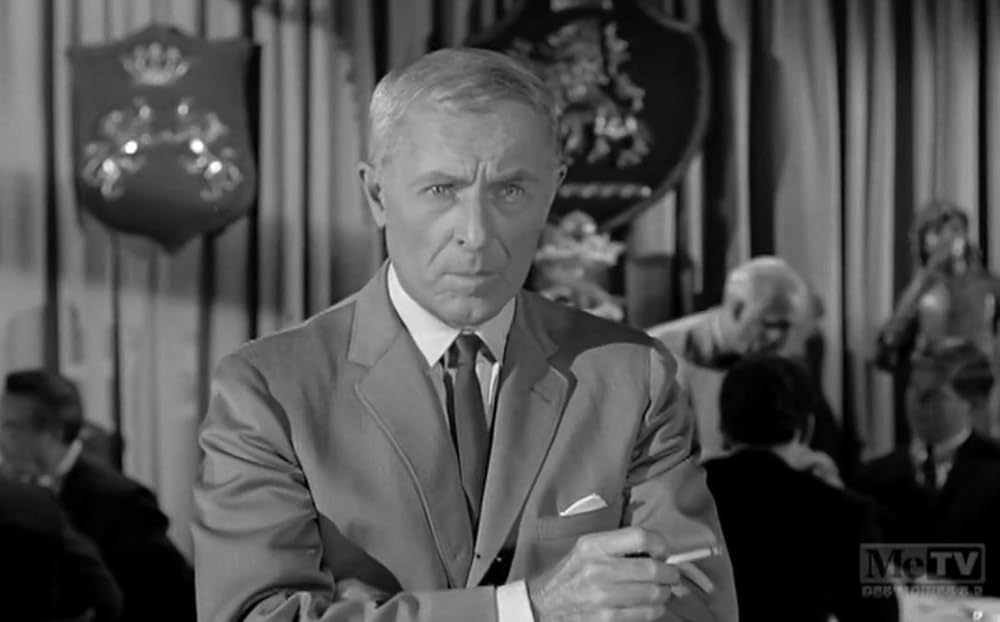
Hoyt’s final appearance on the show is a much better affair: “The Case of the Wednesday Woman” premiered on January 2, 1964, as the thirteenth episode of Season Seven. The “Wednesday woman” is Katherine Stewart (Phyllis Hill, in her first of three appearances on Perry Mason), who every Wednesday has the same cab driver (Alvy Moore, of Green Acres fame) drive her to San Quentin to visit her husband Philip (Philip Pine), serving a sentence for the involuntary manslaughter of his boss. For no discernible reason, Philip has stopped accepting Katherine’s visits, and when he gets out on parole he refuses to speak to her.
Katherine visits Perry Mason to see if he can work out a situation where Philip can take a job she has found for him back East, despite the fact that the terms of his parole forbids him to leave California. This is how Perry, Della and Paul Drake get involved in a complicated case involving the past theft of a huge diamond and the supposed manslaughter by Philip of the man who clearly stole the gem and planned to leave the country and his wife with the diamond and a mysterious mistress.
I don’t want to give too much more away about this story, but I will say that when the big crime comes, it’s a locked room murder that takes place in an elevator, making it seem that only Philip Stewart could have committed the crime. The solution to this element isn’t complicated, but the producers must have thought it would stump the audience because they make Mason explain how it was done twice. Meanwhile, the circle of suspects is fantastic: John Hoyt plays the late thief/victim’s partner in the business, whose rehiring of Philip after his parole may have a sinister purpose; noir queen Marie Windsor plays the late partner’s bitter wife, whose plans to sell her half of the business and move to France are interrupted by Philip’s return; Joyce Hadley (Lisa Gaye, the femme who fataled her way through seven PM episodes) is the lush secretary who is, for unfathomable reasons, dating Lester Ormesby, the company scientist with a serious surfeit of social skills. Ormesby is played by Douglas Dick, a handsome fellow who in his seven episodes of the series played good guys and bad guys, but here clearly relishes playing a weird guy! Any one of these experienced PM players could have dunnit, and the script does a great job of teasing the fact before the big reveal!
* * * * *
Robert H. Hurwitz was born in New York City in 1911, and like many a nice Jewish boy who aspired to be an actor, he changed his name to Harris. Ironically or not, depending on when he changed the name, Harris became a part of the Yiddish Art Theatre in his teens. He worked all around New York, including Broadway, as an actor or a director.
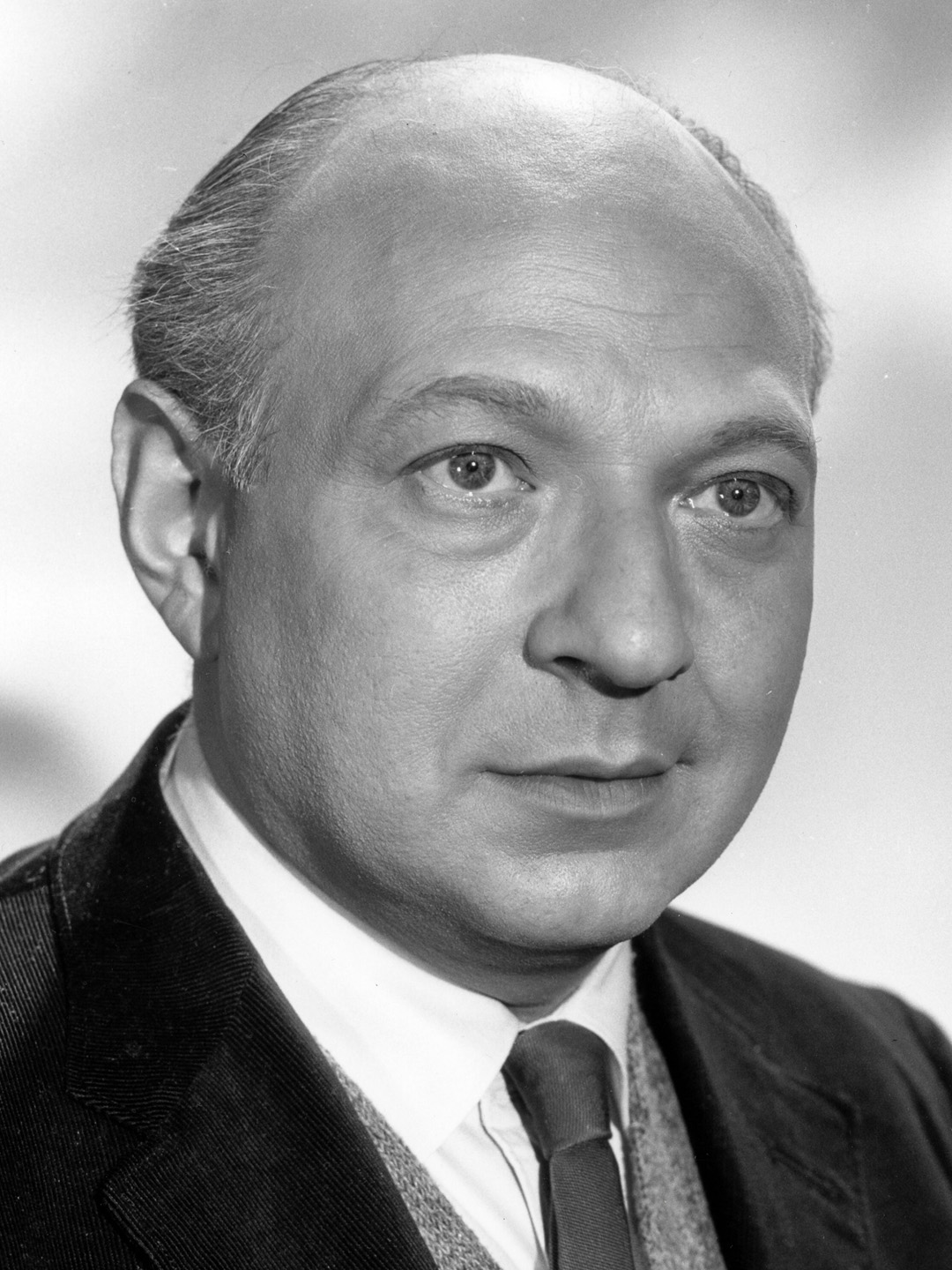
By some sort of divine coincidence, Harris has similar roles in two high-budget but sleazy films as the mentor to the leading lady. First, in Peyton Place (1957), he runs the town paper and gives Allision MacKenzie (Diane Varsi) her first writing job. Then, in Valley of the Dolls (1967), he’s a sleazy theatrical agent who gives Anne Welles (Barbara Parkins, who left the TV version of Peyton Place for this!) her first job.
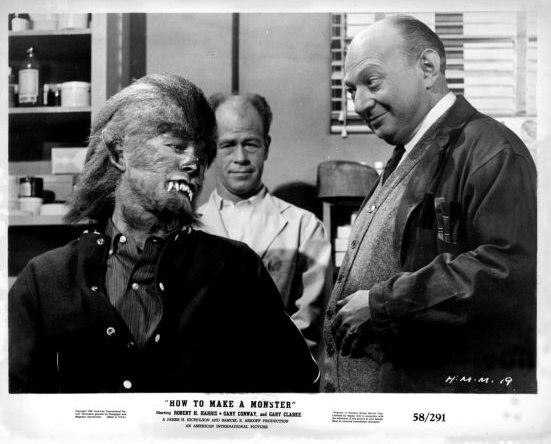
But we’re all here to celebrate the monsters, and Harris’ most triumphant role was as Pete Dumond in 1958’s How to Make a Monster, the unofficial third part of a monstrous trilogy that began with I Was a Teenage Werewolf and continued with I Was a Teenage Frankenstein. Pete is a Hollywood make-up artist famous for his monster designs who is fired by the studio heads because they want to close down their horror division and focus on making . . . (gasp!) musicals! Pete gets his revenge by using a special face cream to bend young actors to his will so that, made up as monsters, they will murder his enemies.
Pure gold!
Most of Harris’ credits come from television, where he specialized in shady characters. No wonder he appeared in eight episodes of Alfred Hitchcock Presents and seven episodes of Perry Mason – three of them as the murderer, once as the victim, and once, against type, as the defendant. His tenure on the series encompassed its entire length, beginning with an adaptation of The Case of the Lonely Heiress in Season one. We discussed “The Case of the Slandered Submarine” when we talked about Robert F. Simon and Bewitched, and we will talk about several of them later when we discuss other actors, but that leaves us with two juicy episodes to explore.
The first, “The Case of the Purple Woman” was the ninth episode of Season Two and premiered on December 6, 1958. It is, pure and simple, a showcase for Harris, whose performance rises above the so-so dullness of the others, but it also shows a tendency of the series to fall back lazily on “types.” Whenever an episode centers around the art world, Perry Mason is there to show us that all artists are half-mad slobs. We saw it with Victor Buono in “The Case of the Absent Artist,” and Harris gives us the same character here, possibly wearing the same filth-begrimed white suit as Buono (albeit in a smaller size) and lurching about drunkenly for the weeks and weeks it takes this case to play out. Seriously, even in court, Harris is drunk and in the same suit, although he adds a touch of “panache” by putting on a black “tie” that looks like a huge birthday bow.
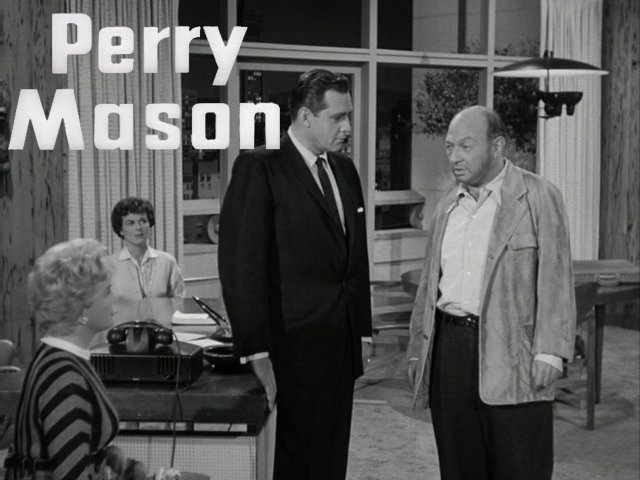
“The Purple Woman” is a famous “lost” painting that has been found and purchased by art collector Rufus Varner (Rhys Williams), who relishes his treasure until he is told by a fellow collector that the painting is a forgery. Incensed more by the fact that he was fooled than by the financial loss, Varner goes to Milo Gerard (George Macready, four PM eps), the art dealer who sold him the painting, and demands his money back. But Gerard just sits back and laughs – as he does with all the other characters for the next ten minutes, including his wife Evelyn (Bethel Leslie, three eps), her lover Wayne Gordon (Donald Murphy, three eps – and he’s trying to play nice here, despite deserving his own place on our “Monster Makers” list for having played the titular doctor in Frankenstein’s Daughter), and his adoring secretary/mistress, Doris Andrews (Doris Singleton – okay, let me pause and talk about Doris for a minute. She’s good here, but she was much more familiar in the world of comedy. A friend to Lucille Ball, she played Carolyn Appleby, friend of Lucy Ricardo, on ten episodes of I Love Lucy and made memorable appearances on three episodes of The Dick Van Dyke Show, a mere drop in the bucket to a career that showed she could hold her own against the comic greats!).
When Gerard is murdered, his wife becomes Mason’s client, and the other people become the suspects – but none of them hold a crooked candle to Aaron Hubble (Harris), the disheveled, filthy, lurching drunk who painted the forged “Purple Woman” for Gerard and now wants the world to know that he’s a good enough artist to fool the great Rufus Varner. For half a minute, you might figure that Harris is too obvious a suspect to confess at the end, that the punchline is simply too obvious. But writers Leslie Edgley and Gene Wang are playing it safe here and giving Harris the showcase he deserves, one lousy costume notwithstanding.
Next up: “The Case of the Frustrated Folk Singer,” which was the fifteenth episode of Season Eight, debuting on January 7, 1965. Nowadays, it’s rather fun to see how quaintly film and television portrayed performers and how the show business was run. Here Harris plays Harry Bronson, a nasty Hollywood agent, complete with constant heartburn, who runs roughshod over everyone in his sights. I think I counted Harris chewing down fifteen antacids before someone put him out of his misery by killing him.
The main suspect is Amy Jo Jennings, a wanna-be singing star from backwoods Tennessee. She is played by Bonnie Jones, who was born in upstate New York and whose Southern accent is so thick you would need a chainsaw to cut through it. Amy Jo is another of Perry Mason’s all-too-credulous clients, despite the fact that her big secret is that she is actually the wealthy president of a down-home remedy company. Somehow, Harry Bronson has glommed onto this fact, and he tricks Amy Jo into parting with $50,000 with the false promise that she will star in a summer stock musical he’s producing. (Imagine a big Hollywood agent dabbling in summer stock! Even the other characters don’t believe it!)
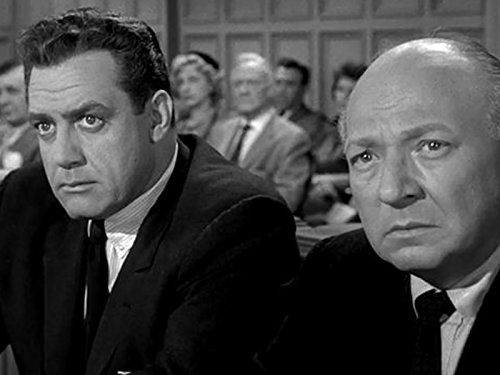
Usually, the suspect line-up in a typical episode numbers four or five people. Here, the list runs to eight characters (if you add up the number of episodes all these folks appeared in, it runs to 17): Bronson’s jaded wife, her gigolo lover, the cool secretary (played by Lee “Catwoman” Merriwether), the frustrated partner, a nice guy actor and drunken actress who have the misfortune to be Bronson’s client, and the two rivals for Amy Jo’s homespun affections. The mean ol’ boyfriend is played by Mark Goddard, who got to be more heroic as Major Don West in Lost in Space, and the new friend is folk-singer Jazbo Williams, played by special guest star Gary Crosby, son of Bing.
With such a large cast, it almost doesn’t matter whodunnit! In this case, the killer is hidden a bit better than usual.
* * * * *
Robert Quarry hailed from Fresno, California and got his first break in an uncredited role in Alfred Hitchcock’s Shadow of a Doubt. In 1970, Quarry starred in a film that seemed destined to lead him into becoming one of the great monster makers of the modern film era: in Count Yorga, Vampire, Quarry played the charismatic and very mod title role, a vampire who transforms lots of beautiful girls to satiate both his bloodlust and his, er, other lusts. The film was popular enough to garner a sequel.
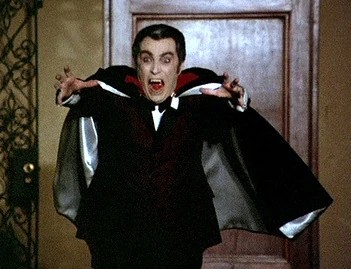
After Quarry co-starred with Vincent Price in two horror pictures, Dr. Phibes Rises Again and Madhouse, AP International was all set to have him replace Price as their scream king. Alas, the studio’s financial problems put an end to that. Quarry’s career was also stalled by a terrible auto accident in which he suffered serious facial injuries. However, he continued to make films and TV appearances until 2000. He died in 2009.
We have already talked about one of Quarry’s two Perry Mason appearances, “The Case of the 12th Wildcat,” when we discussed Karl Swenson and The Birds. Before that, Quarry appeared in “The Case of the Deadly Debt,” which debuted on April 1, 1965, the 25th episode of Season Eight. I’m not usually crazy for gangster stories, but this is a terrific, twist-filled tale that extends far beyond the typical Mob-based plots.
A man named Ed Talbert gets off the train at Union Station. He is clearly ill, and he is being helped along by a fellow passenger named Kitty Delaney. (Ed is played by Emile Hirsch, whose extensive credits include roles in Paths of Glory, Shane, and The Sweet Smell of Success. Kitty is played by Joan Huntington, who went on to play the niece of a serial killer in 1969’s Whatever Happened to Aunt Alice?) Unknown to Ed, he is being followed by another passenger: gangster kingpin Steve Radom (Gregory Morton, whom we have discussed in others of his six appearances on Perry Mason). Radom seems all skulking and menacing here, and this impression is strengthened when Ed drops dead of a heart attack.
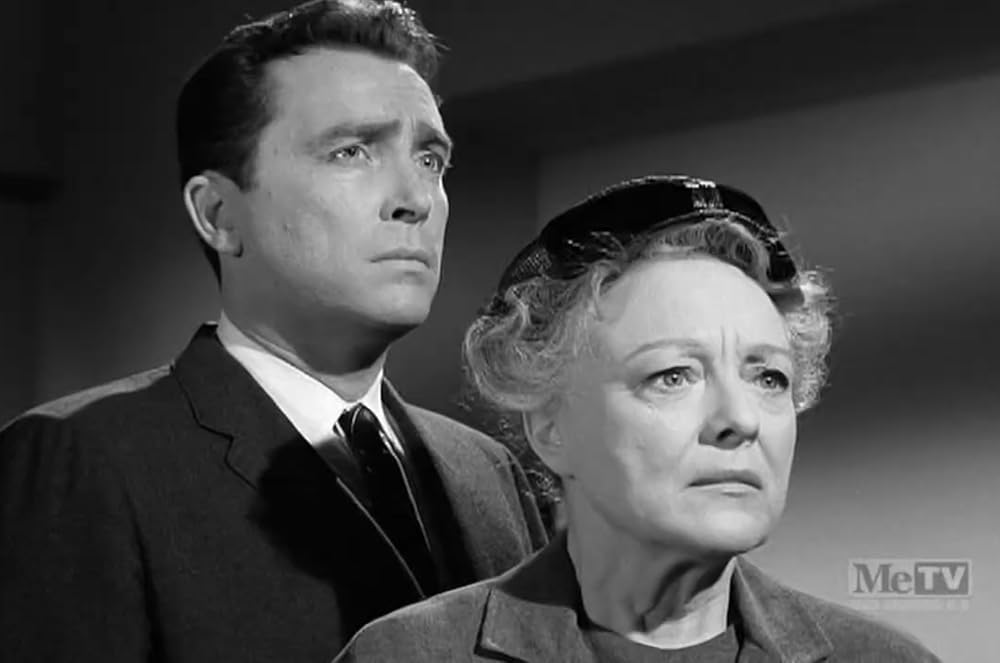
It turns out, however, that Radom’s motives are more complicated, and they involve Ed’s family: his wife (Sheila Bromley, five episodes), his older son Danny (Quarry), who is a cop and trusted associate of Lieutenant Anderson (Wesley Lau), and his younger son Carl (Chris Robinson), a pianist who works in one of Radom’s nightclubs. Danny is concerned that Radom is trying to drag Carl, who has already had problems with the law, into something deeper and darker. In an effort to save his brother, Danny quits the force and then goes to the bungalow where Radom is staying to confront him.
Meanwhile, Carl has consulted Perry Mason to see if the lawyer can protect the family, and Mason sets up a meeting with Radom, which puts the attorney on site at the bungalow just in time to hear a gunshot and see Danny fleeing the scene. Then, in true fashion, Perry discovers the body. Ultimately, there are two mysteries to solve here: first, what was Radom doing in Los Angeles, and second, who killed him? This all adds up to an episode filled with satisfying twists and a choice of killer which, while not overly obvious, is satisfyingly inevitable. Put this one on your watch list!
* * * * *
I hope you’ve enjoyed our look at these three creepy guest stars. Join us in three days for a look at the distaff side of creepy – the women!!!

